Will Solar Panels Get More Efficient
Will Solar Panels Get More Efficient? The Truth About Tomorrow’s Solar Tech Today
You’re thinking about going solar. You know it’s a smart move for your wallet and the planet. But then the nagging question creeps in: “What if I buy now, and super-efficient, breakthrough panels come out next year?”
Table of Contents
- Will Solar Panels Get More Efficient? The Truth About Tomorrow’s Solar Tech Today
- The Current State of Solar Panel Efficiency: Powerful, Proven, and Accessible
- What is Solar Panel Efficiency, Really?
- How Efficient Are Today’s Commercial Solar Panels?
- Why Current Efficiency is Already a Game-Changer
- The Future of Solar Efficiency: Breakthroughs and Incremental Gains
- Lab vs. Commercial: Understanding the Efficiency Gap
- Emerging Technologies Pushing the Boundaries
- Design & Material Innovations Improving Existing Silicon Panels
- Beyond the Panel: System-Level Efficiency Enhancements
- The “Should I Wait?” Dilemma: Making the Smart Solar Decision Now
- The Cost vs. Efficiency Trade-off
- Degradation Rates: Longevity and Performance Over Time
- The Power of Acting Today: Why Waiting Might Cost You More
- Future-Proofing Your Solar Investment
- Choose Reputable Installers and Quality Components
- Monitor Performance and Maintain Your System
- Consider Modular and Expandable Systems
- Embrace Smart Home Integration
It’s a common dilemma, and frankly, a smart one to consider. You don’t want to invest in outdated tech. So, let’s cut to the chase: Yes, solar panels will get more efficient. In fact, they already are, constantly. But here’s the critical part for you, the homeowner: the gains for commercially available panels are incremental, not revolutionary, in the short to medium term.
What does this mean for your decision? It means the solar panels available *today are incredibly powerful, cost-effective, and a financially sound investment. Waiting for a mythical “perfect” panel might mean missing out on thousands of dollars in energy savings and valuable incentives right now. Let’s dive into the reality of solar efficiency, where it’s headed, and why waiting is likely costing you money.
The Current State of Solar Panel Efficiency: Powerful, Proven, and Accessible
Forget what you might have heard about inefficient early solar. Today’s panels are light-years ahead, converting a significant portion of the sun’s energy into electricity with remarkable consistency and durability.
What is Solar Panel Efficiency, Really?
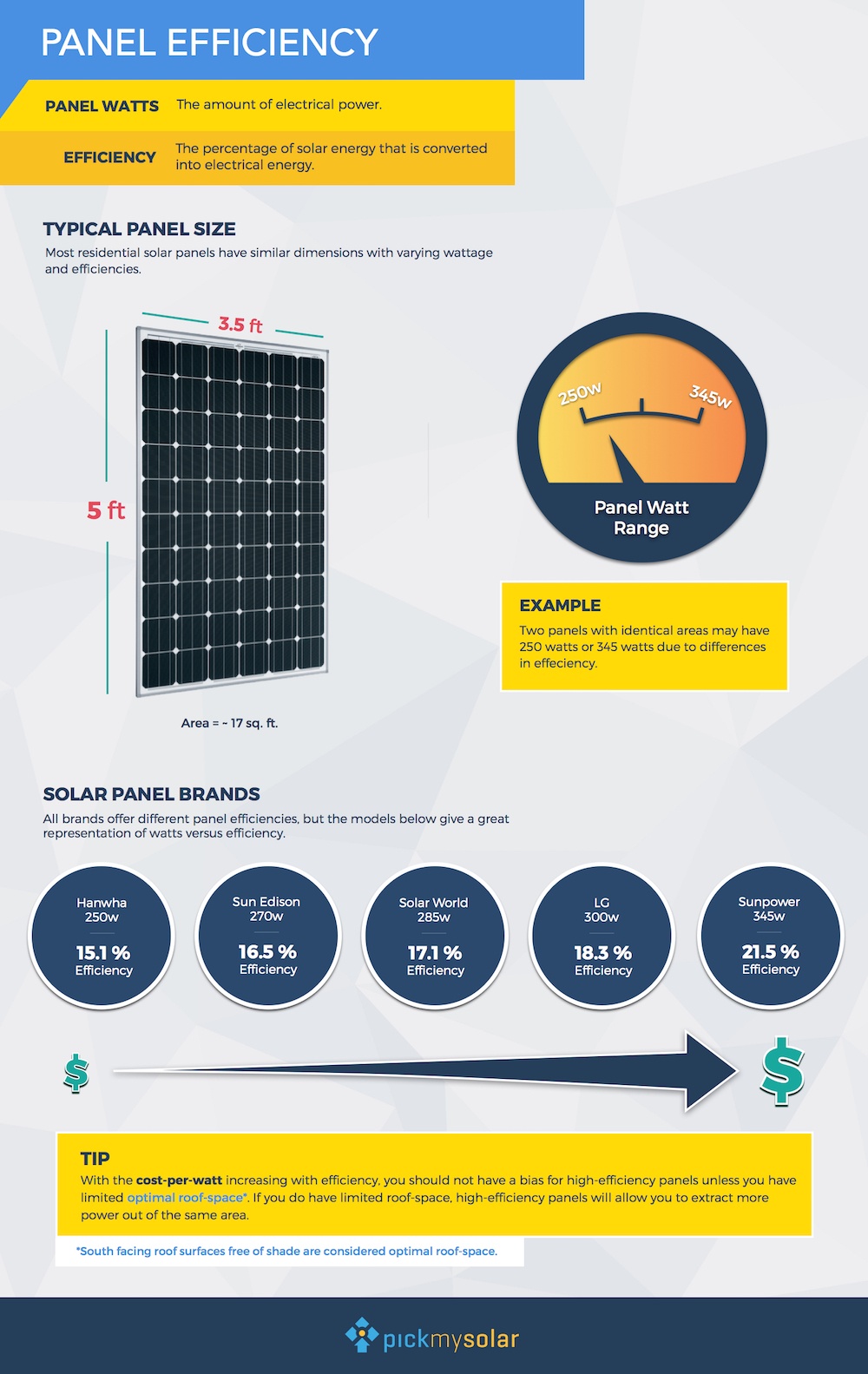
At its core, solar panel efficiency is a simple measurement: it’s the percentage of sunlight hitting a panel that gets converted into usable electricity. A panel with 20% efficiency converts 20% of the sun’s energy it receives into power for your home.
This percentage isn’t arbitrary. It’s measured under standardized conditions (known as Standard Test Conditions or STC) that simulate a specific amount of sunlight (1000 W/m²), panel temperature (25°C), and air mass. It’s a way to compare apples to apples when looking at different manufacturers.
Most commercial panels today are based on silicon technology, primarily either P-type or the newer, generally more efficient N-type cells. N-type cells typically offer better performance in low light and higher temperatures, along with lower degradation over time, contributing to overall better system output.
How Efficient Are Today’s Commercial Solar Panels?
If you’re buying solar panels today, you’ll generally find efficiency ratings ranging from 18% to 23% for most reputable brands. The very best residential panels can push into the 23-24% range. Don’t let those numbers seem small; they represent a tremendous leap from even a decade ago.
These are not just theoretical lab numbers; these are panels you can install on your roof right now. The continuous, steady improvement in silicon technology has led to a highly optimized product.
To give you a clearer picture, here’s how commercial solar panel efficiency has evolved:
| Year | Typical Commercial Efficiency Range | Top Commercial Efficiency | Key Advancements |
|---|---|---|---|
| 2010 | 13-15% | ~17% | Early monocrystalline & polycrystalline |
| 2015 | 15-18% | ~20% | PERC technology emergence |
| 2020 | 17-20% | ~22% | Half-cut cells, improved PERC |
| Today (2024) | 18-23% | ~24% | N-type, TOPCon, HJT, bifacial designs |
| Future (2025-2030 est.) | 20-25% | ~27%+ | Wider adoption of Tandem/Perovskite |
As you can see, the trajectory is upwards, but it’s a steady climb, not a sudden leap. The biggest gains have often come from manufacturing refinements and structural improvements rather than entirely new energy conversion principles for silicon itself.
Why Current Efficiency is Already a Game-Changer
It’s easy to get fixated on a few percentage points of efficiency. But here’s the real story: solar panels today are an economic powerhouse.
- Unprecedented Cost-Effectiveness: The cost of solar has plummeted by over 70% in the last decade, making it competitive with, and often cheaper than, traditional utility power.
- High ROI: For most homeowners, a solar system pays for itself in 6-10 years through electricity bill savings, then generates free power for decades.
- Reliability and Longevity: Modern panels come with 25-year performance warranties, often degrading by less than 0.5% per year. They’re built to last.
- Environmental Impact: Every kilowatt-hour you generate from the sun reduces your carbon footprint today.
In short, the technology is mature, proven, and delivers massive value. Waiting for a theoretical 2-3% more efficient panel might mean missing out on significant savings you could be enjoying right now.
The Future of Solar Efficiency: Breakthroughs and Incremental Gains
While today’s panels are fantastic, innovation never sleeps. Researchers worldwide are constantly pushing the boundaries. It’s crucial, however, to differentiate between lab breakthroughs and what you can realistically put on your roof next year.
Lab vs. Commercial: Understanding the Efficiency Gap
You might see headlines about solar cells achieving 30%, 40%, or even 47% efficiency in a lab. These are incredibly exciting, but there’s a significant chasm between a controlled lab experiment and a product that’s mass-producible, affordable, and durable enough for residential use.
Lab prototypes often use exotic materials, complex manufacturing processes, or extremely tiny cells that aren’t scalable. Bringing these technologies to market takes years, sometimes decades, of engineering, testing, and cost reduction. The path from “lab record” to “rooftop reality” is long and challenging.
Here’s a look at some key solar technologies and their potential, acknowledging this lab-to-market gap:
| Technology | Current Commercial Efficiency | Lab Record Efficiency | Outlook & Challenges |
|---|---|---|---|
| Monocrystalline Silicon | 18-23% | ~26.7% | Workhorse of the industry; incremental gains continue via N-type, TOPCon, HJT. |
| Perovskite Solar Cells | Limited commercial (niche) | ~26.1% (single junction) | High potential, low cost. Stability, lead content, and scalability are main hurdles for widespread use. |
| Silicon-Perovskite Tandem Cells | Emerging (Oxford PV at 25%) | ~33.9% | Combines silicon’s stability with perovskite’s efficiency. Very promising, likely next major efficiency jump for commercial. |
| Quantum Dot Solar Cells | Niche, specialized | ~18.1% | Good for flexible, transparent applications. Still far from silicon in efficiency. |
| Organic Photovoltaics (OPV) | Niche, specialized | ~19.2% | Flexible, lightweight, transparent. Lower efficiency and durability limit widespread use currently. |
| Concentrated Photovoltaics (CPV) | Utility-scale, specific climates | ~47.6% (multi-junction) | Highest efficiencies, but requires direct sunlight and tracking systems. Not for residential. |
Emerging Technologies Pushing the Boundaries
So, what exactly are these cutting-edge technologies that promise higher efficiencies?
- Perovskite Solar Cells: This is the material everyone’s buzzing about. Perovskites are a class of materials that are highly efficient at converting sunlight into electricity, often surpassing traditional silicon in lab settings. They’re cheap to produce, potentially flexible, and can be transparent. The main challenges are their stability (they degrade quickly in moisture) and the presence of lead, which poses environmental concerns.
- Tandem Solar Cells (Silicon + Perovskite): This is arguably the most exciting development for the residential market. Imagine layering a perovskite cell on top of a traditional silicon cell. Each layer captures a different part of the solar spectrum, allowing for significantly higher overall efficiency. Oxford PV, for example, has already demonstrated 25% efficiency in a commercial-sized tandem panel and is moving towards mass production. These are expected to be the “next big thing” for rooftop solar in the coming years.
- Quantum Dot Solar Cells: These tiny semiconductor nanocrystals can be tuned to absorb specific wavelengths of light, offering potential for high efficiency and flexibility. They are still in earlier stages of development for large-scale energy production.
- Organic Photovoltaics (OPV): Made from carbon-based materials, OPVs are lightweight, flexible, and can even be translucent. While their efficiency is currently lower than silicon, their unique properties could make them ideal for niche applications like building-integrated photovoltaics (BIPV) or wearable tech.
- Concentrated Photovoltaics (CPV): These systems use lenses or mirrors to focus a large amount of sunlight onto a small, highly efficient solar cell. While they boast the highest efficiencies (often multi-junction cells achieving 40%+), they require direct sunlight and mechanical tracking, making them suitable for utility-scale projects in sunny, arid regions, not typical residential roofs.
Design & Material Innovations Improving Existing Silicon Panels
It’s not just entirely new materials; silicon panels themselves are constantly evolving through clever design and manufacturing techniques:

- Half-Cut Cells: Instead of one large cell, the panel uses cells cut in half. This reduces resistive losses, increases durability (less prone to microcracks), and improves performance in shaded conditions, leading to slightly higher overall panel output. Most premium panels today use half-cut technology.
- Bifacial Panels: These panels are designed to absorb sunlight from both their front and back sides. If installed on a reflective surface (like a white roof or ground mount), they can generate significantly more electricity, sometimes 10-25% more, compared to single-sided panels.
- TOPCon (Tunnel Oxide Passivated Contact) and HJT (Heterojunction Technology): These are advanced cell structures that improve the passivation of the silicon wafer, reducing electron recombination and allowing for higher voltages and efficiencies, especially in warmer temperatures. These are the cutting-edge of silicon cell technology, driving today’s highest commercial efficiencies.
- Improved Module Packaging and Durability: Advances in encapsulants, frames, and backsheets mean panels are more resilient to harsh weather, PID (Potential Induced Degradation), and LID (Light-Induced Degradation), ensuring their high performance lasts longer.
Beyond the Panel: System-Level Efficiency Enhancements
It’s not just about the panel itself. The entire solar energy system is becoming smarter and more efficient:
- Advanced Inverter Technology: Modern inverters (which convert DC power from panels to AC power for your home) are highly efficient. Microinverters and power optimizers on individual panels maximize output even if one panel is shaded, preventing the entire string from underperforming. This can significantly boost overall system efficiency compared to older, single string inverter setups.
- Energy Storage Integration: Batteries allow you to store excess solar energy and use it when the sun isn’t shining (e.g., at night or during a power outage). This optimizes self-consumption and reduces reliance on the grid, effectively making your entire energy system more efficient.
- Smart Energy Management Systems: AI-powered home energy management systems can learn your usage patterns, predict solar generation, and automatically manage when to use solar, draw from the grid, or charge/discharge batteries for maximum savings and efficiency.
- Improved Installation Practices: Professional installers use advanced modeling software to optimize panel placement, tilt, and azimuth, ensuring your system captures the maximum amount of sunlight throughout the year.
The “Should I Wait?” Dilemma: Making the Smart Solar Decision Now
So, with all these innovations on the horizon, should you really wait?
The Cost vs. Efficiency Trade-off
Historically, solar panels got cheaper and more efficient every year. That trend for cost reduction has dramatically slowed down, meaning the price per watt is already incredibly low. The efficiency gains now are harder-won and often come with a premium price tag for the absolute bleeding edge.
A slightly more efficient panel might cost significantly more, negating the benefit of its higher output. The sweet spot for most homeowners is a balance between reputable brand, good warranty, and strong performance at a competitive price. Today’s standard panels hit that sweet spot perfectly.
Degradation Rates: Longevity and Performance Over Time
Modern solar panels are built to last. Most come with a 25-year performance warranty, guaranteeing a certain percentage of their original power output (usually 80-85%) after two and a half decades. Typical annual degradation rates are around 0.5% to 0.8%. This means after 25 years, a 20% efficient panel might be operating at around 17-18% efficiency. That’s still a significant amount of power production.
The improvements in durability mean that while efficiency gains might be slower, the panels are maintaining their initial efficiency for longer, providing a consistent, reliable energy source for a quarter-century or more.
The Power of Acting Today: Why Waiting Might Cost You More
Here’s the undeniable truth: every day you wait to go solar, you’re still paying your utility company. These are dollars you could be saving, or better yet, using to pay off your own solar investment.
- Immediate Savings: Start saving on your electricity bill from day one. These savings compound over time, giving you a faster return on investment.
- Federal Tax Credits (ITC): The Investment Tax Credit currently offers a 30% federal tax credit for solar systems installed through 2032. This is a massive incentive that significantly reduces the net cost of your system. While it’s currently stable, future political climates could see changes.
- Local Incentives & Rebates: Many states and municipalities offer additional incentives, rebates, or SRECs (Solar Renewable Energy Credits) that further reduce the cost or increase the value of your solar system. These programs can change or expire.
- Increased Home Value: Studies consistently show that homes with solar panels sell for more and faster.
- Opportunity Cost: The money you don’t* save by waiting is an opportunity cost. Think of the extra disposable income, debt repayment, or investments you could be making with those savings.
- Grid Independence and Resilience: Gain more control over your energy future and protect yourself from rising utility rates and power outages sooner.
The solar industry has reached a point of maturity where the technology is highly efficient and economically compelling. The risk of waiting and missing out on current incentives and immediate savings often outweighs the potential for marginal future efficiency gains.
Future-Proofing Your Solar Investment
You’ve decided not to wait, excellent! Now, how do you make sure your solar investment is smart for the long haul?
Choose Reputable Installers and Quality Components
This is paramount. A quality installation using top-tier panels and inverters from established manufacturers will ensure your system performs optimally and lasts for decades. Look for installers with strong local reviews, certifications, and comprehensive warranties on their work.
Monitor Performance and Maintain Your System
Most modern solar systems come with monitoring apps that allow you to track your energy production in real time. Pay attention to this data. While solar panels require minimal maintenance (mostly cleaning off debris), regular checks ensure any issues are caught early. Your installer should also offer annual check-ups.
Consider Modular and Expandable Systems
If you have the roof space and budget, you can design a system that allows for future expansion. If significantly more efficient panels become available at a compelling price point years down the line, you could potentially add more panels without replacing your entire existing array.
Embrace Smart Home Integration
Pairing your solar system with smart home devices (thermostats, EV chargers, smart appliances) and robust energy storage solutions ensures you’re making the most of every electron you generate, maximizing your self-consumption and energy independence.
Ultimately, while solar panel efficiency will continue its upward trajectory, the gains for everyday homeowners are likely to be steady and incremental rather than sudden, groundbreaking leaps. The solar technology available today is powerful, reliable, and more affordable than ever. The biggest missed opportunity isn’t waiting for a slightly better panel; it’s waiting and continuing to pay high utility bills when you could be generating your own clean power right now. The future of solar is bright, and for your home, that future can start today.
Frequently Asked Questions
Will solar panel efficiency double in the next 5-10 years?
No, it’s highly unlikely. While lab records show much higher efficiencies (sometimes double commercial panels), the transition to mass-market production is slow. For residential panels, expect incremental gains of a few percentage points over 5-10 years, not a doubling of current efficiency.
What is the most efficient solar panel technology available commercially today?
Today’s most efficient commercial solar panels typically use advanced silicon technologies like N-type, TOPCon, or HJT cells, often combined with half-cut or bifacial designs. These panels can achieve efficiencies in the 22-24% range from top manufacturers.
Is it worth waiting for new, more efficient solar panels?
For most homeowners, no. The cost of solar is already very low, and current panels offer excellent ROI. Waiting means missing out on immediate electricity bill savings, federal tax credits (like the 30% ITC), and potential local incentives that could expire or change. The financial benefits of installing now typically outweigh the marginal gains of future panel efficiencies.
What are perovskite solar cells, and how efficient are they?
Perovskite solar cells use a unique class of materials that are highly efficient at converting sunlight. In lab settings, they can achieve efficiencies comparable to, or even exceeding, silicon. However, they face challenges with long-term stability and scalability for widespread commercial use, though tandem cells (silicon + perovskite) are very promising and already hitting commercial markets at 25%+.
How long do solar panels last, and how much do they degrade?
Modern solar panels are incredibly durable, typically coming with 25-year performance warranties. They are designed to degrade very slowly, usually at a rate of 0.5% to 0.8% per year. This means after 25 years, a panel will still be producing 80-85% of its original power output.
Besides panel efficiency, what else contributes to overall solar system performance?
Beyond the panel itself, system performance is significantly boosted by efficient inverters (like microinverters or power optimizers), proper system design and installation, energy storage (batteries), and smart home energy management systems that optimize energy usage and self-consumption.


Post Comment