Solar Power Generator Price In Philippines
Understanding Solar Power Generator Prices in the Philippines: A Comprehensive Guide for US Buyers & Enthusiasts
So, you’re searching for ‘Solar Power Generator Price In Philippines.’ Maybe you’re planning a trip, considering a move, supporting family back home, or perhaps you’re just curious about global renewable energy markets. Whatever your reason, you’ve landed in the right place. While the pricing information will be specific to the Philippine market, I’ll frame it so you, a US-based reader, can grasp the context, compare costs, and understand the value proposition.
Table of Contents
- Understanding Solar Power Generator Prices in the Philippines: A Comprehensive Guide for US Buyers & Enthusiasts
- Why Solar Power Generators Are a Game-Changer in the Philippines (And Why You’re Looking)
- Bridging the Power Gap: Grid Reliability and Renewable Solutions
- Common Use Cases: From Emergency Backup to Off-Grid Living
- What a “Solar Power Generator” Really Means
- Decoding the Cost: What Influences Solar Generator Prices in the Philippines?
- Capacity (Wh) and Output (W): The Core Drivers
- Battery Technology: LiFePO4 vs. Lithium-ion
- Brand and Features: Premium vs. Budget Options
- Solar Panel Inclusion and Type
- Warranty, Local Support, and After-Sales Service
- The Hidden Costs: Shipping, Import Duties (for US buyers/gifts)
- Solar Power Generator Price Comparison in the Philippines: Top Brands & Models (PHP & USD)
- EcoFlow Prices and Offerings
- BLUETTI Prices and Offerings
- Jackery Prices and Offerings
- Other Local & International Brands (e.g., Solaric, generic Lazada offerings)
- Choosing the Right Solar Generator: A Practical Buying Guide
- Assess Your Power Needs: How Many Watts Do You Really Need?
- Consider Portability vs. Stationary Use
- Battery Life and Longevity: Understanding Cycles
- Input Options: Solar, AC, Car Charging
- Expandability and Future-Proofing
- Where to Buy: Official Stores vs. Online Marketplaces
- Is Investing in a Solar Generator in the Philippines Worth It?
- Long-Term Savings on Electricity Bills
- Peace of Mind During Power Outages
- Environmental Benefits
- Challenges and Considerations
- Installation and Maintenance: What You Need to Know
- Simple Setup for Portable Units
- Panel Placement and Optimization
- Battery Care and Longevity Tips
In a country like the Philippines, where grid stability can be unpredictable and electricity costs are a significant burden, a reliable backup power solution isn’t a luxury; it’s often a necessity. Solar power generators offer a fantastic blend of independence, cost savings, and environmental responsibility. Let’s dive into what you need to know.
Why Solar Power Generators Are a Game-Changer in the Philippines (And Why You’re Looking)
For many in the Philippines, consistent access to electricity is a daily concern. Typhoons, infrastructure issues, and an often-overloaded grid lead to frequent power outages. This is where solar power generators step in, offering a robust, eco-friendly alternative.
Bridging the Power Gap: Grid Reliability and Renewable Solutions
Imagine living somewhere where the power could cut out at any moment, sometimes for hours, sometimes for days. This isn’t an uncommon scenario in many parts of the Philippines. Businesses lose productivity, food spoils, and daily life grinds to a halt. Traditional gas generators are noisy, require fuel, and contribute to pollution. Solar power generators, on the other hand, silently harness the abundant tropical sun, providing clean, reliable energy.
Common Use Cases: From Emergency Backup to Off-Grid Living
The applications are vast:
- Emergency Home Backup: Keeping essential appliances (lights, fans, charging phones) running during blackouts.
- Remote Work/Study: Ensuring continuous power for laptops, Wi-Fi routers, and other devices critical for work or online schooling.
- Outdoor Adventures: Powering camping trips, beach outings, or mountain excursions where grid power is non-existent.
- Small Business Operations: Maintaining critical services for sari-sari stores, kiosks, or home-based businesses.
- Off-Grid Homes: Providing complete energy independence for properties not connected to the main grid.
What a “Solar Power Generator” Really Means
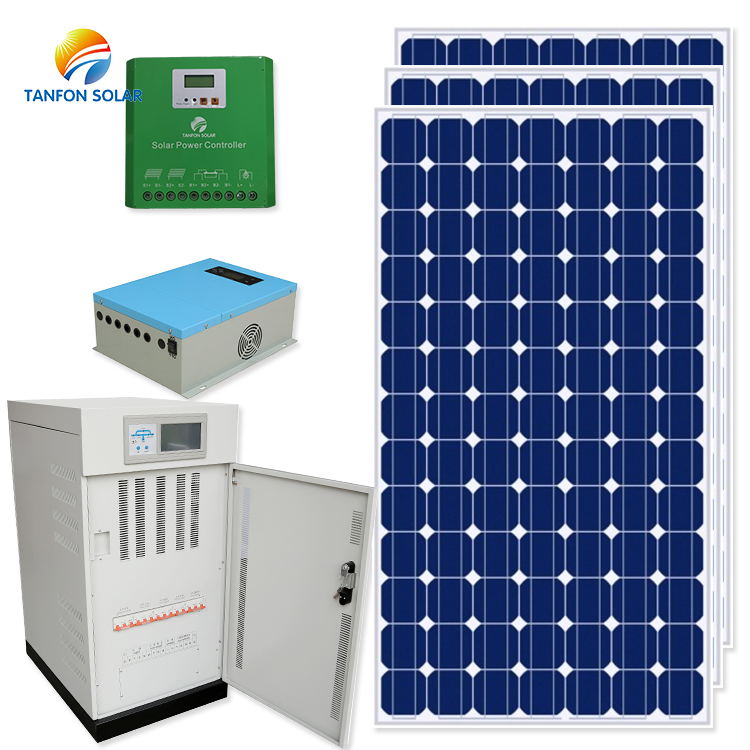
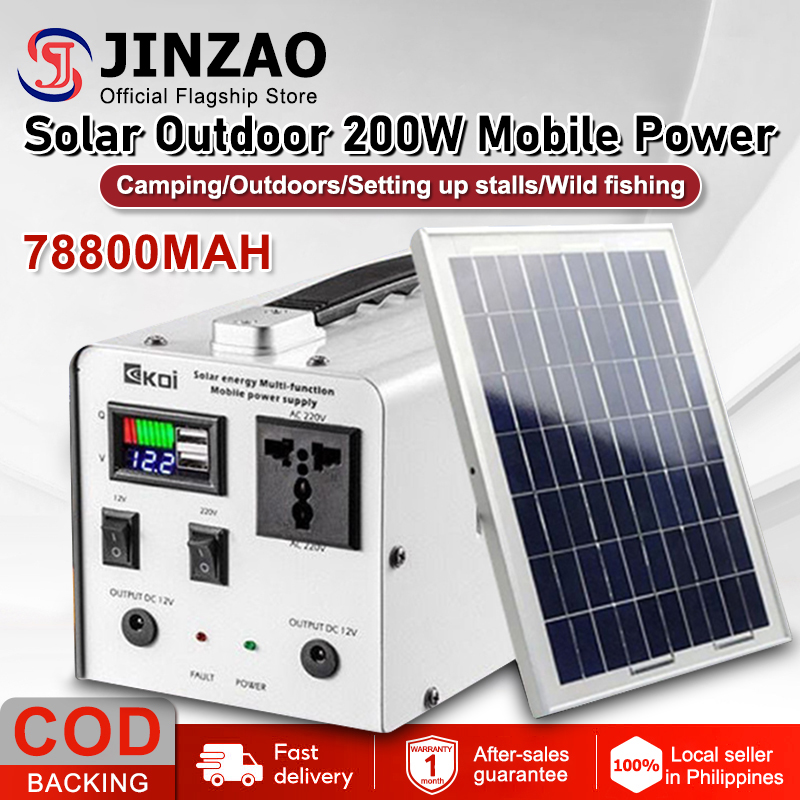
When we talk about a “solar power generator” in this context, we’re typically referring to a portable power station paired with solar panels. The power station contains a battery, an inverter to convert DC to AC power, and various output ports (AC outlets, USB-A, USB-C, 12V DC). The solar panels charge this battery during the day, making it a self-sufficient energy system.
Decoding the Cost: What Influences Solar Generator Prices in the Philippines?
Just like anywhere else, prices in the Philippines vary significantly based on a few core factors. Understanding these will help you make sense of the market.
Capacity (Wh) and Output (W): The Core Drivers
This is the most crucial factor. Capacity, measured in Watt-hours (Wh), tells you how much energy the battery can store. Output, measured in Watts (W), indicates how much power it can deliver at any given moment. A higher Wh capacity means longer run times for your devices, while a higher W output means it can power more demanding appliances. Naturally, more capacity and higher output equate to higher prices.
Battery Technology: LiFePO4 vs. Lithium-ion
Most modern portable power stations use either Lithium-ion (NMC) or Lithium Iron Phosphate (LiFePO4) batteries.

- Lithium-ion (NMC): Generally lighter and often found in older or budget models. They typically offer 500-800 charge cycles before significant degradation.
- LiFePO4: The industry standard for durability. These batteries are heavier but offer significantly longer lifespans, often 2,500-3,500+ charge cycles, making them a better long-term investment. They are also safer and more stable. This superior longevity usually comes with a higher upfront cost.
Brand and Features: Premium vs. Budget Options
Established international brands like EcoFlow, BLUETTI, and Jackery dominate the premium segment. They offer advanced features like fast charging, app control, expandable capacity, and robust build quality. Local brands or generic options found on marketplaces like Lazada might offer lower prices but could compromise on features, warranty, or battery quality.
Solar Panel Inclusion and Type
Many ‘solar generator’ packages include foldable solar panels. The size and efficiency of these panels directly impact the total price. Larger, more efficient panels (e.g., 200W, 400W) will charge your power station faster but add to the cost. Sometimes, you’ll buy the power station and panels separately, giving you more flexibility but requiring careful compatibility checks.
Warranty, Local Support, and After-Sales Service
This is critical, especially in a developing market. Reputable brands offer local warranties (typically 1-5 years) and have service centers or distributors in the Philippines. Opting for a cheaper, no-name brand might save money initially, but a lack of support can be a nightmare if something goes wrong.
The Hidden Costs: Shipping, Import Duties (for US buyers/gifts)
If you, as a US buyer, are considering purchasing one from the Philippines or sending one as a gift, be mindful of potential international shipping costs and import duties. These can significantly inflate the final price. It’s often more practical to purchase from authorized local distributors within the Philippines to leverage local warranties and avoid these cross-border complexities.
Solar Power Generator Price Comparison in the Philippines: Top Brands & Models (PHP & USD)
Let’s get to the numbers. Here’s a breakdown of what you can expect from the major players, with prices converted to USD for your convenience (using an approximate exchange rate of 1 USD = 58 PHP for illustrative purposes, as rates fluctuate).
| Brand/Model | Capacity (Wh) | AC Output (W) | Battery Type | Typical Price Range (PHP) | Approx. Price Range (USD) |
|---|---|---|---|---|---|
| EcoFlow RIVER 2 Max | 512 Wh | 500 W (X-Boost 1000W) | LiFePO4 | ₱29,000 – ₱35,000 | $500 – $600 |
| EcoFlow DELTA 2 | 1024 Wh (Expandable) | 1800 W (X-Boost 2400W) | LiFePO4 | ₱60,000 – ₱75,000 | $1030 – $1290 |
| BLUETTI EB3A | 268 Wh | 600 W (Peak 1200W) | LiFePO4 | ₱16,000 – ₱20,000 | $275 – $345 |
| BLUETTI AC180P | 1440 Wh | 1800 W (Peak 2700W) | LiFePO4 | ₱60,000 – ₱70,000 | $1030 – $1200 |
| Jackery Explorer 500 | 518 Wh | 500 W (Peak 1000W) | Lithium-ion | ₱30,000 – ₱38,000 | $515 – $655 |
| Jackery Explorer 1000 | 1002 Wh | 1000 W (Peak 2000W) | Lithium-ion | ₱50,000 – ₱65,000 | $860 – $1120 |
| Solaric PowerBox (Small) | ~300 Wh | ~300 W | (Varies) | ₱15,000 – ₱25,000 | $260 – $430 |
| Lazada Generic/Others | ~200-500 Wh | ~200-500 W | (Varies) | ₱8,000 – ₱25,000 | $140 – $430 |
EcoFlow Prices and Offerings
EcoFlow is a premium brand known for its X-Stream fast charging technology and modular designs. Their River series caters to smaller, more portable needs, while the Delta series offers much larger capacities for home backup. They often have promotions and bundles with solar panels. You’ll find them on their official PH website and authorized dealers.
BLUETTI Prices and Offerings
BLUETTI is another strong contender in the high-end market, praised for its robust LiFePO4 batteries and wide range of products, from compact units like the EB3A to massive home backup systems like the AC500. They have a significant presence in the Philippines through their official online store and local partners, frequently running sales events.
Jackery Prices and Offerings
Jackery is known for its distinctive orange and black design and user-friendly products. While many of their popular models use Lithium-ion batteries, they are a reliable choice for camping and outdoor use. Their Explorer series offers various capacities, and they also bundle with their SolarSaga solar panels. Jackery has an official presence in the Philippines.
Other Local & International Brands (e.g., Solaric, generic Lazada offerings)
Beyond the big three, you’ll find local brands like Solaric offering their “PowerBox” series, which are custom-built or rebranded solutions. Online marketplaces like Lazada and Shopee are rife with generic or lesser-known international brands. These can sometimes offer competitive prices for lower-capacity units, but always exercise caution regarding warranty, quality, and after-sales support when purchasing from these channels.
Choosing the Right Solar Generator: A Practical Buying Guide
Don’t just chase the lowest price. Consider these factors to ensure you get a solar generator that truly meets your needs.
Assess Your Power Needs: How Many Watts Do You Really Need?
This is your starting point. Make a list of the devices you want to power and their wattage (usually found on a label or in the manual). Then, estimate how long you’ll need to run them. This will give you a rough idea of the required capacity (Wh) and continuous output (W).
- Small needs (phones, fans, lights, router): 200-500 Wh capacity, 300-500W output.
- Medium needs (laptop, small fridge, TV): 500-1500 Wh capacity, 500-1500W output.
- Large needs (multiple appliances, extended backup): 1500 Wh+ capacity, 1800W+ output.
Consider Portability vs. Stationary Use
Are you moving it around frequently (camping, trips) or does it stay in one place (home backup)? Smaller units are lighter and easier to transport. Larger units, especially those with expandable batteries, can be quite heavy and are more suited for fixed installations or less frequent movement.
Battery Life and Longevity: Understanding Cycles
As discussed, LiFePO4 batteries offer significantly more charge cycles (2,500-3,500+) compared to Lithium-ion (500-800). If you plan to use the generator frequently, especially for daily charging and discharging, investing in a LiFePO4 unit will save you money in the long run by not needing a replacement battery as soon.
Input Options: Solar, AC, Car Charging
Ensure the unit can be charged in multiple ways. All will charge via an AC wall outlet. Most can charge via solar panels. Car charging (12V/24V) is also a valuable feature for portability. Look for fast-charging capabilities, which can significantly reduce downtime.
Expandability and Future-Proofing
Some models (like EcoFlow Delta series or BLUETTI AC series) allow you to add extra battery packs to increase capacity. This is an excellent feature if your needs might grow in the future, as it avoids having to buy a whole new system.
Where to Buy: Official Stores vs. Online Marketplaces
For peace of mind, always prioritize authorized dealers or official brand websites in the Philippines. While Lazada and Shopee can offer deals, verify the seller’s legitimacy, check reviews, and understand their warranty and return policies. Counterfeit or substandard products are a risk on unregulated marketplaces.
Is Investing in a Solar Generator in the Philippines Worth It?
For most Philippine households and small businesses, the answer is a resounding yes. Here’s why:
Long-Term Savings on Electricity Bills
While portable solar generators are primarily for backup, they can also supplement your grid power, especially during peak hours. Charging them with free solar energy during the day can offset some of your grid consumption, leading to tangible savings over time.
Peace of Mind During Power Outages
This is arguably the biggest benefit. Knowing you have reliable power during an outage is invaluable. No more scrambling for candles or losing perishable food. It allows life and work to continue with minimal disruption.
Environmental Benefits
By using solar energy, you’re reducing your reliance on fossil fuels and lowering your carbon footprint. It’s a small but significant step towards a more sustainable future for the Philippines.
Challenges and Considerations
It’s not entirely without its challenges. The initial investment can be substantial for larger units. You also need adequate sunlight for effective charging, and solar panels require space. However, for most, the benefits far outweigh these considerations.
Installation and Maintenance: What You Need to Know
One of the beauties of a portable solar generator is its ease of use.
Simple Setup for Portable Units
Most portable solar generators are plug-and-play. You simply connect the solar panels to the power station (often with standard MC4 connectors) and position the panels in direct sunlight. No complex wiring or permits are usually required for these smaller, portable systems.
Panel Placement and Optimization
To maximize charging, place your solar panels where they receive unobstructed sunlight for the longest duration. Angle them towards the sun for optimal efficiency. In the Philippines, this often means facing them towards the south. Keep them clean from dust and debris.
Battery Care and Longevity Tips
To extend the life of your generator’s battery:
- Avoid fully draining the battery whenever possible.
- Store it in a cool, dry place, ideally at a charge level between 50-80% if storing for extended periods.
- Follow the manufacturer’s charging guidelines.
- Keep the unit and its vents clear of obstructions to prevent overheating.
Understanding the solar power generator market in the Philippines offers fascinating insights into how renewable energy is solving real-world problems. Whether you’re planning a purchase for yourself, for family, or just educating yourself, the market provides diverse, increasingly affordable, and highly effective solutions for power independence.
Frequently Asked Questions
What is the typical price range for a solar power generator in the Philippines?
Prices for solar power generators in the Philippines vary widely based on capacity and features. Small, entry-level units (200-500Wh) can range from ₱8,000 to ₱25,000 (approx. $140-$430 USD). Mid-range units (500-1500Wh) typically cost ₱29,000 to ₱75,000 (approx. $500-$1290 USD), while larger, high-capacity models can exceed ₱75,000 ($1290 USD).
Which brands of solar power generators are popular in the Philippines?
The Philippine market is dominated by well-known international brands such as EcoFlow, BLUETTI, and Jackery, which offer a range of portable power stations and solar panels. Local brands like Solaric also provide solutions, and various generic options are available on online marketplaces like Lazada and Shopee.
Why would a US buyer be interested in solar power generator prices in the Philippines?
US buyers might be interested for several reasons: supporting family or friends in the Philippines, planning travel to the region, international business considerations, or simply researching global renewable energy markets. Understanding local pricing helps in making informed decisions about remittances, gifts, or comparative market analysis.
Are solar power generators a good investment in the Philippines?
Yes, they are generally considered a very good investment in the Philippines. Given the frequent power outages and relatively high electricity costs, solar generators provide essential backup power, enhance grid independence, offer long-term savings on electricity bills, and contribute to environmental sustainability.
What key factors should I consider when buying a solar generator in the Philippines?
When purchasing, consider the battery’s capacity (Wh) and AC output (W) to match your power needs, the battery technology (LiFePO4 for longevity), the brand’s reputation and local warranty support, included solar panels, and the overall portability vs. stationary use requirements. Always prioritize authorized dealers for authenticity and after-sales service.
Can I use a solar power generator to power a refrigerator in the Philippines?
Yes, many mid to large-capacity solar power generators (typically 1000Wh+ capacity with 1000W+ AC output) are capable of powering a standard refrigerator for several hours or even overnight, depending on the fridge’s wattage and the generator’s battery size. Always check the appliance’s power requirements against the generator’s output and capacity.


Post Comment