Solar Panel Rate Per Watt In India
Understanding Solar Panel Rates Per Watt in India: A Global Perspective for US Homeowners & Investors
Ever wondered why the price of solar panels seems to vary so much, not just locally but across the globe? If you’re a homeowner in the US contemplating a solar investment, or an investor tracking renewable energy trends, understanding the global market is crucial. India, a rapidly emerging solar powerhouse, offers fascinating insights into the economics of photovoltaic (PV) technology. While you might not be buying panels directly from India, their market dynamics, manufacturing capabilities, and cost structures significantly influence the global solar supply chain and, ultimately, what you pay.
Table of Contents
- Understanding Solar Panel Rates Per Watt in India: A Global Perspective for US Homeowners & Investors
- The Core Numbers: What Solar Panels Cost Per Watt in India
- The Snapshot: Average Panel-Only Costs
- Breaking Down Costs by Panel Technology
- The Full Picture: Residential System Costs Per Watt
- Decoding the Price Tag: Factors Influencing Indian Solar Costs
- Technology Advancements and Efficiency
- Brand Reputation and Warranty
- Scale and Scope of Installation
- Government Subsidies and Incentives
- Supply Chain and Raw Material Volatility
- India’s Global Significance: Why US Buyers & Investors Should Pay Attention
- A Manufacturing Powerhouse in the Making
- Comparative Analysis: Solar Panel Costs in India vs. the USA
- Lessons from India’s Rapid Solar Adoption
- The Road Ahead: Future Trends and Outlook
- Technological Innovations Driving Down Costs
- Policy Landscape and Domestic Manufacturing Goals
- Global Market Forces
- Beyond the Price Per Watt: What Truly Matters for Solar Investment
- Quality, Durability, and Certifications
- Long-Term Performance and ROI
- Environmental Impact
- Conclusion
This isn’t just about curiosity; it’s about seeing the bigger picture. India is scaling up its solar capacity at an incredible pace, driven by ambitious government policies and a massive domestic demand. This expansion impacts manufacturing volumes, technological advancements, and overall pricing trends that ripple worldwide. So, let’s dive deep into the solar panel rate per watt in India, translate those figures for a US context, and uncover what these insights mean for your solar journey.
The Core Numbers: What Solar Panels Cost Per Watt in India
When discussing solar panel costs, it’s vital to differentiate between the price of the bare panel itself and the cost of a fully installed system. In India, like anywhere else, these numbers tell different stories. The market is dynamic, influenced by myriad factors, leading to a noticeable range in prices.
The Snapshot: Average Panel-Only Costs
As of late 2024, the average cost for just the solar panel (excluding installation, inverter, batteries, etc.) in India typically ranges from INR 25 to INR 50 per watt. To put that into perspective for a US audience, using an approximate exchange rate of 83 INR to 1 USD, this translates to roughly $0.30 to $0.60 per watt. This range accounts for different technologies, brands, and purchase volumes. It’s a highly competitive market, so you’ll find promotional offers on the lower end, while premium or newer technologies will command higher prices.
Breaking Down Costs by Panel Technology
The type of solar panel technology you choose significantly impacts the per-watt cost. India’s market offers a spectrum, from older, more budget-friendly options to cutting-edge, high-efficiency panels. Here’s a general breakdown:
| Panel Type | Average Price Per Watt (INR) | Approximate Price Per Watt (USD) | Key Characteristics |
|---|---|---|---|
| Polycrystalline Solar Panels | INR 25 – 35 | $0.30 – $0.42 | Older, lower efficiency (15-17%), blue appearance, cost-effective. |
| Mono PERC Solar Panels | INR 35 – 45 | $0.42 – $0.54 | Improved efficiency (18-21%), monocrystalline base with PERC technology, sleek black look. |
| Half-Cut Cell Panels | INR 40 – 50 | $0.48 – $0.60 | Often Mono PERC, improved shading tolerance, better performance in high temps. |
| Bifacial/TOPCon Panels | INR 45 – 60+ | $0.54 – $0.72+ | Cutting-edge, higher efficiency (21-23%+), capture light from both sides (bifacial), superior temperature coefficient (TOPCon). |
It’s important to remember that while Polycrystalline panels are cheaper per watt, their lower efficiency means you might need more panels (and thus more roof space) to generate the same amount of electricity as higher-efficiency Mono PERC or TOPCon panels. The initial per-watt cost is just one piece of the puzzle.
The Full Picture: Residential System Costs Per Watt
When you look at the cost of a complete residential solar system in India, including panels, inverter, mounting structures, wiring, and installation labor, the per-watt price naturally increases. This is where many of the higher figures reported in the SERP data come from. These are the all-inclusive costs that homeowners would typically pay for a ready-to-use system.
| System Size (kW) | Estimated Total Cost (INR) | Estimated Cost Per Watt (INR) | Approximate Cost Per Watt (USD) |
|---|---|---|---|
| 1 kW | INR 60,000 – 80,000 | INR 60 – 80 | $0.72 – $0.96 |
| 3 kW | INR 1,50,000 – 2,00,000 | INR 50 – 67 | $0.60 – $0.81 |
| 5 kW | INR 2,50,000 – 3,50,000 | INR 50 – 70 | $0.60 – $0.84 |
| 10 kW | INR 4,50,000 – 6,00,000 | INR 45 – 60 | $0.54 – $0.72 |
You’ll notice an important trend here: economies of scale. Larger systems generally have a lower per-watt cost because certain fixed costs (like site assessment, permits, or inverter sizing) are spread across more watts of capacity. The prices above are indicative and can fluctuate based on specific component choices (e.g., micro-inverters versus string inverters), battery storage inclusion, and regional differences within India.

Decoding the Price Tag: Factors Influencing Indian Solar Costs
Understanding the actual rates is only half the battle. To truly grasp why solar panels cost what they do in India, and how these factors might indirectly affect global pricing, we need to peel back the layers.
Technology Advancements and Efficiency
Just like in the US, newer and more efficient solar cell technologies come at a premium. Mono PERC has largely replaced older Polycrystalline panels due to better efficiency and aesthetics. Now, advanced technologies like Half-Cut cells, TOPCon (Tunnel Oxide Passivated Contact), and Bifacial panels are gaining traction. These innovations mean more power generated from a smaller footprint, but they also involve higher manufacturing complexities and material costs, which naturally translate to a higher per-watt price. However, over time, as these technologies become mainstream, their costs tend to decrease.
Brand Reputation and Warranty
India has a vibrant mix of domestic solar manufacturers (e.g., Waaree, Loom Solar, Tata Power Solar) and international brands. Established brands with proven track records, longer warranties, and strong after-sales service often command higher prices. These companies invest heavily in R&D and quality control, which adds to their product cost but offers greater reliability and peace of mind. Newer or lesser-known local manufacturers might offer lower prices to gain market share, but consumers often weigh this against perceived risks in product longevity or support.
Scale and Scope of Installation
The total capacity of the solar system plays a significant role in the overall per-watt cost, as we saw in the table above. Beyond size, the complexity of installation matters. A simple rooftop installation on a flat surface will be cheaper per watt than a system requiring extensive structural modifications, ground mounts, or integration with complex existing electrical systems. The type of inverter (string vs. micro-inverter), cabling requirements, and even the quality of mounting hardware contribute to the final installed price.
Government Subsidies and Incentives
The Indian government has aggressively promoted solar adoption through various schemes, which directly impact the end-user cost. Key initiatives include:
- National Rooftop Solar Programme: Provides central financial assistance (CFA) or subsidies for residential rooftop solar installations, making them significantly more affordable. The subsidy amount varies by system size (e.g., 40% for up to 3 kW, 20% for 3-10 kW).
- Production Linked Incentive (PLI) Scheme: This scheme is a massive boost for domestic solar manufacturing. It offers incentives to companies that set up or expand manufacturing units for high-efficiency solar PV modules in India. While this doesn’t directly lower consumer prices *today*, it aims to reduce India’s reliance on imports, foster local innovation, and ultimately lead to more competitive domestic pricing in the long run.
These government interventions make solar a far more attractive investment for Indian consumers and create a robust domestic market.
Supply Chain and Raw Material Volatility
The global supply chain significantly influences solar panel costs everywhere, including India. Fluctuations in the price of polysilicon (the primary raw material), aluminum, copper, and even glass can push prices up or down. Geopolitical events, trade policies, and global shipping costs also contribute to this volatility. While India aims for self-reliance in solar manufacturing, it is still exposed to these global market forces for certain components and raw materials.
India’s Global Significance: Why US Buyers & Investors Should Pay Attention
For a US audience, understanding India’s solar market isn’t just an academic exercise. It offers crucial insights into global energy trends, manufacturing capabilities, and potential future cost trajectories that could affect the availability and pricing of solar components worldwide.
A Manufacturing Powerhouse in the Making
India is aggressively positioning itself as a major global solar manufacturing hub. Initiatives like the PLI scheme are designed to boost domestic production of solar cells, modules, and even wafers and ingots. This push aims to reduce reliance on imports (especially from China), create jobs, and ensure energy security. As India’s manufacturing capacity grows, it will add another significant player to the global supply chain, potentially increasing competition and driving down costs for components that might eventually find their way into US-assembled panels or systems.
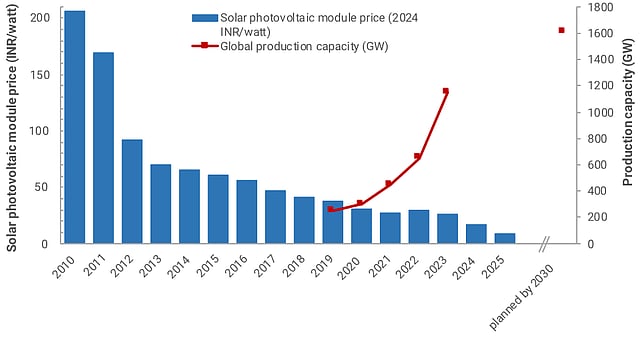
Comparative Analysis: Solar Panel Costs in India vs. the USA
Let’s put those Indian prices into direct comparison with what US consumers typically face. This side-by-side view highlights key differences and the factors behind them.
| Cost Component | Average Cost Per Watt (India – USD) | Average Cost Per Watt (USA – USD) | Key Influencing Factors |
|---|---|---|---|
| Panels Only (Retail) | $0.30 – $0.60 | $0.70 – $1.20 | Manufacturing costs, import duties, brand margins, supply chain. |
| Installation Labor | $0.15 – $0.30 | $0.50 – $1.00 | Labor wages, cost of living, installer overheads. |
| Total Installed System (Residential) | $0.60 – $0.96 | $2.50 – $3.50+ | Permitting, inspection, customer acquisition, soft costs, federal/state incentives. |
The disparities are striking, especially for the total installed system cost. Here’s why:
- Labor Costs: India’s lower cost of living and wages significantly reduce labor expenses for installation compared to the US.
- "Soft Costs": In the US, a large portion of the total system cost comes from "soft costs" – things like customer acquisition, permitting, inspections, financing, and administrative overhead. India’s regulatory environment and market structure often lead to lower soft costs.
- Market Maturity and Competition: Both markets are competitive, but the structure and scale of competition differ. India’s drive for rapid mass adoption fosters aggressive pricing.
- Government Incentives: While both countries offer incentives, their structure and impact on the initial upfront cost vary. India’s direct subsidies often make the initial purchase price lower for consumers. In the US, incentives like the Investment Tax Credit (ITC) are significant but applied after purchase, reducing the net cost rather than the sticker price.
- Component Origin: A significant portion of solar panels in India are either locally manufactured or imported from countries with competitive production costs. While the US also sources globally, trade policies and tariffs (like anti-dumping duties) can sometimes add to the cost of imported panels.
Lessons from India’s Rapid Solar Adoption
India’s solar journey offers valuable lessons. Its success in driving down costs and rapidly deploying solar capacity is a testament to strong government policy, a competitive domestic market, and a strategic focus on scale. For US policymakers and industry stakeholders, India’s model highlights the importance of:
- Streamlined Permitting: Simplifying the bureaucratic process can drastically reduce soft costs.
- Domestic Manufacturing Support: Investments in local production can create resilience and potentially lower long-term costs.
- Aggressive Deployment Targets: Setting ambitious goals can stimulate market growth and innovation.
The Road Ahead: Future Trends and Outlook
The solar market, both in India and globally, is anything but static. Continuous innovation and evolving market dynamics mean today’s prices are merely a snapshot of an ever-changing landscape.
Technological Innovations Driving Down Costs
Expect new technologies to push boundaries. Perovskite solar cells, while still largely in the research phase, hold immense promise for even higher efficiencies and lower manufacturing costs. Advancements in module design, smart inverters, and integrated storage solutions will continue to optimize performance and reduce the overall cost of ownership. As these innovations move from labs to large-scale production, they will contribute to a gradual decrease in the effective per-watt cost globally.
Policy Landscape and Domestic Manufacturing Goals
India’s government is unlikely to waver from its ambitious renewable energy targets. The ongoing commitment to the "Made in India" and "Atmanirbhar Bharat" (self-reliant India) initiatives will continue to drive investments in local manufacturing. This policy stability provides certainty for investors and manufacturers, fostering competition and economies of scale within India. For the US, this means a more diversified global supply chain for solar components, which could mitigate risks associated with over-reliance on a single region.
Global Market Forces
Despite domestic efforts, India’s solar market, like any other, remains intertwined with global economic forces. Inflationary pressures, interest rate changes, and geopolitical events that disrupt shipping or raw material supplies can impact costs. However, the increasing diversification of manufacturing across countries like India, Vietnam, and Malaysia aims to build resilience against such shocks, ultimately benefiting the global solar industry and consumers worldwide.
Beyond the Price Per Watt: What Truly Matters for Solar Investment
Whether you’re looking at solar panel rates in India, the US, or anywhere else, focusing solely on the per-watt price can be misleading. A wise investment goes deeper.
Quality, Durability, and Certifications
A cheaper panel that fails prematurely or performs poorly is no bargain. Always prioritize quality. Look for panels from reputable manufacturers with strong product and performance warranties (typically 25+ years for performance). Ensure panels are certified by international standards bodies (e.g., IEC, UL) which guarantee they’ve met rigorous safety and performance tests. This applies regardless of where the panels are manufactured.

Long-Term Performance and ROI
The real value of solar comes from the electricity it generates over its lifetime. A slightly more expensive, higher-efficiency panel might offer a better return on investment (ROI) because it produces more power for longer. Factor in potential energy savings, any local incentives or net metering programs, and the increasing cost of conventional electricity. Solar is a long-term asset, and its financial benefits accrue over decades.
Environmental Impact
Beyond economics, installing solar panels is a powerful step towards reducing your carbon footprint and contributing to a sustainable future. The environmental benefits—clean energy generation, reduced reliance on fossil fuels, and mitigation of climate change—are significant motivators for many homeowners and investors, regardless of the precise per-watt cost.
Conclusion
The solar panel rate per watt in India provides a compelling look into one of the world’s most dynamic renewable energy markets. While direct comparisons with US pricing highlight significant differences due to labor costs, soft costs, and market structures, India’s aggressive push into solar manufacturing and deployment holds global implications. As India strengthens its position as a major solar player, it will contribute to a more diversified and competitive global supply chain, potentially influencing technology development and cost efficiencies that can ultimately benefit US consumers and the worldwide transition to clean energy. For US homeowners and investors, understanding these global trends means being better informed, anticipating future changes, and appreciating the broader ecosystem that drives the solar revolution.
Frequently Asked Questions
How much does a solar panel cost per watt in India?
The average cost for just the solar panel (excluding installation) in India typically ranges from INR 25 to INR 50 per watt, which translates to approximately $0.30 to $0.60 per watt for a US audience, depending on technology and brand.
What factors cause solar panel prices to vary in India?
Key factors include the type of panel technology (e.g., Polycrystalline vs. Mono PERC vs. TOPCon), brand reputation, system size (economies of scale), installation complexity, government subsidies (like the National Rooftop Solar Programme), and global supply chain fluctuations in raw material costs.
How do solar panel prices in India compare to the USA?
Solar panel costs, particularly for fully installed residential systems, are significantly lower in India. Panels alone might be $0.30-$0.60/watt in India vs. $0.70-$1.20/watt in the USA. A total installed system in India averages $0.60-$0.96/watt, compared to $2.50-$3.50+/watt in the USA, primarily due to lower labor, soft costs, and different market dynamics.
Is India a major solar panel manufacturer?
India is rapidly emerging as a significant global solar manufacturing hub. Through initiatives like the Production Linked Incentive (PLI) scheme, the government is strongly encouraging domestic production of solar cells and modules to reduce import reliance and foster local industry.
What are the cheapest solar panel types in India?
Generally, Polycrystalline solar panels are the most cost-effective option in India, often ranging from INR 25-35 per watt. However, they are also less efficient than newer technologies like Mono PERC or TOPCon panels.
Do government subsidies affect solar panel prices in India?
Yes, government subsidies, such as those provided under the National Rooftop Solar Programme, significantly reduce the upfront cost for residential solar installations in India, making solar energy more accessible and affordable for consumers.
What is the future outlook for solar panel prices in India?
Prices are expected to remain competitive, potentially decreasing further over time due to continued technological advancements (e.g., Perovskite cells), India’s expanding domestic manufacturing capacity, and ongoing government support. Global supply chain stability will also play a role.


Post Comment