Return On Investment In Solar Panels
Your Ultimate Guide to Solar Panel ROI: Unlocking the True Value of Home Solar in the USA
Thinking about solar but feeling stuck on the numbers? You’re not alone. “Will solar panels actually pay off for *my home?” is the million-dollar question for most homeowners considering the switch. It’s easy to get lost in the marketing hype or overwhelmed by complex calculations.
Table of Contents
- Your Ultimate Guide to Solar Panel ROI: Unlocking the True Value of Home Solar in the USA
- What Exactly Is “Return On Investment” for Solar Panels?
- ROI vs. Payback Period: The Crucial Difference
- The Core Numbers: What’s the Average Solar ROI in the USA?
- Deconstructing Your Solar Investment: All the Costs Involved
- Upfront System Costs: Panels, Inverters, Installation
- Soft Costs: Permits, Inspections, Interconnection Fees
- Ongoing Costs: Maintenance and Insurance
- The Power of Savings: How Solar Panels Generate Your Returns
- Eliminating or Drastically Reducing Electricity Bills
- Boosting Your Home’s Property Value
- Federal, State, and Local Incentives: Your ROI Superchargers
- Your ROI Calculation Blueprint: Step-by-Step
- Step 1: Calculate Your Total Net Cost (After Incentives)
- Step 2: Estimate Your Annual Energy Savings
- Step 3: Determine Your Payback Period
- Step 4: Calculate Your Lifetime ROI
- Key Factors Dramatically Influencing Your Solar ROI
- Location, Location, Location: Sun Exposure & Electricity Rates
- System Size and Efficiency: Matching Consumption
- Electricity Rate Trends: Volatility and Future Savings
- Installation Quality & Warranties: Longevity and Performance
- Financing Method: Cash vs. Loan vs. Lease
- Maximizing Your Solar ROI: Expert Strategies
- Right-Sizing Your System: Don’t Oversize, Optimize for Usage
- Shop Around for Installers: Get Multiple Quotes, Vet Reputation
- Understand All Available Incentives: Don’t Leave Money on the Table
- Monitor & Maintain: Keep Panels Efficient
- Consider Battery Storage (Strategic Use): When it Makes Financial Sense
- Solar ROI vs. Other Investments: A Comparison
- The Bottom Line: Is Solar ROI Worth It For You?
Here’s the deal: investing in solar energy for your home in the USA can be an incredibly smart financial decision, often yielding returns that outpace traditional investments. But the key word there is “can.” Your exact financial return, or Return On Investment (ROI), depends on a mix of factors unique to your situation. Forget the generic claims; let’s cut through the noise and equip you with the knowledge to truly understand if solar panels are a smart move for your wallet.
What Exactly Is “Return On Investment” for Solar Panels?
At its heart, ROI is a performance measure. It helps you understand the efficiency of an investment by comparing the gain from the investment relative to its cost. For solar panels, it’s about weighing your initial outlay against the money you save and earn over the system’s lifetime.
When we talk about solar ROI, we’re looking at the total financial picture: the reduction in your electricity bills, any income from selling excess energy back to the grid, the increase in your property value, and the benefits from government incentives, all stacked against the total cost of purchasing and installing your system.
ROI vs. Payback Period: The Crucial Difference
These two terms are often used interchangeably, but they tell you different stories about your investment.
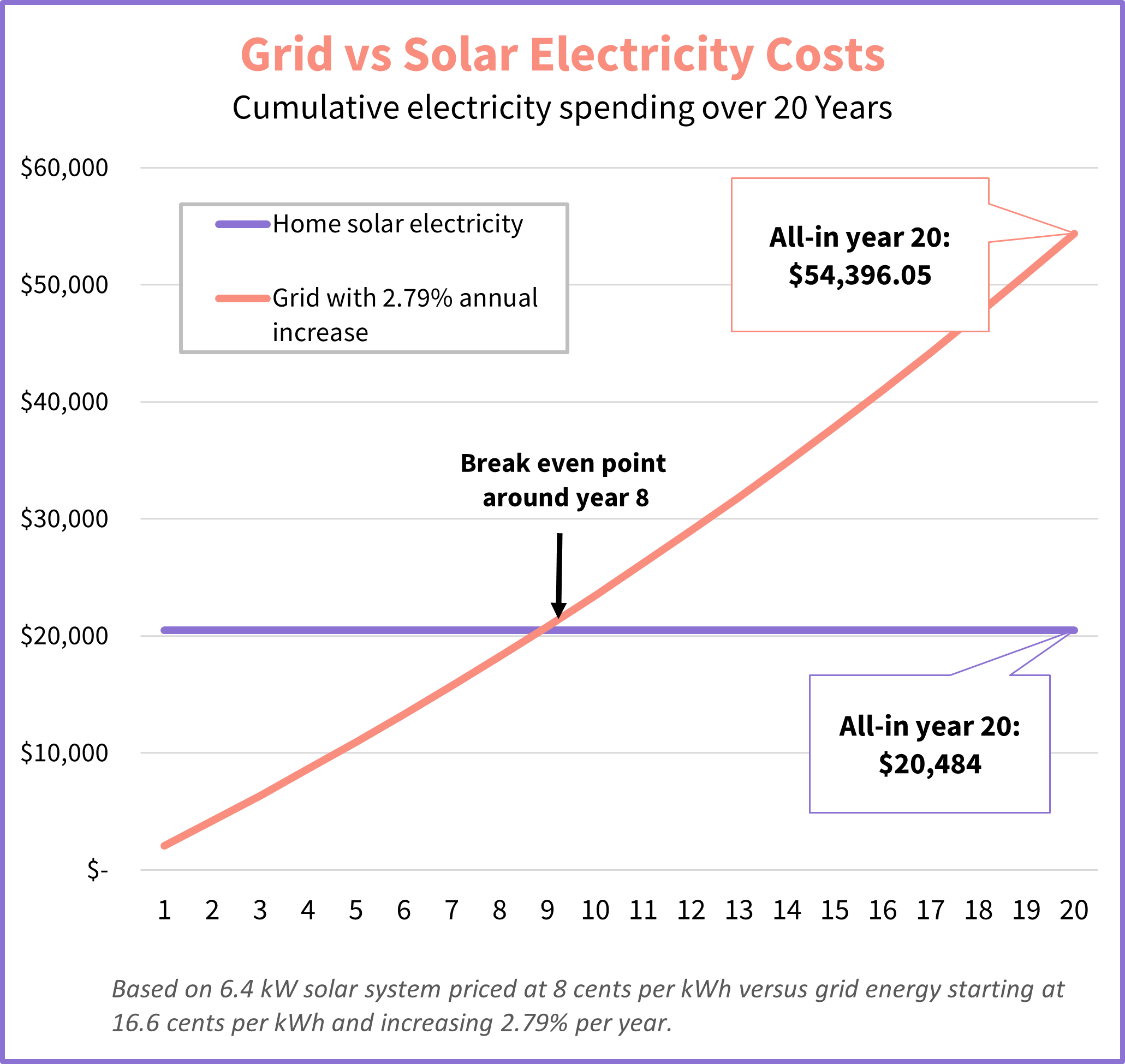
- Payback Period: This is how long it takes for your cumulative savings and incentives to equal your initial investment. Think of it as your “break-even” point. If a system costs $20,000 after incentives and saves you $2,000 per year, your payback period is 10 years. It’s a quick, easy metric to grasp.
- Return on Investment (ROI): This is a broader, percentage-based measure of your total profit* over the entire lifespan of your solar system (typically 25+ years), relative to your initial cost. It considers all the benefits long after you’ve broken even. An ROI of 10% means for every dollar you put in, you get $1.10 back. An ROI of 150% means you get $2.50 back for every dollar you invested.
Both metrics are valuable. The payback period gives you a timeline for recouping your costs, while ROI gives you the full financial punch, showing you the long-term wealth creation.
The Core Numbers: What’s the Average Solar ROI in the USA?
While averages can be misleading without context, they offer a starting point. In the USA, the average payback period for residential solar panels typically falls between 9 to 14 years. As for the average ROI over a 25-year system lifespan? It often ranges from 10% to over 20%, with some regions seeing even higher figures. This means for every dollar you invest, you could see $1.10 to $1.20 or more returned to you over the system’s life.
Here’s a general snapshot of what homeowners in the US might expect:
| Metric | Average Range (USA Residential) | What it Means for You |
|---|---|---|
| Total System Cost (before incentives) | $18,000 – $30,000 (for 6kW – 10kW systems) | The initial price tag before factoring in federal or local help. |
| Payback Period | 9 – 14 Years | The time it takes to recoup your net investment through savings. |
| Average ROI (over 25 years) | 10% – 20%+ | The total percentage gain on your investment over its lifetime. |
| Estimated Lifetime Savings | $25,000 – $80,000+ | The total amount you save on electricity bills over 25+ years. |
| Property Value Increase | ~4% – 6% of home value (or more) | How much your home’s market value could increase. |
Important Caveat: These are national averages. Your actual ROI can swing significantly based on where you live, your energy consumption, and the specific incentives available to you. That’s why a personalized analysis is so crucial.
Deconstructing Your Solar Investment: All the Costs Involved
Before you can calculate any returns, you need a clear picture of what you’re actually paying for. Solar isn’t just the panels; it’s an entire system and service package.
Upfront System Costs: Panels, Inverters, Installation
This is the big one, representing the bulk of your investment. It includes:
- Solar Panels: The actual photovoltaic modules. Costs vary by brand, efficiency, and warranty.
- Inverter(s): Converts the DC electricity from your panels into usable AC electricity for your home.
- Mounting Hardware: The racking system that secures your panels to your roof or ground.
- Wiring and Electrical Components: All the necessary conduits, breakers, and connections.
- Labor: The cost of the professionals designing, installing, and connecting your system. This can vary widely by region.
You’ll often hear costs quoted “per watt” (e.g., $2.50-$3.50 per watt). So, a 7 kW (7,000-watt) system could cost roughly $17,500 to $24,500 before any incentives.
Soft Costs: Permits, Inspections, Interconnection Fees
These are the often-overlooked but necessary expenses:
- Permitting Fees: Your local municipality requires permits to ensure your system meets safety and building codes.
- Inspections: Before your system can be turned on, it needs to pass various inspections (electrical, structural, etc.).
- Interconnection Fees: Your utility company might charge a fee to connect your solar system to their grid.
- Design & Engineering: Professional fees for designing a system tailored to your home and energy needs.
While these are usually folded into your total quote from an installer, it’s good to know what they entail.
Ongoing Costs: Maintenance and Insurance
The good news? Solar panel systems are remarkably low-maintenance. Most installers offer warranties (often 20-25 years for performance, 10-12 years for equipment). Still, factor in:
- Cleaning: While rain often does the job, occasional cleaning (especially in dusty areas) can maintain peak efficiency.
- Minor Repairs: Rare, but possible. Your homeowner’s insurance should cover major damage.
- Insurance Premiums: Your homeowner’s insurance policy will likely cover your solar panels, but it’s worth checking if your premium will see a minor increase.
Compared to other home systems, these ongoing costs are typically minimal.
The Power of Savings: How Solar Panels Generate Your Returns
This is where your ROI starts to shine. Solar panels don’t just sit there; they actively generate financial benefits in several ways.
Eliminating or Drastically Reducing Electricity Bills
This is the most obvious and immediate saving. By generating your own power, you drastically reduce or even eliminate your reliance on your utility company. Imagine opening an electricity bill and seeing a balance of $0, or even a credit! This saving is amplified by:
- Net Metering: In most solar-friendly states, net metering policies allow you to send any excess electricity your panels produce back to the grid. Your utility then credits your account for that energy, effectively making the grid your battery. This means you get full value for every kilowatt-hour your system generates.
- Rising Electricity Rates: Historically, electricity rates have only gone up. By locking in your energy costs with solar, you become insulated from these future price hikes, turning what would have been an increasing expense into a fixed, predictable (or eliminated) cost. This escalating saving dramatically boosts your long-term ROI.
Boosting Your Home’s Property Value
Studies consistently show that homes with owned solar panel systems sell for more and faster than comparable homes without solar. Real estate experts estimate that solar panels can increase a home’s value by approximately 4% to 6% on average, or about $4 to $5 for every watt of solar installed. For a 7 kW system, that’s an extra $28,000 to $35,000 in home value! This isn’t just a “green” perk; it’s a tangible asset that appraisers increasingly recognize.
Federal, State, and Local Incentives: Your ROI Superchargers
These are perhaps the most powerful drivers of your solar ROI, significantly reducing your upfront costs.
- Federal Solar Tax Credit (ITC): Currently, the Investment Tax Credit allows homeowners to claim 30% of the cost of their solar system as a tax credit. This isn’t just a deduction; it’s a dollar-for-dollar reduction in what you owe the IRS. It’s a massive incentive that makes solar significantly more affordable.
- State-Specific Incentives: Many states offer their own programs, which can include:
- Rebates: Direct payments or discounts from state or local governments, or even utility companies.
- Performance-Based Incentives (PBIs) / Solar Renewable Energy Credits (SRECs): In certain states (like Massachusetts, New Jersey, Pennsylvania, Maryland, Ohio, DC), you can earn credits for the clean energy your panels produce. These SRECs can then be sold on a market, providing an additional income stream. The value of SRECs fluctuates, but they can significantly impact your ROI.
- Property Tax Exemptions: Solar adds value to your home, but many states exempt this added value from property tax assessments, so you don’t pay more in taxes for going solar.
- Sales Tax Exemptions: Some states exempt solar equipment from sales tax, saving you money on the purchase.
It’s absolutely critical to research what’s available in your specific area. A reputable solar installer should be able to provide you with a comprehensive list of applicable incentives.
Your ROI Calculation Blueprint: Step-by-Step
Ready to crunch some numbers? Here’s how to calculate your personalized solar ROI.
Step 1: Calculate Your Total Net Cost (After Incentives)
Start with the gross cost of your system and subtract all available incentives. This gives you your true out-of-pocket expense.
Example:
- Gross System Cost: $25,000
- Federal ITC (30% of $25,000): -$7,500
- State/Local Rebate (e.g., $1,000): -$1,000
- Total Net Cost: $16,500
Step 2: Estimate Your Annual Energy Savings
Look at your past electricity bills. Calculate your average monthly bill and multiply by 12. Then, project how much of that will be offset by solar. Remember to factor in a conservative estimate for annual electricity rate increases (historically 2-4% per year).
Example:
- Average Monthly Electricity Bill: $180
- Annual Savings (Year 1): $180 * 12 = $2,160
- (Optional: Factor in additional income from SREC sales if applicable)
Step 3: Determine Your Payback Period
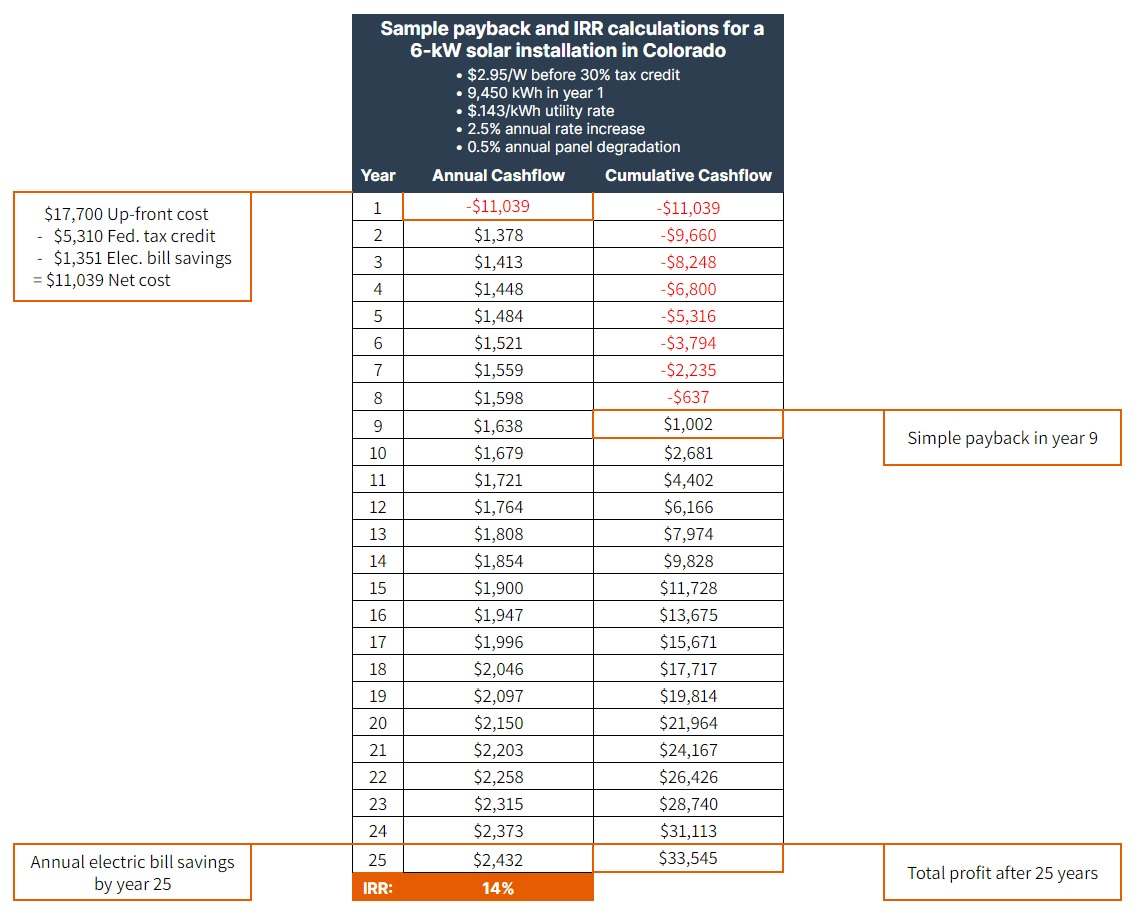
This is your net cost divided by your annual savings. It tells you how many years until your system pays for itself.
Example:
- Total Net Cost: $16,500
- Annual Energy Savings: $2,160
- Payback Period: $16,500 / $2,160 = ~7.6 years
Step 4: Calculate Your Lifetime ROI
This takes into account the full 25-year (or more) lifespan of your system, including cumulative savings and property value increase.
Lifetime ROI Formula:
((Total Lifetime Savings + Property Value Increase + SREC Income (if applicable)) – Total Net Cost) / Total Net Cost * 100%
Example (Continuing from above, assuming a 25-year lifespan):
- Total Net Cost: $16,500
- Estimated Annual Savings: $2,160
- Cumulative Savings over 25 years: This requires projecting annual savings with an assumed electricity rate increase. Let’s conservatively estimate $2,160 increasing by 2.5% annually, resulting in roughly $70,000 in total savings over 25 years.
- Property Value Increase (e.g., $30,000 for a $500k home with 6% increase, or based on $/watt): Let’s use $25,000.
- (SREC Income: Assume $0 for this example, but factor in if applicable)
- Total Lifetime Benefits: $70,000 (savings) + $25,000 (property value) = $95,000
- Profit: $95,000 – $16,500 = $78,500
- Lifetime ROI: ($78,500 / $16,500) * 100% = ~475%
A 475% ROI is phenomenal, illustrating the long-term power of solar. Of course, these are illustrative figures, and your actual results will vary.
| Calculation Step | Description | Illustrative Value |
|---|---|---|
| Gross System Cost | Total price before any incentives (e.g., 7kW @ $3.50/W) | $24,500 |
| Federal ITC (30%) | Tax credit on gross cost | -$7,350 |
| State/Local Incentives (Est.) | Rebates, SRECs, etc. | -$1,500 |
| Total Net Cost | Your actual out-of-pocket investment | $15,650 |
| Annual Energy Savings (Year 1) | Reduced utility bills ($180/month average) | $2,160 |
| Estimated Payback Period | Net Cost / Annual Savings (Year 1) | ~7.2 years |
| Projected Lifetime Savings (25 yrs) | Cumulative savings with 2.5% annual rate increase | $70,000 |
| Property Value Increase | Estimated increase due to solar installation | $25,000 |
| Total Lifetime Benefits | Savings + Value Increase | $95,000 |
| Total Net Profit | Total Benefits – Net Cost | $79,350 |
| Lifetime ROI | Net Profit / Net Cost * 100% | ~507% |
Key Factors Dramatically Influencing Your Solar ROI
As you can see, the numbers are powerful, but they are highly sensitive to several variables. Understanding these factors is key to predicting your personal ROI.
Location, Location, Location: Sun Exposure & Electricity Rates
This is often the biggest driver. States with abundant sunshine (like California, Arizona, Florida) naturally generate more electricity. But critically, states with high electricity rates (e.g., California, Hawaii, New England) see higher savings, which translates to a faster payback and greater ROI. Even if you don’t live in the sunniest state, high electricity prices can make your solar investment incredibly lucrative.
System Size and Efficiency: Matching Consumption
Your ROI is optimized when your solar system is sized correctly to meet your home’s energy needs. Oversizing means you’re spending money on panels that produce excess energy you might not get full credit for. Undersizing means you’re still relying heavily on grid power. An efficient system (higher quality panels, good inverter technology) will produce more power per square foot, maximizing your output and therefore your savings.
Electricity Rate Trends: Volatility and Future Savings
The long-term value of solar significantly benefits from the historical trend of increasing electricity rates. Every time your utility company raises its rates, your solar savings become even more valuable, effectively locking in your energy costs for decades. This inflation hedge is a hidden gem of solar ROI.
Installation Quality & Warranties: Longevity and Performance
A poorly installed system won’t perform optimally, impacting your energy production and lifespan. Always choose a reputable installer with strong warranties on equipment and workmanship. Long-term performance guarantees from manufacturers (25 years or more) ensure your panels will continue producing power at a high level for decades, securing your projected ROI.
Financing Method: Cash vs. Loan vs. Lease
- Cash Purchase: Generally yields the highest ROI because you pay no interest and realize all tax credits and incentives directly.
- Solar Loan: Still offers a strong ROI, especially if interest rates are low and you can still claim the ITC. Your monthly loan payment often replaces or is less than your previous electricity bill.
- Solar Lease/PPA (Power Purchase Agreement): While requiring no upfront cost, these generally offer the lowest financial ROI because you don’t own the system, nor do you receive the federal tax credit or other ownership-based incentives. However, they can be a good option for those who cannot utilize the tax credit or prefer zero upfront cost.
Maximizing Your Solar ROI: Expert Strategies
You don’t just calculate your ROI; you can actively enhance it. Here’s how savvy homeowners approach solar to get the biggest bang for their buck.
Right-Sizing Your System: Don’t Oversize, Optimize for Usage
Work with your installer to determine the ideal system size based on your historical electricity consumption. It’s not always about installing as many panels as possible. An optimally sized system will cover most, if not all, of your energy needs without generating excessive surplus that might not be fully compensated by your utility.
Shop Around for Installers: Get Multiple Quotes, Vet Reputation
Like any major home improvement, getting 3-5 quotes from different, reputable installers is crucial. Compare not just price, but also equipment quality, warranty terms, and customer service reviews. A slightly higher upfront cost for a better warranty or more efficient panels can lead to a significantly higher ROI over 25 years.
Understand All Available Incentives: Don’t Leave Money on the Table
This cannot be stressed enough. The federal ITC is a given, but dig deeper! Research state, local, and even utility-specific programs. Ask your prospective installers about every incentive you qualify for. Missing out on even a small rebate can impact your payback period.

Monitor & Maintain: Keep Panels Efficient
While low-maintenance, a quick annual check-up and occasional cleaning (especially if you have dusty conditions or nearby trees) can ensure your panels are performing at peak efficiency. Most modern systems come with monitoring apps, allowing you to track production and quickly identify any issues.
Consider Battery Storage (Strategic Use): When it Makes Financial Sense
Battery storage isn’t always an ROI booster purely on paper, but it’s becoming more strategic. If your utility has time-of-use (TOU) rates (where electricity costs more during peak hours), a battery allows you to store solar power generated during the day and use it during expensive peak times. Batteries also offer critical backup power during outages, providing a valuable resilience benefit that might not be easily quantified in simple ROI but adds significant peace of mind and home value.
Solar ROI vs. Other Investments: A Comparison
How does solar stack up against traditional investment vehicles? It’s important to remember that solar isn’t a liquid investment like stocks, but it offers a unique combination of financial returns and practical benefits.
| Investment Type | Average Annual Return (Illustrative) | Key Benefits for Homeowners | Key Risks/Considerations |
|---|---|---|---|
| Residential Solar Panels | Equivalent to 10% – 20%+ | Guaranteed savings, increased home value, inflation hedge, energy independence, environmental impact, low maintenance. | High upfront cost (though offset by incentives), dependent on local policies/rates, fixed asset, long payback period. |
| S&P 500 Index Fund | Historically 10% – 12% | High liquidity, diversification, passive income (dividends), potential for significant growth. | Market volatility, no direct impact on daily living costs, taxes on gains, requires monitoring. |
| High-Yield Savings Account | Currently 4% – 5% | Extremely low risk, high liquidity, FDIC insured. | Returns often barely keep pace with inflation, minimal growth. |
| Real Estate (Rental Property) | Highly variable, 5% – 15%+ (pre-tax, pre-maintenance) | Tangible asset, potential for appreciation, rental income, tax benefits. | High capital requirement, illiquid, management-intensive, market-dependent, maintenance costs. |
Solar offers something unique: it’s an investment that directly reduces your most predictable, recurring household expense while simultaneously increasing your home’s value and contributing to a healthier planet. It’s a blend of financial prudence, environmental responsibility, and energy independence.
The Bottom Line: Is Solar ROI Worth It For You?
The numbers don’t lie. For most homeowners in the USA, investing in solar panels offers a compelling financial return, often matching or exceeding traditional investments, while providing tangible benefits like energy independence and increased home value. The average payback period is getting shorter, and long-term ROIs are consistently strong.
But remember, “average” isn’t “your.” Your specific ROI will hinge on your location, electricity usage, local incentives, and the quality of your system. The best next step is to get personalized quotes from several reputable solar installers. They can perform a detailed site assessment, analyze your energy consumption, and provide a precise ROI calculation tailored to your home and the latest incentives. Don’t just guess – get the data and make an informed decision for your financial future and the planet.
Frequently Asked Questions
How long does it typically take for solar panels to pay for themselves?
The average payback period for residential solar panels in the USA typically ranges from 9 to 14 years. This period can be shorter or longer depending on factors like your location, electricity rates, system cost, and available incentives.
What is considered a good ROI for solar panels?
A good Return On Investment (ROI) for solar panels is generally considered to be 10% or higher over the system’s 25-year lifespan. Many homeowners achieve an ROI of 15-20% or even more, especially in regions with high electricity rates and strong incentives.
Do solar panels increase home value?
Yes, numerous studies confirm that owned solar panel systems significantly increase a home’s property value. The average increase is often estimated to be around 4% to 6% of the home’s value, or about $4 to $5 per watt of installed solar capacity.
Are there any government incentives for solar panels in the USA?
Absolutely! The primary incentive is the Federal Solar Investment Tax Credit (ITC), which currently offers a 30% tax credit on the cost of your solar system. Many states, localities, and utility companies also offer additional rebates, performance-based incentives (like SRECs), and property or sales tax exemptions.
What factors can negatively impact my solar ROI?
Factors that can negatively impact your ROI include an oversized system (producing too much unused energy), poor installation quality leading to lower output, not taking advantage of all available incentives, high financing interest rates, or a prolonged period of exceptionally low electricity rates in your area.
How does solar ROI compare to other investments like the stock market?
Solar ROI can often match or even exceed the historical average returns of the stock market (S&P 500, typically 10-12%), especially when factoring in guaranteed electricity savings and increased property value. Unlike stocks, solar is a tangible asset that directly reduces a recurring household expense and is less subject to market volatility, offering a unique blend of financial and practical benefits.
How often do solar panels need maintenance to maintain their ROI?
Solar panels are remarkably low-maintenance. Regular rainfall often keeps them clean. However, occasional cleaning (especially in dusty areas or if heavily soiled) and monitoring their performance through an app can ensure optimal efficiency. Major maintenance is rarely needed, and most systems come with long warranties (20-25 years).


Post Comment