What Government Grants Are Available For Nonprofit Organizations
Navigating the Funding Landscape: Your Definitive Guide to Government Grants for Nonprofits
As a nonprofit leader, you know the immense power of your mission. You’re changing lives, building communities, and tackling critical challenges. But let’s be honest: doing good isn’t free. Funding is the lifeblood of your organization, and securing it can often feel like a full-time job in itself.
Table of Contents
- Navigating the Funding Landscape: Your Definitive Guide to Government Grants for Nonprofits
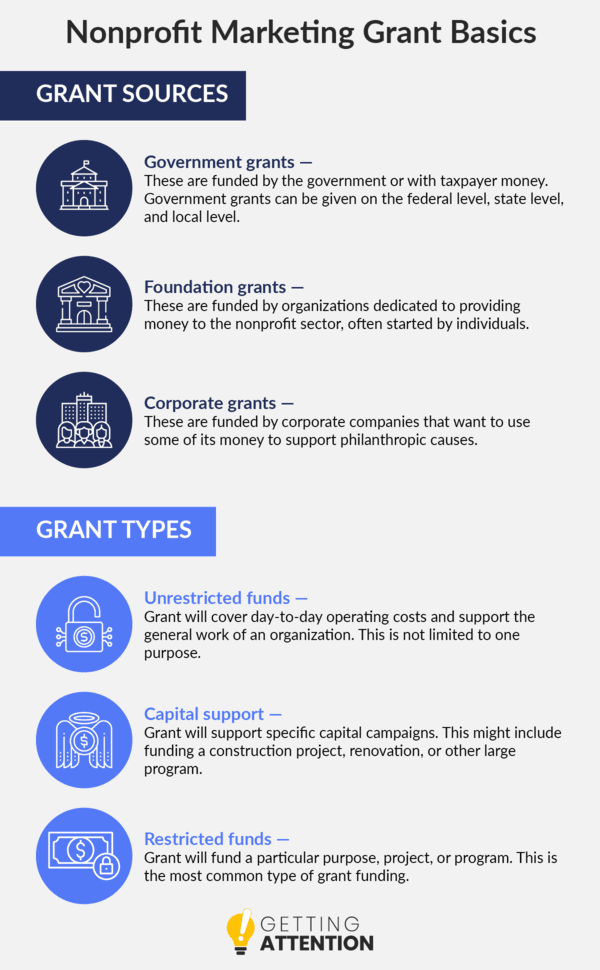
- Unpacking Government Grants: Federal, State, and Local Explained
- Federal Grants: The Big Picture
- State Grants: Bridging Federal and Local Needs
- Local & Municipal Grants: Hyper-Local Impact
- Is Your Nonprofit Grant-Ready? Essential Eligibility Requirements
- The Golden Ticket: 501(c)(3) Status
- Strong Organizational Capacity
- Sound Financial Management
- Alignment with Grantor Priorities
- The Grant Lifecycle: A Step-by-Step Guide to Securing Funding
- Phase 1: Preparation & Planning
- Phase 2: Grant Research & Identification
- Phase 3: Proposal Writing & Submission
- Phase 4: Post-Award Management & Reporting
- Common Pitfalls to Avoid in Your Grant Journey
- Not Grant-Ready
- Misinterpreting the RFP/NOFO
- Procrastination & Rushed Applications
- Poorly Defined Project & Vague Goals
- Lack of Realistic Budgeting
- Ignoring Reporting Requirements
- The “Free Money” Myth and Grant Scams
- Beyond the Basics: Advanced Tips for Grant Success
- Build Relationships Before the Ask
- Collaborate with Other Nonprofits
- Invest in Professional Grant Writing
- Leverage Data and Impact Measurement
- Diversify Your Funding Streams
Government grants represent a powerful, often misunderstood, source of funding for nonprofit organizations. They can provide the substantial capital needed to launch new programs, expand existing services, or sustain vital operations. Yet, the process can seem daunting, a labyrinth of acronyms, applications, and regulations.
This guide cuts through the noise. My goal is to equip you with the knowledge and actionable steps to confidently explore, apply for, and manage government grants. We’ll demystify the federal, state, and local funding landscape, reveal essential eligibility criteria, walk you through the entire grant lifecycle, and even help you dodge common pitfalls and scams. By the end, you’ll have a clear roadmap to unlock this crucial funding stream for your nonprofit’s vital work.
Unpacking Government Grants: Federal, State, and Local Explained
When we talk about “government grants,” it’s easy to picture one monolithic entity. In reality, funding flows from various levels of government, each with its own priorities, processes, and opportunities. Understanding these distinctions is your first step toward successful grant seeking.
Federal Grants: The Big Picture
Federal grants are typically the largest in terms of funding amounts and scope. They originate from various U.S. government agencies and are designed to address national priorities, such as public health, education, environmental protection, scientific research, and social services. These grants are highly competitive and come with stringent reporting requirements.
Key Characteristics:
- Large Scale: Often substantial funding amounts, sometimes millions of dollars.
- National Priorities: Funds projects that align with broader national goals and policies.
- Highly Competitive: Attracts a vast number of applicants, requiring exceptionally strong proposals.
- Rigorous Application: Detailed requirements, extensive documentation, and complex online portals.
- Strict Reporting: Intensive financial and programmatic reporting throughout the grant period.
Your essential starting point for federal grants is Grants.gov. This is the central online portal where all discretionary federal grant opportunities from over 1,000 federal grant-making agencies are published. Beyond Grants.gov, specific federal agencies often have their own direct grant programs, including:
- Department of Health and Human Services (HHS): Health, social services, children and families.
- Department of Education (ED): Educational programs, literacy initiatives.
- Environmental Protection Agency (EPA): Environmental protection, conservation, public health.
- Department of Labor (DOL): Workforce development, employment training.
- Federal Emergency Management Agency (FEMA): Disaster preparedness, response, and recovery (e.g., Nonprofit Security Grant Program).
- U.S. Small Business Administration (SBA): While primarily for businesses, the SBA offers grants to community organizations that support small business growth and development.
- Department of Agriculture (USDA): Rural development, food security, agricultural research.
State Grants: Bridging Federal and Local Needs
State grants serve as a vital link between federal priorities and local community needs. Often, state agencies receive federal “pass-through” funds, which they then distribute to nonprofits within their state. Other times, states fund their own initiatives to address specific regional challenges or policy goals unique to that state.
Key Characteristics:
- State-Specific Focus: Addresses issues relevant to the state’s demographics, economy, and unique challenges.
- Varied Competition: Can be competitive but often less so than federal grants, depending on the program.
- Regional Impact: Seeks to create impact within specific cities, counties, or regions of the state.
- Diverse Programs: Covers a wide range of areas from arts and culture to public safety and infrastructure.
To find state grants, you’ll need to explore individual state government websites. Look for departments that align with your nonprofit’s mission:
- State Department of Health
- State Department of Education
- State Arts Council / Humanities Council
- State Department of Environmental Quality
- State Social Services Agency
- State Housing and Community Development Departments
Many states also have a central grant portal or a listing of funding opportunities on their main government website. A quick search for “[Your State Name] government grants nonprofit” is a great starting point.
![How to Find Grants for Nonprofits [Quickly & Easily!]](https://doublethedonation.com/wp-content/uploads/2025/01/DTD_How-to-Find-Grants-for-Nonprofits-Quickly-Easily_Types-of-Grants.png "How to Find Grants for Nonprofits [Quickly & Easily!]")
Local & Municipal Grants: Hyper-Local Impact
Local grants originate from city, county, or regional governments. These are often smaller in dollar amount compared to federal or state grants, but they can be less competitive and are explicitly designed to address highly localized community needs. These grants are perfect for projects with direct, tangible impact within a specific neighborhood or town.
Key Characteristics:
- Community-Focused: Targets very specific local issues and populations.
- Smaller Amounts: Grant awards are typically in the thousands to tens of thousands of dollars.
- Less Competition: Fewer applicants often mean a better chance of success for well-aligned projects.
- Direct Impact: Funding often leads to immediate, visible improvements in the local community.
Finding local grants involves a more grassroots approach:
- City and County Websites: Look for departments like Parks and Recreation, Community Development, Public Health, or specific grant program offices.
- Local Community Foundations: Many community foundations manage grant programs on behalf of local governments or private donors within their geographic area.
- Chambers of Commerce: Can be a good resource for understanding local priorities and connecting with funding sources.
- Council Meetings: Attending local council or board meetings can provide insights into community needs and potential funding initiatives.
Is Your Nonprofit Grant-Ready? Essential Eligibility Requirements
Before you dive into grant applications, it’s crucial to assess your nonprofit’s readiness. Grantors look for organizations that are not only doing good work but are also well-managed, financially sound, and capable of fulfilling grant obligations. Don’t waste precious time applying if you don’t meet these fundamental criteria.
The Golden Ticket: 501(c)(3) Status
For almost all government grants designated for nonprofits, your organization must possess 501(c)(3) tax-exempt status from the IRS. This designation signifies that your organization is recognized as a public charity and meets specific operational and financial criteria. It’s the primary legal requirement that distinguishes eligible nonprofits from other entities.
Strong Organizational Capacity
Grantors want to invest in organizations that have the infrastructure and personnel to execute projects effectively. This includes:
- Defined Mission and Vision: A clear understanding of your purpose and long-term goals.
- Clear Objectives: Specific, measurable, achievable, relevant, and time-bound (SMART) objectives for your programs.
- Proven Track Record: Demonstrable success in previous projects or services, even on a smaller scale.
- Adequate Staffing: Qualified staff or volunteers to manage and implement the proposed project.
- Strong Leadership: A competent board of directors and experienced executive leadership.
Sound Financial Management
Financial accountability is paramount. Grantors need assurance that your nonprofit can responsibly manage public funds. This often means:
- Audited Financials: For larger grants, an independent audit of your financial statements might be required.
- Robust Accounting Systems: The ability to track income and expenditures accurately, especially for grant funds.
- Fiscal Policies and Procedures: Documented processes for financial oversight, internal controls, and budgeting.
- Diversified Funding Streams: While grants are great, showing that you don’t solely rely on one source of income demonstrates resilience.
Alignment with Grantor Priorities
This might seem obvious, but it’s where many nonprofits go wrong. Your proposed project must directly align with the grantor’s stated purpose and funding priorities. Grantors have specific outcomes they want to achieve; your project needs to be a perfect fit for their agenda. Don’t try to force a square peg into a round hole – it rarely works.
| Eligibility Criterion | What It Means for Your Nonprofit |
|---|---|
| 501(c)(3) Status | Official IRS recognition as a tax-exempt public charity. Mandatory for most grants. |
| Active SAM.gov Registration | Required for federal grants. Unique Entity Identifier (UEI) and current registration in the System for Award Management. |
| Clear Mission & Vision | A well-articulated purpose that guides all your activities. |
| Proven Track Record | Evidence of past success in similar projects or delivering services to your community. |
| Sound Financial Management | Transparent accounting, audited financials (for larger grants), and robust fiscal controls. |
| Adequate Staffing & Capacity | Sufficient human resources and operational capabilities to manage the grant and project. |
| Alignment with Grantor Priorities | Your project’s goals and activities must directly match the grantor’s funding objectives. |
The Grant Lifecycle: A Step-by-Step Guide to Securing Funding
Securing a government grant isn’t a one-off event; it’s a process, a lifecycle with distinct phases. Approaching it systematically will significantly increase your chances of success. Think of it as a marathon, not a sprint.
Phase 1: Preparation & Planning
Before you even look for a grant, you need to look inward. This foundational work is critical.
- Organizational Assessment: What are your nonprofit’s strengths, weaknesses, opportunities, and threats? What are your most pressing needs?
- Program Development: Clearly define the project or program you want to fund. What problem does it solve? Who benefits? What are the specific activities? What are your measurable goals and objectives?
- Budget Creation: Develop a realistic, detailed budget for your proposed project. Include all anticipated expenses (personnel, supplies, travel, indirect costs). This isn’t just a number; it tells a story of how you’ll use the funds responsibly.
- Gather Supporting Documents: Compile your 501(c)(3) letter, IRS determination letter, organizational chart, board member list, résumés of key staff, financial statements, and letters of support.
Phase 2: Grant Research & Identification
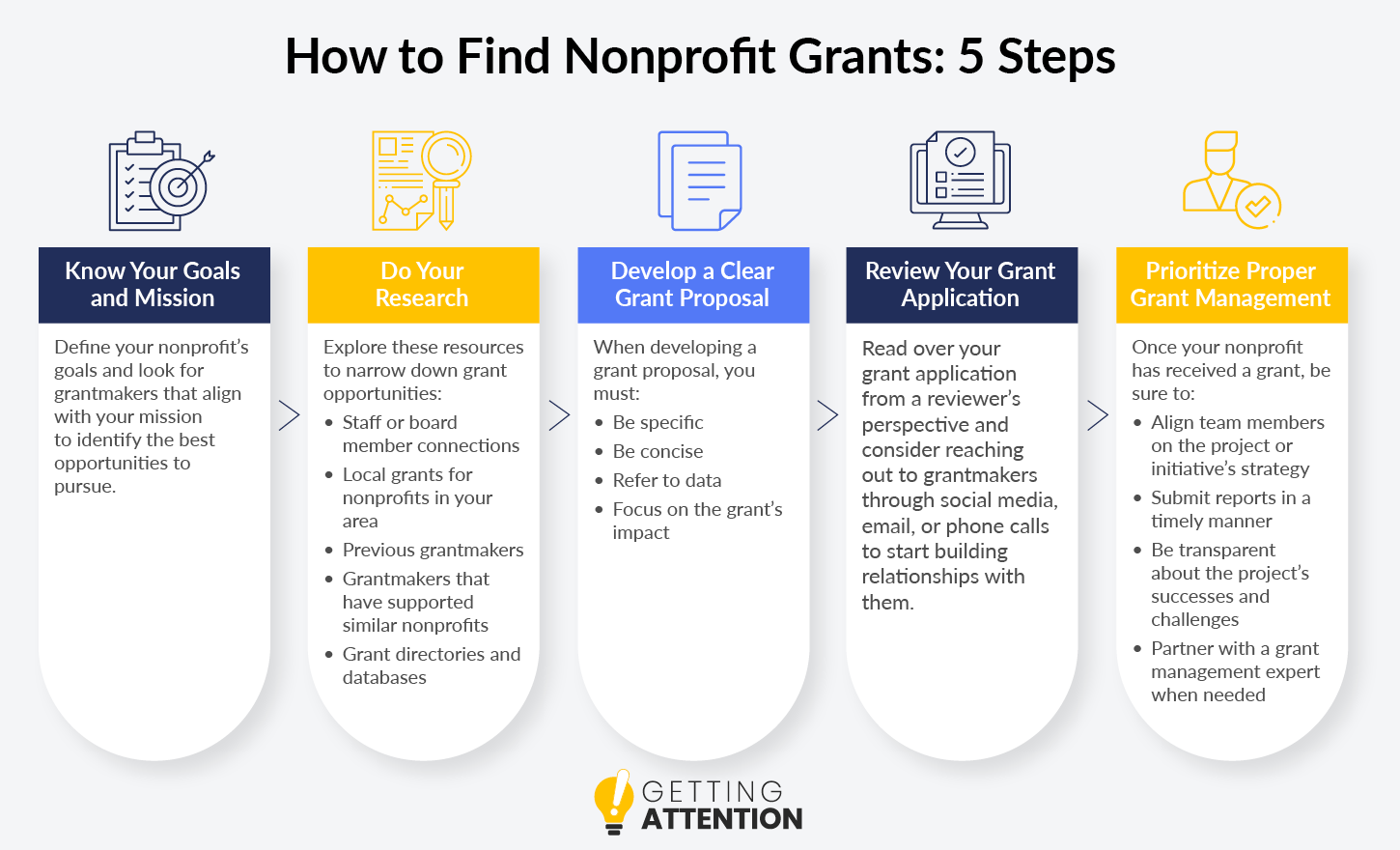
Now that you know what you need to fund, it’s time to find the right opportunities. This requires strategic searching.
- Federal Opportunities: Start with Grants.gov. Use keywords related to your mission, target population, or project activities. Filter by eligibility (e.g., “nonprofit”).
- State & Local Opportunities: As discussed, explore your state’s official government website (look for departments like health, education, arts, community development) and your city/county government websites. Also, investigate local community foundations, as they often administer government or privately funded programs.
- Catalog of Federal Domestic Assistance (CFDA): This comprehensive catalog provides public access to federal programs that provide assistance to the American public. You can find programs that align with your mission.
- Subscription Databases (Optional): While not government-run, many subscription services aggregate grant opportunities from federal, state, local, and private sources. If your budget allows, these can streamline your search.
Tips for Effective Searching: Don’t just look at the grant title. Read the entire Notice of Funding Opportunity (NOFO) or Request for Proposal (RFP) carefully. Pay close attention to the purpose, eligible activities, target populations, and performance measures. If it’s not a clear fit, move on.
Phase 3: Proposal Writing & Submission
This is where you make your case. A compelling grant proposal is well-written, data-driven, and clearly demonstrates alignment with the grantor’s goals.
- Understand the RFP/NOFO: This document is your bible. Adhere to every instruction regarding formatting, page limits, required sections, and submission method. Missing even small details can lead to disqualification.
- Key Components of a Proposal: While structures vary, most include:
- Executive Summary: A concise overview of your project, its impact, and funding request.
- Introduction/Organizational Capacity: Your nonprofit’s mission, history, and ability to execute the project.
- Problem Statement/Needs Assessment: Data-driven explanation of the problem your project addresses and why it’s critical.
- Project Description: Detailed explanation of your proposed activities, methodology, timeline, and who will be served.
- Goals & Objectives: Specific, measurable outcomes you expect to achieve.
- Evaluation Plan: How you will measure success and demonstrate impact.
- Budget & Justification: The detailed budget you prepared in Phase 1, clearly explaining how funds will be used and why.
- Sustainability Plan: How the project will continue after grant funding ends.
- Storytelling vs. Data: A strong proposal balances compelling narratives of impact with hard data and evidence. Show them the human need, then back it up with statistics.
- Proofreading & Review: Never submit without multiple rounds of proofreading. Ask colleagues to review for clarity, coherence, and adherence to instructions.
- Timely Submission: Submit well before the deadline. Technical glitches happen!
Phase 4: Post-Award Management & Reporting
Congratulations, you got the grant! But the work isn’t over. This phase is crucial for maintaining compliance and building a reputation for reliability, essential for future funding.
- Review Grant Agreement: Understand all terms, conditions, and specific reporting requirements.
- Financial Tracking & Compliance: Meticulously track all grant expenditures. Maintain separate accounts or clear accounting codes. Adhere to federal cost principles (e.g., OMB Uniform Guidance).
- Programmatic Reporting: Submit regular progress reports detailing activities, achievements, challenges, and outcomes against your stated objectives. Be transparent and honest.
- Audits & Evaluations: Be prepared for potential financial audits or program evaluations.
- Relationship Building: Maintain open communication with your grant officer. They are a resource.
Common Pitfalls to Avoid in Your Grant Journey
Even experienced grant seekers can stumble. Awareness of common mistakes can save you time, frustration, and potential disqualification.
Not Grant-Ready
Applying for grants without the foundational elements (501(c)(3) status, strong financials, clear project plan) is like building a house without a foundation. It will inevitably crumble. Ensure your organization is robust and prepared before you even start searching.
Misinterpreting the RFP/NOFO
This is perhaps the most frequent and easily avoidable mistake. Grantors have specific instructions for a reason. Failing to follow page limits, font sizes, required attachments, or answering questions out of order can lead to immediate rejection, regardless of how good your project is.
Procrastination & Rushed Applications
Grant writing is not something you can do last minute. It takes time for research, collaboration, writing, reviewing, and gathering necessary signatures and attachments. A rushed application often contains errors, lacks depth, and fails to fully articulate your vision.
Poorly Defined Project & Vague Goals
Grantors fund solutions to problems. If your project description is unclear, your goals are fuzzy, or your anticipated outcomes are not measurable, reviewers will struggle to see the value and impact of your request. Be precise, concrete, and data-informed.
Lack of Realistic Budgeting
A budget that’s too low makes your project seem unsustainable, while one that’s inflated appears irresponsible. Every line item in your budget should be justified and directly relate to project activities. Also, ensure you understand allowable vs. unallowable costs.
Ignoring Reporting Requirements
Failure to submit accurate and timely reports can lead to serious consequences, including grant termination, repayment of funds, and damage to your organization’s reputation, making it difficult to secure future funding from that or other agencies.
The “Free Money” Myth and Grant Scams
Be extremely wary of anyone promising “free money” from the government, guaranteed grant approval, or requiring an upfront fee for a list of grants. Government grants are never guaranteed and legitimate government agencies will never ask for payment to apply for a grant. Common warning signs of scams include:
- Upfront Fees: Legitimate grant applications are free.
- Guaranteed Approval: No one can guarantee a grant award.
- Unsolicited Offers: Be skeptical of emails or calls out of the blue.
- Generic Websites: Scam sites often mimic official government portals but have subtle differences or unprofessional designs.
- Demands for Personal Banking Info: Beyond what’s necessary for organizational financial verification.
Always verify information on official government websites (like Grants.gov or USA.gov) or through trusted nonprofit resource centers.
Beyond the Basics: Advanced Tips for Grant Success
Once you’ve mastered the fundamentals, these strategies can give your nonprofit an edge in a competitive funding environment.
Build Relationships Before the Ask
For larger federal and sometimes state grants, it can be beneficial to connect with program officers *before* the NOFO or RFP is released. Attend webinars, pre-application conferences, or agency outreach events. Understanding the grantor’s priorities and having your questions answered can be invaluable in shaping a stronger proposal.
Collaborate with Other Nonprofits
Many government grants encourage or even require collaboration. Partnering with other organizations can strengthen your proposal by demonstrating broader impact, shared resources, and collective expertise. This is particularly effective for addressing complex community issues that no single organization can solve alone.
Invest in Professional Grant Writing
If grant writing isn’t your core expertise, consider hiring a professional grant writer or consultant. A skilled grant writer understands the nuances of government proposals, can articulate your mission effectively, and significantly increase your chances of securing funding. This is an investment that can yield substantial returns.
Leverage Data and Impact Measurement
Grantors are increasingly focused on outcomes and impact. Integrate strong data collection and evaluation into your project design from the outset. Being able to quantitatively and qualitatively demonstrate the difference your program makes is a powerful persuader.
Diversify Your Funding Streams
While government grants are a fantastic resource, never put all your eggs in one basket. Relying solely on grants can leave your nonprofit vulnerable to shifts in funding priorities or economic downturns. Cultivate a mix of individual donors, corporate sponsorships, earned income, and foundation grants to ensure long-term sustainability.
Securing government grants for your nonprofit is a challenging but immensely rewarding endeavor. It requires meticulous preparation, strategic searching, compelling writing, and diligent management. By understanding the landscape, ensuring your organization is grant-ready, and following a systematic approach, you can unlock significant funding to amplify your impact and continue serving your community. It’s a journey that demands persistence, but the difference it can make for your mission is truly transformative. Start exploring today – your community is counting on it!
Frequently Asked Questions
What is the primary difference between federal, state, and local government grants for nonprofits?
Federal grants are typically larger, address national priorities, and are highly competitive. State grants focus on state-specific needs, often distributing federal funds or their own programs. Local grants are usually smaller, address hyper-local community issues, and can be less competitive, focusing on direct community impact.
What is 501(c)(3) status and why is it important for government grants?
501(c)(3) status is an IRS tax-exempt designation for public charities. It’s crucial because nearly all government grants for nonprofits require this status, signifying your organization’s legal recognition and adherence to specific operational and financial criteria.
Where is the best place to start looking for federal government grants?
The essential starting point for federal government grants is Grants.gov. It’s the central online portal where all discretionary federal grant opportunities from over 1,000 federal grant-making agencies are published. You can search, apply, and manage applications there.
What are the common mistakes nonprofits make when applying for government grants?
Common mistakes include not being grant-ready (lacking necessary documentation or capacity), misinterpreting the Request for Proposal (RFP) or Notice of Funding Opportunity (NOFO) instructions, submitting rushed applications, having poorly defined projects or vague goals, creating unrealistic budgets, and neglecting post-award reporting requirements.
How can I avoid government grant scams?
Be highly skeptical of any offers of ‘free money,’ guaranteed grant approval, or requests for upfront fees to apply for a grant. Legitimate government agencies never charge application fees. Always verify information on official government websites like Grants.gov or USA.gov, and be wary of unsolicited offers or generic-looking websites.
Do I need to be registered with SAM.gov to apply for government grants?
Yes, for federal grants, your nonprofit must be registered with the System for Award Management (SAM.gov) and maintain an active registration with a Unique Entity Identifier (UEI). This is a mandatory step before you can apply for most federal funding opportunities.


Post Comment