Hybrid Solar System Grid Tied With Battery Backup
Hybrid Solar System Grid Tied With Battery Backup: Your Definitive Guide to Energy Independence & Reliability
Tired of frustrating power outages that leave you in the dark? Dreaming of slashing your energy bills and embracing a greener lifestyle, all without completely cutting ties to the reliable grid? If so, a hybrid solar system grid tied with battery backup isn’t just a dream; it’s a powerful, practical solution for your home. It’s the smart choice for homeowners who want the best of both worlds: the cost savings and environmental benefits of solar, combined with the crucial security of backup power.
Table of Contents
- Hybrid Solar System Grid Tied With Battery Backup: Your Definitive Guide to Energy Independence & Reliability
- What Exactly is a Hybrid Solar System?
- The Best of Both Worlds: Grid-Tied Meets Battery Backup
- How It Works: A Simplified Walkthrough
- Why Go Hybrid? Unpacking the Core Benefits
- Uninterrupted Power: Your Shield Against Outages
- Maximized Energy Savings: Beyond Net Metering
- Environmental Impact: Reducing Your Carbon Footprint
- Increased Home Value: An Investment That Pays Off
- Future-Proofing Your Home: Adaptability & Scalability
- The Essential Components of a Hybrid Solar System
- Solar Panels: Your Energy Harvesters
- Hybrid Inverter: The Brain of the System
- Battery Storage: Your Energy Bank
- Net Metering & Grid Connection: Your Utility Link
- Balance of System (BOS): Wiring, Racking, Monitoring
- Hybrid vs. Pure Grid-Tied vs. Off-Grid: Which System Is Right for You?
- Sizing Your Hybrid Solar System: A Step-by-Step Approach
- Assess Your Energy Needs: What Do You Consume?
- Determine Your Backup Requirements: What Must Stay On?
- Calculate Solar Panel Capacity: Generating Enough Power
- Right-Sizing Your Battery Bank: Storage for the Dark Hours
- Inverter Matching: The Heart of Efficiency
- Understanding the Costs & Incentives for Hybrid Solar
- Initial Investment: What to Expect
- The Power of Incentives: Saving You Money
- Federal Solar Tax Credit (ITC): Your Biggest Saving
- State & Local Programs: Look Beyond Federal
- Return on Investment (ROI): When Does It Pay Off?
- Installation & Maintenance: What You Need to Know
- Choosing the Right Installer: A Critical Decision
- The Installation Process: A Quick Overview
- Ongoing Maintenance: Keeping Your System Optimal
- Is a Hybrid Solar System Right for Your Home?
- Ideal Scenarios for Hybrid Systems
- Considerations Before You Commit
- The Future of Home Energy: Why Hybrid Solar is Leading the Way
This isn’t about complex jargon or pushy sales pitches. This is your straightforward guide to understanding what a hybrid solar system is, how it works, why it might be the perfect fit for your lifestyle, and what you need to consider before making the leap. Let’s shed some light on truly reliable home energy.
What Exactly is a Hybrid Solar System?
At its core, a hybrid solar system is a sophisticated blend of traditional grid-tied solar and an off-grid battery storage solution. Imagine a standard solar panel setup on your roof, generating electricity. Now, imagine a powerful battery bank in your garage, storing that excess energy. And finally, imagine your home still connected to the utility grid, ready to draw power when needed or send surplus back.
The Best of Both Worlds: Grid-Tied Meets Battery Backup
Many people know about grid-tied solar – panels that generate electricity, reducing your utility bill, and sending any excess back to the grid for credits (net metering). Others might be familiar with off-grid systems, which are completely independent but require significant battery storage to manage all energy needs. A hybrid system strikes a beautiful balance, offering:
- Connection to the Grid: You retain the security and reliability of utility power. If your solar panels aren’t producing enough or your batteries run low, the grid is there.
- Battery Storage: Crucially, you have a battery bank to store surplus solar energy. This means less reliance on the grid and, most importantly, power during an outage.
How It Works: A Simplified Walkthrough
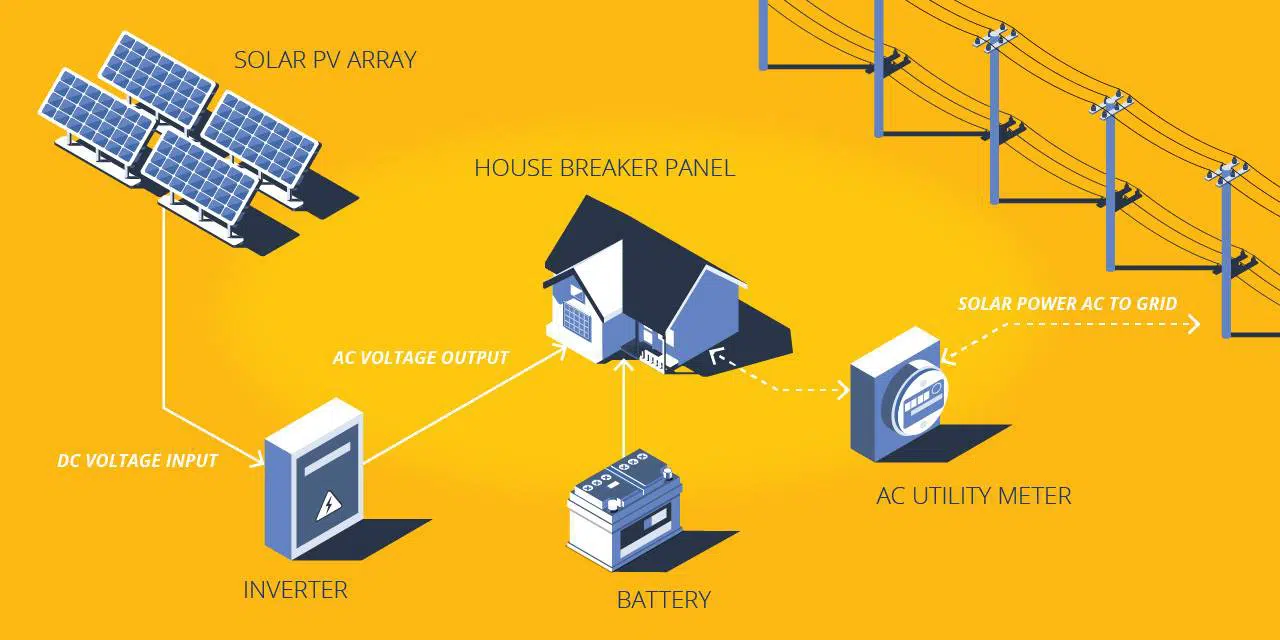
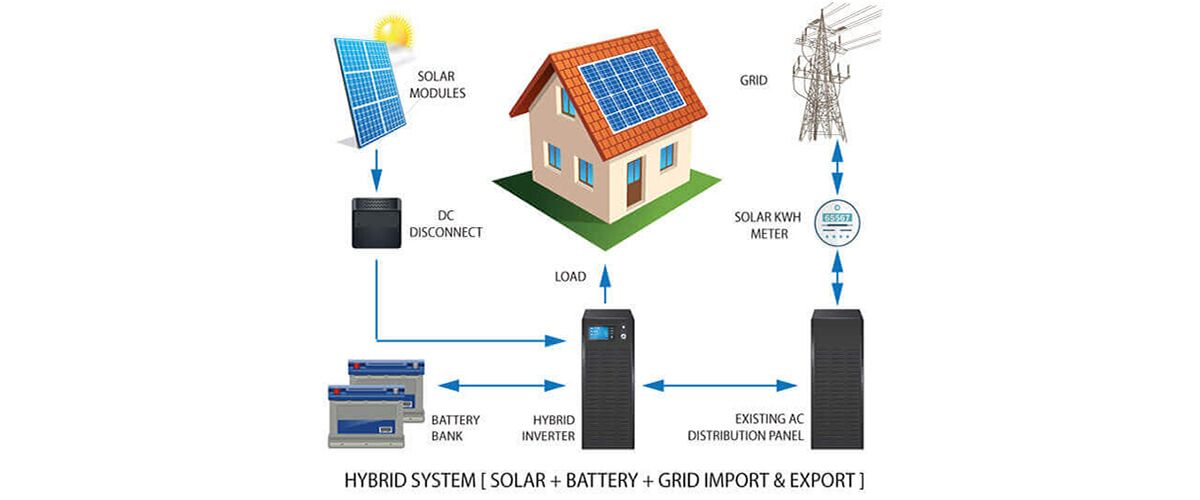
Let’s break down the energy flow in a typical hybrid system:
- Solar Generation: Your solar panels convert sunlight into DC (direct current) electricity.
- Hybrid Inverter Magic: This crucial component takes the DC power and converts it into AC (alternating current) electricity, which is what your home appliances use.
- Power Distribution:
- Immediate Use: The AC power directly fuels your home’s current electricity demands.
- Battery Storage: Any excess solar power that your home doesn’t immediately use is directed by the hybrid inverter to charge your battery bank.
- Grid Export: Once your batteries are full, any *further* surplus solar power is sent back to the utility grid, often earning you credits through net metering.
- Nighttime & Low Production: When the sun isn’t shining (or not enough), your home first draws power from your charged batteries. If the batteries run low, or your demand is very high, the system automatically pulls electricity from the utility grid.
- Power Outage Scenario: This is where hybrid systems truly shine. If the grid goes down, your hybrid inverter automatically disconnects your home from the grid (to protect utility workers). Your home then seamlessly switches to drawing power directly from your solar panels (if the sun is out) and, primarily, from your battery bank, keeping essential appliances running.
Why Go Hybrid? Unpacking the Core Benefits
A hybrid solar system isn’t just a collection of components; it’s an investment in a more secure, sustainable, and intelligent energy future for your home. Here’s why homeowners across the U.S. are increasingly choosing this path.
Uninterrupted Power: Your Shield Against Outages
This is arguably the number one reason people choose a hybrid system. In an era of unpredictable weather events and aging infrastructure, power outages are becoming more frequent and frustrating. A hybrid system ensures that when the grid goes dark, your lights stay on, your fridge stays cold, and your critical medical devices remain operational. It provides genuine energy resilience, giving you peace of mind.
Maximized Energy Savings: Beyond Net Metering
While traditional grid-tied systems save you money through net metering, hybrid systems take it a step further:
- Self-Consumption Optimization: Instead of sending all excess solar energy back to the grid for a credit (which might be less than what you pay to draw power back later), you store it. This means you use more of your own free, self-generated electricity.
- Time-of-Use (TOU) Arbitrage: Many utility companies charge higher rates during peak demand hours (e.g., late afternoon/early evening). With a hybrid system, you can charge your batteries when electricity is cheap (or from your solar panels) and then discharge them during expensive peak hours, dramatically reducing your utility bill.
Environmental Impact: Reducing Your Carbon Footprint
Every kilowatt-hour generated by your solar panels and stored in your batteries means less electricity produced by fossil fuel power plants. You’re actively reducing your household’s carbon footprint, contributing to cleaner air, and supporting the transition to a sustainable energy future. It’s a tangible way to make a difference.
Increased Home Value: An Investment That Pays Off
Studies consistently show that homes with solar installations, especially those with battery backup, command higher resale values. Buyers are increasingly seeking properties with lower utility costs and enhanced energy independence. A hybrid system isn’t just an upgrade; it’s a significant asset that makes your home more attractive and valuable in the market.
Future-Proofing Your Home: Adaptability & Scalability
The energy landscape is constantly evolving. A hybrid system is inherently adaptable. As battery technology improves, you may be able to upgrade your storage capacity. As electric vehicles (EVs) become standard, your system can support EV charging. It positions your home at the forefront of modern energy management, ready for whatever the future holds.
The Essential Components of a Hybrid Solar System
Understanding the core components is key to appreciating how a hybrid system works as a cohesive unit. Each piece plays a vital role in harvesting, converting, storing, and delivering your home’s power.
Solar Panels: Your Energy Harvesters
These are the visible stars of any solar system. Mounted on your roof or ground array, solar panels (photovoltaic modules) capture sunlight and convert it into DC electricity. Modern panels are incredibly efficient and durable, designed to withstand decades of weather.
Hybrid Inverter: The Brain of the System
If solar panels are the muscles, the hybrid inverter is the brain. This is the central control unit for your entire system. Unlike a standard grid-tied inverter, a hybrid inverter can:
- Convert DC solar power to AC for home use.
- Charge and discharge your battery bank.
- Manage the flow of energy between your panels, batteries, home, and the utility grid.
- Automatically disconnect from the grid during an outage and provide backup power from batteries.
- Offer advanced monitoring and energy management features, often accessible via a smartphone app.
Its intelligence dictates how efficiently your system operates, prioritizes energy usage (e.g., self-consumption vs. grid export), and ensures seamless transitions during grid events.
Battery Storage: Your Energy Bank
The battery bank is the heart of the backup power feature. It stores excess solar energy for use when the sun isn’t shining or during a power outage. The most common types for home use are:
- Lithium-ion Batteries: Dominant in the market due to their high energy density, long lifespan, efficiency, and minimal maintenance. Popular brands include Tesla Powerwall, Enphase Encharge, LG Chem, and Generac PWRcell.
- Lead-Acid Batteries: A more traditional, lower-cost option, but generally heavier, larger, less efficient, and with a shorter lifespan and higher maintenance requirements than lithium-ion. Less common in new hybrid installations.
Battery capacity is measured in kilowatt-hours (kWh) and is critical for determining how long your home can run on backup power.
Net Metering & Grid Connection: Your Utility Link
This connection allows your system to interact with the utility grid. With net metering, your utility meter essentially spins backward when your solar system produces more electricity than your home consumes, earning you credits. When your home needs more power than your solar panels and batteries can provide, you draw from the grid. This symbiotic relationship provides a safety net and maximizes financial benefits.
Balance of System (BOS): Wiring, Racking, Monitoring
Often overlooked, the BOS components are crucial for a safe and efficient system:
- Racking and Mounting: Securely holds your solar panels on your roof or ground.
- Wiring and Electrical Components: Connects all parts of the system safely and efficiently.
- Monitoring System: Allows you to track your system’s performance, energy production, consumption, and battery status in real-time, often via a web portal or mobile app.
Hybrid vs. Pure Grid-Tied vs. Off-Grid: Which System Is Right for You?
To truly understand the value of a hybrid system, it helps to compare it with its counterparts. Each system type has distinct characteristics, benefits, and drawbacks.
| Feature | Pure Grid-Tied Solar | Hybrid Solar (Grid-Tied with Battery Backup) | Off-Grid Solar |
|---|---|---|---|
| Connection to Grid | Yes | Yes | No |
| Battery Storage | No (typically) | Yes | Yes (essential) |
| Power Outage Protection | No (system shuts down) | Yes (from battery/solar) | Yes (as primary power) |
| Net Metering Benefits | Primary benefit | Secondary benefit (after self-consumption) | Not applicable |
| Initial Cost | Lowest | Medium to High | Highest (due to large battery/generator needs) |
| Complexity | Lowest | Medium | Highest |
| Ideal For | Cost savings, environmental benefits, stable grid. | Cost savings, backup power, energy independence, TOU optimization. | Remote locations, complete grid independence, unreliable grid. |
Sizing Your Hybrid Solar System: A Step-by-Step Approach
One of the most critical steps in deploying a hybrid solar system is proper sizing. A well-sized system maximizes your investment and meets your energy goals. This isn’t a one-size-fits-all solution; it’s tailored to your unique needs.
Assess Your Energy Needs: What Do You Consume?
Start by understanding your current electricity consumption. Look at your past 12-24 months of utility bills. This will show you your average daily and monthly kilowatt-hour (kWh) usage. This figure is fundamental for determining how many solar panels you’ll need to offset your usage.
Determine Your Backup Requirements: What Must Stay On?
This is where the ‘backup’ part comes in. During an outage, you likely don’t need to power your entire house. Think about your essential loads:
- Refrigerator/Freezer
- Lights (a few critical ones)
- Internet/Router
- Medical equipment
- Phone charging
- Well pump (if applicable)
List these essential appliances and their average wattage. Then, estimate how many hours you’d want them to run during an outage (e.g., 12 hours, 24 hours, multiple days). This will dictate your battery capacity.
Calculate Solar Panel Capacity: Generating Enough Power
Based on your total energy consumption (offsetting bills) and a portion of your backup needs (recharging batteries), your installer will calculate the optimal number and wattage of solar panels. Factors like your roof’s orientation, tilt, shading, and local sunlight hours (insolation) are crucial here. The goal is to generate enough energy to cover your daily use, charge your batteries, and potentially send surplus to the grid.

Right-Sizing Your Battery Bank: Storage for the Dark Hours
Your battery bank size is directly linked to your backup requirements. If you want to power critical loads for 24 hours without sun, you’ll need a larger battery bank than someone only wanting 4-6 hours of backup. Your installer will translate your essential load list and desired backup duration into a specific kWh battery capacity. They’ll also consider the battery’s ‘depth of discharge’ (DoD) – how much of its capacity can be used before needing a recharge.
Inverter Matching: The Heart of Efficiency
Your hybrid inverter needs to be correctly sized to handle both your solar panel array’s output and your home’s peak electricity demand, including the loads you want to back up. It must be able to convert power efficiently from panels to batteries, batteries to home, and handle grid interactions seamlessly.
Understanding the Costs & Incentives for Hybrid Solar
Investing in a hybrid solar system is a significant financial decision, but it’s one with substantial long-term returns. Understanding the upfront costs and available incentives is key to evaluating its viability for your home.
Initial Investment: What to Expect
The cost of a hybrid solar system is higher than a pure grid-tied system due to the added expense of batteries and a more sophisticated hybrid inverter. However, prices have fallen significantly in recent years. While exact costs vary widely based on system size, components chosen, location, and installation complexity, here’s a general breakdown for an average U.S. home (e.g., 5-8 kW solar array with 10-20 kWh battery storage):
- Solar Panels: Typically $2.50 – $3.50 per watt (before incentives).
- Hybrid Inverter: More expensive than standard inverters, ranging from $3,000 – $8,000+.
- Battery Storage: This is the primary driver of increased cost, often $10,000 – $20,000+ for a single home battery system, depending on capacity and brand.
- Installation Costs: Labor, permits, electrical work, etc., can be a substantial portion.
All-in, a hybrid solar system could range from $30,000 to $60,000+ before incentives. This figure will vary greatly, so always get multiple detailed quotes.
The Power of Incentives: Saving You Money
Thankfully, robust incentives significantly reduce the net cost of going solar, including hybrid systems:
Federal Solar Tax Credit (ITC): Your Biggest Saving
The most impactful incentive is the Investment Tax Credit (ITC), also known as the federal solar tax credit. For systems installed through 2032, it allows you to claim 30% of the cost of your solar installation (including panels, inverters, and batteries) as a credit on your federal income taxes. This is a dollar-for-dollar reduction of your tax liability, not just a deduction. It’s a huge financial boost.
State & Local Programs: Look Beyond Federal
Many states and even local municipalities offer additional incentives:
- State Tax Credits/Rebates: Some states offer their own tax credits or direct rebates that can be combined with the federal ITC.
- Net Metering: While not a direct upfront cost reduction, net metering policies ensure you get fair credit for the excess energy you send to the grid, improving your long-term ROI.
- Property Tax Exemptions: In some areas, adding solar to your home won’t increase your property taxes.
It’s crucial to research the specific incentives available in your state and local area, as they can significantly reduce your overall investment. Your solar installer should be knowledgeable about these programs.
Return on Investment (ROI): When Does It Pay Off?
The ROI for a hybrid solar system is multifaceted:
- Direct Financial Savings: Lower utility bills, net metering credits, and potential savings from Time-of-Use optimization.
- Backup Power Value: This is harder to quantify but immensely valuable. Avoiding spoiled food, staying comfortable during outages, and having access to critical power is worth a lot to many homeowners.
- Increased Home Value: The boost to your property value.
- Environmental Good: The satisfaction of contributing to a sustainable future.
Typically, with current incentives and energy prices, a hybrid solar system can pay for itself through energy savings and increased home value in 7-12 years, often less depending on your local electricity rates and the frequency/cost of outages you avoid. After this payback period, your electricity is virtually free for the remaining lifespan of the system (25+ years for panels, 10-15+ for batteries).
Installation & Maintenance: What You Need to Know
Once you’ve decided a hybrid system is for you, the next steps involve professional installation and understanding ongoing care. While most of the work is handled by experts, being informed helps you make the best choices.
Choosing the Right Installer: A Critical Decision
This is perhaps the most important choice you’ll make after deciding to go solar. A qualified, reputable installer ensures your system is designed, installed, and permitted correctly and safely. Look for:
- Experience & Credentials: How long have they been in business? Do they have NABCEP (North American Board of Certified Energy Practitioners) certified installers on staff?
- Licensing & Insurance: Crucial for your protection.
- References & Reviews: Check online reviews and ask for customer references.
- Warranties: Understand their workmanship warranty in addition to equipment warranties.
- Communication: Do they clearly explain the process, costs, and benefits without pressure?
Get multiple quotes and compare them thoroughly, not just on price, but on system design, components, and warranty.
The Installation Process: A Quick Overview
After design and permitting, the physical installation typically involves:
- Racking Installation: Securing the mounting system to your roof.
- Panel Mounting: Attaching the solar panels to the racking.
- Electrical Wiring: Connecting panels to the inverter, and the inverter to your main electrical panel and battery bank.
- Battery Installation: Securely mounting and connecting the battery storage unit.
- System Commissioning: Testing the system, ensuring all components communicate correctly, and configuring the hybrid inverter’s settings.
- Inspections & Interconnection: Final inspections by local authorities and utility company, leading to permission to operate (PTO).
The entire physical installation usually takes a few days to a week, but the overall process from initial consultation to PTO can span several weeks to a few months due to permitting and utility approvals.
Ongoing Maintenance: Keeping Your System Optimal
One of the great advantages of modern solar systems, especially with high-quality components, is their low maintenance. However, some basic care can ensure optimal performance and longevity:
- Panel Cleaning: Rain often keeps panels clean, but a periodic rinse (especially after heavy pollen or dust) can prevent efficiency drops. Avoid harsh chemicals.
- Monitoring: Regularly check your monitoring app or portal to ensure your system is producing as expected and your batteries are charging/discharging correctly.
- Visual Inspections: Occasionally check for any obvious damage to panels, wiring, or racking.
- Professional Check-ups: Consider a professional inspection every few years to ensure everything is working perfectly and proactively address any issues.
Batteries, particularly lithium-ion, are largely maintenance-free beyond monitoring their performance.
Is a Hybrid Solar System Right for Your Home?
Deciding on a hybrid solar system is a big step, but for many, it’s an incredibly rewarding one. Let’s look at who benefits most and what to consider.
Ideal Scenarios for Hybrid Systems
A hybrid system is an excellent choice if:
- You Experience Frequent Power Outages: If you live in an area prone to grid instability, severe weather, or have critical medical needs, backup power is invaluable.
- You Want Enhanced Energy Independence: You value controlling your own energy supply and reducing reliance on the utility company.
- Your Utility Has Time-of-Use (TOU) Rates: You can significantly save by storing energy when it’s cheap (or from solar) and using it when rates are high.
- You Prioritize Environmental Sustainability: You want to maximize your use of clean energy and minimize your carbon footprint.
- You Have a Good Roof for Solar: Sufficient unshaded roof space facing south, east, or west is essential for efficient solar production.
Considerations Before You Commit
- Initial Cost: Be prepared for a higher upfront investment compared to traditional grid-tied solar. Ensure you understand all available incentives.
- Space for Batteries: Batteries require dedicated space, often in a garage, basement, or utility room.
- Backup Load Management: While you get backup power, it’s usually for essential loads, not your entire home. Be clear about your expectations.
- Installer Expertise: Hybrid systems are more complex than basic grid-tied setups; choose an installer with proven experience in these systems.
The Future of Home Energy: Why Hybrid Solar is Leading the Way
The move towards more resilient, sustainable, and intelligent home energy solutions is undeniable. Hybrid solar systems, with their ability to blend the best of grid connectivity with the security of battery backup, represent a significant leap forward in this evolution.
They offer not just financial savings and environmental benefits, but a tangible sense of control and preparedness. As energy costs fluctuate and grid stability faces increasing challenges, having a system that provides both daily utility savings and critical outage protection is becoming less of a luxury and more of a necessity for forward-thinking homeowners. Embrace the future of home energy – it’s bright, reliable, and increasingly within your grasp with a hybrid solar system.
Frequently Asked Questions
What is the main difference between a pure grid-tied system and a hybrid system?
A pure grid-tied system connects directly to the utility grid to offset electricity bills, but it shuts down during a power outage for safety. A hybrid system, while also connected to the grid, includes a battery bank that stores excess solar energy, providing backup power to your home during grid outages and allowing for energy optimization (like using stored power during peak rates).
How long can a hybrid solar system power my home during an outage?
The duration depends on the size of your battery bank, how much solar energy your panels are generating at the time, and the amount of electricity your home consumes during the outage. A properly sized system can power essential loads (refrigerator, lights, internet, medical devices) for 12-24 hours or even several days, especially if solar production continues to recharge the batteries.
Are hybrid solar systems more expensive than regular solar systems?
Yes, hybrid solar systems typically have a higher upfront cost than pure grid-tied systems. This is primarily due to the added expense of the battery storage units and the more sophisticated hybrid inverter required to manage the flow of power between solar panels, batteries, home, and the grid. However, federal and state incentives can significantly reduce the net cost.
What is the Federal Solar Tax Credit (ITC) and how does it apply to hybrid systems?
The Investment Tax Credit (ITC) is a federal tax credit that allows homeowners to deduct a percentage of the cost of installing a solar energy system from their federal income taxes. For systems installed through 2032, it’s 30%. Crucially, this credit applies not only to the solar panels and inverter but also to eligible battery storage components, making hybrid systems more affordable.
Do I still get net metering with a hybrid solar system?
Yes, in most areas with net metering policies, a hybrid system can still participate. However, the way you utilize net metering might shift. Instead of sending all excess power to the grid, your hybrid system will prioritize charging your batteries first. Once the batteries are full, any further excess solar energy can then be sent to the grid, earning you credits.
What kind of maintenance does a hybrid solar system require?
Modern hybrid solar systems are designed for low maintenance. Solar panels generally require infrequent cleaning (rain often takes care of it) and occasional visual inspections. Lithium-ion batteries are largely maintenance-free. The most important ‘maintenance’ is regularly monitoring your system’s performance via its dedicated app or portal to ensure optimal operation and quickly identify any potential issues.


Post Comment