Home Solar Panel Kit With Battery And Inverter
Home Solar Panel Kits with Battery & Inverter: Your Ultimate Guide to Energy Independence
Tired of rising electricity bills? Worried about power outages leaving you in the dark? Or perhaps you dream of a home powered entirely by the sun, completely off the grid? If any of that sounds familiar, you’re not alone. The concept of a home solar panel kit with battery and inverter has moved from a niche solution to a mainstream ambition, offering a compelling path to energy independence, significant savings, and peace of mind.
Table of Contents
- Home Solar Panel Kits with Battery & Inverter: Your Ultimate Guide to Energy Independence
- Why a Solar Kit with Battery and Inverter is Your Smartest Energy Move
- Uninterrupted Power: Beyond Grid Reliance
- Financial Freedom: Slash Your Electricity Bills
- Environmental Impact: Powering a Greener Future
- Increased Home Value: A Smart Investment
- Decoding the Core Components: What’s Really in Your Kit?
- Solar Panels (The Power Collectors)
- Batteries (The Energy Banks)
- Inverters (The AC Converters)
- Charge Controllers (The Smart Managers)
- Mounting Hardware, Cabling & Safety Disconnects: The Unsung Heroes
- Choosing the Right Kit: Tailoring Solar to Your Needs
- Off-Grid Kits: Complete Self-Sufficiency
- Grid-Tied Kits with Battery Backup: The Best of Both Worlds
- Hybrid Solar Kits: Flexible & Future-Proof
- Small/Backup Power Kits: Essential Emergency Preparedness
- Sizing Your System: How Much Power Do You Really Need?
- Calculating Your Energy Consumption (kWh per day)
- Determining Peak Load (Surge Requirements)
- Accounting for Sunlight Hours & Weather
- Future-Proofing: Room for Expansion
- Installation: DIY vs. Professional – What’s Right for You?
- The DIY Appeal: Cost Savings & Hands-On Control
- The Professional Advantage: Expertise, Safety & Warranties
- Permits, Inspections & Local Regulations: Don’t Skip This Step
- Understanding Costs & Maximizing Your Investment
- Initial Investment: What to Expect
- Federal, State & Local Incentives: The ITC & Beyond
- Long-Term Savings & ROI: Your Payback Period
- Maintenance & Lifespan: Keeping Your System Healthy
- The Best Solar Panel Kits with Battery and Inverter: Key Features to Look For
- Future-Proofing Your Home Energy: The Smart Choice Ahead
This isn’t just about putting panels on your roof anymore. It’s about a complete energy ecosystem that captures solar power, stores it for when you need it most, and seamlessly converts it into usable electricity for your home. It’s a powerful combination that fundamentally changes how you interact with your energy supply.
But with so many options, components, and technical jargon, choosing the right kit can feel overwhelming. Don’t worry, I’m here to demystify it all. This guide will walk you through everything you need to know to confidently select, understand, and benefit from a home solar panel kit with battery and inverter.
Why a Solar Kit with Battery and Inverter is Your Smartest Energy Move
Investing in a solar kit isn’t just a purchase; it’s a strategic move that delivers multiple layers of value. Let’s break down the compelling reasons why these integrated systems are becoming essential for modern homeowners.
Uninterrupted Power: Beyond Grid Reliance
This is often the primary motivator for homeowners considering a battery. When the grid goes down, your home doesn’t have to. A solar kit with battery storage means you have a reliable backup power source, keeping essential appliances running – or even your entire home – during outages. For those seeking true off-grid independence, it means never having to rely on the utility company again.
Financial Freedom: Slash Your Electricity Bills
By generating your own electricity and storing excess for later use, you dramatically reduce your reliance on grid power, especially during expensive peak hours. This translates directly into lower, more predictable electricity bills. With federal, state, and local incentives often available, the initial investment can be offset, leading to substantial long-term savings.
Environmental Impact: Powering a Greener Future
Every kilowatt-hour you generate with solar power is a kilowatt-hour that didn’t come from fossil fuels. Choosing solar with battery storage significantly reduces your carbon footprint, contributing to cleaner air and a healthier planet. It’s a tangible way to make a difference from your own home.
Increased Home Value: A Smart Investment
Homes equipped with solar energy systems, especially those with battery backup, are increasingly attractive to buyers. Studies consistently show that solar homes sell faster and for more money. It’s not just an upgrade; it’s an asset that enhances your property’s value and desirability.
Decoding the Core Components: What’s Really in Your Kit?
A “kit” isn’t just a random collection of parts. It’s a carefully engineered system designed to work in harmony. Understanding each key component is crucial to making an informed decision.
Solar Panels (The Power Collectors)
These are the visible face of your solar system, converting sunlight into direct current (DC) electricity. But not all panels are created equal.
- Monocrystalline Panels: Made from a single crystal of silicon, these are typically the most efficient and space-saving, offering a sleek, uniform look. They perform well in lower light conditions.
- Polycrystalline Panels: Made from multiple silicon crystals, they are generally less efficient than monocrystalline but also more affordable. They have a slightly bluer hue.
- Thin-Film Panels: Lighter and more flexible, but generally the least efficient. Best for specific applications where space isn’t an issue or aesthetics are paramount.
When evaluating panels, look at their wattage (W), which indicates their power output, and their efficiency rating, which tells you how well they convert sunlight into electricity.

Batteries (The Energy Banks)
This is where the magic of energy independence truly happens. Batteries store the excess energy your panels produce during the day, so you can use it at night, during cloudy weather, or during a power outage.
- Capacity (kWh): How much energy the battery can store. This is a critical factor for determining how long your battery can power your home.
- Cycle Life: The number of charge/discharge cycles a battery can undergo before its capacity significantly degrades. Higher cycle life means a longer-lasting battery.
- Depth of Discharge (DoD): The percentage of a battery’s capacity that has been discharged. Lithium-ion batteries can typically be discharged deeper than lead-acid without damage.
- Battery Management System (BMS): Essential for lithium-ion batteries, a BMS protects the battery from overcharging, over-discharging, and overheating, optimizing performance and longevity.
Let’s compare the most common battery chemistries:
| Feature | Lithium-ion (LiFePO4) | Lead-Acid (Flooded/Sealed) |
|---|---|---|
| Cost (Initial) | Higher | Lower |
| Lifespan (Cycles) | Significantly longer (3,000-10,000+) | Shorter (500-1,500) |
| Depth of Discharge (DoD) | High (80-100%) | Low (50% recommended) |
| Efficiency | Very High (90%+) | Moderate (70-85%) |
| Maintenance | Virtually none | Regular (watering for flooded) |
| Safety/Hazard | Generally safe (LiFePO4) | Venting of gases (flooded) |
| Weight/Size | Lighter, more compact | Heavier, bulkier |
Inverters (The AC Converters)
Your solar panels produce DC electricity, but your home appliances use alternating current (AC). The inverter is the brain of your system, converting that DC power into usable AC power. It’s a critical component that dictates how efficiently and reliably your system performs.
- String Inverters: A single inverter handles all panels in a ‘string’. Cost-effective but if one panel is shaded or underperforms, it affects the whole string.
- Microinverters: Installed on each individual solar panel, optimizing the output of each panel independently. Excellent for shaded roofs or complex installations, but generally more expensive per panel.
- Hybrid Inverters: Designed to work with both grid-tied systems and battery storage. They can manage power flow between panels, batteries, the grid, and your home, often acting as a charge controller too.
- Off-Grid Inverters: Specifically designed for systems not connected to the utility grid. They create their own AC waveform and manage power from batteries and generators.
Consider the inverter’s wattage (kW) for peak load capacity and its surge capacity, which is critical for starting high-power appliances like refrigerators or pumps. Its efficiency rating indicates how much DC power is lost during the conversion to AC.
Here’s a quick look at inverter types:
| Inverter Type | Pros | Cons | Best For |
|---|---|---|---|
| String Inverter | Cost-effective, simple installation | Shading issues affect entire string, no per-panel monitoring | Unshaded roofs, budget-conscious |
| Microinverter | Maximized individual panel output, panel-level monitoring, modular | Higher upfront cost, more components on roof | Shaded roofs, complex rooflines, expandability |
| Hybrid Inverter | Manages grid, solar, & battery; backup power capable | More complex, often higher cost | Grid-tied homes with battery backup |
| Off-Grid Inverter | Built for standalone operation, robust | Not designed for grid interaction | Remote cabins, total grid independence |
Charge Controllers (The Smart Managers)
While some modern hybrid inverters integrate this function, a standalone charge controller is crucial in many battery-based systems. It regulates the voltage and current coming from your solar panels to prevent overcharging your batteries, which can significantly shorten their lifespan. The two main types are:
- PWM (Pulse Width Modulation): A simpler, more affordable option, but less efficient, especially in cooler conditions.
- MPPT (Maximum Power Point Tracking): More advanced and efficient, especially with larger systems or when panel voltage is higher than battery voltage. It extracts significantly more power from your panels.
Mounting Hardware, Cabling & Safety Disconnects: The Unsung Heroes
Don’t overlook these vital components. A good kit includes robust racking and mounting hardware suitable for your roof type (shingle, tile, metal, flat). High-quality, UV-resistant cabling and appropriate safety disconnects are non-negotiable for safe and efficient operation. Often, kits will also include necessary fuses, breakers, and combiner boxes.
Choosing the Right Kit: Tailoring Solar to Your Needs
The “best” kit isn’t universal; it’s the one that perfectly matches your specific energy goals. Are you looking for occasional backup, complete independence, or something in between?
Off-Grid Kits: Complete Self-Sufficiency
For remote homes, cabins, or anyone seeking ultimate independence from utility companies. These kits are entirely self-contained, generating, storing, and distributing all your power. They require careful sizing to ensure enough energy storage for multiple days of cloudy weather.
Grid-Tied Kits with Battery Backup: The Best of Both Worlds
This is increasingly popular. You remain connected to the utility grid, but the battery provides backup power during outages. Excess solar energy can be sent to the grid (and often credited back via net metering), while the grid can supplement your power if your solar generation or battery storage falls short. Many also use batteries for “peak shaving” – using stored energy during expensive peak utility rates.
Hybrid Solar Kits: Flexible & Future-Proof
Often overlapping with grid-tied plus battery, hybrid systems offer the most flexibility. They can operate grid-tied, off-grid, or in various configurations, allowing you to adapt to changing energy needs or utility regulations. They typically feature advanced hybrid inverters.
Small/Backup Power Kits: Essential Emergency Preparedness
These smaller, often portable kits are designed to power a few essential appliances during short outages. Think lights, a refrigerator, or charging electronics. They’re an excellent entry point into solar for those not ready for a whole-home system.

Here’s a comparison to help you narrow down your options:
| Kit Type | Primary Use | Grid Connection | Battery Importance | Typical Size |
|---|---|---|---|---|
| Off-Grid | Total energy independence | None | Critical (Sole power source) | Medium to Large (3kW – 15kW+) |
| Grid-Tied w/ Battery Backup | Backup power, peak shaving, energy management | Yes | High (Backup/Optimization) | Medium to Large (5kW – 15kW+) |
| Hybrid | Flexible grid/off-grid operation, advanced management | Yes (with off-grid capability) | Critical (Integral to flexibility) | Medium to Large (5kW – 15kW+) |
| Small/Backup Power | Emergency power for essential items | Optional/None | High (Sole power source during outage) | Small (500W – 3kW) |
Sizing Your System: How Much Power Do You Really Need?
This is arguably the most critical step. An undersized system won’t meet your needs, and an oversized one is an unnecessary expense. Accurate sizing ensures efficiency and satisfaction.
Calculating Your Energy Consumption (kWh per day)
Review your past electricity bills for your average monthly kilowatt-hour (kWh) usage. Divide that by 30 to get a daily average. For an off-grid system, you’ll need to do an appliance-by-appliance audit: list every device you want to power, its wattage, and how many hours per day you plan to use it. This will give you a total daily kWh requirement.
Determining Peak Load (Surge Requirements)
Some appliances, like refrigerators or well pumps, draw a significantly higher amount of power for a brief moment when they start up (surge current). Your inverter must be able to handle this momentary surge. Add up the surge wattages of all appliances you expect to run simultaneously to determine your inverter’s minimum surge capacity.
Accounting for Sunlight Hours & Weather
Your solar panel output varies significantly based on your geographic location, time of year, and local weather patterns. A good rule of thumb is to consider your area’s “peak sun hours” – the equivalent number of hours per day when solar irradiance averages 1,000 watts per square meter. Online calculators and solar installers can provide this data for your specific address.
Future-Proofing: Room for Expansion
Consider your future energy needs. Are you planning to add an electric vehicle, expand your home, or purchase more energy-intensive appliances? Building in a little extra capacity or choosing a modular system that can easily be expanded later can save you headaches and money down the line.
Installation: DIY vs. Professional – What’s Right for You?
Once you have your kit, the next big question is installation. While DIY solar kits are appealing, understand what you’re getting into.
The DIY Appeal: Cost Savings & Hands-On Control
Many homeowners are drawn to the idea of installing their own solar kit to save on labor costs, which can be a significant portion of a professional installation. If you have strong electrical knowledge, are comfortable with roof work, and can meticulously follow instructions, a DIY kit can be a rewarding project.
The Professional Advantage: Expertise, Safety & Warranties
For most people, professional installation is the safer and more reliable route. Certified installers ensure your system is correctly sized, safely wired, meets all local codes, and performs optimally. They also typically handle permitting and inspections, and professional installation often protects your equipment warranties and home insurance.
Permits, Inspections & Local Regulations: Don’t Skip This Step
Whether DIY or professional, you absolutely cannot skip local permitting and inspection processes. These vary by municipality but are crucial for safety, compliance, and even qualifying for incentives. Unpermitted installations can lead to fines, insurance issues, and difficulty selling your home.
Understanding Costs & Maximizing Your Investment
Let’s talk money. While an upfront investment is required, the long-term financial benefits of a solar kit with battery and inverter are substantial.
Initial Investment: What to Expect
The cost of a home solar kit with battery and inverter can range widely depending on its size, components, and your specific needs:
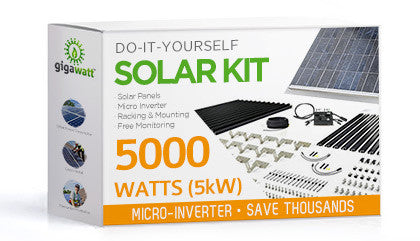
- Small/Backup Kits (500W-3kW): $1,000 – $6,000 (often portable, simpler systems)
- Medium Home Backup/Partial Off-Grid (3kW-8kW): $10,000 – $25,000
- Whole Home Off-Grid/Comprehensive Grid-Tied (8kW-15kW+): $25,000 – $60,000+
These figures are for the kit components themselves. Installation costs (if professional) can add another 10-20% to the total, though this varies greatly by region and complexity.
Federal, State & Local Incentives: The ITC & Beyond
The biggest incentive in the USA is the federal solar Investment Tax Credit (ITC), currently offering a 30% tax credit for eligible systems installed by a certain date. Many states and even local municipalities also offer their own incentives, rebates, or property tax exemptions. Always research what’s available in your area. These incentives can significantly reduce your net cost.
Long-Term Savings & ROI: Your Payback Period
With lower electricity bills, potential net metering credits, and the boost to your home’s value, solar energy systems often have a payback period of 5-10 years, sometimes even less when incentives are factored in. After the payback period, the electricity your system generates is essentially free, saving you tens of thousands of dollars over the system’s lifespan (25+ years for panels, 10-15+ for batteries and inverters).
Maintenance & Lifespan: Keeping Your System Healthy
Solar systems are generally low-maintenance. Panels may need occasional cleaning, and batteries (especially lead-acid) might require some attention. Modern lithium-ion batteries and inverters are designed for long lifespans, often coming with generous warranties (10-25 years for panels, 10-15 years for batteries and inverters).
The Best Solar Panel Kits with Battery and Inverter: Key Features to Look For
When comparing kits, go beyond the price tag and dig into these crucial details:
- Brand Reputation & Warranties: Choose reputable manufacturers with a proven track record. Excellent warranties on all components are a sign of quality and manufacturer confidence.
- Scalability & Expandability: Can you easily add more panels or batteries in the future if your energy needs grow? Modular systems offer this flexibility.
- Monitoring & Smart Home Integration: Many modern inverters and battery systems come with apps or online portals that let you monitor your energy production, consumption, and battery status in real-time. Some integrate with smart home platforms for advanced energy management.
- Customer Support & Technical Assistance: Even the best systems can encounter issues. Strong customer support from the kit provider or manufacturer is invaluable.
- Pre-wired or Pre-assembled Components: Some kits come with components like inverters and charge controllers pre-wired into an enclosure, greatly simplifying DIY installation.
Future-Proofing Your Home Energy: The Smart Choice Ahead
A home solar panel kit with a battery and inverter is more than just an energy solution; it’s an investment in your home’s future, your financial well-being, and a sustainable lifestyle. It offers resilience against power outages, significant savings on electricity, and a tangible way to contribute to a greener world. By understanding the components, matching a kit to your needs, and considering the costs and benefits, you can confidently embark on your journey toward true energy independence.
The technology is constantly evolving, becoming more efficient, affordable, and user-friendly. There has never been a better time to take control of your home’s energy future.
Frequently Asked Questions
What is included in a typical home solar panel kit with battery and inverter?
A complete kit typically includes solar panels to generate electricity, a battery bank to store excess energy, an inverter to convert DC power to AC for home use, a charge controller to manage battery charging, mounting hardware for the panels, and all necessary cabling and safety disconnects. Some kits may also include monitoring systems.
Can a solar kit with a battery and inverter power my entire home?
Yes, it absolutely can, but the system must be sized appropriately for your home’s energy consumption. Off-grid systems are designed for this purpose, while grid-tied systems with battery backup can provide whole-home power during outages if designed correctly. Accurate calculation of your daily energy use and peak loads is crucial for proper sizing.
What’s the difference between an off-grid and a grid-tied solar kit with a battery?
An off-grid kit operates completely independently of the utility grid, relying solely on solar generation and battery storage. A grid-tied kit with a battery remains connected to the utility grid, using the battery for backup power during outages or to optimize energy usage (e.g., peak shaving), while still drawing from or sending excess power to the grid.
How long do solar batteries last, and which type is best?
Battery lifespan varies significantly by type. Lead-acid batteries typically last 5-10 years (500-1,500 cycles), while modern lithium-ion (LiFePO4) batteries can last 10-15+ years (3,000-10,000+ cycles). Lithium-ion batteries are generally considered superior due to their longer lifespan, higher efficiency, deeper discharge capabilities, and minimal maintenance, despite a higher upfront cost.
Is it cheaper to install a solar kit myself or hire a professional?
DIY installation can significantly reduce upfront costs by saving on labor. However, it requires strong electrical knowledge, adherence to safety protocols, and understanding local permitting requirements. Professional installers offer expertise, ensure compliance with codes, often provide better warranties, and handle complex permitting, which can save time and prevent costly errors, making it a more reliable choice for most homeowners.
What kind of maintenance do solar panel kits require?
Solar panel kits are relatively low-maintenance. Panels may need occasional cleaning to remove dirt, leaves, or snow for optimal performance. Batteries, particularly flooded lead-acid types, may require periodic water replenishment. Modern lithium-ion batteries are virtually maintenance-free. It’s also wise to periodically check connections and monitor system performance via your inverter’s monitoring system.
How do I determine the right size solar kit for my home?
Start by reviewing your electricity bills to calculate your average daily kWh consumption. For off-grid systems, list all appliances you’ll power, their wattage, and daily usage hours. Don’t forget to account for peak loads (surge wattage) of appliances that start simultaneously. Factor in your location’s peak sun hours and consider future energy needs to ensure your system can reliably meet demand.


Post Comment