How To Build Your Own Solar Power System For Home
How to Build Your Own Solar Power System for Home: The Ultimate DIY Guide
Tired of those ever-increasing electricity bills? Dream of a home powered by clean, renewable energy? Imagine the satisfaction of flipping on a light switch, knowing that the power came directly from the sun, harnessed by a system you built yourself. Building your own solar power system for your home isn’t just a pipe dream; it’s an achievable, rewarding journey that puts energy independence squarely in your hands.
Table of Contents
- How to Build Your Own Solar Power System for Home: The Ultimate DIY Guide
- Is Building Your Own Solar System Right For You?
- Pros of DIY Solar:
- Cons of DIY Solar:
- Understanding Your Home Solar System Options
- Grid-Tied Systems: The Most Common Choice
- Off-Grid Systems: True Energy Independence
- Hybrid Systems: The Best of Both Worlds
- The Essential Components of a Home Solar System
- Solar Panels (PV Modules)
- Inverter
- Charge Controller (for Battery-Based Systems)
- Batteries (for Off-Grid/Hybrid)
- Mounting System
- Wiring & Electrical Components
- Monitoring System
- Step-by-Step Guide: Designing Your Home Solar System
- Step 1: Assess Your Energy Needs & Site
- Step 2: Determine System Size
- Step 3: Component Selection & System Design
- Step 4: Understand Permitting, Codes, & Incentives
- Step-by-Step Guide: Installing Your Home Solar System
- Step 5: Gather Tools & Safety Gear
- Step 6: Mount the Racking System
- Step 7: Install Solar Panels
- Step 8: Wire the DC Components
- Step 9: Install Inverter & AC Wiring
- Step 10: Install Batteries & Charge Controller (if applicable)
- Step 11: System Commissioning & Testing
- Step 12: Inspection & Interconnection
- Cost Considerations: What to Budget for Your DIY Solar System
- Average Cost Ranges (per Watt)
- Breakdown of Costs:
- Factors Influencing Cost:
- Maintaining Your Home Solar System
- The Future is Bright: Enjoying Your Solar Powered Home
This isn’t a simple weekend project, mind you. It requires research, planning, a bit of elbow grease, and a healthy respect for electrical safety. But the payoff – significant cost savings, reduced carbon footprint, and a deeper understanding of your home’s energy – is absolutely worth it. Consider this your definitive roadmap to going solar, the DIY way.
Is Building Your Own Solar System Right For You?
Before you even think about buying a solar panel, let’s get real: DIY solar isn’t for everyone. It’s crucial to weigh the advantages against the challenges to ensure you’re making an informed decision.
Pros of DIY Solar:
- Significant Cost Savings: This is often the biggest motivator. By eliminating professional labor costs, you can shave anywhere from 20-50% off the total price of a professionally installed system.
- Deep Learning Experience: You’ll gain invaluable knowledge about electrical systems, renewable energy, and your home’s energy consumption.
- Energy Independence: The ultimate goal! Reduce reliance on utility companies and protect yourself from rising electricity rates.
- Immense Satisfaction: There’s a unique pride that comes with powering your home with a system you personally built and installed.
- Customization: You have complete control over component selection, ensuring the system perfectly matches your needs and budget.
Cons of DIY Solar:
- Time and Effort: This is a substantial project, requiring many hours of planning, research, design, and physical labor.
- Technical Knowledge Required: While this guide will help, a basic understanding of electrical principles is essential. Mistakes can be costly or dangerous.
- Safety Risks: Working with electricity, at heights, and with heavy equipment carries inherent dangers. Proper safety precautions are non-negotiable.
- Permitting Complexity: Navigating local building codes, electrical codes (like the NEC), and utility interconnection agreements can be daunting.
- Warranty Limitations: Some manufacturers might void warranties if equipment isn’t installed by certified professionals.
- No Professional Support: If something goes wrong, you’re responsible for troubleshooting and repairs.
When to Consider Professional Installation vs. DIY: If you’re uncomfortable with electrical work, lack the time, or your local regulations make DIY particularly challenging, a professional installer might be a better (and safer) choice. However, if you’re handy, methodical, and committed to learning, DIY solar is incredibly rewarding.
Understanding Your Home Solar System Options
Before you begin designing, you need to decide which type of solar system best fits your home and lifestyle. There are three primary configurations, each with distinct advantages and disadvantages.
Grid-Tied Systems: The Most Common Choice
This is what most homeowners envision when they think of solar. Your solar panels generate electricity, which is converted by an inverter and fed directly into your home’s electrical panel. Any excess electricity is sent back to the utility grid, often earning you credits through a program called net metering.
- How They Work: Panels → Inverter → Home & Grid. When solar production exceeds home demand, the excess flows to the grid. When home demand exceeds solar production (e.g., at night), you draw power from the grid.
- Pros: Lowest upfront cost, the grid acts as an unlimited ‘battery’ (no need for physical batteries), simpler installation than off-grid.
- Cons: Still reliant on the utility grid. Without a specialized inverter or battery backup, your system will shut down during a grid outage for safety (anti-islanding).
Off-Grid Systems: True Energy Independence
Off-grid systems are entirely independent of the utility grid. All generated electricity is either used immediately or stored in a battery bank for later use. These are common in remote locations without grid access.
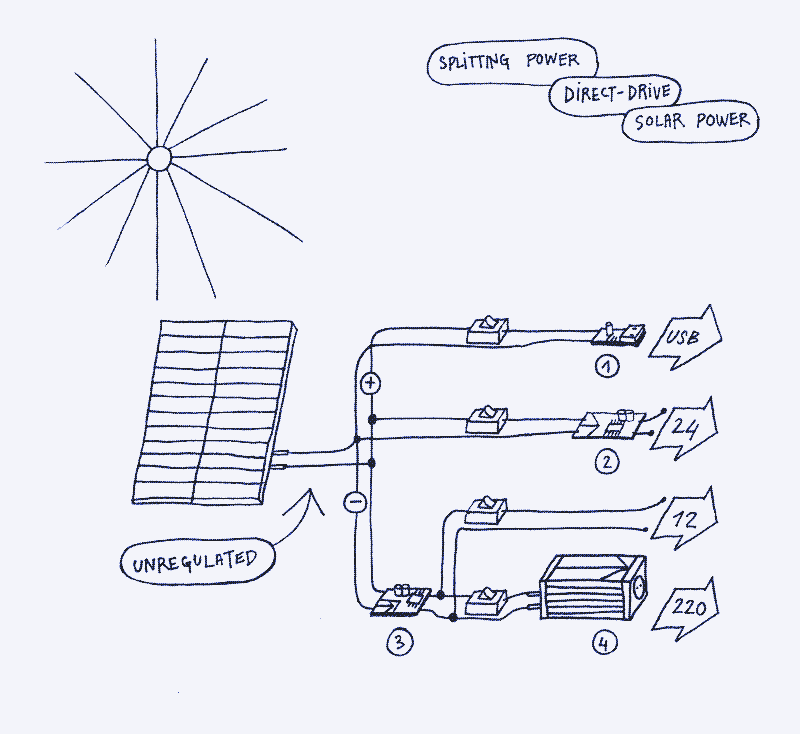
- How They Work: Panels → Charge Controller → Battery Bank → Inverter → Home. Batteries are absolutely essential for storing energy for nights and cloudy days.
- Pros: Total energy independence, ideal for cabins or homes in areas without grid access, no utility bills ever.
- Cons: Highest initial cost (due to batteries), complex battery management, careful system sizing is critical to avoid running out of power.
Hybrid Systems: The Best of Both Worlds
Hybrid systems combine elements of both grid-tied and off-grid systems. They are connected to the utility grid but also include a battery bank. This allows you to store excess solar energy for your own use (e.g., during peak hours or outages) rather than sending it all back to the grid.
- How They Work: Panels → Hybrid Inverter → Home & Battery Bank & Grid. You can charge batteries from solar, use battery power when needed, and still draw from or send to the grid.
- Pros: Provides power during grid outages, optimizes self-consumption, potential for energy arbitrage (charging when electricity is cheap, using when expensive).
- Cons: Higher cost than standard grid-tied, more complex than simple grid-tied systems.
| System Type | Description | Pros | Cons | Key Components |
|---|---|---|---|---|
| Grid-Tied | Connects directly to the utility grid, often utilizing net metering. | Lowest upfront cost, grid acts as unlimited battery, simple setup. | No power during grid outages (without specific inverter), still reliant on utility. | Solar Panels, Grid-Tied Inverter, Racking, Wiring, Meter |
| Off-Grid | Completely independent of the utility grid, stores excess energy in batteries. | Total energy independence, ideal for remote locations, no utility bills. | Highest upfront cost, complex battery management, system sizing critical. | Solar Panels, Charge Controller, Battery Bank, Off-Grid Inverter, Racking, Wiring |
| Hybrid | Combines grid connection with battery storage for backup and optimized self-consumption. | Power during outages, optimize self-consumption, potential energy arbitrage. | Higher cost than grid-tied, more complex than grid-tied. | Solar Panels, Hybrid Inverter, Battery Bank, Racking, Wiring, Meter |
The Essential Components of a Home Solar System
Regardless of the system type you choose, several core components are universally necessary. Understanding each one is key to making smart purchasing decisions.
Solar Panels (PV Modules)
These are the stars of the show, converting sunlight into DC (direct current) electricity. Key considerations:
- Types:
- Monocrystalline: Most efficient, sleek black appearance, best for limited space.
- Polycrystalline: Slightly less efficient but more affordable, blueish appearance.
- Thin-Film: Lowest efficiency, flexible, niche applications, not common for residential rooftops.
- Efficiency: How much sunlight is converted to electricity (typically 17-23% for residential).
- Wattage: The power output of a single panel (e.g., 300W, 400W).
- Warranty: Look for performance warranties (e.g., 25 years at 80% original output).
Inverter
The brain of your solar system. It converts the DC electricity from your panels into AC (alternating current) electricity that your home appliances use and that the grid accepts.
- String Inverters: One central inverter handles multiple strings (series of panels). More affordable, but if one panel’s performance drops (due to shade), it affects the whole string.
- Micro-inverters: Each panel has its own small inverter. Maximize individual panel output, great for shaded roofs, easier to expand, but higher upfront cost.
- Hybrid Inverters: Used in hybrid systems, they can manage both grid interaction and battery charging/discharging.
Charge Controller (for Battery-Based Systems)
If you’re using batteries (off-grid or hybrid), a charge controller is vital. It regulates the voltage and current coming from your solar panels to charge your batteries safely and efficiently, preventing overcharging.
- MPPT (Maximum Power Point Tracking): More expensive, but significantly more efficient (10-30% more power) by optimizing the voltage from the panels. Highly recommended.
- PWM (Pulse Width Modulation): Simpler, less expensive, but less efficient. Better for smaller, less critical systems.
Batteries (for Off-Grid/Hybrid)
For systems that need energy storage, batteries are a significant investment. They store excess solar energy for use when the sun isn’t shining.
- Types:
- Lead-Acid: Cheaper upfront, but heavier, shorter lifespan, requires maintenance, and sensitive to deep discharges.
- Lithium-Ion: More expensive but lighter, longer lifespan, higher depth of discharge, maintenance-free, better performance. Increasingly becoming the standard.
- Capacity: Measured in Amp-hours (Ah) or kilowatt-hours (kWh). Size according to your daily energy needs and desired days of autonomy.
- Depth of Discharge (DoD): The percentage of a battery’s capacity that has been discharged. Lithium batteries can handle deeper discharges.
Mounting System
This is the framework that secures your panels to your roof or ground. It must be robust enough to withstand local weather conditions (wind, snow).
- Roof Mount: Most common. Requires careful penetration and flashing to prevent leaks.
- Ground Mount: Offers optimal tilt and azimuth angles, easier access for cleaning, but takes up yard space.
Wiring & Electrical Components
This includes all the cables, connectors, conduit, circuit breakers, disconnects, and combiner boxes necessary to safely integrate your system. Proper sizing and installation are critical for safety and efficiency.

Monitoring System
Many inverters and battery systems come with monitoring capabilities that allow you to track your energy production, consumption, and battery status via a smartphone app or web portal. This helps you ensure your system is performing optimally.
Step-by-Step Guide: Designing Your Home Solar System
Good design is the foundation of a successful DIY solar project. Don’t rush this phase; precision here saves headaches later.
Step 1: Assess Your Energy Needs & Site
- Calculate Average Daily Energy Consumption: Look at your past 12 months of utility bills. Find your average monthly kWh usage and divide by 30 to get your daily average. This is your target.
- Analyze Sun Exposure (Shade Analysis): Identify any objects (trees, chimneys, other buildings) that cast shade on your proposed panel location throughout the day and year. Even partial shade on one panel can significantly reduce output. Use a solar pathfinder tool or an app.
- Check Roof Suitability:
- Age & Condition: A new roof (less than 10 years old) is ideal. If your roof is old, consider replacing it before installing solar.
- Orientation: In the Northern Hemisphere, south-facing roofs are generally best. Southwest or southeast are also good.
- Pitch: An angle roughly equal to your geographical latitude is often optimal, but a range of pitches work well.
- Available Space: Measure the exact dimensions of usable roof space, accounting for fire setbacks (check local codes).
Step 2: Determine System Size
This is where your energy consumption data meets your solar production potential.
- Required Panel Output: Take your average daily kWh usage and divide it by the peak sun hours for your location (available from NREL or other solar maps). Factor in system losses (typically 15-25% due to temperature, wiring, inverter efficiency, dirt on panels).
Formula: (Daily kWh Usage / Peak Sun Hours) * 1.25 (for 25% losses) = Required DC System Size (in kW) - Sizing for Off-Grid (Battery Bank Size): This is more complex. You need to determine how many days of autonomy (power without sun) you want, then multiply your daily kWh usage by that number. Factor in battery depth of discharge and inverter efficiency when sizing the battery bank.
Step 3: Component Selection & System Design
- Choose Panel Type and Quantity: Based on your required system size and available space, select panel wattage and quantity.
- Select Inverter Type and Size: Match your inverter’s AC output to your system’s DC input, accounting for panel wattage and voltage. Decide between string, micro, or hybrid.
- Size Charge Controller and Battery Bank (if applicable): Ensure the charge controller can handle the maximum current from your solar array and that your battery bank has sufficient capacity.
- Design Electrical Wiring Diagram (DC & AC): This is crucial. Map out all wire runs, connections, fuses, breakers, and disconnects. Pay close attention to wire gauge (size) to prevent voltage drop and overheating. The National Electrical Code (NEC) is your bible here.
- Plan Mounting Layout: Create a diagram showing the exact placement of each panel, ensuring proper spacing and clearances.
Step 4: Understand Permitting, Codes, & Incentives
This administrative phase is often the most frustrating but absolutely necessary.
- Local Building & Electrical Codes (NEC): Obtain and review your local building department’s requirements for solar installations. The National Electrical Code (NEC) governs all electrical installations in the US.
- Permitting Process: You’ll likely need to submit your system design, electrical schematics, and structural plans for review and approval. Be prepared for revisions.
- Utility Interconnection Agreement (for Grid-Tied): Before connecting to the grid, you MUST have an agreement with your utility company. They will require inspections and may install a new net meter.
- Federal (ITC), State, and Local Incentives: Research available tax credits (like the federal Investment Tax Credit – ITC), state rebates, or local programs that can significantly reduce your system’s cost. Understand eligibility requirements.
Step-by-Step Guide: Installing Your Home Solar System
Once your design is approved and components are on-site, it’s time for the physical installation. Safety is paramount at every stage.
Step 5: Gather Tools & Safety Gear
Before touching anything, ensure you have:
- Essential Tools: Wrenches, screwdrivers, wire cutters/strippers, multimeter, drill, stud finder, caulk gun, conduit bender (if needed).
- Safety Gear: Fall protection harness (for roof work), safety glasses, work gloves, hard hat, insulated tools (for electrical work), lockout/tagout kit. Never work on live electrical circuits.
Step 6: Mount the Racking System
- Locate Rafters: Use a stud finder to mark the precise location of your roof rafters. Your racking system must be securely anchored into these structural members.
- Attach Standoffs/Flashings: Drill pilot holes, apply sealant, and securely bolt the standoffs or flashing plates to the rafters. Proper flashing is critical to prevent leaks.
- Install Rails: Attach the mounting rails to the standoffs, ensuring they are level, straight, and properly spaced according to your panel dimensions.
Step 7: Install Solar Panels
- Lift Panels Safely: Solar panels are heavy and cumbersome. Use appropriate lifting techniques and get help.
- Secure Panels: Carefully place each panel onto the racking rails and secure them with clamps according to the manufacturer’s instructions. Ensure proper spacing between panels.
- Grounding: Connect the grounding wire to each panel frame and to the racking system.
Step 8: Wire the DC Components
- Connect Panels: Connect the panels together in series and/or parallel as per your system design. Use MC4 connectors (or similar specified connectors) for weather-tight and secure connections.
- Run Conduits: Route the DC wiring from the panels through weather-rated conduits down to your inverter (or charge controller/combiner box). Seal all conduit entry points.
- Connect to Inverter/Charge Controller: Wire the DC input from the solar array to the appropriate terminals on your inverter (or charge controller if you have batteries), ensuring correct polarity. Install DC disconnects.
Step 9: Install Inverter & AC Wiring
- Mount Inverter: Securely mount the inverter in a cool, dry, well-ventilated location (often in a garage or utility room), adhering to manufacturer clearance requirements.
- Connect AC Output: Run AC wiring from the inverter’s output to your home’s main service panel (breaker box). This typically involves installing a new circuit breaker and potentially an AC disconnect. This step often requires an electrician, especially for grid-tied systems.
- Ground Fault Protection: Ensure all necessary ground fault protection is in place.
Step 10: Install Batteries & Charge Controller (if applicable)
- Mount Charge Controller & Batteries: Mount the charge controller near the battery bank. Place batteries in a well-ventilated area, away from living spaces if they are lead-acid (due to off-gassing).
- Wire Batteries: Connect batteries in series or parallel to achieve the desired voltage and capacity. Use heavy-gauge battery cables and appropriate fusing. Ensure all connections are tight and secure.
- Connect Charge Controller to Batteries: Wire the charge controller’s output to the battery bank, again ensuring correct polarity and proper fusing.
Step 11: System Commissioning & Testing
- Double-Check All Connections: Before powering up, meticulously inspect every single wire connection, screw terminal, and fuse.
- Voltage Checks: Use your multimeter to verify DC voltage from the panels, battery voltage, and AC voltage from the inverter (before connecting to the grid).
- Start-up Sequence: Follow the manufacturer’s recommended start-up procedure for your charge controller and inverter.
Step 12: Inspection & Interconnection
- Final Inspections: Once you’re confident your system is fully installed and safe, schedule the required inspections by local building and electrical authorities. They will verify compliance with codes and your approved plans.
- Utility Hookup (for Grid-Tied): After passing inspections, your utility company will typically install a net meter (if not already present) and give you final authorization to energize your system and connect to the grid.
Cost Considerations: What to Budget for Your DIY Solar System
One of the main draws of DIY solar is the potential for significant cost savings. While professional installation might run $2.50-$3.50+ per watt, a DIY system can often come in under $2.00 per watt, sometimes even closer to $1.00-$1.50 per watt if you source components smartly.
Average Cost Ranges (per Watt)
- DIY Grid-Tied System: ~$1.00 – $2.00 per watt (excluding labor, but including materials).
- DIY Off-Grid/Hybrid System: ~$2.00 – $4.00+ per watt (batteries add substantial cost).
Breakdown of Costs:
- Solar Panels: Typically $0.50 – $0.90 per watt.
- Inverter(s): $0.20 – $0.50 per watt (micro-inverters are on the higher end, hybrid inverters even more).
- Batteries (if applicable): This is highly variable, from a few hundred dollars for small lead-acid to $10,000+ for large lithium-ion banks.
- Racking & Mounting Hardware: $0.15 – $0.30 per watt.
- Wiring, Conduit, Breakers, Disconnects: $0.10 – $0.25 per watt.
- Permitting & Inspection Fees: $100 – $500+.
- Tools & Safety Gear: Variable, depending on what you already own.
- Professional Hookup (Optional): If you hire an electrician for the final grid connection, budget for their labor.
Factors Influencing Cost:
- System Size: Larger systems generally have a lower cost per watt.
- Component Quality: Premium, high-efficiency panels or advanced inverters will increase costs.
- Battery Inclusion: Batteries significantly increase the total project cost.
- Market Fluctuations: Prices for solar components can change.
- Incentives: Federal, state, and local incentives can offset a significant portion of the cost.
Maintaining Your Home Solar System
Once your system is up and running, maintenance is relatively low, but not entirely hands-off. A little attention goes a long way in ensuring peak performance and longevity.

- Panel Cleaning: Rain often does a good job, but occasional cleaning (especially after dusty periods or heavy pollen) can improve output by 5-15%. Use water and a soft brush; avoid harsh chemicals.
- Battery Maintenance (if applicable): For lead-acid batteries, check electrolyte levels periodically and add distilled water. Keep terminals clean. Lithium-ion batteries are generally maintenance-free.
- Monitoring Performance: Regularly check your system’s monitoring app or display to ensure it’s producing as expected. A sudden drop in output could indicate an issue.
- Visual Inspections: Periodically check wiring, conduits, and mounting hardware for any signs of wear, corrosion, or loose connections. Look for shading issues that might have developed (e.g., new tree growth).
- Troubleshooting Common Issues: Most issues are minor (e.g., a dirty panel, an inverter fault code). Consult your component manuals for basic troubleshooting. For complex electrical issues, call a professional.
The Future is Bright: Enjoying Your Solar Powered Home
Building your own solar power system for your home is an empowering undertaking. It’s a journey that demands patience, meticulous planning, and a commitment to safety, but the rewards are profound. You’re not just installing panels; you’re investing in your home’s future, contributing to a cleaner planet, and gaining a newfound sense of self-reliance. The sun is an incredible, free resource – now go harness it!
Frequently Asked Questions
What is the average lifespan of a DIY solar system?
With quality components, solar panels typically last 25-30 years or more, often with a 25-year performance warranty. Inverters might need replacement after 10-15 years, and batteries (especially lithium-ion) can last 10-15 years depending on usage and type. A well-maintained DIY system can easily provide decades of clean energy.
Can I really save money by building my own solar system?
Absolutely. The primary saving comes from eliminating professional labor costs, which can reduce the total system price by 20-50%. While component costs are similar, DIY reduces the overall investment, leading to a faster payback period and greater long-term savings on electricity bills.
Do I need a battery for a home solar system?
It depends on your system type. For a standard grid-tied system, batteries are optional; the utility grid acts as your ‘battery’ through net metering. However, for off-grid systems, batteries are essential for storing energy. Hybrid systems also use batteries to provide backup power during outages and optimize energy usage.
How long does it take to install a DIY solar system?
The total time varies greatly depending on system size, complexity, your experience, and local permitting processes. Planning and permitting alone can take weeks to months. The physical installation might take 3-7 full days for a homeowner with some help, spread out over several weekends, excluding any professional electrical hookup time.
What are the biggest risks of DIY solar installation?
The biggest risks include electrical hazards (shock, fire), fall risks from roof work, improper installation leading to roof leaks, and non-compliance with local codes which can result in fines or denial of interconnection. Always prioritize safety, follow electrical codes, and consider hiring a professional for critical electrical connections.
Is it legal to build my own solar system?
Yes, in most places in the USA, it is legal for a homeowner to install their own solar system. However, you MUST adhere to all local building codes, electrical codes (like the NEC), obtain necessary permits, and get proper inspections. For grid-tied systems, you also need an interconnection agreement with your utility company.
What’s the difference between grid-tied and off-grid for a home?
A grid-tied system is connected to the utility company’s electrical grid, using it as a backup and often selling excess power. An off-grid system is entirely self-sufficient, relying on batteries to store all generated energy and having no connection to the utility grid.


Post Comment