Off Grid Solar System Kit With Batteries
Off-Grid Solar System Kits with Batteries: Your Definitive Guide to Energy Independence
Imagine a life where your power isn’t dictated by utility poles or fluctuating grid prices. A life where blackouts are a mere inconvenience for your neighbors, not you. This isn’t a futuristic fantasy; it’s the reality offered by an off-grid solar system kit with batteries. For those seeking true energy independence, whether for a remote cabin, a tiny home, an RV adventure, or simply to fortify their main residence against the unexpected, these comprehensive kits are the ultimate solution. You’re not just buying solar panels; you’re investing in self-sufficiency, sustainability, and peace of mind.
Table of Contents
- Off-Grid Solar System Kits with Batteries: Your Definitive Guide to Energy Independence
- What Exactly is an Off-Grid Solar System Kit with Batteries?
- Beyond the Basics: Core Components You’ll Find in Your Kit
- Why Go Off-Grid with Batteries? The Undeniable Benefits
- Total Energy Independence & Self-Sufficiency
- Protection from Grid Outages
- Reduced or Eliminated Electricity Bills
- Environmental Impact & Carbon Footprint Reduction
- Value for Remote Locations & Cabins
- Sizing Your Off-Grid Solar System Kit: The Critical First Step
- Calculating Your Daily Energy Consumption (Load Assessment)
- Determining Battery Bank Capacity
- Sizing Your Solar Panel Array
- Matching Your Inverter & Charge Controller
- Choosing the Right Off-Grid Solar System Kit: Key Considerations
- Pre-Assembled vs. Component-Based Systems
- Battery Technology Deep Dive: LiFePO4 vs. Lead-Acid
- Inverter Quality & Features
- Expandability & Future-Proofing
- Warranties & Customer Support
- Certifications & Safety Standards
- Off-Grid Solar Kit Costs: What to Expect
- Component Cost Breakdown
- Installation Costs (DIY vs. Professional)
- Long-Term Maintenance & Replacement Costs
- Potential Incentives & Tax Credits (USA Focus)
- Installation & Maintenance: Practical Realities
- DIY vs. Professional Installation: Pros & Cons
- Essential Maintenance Tips for Longevity
- Permitting and Regulations (Brief Mention for Awareness)
- Common Pitfalls to Avoid When Buying an Off-Grid Kit
- Under-Sizing Your System
- Neglecting Battery Health
- Ignoring Component Compatibility
- Buying Cheap, Low-Quality Components
- Your Path to Sustainable Power
- Off-Grid Solar System Kits with Batteries: Your Definitive Guide to Energy Independence
- What Exactly is an Off-Grid Solar System Kit with Batteries?
- Beyond the Basics: Core Components You’ll Find in Your Kit
- Why Go Off-Grid with Batteries? The Undeniable Benefits
- Total Energy Independence & Self-Sufficiency
- Protection from Grid Outages
- Reduced or Eliminated Electricity Bills
- Environmental Impact & Carbon Footprint Reduction
- Value for Remote Locations & Cabins
- Sizing Your Off-Grid Solar System Kit: The Critical First Step
- Calculating Your Daily Energy Consumption (Load Assessment)
- Determining Battery Bank Capacity
- Sizing Your Solar Panel Array
- Matching Your Inverter & Charge Controller
- Choosing the Right Off-Grid Solar System Kit: Key Considerations
- Pre-Assembled vs. Component-Based Systems
- Battery Technology Deep Dive: LiFePO4 vs. Lead-Acid
- Inverter Quality & Features
- Expandability & Future-Proofing
- Warranties & Customer Support
- Certifications & Safety Standards
- Off-Grid Solar Kit Costs: What to Expect
- Component Cost Breakdown
- Installation Costs (DIY vs. Professional)
- Long-Term Maintenance & Replacement Costs
- Potential Incentives & Tax Credits (USA Focus)
- Installation & Maintenance: Practical Realities
- DIY vs. Professional Installation: Pros & Cons
- Essential Maintenance Tips for Longevity
- Permitting and Regulations (Brief Mention for Awareness)
- Common Pitfalls to Avoid When Buying an Off-Grid Kit
- Under-Sizing Your System
- Neglecting Battery Health
- Ignoring Component Compatibility
- Buying Cheap, Low-Quality Components
- Your Path to Sustainable Power
But stepping off the grid can feel daunting. What components do you really need? How big should your system be? What’s the real cost? And what about those critical batteries? Don’t worry. I’m here to demystify the entire process, guiding you through everything you need to know to choose, size, and understand your perfect off-grid solar setup.
What Exactly is an Off-Grid Solar System Kit with Batteries?
At its core, an off-grid solar system kit with batteries is a complete package designed to generate, store, and deliver electricity entirely independent of the public utility grid. Unlike grid-tied systems that send excess power back to the grid and draw from it when needed, an off-grid system makes you your own power company. The “with batteries” part is crucial here; without them, your power stops as soon as the sun goes down or disappears behind clouds. Batteries store the energy for when you need it most.
Beyond the Basics: Core Components You’ll Find in Your Kit
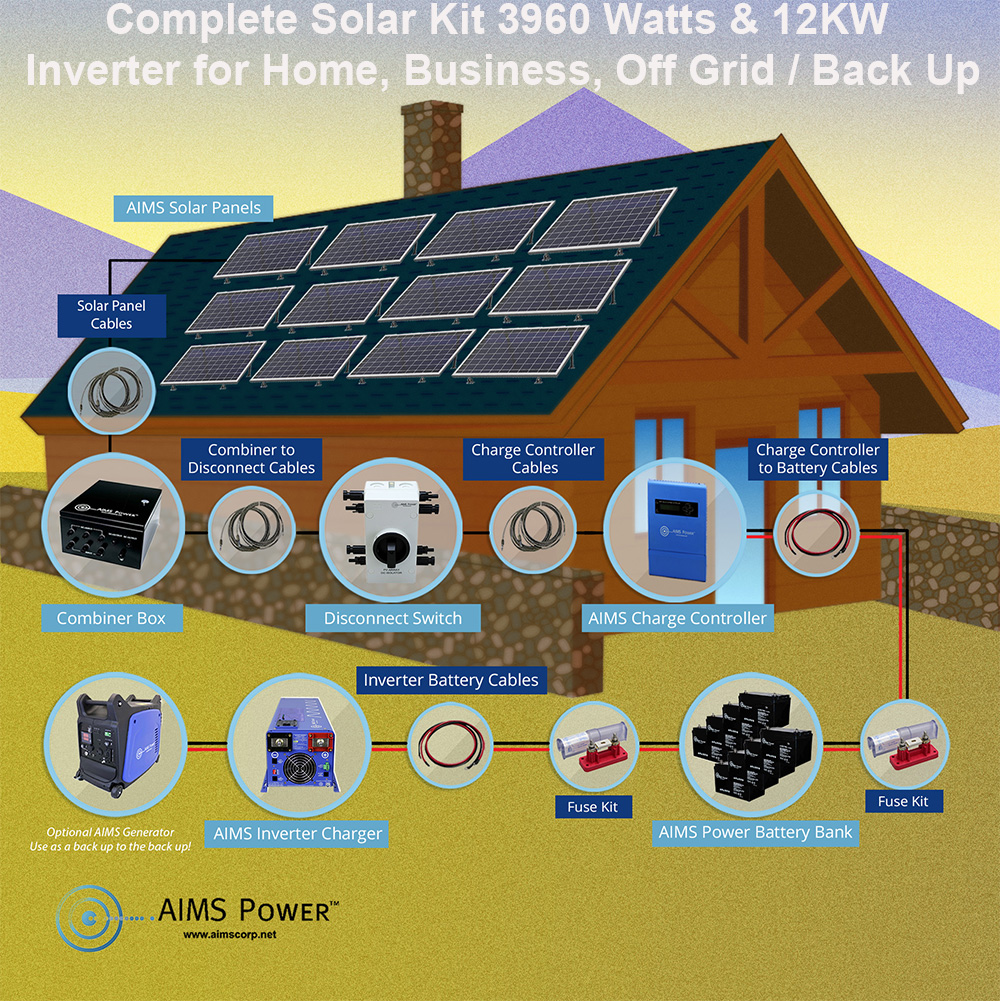
While specific kits vary, a quality off-grid solar system will typically include these fundamental components:
- Solar Panels: These are the workhorses, converting sunlight into DC (Direct Current) electricity. You’ll find monocrystalline (higher efficiency, compact) and polycrystalline (more cost-effective, slightly lower efficiency) options. Their total wattage determines how much power you can generate.
- Batteries: The heart of your off-grid system. Batteries store the DC power generated by your panels. Without them, you’d only have power when the sun is shining. The type and capacity of your batteries are paramount for reliable off-grid living.
- Charge Controller: This vital device regulates the voltage and current coming from your solar panels to your batteries. It prevents overcharging, which can severely damage battery life. MPPT (Maximum Power Point Tracking) controllers are more efficient than PWM (Pulse Width Modulation), especially in varying weather conditions, maximizing energy harvest.
- Inverter: Your solar panels and batteries produce DC power, but most household appliances run on AC (Alternating Current) power. The inverter converts DC to AC, making your solar energy usable for your home. You’ll typically want a pure sine wave inverter for sensitive electronics, as modified sine wave inverters can cause issues.
- Racking & Mounting Hardware: These secure your solar panels to your roof, the ground, or a pole mount, ensuring they’re positioned optimally for sunlight exposure and can withstand local weather conditions.
- Cabling & Balance of System (BOS) Components: This includes all the necessary wires, connectors, fuses, circuit breakers, and disconnects that safely link your system together. Don’t underestimate the importance of high-quality, properly sized cabling.
Why Go Off-Grid with Batteries? The Undeniable Benefits
Choosing an off-grid solar system with batteries isn’t just a trend; it’s a strategic move that offers a cascade of advantages for the right user. Let’s break down why so many are embracing this lifestyle.
Total Energy Independence & Self-Sufficiency
This is the big one. Imagine never seeing another electricity bill. With an off-grid system, you are your own utility company. You generate your power, you store it, and you use it. This level of self-reliance is incredibly empowering, freeing you from rate hikes, service charges, and the vulnerability of a centralized grid.
Protection from Grid Outages
When the grid goes down, your lights stay on. Your refrigerator keeps running. Your internet remains active (if you have an off-grid connection). Off-grid systems provide an unparalleled level of energy security, making them perfect for areas prone to severe weather, natural disasters, or simply unreliable grid infrastructure.
Reduced or Eliminated Electricity Bills
While the initial investment is significant, the long-term savings are substantial. Once your system is paid for, your primary “fuel” is free sunlight. You’ll drastically reduce, or completely eliminate, your monthly electricity costs, offering a predictable energy expense for decades.
Environmental Impact & Carbon Footprint Reduction
Powering your life with solar means saying goodbye to fossil fuels and their associated emissions. You’ll be actively contributing to a cleaner planet, reducing your carbon footprint, and setting an example for sustainable living. This is a choice that feels good, both for your wallet and your conscience.
Value for Remote Locations & Cabins
Extending grid power to a remote property can be prohibitively expensive, often costing tens of thousands of dollars per mile. For cabins, homesteads, or other far-flung locations, an off-grid solar kit is frequently the most economical and practical solution for bringing reliable electricity to where you need it.
Sizing Your Off-Grid Solar System Kit: The Critical First Step
Under-sizing your system leads to frustration and power shortages. Over-sizing wastes money. Getting it right is crucial. This isn’t guesswork; it’s a calculated process. Here’s how you approach it.
Calculating Your Daily Energy Consumption (Load Assessment)
Before you even look at a kit, you need to understand how much power you actually use. This is called a load assessment. Grab your utility bills (if you have them) or walk through your property and list every appliance you might want to power.
- List All Appliances: From your refrigerator to your phone charger, every electrical device.
- Find Their Wattage: Look for labels on appliances, owner’s manuals, or do a quick online search.
- Estimate Daily Usage: How many hours per day will each appliance run? Be realistic!
- Calculate Watt-Hours (Wh) per Day: Wattage (W) x Hours Used (h) = Wh.
- Sum It Up: Add all the daily Wh figures to get your total daily energy consumption.
- Add a Buffer: Always add 10-20% for unforeseen usage or cloudy days.
Table: Common Appliance Wattage Examples
| Appliance | Average Wattage (W) | Approx. Daily Use (hours) | Daily Watt-Hours (Wh) |
|---|---|---|---|
| LED Light Bulb | 10 | 6 | 60 |
| Refrigerator (Energy Star) | 100-200 (runs intermittently) | 8-12 | 800-2400 |
| Laptop | 60 | 4 | 240 |
| Microwave | 1000-1500 | 0.25 (15 min) | 250-375 |
| Well Pump (1 HP) | 1000-1500 | 0.5 | 500-750 |
Determining Battery Bank Capacity
Your battery bank needs to store enough energy to last through periods without sun (nighttime, cloudy days). This is measured in “days of autonomy.” For most off-grid setups, 2-3 days is a safe buffer. You also need to consider “depth of discharge” (DoD) – how much of the battery’s capacity you can use without damaging it. For lead-acid, 50% DoD is common; for LiFePO4, it can be 80-100%.
Formula: (Total Daily Wh x Days of Autonomy) / (Battery Voltage x Max DoD) = Required Amp-Hours (Ah).
Sizing Your Solar Panel Array
Your panels must generate enough power to meet your daily needs and fully recharge your batteries. This depends on your location’s “peak sun hours” – the average number of hours per day your panels receive direct, intense sunlight. These vary significantly by geography and season.
Formula: (Total Daily Wh x System Losses Factor) / Peak Sun Hours = Required Solar Panel Wattage.
Matching Your Inverter & Charge Controller
Your inverter’s continuous wattage rating must be greater than the sum of all appliances you expect to run simultaneously. Its surge rating needs to handle the brief power spikes when motors (like refrigerators or well pumps) start up. The charge controller’s amperage rating must be sufficient to handle the total current from your solar array without overheating.
Choosing the Right Off-Grid Solar System Kit: Key Considerations
With your energy needs quantified, it’s time to evaluate the market. Not all kits are created equal, and understanding the nuances will save you headaches (and money) down the line.
Pre-Assembled vs. Component-Based Systems
- Pre-Assembled Kits: These are typically designed for ease of installation, with all components matched and often pre-wired to some extent. Great for DIYers or those who want a simpler setup. However, they might offer less flexibility for customization or future expansion.
- Component-Based Systems: For the more experienced or those with very specific needs, buying individual high-quality components and building a system offers maximum flexibility. This requires more technical knowledge and integration effort.
Battery Technology Deep Dive: LiFePO4 vs. Lead-Acid
The choice of battery technology is arguably the most critical decision for an off-grid system. It impacts cost, lifespan, performance, and maintenance.
Table: Battery Type Comparison for Off-Grid Systems
| Feature | LiFePO4 (Lithium Iron Phosphate) | Lead-Acid (Flooded/AGM/Gel) |
|---|---|---|
| Initial Cost | Higher | Lower |
| Lifespan (Cycles) | 3,000 – 10,000+ | 500 – 1,500 |
| Depth of Discharge (DoD) | 80% – 100% | 30% – 50% (for longevity) |
| Efficiency | ~99% | ~80-85% |
| Weight | Much Lighter | Very Heavy |
| Maintenance | Virtually None | Regular watering (flooded), minimal for AGM/Gel |
| Temperature Sensitivity | Can’t charge below freezing (without heating) | Performance degrades in extreme cold/heat |
While LiFePO4 batteries have a higher upfront cost, their superior lifespan, efficiency, deeper DoD, and lack of maintenance often make them the more economical and reliable choice over the long term for serious off-grid applications.
Inverter Quality & Features
Look for inverters from reputable brands that offer pure sine wave output. Consider features like:
- Surge Capacity: Essential for starting motors.
- Efficiency: Higher efficiency means less power wasted in conversion.
- Integrated Charge Controller: Some modern inverters include an MPPT charge controller, simplifying wiring.
- Monitoring Capabilities: Remote monitoring via an app or display is incredibly useful.
Expandability & Future-Proofing
Will your energy needs grow? Can you easily add more panels or batteries to the kit? A modular system or one designed for expansion is a smart long-term investment. Consider if the inverter or charge controller can handle additional capacity.
Warranties & Customer Support
High-quality solar components come with robust warranties. Panels often have 25-year performance warranties, inverters typically 5-10 years, and batteries 5-15 years depending on the type. Excellent customer support from your kit provider is invaluable when questions or issues arise.
Certifications & Safety Standards
Ensure all components meet relevant safety and performance standards (e.g., UL listings in the USA). This isn’t just about compliance; it’s about protecting your investment and your property.
Off-Grid Solar Kit Costs: What to Expect
The cost of an off-grid solar system kit with batteries varies wildly based on size, components, and brand. You can find small kits for RVs or basic backup for a few thousand dollars, while whole-home systems can easily range from $15,000 to $50,000+ before installation.
Component Cost Breakdown
- Solar Panels: Generally $0.80 – $1.50 per watt.
- Batteries: This is often the most expensive component. LiFePO4 batteries can cost $0.50 – $1.00+ per Wh (Watt-hour) of usable capacity. Lead-acid is cheaper upfront but has a higher cost per cycle over its lifetime.
- Inverter/Charge Controller: Ranging from $500 for smaller units to $5,000+ for large, integrated systems.
- Racking & BOS: Varies based on mounting type and system complexity, but budget several hundred to a few thousand dollars.
Installation Costs (DIY vs. Professional)
If you’re comfortable with electrical work and can follow instructions meticulously, a DIY installation of a pre-assembled kit can save you thousands. However, for larger, more complex systems or if you lack experience, professional installation is highly recommended and adds 10-20% (or more) to the total cost. Safety and compliance are paramount.
Long-Term Maintenance & Replacement Costs
While solar panels are generally low maintenance, batteries are a consumable. Lead-acid batteries require periodic checks and watering, and both types have a finite lifespan. Budget for eventual battery replacement (every 5-15 years, depending on type and usage) and occasional component checks.
Potential Incentives & Tax Credits (USA Focus)
The good news is that even for off-grid systems, you can often qualify for the federal solar investment tax credit (ITC) in the USA. This credit allows you to deduct a percentage of the cost of installing an eligible solar energy system from your federal taxes. As of my last update, it’s a significant percentage, so research current rates. Some states and local municipalities also offer additional incentives, rebates, or property tax exemptions for renewable energy systems. Always check with your local and federal government resources.
Installation & Maintenance: Practical Realities
Once you’ve selected your kit, the next phase is getting it up and running. This involves careful planning and execution.
DIY vs. Professional Installation: Pros & Cons
- DIY Pros: Significant cost savings, deep understanding of your system, sense of accomplishment.
- DIY Cons: Requires electrical knowledge, time-consuming, potential for errors if not careful, safety risks, may void warranties if not done correctly, permitting challenges.
- Professional Pros: Expert installation, adherence to codes, warranty protection, peace of mind, potentially faster.
- Professional Cons: Higher upfront cost.
For most residential off-grid systems, especially those connected to a permanent dwelling, I strongly recommend consulting with or hiring a licensed electrician or solar installer. Electrical work can be dangerous, and incorrect installation can lead to fires or equipment damage.
Essential Maintenance Tips for Longevity
While off-grid solar systems are robust, a little care goes a long way:
- Keep Panels Clean: Dust, dirt, leaves, and snow can reduce efficiency. Clean them periodically with water and a soft brush.
- Inspect Wiring: Annually check all connections for corrosion, looseness, or damage.
- Monitor Battery Health: For lead-acid, check electrolyte levels and specific gravity. For LiFePO4, monitor via your system’s management app.
- Check Ventilation: Ensure your battery bank and inverter area are well-ventilated to prevent overheating.
- Software Updates: Keep your inverter and charge controller firmware updated if applicable.
Permitting and Regulations (Brief Mention for Awareness)
Even though you’re off-grid, many jurisdictions still require permits for solar installations, especially for permanent structures. These regulations are primarily for safety and structural integrity. Always check with your local building department before beginning installation to understand what permits, inspections, and codes apply to your project. Ignoring this can lead to fines, forced removal, or insurance issues.
Common Pitfalls to Avoid When Buying an Off-Grid Kit
Steering clear of these common mistakes will save you a lot of headache and expense.
Under-Sizing Your System
This is the most frequent error. If your system can’t meet your daily energy demands or recharge your batteries adequately, you’ll constantly be running out of power, relying on a noisy, fossil-fuel generator, and stressing your batteries. Always err on the side of slightly over-sizing your system, especially your battery bank, and be brutally honest in your load assessment.
Neglecting Battery Health
Batteries are the most vulnerable and expensive component. Failing to maintain lead-acid batteries, consistently deep-discharging any battery beyond its recommended DoD, or operating them in extreme temperatures will drastically shorten their lifespan. Treat your batteries well, and they’ll return the favor.
Ignoring Component Compatibility
Not all solar components play nicely together. Ensure your charge controller is rated for your solar panel voltage and battery bank voltage. Your inverter needs to match your battery bank voltage (e.g., a 48V inverter for a 48V battery bank). Pre-packaged kits usually handle this for you, but it’s critical if you’re building a custom system.
Buying Cheap, Low-Quality Components
The solar market has its share of inexpensive, low-quality products, especially online. While tempting to save money upfront, these components often fail prematurely, perform poorly, or lack adequate safety features. Invest in reputable brands with good warranties and certifications. The long-term reliability and peace of mind are worth the extra cost.
Your Path to Sustainable Power
Embarking on the journey to energy independence with an off-grid solar system kit with batteries is a significant decision, but an incredibly rewarding one. It’s about taking control of your power, living more sustainably, and building resilience against an unpredictable world. By carefully assessing your needs, understanding the components, considering the costs, and committing to proper installation and maintenance, you can create a robust, reliable, and truly independent power source for years to come. The sun is shining; seize your freedom.
”
}
{ “content”: “
Off-Grid Solar System Kits with Batteries: Your Definitive Guide to Energy Independence
Imagine a life where your power isn’t dictated by utility poles or fluctuating grid prices. A life where blackouts are a mere inconvenience for your neighbors, not you. This isn’t a futuristic fantasy; it’s the reality offered by an off-grid solar system kit with batteries. For those seeking true energy independence, whether for a remote cabin, a tiny home, an RV adventure, or simply to fortify their main residence against the unexpected, these comprehensive kits are the ultimate solution. You’re not just buying solar panels; you’re investing in self-sufficiency, sustainability, and peace of mind.
But stepping off the grid can feel daunting. What components do you really need? How big should your system be? What’s the real cost? And what about those critical batteries? Don’t worry. I’m here to demystify the entire process, guiding you through everything you need to know to choose, size, and understand your perfect off-grid solar setup.
What Exactly is an Off-Grid Solar System Kit with Batteries?
At its core, an off-grid solar system kit with batteries is a complete package designed to generate, store, and deliver electricity entirely independent of the public utility grid. Unlike grid-tied systems that send excess power back to the grid and draw from it when needed, an off-grid system makes you your own power company. The “with batteries” part is crucial here; without them, your power stops as soon as the sun goes down or disappears behind clouds. Batteries store the energy for when you need it most.

Beyond the Basics: Core Components You’ll Find in Your Kit
While specific kits vary, a quality off-grid solar system will typically include these fundamental components:
- Solar Panels: These are the workhorses, converting sunlight into DC (Direct Current) electricity. You’ll find monocrystalline (higher efficiency, compact) and polycrystalline (more cost-effective, slightly lower efficiency) options. Their total wattage determines how much power you can generate.
- Batteries: The heart of your off-grid system. Batteries store the DC power generated by your panels. Without them, you’d only have power when the sun is shining. The type and capacity of your batteries are paramount for reliable off-grid living.
- Charge Controller: This vital device regulates the voltage and current coming from your solar panels to your batteries. It prevents overcharging, which can severely damage battery life. MPPT (Maximum Power Point Tracking) controllers are more efficient than PWM (Pulse Width Modulation), especially in varying weather conditions, maximizing energy harvest.
- Inverter: Your solar panels and batteries produce DC power, but most household appliances run on AC (Alternating Current) power. The inverter converts DC to AC, making your solar energy usable for your home. You’ll typically want a pure sine wave inverter for sensitive electronics, as modified sine wave inverters can cause issues.
- Racking & Mounting Hardware: These secure your solar panels to your roof, the ground, or a pole mount, ensuring they’re positioned optimally for sunlight exposure and can withstand local weather conditions.
- Cabling & Balance of System (BOS) Components: This includes all the necessary wires, connectors, fuses, circuit breakers, and disconnects that safely link your system together. Don’t underestimate the importance of high-quality, properly sized cabling.
Why Go Off-Grid with Batteries? The Undeniable Benefits
Choosing an off-grid solar system with batteries isn’t just a trend; it’s a strategic move that offers a cascade of advantages for the right user. Let’s break down why so many are embracing this lifestyle.
Total Energy Independence & Self-Sufficiency
This is the big one. Imagine never seeing another electricity bill. With an off-grid system, you are your own utility company. You generate your power, you store it, and you use it. This level of self-reliance is incredibly empowering, freeing you from rate hikes, service charges, and the vulnerability of a centralized grid.
Protection from Grid Outages
When the grid goes down, your lights stay on. Your refrigerator keeps running. Your internet remains active (if you have an off-grid connection). Off-grid systems provide an unparalleled level of energy security, making them perfect for areas prone to severe weather, natural disasters, or simply unreliable grid infrastructure.
Reduced or Eliminated Electricity Bills
While the initial investment is significant, the long-term savings are substantial. Once your system is paid for, your primary “fuel” is free sunlight. You’ll drastically reduce, or completely eliminate, your monthly electricity costs, offering a predictable energy expense for decades.
Environmental Impact & Carbon Footprint Reduction
Powering your life with solar means saying goodbye to fossil fuels and their associated emissions. You’ll be actively contributing to a cleaner planet, reducing your carbon footprint, and setting an example for sustainable living. This is a choice that feels good, both for your wallet and your conscience.
Value for Remote Locations & Cabins
Extending grid power to a remote property can be prohibitively expensive, often costing tens of thousands of dollars per mile. For cabins, homesteads, or other far-flung locations, an off-grid solar kit is frequently the most economical and practical solution for bringing reliable electricity to where you need it.
Sizing Your Off-Grid Solar System Kit: The Critical First Step
Under-sizing your system leads to frustration and power shortages. Over-sizing wastes money. Getting it right is crucial. This isn’t guesswork; it’s a calculated process. Here’s how you approach it.
Calculating Your Daily Energy Consumption (Load Assessment)
Before you even look at a kit, you need to understand how much power you actually use. This is called a load assessment. Grab your utility bills (if you have them) or walk through your property and list every appliance you might want to power.
- List All Appliances: From your refrigerator to your phone charger, every electrical device.
- Find Their Wattage: Look for labels on appliances, owner’s manuals, or do a quick online search.
- Estimate Daily Usage: How many hours per day will each appliance run? Be realistic!
- Calculate Watt-Hours (Wh) per Day: Wattage (W) x Hours Used (h) = Wh.
- Sum It Up: Add all the daily Wh figures to get your total daily energy consumption.
- Add a Buffer: Always add 10-20% for unforeseen usage or cloudy days.
Table: Common Appliance Wattage Examples
| Appliance | Average Wattage (W) | Approx. Daily Use (hours) | Daily Watt-Hours (Wh) |
|---|---|---|---|
| LED Light Bulb | 10 | 6 | 60 |
| Refrigerator (Energy Star) | 100-200 (runs intermittently) | 8-12 | 800-2400 |
| Laptop | 60 | 4 | 240 |
| Microwave | 1000-1500 | 0.25 (15 min) | 250-375 |
| Well Pump (1 HP) | 1000-1500 | 0.5 | 500-750 |
Determining Battery Bank Capacity
Your battery bank needs to store enough energy to last through periods without sun (nighttime, cloudy days). This is measured in “days of autonomy.” For most off-grid setups, 2-3 days is a safe buffer. You also need to consider “depth of discharge” (DoD) – how much of the battery’s capacity you can use without damaging it. For lead-acid, 50% DoD is common; for LiFePO4, it can be 80-100%.
Formula: (Total Daily Wh x Days of Autonomy) / (Battery Voltage x Max DoD) = Required Amp-Hours (Ah).
Sizing Your Solar Panel Array
Your panels must generate enough power to meet your daily needs and fully recharge your batteries. This depends on your location’s “peak sun hours” – the average number of hours per day your panels receive direct, intense sunlight. These vary significantly by geography and season.
Formula: (Total Daily Wh x System Losses Factor) / Peak Sun Hours = Required Solar Panel Wattage.
Matching Your Inverter & Charge Controller
Your inverter’s continuous wattage rating must be greater than the sum of all appliances you expect to run simultaneously. Its surge rating needs to handle the brief power spikes when motors (like refrigerators or well pumps) start up. The charge controller’s amperage rating must be sufficient to handle the total current from your solar array without overheating.
Choosing the Right Off-Grid Solar System Kit: Key Considerations
With your energy needs quantified, it’s time to evaluate the market. Not all kits are created equal, and understanding the nuances will save you headaches (and money) down the line.
Pre-Assembled vs. Component-Based Systems
- Pre-Assembled Kits: These are typically designed for ease of installation, with all components matched and often pre-wired to some extent. Great for DIYers or those who want a simpler setup. However, they might offer less flexibility for customization or future expansion.
- Component-Based Systems: For the more experienced or those with very specific needs, buying individual high-quality components and building a system offers maximum flexibility. This requires more technical knowledge and integration effort.
Battery Technology Deep Dive: LiFePO4 vs. Lead-Acid
The choice of battery technology is arguably the most critical decision for an off-grid system. It impacts cost, lifespan, performance, and maintenance.
Table: Battery Type Comparison for Off-Grid Systems
| Feature | LiFePO4 (Lithium Iron Phosphate) | Lead-Acid (Flooded/AGM/Gel) |
|---|---|---|
| Initial Cost | Higher | Lower |
| Lifespan (Cycles) | 3,000 – 10,000+ | 500 – 1,500 |
| Depth of Discharge (DoD) | 80% – 100% | 30% – 50% (for longevity) |
| Efficiency | ~99% | ~80-85% |
| Weight | Much Lighter | Very Heavy |
| Maintenance | Virtually None | Regular watering (flooded), minimal for AGM/Gel |
| Temperature Sensitivity | Can’t charge below freezing (without heating) | Performance degrades in extreme cold/heat |
While LiFePO4 batteries have a higher upfront cost, their superior lifespan, efficiency, deeper DoD, and lack of maintenance often make them the more economical and reliable choice over the long term for serious off-grid applications.
Inverter Quality & Features
Look for inverters from reputable brands that offer pure sine wave output. Consider features like:
- Surge Capacity: Essential for starting motors.
- Efficiency: Higher efficiency means less power wasted in conversion.
- Integrated Charge Controller: Some modern inverters include an MPPT charge controller, simplifying wiring.
- Monitoring Capabilities: Remote monitoring via an app or display is incredibly useful.
Expandability & Future-Proofing
Will your energy needs grow? Can you easily add more panels or batteries to the kit? A modular system or one designed for expansion is a smart long-term investment. Consider if the inverter or charge controller can handle additional capacity.
Warranties & Customer Support
High-quality solar components come with robust warranties. Panels often have 25-year performance warranties, inverters typically 5-10 years, and batteries 5-15 years depending on the type. Excellent customer support from your kit provider is invaluable when questions or issues arise.

Certifications & Safety Standards
Ensure all components meet relevant safety and performance standards (e.g., UL listings in the USA). This isn’t just about compliance; it’s about protecting your investment and your property.
Off-Grid Solar Kit Costs: What to Expect
The cost of an off-grid solar system kit with batteries varies wildly based on size, components, and brand. You can find small kits for RVs or basic backup for a few thousand dollars, while whole-home systems can easily range from $15,000 to $50,000+ before installation.
Component Cost Breakdown
- Solar Panels: Generally $0.80 – $1.50 per watt.
- Batteries: This is often the most expensive component. LiFePO4 batteries can cost $0.50 – $1.00+ per Wh (Watt-hour) of usable capacity. Lead-acid is cheaper upfront but has a higher cost per cycle over its lifetime.
- Inverter/Charge Controller: Ranging from $500 for smaller units to $5,000+ for large, integrated systems.
- Racking & BOS: Varies based on mounting type and system complexity, but budget several hundred to a few thousand dollars.
Installation Costs (DIY vs. Professional)
If you’re comfortable with electrical work and can follow instructions meticulously, a DIY installation of a pre-assembled kit can save you thousands. However, for larger, more complex systems or if you lack experience, professional installation is highly recommended and adds 10-20% (or more) to the total cost. Safety and compliance are paramount.
Long-Term Maintenance & Replacement Costs
While solar panels are generally low maintenance, batteries are a consumable. Lead-acid batteries require periodic checks and watering, and both types have a finite lifespan. Budget for eventual battery replacement (every 5-15 years, depending on type and usage) and occasional component checks.
Potential Incentives & Tax Credits (USA Focus)
The good news is that even for off-grid systems, you can often qualify for the federal solar investment tax credit (ITC) in the USA. This credit allows you to deduct a percentage of the cost of installing an eligible solar energy system from your federal taxes. As of my last update, it’s a significant percentage, so research current rates. Some states and local municipalities also offer additional incentives, rebates, or property tax exemptions for renewable energy systems. Always check with your local and federal government resources.
Installation & Maintenance: Practical Realities
Once you’ve selected your kit, the next phase is getting it up and running. This involves careful planning and execution.
DIY vs. Professional Installation: Pros & Cons
- DIY Pros: Significant cost savings, deep understanding of your system, sense of accomplishment.
- DIY Cons: Requires electrical knowledge, time-consuming, potential for errors if not careful, safety risks, may void warranties if not done correctly, permitting challenges.
- Professional Pros: Expert installation, adherence to codes, warranty protection, peace of mind, potentially faster.
- Professional Cons: Higher upfront cost.
For most residential off-grid systems, especially those connected to a permanent dwelling, I strongly recommend consulting with or hiring a licensed electrician or solar installer. Electrical work can be dangerous, and incorrect installation can lead to fires or equipment damage.
Essential Maintenance Tips for Longevity
While off-grid solar systems are robust, a little care goes a long way:
- Keep Panels Clean: Dust, dirt, leaves, and snow can reduce efficiency. Clean them periodically with water and a soft brush.
- Inspect Wiring: Annually check all connections for corrosion, looseness, or damage.
- Monitor Battery Health: For lead-acid, check electrolyte levels and specific gravity. For LiFePO4, monitor via your system’s management app.
- Check Ventilation: Ensure your battery bank and inverter area are well-ventilated to prevent overheating.
- Software Updates: Keep your inverter and charge controller firmware updated if applicable.
Permitting and Regulations (Brief Mention for Awareness)
Even though you’re off-grid, many jurisdictions still require permits for solar installations, especially for permanent structures. These regulations are primarily for safety and structural integrity. Always check with your local building department before beginning installation to understand what permits, inspections, and codes apply to your project. Ignoring this can lead to fines, forced removal, or insurance issues.
Common Pitfalls to Avoid When Buying an Off-Grid Kit
Steering clear of these common mistakes will save you a lot of headache and expense.
Under-Sizing Your System
This is the most frequent error. If your system can’t meet your daily energy demands or recharge your batteries adequately, you’ll constantly be running out of power, relying on a noisy, fossil-fuel generator, and stressing your batteries. Always err on the side of slightly over-sizing your system, especially your battery bank, and be brutally honest in your load assessment.
Neglecting Battery Health
Batteries are the most vulnerable and expensive component. Failing to maintain lead-acid batteries, consistently deep-discharging any battery beyond its recommended DoD, or operating them in extreme temperatures will drastically shorten their lifespan. Treat your batteries well, and they’ll return the favor.
Ignoring Component Compatibility
Not all solar components play nicely together. Ensure your charge controller is rated for your solar panel voltage and battery bank voltage. Your inverter needs to match your battery bank voltage (e.g., a 48V inverter for a 48V battery bank). Pre-packaged kits usually handle this for you, but it’s critical if you’re building a custom system.
Buying Cheap, Low-Quality Components
The solar market has its share of inexpensive, low-quality products, especially online. While tempting to save money upfront, these components often fail prematurely, perform poorly, or lack adequate safety features. Invest in reputable brands with good warranties and certifications. The long-term reliability and peace of mind are worth the extra cost.
Your Path to Sustainable Power
Embarking on the journey to energy independence with an off-grid solar system kit with batteries is a significant decision, but an incredibly rewarding one. It’s about taking control of your power, living more sustainably, and building resilience against an unpredictable world. By carefully assessing your needs, understanding the components, considering the costs, and committing to proper installation and maintenance, you can create a robust, reliable, and truly independent power source for years to come. The sun is shining; seize your freedom.
Frequently Asked Questions
What’s the main difference between an off-grid kit and a grid-tied system?
An off-grid kit operates entirely independent of the public utility grid, storing all generated power in batteries for use. A grid-tied system, conversely, remains connected to the utility grid, often sending excess power back and drawing from the grid when needed, typically without long-term battery storage.
Can I really install an off-grid solar kit myself?
Yes, many smaller, pre-assembled off-grid kits are designed for DIY installation, especially for RVs or basic cabins. However, for larger, more complex systems connected to a permanent dwelling, professional assistance from a licensed electrician or solar installer is highly recommended due to safety, electrical code compliance, and proper system optimization.
How long do off-grid solar batteries typically last?
Battery lifespan varies significantly by type and usage. Lead-acid batteries (like flooded or AGM) typically last 3-7 years, while more advanced Lithium Iron Phosphate (LiFePO4) batteries can last 10-15+ years due to their higher cycle life and depth of discharge capabilities. Proper maintenance and avoiding deep discharges extend life.
What happens if my solar panels don’t produce enough power on cloudy days?
On cloudy days or during periods of low sunlight, your solar panels will produce less power. This is where your battery bank becomes critical. It stores surplus energy from sunny days to bridge these gaps. If prolonged cloudy periods deplete your batteries, you may need a backup generator or to conserve energy until the sun returns.
Are there any tax credits or incentives for off-grid solar in the USA?
Yes, off-grid solar systems in the USA are typically eligible for the federal solar investment tax credit (ITC), which allows you to deduct a significant percentage of the system’s cost from your federal taxes. It’s always advisable to check current federal, state, and local incentives, as these can change.
How much does a complete off-grid solar kit usually cost?
The cost can range from a few thousand dollars for small, basic kits (e.g., for an RV or tiny shed) to $15,000 – $50,000+ for robust whole-home systems. Factors like system size, battery type, component quality, and whether you DIY or hire professional installation all heavily influence the final price.
What’s the best battery type for an off-grid system?
For most modern off-grid systems, Lithium Iron Phosphate (LiFePO4) batteries are generally considered the best choice. While they have a higher upfront cost than lead-acid, their significantly longer lifespan, deeper depth of discharge, higher efficiency, lighter weight, and minimal maintenance usually result in a lower total cost of ownership and superior performance.


Post Comment