Solar Power For Rv
Unlock Endless Adventures: Your Definitive Guide to RV Solar Power Systems
Imagine this: You’re parked at a stunning, secluded spot, far from any campground hookups. The only sounds are the birds chirping and the gentle breeze. Your coffee maker is brewing, your lights are on, and your devices are charging. No noisy generator sputtering to life. No worries about running out of power. This isn’t a dream, friend; it’s the reality of embracing RV solar power.
Table of Contents
- Unlock Endless Adventures: Your Definitive Guide to RV Solar Power Systems
- Why Solar Power for Your RV is a Game Changer
- Understanding the Core Components of an RV Solar System
- Solar Panels: The Power Harvesters
- Charge Controllers: The Brains of the Operation
- Batteries: Your Energy Bank
- Inverters: AC Power on the Go
- Wiring, Fuses, and Safety Disconnects: The Unsung Heroes
- Sizing Your RV Solar System: A Step-by-Step Approach
- Step 1: Calculate Your Daily Energy Consumption (Watt-Hours)
- Step 2: Determine Your Battery Bank Size (Amp-Hours)
- Step 3: Calculate Required Solar Panel Wattage
- Step 4: Choose the Right Charge Controller
- Step 5: Select Your Inverter Size
- Installation Considerations for Your RV Solar Setup
- Portable vs. Permanent RV Solar Systems: Which is Right for You?
- Maximizing Your RV Solar Efficiency and Longevity
- The Cost of Going Solar: Is it Worth the Investment?
- Common RV Solar Power Myths Debunked
- Embrace the Power of the Sun on Your Next RV Journey
For too long, RVers have been tied to shore power or the incessant hum of a generator, limiting where they can go and how long they can stay. But what if you could break free? What if you could harness the sun’s energy to power your adventures, silently and sustainably? That’s exactly what this guide is about. We’re going to demystify RV solar, showing you how to choose, size, and set up a system that gives you ultimate freedom on the open road.
Why Solar Power for Your RV is a Game Changer
If you’re reading this, you probably already sense the appeal. But let’s spell out exactly why transitioning to solar power for your RV isn’t just a nice-to-have, but a true game-changer for your travel lifestyle.
- Unrivaled Freedom to Roam: This is the big one. Solar power untethers you from expensive, often crowded campgrounds with electrical hookups. Want to boondock in a national forest, dry camp at a remote trailhead, or spend a week in the desert? Solar makes it possible, keeping your essentials powered no matter how far off the beaten path you go.
- Quiet Operation, Peaceful Camps: Let’s be honest, generators are loud. They interrupt the tranquility of nature, disturb neighbors, and often require specific run times. Solar power operates in blissful silence. Imagine waking up to nothing but the sounds of the wilderness – that’s the solar difference.
- Environmental Responsibility: You love nature, which is probably why you RV. Solar is a clean, renewable energy source that produces zero emissions. By going solar, you reduce your carbon footprint and contribute to a healthier planet, aligning your adventures with your values.
- Long-Term Cost Savings: While there’s an initial investment, solar power significantly reduces your reliance on shore power fees and the cost of gasoline or propane for generators. Over time, these savings can be substantial, making your RV trips more economical.
- Enhanced Comfort and Convenience: With a properly sized solar system, you can run lights, charge devices, operate your refrigerator, watch TV, and even power smaller appliances without a second thought. It means more comfort and less compromise, ensuring your home-on-wheels feels truly like home, wherever you are.
Understanding the Core Components of an RV Solar System
An RV solar system might seem complex, but it’s really a collection of interconnected components, each playing a vital role. Think of it like a carefully orchestrated team. Let’s break down the key players.
Solar Panels: The Power Harvesters
These are the most recognizable part of any solar setup. Panels convert sunlight into direct current (DC) electricity. But not all panels are created equal.
- Monocrystalline Panels: Made from a single crystal structure, these are generally the most efficient and space-saving, performing well in lower light conditions. They are often more expensive but offer excellent performance.
- Polycrystalline Panels: Composed of multiple silicon crystals, they are less efficient than monocrystalline but are also typically more affordable. They require a bit more space for the same wattage output.
- Flexible Panels: Lightweight and able to conform to curved RV roofs, these are great for stealth installs or when weight is a major concern. However, they can be less efficient and may degrade faster if not properly installed and cooled.
You’ll also decide between fixed panels (permanently mounted to your roof) and portable panels (can be moved to chase the sun). Many RVers opt for a hybrid approach!
Charge Controllers: The Brains of the Operation
This critical component sits between your solar panels and your batteries. Its job is to regulate the voltage and current coming from the panels to prevent overcharging and extend battery life. There are two main types:
- PWM (Pulse Width Modulation) Controllers: These are simpler, more affordable, and effectively act as an on/off switch, matching the panel’s voltage to the battery’s voltage. They are less efficient, especially when panel voltage significantly exceeds battery voltage.
- MPPT (Maximum Power Point Tracking) Controllers: These are more advanced and significantly more efficient. They actively track the maximum power point of the solar array, converting excess voltage into additional current. This means more power gets to your batteries, especially in cooler weather or when panel voltage is high.
| Feature | PWM Charge Controller | MPPT Charge Controller |
|---|---|---|
| Efficiency | ~75-80% | ~92-98% |
| Cost | Lower | Higher |
| Voltage Conversion | No, panel and battery voltages must match closely. | Yes, converts excess voltage into amperage. |
| Best Use Case | Smaller systems, fixed panel voltage similar to battery. | Larger systems, varying panel temperatures, higher panel voltage. |
| Performance in Cold Weather | Less effective at higher panel voltage. | Significant boost due to higher panel voltage. |
For most serious RV solar setups, an MPPT controller is the clear winner due to its superior efficiency, which means more usable power from your panels.
Batteries: Your Energy Bank
Batteries store the DC electricity generated by your solar panels for use when the sun isn’t shining. This is your energy reserve, and choosing the right type is paramount.
- Lead-Acid Batteries: This traditional option includes Flooded Lead-Acid (FLA), Absorbed Glass Mat (AGM), and Gel batteries. They are generally less expensive upfront but have a shorter lifespan, require more maintenance (FLA), and can only be discharged to about 50% without damaging them.
- Lithium Iron Phosphate (LiFePO4) Batteries: These are the gold standard for RV solar. While more expensive initially, they offer a significantly longer lifespan (thousands of cycles), can be discharged to nearly 100%, are much lighter, maintenance-free, and perform better in various temperatures.
| Feature | Lead-Acid (AGM/Gel) | Lithium (LiFePO4) |
|---|---|---|
| Cost (Initial) | Lower | Higher |
| Usable Capacity (DoD) | ~50% | ~80-100% |
| Cycle Life | 300-1200 cycles | 2000-5000+ cycles |
| Weight | Very Heavy | Significantly Lighter |
| Maintenance | Low (AGM/Gel), High (FLA) | None |
| Performance | Voltage sags under load, lower efficiency. | Stable voltage, high discharge/charge rates. |
While the initial cost is higher, LiFePO4 batteries are typically the best long-term investment due to their lifespan, usable capacity, and performance.
Inverters: AC Power on the Go
Most RV appliances run on 120V AC (Alternating Current), but your solar panels and batteries produce 12V DC (Direct Current). An inverter converts DC power from your batteries into usable AC power for your standard outlets.
 "RV Solar Panels: What You Need To Know | EnergySage")
- Pure Sine Wave Inverters: These produce clean, reliable AC power identical to what you get from a utility grid. They are essential for sensitive electronics (laptops, medical devices) and run all appliances more efficiently.
- Modified Sine Wave Inverters: These are less expensive but produce a “choppier” waveform. They can be fine for basic loads like lights or resistive heaters, but they can damage sensitive electronics, cause buzzing in audio equipment, and make some motors run hotter.
Always opt for a pure sine wave inverter if your budget allows, especially if you plan to run anything beyond basic lighting.
Wiring, Fuses, and Safety Disconnects: The Unsung Heroes
These components are crucial for the safe and efficient operation of your system. Properly sized wiring prevents voltage drop and overheating. Fuses and circuit breakers protect your system from shorts and overcurrents. Disconnect switches allow you to safely shut down parts of your system for maintenance or in an emergency. Never skimp on safety components!
Sizing Your RV Solar System: A Step-by-Step Approach
This is often the most intimidating part, but it doesn’t have to be. Sizing your system correctly ensures you have enough power for your lifestyle without overspending on unnecessary capacity. Let’s break it down.
Step 1: Calculate Your Daily Energy Consumption (Watt-Hours)
This is where you become an energy detective. Go through your RV and list every electrical appliance you use, how many watts it consumes (check the label or Google it), and how many hours per day you use it. Don’t forget parasitic draws (things always on, like CO detectors or stereos in standby).
Formula: Watts x Hours Used Per Day = Watt-Hours Per Day
Here’s a sample list to get you started:
| Appliance | Typical Wattage | Hours Used/Day | Daily Watt-Hours |
|---|---|---|---|
| LED Lights (3) | 5W each (15W total) | 4 hours | 60 Wh |
| Laptop | 60W | 3 hours | 180 Wh |
| RV Refrigerator (12V) | 60W | 12 hours (compressor run time) | 720 Wh |
| Phone Charging | 10W | 2 hours | 20 Wh |
| Water Pump | 50W | 0.5 hours | 25 Wh |
| TV | 50W | 2 hours | 100 Wh |
| TOTAL DAILY CONSUMPTION | 1105 Wh |
Pro Tip: Use a watt meter or energy monitor to get precise readings for your specific appliances.
Step 2: Determine Your Battery Bank Size (Amp-Hours)
Once you have your daily Watt-Hours, convert it to Amp-Hours (Ah) for your 12V system:
Formula: Daily Watt-Hours / 12V = Daily Amp-Hours (Ah)
Using our example: 1105 Wh / 12V = 92.08 Ah
Now, consider your desired autonomy – how many days do you want to be able to run your RV without sun? And remember the Depth of Discharge (DoD) for your battery type:
- Lead-Acid: Use 50% DoD. So, you need double your calculated Ah.
- LiFePO4: Use 80-100% DoD. You’ll need close to your calculated Ah, maybe adding 20% buffer.
Example for LiFePO4 with 1 day autonomy: 92.08 Ah x 1.2 (20% buffer) = 110.5 Ah. So, you’d look for a 100Ah or 120Ah LiFePO4 battery.

Example for Lead-Acid with 1 day autonomy: 92.08 Ah x 2 (50% DoD) = 184.16 Ah. You’d need approximately two 100Ah lead-acid batteries.
Step 3: Calculate Required Solar Panel Wattage
This depends on your location and the time of year. A good estimate for average peak sun hours in the US is 4-5 hours per day. This means your panels produce their rated wattage for that many hours.
Formula: (Daily Watt-Hours Needed x 1.25 [for system losses]) / Peak Sun Hours = Required Panel Wattage
Using our example (1105 Wh, 5 peak sun hours): (1105 Wh x 1.25) / 5 hours = 1381.25 Wh / 5 hours = 276.25 Watts.
So, you’d need at least 275-300 watts of solar panels. Remember, this is a minimum. Many RVers choose to “overpanel” (install more wattage) to account for cloudy days, partial shading, or less-than-ideal panel angles.
Step 4: Choose the Right Charge Controller
Your charge controller needs to be sized for the total wattage of your solar panels and your battery bank voltage. Most 12V systems will use a 12V controller.
Formula (for MPPT): Total Panel Watts / Battery Voltage = Max Amps
For our example (300W panels, 12V battery): 300W / 12V = 25 Amps.
You would need at least a 25A MPPT charge controller (e.g., a 30A controller would be a safe choice).
Step 5: Select Your Inverter Size
Your inverter needs to be able to handle the maximum instantaneous AC load you anticipate. This means looking at the wattage of your highest-draw AC appliance, or the sum of multiple AC appliances you’d run simultaneously.
If your coffee maker is 1000W and that’s your highest draw, you’ll need at least a 1000W inverter. If you plan to run a microwave (1500W) AND a hair dryer (1800W) simultaneously, you’d need an inverter capable of 3300W, plus a buffer. Be realistic about what you’ll run at the same time.
Key Takeaway: Don’t guess. Take the time to accurately calculate your usage. It’s the foundation of a successful solar system.
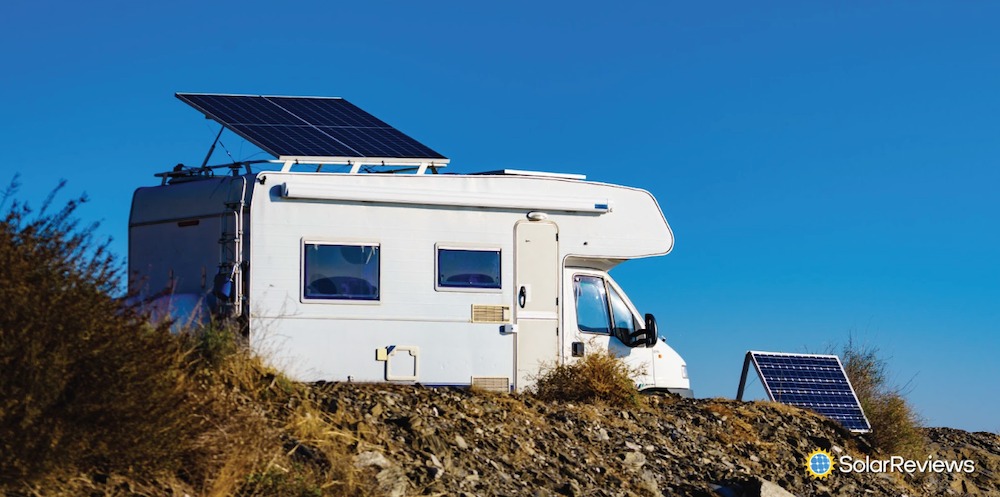
Installation Considerations for Your RV Solar Setup
Once you’ve got your components, it’s time for installation. This can range from a simple DIY job for small systems to a more complex professional installation for larger, integrated setups.
- DIY vs. Professional Installation: For smaller, simpler kits or portable panels, many RVers successfully DIY. However, for larger, integrated systems with multiple panels, high-capacity batteries, and complex wiring, hiring a qualified RV solar installer is highly recommended. Safety, efficiency, and system longevity depend on proper installation.
- Mounting Options and Roof Space: RV roofs have limited space. Plan your panel layout carefully, considering shading from AC units, vents, or other roof accessories. Fixed mounts are sturdy but require drilling. Flexible panels glue down. Portable panels are great for extra power or when parked in the shade.
- Cable Routing and Weatherproofing: All cables must be correctly sized, securely routed, and protected from the elements. Proper cable entry points into the RV are crucial to prevent leaks and damage. Use marine-grade sealants and cable glands.
- Safety First: Fuses, Circuit Breakers, Proper Grounding: This isn’t optional. Every major component (panels to controller, controller to battery, battery to inverter) should have appropriate fusing or circuit breakers. A proper grounding system is also vital to prevent electrical hazards. Consult wiring diagrams and local codes.
Portable vs. Permanent RV Solar Systems: Which is Right for You?
The beauty of RV solar is its flexibility. You don’t have to commit to one type of system.
- Permanent Systems: These involve panels bolted to your RV roof, wired directly into your RV’s electrical system. They offer continuous, passive charging and are ideal for those who plan to regularly boondock or want maximum convenience.
- Portable Systems: These are standalone panels that you set up outside your RV and connect via cables to a charge controller and battery (either your RV’s existing bank or a separate power station). They are great for occasional use, can be moved to chase the sun or avoid shade, and require no permanent modifications to your RV.
- Hybrid Approach: Many savvy RVers combine both! A smaller permanent system handles baseline power needs, while portable panels provide a boost when extra power is needed or when the roof panels are shaded.
Maximizing Your RV Solar Efficiency and Longevity
Getting your system installed is just the beginning. A few simple practices can significantly improve its performance and extend its life.
- Keep Panels Clean: Dirt, dust, leaves, and bird droppings can dramatically reduce panel efficiency. Regularly clean your panels with water and a soft brush or cloth.
- Optimize Panel Angle (if possible): While fixed panels are set, if you have portable panels or adjustable mounts, angling them directly towards the sun (especially during winter months or early/late in the day) can boost output significantly.
- Shading Avoidance: Even partial shading on a single panel can cripple the output of an entire array. Park strategically to minimize shade from trees, buildings, or even your own RV’s AC unit. This is where portable panels really shine.
- Monitor System Performance: Most charge controllers and inverters come with displays or apps that show real-time power generation, battery state of charge, and consumption. Regularly checking these numbers helps you understand your system’s health and adjust your usage.
- Battery Maintenance (if applicable): If you use flooded lead-acid batteries, regularly check and top off water levels. LiFePO4 batteries are maintenance-free, but ensuring they don’t sit completely drained for extended periods is good practice.
- Minimize Parasitic Loads: Unplug devices you’re not using, turn off lights, and be mindful of “phantom” power draws. Every watt-hour saved is a watt-hour you don’t need to generate.
The Cost of Going Solar: Is it Worth the Investment?
Let’s address the elephant in the room: the upfront cost. RV solar systems can range from a few hundred dollars for a basic portable setup to several thousand for a robust, multi-panel, high-capacity lithium system. This isn’t a small decision, but it’s an investment with significant returns.
- Initial Outlay vs. Long-Term Savings: While the initial cost can feel steep, calculate how much you currently spend on campground fees for electricity, generator fuel, and potential wear and tear on your generator. Over several years, the savings from solar can often offset the initial investment.
- Increased RV Resale Value: A professionally installed, well-maintained solar system can increase the resale value of your RV, making it more appealing to potential buyers looking for off-grid capabilities.
- Intangible Benefits: Freedom, Quiet, and Comfort: You can’t put a price tag on the ability to camp anywhere, enjoy silent nights, and have reliable power without compromise. For many RVers, these intangible benefits far outweigh the monetary cost.
- Budgeting for Different System Sizes: Start small if needed. A modest system might cover lights, charging, and a fan. You can always expand later. Prioritize what’s most important to you (e.g., quiet mornings, reliable fridge power) and build your system around those needs.
Ultimately, for serious RVers who crave freedom and self-sufficiency, the investment in solar power is almost always worth it.
Common RV Solar Power Myths Debunked
There’s a lot of misinformation out there about solar power. Let’s clear up some common myths:
- Myth: “Solar panels only work on perfectly sunny days.”
Reality: While full sun yields peak performance, panels still produce power on cloudy or overcast days, just at a reduced rate. MPPT charge controllers are particularly good at maximizing this lower output. - Myth: “It’s too complicated to install, I need to be an electrician.”
Reality: Basic portable systems are plug-and-play. More complex permanent systems do require careful planning and electrical knowledge, but many RVers with good DIY skills successfully install them. When in doubt, hiring a professional ensures safety and proper functionality. - Myth: “RV solar can’t run my air conditioner.”
Reality: This used to be largely true, but with advancements in solar panels, high-capacity LiFePO4 batteries, and powerful inverters, running an RV air conditioner on solar is absolutely possible. It requires a significantly larger and more expensive system, often 600W-1000W+ of solar and several hundred amp-hours of lithium batteries, but it’s no longer a myth. - Myth: “Solar panels will drain my battery at night.”
Reality: Modern charge controllers include a blocking diode that prevents current from flowing back into the panels from the battery when there’s no sunlight. Your panels won’t drain your batteries.
Embrace the Power of the Sun on Your Next RV Journey
The world of RVing is evolving, and solar power is leading the charge towards greater freedom, sustainability, and comfort. Moving beyond the limitations of traditional power sources opens up a universe of possibilities for where you can go and how long you can stay. No more hunting for hookups, no more noisy generators, just the quiet hum of your appliances and the endless potential of the sun.
Whether you start with a small, portable setup or dive headfirst into a comprehensive rooftop system, taking the leap into RV solar power is an investment in your adventures. It’s an investment in peace of mind, in connecting with nature on your own terms, and in experiencing the true spirit of the open road. Are you ready to embrace the sun and unlock endless adventures?
Frequently Asked Questions
How much solar power do I need for my RV?
The amount of solar power you need depends entirely on your daily energy consumption and how long you want to be off-grid. Start by listing all your RV appliances, their wattages, and how many hours you use them daily to calculate your total daily watt-hours. Then, you can size your battery bank and solar panels accordingly, typically aiming for 1.25x your daily consumption in panel wattage for a few hours of peak sun.
Can RV solar power run an air conditioner?
Yes, it is possible to run an RV air conditioner with solar power, but it requires a significantly larger and more expensive system. You’ll need a substantial solar array (often 600W-1000W+), a large capacity pure sine wave inverter, and a robust lithium (LiFePO4) battery bank of several hundred amp-hours to handle the high surge and continuous draw of an AC unit.
What’s the difference between PWM and MPPT charge controllers?
PWM (Pulse Width Modulation) charge controllers are simpler and more affordable, but less efficient (around 75-80%). They essentially match panel voltage to battery voltage. MPPT (Maximum Power Point Tracking) controllers are more advanced, more efficient (92-98%), and can convert excess panel voltage into additional amperage, resulting in more power delivered to your batteries, especially in varying temperatures or when panels are high voltage.
Are lithium (LiFePO4) batteries worth the extra cost for RV solar?
For most RV solar applications, yes, LiFePO4 batteries are worth the initial higher cost. They offer a much longer lifespan (2000-5000+ cycles vs. 300-1200 for lead-acid), can be discharged much deeper (80-100% vs. 50%), are significantly lighter, maintenance-free, and provide more stable voltage under load, leading to better overall performance and a quicker return on investment over time.
How long do RV solar panels last?
Most quality RV solar panels are designed to last 20-25 years or more, with many manufacturers offering performance warranties for this duration. While their output may degrade slightly over decades, they will continue to produce power for a very long time if properly installed and maintained.
Is DIY RV solar installation safe?
DIY RV solar installation can be safe for those with adequate electrical knowledge and a commitment to following safety protocols, proper wiring diagrams, and component specifications. However, improper installation can be dangerous and inefficient. For larger or more complex systems, or if you’re unsure, hiring a qualified RV solar installer is highly recommended to ensure safety and optimal performance.


Post Comment