Can You Run An Rv On Solar Power
Can You Really Run Your RV On Solar Power? The Definitive Guide to Off-Grid RVing
Imagine this: You’re parked by a pristine lake, miles from the nearest hookup, yet your lights are on, your fridge is humming, and your laptop is charged. No noisy generator, no searching for power pedestals. Just the quiet hum of nature and the gentle glow of your RV. This isn’t a fantasy; it’s the promise of RV solar power.
Table of Contents
- Can You Really Run Your RV On Solar Power? The Definitive Guide to Off-Grid RVing
- The Short Answer: Yes, But It’s All About Your Lifestyle
- Essential Concepts: Energy Demands vs. Solar Supply
- How Does RV Solar Power Work? Unpacking the System
- The Core Components of an RV Solar System
- Solar Panels
- Charge Controller
- Battery Bank
- Inverter
- Wiring, Fuses, and Breakers
- Monitoring System
- Sizing Your RV Solar System: The Power Calculation Playbook
- Step 1: Calculate Your Daily Energy Consumption (Watt-Hours)
- Step 2: Determine Your Battery Bank Needs
- Step 3: Figure Out Your Solar Panel Requirements
- Step 4: Choose the Right Inverter
- A Realistic Example: Sizing for a Weekend Warrior vs. Full-Timer
- Can You Run an RV Air Conditioner on Solar? The Ultimate Challenge
- Specific Requirements for AC on Solar:
- Installation Options: DIY vs. Professional
- Cost of an RV Solar System: Breaking Down the Investment
- Maximizing Your RV Solar System’s Performance
- The Benefits and Drawbacks of RV Solar Power
- Benefits of RV Solar:
- Drawbacks of RV Solar:
- Is RV Solar Power Right For You? Making the Decision
The burning question on every RVer’s mind, especially those dreaming of true freedom, is: “Can you run an RV on solar power?”
The short answer is a resounding YES. But like most things in life, it’s not a simple flip of a switch. It’s about understanding your needs, choosing the right system, and optimizing your energy use. This isn’t just about throwing some panels on your roof; it’s about unlocking a new level of independence and adventure.
In this definitive guide, we’re going to pull back the curtain on RV solar. We’ll show you exactly how it works, how to size a system for your unique lifestyle, tackle the big question of running an air conditioner, and break down the costs. By the end, you’ll know exactly what it takes to embrace the silent, limitless power of the sun for your RV.
The Short Answer: Yes, But It’s All About Your Lifestyle
You absolutely can run your RV on solar power, but the extent to which you do so depends entirely on your energy demands, your budget, and how you plan to use your RV. For some, solar means enough power for lights, charging phones, and keeping the fridge cold for a weekend boondocking trip. For others, it means running everything from a microwave to a full-sized air conditioner, living off-grid indefinitely.
It’s not about if solar can power your RV, but rather how much solar power you need and for what. Your RV’s existing appliances (especially high-draw items like microwaves, coffee makers, and, yes, air conditioners) dictate the complexity and cost of your solar setup. The goal is to match your energy production (solar panels) with your energy storage (batteries) to meet your daily energy consumption.
Essential Concepts: Energy Demands vs. Solar Supply
- Energy Demands: This is how much power your RV appliances use over a day, measured in Watt-hours (Wh).
- Solar Supply: This is how much power your solar panels can generate and your battery bank can store, also measured in Watt-hours.
The trick is balancing these two sides of the equation. Undershoot, and you’ll be rationing power. Overshoot, and you’ll be spending more than you need. Let’s dive into how to get that balance just right.
How Does RV Solar Power Work? Unpacking the System
At its heart, an RV solar system is elegantly simple. Solar panels convert sunlight into electricity, which is then managed by a charge controller, stored in a battery bank, and converted by an inverter for your AC appliances. Let’s break down each component:
The Core Components of an RV Solar System
Solar Panels
These are the workhorses, capturing the sun’s energy. For RVs, you’ll typically encounter a few types:
- Monocrystalline: The most efficient, best for limited roof space. Higher cost.
- Polycrystalline: Slightly less efficient than monocrystalline, but generally more affordable. Good for larger roofs.
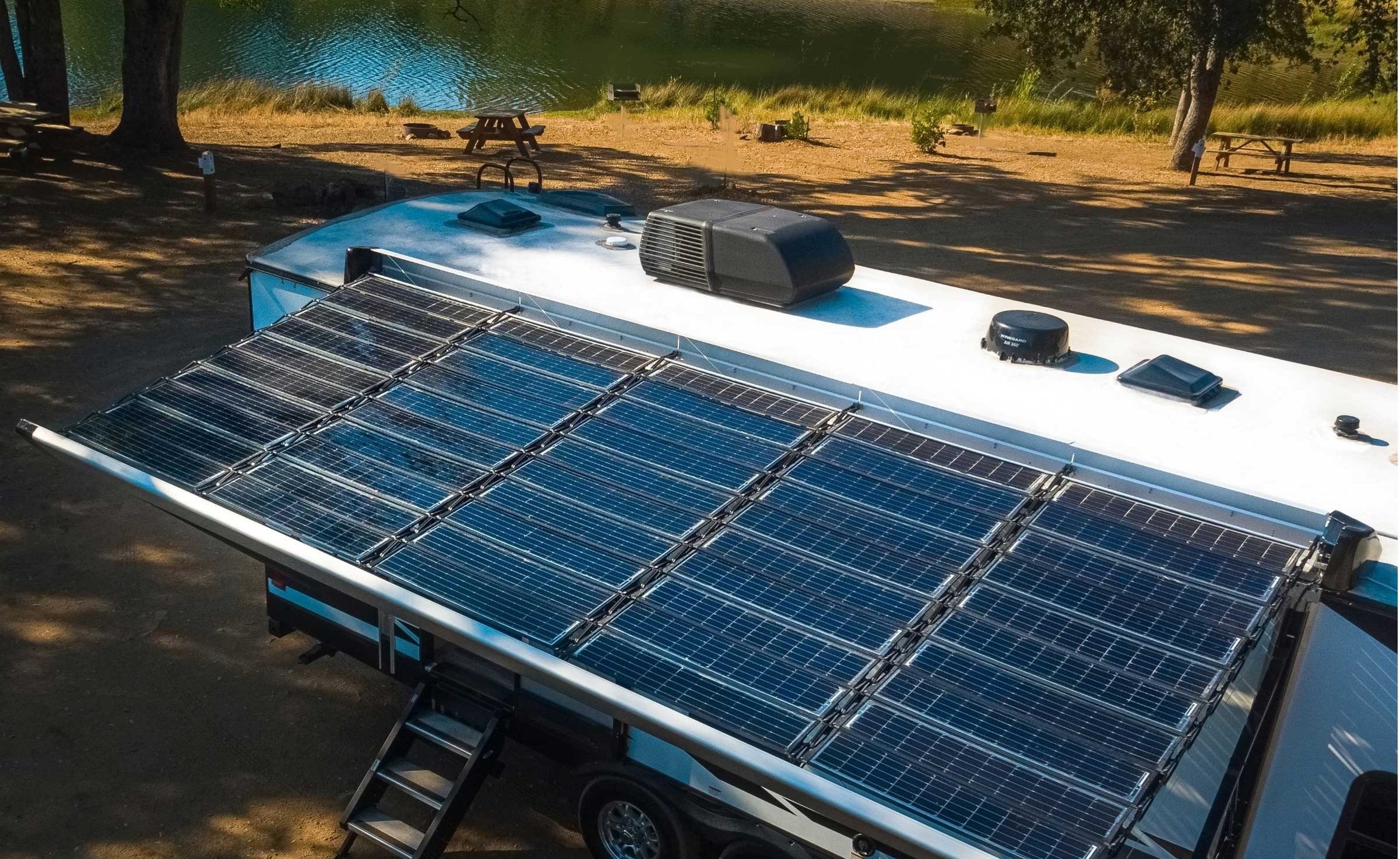
- Flexible: Lightweight and can conform to curved surfaces. Less efficient and generally less durable, but great for specific applications or temporary setups.
Panels come in various wattages (e.g., 100W, 200W). You’ll string multiple panels together to meet your power generation goals.
Charge Controller
This critical device sits between your solar panels and your battery bank. Its job is to regulate the voltage and current coming from the panels to prevent overcharging your batteries, which can severely damage them.
- PWM (Pulse Width Modulation): More affordable, but less efficient. Best for smaller systems or if your panel voltage closely matches your battery voltage.
- MPPT (Maximum Power Point Tracking): More expensive, but significantly more efficient (10-30% more power harvest, especially in variable conditions or cold weather). Essential for larger systems or if your panel voltage is much higher than your battery voltage. If you can afford it, go MPPT.
Battery Bank
This is where the energy generated by your panels is stored for when the sun isn’t shining (night, cloudy days). It’s arguably the most crucial component for true off-grid freedom.
- Lead-Acid (Flooded, AGM, Gel): Traditional, cheaper upfront. Require careful maintenance (flooded) and have a limited Depth of Discharge (DoD), meaning you can only safely use 50% of their capacity before risking damage and shortening their lifespan. They’re also heavy.
- Lithium-Ion (LiFePO4): More expensive upfront, but superior in almost every way. Lighter, smaller, can be discharged up to 80-100% (much more usable capacity), last significantly longer (thousands of cycles), and require no maintenance. For serious RV solar, lithium is the gold standard.
Inverter
Your solar panels and batteries produce DC (Direct Current) power, which is great for some RV lights and USB chargers. But most of your standard household appliances (microwaves, TVs, coffee makers, laptops) run on AC (Alternating Current). The inverter converts DC power from your batteries into usable AC power.
- Modified Sine Wave: Cheaper, but can be rough on sensitive electronics (laptops, medical devices) and some appliances (motors).
- Pure Sine Wave: More expensive, but produces clean, reliable power identical to what you get at home. Essential for sensitive electronics and highly recommended for any substantial RV solar setup.
Wiring, Fuses, and Breakers
Don’t skimp here. Proper wiring sized for the current, along with appropriate fuses and breakers, is essential for safety and efficiency. This protects your system and, more importantly, you, from electrical fires or damage.
Monitoring System
A good battery monitor (often a shunt-based system) tells you exactly how much power you’re using, how much charge your batteries have, and how much power your panels are generating. This is vital for managing your energy consumption and ensuring you don’t run out of juice.
Sizing Your RV Solar System: The Power Calculation Playbook
This is where we get practical. To build a system that works for you, you need to understand your energy needs. Grab a pen and paper (or a spreadsheet!), because we’re going to calculate.
Step 1: Calculate Your Daily Energy Consumption (Watt-Hours)
List every appliance you use and estimate how many hours per day you use it. Look for the wattage rating on the appliance (or a sticker). If you only see amps, multiply amps by your RV’s voltage (typically 12V DC for lights/fans, 120V AC for outlets) to get watts.
| Appliance | Avg. Wattage (W) | Hours Used/Day | Daily Watt-Hours (Wh) |
|---|---|---|---|
| LED Lights (5-10 bulbs) | 50 | 4 | 200 |
| Water Pump | 60 | 0.5 | 30 |
| Laptop Charging | 60 | 3 | 180 |
| Phone Charging (2 devices) | 20 | 2 | 40 |
| RV Fridge (Propane/Electric, cycling) | 80 (avg electric draw) | 12 (cycling) | 960 |
| Fan (small) | 20 | 6 | 120 |
| TV (24-inch LED) | 50 | 3 | 150 |
| Microwave (brief use) | 1000 | 0.1 (6 min) | 100 |
| Coffee Maker (brief use) | 1200 | 0.08 (5 min) | 96 |
| TOTAL DAILY WATT-HOURS (Wh) | 1896 Wh |
Pro Tip: Add a 10-20% buffer to your total for unexpected usage or inverter efficiency losses.
Step 2: Determine Your Battery Bank Needs
Your battery bank stores the energy. You need enough capacity to cover your daily usage and ideally, have some reserve for cloudy days. Battery capacity is measured in Amp-hours (Ah). Assuming a 12V system:
Formula: (Total Daily Watt-Hours / Battery Voltage) / Usable DoD % = Ah needed
Let’s use our example of 1896 Wh/day. Add a 15% buffer: 1896 * 1.15 = ~2180 Wh.
- For Lead-Acid (e.g., AGM) at 50% DoD: (2180 Wh / 12V) / 0.50 = ~363 Ah
- For Lithium (LiFePO4) at 80% DoD: (2180 Wh / 12V) / 0.80 = ~227 Ah
Notice how much less lithium capacity you need for the same usable energy due to its deeper discharge capability! This also means fewer, lighter batteries.
| Battery Type | Pros | Cons | Usable DoD | Lifespan (Cycles) | Relative Cost |
|---|---|---|---|---|---|
| Flooded Lead-Acid | Lowest upfront cost | Heavy, requires maintenance, low DoD, shorter lifespan | 50% | 300-500 | $ |
| AGM Lead-Acid | Maintenance-free, sealed, good for moderate use | Heavy, still limited DoD, shorter lifespan than lithium | 50% | 400-800 | $$ |
| LiFePO4 (Lithium Iron Phosphate) | Lightweight, high usable capacity, long lifespan, maintenance-free, faster charging | Highest upfront cost | 80-100% | 2000-5000+ | $$$$ |
Step 3: Figure Out Your Solar Panel Requirements
This is where the sun comes in! You need enough solar panels to recharge your battery bank each day. The number of ‘peak sun hours’ you get daily will heavily influence this. In the US, average peak sun hours range from 3 (winter in northern states) to 6 (summer in southern states).
Formula: (Total Daily Watt-Hours / Avg. Peak Sun Hours) / Panel Efficiency Loss = Watts of Solar Panels needed
Let’s use our example (2180 Wh daily consumption) and assume 4 average peak sun hours, with a 20% efficiency loss for factors like dirt, angle, and wire loss:
(2180 Wh / 4 hours) / 0.80 = ~681 Watts of solar panels.
So, you’d aim for roughly 700 watts of panels. This could be seven 100W panels or three to four 200W panels, depending on your roof space and panel availability.
Considerations:
- Roof Space: How much physical space do you have for panels?
- Shading: Will trees or other obstructions frequently shade your panels?
- Weather: Cloudy days mean less production.
- Panel Angle: Adjusting panels for optimal sun exposure can significantly increase output.
Step 4: Choose the Right Inverter
Your inverter needs to be able to handle the maximum wattage of all AC appliances you might run simultaneously. Look at the surge (startup) wattage for items like microwaves, coffee makers, or induction cooktops, as this can be much higher than their running wattage.
 "RV Solar Panels: What You Need To Know | EnergySage")
For our example, if you want to run a 1000W microwave and a 1200W coffee maker, you’d need an inverter capable of handling at least 2200W. A 2000W or 3000W pure sine wave inverter is common for moderately-sized RV solar setups.
A Realistic Example: Sizing for a Weekend Warrior vs. Full-Timer
-
Weekend Warrior (Occasional Boondocking):
- Needs: Lights, phone/laptop charging, water pump, occasional TV. No AC.
- Daily Consumption: ~500-1000 Wh
- Battery: One 100Ah LiFePO4 battery (1280 Wh usable) or two 100Ah AGM batteries (1200 Wh usable but heavier).
- Solar Panels: 200-400W (two to four 100W panels).
- Inverter: 1000-1500W Pure Sine Wave.
- Charge Controller: MPPT (e.g., 30A).
-
Full-Timer (Extensive Off-Grid Living):
- Needs: All basic appliances, microwave, coffee maker, occasional AC, hair dryer, multiple laptops/devices.
- Daily Consumption: ~2500-5000 Wh (or more if AC is frequent).
- Battery: Two to four 200Ah LiFePO4 batteries (5120 Wh to 10240 Wh usable). Lithium is almost a necessity here.
- Solar Panels: 800W – 2000W+ (four to ten 200W panels). This requires significant roof space.
- Inverter: 3000W-5000W Pure Sine Wave, often an inverter/charger combo.
- Charge Controller: Large MPPT (e.g., 60A-100A).
Can You Run an RV Air Conditioner on Solar? The Ultimate Challenge
This is the Everest of RV solar power. An RV air conditioner is by far the biggest power hog in your rig. Running it exclusively on solar, especially for extended periods, requires a significantly larger and more expensive system.
Yes, you absolutely can run an RV air conditioner on solar power. But it’s not for the faint of heart or the small budget.
Specific Requirements for AC on Solar:
-
Massive Battery Bank: A typical 13,500 BTU RV AC unit draws around 1200-1600 watts while running. If you want to run it for even 4-6 hours, you’re looking at 4800-9600 Wh. This translates to at least two, often three or four, 200Ah 12V LiFePO4 batteries (totaling 5120 Wh to 10240 Wh usable).
-
Substantial Solar Array: To recharge those massive batteries, you’ll need a large solar array. Think 1000 watts to 2000+ watts of solar panels. This usually means filling almost all available roof space on a larger RV.
-
Powerful Inverter: An AC unit will require at least a 2000W inverter, and often a 3000W or 5000W pure sine wave inverter to handle the surge (startup) current.
-
Soft Starters: Devices like the Micro-Air EasyStart can significantly reduce the surge current of your AC, making it easier for a smaller inverter to start the unit. This can save you from needing an even larger (and more expensive) inverter.
-
Efficient AC Units: Newer, inverter-style RV AC units (like some Dometic models) are more efficient and have lower startup surges, making them better candidates for solar power.
| RV AC Type | Running Watts (Avg.) | Surge Watts (Avg.) | Minimum Inverter Size | Typical Battery Bank for 4 Hrs Run Time (LiFePO4) |
|---|---|---|---|---|
| 10,000 BTU | 1000-1200W | 2000-2500W | 2000W (with soft start) | 2 x 200Ah (5120 Wh) |
| 13,500 BTU | 1200-1600W | 2500-3500W | 3000W (with soft start) | 3 x 200Ah (7680 Wh) |
| 15,000 BTU | 1500-2000W | 3000-4000W | 3000-5000W (with soft start) | 4 x 200Ah (10240 Wh) |
Installation Options: DIY vs. Professional
Once you’ve sized your system, you have to get it installed. This is where your comfort level with electrical work comes into play.
-
DIY (Do-It-Yourself):
- Pros: Significant cost savings on labor, deep understanding of your system, customization.
- Cons: Requires electrical knowledge, proper tools, and adherence to safety protocols. Mistakes can be dangerous and costly. Can be time-consuming.
- Best for: Those with electrical experience, smaller systems, or those willing to invest time in learning and research. Many online resources and forums can guide you.
-
Professional Installation:
- Pros: Expertise, peace of mind, warranty on labor, correct wiring and component matching, often faster.
- Cons: Higher upfront cost due to labor.
- Best for: Anyone uncomfortable with complex electrical work, larger systems (especially those involving AC), or those who prioritize convenience and professional assurance.
Safety First: Regardless of who installs it, ensure all wiring is properly sized, connections are secure, and appropriate fuses and circuit breakers are in place. Electricity is powerful and demands respect.
Cost of an RV Solar System: Breaking Down the Investment
The cost of an RV solar system varies wildly, from a few hundred dollars for a basic portable setup to well over $15,000 for a comprehensive, multi-battery, AC-capable system. Here’s a general breakdown:

| Component | Budget-Friendly (Small System) | Mid-Range (Moderate Use) | High-End (Full-Time/AC) |
|---|---|---|---|
| Solar Panels (Watts) | 100-200W ($100-$300) | 400-800W ($400-$1000) | 1000-2000W+ ($1000-$3000+) |
| Charge Controller | PWM ($50-$100) | MPPT ($150-$300) | Large MPPT ($400-$800+) |
| Battery Bank | 1-2x 100Ah AGM ($200-$400) | 1x 100-200Ah LiFePO4 ($600-$1500) | 2-4x 200Ah LiFePO4 ($3000-$8000+) |
| Inverter | 500-1000W Mod. Sine ($50-$150) | 1500-2000W Pure Sine ($300-$700) | 3000-5000W Pure Sine ($800-$2000+) |
| Wiring, Fuses, Connectors | $50-$100 | $100-$300 | $300-$800+ |
| Installation (DIY vs. Pro) | DIY (Labor: $0) | DIY or Pro ($0-$1500) | Pro Recommended ($1500-$4000+) |
| TOTAL ESTIMATE (Components Only) | $450 – $950 | $1450 – $3800 | $5500 – $16600+ |
Is it worth it? While the upfront cost can be substantial, especially for larger systems, many RVers find the investment pays dividends in:
- Freedom: Camp anywhere without hookups.
- Quiet: No noisy generator running.
- Fuel Savings: Less reliance on generator fuel.
- Environmental Impact: Reduced carbon footprint.
- Increased RV Value: A well-installed solar system can be a selling point.
Maximizing Your RV Solar System’s Performance
Having a solar system is one thing; making the most of it is another. Here are key tips:
- Park Smart: Position your RV to maximize sun exposure on your panels and minimize shade from trees or other RVs. If you have portable panels, move them throughout the day.
- Angle Your Panels: If possible, use tilting mounts to angle your panels directly towards the sun. This can significantly increase output, especially in winter or when the sun is low.
- Keep Panels Clean: Dirt, dust, leaves, and bird droppings can dramatically reduce panel efficiency. Regularly wipe them down.
- Conserve Energy Ruthlessly: This is the cheapest way to extend your off-grid time. Turn off lights you’re not using, unplug phantom loads, use efficient appliances (LEDs, 12V fans), and be mindful of high-draw appliances like microwaves and coffee makers.
- Monitor Your System: Use your battery monitor to understand your consumption and generation. This helps you anticipate when you might need to conserve or supplement power.
- Understand Weather Patterns: Plan for cloudy or rainy days by having your batteries fully charged beforehand, or consider alternative charging (like your RV’s engine alternator or a small generator).
The Benefits and Drawbacks of RV Solar Power
Like any major RV upgrade, solar comes with its own set of pros and cons.
Benefits of RV Solar:
- Unparalleled Freedom: Camp anywhere the road takes you, not just where hookups are available.
- Quiet Operation: Enjoy the sounds of nature without the roar of a generator.
- Reduced Fuel Consumption: Save money on gasoline for your generator.
- Environmental Friendliness: Harness clean, renewable energy.
- Self-Sufficiency: Be less reliant on external power sources.
- Long-Term Savings: While the upfront cost is high, ongoing energy costs are minimal.
Drawbacks of RV Solar:
- High Upfront Cost: A quality system is a significant investment.
- Weather Dependency: Cloudy days, rain, and short winter days drastically reduce solar output.
- Roof Space Limitations: RV roofs have finite space, limiting the number of panels you can install.
- Weight: Batteries, especially lead-acid, can add considerable weight to your RV.
- Complexity: Designing and installing a robust system requires some technical understanding.
- Shading Issues: Even partial shading on one panel can reduce the output of an entire array.
Is RV Solar Power Right For You? Making the Decision
So, can you run an RV on solar power? Absolutely. But is it the right solution for you?
If you:
- Dream of extended boondocking trips far from crowded campgrounds.
- Value peace and quiet over the drone of a generator.
- Are committed to understanding and managing your energy consumption.
- Are willing to make a significant upfront investment for long-term freedom and savings.
…then RV solar power is likely a game-changer for your travels. It transforms your RV from a mere vehicle into a truly self-sufficient mobile home, opening up a world of possibilities for adventure.
Start with a clear assessment of your daily energy needs. Be realistic about your budget and your comfort level with installation. With careful planning and the right components, you can indeed harness the sun to power your RV adventures, wherever the road may lead.
Frequently Asked Questions
How much solar power do I need for my RV?
The amount of solar power you need depends entirely on your daily energy consumption (Watt-hours). You’ll need to calculate the wattage and daily usage hours for all your appliances, then size your battery bank and solar panels accordingly. A small system for basic lights and charging might be 200-400W, while a full-timer with AC could need 1000-2000W or more.
Can I run my RV air conditioner on solar power?
Yes, you can, but it requires a very substantial and expensive solar setup. RV air conditioners are high-wattage appliances, demanding a large battery bank (typically multiple high-capacity lithium batteries), a powerful inverter (3000W+), and a significant solar panel array (1000W+). Soft starters can help reduce the AC’s startup surge.
What’s the difference between PWM and MPPT charge controllers?
A charge controller regulates the power from your solar panels to your batteries. PWM (Pulse Width Modulation) controllers are more affordable but less efficient, best for smaller systems. MPPT (Maximum Power Point Tracking) controllers are more expensive but significantly more efficient (10-30% more power harvest), making them ideal for larger systems and maximizing energy capture in varying conditions.
Are lithium batteries really worth the extra cost for an RV solar system?
For serious RV solar systems, especially those designed for extended off-grid use or running high-draw appliances like AC, lithium-ion (LiFePO4) batteries are generally worth the higher upfront cost. They offer significantly more usable capacity (80-100% DoD vs. 50% for lead-acid), are lighter, last much longer (thousands of cycles), and are maintenance-free, leading to better long-term value and performance.
How long does an RV solar system last?
The lifespan varies by component. Solar panels typically last 20-25 years, often with a performance warranty. Lithium (LiFePO4) batteries can last 8-15 years or more (2000-5000+ charge cycles). Lead-acid batteries have a shorter lifespan, usually 3-7 years (300-800 cycles). Charge controllers and inverters can last 5-15 years, depending on quality and usage.
Can I install an RV solar system myself, or do I need a professional?
You can absolutely install an RV solar system yourself if you have a good understanding of electrical wiring, safety protocols, and are comfortable with DIY projects. Many resources are available to guide you. However, for larger, more complex systems or if you lack electrical experience, professional installation ensures safety, correct component matching, and optimal performance.
What maintenance does an RV solar system require?
Maintenance is relatively low. Regularly clean your solar panels to remove dirt, dust, and debris. Check wiring connections periodically for corrosion or looseness. If you have flooded lead-acid batteries, you’ll need to check and top off water levels. Lithium batteries are generally maintenance-free. Monitor your system’s performance for any drops in efficiency, which could indicate a problem.


Post Comment