How Much Solar Power Do I Need For My Camper
How Much Solar Power Do I REALLY Need For My Camper? Your Ultimate Off-Grid Guide
So, you’re dreaming of hitting the open road, parking your camper in a remote spot, and enjoying the freedom of off-grid living. No noisy generators, no searching for hookups – just the quiet hum of nature and the steady, clean power of the sun. But then the big question hits you: “How much solar power do I actually need for my camper?”
Table of Contents
- How Much Solar Power Do I REALLY Need For My Camper? Your Ultimate Off-Grid Guide
- Step 1: Uncover Your Camper’s Energy Appetite (The Load Audit)
- How to Perform a Camper Energy Audit
- Step 2: Build Your Battery Bank Foundation
- Understanding Battery Capacity (Amp-Hours vs. Watt-Hours)
- Sizing Your Battery Bank
- Step 3: Determine Your Solar Panel Array Size
- The “Magic” Formula for Solar Panels
- Factors Affecting Solar Panel Output
- Beyond the Panels: Essential Solar System Components
- Solar Charge Controller
- Inverter
- Wiring and Fuses/Breakers
- Real-World Scenarios: How Much Solar for Different Camper Lifestyles?
- The Weekend Warrior / Light User (Basic Needs)
- The Moderate Boondocker (Comfortable Living)
- The Full-Timer / Power Hungry (AC, Microwave, Entertainment)
- Optimizing Your Solar Power System and Usage
- Common Mistakes to Avoid When Sizing Your Camper Solar
- Ready to Go Off-Grid? Start Planning Today!
If you’re feeling overwhelmed by watts, amp-hours, and charge controllers, you’re not alone. It seems complicated, but I promise it doesn’t have to be. The truth is, there’s no single magic number, no one-size-fits-all answer. Your ideal solar setup depends entirely on your unique energy habits, the capacity of your battery bank, and how much sunshine you can realistically expect.
This isn’t just a guide; it’s your definitive roadmap to understanding, calculating, and confidently sizing the perfect solar power system for your camper (or RV – we’ll use these terms interchangeably). We’re going to cut through the jargon and give you a straightforward, step-by-step process. Ready to reclaim your energy independence?
Step 1: Uncover Your Camper’s Energy Appetite (The Load Audit)
Before we can talk about generating power, we need to know exactly what you’re consuming. This is arguably the most crucial step, often overlooked or underestimated. Think of it as your camper’s “energy audit.” You wouldn’t buy a fridge without knowing how much food you need to store, right? The same goes for power.
How to Perform a Camper Energy Audit
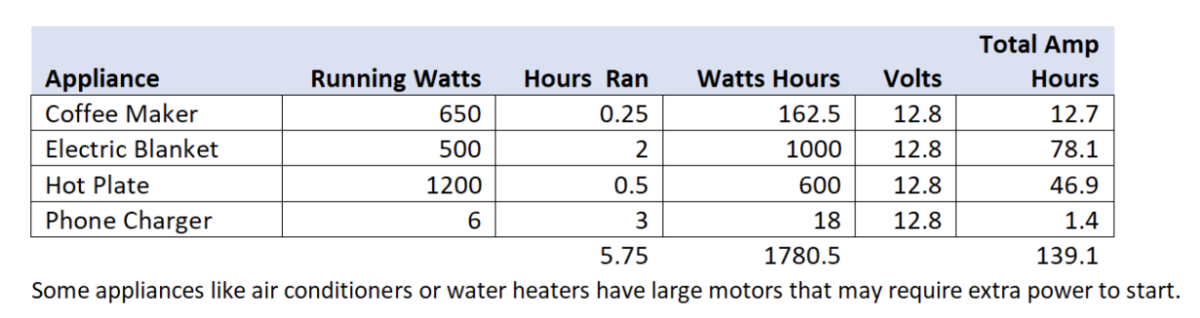
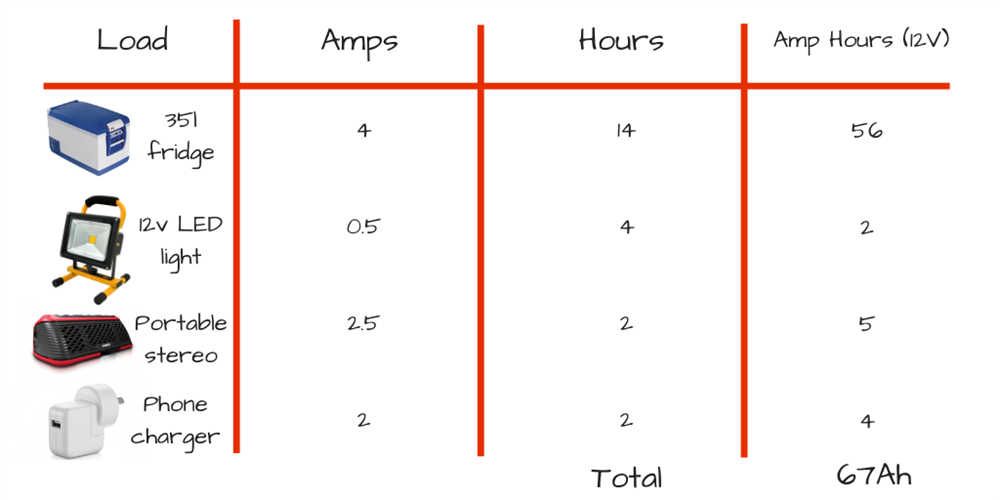
Grab a pen, paper, or a spreadsheet. You’re going to list every electrical appliance and device you plan to use in your camper, then estimate how long you’ll use it each day. Here’s how:
- List All Appliances: Go through your camper and list everything that draws power. Lights, phone chargers, laptops, fans, water pump, coffee maker, microwave, TV, air conditioner, fridge, Starlink – everything!
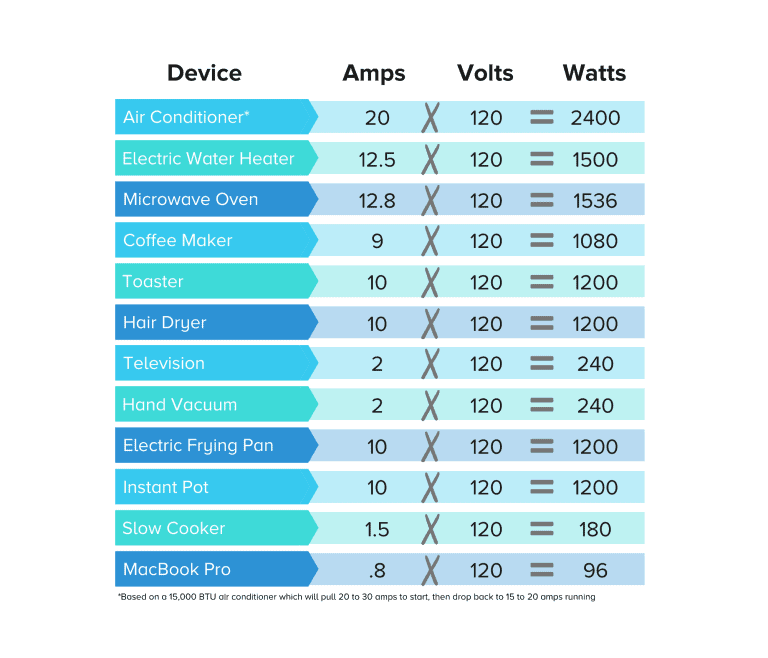
- Find Their Wattage (W): Look for labels on your appliances (usually on the back or bottom) that indicate wattage. If you only see amps (A), multiply amps by your system voltage (usually 12V for most camper systems) to get watts (W = A x V). If you can’t find it, a quick online search for the make and model usually helps. For AC appliances that plug into an inverter, use their AC wattage rating.
- Estimate Daily Usage Hours: Be realistic. How many hours a day will you actually use each item?
- Calculate Daily Watt-Hours (Wh) for Each: Multiply the appliance’s wattage by its estimated daily usage hours (Wattage x Hours = Watt-Hours).
- Sum Them Up: Add up the Daily Watt-Hours for all your appliances. This total is your camper’s daily energy consumption in Watt-Hours (Wh). This is the number we’ll use to size everything else.
Here’s a practical example to get you started:
| Appliance | Wattage (W) | Daily Usage (Hours) | Daily Watt-Hours (Wh) |
|---|---|---|---|
| LED Lights (multiple) | 20 W | 4 hours | 80 Wh |
| Phone Charging (2 phones) | 10 W | 3 hours | 30 Wh |
| Laptop Charging | 60 W | 2 hours | 120 Wh |
| Water Pump | 50 W | 0.5 hours | 25 Wh |
| Small Fan | 15 W | 6 hours | 90 Wh |
| Propane Fridge (DC power board) | 15 W | 24 hours | 360 Wh |
| Coffee Maker (brief surge) | 1000 W | 0.1 hours (6 min) | 100 Wh |
| TOTAL DAILY WATT-HOURS | 805 Wh |
Crucial Insight: Don’t forget parasitic draws! Even when off, devices like your CO detector, propane detector, and stereo memory can draw a small amount of power 24/7. These often add up to 20-50 Wh per day. Always add a buffer to your total.
Actionable Tip: For maximum accuracy, invest in a simple device like a “Kill-A-Watt” meter. You plug your AC appliances into it, and it tells you their exact wattage and total energy consumption over time. For DC devices, clamp meters or dedicated battery monitors can provide similar data.
Step 2: Build Your Battery Bank Foundation
Your battery bank is the heart of your off-grid system. It stores the energy your solar panels generate, allowing you to use power even when the sun isn’t shining (like at night or on cloudy days). Without adequate storage, even the biggest solar array won’t do you much good.
Understanding Battery Capacity (Amp-Hours vs. Watt-Hours)
You’ll often see battery capacity listed in Amp-Hours (Ah), especially for 12V systems common in campers. While Ah is useful for comparing similar batteries, for consistency in your solar calculations, it’s best to convert everything to Watt-Hours (Wh). Why? Because Watt-Hours combine voltage and current, giving you the total energy available, regardless of voltage.
The conversion is simple: Watt-Hours (Wh) = Amp-Hours (Ah) x System Voltage (V). So, a 100 Ah 12V battery stores 100 Ah x 12V = 1200 Wh of energy.
Sizing Your Battery Bank
The goal is to store enough energy to cover your daily consumption (your total from Step 1) for a certain number of days without sun. This is often referred to as your “days of autonomy.” For most campers, aiming for 1 to 3 days of autonomy is a good starting point, depending on how often you’re in sunny areas.
The calculation is: (Total Daily Wh from Step 1) x (Days of Autonomy) / (Depth of Discharge – DoD) = Usable Battery Bank Capacity Needed (Wh).
The Depth of Discharge (DoD) is crucial here because not all battery types can be fully discharged without damage:
- Lead-Acid Batteries (Flooded, AGM, Gel): Generally, you should only discharge these to 50% DoD to prolong their lifespan. So, if you need 1000 Wh, you’d need a battery bank with 2000 Wh total capacity.
- Lithium Iron Phosphate (LiFePO4) Batteries: These are game-changers for camper solar. They can be safely discharged to 80-100% DoD, offer more charge cycles, weigh less, and perform better in cold weather. If you need 1000 Wh, you’d only need a 1000-1200 Wh LiFePO4 battery bank.
Let’s compare battery types:
| Feature | Lead-Acid (AGM/Gel) | Lithium Iron Phosphate (LiFePO4) |
|---|---|---|
| Usable Capacity (DoD) | ~50% | ~80-100% |
| Lifespan (Cycles) | ~300-1000 cycles | ~2000-5000+ cycles |
| Weight | Very Heavy | Significantly Lighter |
| Cost (Initial) | Lower | Higher |
| Cost (Per Usable Wh over lifetime) | Higher | Lower |
| Maintenance | Can require some (flooded) | Virtually None |
Using our 805 Wh/day example from Step 1:
- For 2 days autonomy with LiFePO4 (80% DoD): (805 Wh/day * 2 days) / 0.80 = 2012.5 Wh needed. This equates to approximately 168 Ah at 12V (2012.5 Wh / 12V). You’d likely get a 200 Ah LiFePO4 battery.
- For 2 days autonomy with Lead-Acid (50% DoD): (805 Wh/day * 2 days) / 0.50 = 3220 Wh needed. This equates to approximately 268 Ah at 12V (3220 Wh / 12V). You’d probably need two 150 Ah lead-acid batteries for this.
As you can see, LiFePO4 often allows for a smaller, lighter physical battery bank for the same usable power.
Step 3: Determine Your Solar Panel Array Size
Now that you know your daily consumption and how much energy you need to store, it’s time to figure out how many solar panels you’ll need to replenish that energy from the sun. The goal is to generate enough power each day to recharge what you’ve used from your battery bank.
The “Magic” Formula for Solar Panels
Here’s the core calculation:
(Total Daily Watt-Hours from Step 1) / (Peak Sun Hours per Day) / (System Efficiency Factor) = Minimum Panel Wattage Needed (W)
Let’s break down the components:
- Total Daily Watt-Hours (Wh): This is the number you calculated in Step 1 (e.g., 805 Wh).
- Peak Sun Hours (P.S.H.) per Day: This is the equivalent number of hours per day when the sun’s intensity is at 1000 watts per square meter (kW/m²). This isn’t just how long the sun is in the sky, but how many hours of *peak sunlight you get. This varies greatly by location, season, and weather. A general average for many parts of the US is 4-6 Peak Sun Hours. If you plan to travel south in winter, you might get more; if you’re in the Pacific Northwest in winter, expect less. Err on the side of caution!
- System Efficiency Factor: No solar system is 100% efficient. You’ll lose power due to temperature, wiring resistance, inverter inefficiencies, and charge controller losses. A typical efficiency factor for camper systems is 0.7 (70%) to 0.8 (80%). Using 0.7 is a safer, more conservative estimate.
Using our 805 Wh/day example, and assuming 5 Peak Sun Hours and 0.7 (70%) system efficiency:
(805 Wh) / (5 P.S.H.) / (0.7) = 230 Watts of Solar Panels
This means you’d need approximately 230 watts of solar panels to replenish your 805 Wh daily usage, assuming good sun conditions. This might translate to two 100W panels and one 50W panel, or perhaps a single 250W panel.
Factors Affecting Solar Panel Output
Your actual solar panel output can be significantly impacted by real-world conditions:
- Angle & Orientation: Panels produce most efficiently when directly facing the sun. Flat-mounted panels on a camper roof are rarely at the optimal angle. Tiltable panels (if you have them) can dramatically increase output.
- Shading: Even a small shadow from an antenna, vent, or tree branch can drastically reduce the output of an entire panel or string of panels.
- Temperature: Solar panels lose efficiency as they get hotter. Cooler temperatures (like winter) can sometimes yield better output than scorching summer days, assuming equal sun exposure.
- Weather: Cloudy days, rain, and snow will severely limit or completely stop solar production. This is why your battery bank needs to have enough capacity for multiple days of autonomy.
- Panel Type: Monocrystalline panels are generally more efficient in converting sunlight to electricity than polycrystalline, especially in lower light conditions. Flexible panels, while convenient, often have lower efficiency and shorter lifespans than rigid panels.
Here’s a general idea of Peak Sun Hours in different US regions, for illustrative purposes:
| Region (USA) | Peak Sun Hours (Winter Avg) | Peak Sun Hours (Summer Avg) |
|---|---|---|
| Northeast (e.g., Maine, New York) | 2.5 – 3.5 | 4.5 – 6.0 |
| Southeast (e.g., Florida, Georgia) | 3.5 – 4.5 | 5.0 – 6.5 |
| Midwest (e.g., Ohio, Iowa) | 3.0 – 4.0 | 5.0 – 6.0 |
| Southwest (e.g., Arizona, New Mexico) | 4.5 – 6.0 | 6.0 – 7.5 |
| Pacific Northwest (e.g., Washington, Oregon) | 2.0 – 3.0 | 4.0 – 5.5 |
Always consider the least amount of sun you expect when designing your system, especially if you plan to camp in winter or in shaded locations.
Beyond the Panels: Essential Solar System Components
Solar panels are just one part of the equation. To have a functional and safe system, you’ll need a few other critical components working in harmony.
Solar Charge Controller
This device sits between your solar panels and your battery bank. Its job is to regulate the voltage and current coming from the panels to safely charge your batteries, preventing overcharging and maximizing efficiency. There are two main types:
- PWM (Pulse Width Modulation) Controllers: These are simpler, less expensive, and generally less efficient. They’re suitable for smaller systems or trickle charging.
- MPPT (Maximum Power Point Tracking) Controllers: These are more advanced and significantly more efficient (10-30% better output) because they optimize the voltage and current from your panels to match your battery’s needs. They are highly recommended for larger systems, or if you want to maximize every watt from your panels, especially in varying light conditions.
Inverter
Most camper appliances run on 12-volt DC power (lights, fans, water pump, phone chargers). However, many common household items (laptops, coffee makers, microwaves, TVs) require 120-volt AC power. An inverter converts the DC power from your batteries into usable AC power.
- Pure Sine Wave Inverters: These produce clean, stable AC power, just like you get from your home outlets. They are essential for sensitive electronics (laptops, medical devices) and are generally recommended for all camper applications.
- Modified Sine Wave Inverters: These are cheaper but produce a “choppier” waveform that can damage sensitive electronics or cause motors to run less efficiently and hotter. Avoid these if you plan to run anything other than basic, robust appliances (like a simple fan or toaster).
Sizing Your Inverter: Your inverter needs to be able to handle the combined wattage of all AC appliances you plan to run simultaneously*. If you want to run a 1000W coffee maker and a 500W microwave at the same time, you’ll need at least a 1500W inverter (plus a buffer). Also, consider surge wattage – many appliances (like microwaves or refrigerators) draw a much higher wattage for a brief moment when they start up. Always size your inverter slightly larger than your maximum anticipated load.
Inverter Efficiency Losses: Remember, converting DC to AC isn’t 100% efficient. Inverters typically have 85-95% efficiency. This means if you draw 1000W of AC power, your batteries are actually providing closer to 1100-1175W of DC power. Factor this into your overall system calculations, often included in the 0.7-0.8 system efficiency factor mentioned earlier.
Wiring and Fuses/Breakers
This is where safety comes in. Properly sized wiring is crucial to prevent overheating and ensure efficient power delivery. Always use appropriate gauge wire for the distance and current, and install fuses or circuit breakers on all major circuits to protect your system and prevent fires. If you’re unsure about electrical wiring, consult a qualified professional.
Real-World Scenarios: How Much Solar for Different Camper Lifestyles?
Let’s tie it all together with some typical camper profiles. Remember, these are estimates, but they give you a solid starting point.
The Weekend Warrior / Light User (Basic Needs)
You’re camping primarily on weekends, maybe a few days at a time. Your energy needs are minimal: charging phones, running a few LED lights, maybe a small fan, and a water pump. You likely have a propane fridge.
- Daily Wh Estimate: 300-600 Wh
- Recommended Panel Wattage: 100-200 Watts (often one or two panels)
- Recommended Battery (12V LiFePO4): 50-100 Ah (600-1200 Wh usable)
- Key Appliances: LED lights, phone/tablet charging, small fan, water pump, CO/propane detectors.
The Moderate Boondocker (Comfortable Living)
You spend extended periods off-grid, perhaps working remotely or enjoying longer trips. You want creature comforts like a laptop, consistent fridge power, a powerful water pump, and perhaps occasional use of a small microwave or coffee maker.
- Daily Wh Estimate: 800-1500 Wh
- Recommended Panel Wattage: 300-600 Watts (two to four panels)
- Recommended Battery (12V LiFePO4): 200-400 Ah (2400-4800 Wh usable)
- Key Appliances: All from above, plus laptop, CPAP machine, 12V compressor fridge, occasional TV, small microwave/coffee maker (with appropriate inverter).
The Full-Timer / Power Hungry (AC, Microwave, Entertainment)
You live in your camper full-time, want to run high-draw appliances like an air conditioner, microwave, hairdryer, or have an extensive entertainment system. You need significant power to support a home-like experience.
- Daily Wh Estimate: 2000-5000+ Wh (or even higher if running AC for many hours)
- Recommended Panel Wattage: 800-1500+ Watts (four to ten+ panels)
- Recommended Battery (12V LiFePO4): 400-800+ Ah (4800-9600+ Wh usable), often in a 24V or 48V system for efficiency.
- Key Appliances: All from above, plus air conditioner, residential fridge, electric water heater (briefly), large microwave, Starlink, multiple large TVs, induction cooktop (briefly).
Here’s a summary table for easy comparison:
| Camper Lifestyle | Daily Wh Estimate | Recommended Panel Wattage | Recommended Battery (12V LiFePO4) | Key Appliances |
|---|---|---|---|---|
| Weekend Warrior | 300-600 Wh | 100-200W | 50-100 Ah | Lights, phone charging, fan, water pump |
| Moderate Boondocker | 800-1500 Wh | 300-600W | 200-400 Ah | Laptop, compressor fridge, occasional small AC appliance |
| Full-Timer / Power Hungry | 2000-5000+ Wh | 800-1500+W | 400-800+ Ah (or 24/48V) | AC, residential fridge, microwave, extensive electronics |
Optimizing Your Solar Power System and Usage
Getting the right sized system is one thing; making the most of it is another. Here are some pro tips:
- Minimize Phantom Loads: Unplug devices when not in use. Small chargers, TVs on standby, and even some inverters draw power even when not actively charging or running an appliance.
- Invest in Efficient Appliances: A 12V compressor fridge uses significantly less power than an older 3-way absorption fridge. LED lighting is far more efficient than incandescent.
- Strategic Power Usage: Run high-draw appliances (like coffee makers or microwaves) when your panels are producing peak power (mid-day, sunny conditions). Boil water on your propane stove instead of an electric kettle.
- Maximize Panel Exposure: Park your camper to avoid shade, especially during peak sun hours. If possible, use tiltable or portable panels that you can angle directly at the sun. Keep your panels clean! Dust, leaves, and bird droppings can significantly reduce output.
- Monitor Your System: A good battery monitor will give you real-time data on your battery’s state of charge, incoming solar power, and outgoing consumption. This helps you understand your system and adjust your usage.
Common Mistakes to Avoid When Sizing Your Camper Solar
Even with all the calculations, it’s easy to make missteps. Here are the big ones to watch out for:
- Underestimating Consumption: The mistake! It’s easy to forget how many times you charge your phone, or how long that fan really runs. Always add a buffer to your daily Wh estimate.
- Ignoring Efficiency Losses: Forgetting about inverter losses, charge controller losses, and wiring resistance means your panels will need to produce more than your calculated net consumption.
- Not Accounting for Bad Weather Days: Planning only for perfect sunny days will leave you stranded when clouds roll in or during winter. Always build in a few days of battery autonomy.
- Poor Quality Components: Skimping on batteries, charge controllers, or inverters can lead to premature failure, inefficiencies, or even safety hazards. Buy reputable brands.
- Improper Installation: Incorrect wiring, undersized wires, or poor connections can reduce efficiency and pose serious fire risks. If you’re not comfortable with electrical work, hire a professional.
Ready to Go Off-Grid? Start Planning Today!
Getting your camper solar system right isn’t about being an electrical engineer; it’s about understanding your needs, doing a little math, and making informed choices. You now have the tools to calculate exactly how much solar power you need to fuel your adventures.
Start with your energy audit, size your battery bank for your desired autonomy, then calculate the solar panels needed to keep that bank topped up. Don’t be afraid to start small and expand later if your needs grow. The freedom of off-grid power is within your reach – go enjoy it!
Frequently Asked Questions
How many watts of solar do I need to run a camper air conditioner?
Running an air conditioner (AC) on solar is challenging due to its high power draw. A typical 13,500 BTU RV AC unit can draw 1200-2000 watts while running. To power this, you’d need a very large solar array (1000W-2000W+) and a substantial lithium battery bank (400Ah+ at 12V, or higher voltage system) to provide enough energy, even for short periods. Most solar setups are not designed for continuous AC use; it’s usually for occasional cooling.
How many solar panels does a 100Ah battery need?
A 100Ah 12V LiFePO4 battery holds 1200 Wh of usable energy. If your daily consumption matches this, and you get 5 peak sun hours with 70% system efficiency, you’d need approximately (1200 Wh / 5 P.S.H. / 0.7) = 343 watts of solar panels to recharge it daily. For lead-acid, needing to replace only 50% (600 Wh), you’d need about 171 watts. This is a baseline; real-world needs vary by daily usage.
Can I run a fridge purely on solar in my camper?
Yes, absolutely! A 12V DC compressor fridge is one of the most common and efficient appliances to run on solar. These fridges typically draw 30-60 watts when running and cycle on/off. A modest solar setup (e.g., 200W panels, 100-200Ah LiFePO4 battery) is often sufficient to power a 12V compressor fridge indefinitely in good sun conditions.
What’s the difference between Amp-Hours (Ah) and Watt-Hours (Wh) for camper solar?
Amp-Hours (Ah) measure current over time and are common for 12V battery ratings. Watt-Hours (Wh) measure total energy and are crucial for understanding consumption and generation across different voltages. Wh = Ah x Volts. When sizing a full solar system, using Watt-Hours for all calculations (consumption, battery capacity, solar production) provides a more accurate and consistent picture of your total energy needs.
How many days of battery autonomy should I plan for?
Most camper owners aim for 1 to 3 days of battery autonomy. This means your battery bank can power your camper for that many days without any solar input (e.g., during cloudy weather or heavy rain). The ideal number depends on your travel style: a ‘weekend warrior’ might be fine with 1 day, while a ‘full-time boondocker’ might prefer 2-3+ days to handle extended bad weather.
Is it better to have more solar panels or more battery capacity?
Both are important and must be balanced. More battery capacity gives you longer autonomy (more days without sun), while more solar panels allow you to recharge your batteries faster and handle higher daily consumption. Generally, it’s wise to have enough battery capacity for 1-3 days of your typical usage, then sufficient solar to fully replenish that usage within a single day of good sun. A common mistake is having a huge battery bank but too few panels to charge it efficiently.


Post Comment