Perovskite Solar Cells Advantages And Disadvantages
Perovskite Solar Cells: Unpacking the Hype, The Full Story on Pros & Cons
Ever feel like you’re constantly hearing about the next big thing in solar, only for it to remain just out of reach? If you’ve been following renewable energy news, you’ve undoubtedly come across “perovskite solar cells.” They’re touted as a revolutionary leap, capable of incredible efficiencies and low costs. But what’s the real story? Is this just hype, or are we on the cusp of a true energy transformation?
Table of Contents
- Perovskite Solar Cells: Unpacking the Hype, The Full Story on Pros & Cons
- What Exactly Are Perovskite Solar Cells?
- The “Perovskite” Name: A Nod to History
- How They Differ from Silicon
- The Game-Changing Advantages of Perovskite Solar Cells
- Unrivaled Efficiency: From Lab to Potential Reality
- Low Manufacturing Costs & Simplicity
- Versatility & Flexibility: Beyond Rooftops
- Tunable Bandgap: Tailoring for Specific Needs
- Impressive Performance in Low-Light Conditions
- The Stark Realities: Disadvantages and Challenges of Perovskite Solar Cells
- Stability – The Achilles’ Heel
- Lead Toxicity – A Major Environmental Hurdle
- Scalability and Manufacturing Uniformity
- Long-Term Performance & Reliability
- Patent Landscape & Commercialization Roadblocks
- Bridging the Gap: How Research is Tackling Perovskite’s Challenges
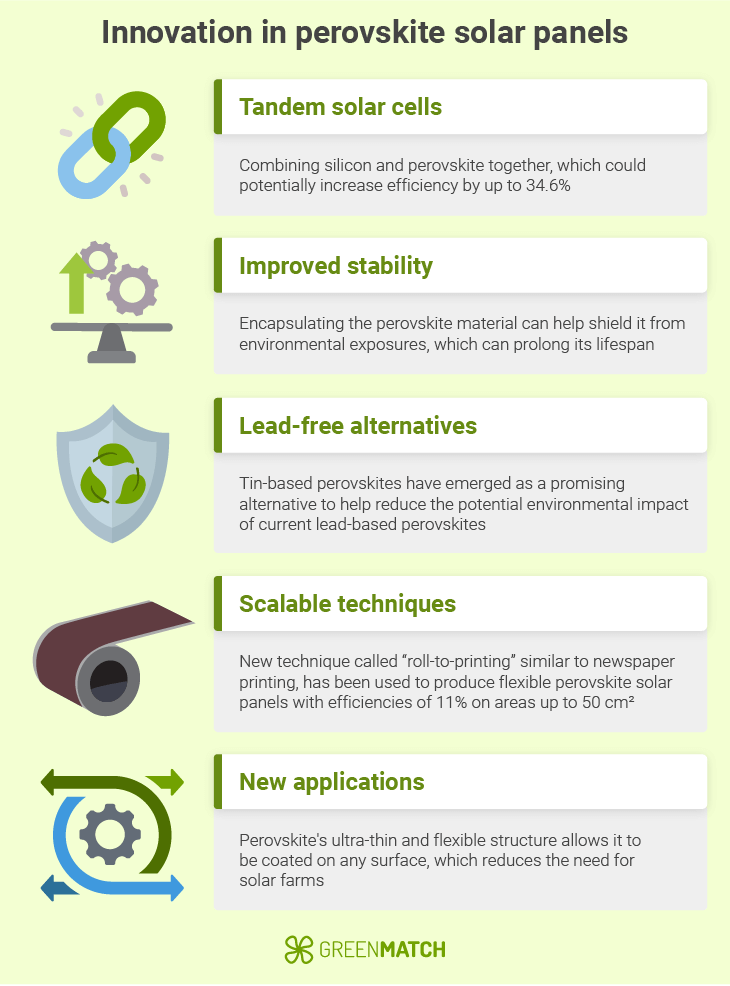
- Enhancing Stability: New Encapsulation & Material Engineering
- Towards Lead-Free Perovskites: Exploring Safer Alternatives
- Advancements in Large-Scale Manufacturing
- Tandem Solar Cells: The Best of Both Worlds?
- Perovskite Solar Cells: What This Means for YOU (Practical Implications)
- For Homeowners: Should You Wait?
- For Industry & Investors: The Market Potential
- The Future is Bright (But Not Without Hurdles) for Perovskite Solar
As someone who digs into the nitty-gritty of clean energy, I’ve seen my share of promising technologies. Perovskites are definitely exciting, but like any groundbreaking innovation, they come with a distinct set of advantages and challenges. This isn’t just a technical discussion; it’s about understanding what this could mean for your energy future, for our planet, and for the entire solar industry. Let’s cut through the noise and get to the core of what makes perovskite solar cells so compelling – and what hurdles still stand in their way.
What Exactly Are Perovskite Solar Cells?
Before we dive into the good and bad, let’s get on the same page about what a perovskite solar cell actually is. At its heart, it’s a type of solar cell that uses a perovskite-structured compound as its active light-harvesting material. Unlike traditional silicon solar cells that rely on highly purified silicon wafers, perovskite materials are a class of compounds that share a specific crystal structure, similar to the original perovskite mineral discovered in 1837.
These materials have some truly remarkable properties when it comes to absorbing sunlight and converting it into electricity. Think of them as tiny, highly efficient light sponges. What’s truly fascinating is their ability to be processed from solutions, meaning they can be “printed” onto surfaces rather than requiring complex, high-temperature manufacturing processes.
The “Perovskite” Name: A Nod to History
The name “perovskite” actually comes from Russian mineralogist L.A. Perovski. The original mineral, calcium titanate (CaTiO₃), has this distinct cubic crystal structure. Scientists later found that many other compounds, particularly hybrid organic-inorganic lead-halide and tin-halide materials, mimic this exact structure and exhibit fantastic photovoltaic properties. When we talk about perovskite solar cells today, we’re typically referring to these synthetic compounds.
How They Differ from Silicon
Here’s the quick breakdown of how they fundamentally differ from the silicon cells you see on most rooftops:
- Material: Silicon is a semiconductor element. Perovskites are compounds (usually a metal halide like methylammonium lead iodide).
- Processing: Silicon requires energy-intensive, high-temperature vacuum processes. Perovskites can be processed from liquid solutions at much lower temperatures.
- Structure: Silicon cells are rigid. Perovskites can be made into thin, flexible films.
The Game-Changing Advantages of Perovskite Solar Cells
Alright, let’s talk about why so many people are buzzing about these cells. The advantages are compelling and could genuinely reshape our energy landscape.
Unrivaled Efficiency: From Lab to Potential Reality
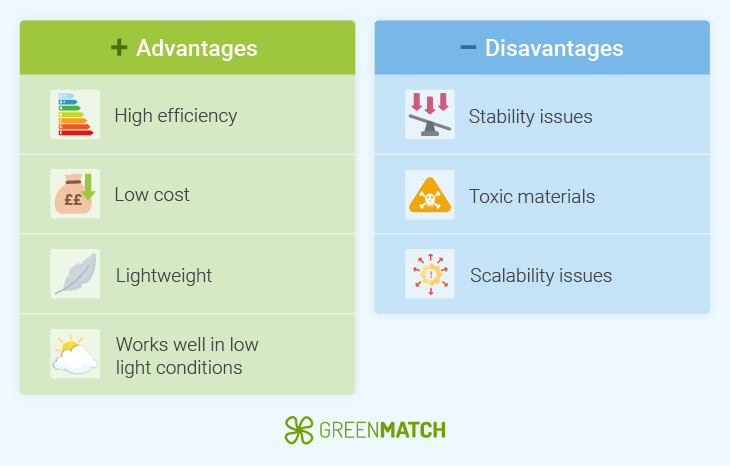
This is arguably the most significant headline grabber. Perovskite solar cells have shown an unbelievably rapid increase in power conversion efficiency (PCE). In just over a decade, laboratory efficiencies have soared from a mere 3.8% to over 26% for single-junction cells, and even higher (over 33%) for tandem cells (where perovskite is combined with silicon). To put that in perspective, it took silicon solar cells decades to reach similar milestones. This rapid climb suggests an intrinsic potential for very high efficiency, possibly exceeding silicon’s theoretical limits.
Low Manufacturing Costs & Simplicity
Imagine printing solar panels like you print newspapers. That’s the dream with perovskites. Because they can be processed from solutions at low temperatures, they bypass the expensive, high-energy vacuum deposition methods required for silicon. This means:
- Cheaper Raw Materials: Many of the constituent elements are more abundant and less costly than highly purified silicon.
- Less Energy-Intensive Production: Lower temperatures mean less energy input during manufacturing, reducing costs further.
- Simpler Manufacturing Techniques: Techniques like slot-die coating, inkjet printing, and roll-to-roll processing (think printing newspapers) can be used, which are inherently cheaper and faster for large-scale production.
Versatility & Flexibility: Beyond Rooftops
Traditional silicon panels are rigid, heavy, and typically opaque. Perovskites? Not so much. Their thin-film nature allows for incredible versatility:
- Flexible Solar Cells: Imagine solar cells integrated into clothing, tents, or curved surfaces.
- Transparent Solar Cells: Windows that generate electricity? Yes, please. This opens up entirely new architectural applications.
- Lightweight: Perfect for applications where weight is a concern, like drones or portable devices.
- Diverse Substrates: They can be deposited on plastic, glass, or even fabrics.
Tunable Bandgap: Tailoring for Specific Needs
This is a bit technical, but really cool. The “bandgap” of a solar cell material determines which parts of the solar spectrum it absorbs most efficiently. Perovskites are unique because their bandgap can be “tuned” by changing their chemical composition. This means:
- You can design them to absorb specific wavelengths of light.
- This is crucial for tandem solar cells, where a perovskite layer captures high-energy blue light, and a silicon layer captures lower-energy red light, maximizing overall efficiency.
Impressive Performance in Low-Light Conditions
While silicon cells perform well in direct sunlight, their efficiency can drop significantly on cloudy days or indoors. Perovskites, surprisingly, show excellent performance under diffused light conditions. This makes them ideal for applications like indoor IoT devices or in regions with less consistent direct sunlight.
Here’s a quick comparison of how perovskites stack up against traditional silicon:
| Feature | Perovskite Solar Cells | Traditional Silicon Solar Cells |
|---|---|---|
| Power Conversion Efficiency (Lab) | 26%+ (single junction), 33%+ (tandem) | 26% (commercial, lab max 26.7%) |
| Manufacturing Cost | Potentially very low (solution processing) | Moderate to high (energy-intensive) |
| Flexibility | Highly flexible, can be transparent | Rigid and opaque |
| Weight | Extremely lightweight | Heavy |
| Low-Light Performance | Excellent | Good in direct light, drops in low light |
| Material Abundance | Good (many components are common) | Good (silicon is abundant) |
| Environmental Impact (Mfg) | Lower energy footprint | Higher energy footprint |
The Stark Realities: Disadvantages and Challenges of Perovskite Solar Cells
Okay, now for the honest truth. While the advantages are enticing, perovskites aren’t a magic bullet. There are significant challenges that need to be overcome before they can truly dominate the market.
Stability – The Achilles’ Heel
This is the biggest headache for researchers. Perovskite materials are notoriously unstable in ambient conditions. They degrade when exposed to:
- Moisture: Water vapor can break down the perovskite crystal structure.
- Heat: High temperatures accelerate degradation, which is a problem for solar panels sitting on hot rooftops.
- UV Light: Prolonged exposure to ultraviolet radiation can also cause the materials to break down.
- Oxygen: Atmospheric oxygen can lead to oxidation and reduced performance.
While silicon solar cells come with a 25-year performance warranty, perovskite cells currently degrade much faster, often within months or even weeks under harsh conditions. For widespread commercial adoption, they need to reliably last for decades.
Lead Toxicity – A Major Environmental Hurdle
Most high-performing perovskite solar cells contain lead. Lead is a known toxic heavy metal that poses serious environmental and health risks if it leaches into the soil or water. This raises significant concerns about:
- Manufacturing Safety: Protecting workers during production.
- Disposal and Recycling: Ensuring that decommissioned panels don’t become toxic waste.
- Public Acceptance: Overcoming consumer apprehension about lead in a widespread household product.
While the amount of lead in a single cell is small, the sheer volume needed for widespread solar deployment could be problematic without proper encapsulation or lead-free alternatives.
Scalability and Manufacturing Uniformity
It’s one thing to make a tiny, high-efficiency perovskite cell in a laboratory. It’s an entirely different beast to scale that up to produce large-area panels consistently and cost-effectively. Challenges include:
- Uniformity: Ensuring the perovskite film is perfectly uniform over large areas is difficult, and defects can drastically reduce efficiency and stability.
- Reproducibility: Achieving the same high performance consistently from batch to batch in large-scale manufacturing remains a hurdle.
- Encapsulation: Developing cost-effective, durable encapsulation methods to protect the sensitive perovskite layer from the elements.
Long-Term Performance & Reliability
We simply don’t have decades of real-world data on perovskite solar cells like we do for silicon. This lack of long-term performance validation makes investors and consumers wary. Without proven reliability over extended periods, it’s hard to justify the large-scale investment required for broad deployment.
Patent Landscape & Commercialization Roadblocks
The field is relatively new, and the patent landscape is complex and evolving. This can create legal and commercial roadblocks for companies looking to commercialize the technology. Navigating intellectual property rights and securing investment for a still-developing technology is a significant challenge.

Here’s a quick overview of the major disadvantages:
| Challenge Area | Specific Issues | Impact on Adoption |
|---|---|---|
| Stability | Degrades with moisture, heat, UV light, oxygen. | Shortens lifespan, requires extensive encapsulation, reduces long-term ROI. |
| Toxicity | Contains lead (in most high-efficiency variants). | Environmental/health concerns, complicates manufacturing & disposal, impacts public acceptance. |
| Scalability | Difficulty achieving uniform, high-performance films over large areas. | Limits mass production, increases costs per unit area for large panels. |
| Long-Term Reliability | Limited real-world performance data over decades. | Hesitation from investors and consumers for large-scale projects. |
| Commercialization | Complex patent landscape, high R&D investment needed. | Slows market entry and widespread availability. |
Bridging the Gap: How Research is Tackling Perovskite’s Challenges
The good news? Scientists and engineers aren’t just sitting idly by. Massive research efforts are underway globally to address these very challenges. This isn’t a stagnant field; it’s a dynamic one with continuous breakthroughs.
Enhancing Stability: New Encapsulation & Material Engineering
Researchers are experimenting with several strategies to make perovskite cells more robust:
- Advanced Encapsulation: Developing better barrier layers (like specialized polymers or inorganic thin films) that completely seal the perovskite material from moisture and oxygen. Think of it as putting the perovskite in a super-tough, airtight container.
- Material Engineering: Modifying the chemical composition of the perovskite itself. This includes incorporating more stable inorganic ions, creating 2D or quasi-2D perovskites (which are more resistant to moisture), or adding specific additives to the perovskite precursor solution that improve crystal stability.
- Interface Engineering: Optimizing the layers surrounding the perovskite to improve charge extraction and prevent degradation at the interfaces.
Towards Lead-Free Perovskites: Exploring Safer Alternatives
Addressing the lead toxicity issue is a high priority. Scientists are actively exploring alternatives:
- Tin-Based Perovskites: Tin (Sn) is a promising substitute for lead, but tin-based cells currently suffer from lower efficiency and even greater instability due to the ease of oxidation of Sn²⁺ to Sn⁴⁺. Research is focusing on stabilizing tin in its +2 oxidation state.
- Bismuth-Based Perovskites: Bismuth (Bi) is another non-toxic option, but current bismuth-based cells have significantly lower efficiencies compared to lead-based ones.
- Double Perovskites: These involve a more complex crystal structure that can use non-toxic metals like silver and bismuth. While early-stage, they offer a pathway to lead-free, stable materials.
While lead-free options haven’t yet matched the efficiency of their lead-containing counterparts, progress is steady, and this remains a crucial area of focus.
Advancements in Large-Scale Manufacturing
To move beyond lab-scale devices, manufacturing techniques are being refined:
- Roll-to-Roll Printing: This high-throughput method, similar to printing newspapers, allows for continuous, fast, and cost-effective production of flexible solar films.
- Slot-Die Coating: A precise method that can deposit uniform perovskite films over large areas, suitable for both rigid and flexible substrates.
- Vapor Deposition: While typically more energy-intensive, hybrid vapor-solution methods are also being explored to create highly uniform and stable films.
Tandem Solar Cells: The Best of Both Worlds?
One of the most exciting pathways is the development of tandem solar cells. This involves layering a perovskite cell on top of a traditional silicon cell. Here’s why it’s a game-changer:
- The perovskite layer efficiently absorbs the blue and green light spectrum.
- The silicon layer then captures the red and infrared light that passes through the perovskite.
- This combination can harvest a much broader spectrum of sunlight, pushing theoretical efficiency limits well beyond what either material can achieve alone. We’re already seeing lab efficiencies over 33% for these devices.
This approach leverages the strengths of both technologies, potentially bringing perovskites to market sooner by integrating them with established silicon technology.
Perovskite Solar Cells: What This Means for YOU (Practical Implications)
So, what does all this technical talk mean for the average person, or for someone considering investing in solar?
For Homeowners: Should You Wait?
For most homeowners considering solar today, silicon solar panels are still the undisputed champion. They are readily available, have a proven track record of decades of reliability, come with long warranties, and their costs have plummeted. Perovskite solar cells are not yet widely available for residential installation, nor do they have the necessary long-term stability and safety certifications.
Should you wait? Probably not to install solar *today*. The financial and environmental benefits of silicon solar are too significant to delay. However, keep an eye on the market. In the next 5-10 years, we might see niche perovskite products (like semi-transparent windows, flexible panels for specific applications, or even high-efficiency tandem silicon-perovskite panels) begin to emerge. They won’t replace silicon overnight, but they could complement it beautifully.
For Industry & Investors: The Market Potential
For those in the industry or looking to invest, perovskites represent a massive opportunity, particularly in certain segments:
- Niche Applications: Think flexible electronics, smart windows, building-integrated photovoltaics (BIPV), and low-light indoor energy harvesting. Their unique properties make them perfect for these areas where silicon is less suitable.
- Tandem Cells: The potential to boost existing silicon panel efficiency means a huge upside for manufacturers. A few percentage points of efficiency gain can translate to significant cost savings and power output improvements.
- Developing Markets: Low manufacturing costs could make solar energy more accessible in regions where traditional silicon has been too expensive.
The market potential is undeniable, but it requires patient investment in R&D to solve the remaining stability and toxicity challenges.
The Future is Bright (But Not Without Hurdles) for Perovskite Solar
Perovskite solar cells are a fascinating and incredibly promising technology. They hold the potential for truly disruptive change in the energy sector, offering efficiencies that rival or even surpass silicon, at a potentially much lower cost and with unparalleled versatility. The rapid pace of research and development in this field is nothing short of astonishing.
However, it’s crucial to approach this with a clear understanding of the challenges. The issues of long-term stability and the presence of lead are significant hurdles that absolutely must be overcome for widespread adoption. While lead-free options are emerging and stability is improving, these are still areas of intense focus.
Ultimately, perovskites aren’t here to immediately replace your rooftop silicon panels, but they are very likely to complement them, open up new solar applications, and push the boundaries of what solar energy can achieve. Keep watching this space – the next few years promise to be incredibly exciting for perovskite solar technology.
Frequently Asked Questions
What is a perovskite solar cell?
A perovskite solar cell is a type of solar cell that uses a perovskite-structured compound, typically a hybrid organic-inorganic metal halide, as its active light-harvesting material to convert sunlight into electricity. They are known for their rapid efficiency gains and potential for low-cost manufacturing.
Are perovskite solar cells better than silicon?
Perovskite solar cells show potential for higher efficiency, lower manufacturing costs, and greater flexibility than traditional silicon cells. However, they currently face significant challenges with long-term stability and toxicity (due to lead content), which silicon cells have largely overcome. They are not yet commercially viable for widespread residential use, but could be complementary or superior in niche applications or tandem configurations.
When will perovskite solar cells be available commercially?
While some niche applications (e.g., small flexible devices, tandem cell layers) might see commercialization within the next 5-10 years, widespread residential or utility-scale perovskite-only solar panels are still a ways off. Significant breakthroughs in stability and addressing toxicity are needed for broad market entry, likely requiring another decade or more for full maturity.
Are perovskite solar cells toxic?
Most high-performing perovskite solar cells contain lead, which is a toxic heavy metal. This raises environmental and health concerns regarding manufacturing safety, accidental damage, and end-of-life disposal. Researchers are actively working on lead-free alternatives (e.g., tin- or bismuth-based perovskites) and advanced encapsulation methods to mitigate these risks.
What is the efficiency of perovskite solar cells?
In laboratory settings, single-junction perovskite solar cells have achieved power conversion efficiencies over 26%, rivaling or exceeding silicon. When combined with silicon in tandem solar cells, efficiencies have surpassed 33%, demonstrating their incredible potential for future performance records.
How long do perovskite solar cells last?
One of the major challenges for perovskite solar cells is their stability. Under real-world conditions (exposure to moisture, heat, UV light), current perovskite cells degrade much faster than traditional silicon cells, which typically come with 25-year warranties. Researchers are focused on improving their long-term durability to enable lifespans comparable to conventional solar panels.


Post Comment