What Is A Bifacial Solar Panel
Bifacial Solar Panels: The Definitive Guide to Maximizing Your Solar Energy Harvest
Let’s be honest, when you think of solar panels, you probably picture sleek, dark rectangles soaking up sun from one side. But what if I told you there’s a new generation of panels that can capture sunlight not just from above, but from below as well? Imagine boosting your energy production without adding more panels to your roof or yard.
Table of Contents
- Bifacial Solar Panels: The Definitive Guide to Maximizing Your Solar Energy Harvest
- What Exactly is a Bifacial Solar Panel?
- Beyond Monofacial: The Dual-Sided Advantage
- The Science of Dual Absorption: Albedo Effect Explained
- How Do Bifacial Solar Panels Work? Unpacking the Mechanics
- Photovoltaic Cells: A Two-Way Street for Photons
- Harnessing Reflected Light: The Albedo Factor in Action
- Bifacial vs. Monofacial Solar Panels: A Head-to-Head Comparison
- Efficiency and Energy Yield: More Power Per Square Foot
- Durability and Lifespan: Built Tougher
- Aesthetics and Design Flexibility
- Cost Considerations: Initial Investment vs. Long-Term Value
- Advantages of Going Bifacial: Why They’re Gaining Traction
- Higher Energy Output in the Same Footprint
- Enhanced Durability and Longevity
- Improved Performance in Low-Light Conditions
- Aesthetic Versatility for Innovative Designs
- Reduced Balance of System (BOS) Costs
- Disadvantages and Considerations: Is Bifacial Right For You?
- Higher Upfront Cost
- Specific Installation Requirements
- Performance Variability (Site-Dependent)
- Not Always Ideal for Rooftop Installations (Traditional Pitched Roofs)
- Ideal Applications for Bifacial Solar Panels
- Ground-Mounted Solar Farms and Utility Scale Projects
- Carports, Awnings, and Pergolas
- Flat Commercial and Residential Rooftops
- Vertical Installations (Noise Barriers, Facades)
- Snow-Prone Regions (Increased Albedo)
- Installation Best Practices for Maximizing Bifacial Gain
- Optimizing Ground Clearance and Tilt Angle
- Choosing the Right Albedo Surface
- Selecting the Ideal Mounting Structure
- Minimizing Rear-Side Shading
- The Future of Solar: Why Bifacial Technology is Here to Stay
- Continuous Efficiency Improvements
- Cost Reduction Trends
- Integration into Smart Cities and Infrastructure
- Are Bifacial Solar Panels Worth the Investment? Making an Informed Decision
- Conclusion: Embracing the Dual Power Revolution
That’s the promise of bifacial solar panels, and they’re rapidly transforming how we think about solar energy. They’re not just a minor upgrade; they represent a significant leap in efficiency and design flexibility. If you’re serious about solar, understanding bifacial technology is no longer optional – it’s essential.
What Exactly is a Bifacial Solar Panel?
At its core, a bifacial solar panel is a photovoltaic (PV) module designed to capture sunlight from both its front and rear sides. Unlike traditional, or “monofacial,” panels that have an opaque backsheet, bifacial panels feature transparent or semi-transparent backing materials, allowing light that reflects off the ground or surrounding surfaces to reach the solar cells on the underside.
Beyond Monofacial: The Dual-Sided Advantage
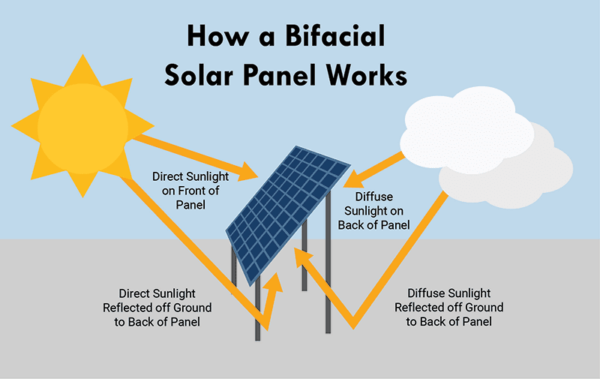
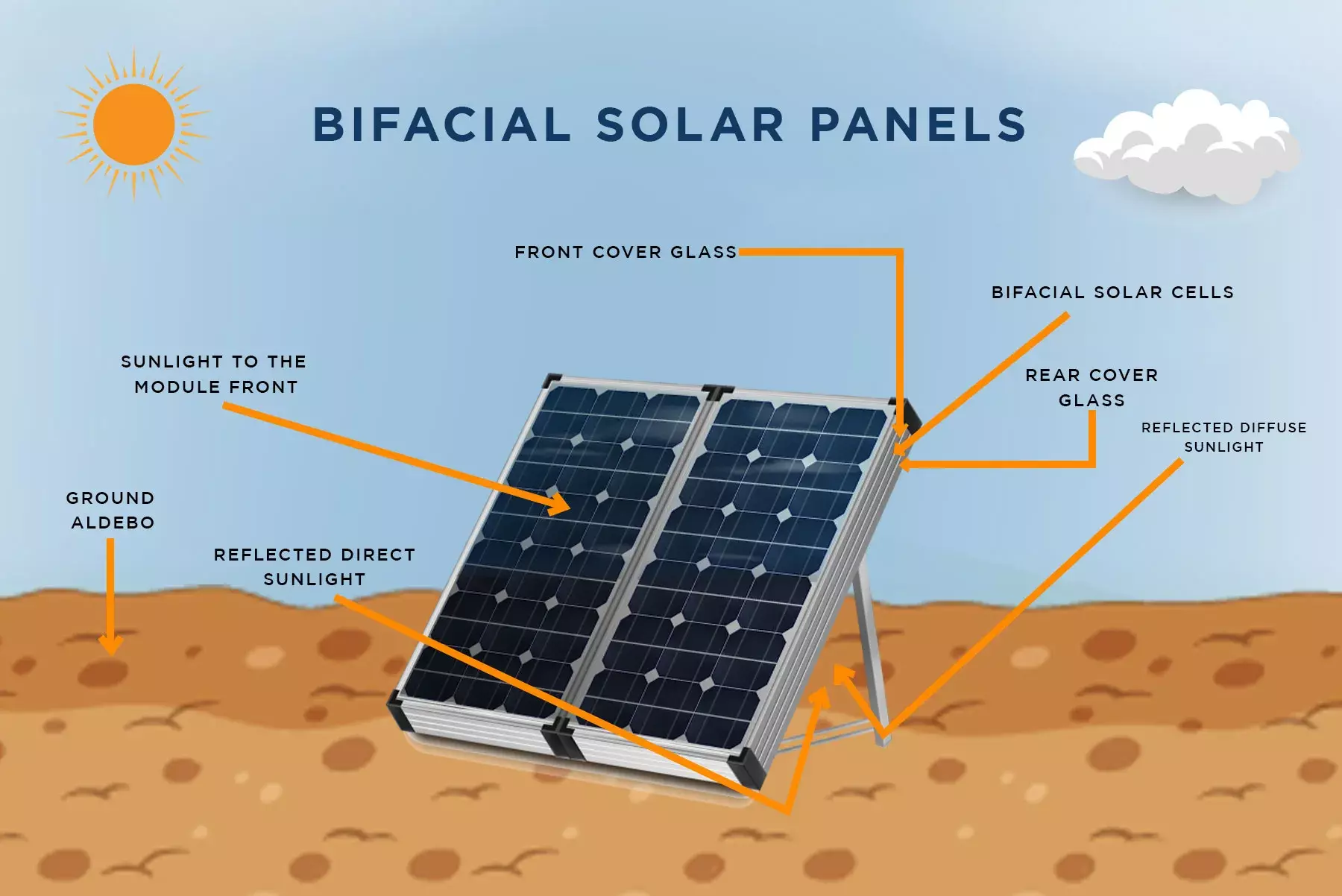
The fundamental difference lies in how light is absorbed. A standard monofacial panel only converts direct sunlight hitting its front surface. A bifacial panel, however, is a two-way street for photons. While the front side still captures the bulk of direct sunlight, the rear side diligently collects diffused light and, more importantly, reflected light (albedo) from the environment.
This dual-sided absorption means you’re harnessing more of the available solar energy, translating directly into higher electricity generation from the same physical footprint. These panels typically use a dual-glass construction or a transparent backsheet, making the cells visible from both sides. Many modern bifacial panels also incorporate N-type solar cells, which are inherently more efficient and suffer less from light-induced degradation (LID) compared to traditional P-type cells, further boosting their performance and longevity.
The Science of Dual Absorption: Albedo Effect Explained
The magic behind bifacial panels’ rear-side gain largely comes down to the “albedo effect.” In simple terms, albedo is a measure of how much light a surface reflects. Think about how much brighter it is near snow on a sunny day – that’s high albedo in action.
For bifacial panels, the ground surface or mounting structure directly beneath and around the panels plays a critical role. A highly reflective surface will bounce more sunlight onto the panel’s rear side, significantly increasing its overall output. Conversely, a dark, non-reflective surface will offer minimal or no rear-side gain.
| Surface Type | Albedo Coefficient (Approx.) | Typical Rear-Side Gain Boost (Relative) |
|---|---|---|
| Fresh Snow | 0.80 – 0.90 | Very High (20-30%+) |
| White Gravel / White Roof Membrane | 0.60 – 0.80 | High (15-25%) |
| Light-Colored Concrete | 0.30 – 0.40 | Moderate (10-15%) |
| Grass / Vegetation | 0.20 – 0.25 | Low to Moderate (5-10%) |
| Dark Asphalt / Black Roof | 0.05 – 0.15 | Negligible (0-5%) |
How Do Bifacial Solar Panels Work? Unpacking the Mechanics
Understanding the “what” is one thing, but the “how” is where the real ingenuity lies. Bifacial panels leverage advanced materials and structural design to achieve their dual-sided power generation.
Photovoltaic Cells: A Two-Way Street for Photons
All solar panels rely on the photovoltaic effect, where photons from sunlight strike semiconductor materials (typically silicon) and knock electrons loose, creating an electric current. In a monofacial cell, this process is optimized for one direction.
Bifacial cells, however, are designed with contacts on both the front and back surfaces that allow light to be absorbed from either side. The transparent encapsulating materials (often glass on both sides, or glass on the front and a transparent backsheet) ensure that light can reach these cells from the rear without obstruction. The junction box and wiring are strategically placed to minimize any shading on the back of the panel, further maximizing light capture.
Harnessing Reflected Light: The Albedo Factor in Action
While direct sunlight provides the primary energy source, the rear side of a bifacial panel effectively acts as a secondary collector, relying heavily on environmental factors. When sunlight hits a surface like the ground, a white roof, or even snow, a portion of that light is reflected. This reflected light, along with diffused light (light scattered by the atmosphere), then hits the back of the bifacial panel.
For optimal performance, bifacial panels are typically installed with greater ground clearance than traditional panels. This allows more reflected light to reach the underside without being blocked by the mounting structure or the ground itself. The tilt angle is also crucial; a steeper tilt can sometimes catch more reflected light from further away, depending on the sun’s path and the reflective surface’s proximity.
Bifacial vs. Monofacial Solar Panels: A Head-to-Head Comparison
When you’re weighing your solar options, the choice between bifacial and monofacial panels often comes down to specific project goals, budget, and site conditions. Let’s break down how they stack up.
| Feature | Bifacial Solar Panels | Monofacial Solar Panels |
|---|---|---|
| Light Absorption | Both front and rear sides | Only front side |
| Energy Yield | Typically 10-30% higher due to rear-side gain | Standard output |
| Efficiency | Higher effective efficiency (W/m²) | Standard panel efficiency |
| Durability | Often dual-glass construction; enhanced mechanical strength, less degradation, longer lifespan | Typically glass-front, opaque backsheet; standard durability |
| Aesthetics | Transparent/semi-transparent; modern, sleek look; ideal for architectural integration | Opaque back; traditional look |
| Installation Requirements | Requires adequate ground clearance, reflective surfaces (high albedo) for optimal gain | More flexible; works on almost any surface/roof type |
| Cost | Higher upfront cost per panel, but potentially lower LCOE (Levelized Cost of Energy) | Lower upfront cost per panel |
| Applications | Ground mounts, carports, pergolas, flat roofs, snowy regions, vertical installations | Pitched rooftops, ground mounts, almost universal |
Efficiency and Energy Yield: More Power Per Square Foot
This is arguably the biggest selling point. Bifacial panels can generate anywhere from 10% to 30% more energy than their monofacial counterparts under optimal conditions, sometimes even more, thanks to that rear-side gain. This means you can achieve your target energy production with fewer panels, which is a huge advantage if you have limited installation space. For large-scale projects, this translates to reduced land use and overall system costs for the same power output.
Durability and Lifespan: Built Tougher
Many bifacial panels come with a dual-glass construction (glass on both front and back) instead of a glass-and-backsheet design. This makes them inherently more resistant to micro-cracks, moisture ingress, and potential-induced degradation (PID). The added strength also means better resistance to wind, snow, and hail. This robustness often leads to longer product warranties (e.g., 25-30 years) and slower degradation rates over time, ensuring your investment pays off for decades.
Aesthetics and Design Flexibility
With their transparent nature, bifacial panels offer a sleek, modern aesthetic. This makes them ideal for applications where visibility of the panel’s underside is a factor, such as carports, pergolas, awnings, or building facades. They integrate beautifully into architectural designs, creating shaded areas that also generate clean energy, adding both form and function.
Cost Considerations: Initial Investment vs. Long-Term Value
It’s true that bifacial panels typically have a higher upfront cost per watt than monofacial panels. However, this initial premium can be offset by several factors. Because they generate more electricity, you might need fewer panels, reducing material and installation costs (racking, wiring, labor). More importantly, the increased energy yield over the system’s lifespan can lead to a lower Levelized Cost of Energy (LCOE), meaning the cost per unit of electricity produced is ultimately lower, providing a faster return on investment (ROI).
Advantages of Going Bifacial: Why They’re Gaining Traction
The benefits of bifacial technology extend beyond just generating more power. They address several key challenges in solar deployment and offer compelling advantages for a range of applications.
Higher Energy Output in the Same Footprint
This is the prime motivator. For sites with limited space, whether it’s a small urban rooftop or a tightly constrained solar farm, bifacial panels allow for significantly greater power production without expanding the physical area. This maximizes the return on your available land or roof space.
Enhanced Durability and Longevity
As mentioned, the dual-glass construction (common in bifacial designs) provides superior protection against environmental stressors. This translates to fewer warranty claims, less performance degradation over time, and a more reliable system throughout its operational life. Many manufacturers offer extended warranties on bifacial modules due to this inherent robustness.
Improved Performance in Low-Light Conditions
While direct sunlight is crucial, bifacial panels also excel at capturing diffused light. On cloudy days, or during dawn and dusk, when direct sunlight is less intense, the ability to absorb ambient light from multiple angles helps maintain a higher level of energy production compared to a monofacial panel that primarily relies on direct exposure.
Aesthetic Versatility for Innovative Designs
The transparent nature of bifacial panels opens up a world of design possibilities. Architects and designers can integrate them seamlessly into building facades, create elegant solar canopies for parking lots, or construct visually appealing pergolas that generate power. This aesthetic flexibility makes solar solutions more attractive for a broader range of residential, commercial, and urban planning projects.
Reduced Balance of System (BOS) Costs
Because bifacial panels generate more power per module, you might need fewer overall panels to meet your energy demands. This can lead to savings on various “Balance of System” components, including:
- Less racking and mounting hardware: Fewer panels mean less structure is needed.
- Reduced wiring and electrical components: A smaller array simplifies the electrical infrastructure.
- Lower installation labor: Fewer panels to install can reduce labor time and costs.
- Smaller land footprint: Especially critical for large-scale solar farms, reducing land acquisition or leasing costs.
Disadvantages and Considerations: Is Bifacial Right For You?
While the advantages are compelling, bifacial technology isn’t a universal solution. It comes with its own set of considerations that need to be evaluated based on your specific circumstances.
Higher Upfront Cost
Yes, individual bifacial panels typically cost more per watt than monofacial ones. This higher initial investment can be a deterrent for some budgets, especially for smaller residential projects where the overall system size might not be large enough to fully capitalize on BOS savings.
Specific Installation Requirements
To truly leverage the rear-side gain, bifacial panels demand specific installation conditions:
- Need for optimal albedo surfaces: Installing over dark asphalt or a non-reflective roof won’t yield significant benefits.
- Higher ground clearance: Panels need to be elevated sufficiently to allow reflected light to hit the back. This might not always be practical or aesthetically pleasing for all residential settings.
- Open racking systems: The mounting structure itself needs to minimize shading on the rear side of the panels. Traditional rail systems can sometimes cast shadows that reduce efficiency.
Performance Variability (Site-Dependent)
The actual energy gain from the rear side is highly dependent on factors like:
- Ground surface reflectivity (albedo): As discussed, a white surface yields more than a dark one.
- Height and tilt angle: Optimizing these is crucial.
- Shading: Any obstructions (nearby buildings, trees, even the mounting frame itself) that cast shadows on the rear of the panel will reduce its performance.
- Dust and dirt accumulation: Soiling on the rear side can impede light absorption.
Not Always Ideal for Rooftop Installations (Traditional Pitched Roofs)
For most residential pitched roofs, bifacial panels might not deliver their full potential. The roof surface beneath is often dark and non-reflective, and the typical low mounting height doesn’t allow enough reflected light to reach the back. While they can still function as highly durable, high-efficiency monofacial panels in such scenarios, you might be paying a premium for a feature you can’t fully utilize.
Ideal Applications for Bifacial Solar Panels
Understanding where bifacial panels shine is key to making an informed decision. They are particularly well-suited for scenarios where optimizing space and maximizing energy yield are top priorities, and where specific installation conditions can be met.
Ground-Mounted Solar Farms and Utility Scale Projects
This is where bifacial technology truly takes off. Large solar farms can optimize the ground surface beneath (e.g., using white gravel or vegetation with good albedo) and configure panels with ideal height and spacing to maximize rear-side gain. The ability to generate more power per acre reduces land acquisition costs and increases project efficiency.
Carports, Awnings, and Pergolas
These applications are perfect for bifacial panels. They provide shade while generating electricity, and the open structure allows ample reflected light to hit the panel’s underside. The transparent nature also creates a visually appealing, filtered light effect below, making them excellent architectural features for homes and businesses.
Flat Commercial and Residential Rooftops
Unlike pitched roofs, flat roofs offer more flexibility for elevating panels and using reflective roof coatings (like white TPO or similar membranes) to boost albedo. This allows homeowners and businesses with flat roofs to benefit significantly from the dual-sided power generation, maximizing output from their available roof space.
Vertical Installations (Noise Barriers, Facades)
Imagine solar panels integrated into highway noise barriers or building facades. Bifacial panels are ideal here because they can capture direct sunlight from one side and reflected light from the road, ground, or adjacent surfaces from the other. This innovative application allows for energy generation in urban environments without occupying traditional ground space.
Snow-Prone Regions (Increased Albedo)
For areas that experience regular snowfall, bifacial panels offer a unique advantage. Fresh snow has one of the highest albedo coefficients, reflecting a significant amount of sunlight. When panels are installed over snow, the rear side can experience a substantial boost in energy production, potentially mitigating some of the winter performance dips seen with monofacial systems.
Installation Best Practices for Maximizing Bifacial Gain
Getting the most out of your bifacial panels isn’t just about buying the right equipment; it’s about smart installation. Here are the critical factors to consider:
Optimizing Ground Clearance and Tilt Angle
Height matters. For ground-mounted systems, panels should be elevated higher than typical monofacial installations, often 1 to 2 meters (3 to 6 feet) off the ground. This increased clearance allows for a larger “capture area” for reflected light. The tilt angle also plays a role; while generally optimized for direct sunlight, a slightly steeper or shallower angle might be considered to maximize reflection from a specific surface or during certain seasons.
Choosing the Right Albedo Surface
As we’ve explored, the surface beneath the panels is a game-changer. For new installations, consider:
- White gravel or crushed rock: Excellent albedo and good drainage.
- Light-colored concrete: Durable and reflective.
- White TPO roofing membranes: Ideal for flat commercial roofs.
- Grasses/vegetation: While lower albedo, they can still offer some benefit and are good for environmental integration.
Avoid dark, non-reflective surfaces like asphalt or black rubber roofs, as they will negate much of the bifacial advantage.
Selecting the Ideal Mounting Structure
The mounting system must be designed to minimize shading on the rear of the panels. This means:
- Open-frame racking: Structures that use thin rails or minimal cross-members are preferred over bulky frames.
- Single-axis trackers: These systems, common in utility-scale projects, can further enhance bifacial performance by optimizing the panel’s orientation throughout the day to capture both direct and reflected light effectively.
Minimizing Rear-Side Shading
Beyond the mounting structure, pay close attention to any other potential sources of rear-side shading. This includes junction boxes, wiring runs, conduits, and even adjacent vegetation or architectural features. Smart design and careful component placement are essential to ensure the back of the panel receives as much light as possible.
The Future of Solar: Why Bifacial Technology is Here to Stay
Bifacial technology isn’t just a niche product; it’s a significant part of solar’s evolution. Its advantages are becoming more pronounced as the industry matures and seeks higher efficiency and greater versatility.

Continuous Efficiency Improvements
Research and development in bifacial cell technology are ongoing. We’re seeing panels with even higher front-side efficiencies combined with optimized rear-side gains. Advances in cell materials, passivation layers, and module design will continue to push the boundaries of what’s possible, leading to even greater power output from the same physical size.
Cost Reduction Trends
Like all new solar technologies, manufacturing costs for bifacial panels are decreasing as production scales up and processes become more efficient. As the price difference between monofacial and bifacial panels narrows, the economic case for choosing bifacial will become even stronger, making them accessible to a wider market segment.
Integration into Smart Cities and Infrastructure
Imagine solar-powered bus shelters, transparent facades that generate electricity for buildings, or sound barriers that double as power plants. Bifacial panels are perfectly suited for these kinds of integrations, enabling renewable energy generation in places previously deemed impractical. This blending of solar technology into urban infrastructure will be key to developing sustainable smart cities.
Are Bifacial Solar Panels Worth the Investment? Making an Informed Decision
So, after all this, the big question remains: are bifacial solar panels worth the extra investment for you? The answer, as with most things in solar, is: it depends. But here’s a framework to help you decide:
| Scenario | Is Bifacial Worth It? | Reasoning |
|---|---|---|
| Large-scale ground-mount / Solar Farm | YES | Maximizes energy density per acre, reduces land/BOS costs, long-term LCOE benefits. |
| Carport, Pergola, Awning Installation | YES | Excellent rear-side gain potential, aesthetic benefits, dual-purpose functionality. |
| Flat Commercial / Residential Roof with High Albedo | YES | Can optimize height and utilize reflective roof materials for significant gains. |
| Pitched Residential Roof (dark shingles) | LIKELY NO | Minimal to no rear-side gain, paying premium for unused feature. Monofacial often better value. |
| Limited Space, High Energy Needs | YES | Fewer panels needed to reach target output, saving space. |
| Region with Significant Snowfall | YES | Snow provides a highly reflective surface, boosting winter performance. |
If your project aligns with the “YES” scenarios above, the higher upfront cost of bifacial panels is almost certainly justified by the increased energy production, enhanced durability, and lower long-term cost of electricity. If your situation more closely resembles a traditional pitched roof with limited albedo potential, a high-efficiency monofacial panel might offer better value for your dollar.
Ultimately, consult with a reputable solar installer who can assess your specific site, energy needs, and budget. They can provide a tailored analysis to determine if the dual-sided power of bifacial solar panels is the right choice for your energy future.
Conclusion: Embracing the Dual Power Revolution
Bifacial solar panels represent an exciting evolution in photovoltaic technology. By cleverly capturing sunlight from both sides, they offer a powerful solution for maximizing energy yield, enhancing durability, and opening up new design possibilities. While they come with specific installation requirements and a higher initial price tag, their long-term benefits in terms of efficiency and reduced Levelized Cost of Energy make them an increasingly attractive option for a wide range of solar applications.
As we continue to push towards a more sustainable future, bifacial technology will undoubtedly play a pivotal role, helping us squeeze every last drop of clean energy from the sun. The era of dual-sided power is here, and it’s brighter than ever.
Frequently Asked Questions
What is the main difference between bifacial and monofacial solar panels?
The primary difference is that bifacial panels can absorb sunlight from both their front and rear sides, converting direct and reflected/diffused light into electricity. Monofacial panels, conversely, only capture sunlight from their front surface.
How much more efficient are bifacial solar panels compared to traditional ones?
Under optimal conditions, bifacial solar panels can generate 10% to 30% more energy than monofacial panels of the same rating due to the added rear-side gain. The exact gain depends heavily on factors like ground reflectivity (albedo), panel height, and tilt angle.
What is the ‘albedo effect’ and why is it important for bifacial panels?
The albedo effect refers to the amount of sunlight reflected by a surface. For bifacial panels, high albedo surfaces (like white gravel, concrete, or snow) beneath and around the panels reflect more light onto the rear side, significantly boosting their overall energy production.
Are bifacial solar panels more durable than monofacial panels?
Often, yes. Many bifacial panels feature a dual-glass construction (glass on both sides) instead of a traditional glass-and-backsheet design. This makes them more resistant to micro-cracks, moisture ingress, and degradation, often leading to longer product warranties.
Where are bifacial solar panels best installed to maximize their benefits?
Bifacial panels perform best in applications with good rear-side exposure and high albedo surfaces, such as ground-mounted solar farms, carports, pergolas, awnings, and flat commercial or residential rooftops with reflective coatings. They are also highly effective in snowy regions.
Are bifacial solar panels more expensive?
Initially, bifacial panels typically have a higher upfront cost per watt than monofacial panels. However, their higher energy yield can lead to a lower Levelized Cost of Energy (LCOE) over their lifespan and potentially reduce Balance of System (BOS) costs, making them a more cost-effective choice in the long run for suitable applications.


Post Comment