Most Efficient Solar Panels For Home
The Ultimate Guide to the Most Efficient Solar Panels for Your Home (2025-2026)
You’re ready to go solar, and you want the best. Specifically, you want the most efficient solar panels for your home. Why? Because you understand that efficiency means more power from less space, more savings over the long haul, and a quicker path to energy independence. But navigating the sea of marketing claims and technical jargon can feel overwhelming. What truly makes a panel efficient, and is the highest efficiency always the right choice for *your* home?
Table of Contents
- The Ultimate Guide to the Most Efficient Solar Panels for Your Home (2025-2026)
- What Exactly is Solar Panel Efficiency (and Why Does it Matter)?
- The Simple Definition: Power per Square Foot
- Why Higher Efficiency Isn’t Just a Number
- The Absolute Top Contenders: Most Efficient Solar Panels for Residential Use (2025-2026)
- Maxeon (SunPower): The Consistent Leader
- Qcells: Performance Meets Value
- REC Group: Premium Performance
- Canadian Solar: High Power, Global Reach
- Jinko Solar / Trina Solar: Emerging Giants with High Efficiency
- Beyond the Percentage: What REALLY Makes a Solar Panel Efficient?
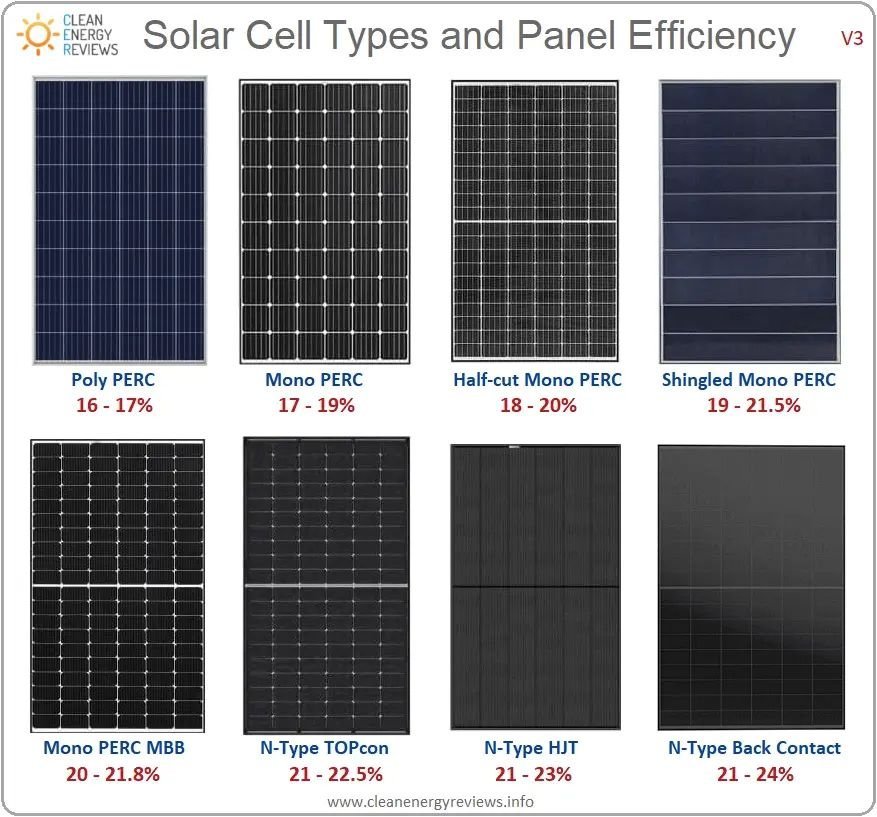
- Solar Cell Technology: Monocrystalline, PERC, and TOPCon
- Manufacturing Quality and Design
- Temperature Coefficient: The Unsung Hero of Real-World Performance
- Degradation Rate: Long-Term Efficiency
- Panel Wattage vs. Efficiency: Understanding the Difference
- Is the “Most Efficient” Panel Always the “Best” for YOUR Home? (The Nuance)
- When Max Efficiency is Non-Negotiable (Limited Roof Space)
- When Other Factors Come into Play (Cost, Warranty, Aesthetics)
- The Sweet Spot: Balancing Efficiency with Value
- Maximizing Your Solar System’s Overall Efficiency (Beyond Just the Panels)
- Professional Installation and System Design
- Inverter Technology (String, Microinverters, Optimizers)
- Battery Storage Integration
- Proper Maintenance and Monitoring
- What’s Next? Glimpse into Future Solar Efficiency
- Perovskite Solar Cells
- Tandem Cells
- Bifacial Panels (Already here, but still evolving)
- Making Your Decision: A Step-by-Step Guide
- Step 1: Assess Your Energy Needs and Roof Space
- Step 2: Research Top-Tier Panels and Local Installers
- Step 3: Get Multiple Quotes (Compare System Designs, Not Just Panel Specs)
- Step 4: Evaluate Warranties and Degradation Rates
- Step 5: Understand Financing and Incentives
I get it. Choosing solar is a big decision. This guide cuts through the noise to give you a clear, human-centric breakdown of solar panel efficiency, the absolute top performers on the market right now, and the critical factors you need to consider beyond just a percentage number. Let’s make sure you’re making the smartest investment for your clean energy future.
What Exactly is Solar Panel Efficiency (and Why Does it Matter)?
Let’s strip away the technicalities for a moment. At its core, solar panel efficiency is a measurement of how effectively a solar panel converts sunlight into usable electricity. Imagine sunlight hitting a panel – not all of that energy gets converted. Some bounces off, some is lost as heat, and some just isn’t absorbed by the cells.
The efficiency rating, expressed as a percentage, tells you what proportion of the sun’s energy hitting the panel is actually turned into power. For example, a 20% efficient panel will convert 20% of the sunlight it receives into electricity under standard test conditions.
The Simple Definition: Power per Square Foot
Think of it like this: if you have a fixed amount of roof space, a more efficient panel will generate more electricity from that same area than a less efficient one. It’s about maximizing power output from a given footprint. This is crucial for most homeowners.
Why Higher Efficiency Isn’t Just a Number
While some might argue that a few percentage points don’t make a huge difference, for most homeowners, higher efficiency translates to tangible benefits:
- Limited Roof Space: This is often the biggest driver. If your roof has limited usable area, or is complex with dormers and vents, higher efficiency panels allow you to fit more power generation into a smaller footprint. You can achieve your desired energy offset with fewer panels.
- Maximizing Production: Even with ample roof space, higher efficiency means you’re squeezing every possible watt out of the sun. This leads to greater overall energy production, especially valuable in areas with less consistent sunlight or for homes with high energy demands.
- Long-Term Savings: More power generated means less reliance on grid electricity, leading to greater savings on your utility bills over the system’s 25+ year lifespan. A slightly higher upfront cost for highly efficient panels can often be recouped through accelerated savings.
The Absolute Top Contenders: Most Efficient Solar Panels for Residential Use (2025-2026)
The solar industry is dynamic, with new advancements emerging constantly. While yesterday’s top-tier panels hovered around 20-21% efficiency, today’s leaders are pushing well past 22%, with some hitting nearly 25% for residential applications. It’s important to note that listed efficiencies are under Standard Test Conditions (STC), which are ideal lab environments. Real-world performance will vary.
Here’s a look at the panels consistently leading the pack in residential efficiency, along with a comprehensive comparison:
| Brand & Model | Peak Efficiency | Max Wattage (W) | Temperature Coeff. (%/°C) | Product Warranty (Years) |
|---|---|---|---|---|
| Maxeon (SunPower) 7 Series | Up to 24.1% | 445W | -0.29 | 40 |
| Qcells Q.TRON G2+ | Up to 22.8% | 440W | -0.28 | 25 |
| REC Alpha Pure-R Series | Up to 22.3% | 430W | -0.26 | 25 |
| Canadian Solar TOPHiKu6 | Up to 22.7% | 470W | -0.29 | 25 |
| Jinko Solar Tiger Neo N-Type | Up to 23.23% | 495W | -0.29 | 15-25 |
| Trina Solar Vertex N-Type | Up to 23.2% | 450W | -0.30 | 25 |
Maxeon (SunPower): The Consistent Leader
When it comes to raw efficiency, Maxeon (formerly SunPower) consistently sets the benchmark. Their panels are renowned for their proprietary cell technology that not only achieves some of the highest efficiencies but also boasts exceptional durability and low degradation rates. The Maxeon 7 series, in particular, pushes the limits for residential solar, making them ideal for homeowners with extremely limited roof space or those seeking the absolute maximum power output per square foot. Their industry-leading 40-year warranty is a testament to their confidence in product longevity.
Qcells: Performance Meets Value
Qcells, a South Korean manufacturer, has become a household name in the US market, balancing high performance with competitive pricing. Their Q.TRON BLK M-G2+ series, utilizing advanced Q.ANTUM NEO technology (based on TOPCon), offers excellent efficiency ratings and solid power output. They are a fantastic choice for homeowners looking for premium performance without necessarily breaking the bank, often delivering a great efficiency-to-cost ratio.
REC Group: Premium Performance
REC Group, known for its Scandinavian heritage and focus on sustainability, offers high-efficiency panels with innovative designs. Their Alpha Pure-R series uses heterojunction (HJT) cells, which combine the best attributes of crystalline silicon and thin-film technologies to achieve impressive efficiency and strong performance in various conditions. REC panels are a top pick for those who value both cutting-edge technology and environmental responsibility.
Canadian Solar: High Power, Global Reach
Don’t let the name fool you – Canadian Solar is a global giant in solar manufacturing, consistently ranking among the top producers worldwide. Their TOPHiKu6 series showcases their commitment to advanced N-type TOPCon technology, delivering very high wattage panels with excellent efficiency. They are a reliable choice for homeowners seeking high power output and robust performance from a well-established, bankable brand.
Jinko Solar / Trina Solar: Emerging Giants with High Efficiency
Chinese manufacturers Jinko Solar and Trina Solar are dominant forces globally, and their residential offerings are quickly climbing the efficiency charts. Both are heavily investing in N-type TOPCon technology (Jinko’s Tiger Neo and Trina’s Vertex N-Type). These panels are pushing past 23% efficiency, offering incredible wattage output and increasingly competitive warranties, making them strong contenders for homeowners seeking top-tier performance at often more accessible price points.
Beyond the Percentage: What REALLY Makes a Solar Panel Efficient?
It’s easy to get fixated on that single efficiency percentage, but the truth is, it’s a culmination of several sophisticated technologies and design choices. Understanding these factors will help you appreciate why some panels perform better than others, not just in a lab, but on your roof.
Solar Cell Technology: Monocrystalline, PERC, and TOPCon
The type of solar cell is fundamental to a panel’s efficiency.
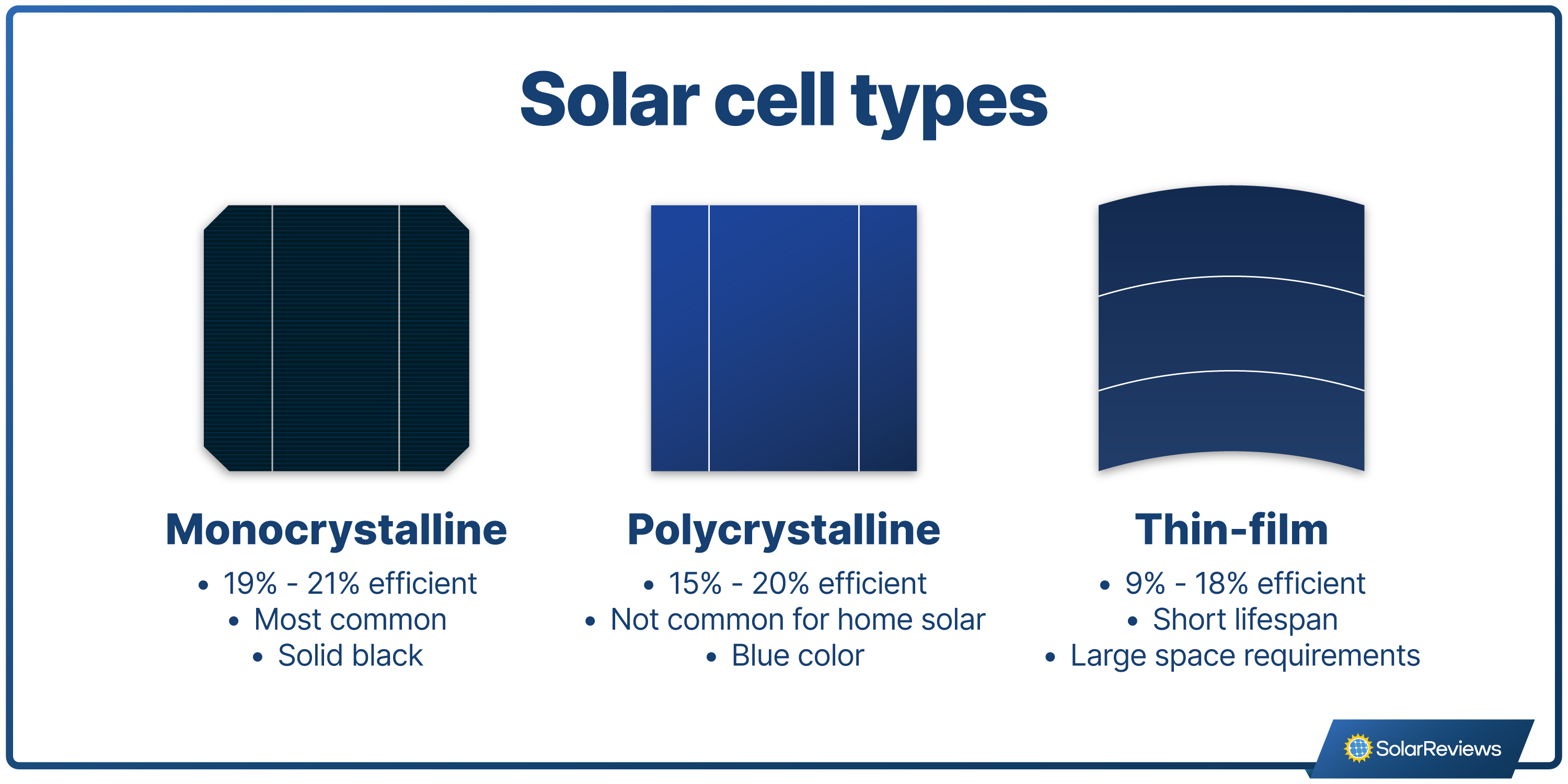
- Monocrystalline: The Foundation: Most high-efficiency panels today use monocrystalline silicon cells. These cells are cut from a single, pure crystal of silicon, giving them their uniform dark appearance and superior electronic properties compared to older polycrystalline cells.
- PERC (Passivated Emitter Rear Cell): How it Improved Efficiency: PERC technology adds a passive layer to the rear of the solar cell. This layer reflects unabsorbed sunlight back into the cell, giving it a second chance to be converted into electricity. It also helps reduce heat buildup, leading to better performance in warmer temperatures. Most high-efficiency panels today incorporate PERC.
- TOPCon (Tunnel Oxide Passivated Contact): The New Frontier: This is the leading edge of current commercial solar cell technology, and you’ll see it mentioned frequently with the highest efficiency panels (like Qcells Q.TRON, Jinko Tiger Neo, Canadian Solar TOPHiKu). TOPCon cells introduce an ultra-thin tunnel oxide layer between the silicon wafer and the metal contact. This innovative structure minimizes energy losses, enhances electron flow, and allows for even greater efficiency gains beyond PERC technology.
Manufacturing Quality and Design
Beyond the cell itself, how the panel is built and designed plays a significant role:
- Half-Cut Cells, Multi-Busbar Technology: Many modern high-efficiency panels use half-cut cells, which are literally full cells cut in half. This reduces resistive losses and improves performance in shaded conditions. Multi-busbar (MBB) technology, using more and thinner wires to collect current, also reduces internal resistance and shading effects.
- Shading Tolerance: Advanced panel designs, often employing half-cut cells and bypass diodes, are better equipped to handle partial shading. If one part of a traditional panel is shaded, it can significantly reduce the output of the entire panel. Better designs minimize this impact.
Temperature Coefficient: The Unsung Hero of Real-World Performance
This is a critical, often overlooked, specification. Solar panels lose efficiency as they get hotter. The temperature coefficient (expressed as %/°C) tells you how much a panel’s power output will decrease for every degree Celsius above 25°C (77°F) – the standard test temperature. A lower (closer to zero) negative number is better. For example, a panel with -0.26%/°C will perform better in hot climates than one with -0.35%/°C, even if their peak STC efficiencies are similar. This significantly impacts real-world energy production, especially in sunny, hot regions.
Degradation Rate: Long-Term Efficiency
All solar panels degrade over time, meaning their power output gradually decreases. Reputable manufacturers provide a performance warranty, guaranteeing a certain percentage of original output after 25 or even 30 years (e.g., 85% after 25 years). A lower annual degradation rate means your panels will produce more energy over their lifetime, maximizing your investment. Maxeon, for instance, is known for its exceptionally low degradation rates.
Panel Wattage vs. Efficiency: Understanding the Difference
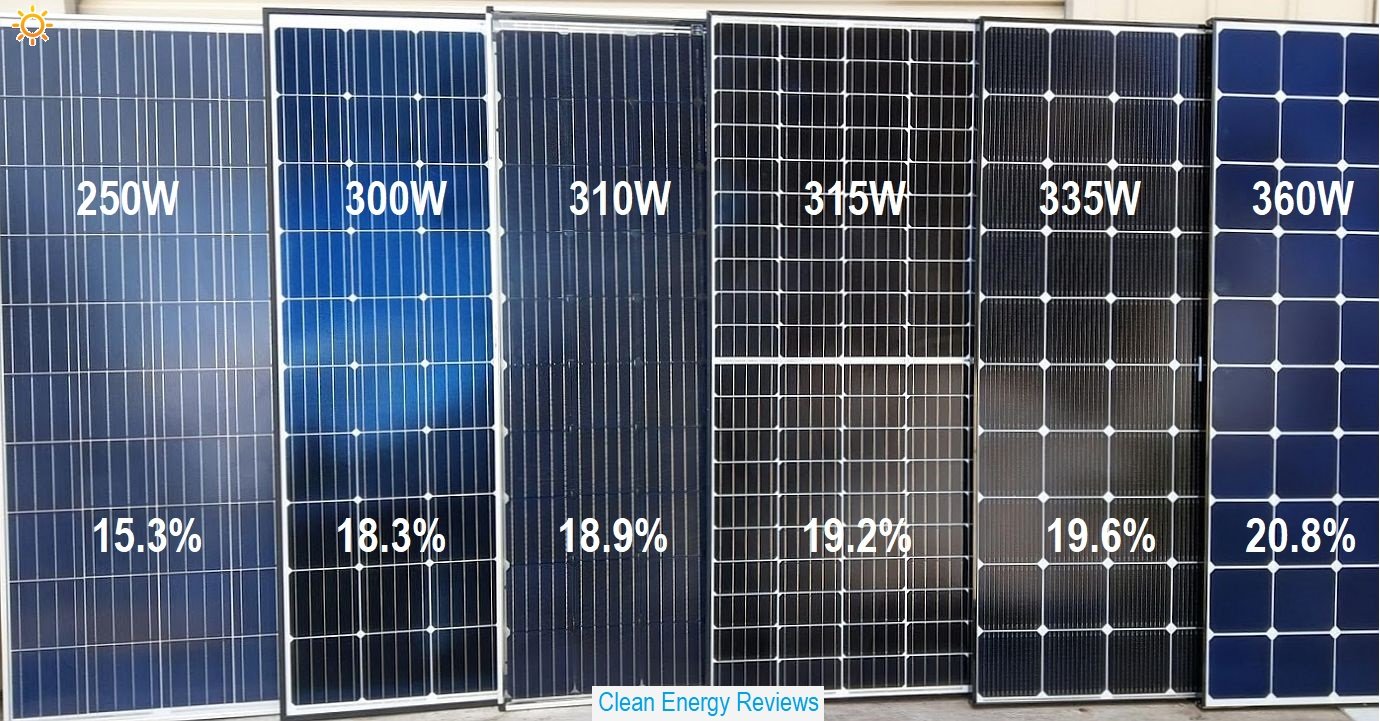
It’s common to confuse wattage with efficiency. A panel’s wattage (e.g., 400W, 450W) is its total power output under standard conditions. Efficiency is the wattage divided by its physical area and solar irradiance. You can have a very large, moderately efficient panel with high wattage, or a smaller, highly efficient panel with similar wattage. For limited roof space, high efficiency is key, as it allows for high wattage in a compact form factor. For ample roof space, high efficiency may be less critical than cost per watt, as you can simply install more panels.
Is the “Most Efficient” Panel Always the “Best” for YOUR Home? (The Nuance)
This is where smart decision-making comes into play. While the allure of the absolute highest efficiency is strong, it’s not always the optimal choice for every homeowner. The “best” panel is the one that best suits your specific needs, roof, and budget.
When Max Efficiency is Non-Negotiable (Limited Roof Space)
If your roof has limited usable area, significant shading from trees or adjacent buildings, or a complex design with many obstructions, then opting for the highest efficiency panels becomes almost essential. These panels allow you to generate the maximum possible electricity within those constraints, potentially getting you to 100% energy offset where less efficient panels might fall short. This scenario often justifies the higher per-watt cost of premium efficient panels.
When Other Factors Come into Play (Cost, Warranty, Aesthetics)
For many homeowners, a panel in the 20-22% efficiency range strikes an excellent balance. If you have a large, unshaded roof, you might achieve your energy goals by installing a few more slightly less efficient (and often less expensive) panels. In this case, the incremental gain from a 23% panel versus a 21% panel might not justify the significant price difference.
Other considerations include:
- Cost: Premium efficiency often comes with a premium price tag. Calculate the long-term ROI. Sometimes, a slightly less efficient system with a lower upfront cost can offer a better return.
- Warranty: A robust product and performance warranty (e.g., 25 years for both) from a reputable manufacturer can offer more peace of mind than a fractional increase in efficiency from an unknown brand.
- Aesthetics: Many highly efficient panels are all-black (monocrystalline), which many homeowners prefer for a sleek look. However, aesthetics can also be a factor in panel choice.
The Sweet Spot: Balancing Efficiency with Value
Ultimately, the sweet spot is finding a panel that provides enough efficiency to meet your energy needs and roof space limitations, while also offering excellent long-term reliability, a strong warranty, and a price point that fits your budget and offers a compelling return on investment. Don’t chase the highest number blindly; consider the whole package.
Maximizing Your Solar System’s Overall Efficiency (Beyond Just the Panels)
Remember, your panels are just one component of a larger system. Even the most efficient panels won’t perform optimally without proper system design and other high-quality components.
Professional Installation and System Design
This is arguably the most critical factor. A skilled installer will:
- Optimize Panel Placement: Orient panels for maximum sun exposure throughout the day and year, considering pitch, azimuth, and potential shading.
- Proper Sizing: Design a system that meets your current and future energy needs.
- Quality Wiring and Components: Ensure all electrical connections are robust and efficient, minimizing power loss.
Inverter Technology (String, Microinverters, Optimizers)
The inverter converts the DC electricity from your panels into usable AC electricity for your home. The choice of inverter technology significantly impacts system efficiency, especially with shading:
- String Inverters: Connect multiple panels in a “string.” If one panel is shaded, it can reduce the output of the entire string.
- Microinverters: Each panel has its own microinverter. This means each panel operates independently, maximizing output even if other panels are shaded or dirty. They generally offer higher system-level efficiency and better monitoring.
- Power Optimizers: Similar to microinverters, optimizers are attached to each panel to maximize individual panel output, but then feed DC power to a single string inverter. This offers a hybrid approach to mitigate shading effects.
For homes with potential shading issues or complex rooflines, microinverters or power optimizers are almost always the better choice for maximizing overall system efficiency.
Battery Storage Integration
While not directly increasing panel efficiency, adding a home battery storage system can dramatically increase your overall energy independence and financial efficiency. It allows you to store excess solar energy generated during the day and use it at night or during power outages, reducing your reliance on grid power and potentially offsetting peak demand charges.
Proper Maintenance and Monitoring
Regular (though minimal) maintenance, like cleaning your panels if they get excessively dirty from pollen, dust, or bird droppings, ensures they can absorb sunlight effectively. Monitoring systems, often provided with your inverter, allow you to track real-time production, identify any issues quickly, and ensure your system is always performing at its peak.
What’s Next? Glimpse into Future Solar Efficiency
The quest for higher efficiency is relentless. While today’s top panels are impressive, researchers are exploring even more groundbreaking technologies that promise to push the boundaries further.
Perovskite Solar Cells
Perovskite is a class of materials that has shown incredible promise in solar energy. These cells are cheap to produce, flexible, and have rapidly achieved efficiencies comparable to traditional silicon in lab settings. While still largely in the research and development phase for commercial home use, perovskite could one day offer ultra-high efficiency, lightweight, and even transparent solar solutions.
Tandem Cells
Tandem cells combine different types of solar cells (e.g., silicon and perovskite) into a single device. Each layer is optimized to absorb a different part of the solar spectrum, allowing the cell to capture more energy than a single-layer cell could. Lab prototypes have already exceeded 30% efficiency, pointing towards a future of dramatically more powerful panels.
Bifacial Panels (Already here, but still evolving)
While not strictly a “future” technology as they are available today, bifacial panels are continually improving. These panels can capture sunlight from both their front and back sides. When installed correctly (e.g., on a light-colored roof, elevated ground mounts), the reflected light hitting the back can significantly boost overall energy yield, acting as an efficiency multiplier in certain setups.
Making Your Decision: A Step-by-Step Guide
Ready to choose your solar panels? Here’s a practical guide to help you make an informed decision:
Step 1: Assess Your Energy Needs and Roof Space
- Review past electricity bills to understand your average monthly consumption (kWh).
- Measure your available roof space, noting any obstructions (vents, chimneys, dormers) or shading issues. This will help determine if high-efficiency panels are a necessity.
Step 2: Research Top-Tier Panels and Local Installers
- Familiarize yourself with the leading high-efficiency brands (Maxeon, Qcells, REC, Canadian Solar, Jinko, Trina).
- Seek out reputable local solar installers. Look for certifications, positive reviews, and extensive experience.
Step 3: Get Multiple Quotes (Compare System Designs, Not Just Panel Specs)
- Obtain at least 3-5 quotes from different installers.
- Critically compare not just the panels themselves, but the entire system design, proposed energy offset, inverter technology, and overall cost. A good installer will explain why they recommend specific panels for your home.
Step 4: Evaluate Warranties and Degradation Rates
- Prioritize panels with strong product warranties (25+ years is excellent) and performance warranties (guaranteeing high output after 25 years).
- Ask about the annual degradation rate – lower is better for long-term production.
Step 5: Understand Financing and Incentives
- Explore all available financing options (cash, loan, lease, PPA).
- Factor in federal, state, and local incentives, such as the Investment Tax Credit (ITC), SRECs, and net metering policies, as these significantly impact the overall cost and ROI.
Choosing the most efficient solar panels for your home is about more than just finding the highest percentage. It’s about making a smart, informed decision that balances cutting-edge technology with practical considerations like your unique roof, budget, and long-term energy goals. By understanding the factors that truly drive efficiency and adopting a holistic view of your entire solar system, you’ll be well-equipped to invest in a sustainable, energy-independent future for your home.
Frequently Asked Questions
What is the most efficient solar panel available for homes in 2025-2026?
Currently, Maxeon (SunPower) 7 series panels are considered among the most efficient residential solar panels, reaching up to 24.1% efficiency. Other top contenders include Qcells Q.TRON G2+, REC Alpha Pure-R, Canadian Solar TOPHiKu6, and high-efficiency N-type panels from Jinko Solar and Trina Solar, all often exceeding 22-23%.
Does higher solar panel efficiency always mean it’s the best choice?
Not always. While higher efficiency means more power from less space, it often comes with a higher cost per watt. It’s ideal for homes with limited roof space or significant shading. For homes with ample, unshaded roof space, a slightly less efficient panel at a more competitive price might offer a better overall return on investment.
What factors, besides the efficiency percentage, should I consider?
Key factors include the panel’s wattage, its temperature coefficient (how it performs in heat), degradation rate (how quickly it loses power over time), the product and performance warranties, and the manufacturer’s reputation and financial stability.
What is TOPCon technology in solar panels?
TOPCon (Tunnel Oxide Passivated Contact) is a cutting-edge solar cell technology that enhances efficiency by creating an ultra-thin tunnel oxide layer. This layer minimizes energy losses and improves electron flow, allowing panels to achieve significantly higher efficiencies than traditional PERC cells.
How much does solar panel efficiency impact my energy bill savings?
Higher efficiency panels, especially when roof space is limited, can lead to greater energy production over the system’s lifetime. This directly translates to increased savings on your electricity bill and a potentially faster payback period for your solar investment, assuming the upfront cost is managed well.
Should I choose microinverters or a string inverter for my efficient solar panels?
For optimal system efficiency, especially with high-efficiency panels or if you have any potential shading issues on your roof, microinverters or power optimizers are generally recommended. They allow each panel to operate independently, maximizing output even if other panels are partially shaded or dirty, leading to higher overall system performance compared to a traditional string inverter.
What is the average lifespan of a high-efficiency solar panel?
Most high-efficiency solar panels come with performance warranties guaranteeing a minimum power output (e.g., 85% of original capacity) after 25 years, and increasingly, up to 30 or even 40 years for premium brands like Maxeon. The physical lifespan of the panels often extends beyond these warranty periods.


Post Comment