Benefits Of Learning About Solar System For Preschoolers
Beyond the Stars: Why Learning About the Solar System is a Preschool Power-Up (And How to Do It!)
As a parent or early childhood educator, you’re always looking for ways to spark a child’s imagination and lay strong foundations for learning. But what if I told you that one of the most powerful tools isn’t a new toy or a complex curriculum, but something as vast and wonder-inducing as the solar system itself?
Table of Contents
- Beyond the Stars: Why Learning About the Solar System is a Preschool Power-Up (And How to Do It!)
- Why “Preschool” and “Solar System” Are a Perfect Match
- Tapping into Natural Curiosity
- Laying Foundational Skills
- Simple Concepts, Big Impact
- The Unseen Superpowers: 7 Core Benefits of Space Education for Preschoolers
- 1. Igniting Cognitive Growth & Critical Thinking
- 2. Supercharging Language & Communication Skills
- 3. Developing Fine Motor Skills & Artistic Expression
- 4. Boosting Gross Motor Skills & Spatial Awareness
- 5. Fostering Social-Emotional Development
- 6. Cultivating Early Math & Science Foundations
- 7. Enhancing Sensory Exploration
- Bringing the Cosmos Down to Earth: Age-Appropriate Activities You Can Do Today
- Hands-On Planetary Crafting:
- Storytime & Imaginative Play:
- Movement & Exploration:
- Sensory Bins & Textural Adventures:
- Quick Guide: Solar System Benefits & Activities for Preschoolers
- Addressing Common Parental Concerns: Is It Too Much, Too Soon?
- Beyond the Classroom: Connecting Space to Everyday Life
- Conclusion: Your Little Astronaut’s Journey Begins Now
You might be thinking, “The solar system? For preschoolers? Isn’t that a bit… much?” And I get it. Images of complex astronomical equations or dense textbooks might spring to mind. But here’s the secret: introducing young children to the cosmos isn’t about memorizing planet names or orbital mechanics. It’s about leveraging their natural curiosity to unlock a treasure trove of developmental benefits that reach far beyond science. It’s about sparking a love for discovery that can power their learning journey for years to come.
Forget dry facts. We’re talking about nurturing cognitive growth, supercharging language skills, honing fine and gross motor coordination, fostering crucial social-emotional development, and even building early math and sensory awareness – all while having an absolute blast exploring the planets, stars, and beyond. This isn’t just a science lesson; it’s a holistic learning adventure, perfectly tailored for tiny explorers. And I’m here to show you exactly how to make it happen, simply and effectively.
Why “Preschool” and “Solar System” Are a Perfect Match
It might seem counterintuitive, but preschoolers are at an ideal age to begin exploring concepts related to the solar system. Their world is rapidly expanding, and their minds are sponges, eager to absorb new information and make sense of their surroundings. The magic of space offers a unique canvas for this growth.
Tapping into Natural Curiosity
Walk into any preschool classroom or living room, and you’ll find children asking “Why?” and “How?” constantly. This inherent curiosity is a superpower, and the solar system is an endless source of wonder that fuels it. What makes the sun hot? Why does the moon change shape? Where do stars go in the daytime? These questions are perfect springboards for exploration, encouraging them to observe, inquire, and seek answers.
Laying Foundational Skills
Introducing space concepts at this age isn’t just about early science literacy; it’s about building a robust foundation for learning across all domains. Think about it: discussing the order of planets from the sun touches on pre-math sequencing. Drawing or painting a planet hones pre-writing skills and artistic expression. Listening to a story about an astronaut builds listening comprehension and vocabulary. The solar system provides a rich context where various learning areas naturally intersect.

Simple Concepts, Big Impact
The key isn’t to bombard preschoolers with complex scientific data. Instead, it’s about simplifying vast ideas into relatable, engaging concepts. For example, instead of explaining gravitational pull, you can talk about how the sun is like a big magnet holding all the planets in a line. Instead of exact distances, focus on relative size: “Jupiter is super, super big, and Earth is smaller, like this ball.” This simplification doesn’t dumb down the concept; it makes it accessible and awe-inspiring, fostering a sense of wonder without overwhelming them.
The Unseen Superpowers: 7 Core Benefits of Space Education for Preschoolers
Beyond the sheer fun, learning about the solar system provides a surprising array of developmental advantages for your little one. Let’s dive into these “superpowers” that early space education unlocks.
1. Igniting Cognitive Growth & Critical Thinking
Exploring space naturally challenges preschoolers to think, observe, and categorize. It’s a goldmine for cognitive development:
- Pattern Recognition: Learning about orbits (planets going around the sun in a circle), day and night cycles, or moon phases helps children recognize and predict patterns.
- Problem-Solving: Simple questions like “Why do we have day and night?” or “What if we lived on a planet with no air?” encourage imaginative problem-solving and critical thinking.
- Memory Skills: Remembering planet names, their order from the sun, or simple facts about each one is a fantastic memory exercise.
- Cause and Effect: Understanding that the sun gives us light and warmth (cause) and without it, Earth would be dark and cold (effect) introduces fundamental scientific principles.
2. Supercharging Language & Communication Skills
Space offers a rich vocabulary and endless opportunities for communication:
- Vocabulary Expansion: Words like galaxy, orbit, asteroid, telescope, astronaut, and names of planets introduce exciting new terms, broadening their descriptive language.
- Descriptive Language: Talking about the colors of planets, the texture of the moon, or the vastness of space encourages children to use more descriptive adjectives and adverbs.
- Storytelling: Imagining journeys to other planets, meeting friendly aliens, or exploring distant stars sparks creative storytelling and narrative development.
- Asking Questions: The mysteries of space naturally lead to questions, fostering inquiry and teaching children how to articulate their curiosity.
3. Developing Fine Motor Skills & Artistic Expression
Many space-themed activities are perfect for refining small muscle movements:
- Crafting Planets: Painting, cutting, gluing, and shaping materials to create planets or a solar system model strengthens hand-eye coordination and finger dexterity.
- Drawing Constellations: Connecting dots to form star patterns or free-hand drawing space scenes enhances fine motor control and artistic representation.
- Building Models: Using play-doh, clay, or even blocks to build rockets or planetary landscapes develops manipulative skills.
4. Boosting Gross Motor Skills & Spatial Awareness
The concepts of movement and space naturally lend themselves to active play:
- Orbit Games: Children can pretend to be planets orbiting a “sun” (another child or a marked spot), promoting large motor movement, balance, and understanding of circular paths.
- Planet Walks: Creating a large-scale solar system model in a yard or gym and having children walk the distances between planets develops spatial awareness and understanding of scale.
- Mimicking Astronaut Movements: Pretending to float, jump on the moon, or blast off in a rocket encourages full-body movement and imaginative gross motor play.
5. Fostering Social-Emotional Development
Space education offers unique avenues for emotional growth and social interaction:
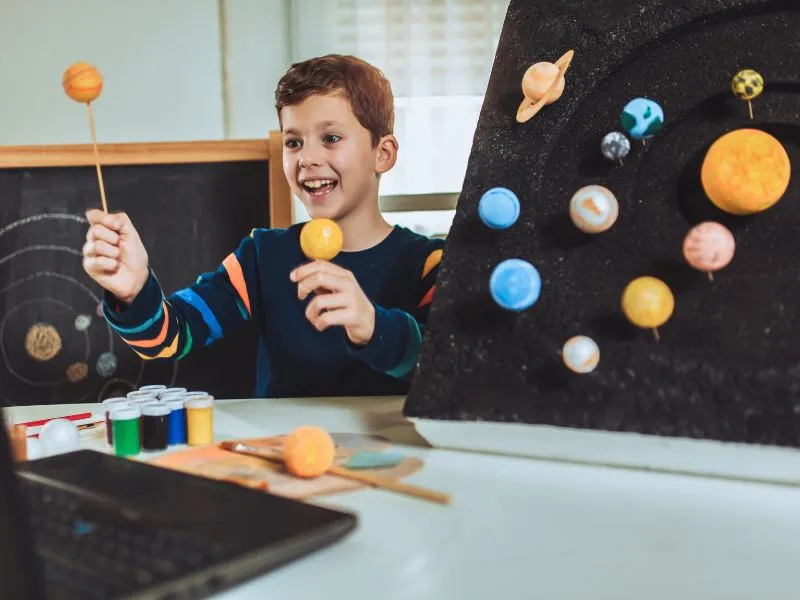
- Teamwork: Group projects like building a collective solar system model or acting out a space mission teach cooperation, sharing, and collaborative problem-solving.
- Empathy and Environmental Awareness: Understanding Earth as a unique, living planet among many barren ones can instill a sense of responsibility and appreciation for our home.
- Patience and Observation: Stargazing, even if it’s just watching the moon, teaches patience and careful observation skills.
- Sense of Wonder and Humility: Grasping the immense scale of the universe can foster a sense of awe, humility, and perspective about our place in the cosmos.
6. Cultivating Early Math & Science Foundations
Without even realizing it, preschoolers engage in foundational STEM learning:
- Counting: Counting the number of planets, moons, or stars in a picture.
- Size Comparison: Discussing which planets are bigger or smaller than others, introducing comparative language and basic measurement concepts.
- Ordering: Arranging planets in order from the sun (closest to farthest) introduces sequencing and ordinal numbers.
- Simple Scientific Method: Observing the moon, making predictions about its shape, and then checking those predictions lays the groundwork for scientific inquiry.
7. Enhancing Sensory Exploration
Space can be a wonderfully tactile and visual experience:
- Textural Planets: Making planets using different materials like sand (Mars), glitter (Jupiter), bumpy fabric (Venus) engages touch.
- Dark/Light Contrast: Exploring the difference between deep space and twinkling stars, or day and night, is a visual sensory experience.
- Sound Exploration: Imagining rocket launch sounds, alien voices, or the quietness of space stimulates auditory senses through creative play.
Bringing the Cosmos Down to Earth: Age-Appropriate Activities You Can Do Today
Ready to launch your preschooler’s space adventure? Here are simple, engaging activities that reinforce the benefits we’ve discussed.
Hands-On Planetary Crafting:
- Paper Mache Planets: Blow up balloons, cover them with newspaper strips dipped in glue, and once dry, paint them to resemble different planets. This is fantastic for fine motor skills and color recognition.
- Play-Doh Solar System: Let your child roll, flatten, and shape Play-Doh into planets of varying sizes and colors. Great for fine motor strength and understanding relative size.
- Glow-in-the-Dark Star Jars: Paint the inside of a glass jar with glow-in-the-dark paint (or stick glow-in-the-dark stickers). Fill with cotton balls for a cloudy effect. Perfect for sensory exploration and creating a calming nightlight.
Storytime & Imaginative Play:
- Space-Themed Books: Read age-appropriate books about astronauts, planets, or friendly aliens. This boosts vocabulary and encourages storytelling. Ask questions like, “Which planet would you like to visit?”
- Astronaut Dress-Up: Use old clothes, foil, and cardboard boxes to create a DIY astronaut suit or a spaceship. Encourage imaginative play, promoting social-emotional development (if playing with others) and gross motor skills.
- Alien Puppet Shows: Make simple alien puppets from paper bags or socks and create stories about their adventures on different planets. This fosters language skills and creativity.
Movement & Exploration:
- “Orbit the Sun” Game: Designate one person or a yellow blanket as the “sun” in an open space. Have children (the “planets”) walk or run in a circle around the sun. Vary the speed to mimic different planets. Excellent for gross motor skills and understanding orbits.
- Stargazing Adventure: On a clear night, simply step outside. Point out the moon, visible stars, and any accessible constellations. Even city lights can’t entirely hide the moon. This is a powerful sensory and observational experience.
- DIY Planetarium: Drape blankets over chairs to create a fort. Use a flashlight to project star patterns (made by poking holes in foil over the flashlight lens) onto the walls. A cozy way to explore light and patterns.
Sensory Bins & Textural Adventures:
- Space-Themed Sensory Bin: Fill a bin with oats, black beans, or kinetic sand to represent space. Add small toy planets, astronauts, glitter, and scoops. Children can explore textures, practice counting, and engage in imaginative play.
- “Moon Rock” Painting: Mix baking soda with a little water to form “moon rocks.” Let them dry, then let your preschooler paint them with watercolors. The fizzy reaction when adding vinegar later can be an exciting scientific discovery!
Quick Guide: Solar System Benefits & Activities for Preschoolers
Here’s a snapshot of how space education supports key developmental areas in preschoolers, along with simple activity ideas.
| Developmental Area | Key Benefit for Preschoolers | Simple Activity Example |
|---|---|---|
| Cognitive Growth | Pattern recognition, memory, critical thinking, cause & effect. | Ordering planets by size/distance, discussing day/night. |
| Language & Communication | Vocabulary expansion, descriptive language, storytelling. | Reading space books, describing planet colors, astronaut role-play. |
| Fine Motor Skills | Hand-eye coordination, dexterity, pre-writing skills. | Crafting Play-Doh planets, drawing stars, cutting out rocket shapes. |
| Gross Motor Skills | Balance, coordination, spatial awareness. | Playing “Orbit the Sun,” mimicking astronaut movements. |
| Social-Emotional Dev. | Teamwork, empathy, wonder, environmental responsibility. | Collaborative planet making, discussing Earth’s uniqueness. |
| Early Math & Science | Counting, size comparison, sequencing, observation. | Counting planets, comparing “big” Jupiter to “small” Earth. |
| Sensory Exploration | Visual (light/dark), tactile (textures), auditory (sounds). | Space-themed sensory bin, making textured planets, stargazing. |
Addressing Common Parental Concerns: Is It Too Much, Too Soon?
It’s natural to worry about overwhelming a young child with complex information. But when it comes to the solar system, it’s all about approach. Here’s how to keep it developmentally appropriate:
- Focus on Fun, Not Facts: The goal isn’t rote memorization. It’s about sparking joy, wonder, and curiosity. If a child remembers a few planet names, great! If they just love playing astronaut, that’s a win too.
- Simplify, Don’t Dumb Down: Break down big ideas into small, digestible chunks. Use analogies they understand. “The sun is like a giant lightbulb and heater for Earth.”
- Follow the Child’s Lead: If they’re fascinated by the moon one day, dive deep into moon books and activities. If they then switch their interest to dinosaurs, it’s okay to pivot. The exposure itself is valuable.
- Use Concrete Examples: Relate abstract concepts to their world. “Earth is where we live,” “The moon shines at night.”
Beyond the Classroom: Connecting Space to Everyday Life
The beauty of space education is that it’s not confined to specific activities; it connects to daily observations, making the world around them even more fascinating.
- Day/Night Cycles: “Look, the sun is setting! Soon it will be dark, and the moon will come out. That’s because Earth is spinning!”
- Moon Phases: Point out the moon each night. “Look, the moon looks different tonight! It’s changing shape.” You don’t need to explain the full science, just the observation.
- Weather Patterns: Briefly mention how the sun’s warmth affects our weather, tying solar energy to their direct experience of warm days or rainy storms.
- Gravity: When something falls, you can playfully say, “Whoosh! Gravity pulled it down, just like it keeps us on Earth!”
Conclusion: Your Little Astronaut’s Journey Begins Now
As you can see, introducing the solar system to preschoolers is far more than a science lesson. It’s a powerful, multifaceted approach to early childhood development, touching every area of their growth. From igniting their cognitive engines and supercharging their language to refining their motor skills and fostering a deep sense of wonder and empathy, space exploration truly is a preschool power-up.
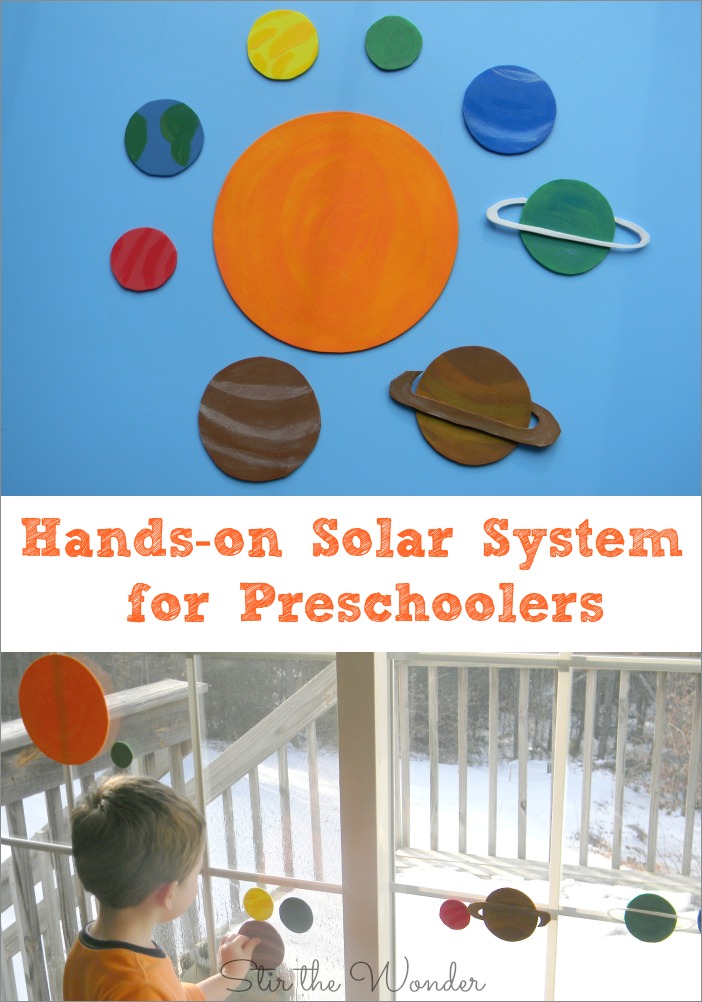
You don’t need a telescope or a Ph.D. in astrophysics to start this journey. All you need is a willingness to explore, a sprinkle of creativity, and a healthy dose of enthusiasm. So, go ahead, encourage those “Why?” questions, get messy with some planet crafts, and gaze up at the night sky with your little astronaut. Their journey of discovery, fueled by the cosmos, is just beginning, and the benefits will resonate for years to come. What an incredible adventure to share!
”
Frequently Asked Questions
At what age should I start teaching my child about the solar system?
You can start introducing simple space concepts as early as 2-3 years old, focusing on wonder and basic ideas like the moon, sun, and stars. Formal concepts like planet names and order can be introduced more actively during the preschool years (3-5 years old) when their curiosity and cognitive abilities are rapidly developing. The key is to keep it fun and age-appropriate.
Isn’t the solar system too complex for preschoolers?
Not at all, if approached correctly! The goal isn’t to teach complex astrophysics, but to spark curiosity, introduce new vocabulary, and develop foundational skills through engaging themes. Simplify concepts (e.g., big vs. small planets, day vs. night) and focus on hands-on activities, stories, and imaginative play rather than rote memorization of facts.
What are the main benefits of learning about space for young children?
Learning about the solar system offers numerous benefits for preschoolers, including enhanced cognitive development (curiosity, critical thinking, memory, pattern recognition), improved language skills (new vocabulary, descriptive language, storytelling), better fine and gross motor skills (crafting, movement games), social-emotional growth (teamwork, empathy for Earth), and early math and science foundations (counting, size comparison, observation).
What are some easy, hands-on solar system activities for preschoolers?
Simple activities include making Play-Doh planets, painting paper mache planets, creating glow-in-the-dark star jars, reading space-themed storybooks, playing
How can I connect space learning to my child’s everyday life?
You can connect space to daily life by discussing the day and night cycle as Earth spins, pointing out different phases of the moon, talking about how the sun provides light and warmth, and even explaining gravity when objects fall. These simple observations help children see science in their world.
Do I need special equipment to teach my child about the solar system?
Absolutely not! While a telescope can be fun, it’s not necessary. You can use everyday items like construction paper, paint, Play-Doh, blankets for fort-building, flashlights, and storybooks. The most important ‘equipment’ is your enthusiasm and willingness to explore with your child.


Post Comment