Advantages Of Solar Energy Over Wind Energy
The Clear Advantages of Solar Energy Over Wind: Why It’s Often the Smarter Choice
Thinking about powering your home or business with clean energy but feeling stuck between solar and wind? You’re not alone. Both are incredible renewable resources, but when it comes to practical advantages for most applications, especially residential and commercial, solar energy frequently pulls ahead. While wind power certainly has its place in large-scale utility projects, the sun offers a more versatile, predictable, and often more accessible path to energy independence.
Table of Contents
- The Clear Advantages of Solar Energy Over Wind: Why It’s Often the Smarter Choice
- Immediate Benefits: Why Solar Pulls Ahead for Many
- Predictable & Consistent Energy Output (with a caveat)
- Scalability & Versatility: From Rooftops to Mega-Projects
- Lower Maintenance & Operational Costs
- Quiet Operation & Aesthetic Integration
- A Deeper Dive: Practical & Environmental Superiority
- Land Use Efficiency: More Power, Less Footprint
- Grid Integration & Stability Advantages
- Wildlife Impact: A Gentler Footprint
- Material Sourcing & End-of-Life: A Growing Edge
- Solar vs. Wind: A Side-by-Side Comparison of Key Metrics
- Debunking the Myths: When “Efficiency” Needs Context
- The Future is Bright: Why Solar’s Trajectory is Unmatched
- Rapid Technological Advancement & Cost Reduction
- Growing Accessibility & Policy Support
- Making Your Choice: Is Solar Right for You?
- Conclusion: Harnessing the Sun’s Unrivaled Power
Let’s cut through the noise and explore why solar energy often holds a compelling edge, providing benefits that resonate directly with homeowners, businesses, and even grid operators across the USA.
Immediate Benefits: Why Solar Pulls Ahead for Many
Predictable & Consistent Energy Output (with a caveat)
One of solar energy’s standout advantages is its inherent predictability. We know the sun will rise and set every day. While cloud cover and seasons cause variations, the general pattern of solar output is highly forecastable. Solar panels generate power consistently during daylight hours, typically peaking around midday, which often aligns with peak energy demand for many households and businesses. This diurnal pattern is a boon for energy planning.
Wind, on the other hand, is notoriously intermittent. Wind turbines only generate electricity when the wind blows within a specific speed range. This means production can fluctuate wildly, sometimes even hour by hour, making it a less predictable resource for immediate energy needs without substantial battery storage or grid backup. Imagine needing power during a calm spell – solar offers a more reliable daily baseline.
Scalability & Versatility: From Rooftops to Mega-Projects
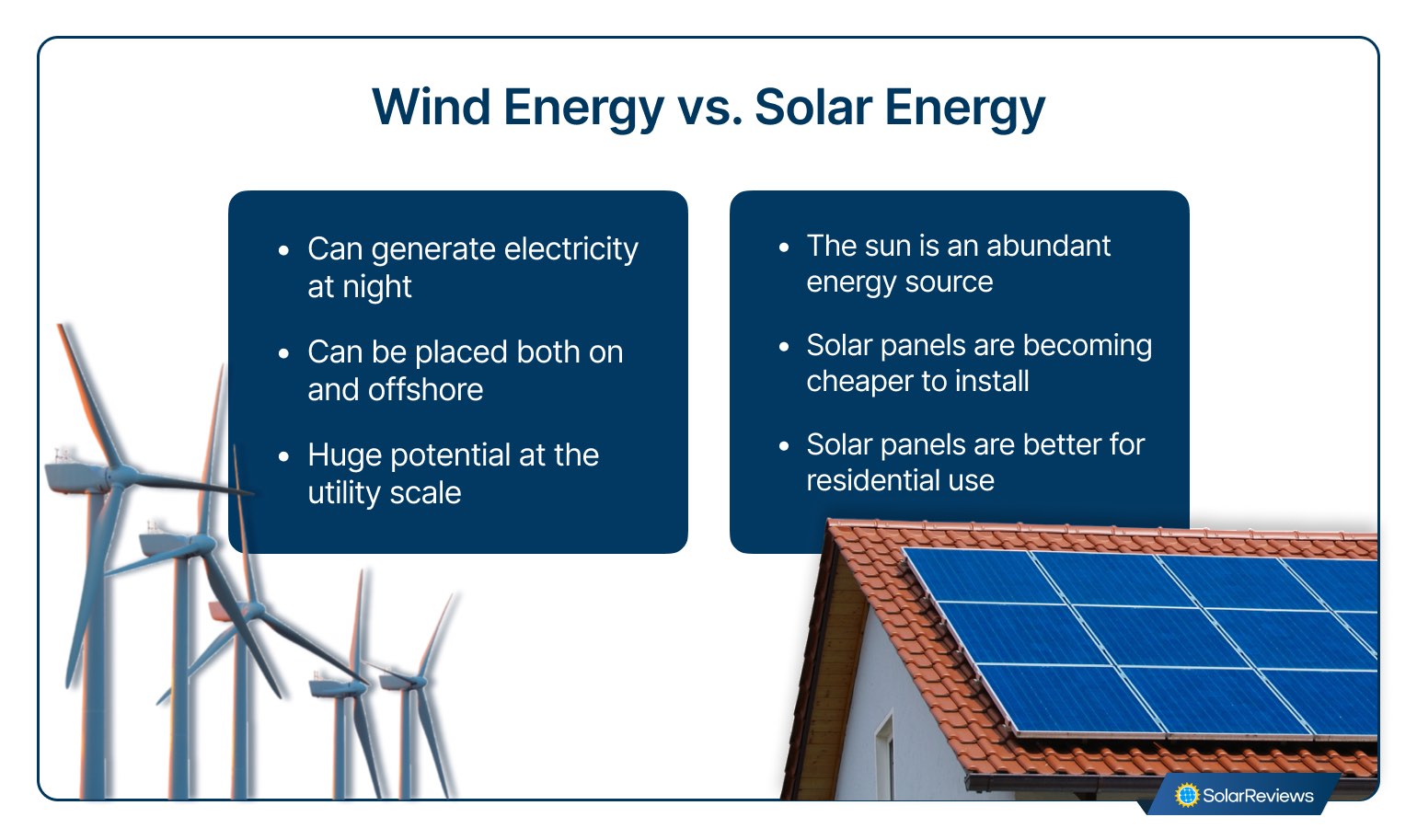
Solar energy wins big on flexibility. You can install a single solar panel to charge a small device, a few panels on your rooftop to offset your home’s electricity bill, or acres of panels for a utility-scale solar farm. This scalability is unmatched. Most crucially, solar panels can be integrated into existing structures – your roof, a carport, even building facades – turning underutilized spaces into power generators.
Wind energy lacks this granular scalability. A wind turbine, even a small residential one, requires significant space, a clear unobstructed wind path, and often specific zoning approvals. Large utility-scale wind farms demand vast tracts of land, not just for the turbines themselves, but also for necessary setback distances from homes and property lines. This makes wind a less viable option for densely populated areas or typical residential properties.
Lower Maintenance & Operational Costs
Think about a wind turbine. It’s a complex machine with dozens of moving parts: blades, gearboxes, generators, yaw systems, anemometers. All these components are exposed to the elements and require regular inspection, lubrication, and potential repairs. This translates to higher ongoing maintenance costs and a greater chance of mechanical failure.
Solar panels, in stark contrast, are elegantly simple. They have no moving parts. Once installed, they typically require minimal maintenance – an occasional cleaning (which rain often takes care of) and monitoring their performance. This simplicity leads to significantly lower operational costs and a longer, more reliable lifespan with fewer interventions.
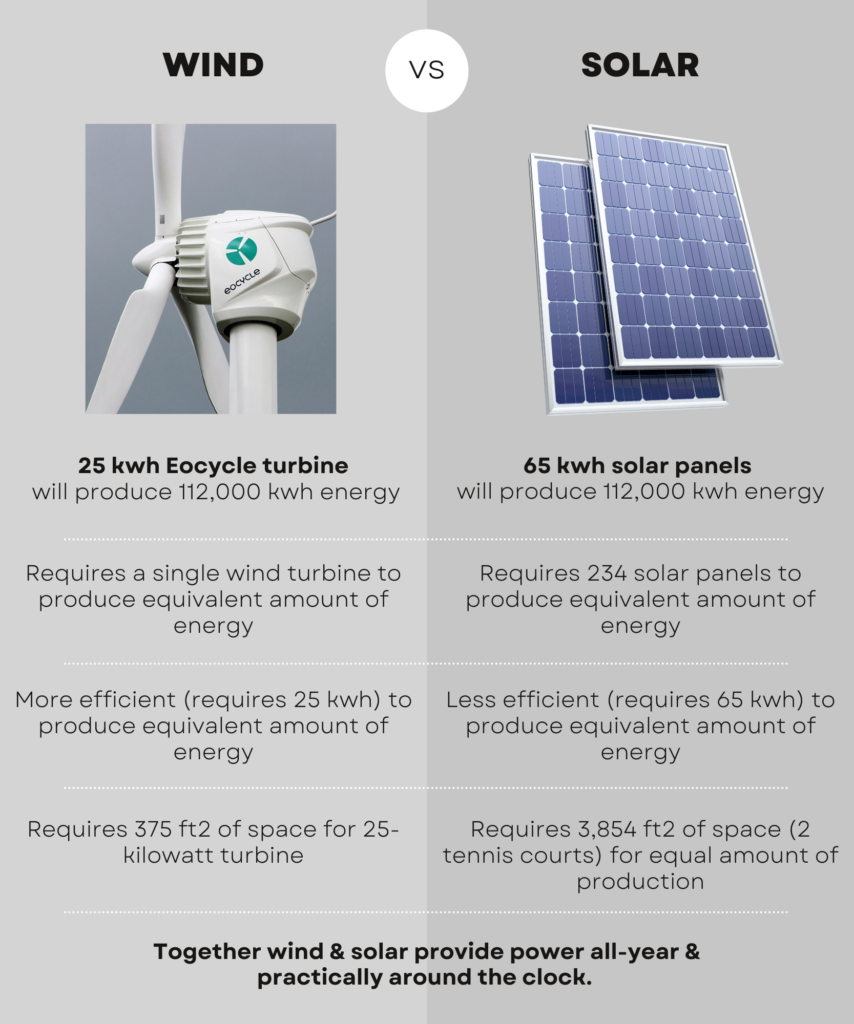
Quiet Operation & Aesthetic Integration
Have you ever stood near an operating wind turbine? They produce noise – a distinct ‘whooshing’ sound that, while not always loud, can be a constant presence for those living nearby. This noise pollution is a frequent complaint in communities near wind farms and can impact property values and quality of life.
Solar panels, however, are virtually silent. They simply absorb sunlight and convert it to electricity, without a hum or a whir. Furthermore, their low-profile design allows them to integrate seamlessly onto rooftops, often becoming an unnoticed part of a building’s architecture. They don’t dramatically alter the landscape in the way towering wind turbines do, offering a more aesthetically pleasing solution for many homeowners and businesses.
A Deeper Dive: Practical & Environmental Superiority
Land Use Efficiency: More Power, Less Footprint
When we talk about land use, solar energy generally uses land more efficiently to generate the same amount of electricity. While large solar farms can take up significant acreage, they often utilize land that isn’t suitable for agriculture or development. More importantly, rooftop solar utilizes space that is already built upon, essentially having a zero-additional-land footprint.
Wind energy requires a substantial amount of land. Not just for the turbine bases, but for the necessary buffer zones between turbines to prevent wake effects (where one turbine’s air disturbance reduces the efficiency of another) and from residential areas. This can lead to conflicts over land use, especially in agricultural or scenic regions.
Grid Integration & Stability Advantages
The rise of distributed solar generation (think rooftop solar on homes and businesses) offers significant benefits for grid stability. By generating power closer to where it’s consumed, solar reduces the strain on long-distance transmission lines, minimizes energy loss during transmission, and can even defer the need for expensive grid upgrades. Solar also helps meet peak daytime demand, alleviating pressure on the grid when it needs it most.
While large wind farms contribute significantly to the grid, their inherent intermittency requires more sophisticated grid management, often involving fossil fuel ‘peaker plants’ or large-scale storage solutions to balance fluctuations. Solar’s more predictable daily curve can often be easier to manage in many grid contexts.
Wildlife Impact: A Gentler Footprint
No energy source is without environmental impact, but solar generally poses less direct threat to wildlife than wind. The primary concern with solar is habitat disruption during construction of large solar farms, though responsible siting can mitigate this. Rooftop solar, of course, has minimal wildlife impact.
Wind turbines, unfortunately, are known to cause bird and bat mortality, especially for migratory species or those flying at specific altitudes. While efforts are made to site turbines away from known migratory paths and use deterrents, it remains a significant ecological concern that solar largely avoids.
Material Sourcing & End-of-Life: A Growing Edge
Both solar panels and wind turbines require raw materials, and both industries are working on improving sustainability. However, some advanced wind turbine designs can rely on rare earth elements for their magnets, which can have complex supply chains and environmental footprints during extraction. Solar panels primarily use silicon, aluminum, and glass – materials that are becoming increasingly recyclable.
The solar industry is rapidly advancing its panel recycling programs, aiming for a circular economy where materials are recovered and reused. While wind turbine blade recycling is a challenging area due to the composite materials used, innovations are also emerging here. However, given the simpler construction of solar panels, their end-of-life management often presents fewer hurdles.
Solar vs. Wind: A Side-by-Side Comparison of Key Metrics
Let’s put it all into perspective with a direct comparison:
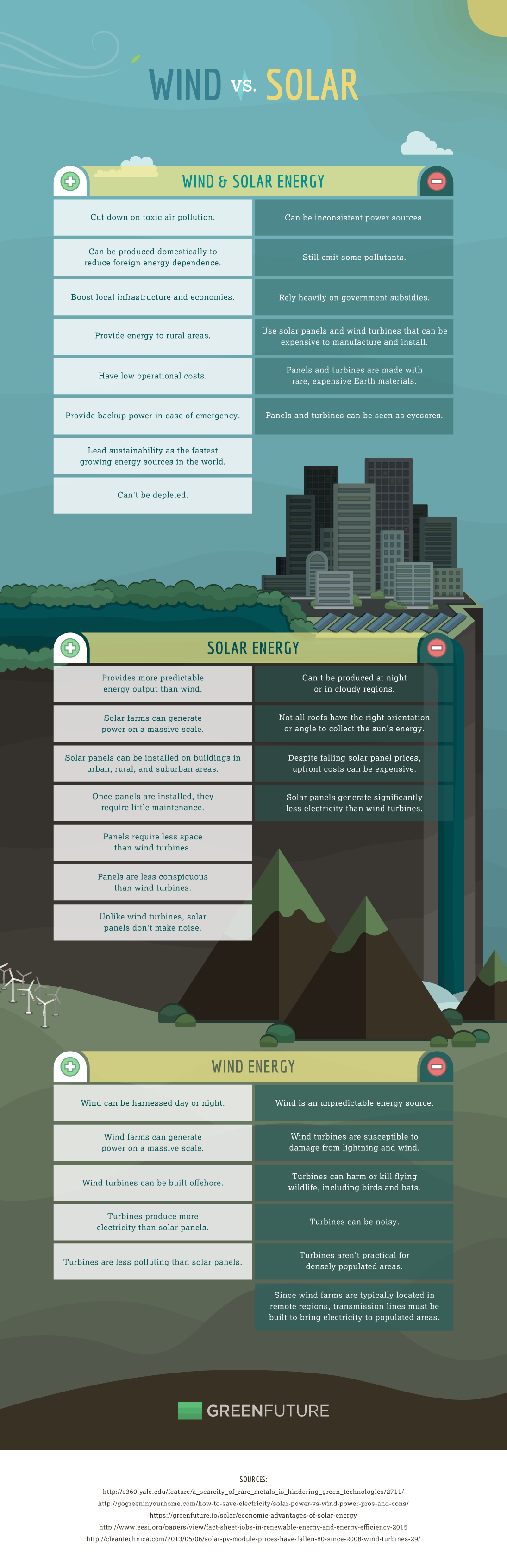
| Feature | Solar Energy (Primary Advantages) | Wind Energy (Primary Context) | Solar’s Edge |
|---|---|---|---|
| Energy Predictability | Highly predictable daily cycle, easily forecastable. | Intermittent; dependent on specific wind speeds, less predictable. | More reliable for daily load matching and grid planning. |
| Scalability & Versatility | Excellent: from small devices to large farms, highly adaptable. | Limited: best for medium to utility-scale; small turbines have niche uses. | Suits a broader range of applications, especially residential/commercial. |
| Land Use Efficiency | High: utilizes existing roof space, less ecologically sensitive land. | Low: requires large, unobstructed areas and significant setbacks. | Minimal new land acquisition needed for many installations (rooftop). |
| Noise & Aesthetics | Silent operation, low visual profile, integrates well. | Generates audible noise, large imposing structures, visual impact. | Better for residential areas and preserving natural landscapes. |
| Maintenance & Operational Costs | Very low; no moving parts, minimal upkeep. | Higher; complex machinery requires regular inspections and repairs. | More cost-effective long-term due to reduced upkeep needs. |
| Residential Suitability | Excellent; ideal for rooftops, easy integration. | Poor; requires significant space, specific wind resources, and zoning. | The default choice for homeowners seeking renewable energy. |
| Wildlife Impact | Minimal direct impact (primary concern: habitat for ground arrays). | Significant concern for bird and bat mortality. | Generally considered to have a gentler direct impact on wildlife. |
Debunking the Myths: When “Efficiency” Needs Context
You might have heard the argument that “wind is more efficient than solar.” This statement needs careful unpacking because “efficiency” can mean different things. If we’re talking about the conversion efficiency of a single device (how much of the available energy resource is converted to electricity), a modern wind turbine can sometimes have a higher capacity factor (the ratio of actual energy output over a period to the maximum possible output) in ideal wind conditions than a solar panel’s raw conversion rate.
However, this narrow definition often overlooks critical practicalities. Solar’s “efficiency” really shines when considering the entire system’s performance, its widespread applicability, and its ability to deliver predictable power during peak demand. A solar panel’s efficiency might be lower in a laboratory setting compared to a turbine’s theoretical maximum, but its ability to generate power silently on a small footprint, reliably during daylight hours, and with minimal maintenance, often makes it the more practically efficient and accessible solution for the vast majority of people and businesses.
Furthermore, solar energy’s ability to be deployed as distributed generation closer to the point of consumption means less energy is lost in transmission, boosting its overall system efficiency. When you factor in land use, noise, maintenance, and residential viability, solar often proves to be the more “efficient” choice for solving real-world energy needs.
The Future is Bright: Why Solar’s Trajectory is Unmatched
Rapid Technological Advancement & Cost Reduction
The solar industry has been a hotbed of innovation. We’ve seen incredible advancements in panel efficiency, durability, and manufacturing processes, leading to a dramatic reduction in costs over the past decade. The cost of solar power has plummeted, making it one of the most affordable electricity sources in many parts of the world. This trend is expected to continue, driven by ongoing research and development in materials science, battery storage integration, and smart grid technologies.
While wind energy has also seen cost reductions, the pace of innovation in modularity and distributed application often favors solar. The constant improvements in solar cell technology and related components like inverters and energy storage solutions ensure its competitive edge continues to sharpen.
Growing Accessibility & Policy Support
Solar energy is increasingly accessible to the average homeowner. Government incentives, tax credits, and financing options have made the upfront investment more manageable than ever. Net metering policies, where homeowners can sell excess electricity back to the grid, further enhance solar’s financial appeal. This widespread support and ease of adoption are creating a virtuous cycle, driving further demand and innovation.
Policies for wind energy, while robust at the utility scale, are often less geared towards individual residential adoption due to the inherent constraints of turbine placement and scale. Solar, on the other hand, is perfectly positioned to empower individual energy consumers.
Making Your Choice: Is Solar Right for You?
While large-scale wind farms remain a crucial part of our renewable energy portfolio, particularly in areas with consistent, strong winds and available land, for the majority of individuals, businesses, and even smaller communities seeking to embrace clean energy, solar energy presents a compelling set of advantages. Its predictability, scalability, low maintenance, quiet operation, and ability to integrate seamlessly into existing structures make it an exceptionally versatile and effective solution.
If you’re looking to reduce your carbon footprint, lower your energy bills, and invest in a reliable power source, chances are, the sun is your best bet.
Conclusion: Harnessing the Sun’s Unrivaled Power
In the evolving landscape of renewable energy, both solar and wind play vital roles in decarbonizing our world. However, for a multitude of practical reasons – from immediate residential application to long-term grid stability and environmental harmony – solar energy often stands out with clear and undeniable advantages over wind energy. Its remarkable adaptability, sustained cost reductions, and ever-improving technology firmly establish solar as a leading, and often superior, choice for a sustainable future.
Frequently Asked Questions
Is solar energy more predictable than wind energy?
Yes, solar energy’s output is generally more predictable than wind energy. While factors like cloud cover and seasons influence solar production, the sun’s daily cycle allows for more consistent forecasting. Wind, however, is highly intermittent and dependent on specific wind speeds, leading to less predictable power generation.
Which requires less land: solar or wind energy?
Solar energy generally requires less land, especially when installed on rooftops or existing structures, effectively using a zero-additional-land footprint. While large solar farms can take up acreage, wind turbines require significant land for their bases, access roads, and extensive buffer zones, making them less land-efficient per unit of energy generated.
Is solar power quieter than wind power?
Absolutely. Solar panels operate silently as they have no moving parts. Wind turbines, conversely, produce audible ‘whooshing’ sounds from their blades and internal machinery, which can be a source of noise pollution for nearby communities.
Are solar panels easier to maintain than wind turbines?
Yes, solar panels are significantly easier and less costly to maintain. With no moving parts, they require minimal upkeep beyond occasional cleaning. Wind turbines, being complex mechanical systems with many moving parts, demand regular inspections, lubrication, and potential repairs, leading to higher operational costs and maintenance efforts.
Is solar energy a better option for residential homes than wind energy?
For most residential homes, solar energy is a far superior option. It can be easily installed on rooftops, requires no significant additional land, operates silently, and integrates well aesthetically. Residential wind turbines often require large properties, specific wind resources, and can face significant zoning and noise challenges, making them impractical for typical homeowners.
How does solar energy impact wildlife compared to wind energy?
Solar energy generally has a gentler direct impact on wildlife, particularly rooftop installations. Large ground-mounted solar farms can cause habitat disruption during construction, but responsible siting can mitigate this. Wind turbines, however, are known to cause bird and bat mortality, which remains a significant ecological concern for wind energy projects.


Post Comment