Pros And Cons Of Solar Panels On Roof
Pros and Cons of Solar Panels on Your Roof: Your Definitive Guide to Going Solar
Thinking about putting solar panels on your roof? You’re not alone. Thousands of homeowners across the USA are grappling with the same question: Is it really worth it? The promise of lower electricity bills and a greener footprint is incredibly appealing, but the upfront cost and myriad of technical details can feel overwhelming.
Table of Contents
- Pros and Cons of Solar Panels on Your Roof: Your Definitive Guide to Going Solar
- The Undeniable Upsides: Why Homeowners Are Embracing Rooftop Solar (Pros)
- Slash Your Electricity Bills and Boost Savings
- Harnessing Financial Incentives: Tax Credits, Rebates & More
- Elevate Your Home’s Value and Appeal
- Environmental Impact: A Greener Footprint
- Energy Independence and Grid Resilience
- Minimal Maintenance, Maximum Durability
- The Honest Truth: Potential Downsides to Consider Before Installation (Cons)
- The Upfront Investment: Understanding the Cost
- Not Every Roof is a Candidate: Suitability Factors
- Aesthetic Considerations: How Will It Look?
- Potential Impact on Roof Integrity and Maintenance
- Navigating Net Metering and Utility Policies
- Resale Value Nuances and Buyer Perception
- Weighing Your Options: Is Rooftop Solar Right for You?
- Key Factors for a Successful Solar Installation
- When Alternative Solutions Might Be Better
- Making the Leap: What to Expect When Going Solar
- Finding a Reputable Installer
- Understanding Warranties and Guarantees
- The Installation Process (Briefly)
- The Future is Bright: Final Thoughts on Rooftop Solar
Let’s cut through the noise. This isn’t just a list; it’s a deep dive into the real-world advantages and potential hurdles of rooftop solar. By the end, you’ll have a clear understanding of whether solar panels are the right investment for your home and your future.
The Undeniable Upsides: Why Homeowners Are Embracing Rooftop Solar (Pros)
Let’s start with the good stuff. The reasons why solar energy is booming aren’t just hype; they’re rooted in tangible benefits that can dramatically improve your home life and financial health.
Slash Your Electricity Bills and Boost Savings
This is often the biggest motivator, and for good reason. Imagine seeing your electric bill shrink, or even disappear entirely, each month. Solar panels generate your own electricity, reducing your reliance on the grid and those ever-increasing utility rates. It’s not just about today’s savings; it’s about hedging against future energy inflation.
While exact savings vary based on your location, system size, and energy usage, homeowners typically see significant reductions. Over the lifespan of your system, these savings can amount to tens of thousands of dollars.
| System Size | Average Monthly Bill Reduction | Estimated Annual Savings | Estimated 25-Year Lifetime Savings |
|---|---|---|---|
| 5 kW (Small) | $50 – $100 | $600 – $1,200 | $15,000 – $30,000 |
| 7 kW (Medium) | $100 – $150 | $1,200 – $1,800 | $30,000 – $45,000 |
| 10 kW (Large) | $150 – $250+ | $1,800 – $3,000+ | $45,000 – $75,000+ |
Note: These are estimates. Actual savings depend on location, electricity rates, sun exposure, and system efficiency.
Harnessing Financial Incentives: Tax Credits, Rebates & More
The government wants you to go solar, and they’re willing to help pay for it. The most significant incentive is the Federal Solar Investment Tax Credit (ITC). This credit allows you to deduct a percentage of the cost of your solar installation from your federal taxes. As of my last update, it stands at 30% for systems installed through 2032, which is a massive chunk of change off your total investment.
Beyond the federal ITC, many states, municipalities, and even local utilities offer their own incentives. These can include:
- State Tax Credits or Rebates: Direct financial reductions on your state taxes or upfront cash back.
- Property Tax Exemptions: Solar panels increase your home value, but many areas exempt this added value from property tax assessments.
- Sales Tax Exemptions: Some states don’t charge sales tax on solar equipment.
- Solar Renewable Energy Credits (SRECs): In certain markets, you can earn credits for the solar energy your system produces, which can then be sold for cash.
These incentives significantly reduce your payback period and make solar a much more attractive financial proposition. It’s crucial to research the specific programs available in your area.
Elevate Your Home’s Value and Appeal
A solar-equipped home isn’t just good for your wallet; it’s often more attractive to potential buyers. Studies consistently show that homes with solar panels sell faster and for more money than comparable homes without them. Buyers are increasingly looking for energy-efficient features, and pre-installed solar takes a major decision off their plate.
However, this value add largely applies to owned solar systems. If you lease your panels, the increase in home value might be negligible or even require a lease transfer, which can complicate sales.
Environmental Impact: A Greener Footprint
For many, the environmental benefit is a core driver. Solar energy is clean, renewable, and produces zero carbon emissions during operation. By switching to solar, you’re directly reducing your household’s carbon footprint and contributing to a healthier planet. This means:
- Less reliance on fossil fuels.
- Cleaner air and water.
- A step towards energy independence and sustainability for future generations.
Energy Independence and Grid Resilience
The grid can be unreliable. Storms, aging infrastructure, and peak demand can lead to blackouts. While standard grid-tied solar systems often shut down during outages for safety reasons (unless paired with battery storage), having your own energy source gives you a sense of greater control. With a battery backup system, you can keep your lights on and essential appliances running even when the neighborhood goes dark. It’s peace of mind wrapped in sustainable technology.
Minimal Maintenance, Maximum Durability
Once installed, solar panels are remarkably low-maintenance. They’re designed to withstand harsh weather – hail, snow, and extreme temperatures – and typically come with warranties lasting 20-25 years, guaranteeing their performance. Cleaning is usually only required occasionally, often handled by rainfall, and monitoring systems alert you to any issues. Think of them as a long-term appliance that quietly works for you every day.
The Honest Truth: Potential Downsides to Consider Before Installation (Cons)
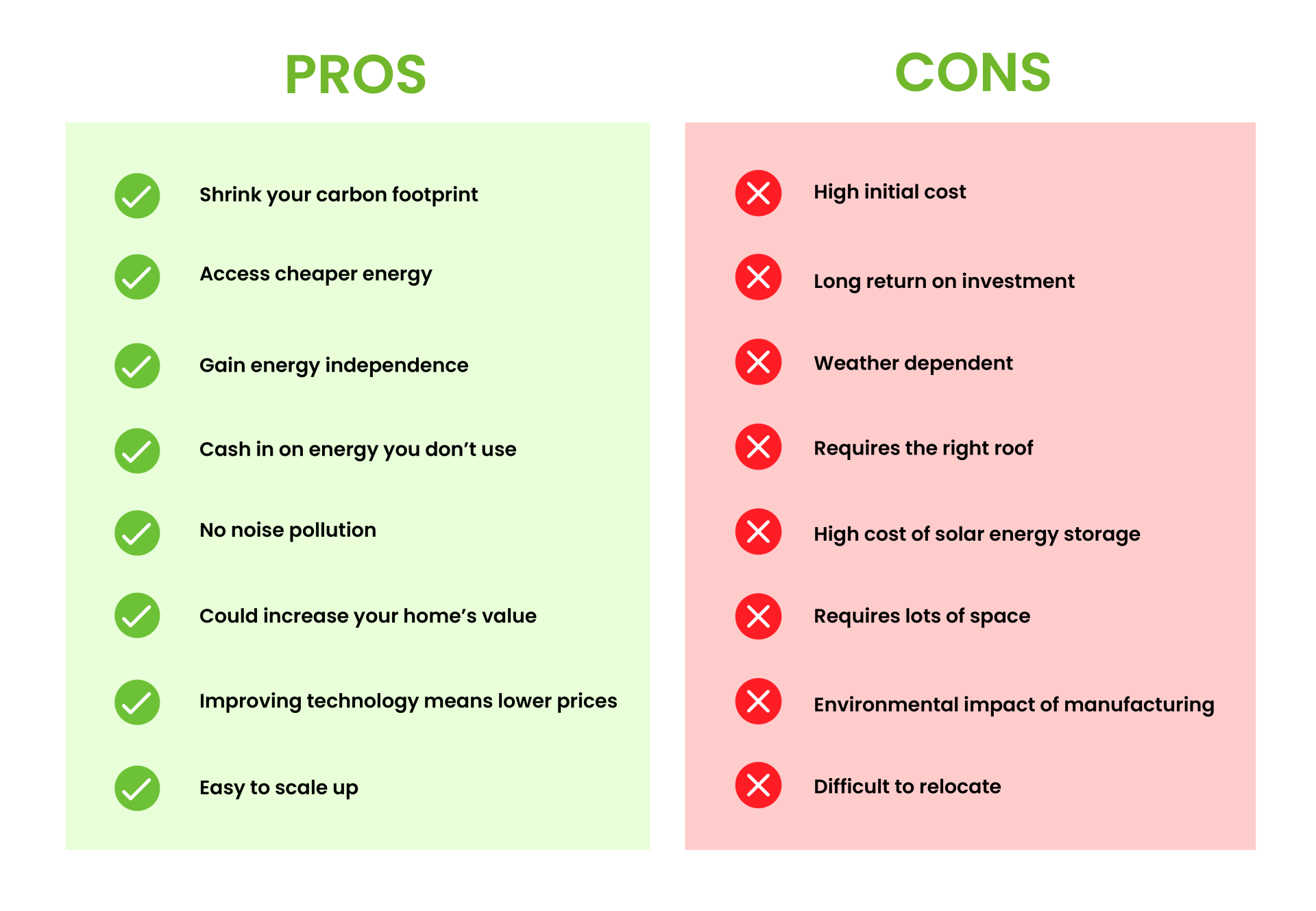
No investment is without its considerations, and solar panels are no exception. Being aware of the potential drawbacks upfront allows you to make an informed decision and plan accordingly.
The Upfront Investment: Understanding the Cost
Let’s be blunt: solar panels are not cheap to install. Before incentives, a typical residential solar system can cost anywhere from $15,000 to $30,000 or more, depending on its size and complexity. This is a significant sum, and it’s the primary barrier for many homeowners.
However, it’s crucial to look beyond the sticker price. With the federal ITC and other incentives, the net cost drops considerably. Moreover, various financing options make solar accessible:
- Cash Purchase: Highest ROI, but requires significant upfront capital.
- Solar Loan: Allows you to own the system with monthly payments, often less than your previous electric bill.
- Solar Lease or Power Purchase Agreement (PPA): You don’t own the system but pay a fixed monthly fee (lease) or per-kWh rate (PPA) for the electricity it produces. These have zero upfront cost but offer lower overall savings and fewer incentives.
| Cost Component | Estimated % of Total | Description |
|---|---|---|
| Equipment (Panels, Inverter, Racking) | 25-35% | The physical components of the system. |
| Installation & Labor | 15-25% | Costs for design, mounting, wiring, and connection. |
| Permitting & Interconnection | 10-15% | Fees for permits, inspections, and utility grid connection. |
| Customer Acquisition (Sales, Marketing) | 10-20% | Cost of sales teams, marketing, and overhead. |
| Developer Overhead & Profit | 10-15% | Business operations and profit margin for the installer. |
Note: Percentages are approximate and can vary significantly by installer and region.
Not Every Roof is a Candidate: Suitability Factors
While solar is becoming more versatile, not every roof is ideally suited. Here’s what makes a difference:
- Roof Age and Condition: Panels last 25+ years. If your roof is nearing the end of its life, it’s often best to replace it *before installing solar. The cost of removing and reinstalling panels for a future roof replacement can be substantial.
- Orientation and Shading: South-facing roofs generally get the most sun, maximizing energy production. West-facing can also be great for capturing afternoon sun. North-facing roofs are typically poor candidates. Significant shading from trees, chimneys, or neighboring buildings can drastically reduce efficiency.
- Roof Material and Structure: Most common roofing materials (asphalt shingles, metal, tile) are compatible, but some may require specialized mounting. Your roof must also be structurally sound to support the weight of the panels.
- Available Space: You need enough unobstructed roof space to install a system large enough to meet your energy needs.
Aesthetic Considerations: How Will It Look?
Let’s be honest, solar panels change the look of your home. For some, it’s a modern, forward-thinking aesthetic; for others, it can be an eyesore. While panel designs have become sleeker and less obtrusive, they are still prominent fixtures on your roof.
Consider newer options like integrated solar shingles or tiles, which blend seamlessly with your roof, though these often come at a higher cost. Also, check with your HOA; some communities have specific rules regarding solar panel visibility or placement.

Potential Impact on Roof Integrity and Maintenance
A common concern is whether solar panels will damage your roof. A reputable, certified installer will ensure proper installation methods that protect your roof from leaks or structural damage. They use flashing and sealing techniques to maintain weatherproofing.
However, if your roof needs repair or replacement after* solar installation, the panels will need to be temporarily removed and then reinstalled, adding to the cost and complexity of the roof work.
Navigating Net Metering and Utility Policies
Net metering allows you to send excess electricity your panels produce back to the grid, often receiving credits on your bill. It’s a crucial component of solar’s financial viability. However, net metering policies are dynamic and vary widely by state and utility. Some states are reducing compensation rates (e.g., California’s NEM 3.0), which can impact your overall savings and extend your payback period.
It’s essential to understand the current net metering rules and future policy trends in your service area. This directly influences the economic return of your investment, especially if you don’t pair your system with a battery.
Resale Value Nuances and Buyer Perception
While owned solar systems generally boost home value, the situation can be more complex with leased systems or PPAs. Potential buyers might be hesitant to take on a solar lease, seeing it as an additional financial obligation rather than an asset. This can complicate selling your home.
Additionally, while many states offer property tax exemptions for solar value, in areas without such exemptions, an increase in home value could lead to a slight increase in property taxes, though this is usually far outweighed by energy savings.
Weighing Your Options: Is Rooftop Solar Right for You?
So, after all that, how do you decide? It boils down to a few key factors about your home, your finances, and your long-term goals.
Key Factors for a Successful Solar Installation
Rooftop solar is likely a fantastic fit if:
- You have a suitable roof: South- or west-facing, minimal shading, good condition, sufficient space.
- You plan to stay in your home for at least 5-7+ years: This allows you to recoup your investment and start enjoying pure savings.
- You have high electricity bills: The more you pay for electricity, the more you stand to save with solar.
- You can take advantage of incentives: The Federal ITC and any state/local programs significantly improve your ROI.
- You own your home: This gives you full control and access to all incentives.
- You are environmentally conscious: Beyond savings, reducing your carbon footprint is a major benefit.
When Alternative Solutions Might Be Better
Rooftop solar might not be the best fit if:
- Your roof is unsuitable: Too old, too much shade, incorrect orientation.
- You plan to move soon: The payback period might not align with your timeline.
- You don’t own your home: Renters usually can’t install rooftop solar.
- You have low electricity usage: The financial savings might not justify the upfront cost.
- You have a tight budget and cannot leverage loans or incentives effectively.
In these scenarios, consider alternatives like community solar programs (where you subscribe to a share of a local solar farm) or exploring other energy efficiency upgrades for your home.
Making the Leap: What to Expect When Going Solar
If you’ve weighed the pros and cons and decided solar is for you, here’s a quick overview of what comes next.
Finding a Reputable Installer
This is perhaps the most critical step. Get multiple quotes from at least three different, highly-rated solar companies. Look for installers with:
- Strong local references and reviews.
- Certifications (like NABCEP).
- Clear explanations of equipment, warranties, and pricing.
- Experience with local permitting and utility interconnection processes.
Don’t fall for high-pressure sales tactics or deals that sound too good to be true. Do your due diligence!
Understanding Warranties and Guarantees
A good solar system comes with several warranties:
- Performance Warranty: Guarantees that panels will produce electricity at a certain percentage for 20-25 years.
- Equipment Warranty: Covers defects in the panels and inverter, typically 10-25 years.
- Workmanship Warranty: Covers the installation itself, usually 10 years, ensuring against leaks or faulty wiring.
Read these carefully and understand what’s covered.
The Installation Process (Briefly)
Once you sign a contract, the process generally involves:
- Site Assessment & Design: Engineers evaluate your roof and design a custom system.
- Permitting: The installer handles all local permits.
- Installation: Panels are mounted, wired, and connected to your electrical panel. This typically takes 1-3 days.
- Inspection & Interconnection: Local inspectors and the utility company sign off on the system.
- Activation: You flip the switch and start generating your own clean energy!
The Future is Bright: Final Thoughts on Rooftop Solar
Rooftop solar panels are more than just a home improvement; they’re an investment in your financial future and a step towards a more sustainable world. While the initial investment and suitability factors require careful consideration, the long-term benefits of reduced bills, increased home value, and environmental stewardship are compelling.
Take the time to assess your specific situation, gather quotes, and understand the incentives available to you. For many American homeowners, the sun is indeed shining on a smarter energy choice. Don’t let the complexity deter you; empower yourself with knowledge, and you’ll be well on your way to harnessing the sun’s power from your own roof.
Frequently Asked Questions
How long do solar panels typically last?
Most solar panels are designed to last 25-30 years, often coming with performance warranties that guarantee they will produce electricity at a certain percentage (e.g., 80% of original capacity) for that duration. The inverters, which convert DC to AC electricity, may need replacement around the 10-15 year mark.
Will solar panels damage my roof?
When installed correctly by certified professionals, solar panels should not damage your roof. Reputable installers use proper mounting techniques and flashing to prevent leaks and maintain your roof’s integrity. However, if your roof is old or in poor condition, it’s advisable to repair or replace it before solar installation to avoid costly panel removal and reinstallation later.
Can I go completely off-grid with rooftop solar?
While rooftop solar reduces your reliance on the grid, going completely off-grid requires a significant battery storage system to power your home during nights, cloudy days, and extended outages. Most residential solar systems are ‘grid-tied,’ meaning they remain connected to the utility grid, using it as a backup and feeding excess power back into it.
What happens to my solar panels during extreme weather?
Solar panels are built to be incredibly durable and withstand harsh weather conditions, including heavy snow, strong winds, and hail. They undergo rigorous testing to meet industry standards. However, in severe storms, there’s always a small risk of damage, which is typically covered by your homeowner’s insurance.
How much maintenance do solar panels require?
Solar panels require very little maintenance. Most of the time, rainfall naturally cleans them. In drier climates or if heavy debris accumulates, a simple rinse with a garden hose a few times a year might be beneficial. Regular monitoring via your inverter’s app or web portal helps ensure they are performing optimally.
Do solar panels work on cloudy days?
Yes, solar panels still produce electricity on cloudy days, but at a reduced capacity. Clouds scatter sunlight, so the panels won’t generate as much power as they would under direct sun. The amount of electricity produced depends on the density of the clouds.


Post Comment