How Does Solar Energy Work Step By Step
How Solar Energy Works: Your Step-by-Step Guide to Harnessing the Sun’s Power
Ever wondered how those sleek panels on a rooftop magically turn sunlight into the power that runs your home? It’s not magic; it’s brilliant science and engineering working in perfect harmony. If you’re curious about switching to solar, or just want to understand the basics, you’re in the right place. I’m going to break down the entire process, step-by-step, making the complex simple and clear. By the end, you’ll not only know how solar energy works but also why it’s a game-changer for your energy bill and the planet.
Table of Contents
- How Solar Energy Works: Your Step-by-Step Guide to Harnessing the Sun’s Power
- The Core Principle: What Makes Solar Panels Tick?
- Demystifying the Photovoltaic (PV) Effect: From Photon to Electron
- Anatomy of a Solar Panel: More Than Just Glass
- The Journey of Sunlight: A Step-by-Step Breakdown of Solar Power Generation
- Step 1: Sunlight Strikes the Solar Panels (Photon Absorption)
- Step 2: PV Cells Generate Direct Current (DC) Electricity
- Step 3: The Inverter Converts DC to Usable Alternating Current (AC)
- Step 4: Electricity Powers Your Home (and Beyond)
- Step 5: Excess Energy Heads to the Grid (Net Metering Explained)
- Step 6: Storing Power for Later (Optional: The Role of Solar Batteries)
- Key Components of a Complete Solar System
- Solar Panels (PV Modules): The Energy Collectors
- Inverter (String, Micro, Hybrid): The Brains of the Operation
- Racking and Mounting System: The Foundation
- Electrical Panel (Breaker Box): The Home’s Energy Hub
- Utility Meter (Net Meter): The Scorekeeper
- Solar Battery Storage (Optional): Your Personal Power Reserve
- Grid-Tied vs. Off-Grid vs. Hybrid: Understanding Your Solar Options
- The Benefits Beyond the Bill: Why Solar Matters
- Environmental Impact: A Greener Footprint
- Energy Independence and Reliability
- Increasing Home Value
- Common Misconceptions About Solar Energy (Busted!)
- Maximizing Your Solar Investment: Tips for Homeowners
- Proper Sizing and Design
- Regular Maintenance Checks
- Monitoring Your System’s Performance
- The Future of Solar: Brighter Than Ever
The Core Principle: What Makes Solar Panels Tick?
Before we dive into the steps, let’s get to the heart of how a solar panel does its job. It all comes down to something called the photovoltaic (PV) effect – a fancy term for how light can be converted directly into electricity.
Demystifying the Photovoltaic (PV) Effect: From Photon to Electron
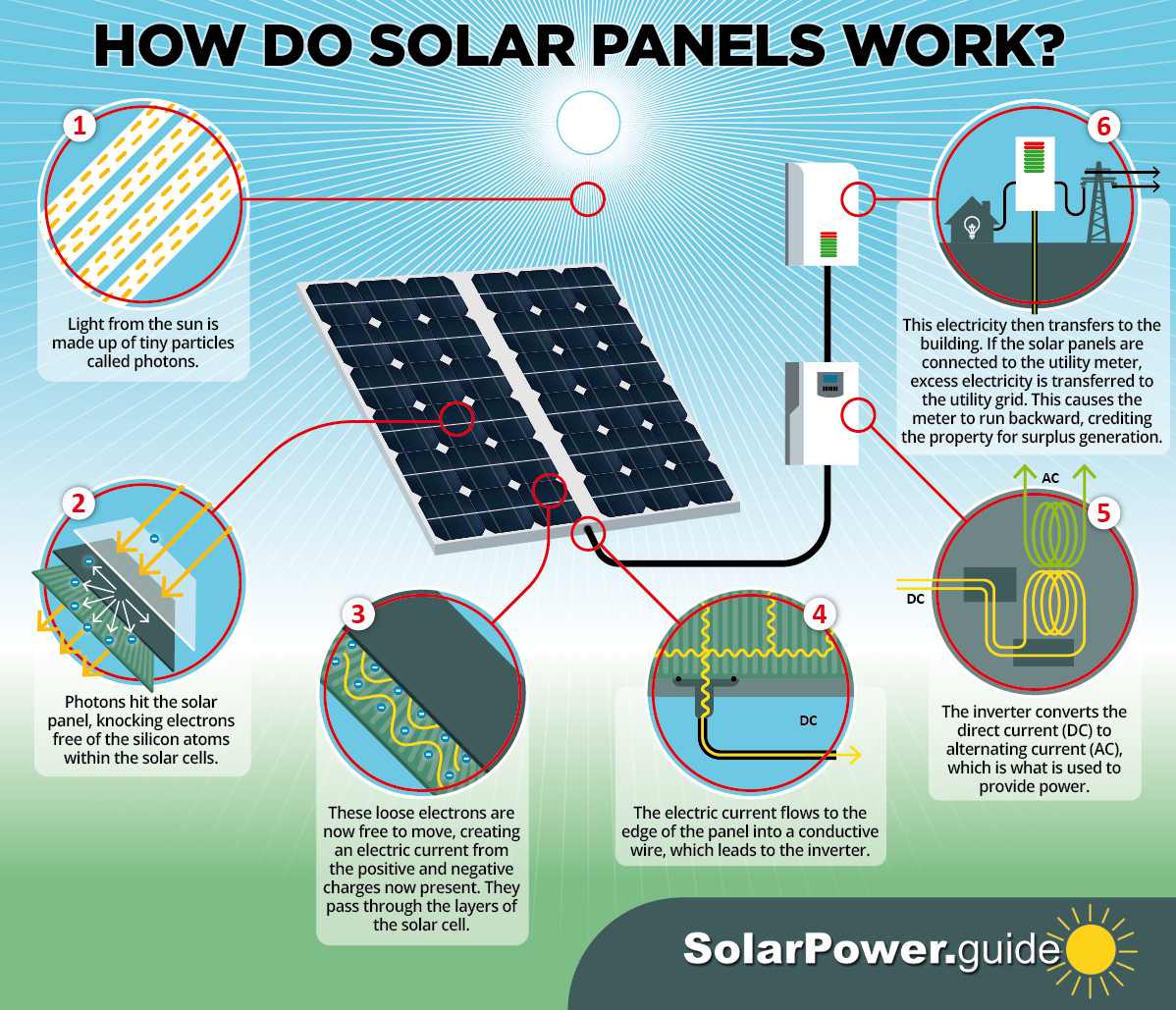
Think of sunlight not just as a warm glow, but as a stream of tiny energy packets called photons. When these photons hit certain materials, specifically semiconductors like silicon (the main component of solar cells), they can literally knock electrons loose from their atoms. This creates a flow of electrons, and a flow of electrons is, by definition, electricity.
Here’s the simple version:
- Sunlight (Photons) hits the solar cell.
- Electrons in the silicon material get excited and break free.
- The solar cell’s design creates an electric field that pushes these free electrons in one direction, forming an electric current.
Anatomy of a Solar Panel: More Than Just Glass
A solar panel isn’t just one big silicon sheet. It’s an assembly designed for maximum efficiency and durability. Each panel is made up of individual solar cells (typically 60 or 72 for residential panels), linked together. These cells are sandwiched between layers of protective glass, an encapsulant (like EVA), and a sturdy backsheet, all framed in aluminum. This layered construction protects the delicate cells from the elements while optimizing light absorption.
The Journey of Sunlight: A Step-by-Step Breakdown of Solar Power Generation
Now that we understand the basic science, let’s follow the journey of sunlight from the sky to your electrical outlets.
Step 1: Sunlight Strikes the Solar Panels (Photon Absorption)
The process kicks off when the sun’s photons hit your solar panels. Each panel is optimally angled to capture as much direct sunlight as possible. The dark, often bluish-black surface of the panels is specifically designed to absorb these photons efficiently. This is where the photovoltaic effect begins.
Step 2: PV Cells Generate Direct Current (DC) Electricity
As those photons excite and free electrons within the silicon solar cells, a direct current (DC) of electricity is produced. Think of DC electricity as a one-way street for electrons – they flow in a single direction. This is the raw energy output from your solar panels, but it’s not yet ready to power most household appliances.
Step 3: The Inverter Converts DC to Usable Alternating Current (AC)
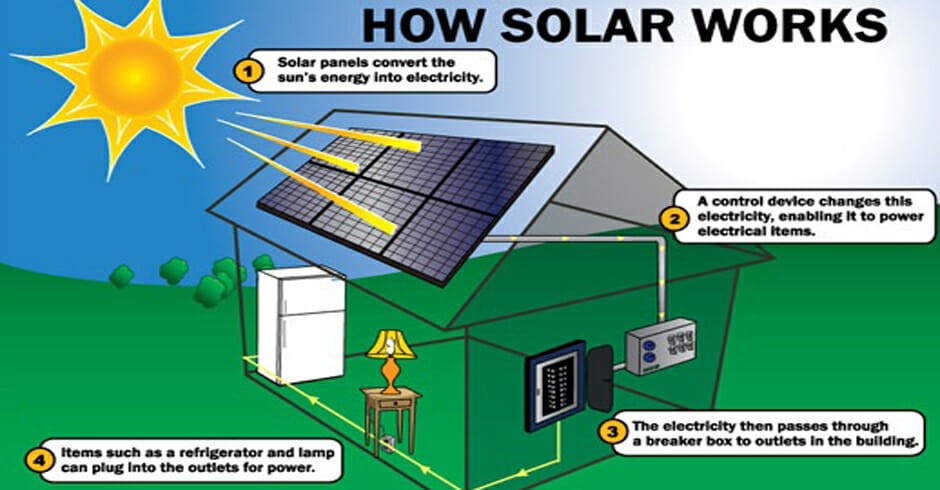
Here’s where the magic happens for your home. Most homes and the national electrical grid run on alternating current (AC) electricity. DC power from your panels needs to be converted. This is the job of the solar inverter. Whether it’s a single string inverter, microinverters attached to each panel, or a hybrid inverter, its primary function is to transform that DC power into AC power. It’s a critical component, effectively acting as the translator between your panels and your home’s electrical system.
Quick Conversion Comparison: DC vs. AC
| Feature | Direct Current (DC) | Alternating Current (AC) |
|---|---|---|
| Electron Flow | One direction | Periodically reverses direction |
| Source | Solar panels, batteries | Utility grid, household outlets |
| Typical Use | Charging batteries, specialized electronics | Powering homes, businesses, appliances |
Step 4: Electricity Powers Your Home (and Beyond)
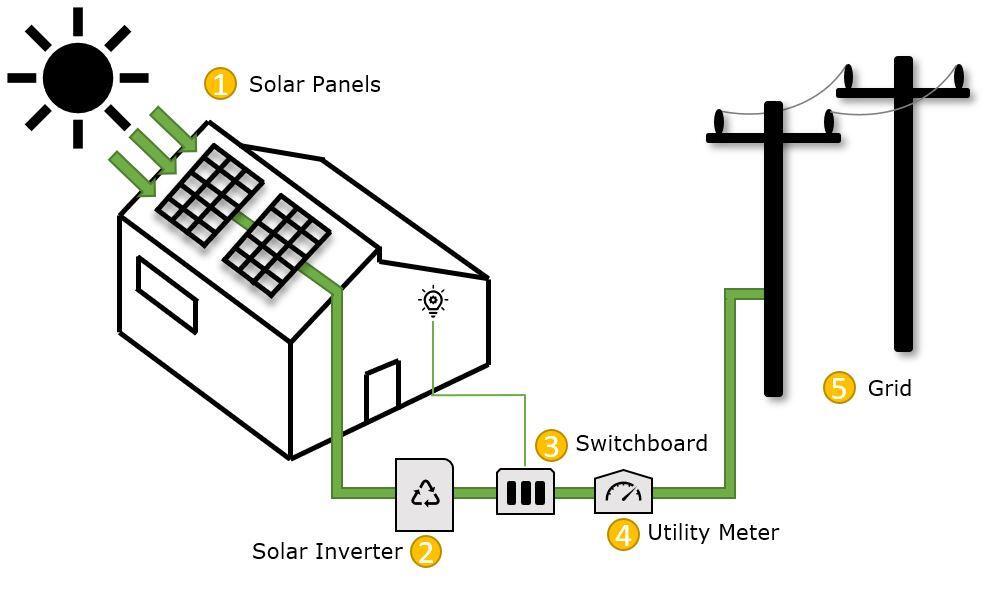
Once converted to AC, the electricity flows from the inverter to your home’s main electrical panel (also known as the breaker box or service panel). From there, it’s distributed throughout your home to power all your appliances, lights, and electronics. The beauty of this is that you’re using electricity generated right on your own property, reducing your reliance on grid power and lowering your electricity bills.
Step 5: Excess Energy Heads to the Grid (Net Metering Explained)
What happens if your solar panels produce more electricity than your home is currently using? This surplus energy doesn’t go to waste! It’s automatically sent back to the electrical grid. Your utility company then credits your account for this excess power, a process called net metering. Think of your electric meter spinning backward as you essentially sell electricity back to the grid. At night or on cloudy days when your panels aren’t producing enough, you simply draw power from the grid as usual, often offsetting it with your accumulated credits.
Step 6: Storing Power for Later (Optional: The Role of Solar Batteries)
For even greater energy independence and blackout protection, many homeowners are adding solar batteries to their systems. Instead of sending all excess power back to the grid, batteries store this energy for later use. This means you can power your home with stored solar energy at night, during peak utility rates, or if the grid goes down. Batteries are an increasingly popular addition, providing peace of mind and optimizing energy use.
Key Components of a Complete Solar System
While solar panels are the star of the show, a complete solar energy system relies on several integrated components to work effectively.
Solar Panels (PV Modules): The Energy Collectors
As we discussed, these are the frontline components that absorb sunlight and convert it into DC electricity. Modern panels are highly efficient, durable, and come with impressive warranties, often guaranteeing 80-85% of their original output after 25 years.
Inverter (String, Micro, Hybrid): The Brains of the Operation
This critical device converts DC power from the panels into AC power suitable for your home and the grid. There are a few types:
- String Inverters: A single inverter for the entire array. Cost-effective but if one panel performs poorly (due to shade, for example), it can affect the whole ‘string.’
- Microinverters: Installed under each individual panel. This optimizes performance per panel, meaning shade on one panel won’t significantly impact the others. Great for complex roofs or partial shading.
- Hybrid Inverters: Combine the functions of a solar inverter and a battery inverter, allowing direct integration with battery storage systems.
Racking and Mounting System: The Foundation
This is the hardware that securely attaches your solar panels to your roof or ground. It’s designed to withstand various weather conditions, including high winds and heavy snow loads, ensuring your panels stay in place for decades.
Electrical Panel (Breaker Box): The Home’s Energy Hub
This is where the AC electricity from your solar system ties into your home’s existing wiring. It distributes the solar power to your circuits, just like it does with grid power.
Utility Meter (Net Meter): The Scorekeeper
A standard electricity meter only measures power coming into your home. A net meter (or a bidirectional meter) measures power flowing both to and from the grid, accurately tracking your energy credits and consumption.
Solar Battery Storage (Optional): Your Personal Power Reserve
Lithium-ion batteries are the most common type for residential storage. They store excess solar energy generated during the day, making it available for use during evenings, cloudy periods, or power outages. This enhances self-sufficiency and can help you avoid peak utility rates.
Grid-Tied vs. Off-Grid vs. Hybrid: Understanding Your Solar Options
Not all solar systems are created equal. Your needs and location will dictate the best setup for you.
| System Type | Description | Key Features | Best For |
|---|---|---|---|
| Grid-Tied | Connected to the public electricity grid. Most common residential system. | Utilizes net metering; no battery storage (unless added); relies on grid for backup. | Urban/suburban homes, cost savings, environmental benefits. |
| Off-Grid | Completely independent from the public electricity grid. | Requires battery storage; often includes a backup generator; no utility bills. | Remote properties, cabins, desire for complete energy independence. |
| Hybrid | Connected to the grid but also includes battery storage. | Benefits of net metering plus energy independence/backup power; can be more complex. | Homes wanting backup power, optimizing self-consumption, reducing peak demand charges. |
The Benefits Beyond the Bill: Why Solar Matters
While saving money on your electricity bill is often the primary driver, solar energy offers a host of other compelling advantages.
Environmental Impact: A Greener Footprint
Every kilowatt-hour of electricity you generate from solar panels is a kilowatt-hour that doesn’t come from fossil fuels. This means significantly reducing your carbon footprint, lessening air pollution, and conserving precious natural resources. It’s a tangible step towards a cleaner, more sustainable future.
Energy Independence and Reliability
Generating your own power means less reliance on utility companies and their fluctuating rates. With a battery storage system, you gain an even greater degree of independence, ensuring you have power even during grid outages. This provides peace of mind and energy security.
Increasing Home Value
Multiple studies have shown that homes with solar panel systems sell faster and at a higher price than comparable homes without solar. Buyers are increasingly valuing the immediate and long-term savings that solar provides, making it a valuable home improvement investment.
Common Misconceptions About Solar Energy (Busted!)
It’s easy to get caught up in myths and outdated information about solar power. Let’s clear up a few common ones:
- Myth: Solar panels don’t work on cloudy days.
Reality: While efficiency is reduced, solar panels still produce electricity on cloudy days, just like you can still get a sunburn on an overcast day. Modern panels are designed to capture diffused light.
- Myth: Solar panels are too expensive.
Reality: The cost of solar has dropped dramatically over the last decade, and various federal, state, and local incentives (like the federal solar tax credit) make it more affordable than ever. Financing options also make it accessible.
- Myth: Solar panels require a lot of maintenance.
Reality: Solar systems are remarkably low-maintenance. Rain often does the cleaning for you, and occasional checks for debris or shading are usually all that’s needed. They’re built to last for decades.
- Myth: Solar won’t work in my climate.
Reality: Solar panels work efficiently in a wide range of climates, not just sunny desert regions. In fact, cooler temperatures can sometimes even improve panel efficiency. Snow typically slides off, or can be easily cleared.
Maximizing Your Solar Investment: Tips for Homeowners
To get the most out of your solar system, consider these practical tips:
Proper Sizing and Design
Work with reputable solar professionals to ensure your system is accurately sized for your energy consumption and roof space. An undersized system won’t meet your needs, and an oversized one might be an unnecessary expense.
Regular Maintenance Checks
While low-maintenance, a quick visual inspection now and then can catch issues early. Ensure panels are free of heavy debris, leaves, or excessive dust. Your installer can also offer professional cleaning or check-up services.
Monitoring Your System’s Performance
Most modern solar systems come with monitoring apps that allow you to track your energy production in real-time. This helps you understand your energy patterns, identify any potential issues, and ensure your system is always performing at its best.
The Future of Solar: Brighter Than Ever
Solar energy is not just a present-day solution; it’s a cornerstone of our future energy landscape. With ongoing advancements in panel efficiency, battery technology, and smart grid integration, solar power is becoming increasingly powerful, affordable, and accessible. As more homeowners and businesses embrace the sun’s potential, we move closer to a truly sustainable and resilient energy future for everyone.
Understanding how solar energy works step-by-step empowers you to make informed decisions about your home’s energy future. It’s a journey from sunlight to savings, and it’s simpler and more beneficial than you might have thought.
Frequently Asked Questions
What is the very first step in how solar energy works?
The very first step is when sunlight, composed of tiny energy packets called photons, strikes the solar panels. These photons are absorbed by the photovoltaic (PV) cells within the panels, initiating the energy conversion process.
How does a solar panel create electricity?
When photons from sunlight hit the silicon in solar cells, they knock electrons loose from their atoms. The solar cell is designed with an electric field that guides these free electrons to flow in a specific direction, creating a direct current (DC) of electricity. This phenomenon is known as the photovoltaic effect.
Why do solar systems need an inverter?
Solar panels produce direct current (DC) electricity, but most homes and the electrical grid use alternating current (AC) electricity. An inverter is a crucial component that converts the DC power from your solar panels into usable AC power, allowing it to power your appliances and connect to the utility grid.
What is net metering and how does it benefit homeowners?
Net metering is a billing mechanism that credits solar homeowners for the excess electricity their panels generate and send back to the grid. When your panels produce more power than you use, your utility company provides credits, which can then be used to offset the cost of electricity drawn from the grid at other times (e.g., at night or on cloudy days).
Do solar panels work on cloudy days or in winter?
Yes, solar panels still work on cloudy days and in winter, although their efficiency is reduced. Modern panels are capable of capturing diffused sunlight, meaning they will continue to generate electricity even when the sun isn’t shining directly. Snow typically slides off, or can be easily cleared to restore full efficiency.
Is battery storage necessary for a home solar system?
Battery storage is optional for most grid-tied home solar systems. Without batteries, excess solar energy is sent to the grid via net metering. However, adding solar batteries provides greater energy independence, allows you to use stored solar power during outages or at night, and can help optimize energy usage by avoiding peak utility rates.


Post Comment