What Is Solar Radiation And Insolation
Decoding the Sun’s Energy: What Are Solar Radiation and Insolation?
Ever gazed at the sun and wondered about its immense power? It’s not just a giant, glowing orb; it’s the ultimate energy source driving virtually everything on Earth. For anyone curious about renewable energy, climate science, or even just why your car gets so hot on a summer day, understanding the sun’s energy is crucial. But terms like “solar radiation” and “insolation” often get thrown around, making it all sound more complicated than it needs to be.
Table of Contents
- Decoding the Sun’s Energy: What Are Solar Radiation and Insolation?
- Solar Radiation: The Sun’s Raw Power
- Insolation: The Sun’s Energy Reaching Us (and Our Solar Panels)
- Unpacking the Nuances: Solar Irradiance vs. Insolation vs. Solar Radiation
- Solar Irradiance: The Instantaneous Intensity
- The Big Picture: A Clear Comparison
- Why Does Insolation Vary So Much? The Key Influencers
- 1. Earth’s Tilt and Orbit: The Seasonal Dance
- 2. Atmospheric Conditions: Earth’s Protective (and Obstructive) Blanket
- 3. Latitude: Location, Location, Location
- 4. Time of Day: The Daily Cycle
- 5. Altitude: Above the Fray
- 6. Surface Characteristics: The Reflective Factor (Albedo)
- 7. Geographic Factors: Local Shading
- Measuring the Sun: Tools and Techniques for Solar Insights
- Beyond the Basics: Practical Applications of Solar Radiation and Insolation
- 1. Solar Energy Systems: The Obvious Connection
- 2. Climate Science and Meteorology
- 3. Agriculture and Ecology
- 4. Architecture and Urban Planning
- Maximize Your Solar Potential: Understanding Your Local Insolation
- Key Takeaways: Harnessing the Sun’s Power for a Brighter Future
I get it. When you’re trying to figure out if solar panels are right for your home or simply understand a weather report, you don’t need academic jargon. You need clarity. So, let’s cut through the noise. This guide will demystify solar radiation and insolation, explain why their distinction matters, and show you how this knowledge can empower your decisions, especially concerning solar energy.
Think of it this way: Solar radiation is the raw, potent energy emitted by the sun. Insolation is the measured portion of that energy that actually reaches a specific surface on Earth over a certain period. Simple, right? Let’s dive deeper.
Solar Radiation: The Sun’s Raw Power
At its core, solar radiation is the energy — in the form of electromagnetic waves — that the sun blasts out into space. It’s the engine of our solar system, a constant stream of photons traveling at the speed of light, originating from nuclear fusion reactions deep within the sun.
When we talk about solar radiation, we’re really talking about a spectrum of energy, not just visible light. It includes:
- Visible Light: What we see – the reds, oranges, yellows, greens, blues, indigos, and violets.
- Ultraviolet (UV) Radiation: The energy that gives you a sunburn (and sometimes powers UV purifiers).
- Infrared (IR) Radiation: The heat you feel from the sun, even when it’s behind a cloud.
- And other forms like X-rays, gamma rays, microwaves, and radio waves, though these make up a much smaller portion of the sun’s terrestrial energy impact.
This radiation travels through the vacuum of space, carrying incredible amounts of energy. By the time it reaches Earth’s outer atmosphere, it’s a powerful and consistent flux. However, what happens next is where things get interesting and where the concept of insolation comes into play.
Insolation: The Sun’s Energy Reaching Us (and Our Solar Panels)
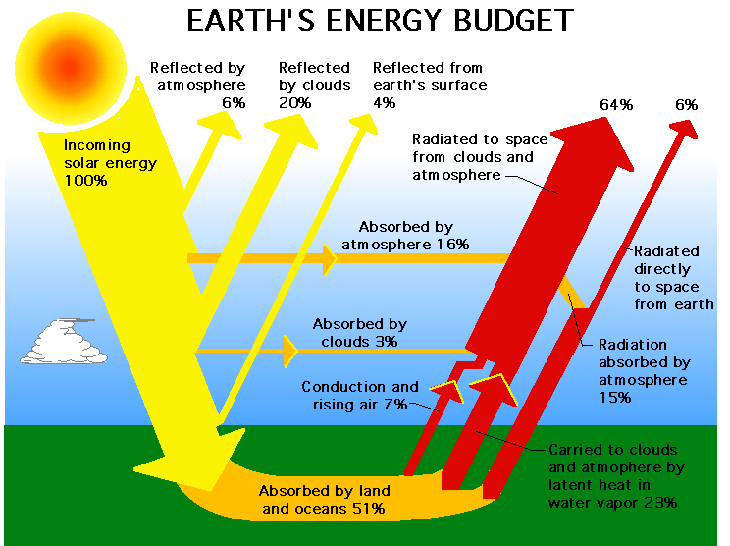
Here’s where the rubber meets the road. Insolation, a term derived from “Incoming Solar Radiation,” quantifies the amount of solar energy that actually lands on a specific surface area over a defined period. It’s not just about the sun’s raw power; it’s about the effective, usable energy at a given location and time.
Imagine solar radiation as a vast ocean of light. Insolation is like measuring how much of that ocean’s water actually makes it into your bucket during a specific rain shower, given your bucket’s size and how long you leave it out. This measurement is crucial because it tells us the potential for solar energy generation or the amount of solar heating a building might experience.
Insolation is typically expressed in units of energy per unit area per unit time, such as kilowatt-hours per square meter per day (kWh/m²/day) or Joules per square meter (J/m²) over a period. For solar panel enthusiasts, kWh/m²/day is a favorite because it directly relates to how much electricity your panels might produce.
When you hear a solar installer talk about your home’s “solar resource,” they’re essentially talking about the average insolation your roof receives. It’s the practical metric that turns raw solar power into a tangible asset for your energy needs.
Unpacking the Nuances: Solar Irradiance vs. Insolation vs. Solar Radiation
These terms are often used interchangeably, leading to confusion. But trust me, understanding their distinct meanings is key to truly grasping how solar energy works. Let’s break down the triumvirate.
Solar Irradiance: The Instantaneous Intensity
If solar radiation is the sun’s total output and insolation is the total energy collected over time, then solar irradiance is the instantaneous power per unit area received from the sun. Think of it as the “rate” at which solar radiation is hitting a surface at any given moment.
It’s measured in Watts per square meter (W/m²). If you’re standing outside on a bright, sunny day, you’re experiencing high irradiance. If a cloud passes over, the irradiance drops instantly. It’s like the speedometer of a car – showing you the current speed, not the distance traveled.
For solar professionals, irradiance is further broken down:
- Direct Normal Irradiance (DNI): The solar radiation that travels in a straight line from the sun to the Earth’s surface without being scattered or absorbed. This is what you feel as direct sunlight.
- Diffuse Horizontal Irradiance (DHI): The solar radiation that has been scattered by the atmosphere (clouds, dust, gases) and reaches the Earth’s surface from all directions. This is why it’s still bright on a cloudy day.
- Global Horizontal Irradiance (GHI): The total solar radiation received on a horizontal surface, which is the sum of DNI and DHI. This is the most common measurement used in meteorology and for general solar assessments.
The Big Picture: A Clear Comparison
To make this as clear as possible, here’s a table comparing these often-confused terms:
| Term | What It Is | Units of Measurement | Analogy | Primary Use |
|---|---|---|---|---|
| Solar Radiation | The total electromagnetic energy emitted by the sun. | Typically energy units (Joules, BTUs) or power (Watts) for the sun’s total output. | The entire solar system’s water reservoir. | Fundamental physics, understanding stellar energy. |
| Solar Irradiance | The instantaneous power per unit area received from the sun. | Watts per square meter (W/m²). | The flow rate of water from a garden hose at any moment. | Real-time solar panel performance, weather modeling. |
| Insolation | The total solar energy received on a given surface area over a defined period (e.g., day, month, year). | Kilowatt-hours per square meter (kWh/m²), Joules per square meter (J/m²). | How much water fills a bucket over an hour. | Solar system sizing, climate studies, building design. |
So, the next time someone talks about how much sun your roof gets, you’ll know they’re talking about insolation. And when they mention how bright it is right now, that’s irradiance.
Why Does Insolation Vary So Much? The Key Influencers
If solar radiation is constant as it leaves the sun, why do some places get more intense sunlight than others, and why does it change throughout the year? The answer lies in a combination of astronomical and atmospheric factors that profoundly impact insolation levels on Earth.
1. Earth’s Tilt and Orbit: The Seasonal Dance
- Axial Tilt: The Earth’s axis is tilted at approximately 23.5 degrees relative to its orbit around the sun. This tilt is the primary reason we have seasons. As Earth revolves, different parts of the planet are tilted towards or away from the sun, influencing the angle at which solar radiation strikes the surface.
- Angle of Incidence: When the sun’s rays hit the Earth more directly (closer to a 90-degree angle), the energy is concentrated over a smaller area, leading to higher insolation. When rays strike at a shallower angle, the same amount of energy is spread over a larger area, resulting in lower insolation.
- Orbital Path: Earth’s orbit isn’t a perfect circle; it’s an ellipse. We’re slightly closer to the sun in January (perihelion) and further away in July (aphelion). While this has a minor effect on global insolation, the axial tilt is the dominant factor for seasonal changes.
2. Atmospheric Conditions: Earth’s Protective (and Obstructive) Blanket
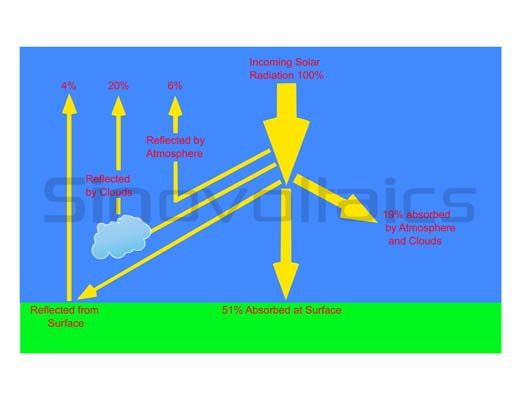
- Clouds: The biggest and most obvious factor. Clouds absorb, reflect, and scatter solar radiation, significantly reducing the amount of insolation reaching the ground. Think of a sunny day versus a heavily overcast one.
- Aerosols and Dust: Tiny particles in the atmosphere (from pollution, wildfires, volcanic eruptions) can scatter and absorb sunlight, dimming the sun’s intensity.
- Humidity and Water Vapor: Water vapor in the air absorbs certain wavelengths of solar radiation, particularly in the infrared spectrum.
- Ozone Layer: The ozone layer in the stratosphere absorbs most of the sun’s harmful UV radiation, protecting life on Earth.
- Atmospheric Path Length: When the sun is lower in the sky (morning, evening, or winter months), its rays have to travel through more of the Earth’s atmosphere. This longer path means more opportunities for scattering and absorption, reducing the insolation.
3. Latitude: Location, Location, Location
Generally, locations closer to the equator receive more direct and consistent solar radiation throughout the year compared to polar regions. This is because the sun’s rays strike the equatorial regions at a more perpendicular angle, minimizing the atmospheric path length and maximizing energy concentration.
4. Time of Day: The Daily Cycle
Insolation is highest around solar noon (when the sun is at its highest point in the sky for your specific location), as the sun’s rays are most direct and the atmospheric path length is shortest. It gradually decreases towards sunrise and sunset.
5. Altitude: Above the Fray
Higher altitudes generally receive greater insolation because there’s less atmosphere above to absorb, scatter, or reflect solar radiation. This is why you get sunburned so easily on mountaintops, even on cooler days.
6. Surface Characteristics: The Reflective Factor (Albedo)
Different surfaces reflect or absorb solar radiation differently. This is called albedo. Fresh snow has a high albedo, reflecting up to 90% of incident solar radiation. Dark asphalt, on the other hand, has a low albedo and absorbs most of the incoming energy, which is why it gets so hot. This affects the local energy balance and can influence surrounding insolation.
7. Geographic Factors: Local Shading
Mountains, tall buildings, or even trees can cast shadows that significantly reduce insolation for a specific area. This is a crucial consideration for solar panel placement.
Measuring the Sun: Tools and Techniques for Solar Insights
To accurately understand and harness solar energy, we need to measure it. Scientists, engineers, and solar companies use sophisticated tools and data to quantify solar radiation, irradiance, and insolation.
- Pyranometers: These instruments measure Global Horizontal Irradiance (GHI), capturing both direct and diffuse solar radiation on a horizontal surface. They are fundamental for general solar resource assessment and meteorological studies.
- Pyrheliometers: Used to measure Direct Normal Irradiance (DNI). These devices must be pointed directly at the sun to capture only the unscattered, direct beam radiation. They are vital for concentrated solar power (CSP) systems.
- Photovoltaic (PV) Reference Cells: Smaller, simpler devices that mimic the response of a solar panel. They provide a quick, localized measurement of irradiance, often used to monitor the performance of an actual solar array.
- Satellite Data and Modeling: Orbiting satellites equipped with radiometers can measure solar radiation entering the Earth’s atmosphere. This data, combined with sophisticated models, allows organizations like NASA and NOAA to create detailed solar resource maps (e.g., the National Renewable Energy Laboratory’s NREL Solar Maps) that estimate insolation levels across vast regions. These maps are invaluable for planning large-scale solar projects and assessing individual properties.
For homeowners, you won’t need to install a pyranometer on your roof. Instead, solar installers rely on these sophisticated measurements and historical data to assess your property’s solar potential, design the optimal system, and predict your energy savings. They use tools that factor in your roof’s tilt, orientation, and potential shading to give you an accurate estimate of your home’s average daily insolation.
Beyond the Basics: Practical Applications of Solar Radiation and Insolation
Understanding these solar terms isn’t just academic; it has profound real-world implications across various fields.
1. Solar Energy Systems: The Obvious Connection
This is where insolation truly shines (pun intended!).
- System Sizing: The amount of insolation a location receives directly dictates how many solar panels are needed to meet a specific energy demand. High insolation means fewer panels; low insolation means more.
- Predicting Output: Solar installers use historical insolation data to accurately predict how much electricity your solar array will generate annually, helping you calculate your potential savings and ROI.
- Optimization: Knowing how insolation varies helps determine the optimal tilt angle and orientation for solar panels to capture maximum sunlight throughout the year.
- Geographic Suitability: It’s why places like Arizona and California are solar powerhouses – they simply receive higher average insolation than, say, Seattle.
2. Climate Science and Meteorology
Solar radiation is the primary driver of Earth’s climate and weather systems.
- Global Energy Balance: Insolation dictates how much energy enters Earth’s system, influencing global temperatures, ocean currents, and atmospheric circulation.
- Weather Patterns: Differences in insolation across the globe create temperature gradients that drive wind, precipitation, and storm formation.
- Greenhouse Effect: While the atmosphere traps some outgoing infrared radiation, the initial incoming solar radiation warms the surface, making life possible.
3. Agriculture and Ecology
The sun’s energy is fundamental to life itself.
- Photosynthesis: Plants convert solar energy into chemical energy, forming the base of nearly all food webs. Insolation levels directly impact crop growth rates and yields.
- Water Cycle: Solar radiation drives evaporation from oceans and land, fueling the global water cycle and influencing rainfall patterns.
- Ecosystem Health: The amount of available solar energy influences biodiversity and the distribution of plant and animal species across different biomes.
4. Architecture and Urban Planning
Smart design can leverage solar energy.
- Passive Solar Design: Architects design buildings to maximize solar heat gain in winter (e.g., south-facing windows in the Northern Hemisphere) and minimize it in summer, reducing heating and cooling costs.
- Building Orientation: Understanding solar paths helps orient buildings and place features like overhangs or shade structures to optimize daylighting and thermal performance.
- Urban Heat Island Effect: Urban planners consider how materials with low albedo (like dark asphalt) absorb and re-emit solar radiation, contributing to higher temperatures in cities.
Maximize Your Solar Potential: Understanding Your Local Insolation
For homeowners considering solar, understanding your local insolation is perhaps the most critical piece of the puzzle. It directly translates to how much energy your panels can produce and, consequently, your potential savings.
Here’s how you can use this knowledge:
- Consult with Solar Professionals: Reputable solar installers will perform a detailed site assessment, often using specialized software that integrates satellite imagery and local weather data to precisely calculate your roof’s insolation. They’ll consider shading from trees or neighboring buildings, your roof’s pitch, and its orientation.
- Explore Solar Maps: Resources like the NREL PVWatts Calculator (a widely used tool) allow you to input your address and get an estimate of your annual solar resource and potential system output. This can give you a good starting point for your research.
- Consider Shading: Even a small amount of shade can disproportionately impact solar panel output. Understand if your property has significant shading issues, especially during peak sunlight hours. Sometimes, strategic tree trimming can make a huge difference.
- Optimal Panel Placement: While a south-facing roof (in the Northern Hemisphere) is generally ideal, understanding your local insolation patterns might reveal that other orientations still offer excellent production, especially with modern panel technology and micro-inverters.
By asking informed questions and understanding the basics of solar radiation and insolation, you empower yourself to make better decisions about investing in renewable energy and optimizing your home’s energy efficiency.

Key Takeaways: Harnessing the Sun’s Power for a Brighter Future
Solar energy is our planet’s most abundant and enduring resource. By understanding the fundamental concepts of solar radiation and insolation, you gain a clearer picture of how this colossal power is harnessed and how it shapes our world.
Remember:
- Solar Radiation is the sun’s total energy output.
- Solar Irradiance is the instantaneous rate of that energy reaching a surface.
- Insolation is the total accumulated solar energy on a surface over time – the crucial metric for solar power generation.
From powering your home with solar panels to understanding climate change or even just appreciating a sunny day, these concepts are foundational. As we move towards a more sustainable future, a clear understanding of the sun’s energy is not just for scientists and engineers; it’s for all of us. You’re now equipped to think like a solar strategist, ready to make smarter choices for your energy needs and our planet.
Frequently Asked Questions
What is the basic difference between solar radiation and insolation?
Solar radiation is the general term for the electromagnetic energy emitted by the sun into space. It’s the sun’s raw power output. Insolation, on the other hand, is the specific amount of that solar radiation that actually reaches a particular surface on Earth over a defined period of time (e.g., per day or per year). Insolation is the measurable, usable solar energy at a given location.
How does solar irradiance relate to insolation and solar radiation?
Solar radiation is the source. Solar irradiance is the instantaneous power per unit area from the sun, measured in Watts per square meter (W/m²). It’s the rate at which energy is arriving. Insolation is the total energy accumulated over time, often expressed in kilowatt-hours per square meter (kWh/m²). Think of it like this: solar radiation is the sun itself, irradiance is the intensity of sunlight at any given moment, and insolation is the total energy collected by a surface over an entire day.
Why is insolation important for solar panels?
Insolation is critical for solar panels because it directly determines how much energy a solar system can generate. High average insolation means more sunlight hitting the panels, leading to greater electricity production. Solar installers use insolation data for your specific location, considering factors like roof angle, orientation, and shading, to accurately size your solar system and predict its annual energy output and financial returns.
What factors cause insolation to vary from place to place?
Insolation varies significantly due to several factors: Earth’s tilt and orbit (causing seasons and changing angles of incidence), atmospheric conditions (clouds, dust, humidity, pollution scattering and absorbing sunlight), latitude (equatorial regions receive more direct sunlight), time of day (highest around solar noon), altitude (less atmosphere at higher elevations), and local geographic factors (mountains, trees causing shading).
How is insolation typically measured?
Insolation is often estimated using historical data and models derived from satellite measurements and ground-based sensors like pyranometers (for global horizontal irradiance) and pyrheliometers (for direct normal irradiance). For practical applications in solar energy, it’s commonly expressed in kilowatt-hours per square meter per day (kWh/m²/day) or annually, representing the total energy accumulated over time.
Does higher altitude mean more insolation?
Yes, generally, higher altitudes receive more insolation. This is because there’s less atmosphere above to scatter, absorb, or reflect solar radiation. As the sun’s rays travel through less air, more of their energy reaches the surface. This effect is why mountain regions often have higher solar potential than lowland areas, assuming no significant local shading.
How can I find out the insolation for my home?
You can estimate the insolation for your home using online tools like the NREL PVWatts Calculator, which provides average solar resource data for specific locations in the USA. For a precise assessment, it’s best to consult with a professional solar installer. They use specialized software and conduct on-site evaluations to factor in your roof’s specifics (tilt, orientation, shading) to give you an accurate insolation report and system design.


Post Comment