What Is Solar Power Simple Explanation
What Is Solar Power? Your Simple Guide to Harnessing the Sun’s Energy
You see solar panels popping up everywhere – on rooftops, in vast fields, even powering streetlights. But beyond the shiny blue rectangles, what is solar power, really? How does it actually turn sunlight into the juice that runs your blender or charges your phone?
Table of Contents
- What Is Solar Power? Your Simple Guide to Harnessing the Sun’s Energy
- The Core Concept: How the Sun Becomes Your Electricity
- Light into Power: The Photovoltaic (PV) Effect Explained
- Beyond PV: Concentrated Solar Power (CSP) – The Sun’s Oven
- Table 1: PV vs. CSP – A Quick Comparison
- Why Solar? Unpacking the Benefits of Sunlight
- Environmental Champion: Clean, Green Energy
- Financial Freedom: Saving Money, Boosting Value
- Energy Independence: Control Your Power
- Is Solar Perfect? The Realities and Challenges
- Initial Investment: A Big Price Tag Upfront
- Intermittency: When the Sun Doesn’t Shine
- Space & Location: Not Every Roof Is Right
- Diving Deeper: Types of Solar Power Systems
- Grid-Tied Systems: Connected to the Utility
- Off-Grid Systems: Total Independence
- Hybrid Systems: The Best of Both Worlds
- Table 2: Common Solar System Types Compared
- The Evolution and Future of Solar Power
- A Brief History: From Niche to Mainstream
- Innovations on the Horizon: Smarter, Cheaper, More Efficient
- Is Solar Right for YOU? What to Consider Next
- Assessing Your Readiness: Key Questions
- Taking the First Step: Getting Started
- Conclusion: Powering Tomorrow, One Ray at a Time
Forget the jargon and the complex diagrams for a moment. Think of the sun as a gigantic, always-on power plant, 93 million miles away, broadcasting pure energy in every direction. Solar power is simply our ingenious way of catching a tiny fraction of that broadcast and putting it to work for us here on Earth. It’s like setting out a special antenna to pick up a free, unlimited signal.
In this guide, I’m going to break down solar power into plain English. We’ll explore how it works, why it’s becoming such a big deal, what its limitations are, and what it means for your home and your future. Ready to demystify the sun’s incredible energy?
The Core Concept: How the Sun Becomes Your Electricity
At its heart, solar power is about conversion. It takes one form of energy – sunlight – and transforms it into another, more usable form: electricity or heat. There are two primary ways we do this, and understanding them is key to grasping the magic of solar.
Light into Power: The Photovoltaic (PV) Effect Explained
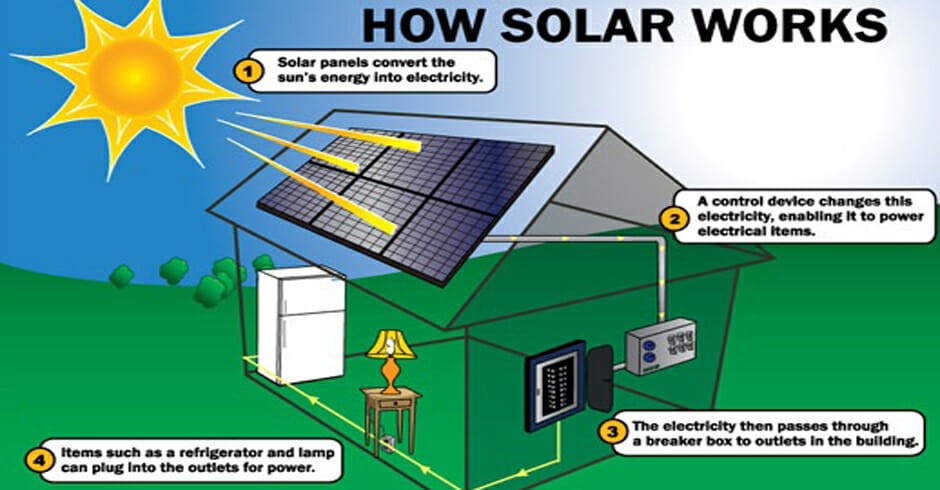
When most people think of solar power, they’re picturing photovoltaic (PV) solar panels. This is the technology that uses the sun’s light to create electricity directly. Here’s the simplified breakdown:
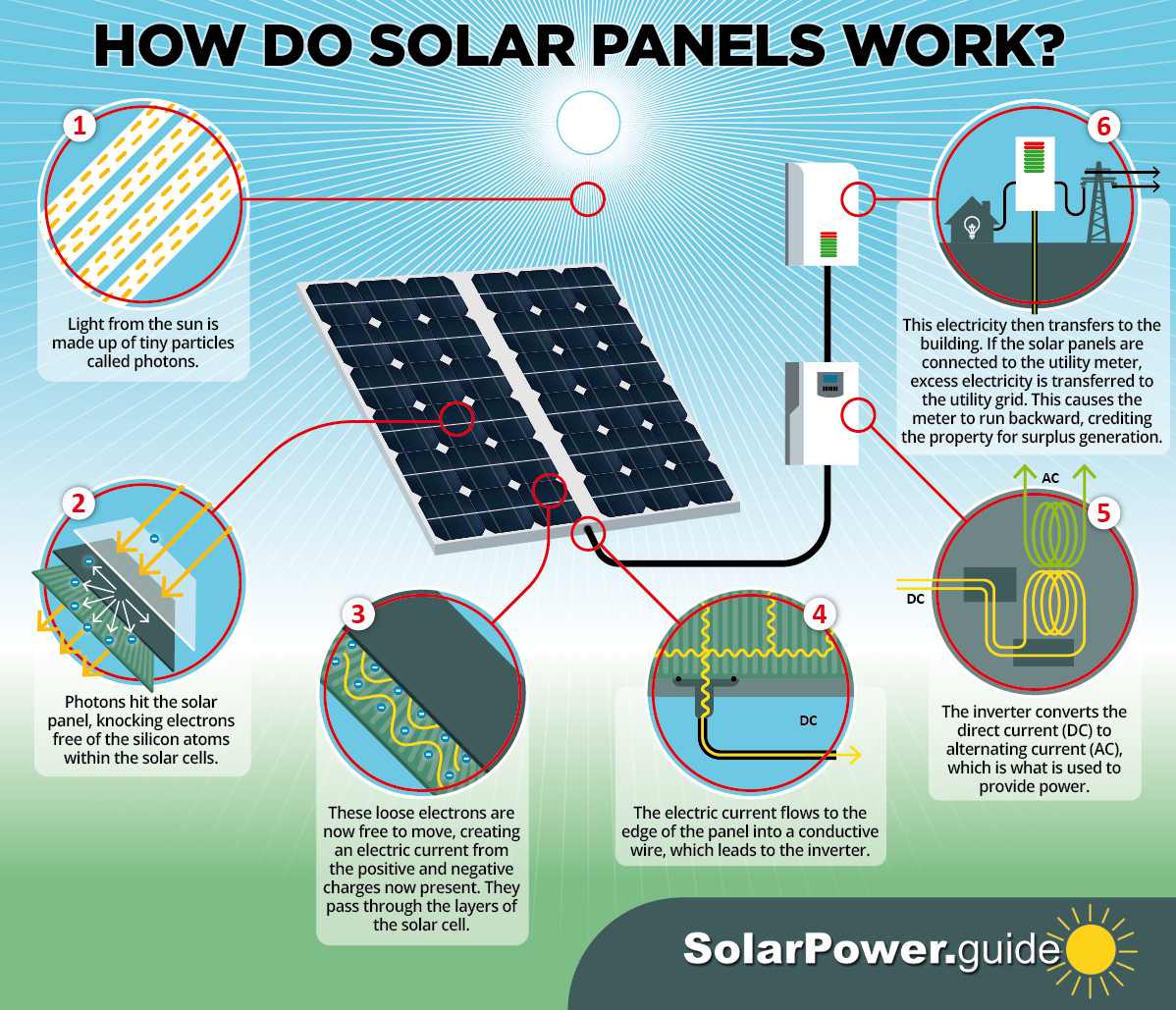
- The Star of the Show: The Solar Cell. Each panel is made up of many smaller solar cells. These cells are typically made from semiconductor materials, most commonly silicon.
- Photons Strike! When sunlight (which is made of tiny energy packets called photons) hits the silicon in a solar cell, it excites the electrons within the silicon atoms. Think of it like a photon giving an electron a tiny, energetic kick.
- Electrons Get Moving. The way the silicon is specially treated (or ‘doped’) creates an electric field within the cell. This field acts like a one-way street, pushing those excited electrons to flow in a particular direction, creating an electric current. This is called the photovoltaic effect.
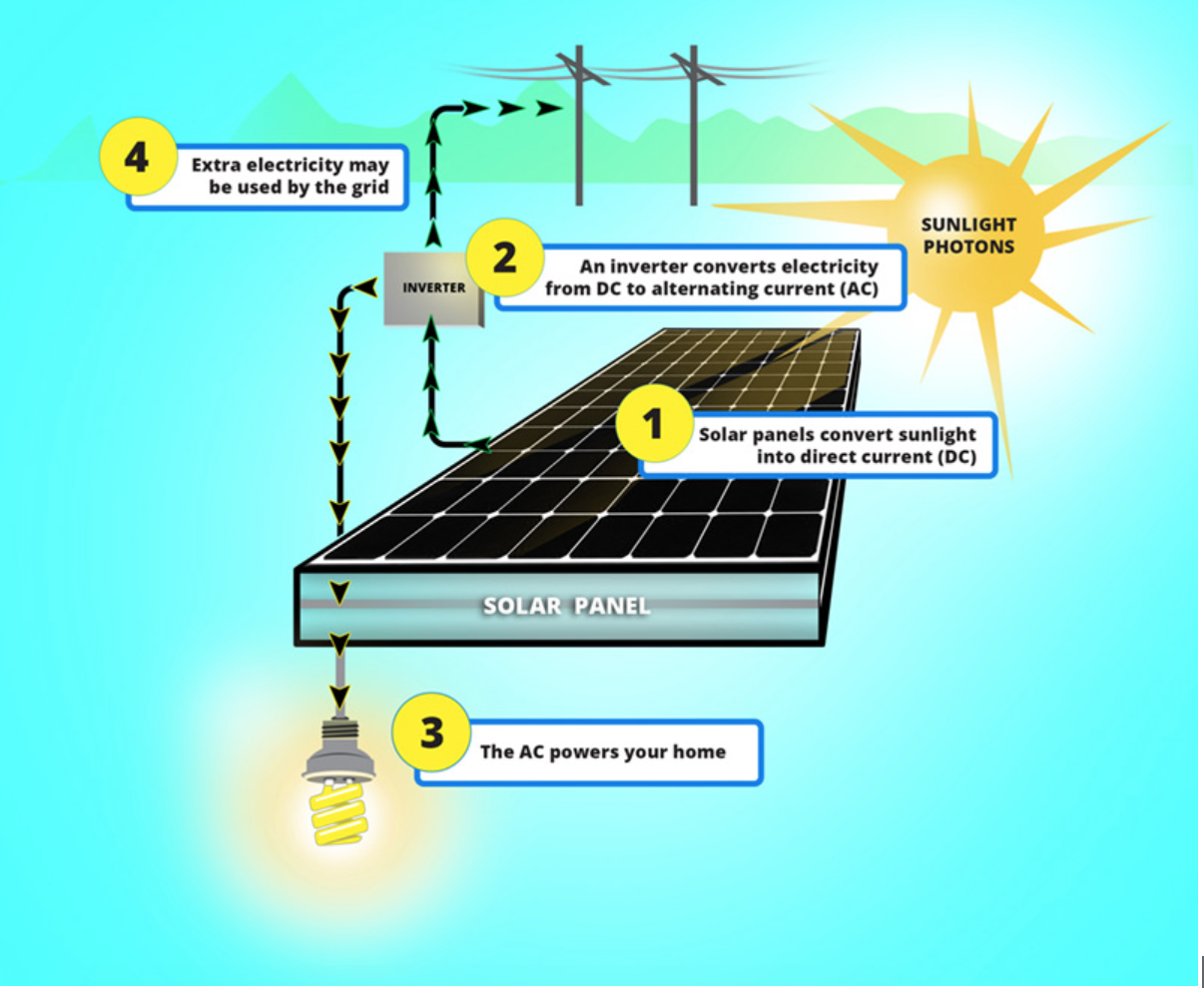
- From DC to AC. The electricity generated by solar panels at this stage is Direct Current (DC). Most homes and appliances, however, run on Alternating Current (AC). This is where an essential piece of equipment called an inverter comes in. It flawlessly converts that DC electricity into usable AC electricity for your home or the electrical grid.
So, in essence, a solar panel isn’t just sitting there absorbing heat; it’s actively catching photons and using their energy to create a flow of electrons – pure electricity – right from the sun’s rays.
Beyond PV: Concentrated Solar Power (CSP) – The Sun’s Oven
While PV is dominant for residential and many commercial applications, another fascinating method exists: Concentrated Solar Power (CSP). This technology operates on a different principle, focusing the sun’s heat rather than its light directly.
- Mirrors, Mirrors Everywhere. CSP systems use an array of mirrors (like parabolic troughs or heliostats) to concentrate a vast area of sunlight onto a small receiver.
- Generating Heat. This concentrated sunlight heats a fluid (like oil or molten salt) to extremely high temperatures.
- Making Steam. The superheated fluid then creates steam, much like a conventional power plant.
- Turbine Time. This steam drives a turbine, which in turn spins a generator to produce electricity.
CSP plants are typically massive, utility-scale operations, not something you’d put on your roof. They’re great for storing energy in the heated fluid to generate electricity even after the sun goes down.
Table 1: PV vs. CSP – A Quick Comparison
| Feature | Photovoltaic (PV) | Concentrated Solar Power (CSP) |
|---|---|---|
| Primary Conversion | Directly converts sunlight into electricity (photons → electrons). | Converts sunlight into heat, then heat into electricity (photons → heat → steam → turbine → electricity). |
| Energy Focus | Sunlight (photons). | Sunlight’s thermal energy (heat). |
| Typical Scale | Residential, commercial, utility-scale. | Utility-scale power plants. |
| Energy Storage | Requires separate battery storage. | Often has integrated thermal energy storage. |
| Common Application | Home electricity, smaller power needs. | Large-scale grid power generation. |
Why Solar? Unpacking the Benefits of Sunlight
So, now you know the mechanics. But why is everyone talking about solar? Why is it considered a cornerstone of our energy future? The reasons are compelling and touch on environmental responsibility, financial savings, and even personal freedom.
Environmental Champion: Clean, Green Energy
This is often the first benefit people think of, and for good reason. Solar power is incredibly kind to our planet.
- Reduced Carbon Footprint. Unlike burning fossil fuels (coal, oil, natural gas) which release greenhouse gases that contribute to climate change, solar panels produce electricity without any harmful emissions during operation. Once installed, they’re simply soaking up sunshine.
- Renewable and Abundant. The sun is an inexhaustible energy source, at least for the next few billion years. We’re not depleting a finite resource; we’re simply tapping into a continuous flow.
- Cleaner Air & Water. Less reliance on fossil fuels means less air pollution (smog, acid rain) and less water pollution associated with mining and drilling.
Financial Freedom: Saving Money, Boosting Value
While the environmental benefits are crucial, the economic advantages of solar are often what drive homeowners and businesses to make the switch.
- Lower Electricity Bills. This is the big one. By generating your own power, you buy less (or sometimes no) electricity from your utility company. Over time, these savings can be substantial, especially as utility rates tend to rise.
- Incentives and Rebates. Governments at federal, state, and local levels, along with some utilities, offer significant incentives. This can include federal tax credits (like the Investment Tax Credit in the U.S.), state rebates, and property tax exemptions, all of which dramatically reduce the upfront cost of installation.
- Increased Home Value. Studies consistently show that homes with solar panel installations sell faster and for more money than comparable non-solar homes. It’s an upgrade that pays for itself and then some.
- Predictable Energy Costs. Once your system is installed, you’ve essentially locked in your energy costs for decades, protecting you from volatile energy markets and rising utility prices.
Energy Independence: Control Your Power
Imagine having more control over where your energy comes from and not being entirely at the mercy of the grid.
- Less Reliance on the Grid. While most residential systems are connected to the grid (called ‘grid-tied’), generating your own power reduces your dependence on external sources.
- Backup Power (with Batteries). Pair your solar panels with a battery storage system, and you gain resilience during power outages. Your home can stay lit and critical appliances running, even when the neighborhood goes dark.
- Local Power Generation. Distributed solar (panels on individual homes and businesses) reduces the need for large, centralized power plants and the complex, expensive transmission lines required to move electricity across vast distances.
Is Solar Perfect? The Realities and Challenges
No energy source is without its trade-offs, and solar power is no exception. While its benefits are undeniable, it’s important to understand the practical challenges to make an informed decision.
Initial Investment: A Big Price Tag Upfront
Let’s be honest: installing solar panels is not cheap, at least initially.
- Cost Considerations. A typical residential solar system can cost tens of thousands of dollars before incentives. This can be a significant hurdle for many households.
- Financing Options. Fortunately, there are many ways to finance solar. Beyond outright purchase, options include solar loans (similar to home improvement loans), solar leases, and Power Purchase Agreements (PPAs) where a third party owns and maintains the system, and you simply buy the electricity it produces at a fixed rate. These options can make solar accessible without a large upfront payment.
Intermittency: When the Sun Doesn’t Shine
This is perhaps the most obvious challenge: solar panels need sunlight to produce electricity.
- Nighttime, Cloudy Days. When the sun sets, or a thick cloud cover rolls in, your panels’ output drops significantly, or ceases entirely.
- Solutions: Battery Storage and Net Metering. This is where innovation comes in. Battery storage systems allow you to save excess electricity generated during sunny periods for use when the sun isn’t shining. Another common solution is net metering, where your home remains connected to the utility grid. When your panels produce more electricity than you need, the excess is sent to the grid, and you receive credits. When your panels aren’t producing enough, you draw electricity from the grid, using up your credits. It’s like your utility company is your big, shared battery.
Space & Location: Not Every Roof Is Right
While adaptable, solar isn’t a one-size-fits-all solution for every property.
- Roof Size, Angle, Shading. Optimal solar production requires sufficient, unshaded roof space. A south-facing roof (in the Northern Hemisphere) with a good angle to the sun is ideal. Trees, chimneys, or neighboring buildings that cast significant shade can severely reduce efficiency.
- Structural Integrity. Older roofs or those in poor condition may need repairs or reinforcement before panels can be installed.
- Alternative Installations. If your roof isn’t suitable, ground mounts are an option if you have enough land. Community solar programs also allow individuals to invest in a shared solar project and receive credits on their utility bill without installing panels on their own property.
Diving Deeper: Types of Solar Power Systems
Beyond the fundamental PV and CSP technologies, the way solar power is integrated into your home or business varies. Understanding these system types will help you consider what might be best for your needs.
Grid-Tied Systems: Connected to the Utility
These are by far the most common type of residential and commercial solar installations.
- How They Work. Your solar panels generate electricity, which is converted to AC by an inverter. This electricity first powers your home’s needs. Any excess electricity is sent back to the utility grid, and you earn credits through net metering. When your panels aren’t producing enough (e.g., at night), you draw power from the grid, using your accumulated credits.
- Pros. Simple, generally lower upfront cost (no batteries needed), and you don’t have to worry about running out of power as long as the grid is up.
- Cons. If the grid goes down (a power outage), your solar system will also shut down for safety reasons (to prevent back-feeding electricity into lines being worked on by utility crews). You won’t have power, even if the sun is shining, unless you have a battery backup.
Off-Grid Systems: Total Independence
As the name suggests, off-grid systems are completely independent of the main utility grid.
- Battery Storage is Essential. Since there’s no grid to draw from, these systems rely heavily on robust battery banks to store excess solar energy for use during nighttime or cloudy periods. They often include a backup generator for emergencies.
- Ideal for Remote Locations. Off-grid solar is perfect for cabins, remote homes, or properties where extending utility lines would be prohibitively expensive.
- Pros. Complete energy independence, no monthly utility bills.
- Cons. Much higher upfront cost due to battery bank and backup generator, requires careful energy management, and sizing the system correctly is critical to avoid running out of power.
Hybrid Systems: The Best of Both Worlds
Hybrid systems combine the advantages of grid-tied setups with the resilience of battery storage.
- Grid Connection Plus Battery Backup. Your home remains connected to the utility grid, leveraging net metering, but you also have a battery bank. The battery stores excess solar power and can provide electricity during grid outages.
- Resilience and Savings. You get the benefit of lower utility bills and grid credits, plus the peace of mind that comes with backup power. Some systems can even be programmed to charge the battery when electricity rates are low and discharge when rates are high (time-of-use optimization).
- Pros. Offers the best of both worlds: energy independence during outages and financial benefits from grid connection.
- Cons. More expensive than a simple grid-tied system due to the added cost of batteries and more complex inverter technology.
Table 2: Common Solar System Types Compared
| System Type | Description | Key Benefit | Best For |
|---|---|---|---|
| Grid-Tied | Connected to the utility grid; no battery storage. | Lowest initial cost; leverages net metering for savings. | Homeowners focused purely on cost savings who don’t need backup power. |
| Off-Grid | Completely independent of the utility grid; requires substantial battery storage. | Total energy independence; no utility bills. | Remote properties where grid connection is unavailable or too costly. |
| Hybrid | Connected to the grid with integrated battery storage. | Backup power during outages, energy independence, and financial savings. | Homeowners wanting both bill savings and reliable backup power. |
The Evolution and Future of Solar Power
Solar power isn’t a new concept, but its journey from niche technology to mainstream energy contender has been remarkable, and the future promises even more exciting developments.
A Brief History: From Niche to Mainstream
- Early Beginnings. The photovoltaic effect was first observed in 1839 by Alexandre-Edmond Becquerel. The first practical silicon solar cell was invented in 1954 at Bell Labs.
- Space Race Catalyst. For decades, solar cells were primarily used in space, powering satellites and spacecraft due to their reliability and ability to operate in harsh environments.
- Cost Reductions & Grid Parity. Beginning in the 2000s and accelerating rapidly, manufacturing efficiencies, technological advancements, and government incentives have driven down the cost of solar panels dramatically. Many regions have reached ‘grid parity,’ meaning solar electricity is as cheap or cheaper than conventional grid electricity.
Innovations on the Horizon: Smarter, Cheaper, More Efficient
The solar industry is a hotbed of research and development, constantly pushing the boundaries of what’s possible.
- New Materials. Researchers are exploring new materials like perovskite solar cells, which promise higher efficiencies and lower manufacturing costs than traditional silicon.
- Transparent Solar. Imagine windows that generate electricity! Transparent solar technology could allow buildings themselves to become power generators.
- AI Integration. Artificial intelligence is being used to optimize solar panel placement, predict energy output based on weather patterns, and manage grid interactions more efficiently.
- Advanced Storage. Beyond lithium-ion, new battery chemistries and long-duration storage solutions (like flow batteries or even gravity-based storage) are being developed to solve the intermittency challenge on a larger scale.
- Solar Roads and Paint. While still largely experimental, the idea of integrating solar technology into everyday surfaces like roads or even paint demonstrates the limitless potential for innovation.
Is Solar Right for YOU? What to Consider Next
By now, you should have a solid understanding of what solar power is and how it works. The next logical question is: “Is it right for me?”
Assessing Your Readiness: Key Questions
- Your Energy Consumption. Look at your past electricity bills. How much power do you use? This will help determine the size of the system you need.
- Sunlight Exposure. Is your roof largely unshaded during the day? Does it face a favorable direction (south in the Northern Hemisphere)?
- Your Budget & Financial Goals. What’s your comfort level with upfront costs, and what are you hoping to save long-term? Are you interested in battery backup?
- Local Incentives. What federal, state, and local incentives are available in your area? These can significantly impact your return on investment.
Taking the First Step: Getting Started
If you’re intrigued, the next step is simple:
- Consult an Expert. Reach out to reputable local solar installers. They can assess your property, analyze your energy needs, and provide a customized proposal.
- Get Multiple Quotes. Always get quotes from at least 2-3 different companies. Compare not just the price, but also the equipment (panel brands, inverter types), warranties, and their customer service reputation.
- Ask Questions. Don’t hesitate to ask about every detail: installation process, maintenance, financing, monitoring, and what happens if you sell your home.
Conclusion: Powering Tomorrow, One Ray at a Time
Solar power is more than just a buzzword; it’s a profound shift in how we think about and generate electricity. It’s the simple, elegant solution of turning sunshine into the energy that fuels our lives, offering a cleaner, more sustainable, and increasingly affordable path forward.
From the tiny electrons kicking into gear in a silicon cell to the vast arrays powering entire communities, solar energy is harnessing the most powerful, consistent energy source in our local universe. It’s an investment not just in technology, but in a brighter, more independent future. Isn’t it time you explored how the sun can work for you?
Frequently Asked Questions
What is the simplest way to explain solar power?
Solar power is simply capturing the energy from sunlight and converting it into usable electricity or heat. Think of solar panels as special light-catchers that turn sunbeams into electric currents for your home, similar to how a calculator uses a small solar cell to power itself.
How do solar panels turn sunlight into electricity?
Solar panels contain photovoltaic (PV) cells, usually made of silicon. When sunlight (photons) hits these cells, it excites electrons in the silicon, causing them to move and create an electric current. This is known as the photovoltaic effect. An inverter then converts this direct current (DC) electricity into alternating current (AC) that your home appliances can use.
What are the main benefits of using solar power?
The key benefits of solar power include reducing your carbon footprint and reliance on fossil fuels, significantly lowering or eliminating electricity bills, increasing your home’s value, and providing energy independence, especially when paired with battery storage for backup power during outages.
What happens to solar power when the sun isn’t shining?
When the sun isn’t shining (at night or during heavy cloud cover), solar panels stop producing electricity. Homes with solar typically rely on the utility grid during these times, often using credits earned through ‘net metering’ when their panels produced excess power. Alternatively, homeowners can install battery storage systems to save surplus solar energy for later use.
Is solar power expensive to install?
The initial cost of installing a solar system can be significant, but it has decreased dramatically over time. Various incentives like federal tax credits, state rebates, and utility programs can substantially reduce the net cost. Financing options like solar loans, leases, and Power Purchase Agreements (PPAs) also make solar more accessible without a large upfront payment.
What are the different types of solar power systems for homes?
The three main types for homes are: Grid-Tied Systems (connected to the utility grid, no battery), Off-Grid Systems (completely independent, requires batteries and often a backup generator), and Hybrid Systems (connected to the grid with battery storage for backup and optimized use).
How long do solar panels last?
Most modern solar panels are designed to be highly durable and come with warranties guaranteeing performance for 20-25 years. However, many systems continue to produce electricity efficiently well beyond that period, often for 30 years or more, though their output might slightly decrease over very long durations.


Post Comment