What Is Solar Energy And How Does It Work
What Is Solar Energy And How Does It Really Work? Your Definitive Guide
Have you ever looked up at the sun and imagined harnessing its immense power to run your home, heat your water, or even charge your car? It’s not just a futuristic dream; it’s a present-day reality for millions. Solar energy is changing how we power our lives, offering a cleaner, more sustainable path forward.
Table of Contents
- What Is Solar Energy And How Does It Really Work? Your Definitive Guide
- Solar Energy: The Sun’s Power, Demystified
- What Exactly Is Solar Energy?
- A Tale of Two Solars: Photovoltaic (PV) vs. Solar Thermal
- The Magic Behind the Panels: How Solar Photovoltaic (PV) Works
- Understanding the “Photovoltaic Effect” (It’s Easier Than You Think!)
- Anatomy of a Solar Panel: More Than Just Glass
- From Sunlight to Socket: The Step-by-Step Journey of Electricity
- Beyond Electricity: How Solar Thermal Systems Capture Heat
- Solar Water Heaters: Hot Showers, Sun-Powered
- Passive Solar Design: Harnessing Heat in Your Home’s Bones
- Solar PV vs. Solar Thermal: A Quick Comparison
- The Components of a Complete Solar PV System (What You Need to Know)
- Solar Panels (PV Modules): The Power Generators
- Inverters: The Brains of the Operation (DC to AC)
- Mounting System: Holding It All Together
- Electrical Wiring & Components: The Lifelines
- Monitoring System: Keeping an Eye on Your Energy
- Battery Storage (Optional, But Increasingly Popular): Storing Sunshine
- The Grid Connection: Your Utility’s Role
- Why Solar Matters: Benefits Beyond the Bill
- Environmental Impact: A Greener Footprint
- Energy Independence & Cost Savings: Taking Control
- Increased Home Value: An Investment That Pays Off
- Reliability & Durability: Built to Last
- Common Questions & Solar Myths, Busted
- “Does solar work on cloudy days?”
- “What about night time or power outages?”
- “Is solar too expensive for me?”
- The Future is Bright: Innovations in Solar Technology
- Efficiency Gains: More Power from Less Space
- Storage Solutions: The Missing Piece
- Integrated Solar: Building-Applied PV (BAPV) and Beyond
- Conclusion: Your Path to a Sun-Powered Future
But beyond the buzzwords, what is solar energy? And more importantly, how does it actually convert sunlight into the electricity you use every day? If you’re curious about embracing a sun-powered future, understanding the fundamentals is your first step. Let’s peel back the layers and demystify the incredible science and technology behind solar energy.
Solar Energy: The Sun’s Power, Demystified
What Exactly Is Solar Energy?
At its core, solar energy is quite simply any energy generated by the sun. This powerhouse in the sky constantly emits vast amounts of energy in the form of electromagnetic radiation – everything from visible light to ultraviolet rays. This energy is a result of nuclear fusion reactions happening inside the sun, releasing photons that travel millions of miles to reach Earth.
What makes solar energy so appealing is its abundance and renewability. The sun is an essentially inexhaustible energy source, at least on a human timescale. Every hour, the Earth is bathed in enough solar energy to power the entire world for a year. The challenge, and the genius of solar technology, lies in capturing and converting just a fraction of that colossal energy into a usable form.
A Tale of Two Solars: Photovoltaic (PV) vs. Solar Thermal
When most people think of solar energy, they picture sleek panels on a rooftop generating electricity. This is known as solar photovoltaic (PV). But there’s another significant way we harness the sun’s power: solar thermal, which captures the sun’s heat. While both utilize the sun, their methods and end uses are distinct. We’ll dive deeper into each, but it’s important to recognize these two primary branches of solar technology from the outset.
The Magic Behind the Panels: How Solar Photovoltaic (PV) Works
This is where the magic happens – converting light directly into electricity. It might sound complex, but the underlying principle is quite elegant.
Understanding the “Photovoltaic Effect” (It’s Easier Than You Think!)
The heart of solar electricity generation is the photovoltaic effect. Let’s break it down:
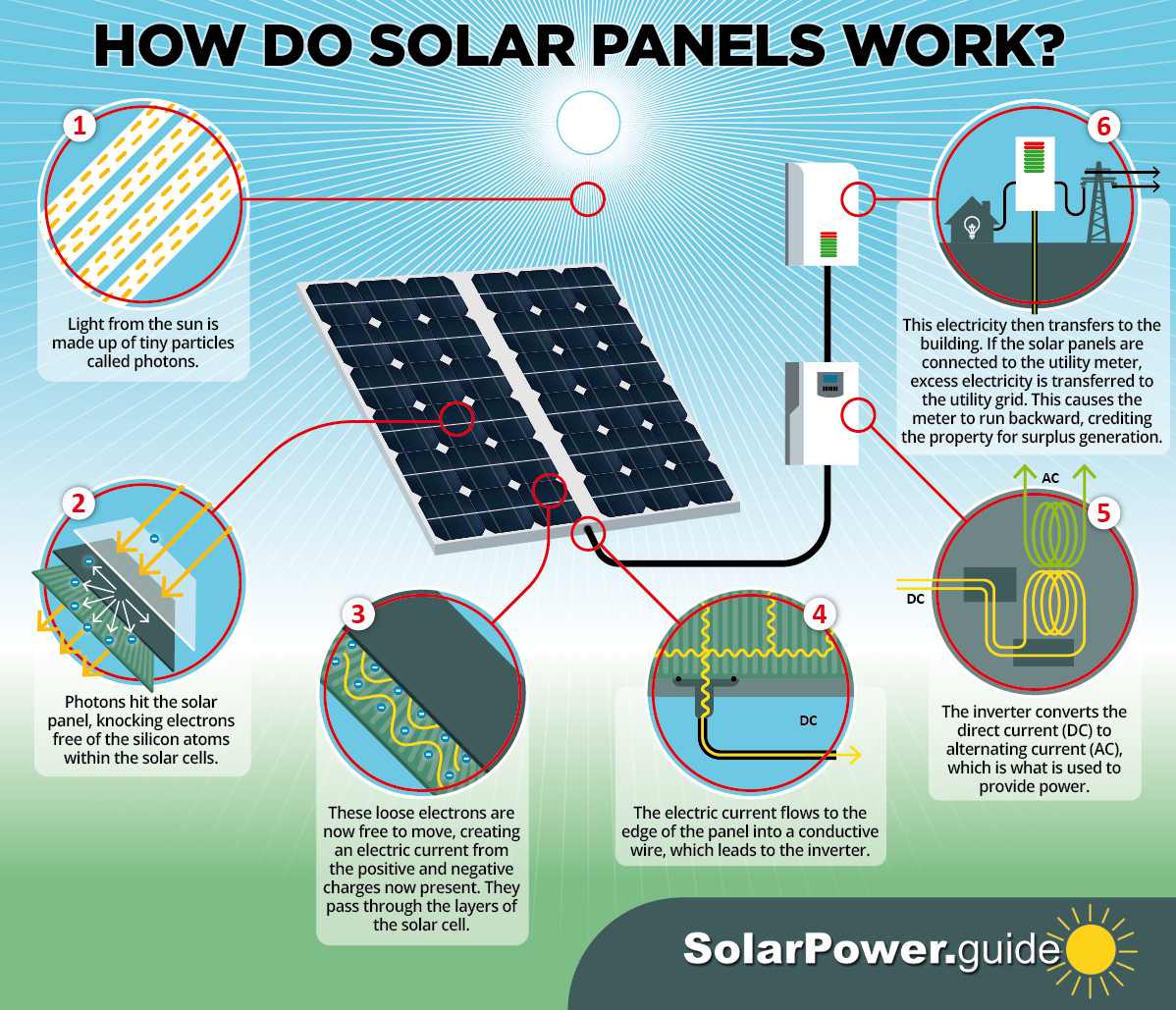
- Photons hit Silicon: Solar panels are made up of many individual solar cells, typically crafted from semiconductor materials like silicon. When sunlight (composed of tiny energy packets called photons) strikes these cells, it excites the electrons within the silicon.
- Electrons Get Moving: Silicon cells are specially designed with positive and negative layers, creating an electric field. When photons energize the electrons, this electric field acts like a one-way street, pushing the freed electrons from the negative layer to the positive layer.
- Creating Current: This movement of electrons is what we call an electric current. Wires connected to the solar cell capture these moving electrons, turning the light energy into direct current (DC) electricity.
Imagine it like a tiny, light-powered electron conveyor belt. The sun shines, electrons get a jolt of energy, and the panel guides them into a usable flow.
Anatomy of a Solar Panel: More Than Just Glass
A typical solar panel, or PV module, is a carefully engineered stack of components designed to maximize energy capture and withstand the elements:
- Tempered Glass: The topmost layer, robust and transparent, protects the cells from weather and debris while allowing maximum light penetration.
- Encapsulant (EVA): A thin layer of ethylene vinyl acetate (EVA) laminates and seals the solar cells, protecting them from moisture and vibration.
- Solar Cells: The silicon cells, arranged in a grid, are where the photovoltaic effect occurs.
- Backsheet: The bottom layer, usually made of a durable polymer, provides electrical insulation and protection from moisture and UV radiation.
- Aluminum Frame: Provides structural integrity, protecting the edges of the laminated components and simplifying mounting.
- Junction Box: Mounted on the back, it contains bypass diodes and connects the individual solar cells within the panel to the external wiring of the solar array.
From Sunlight to Socket: The Step-by-Step Journey of Electricity
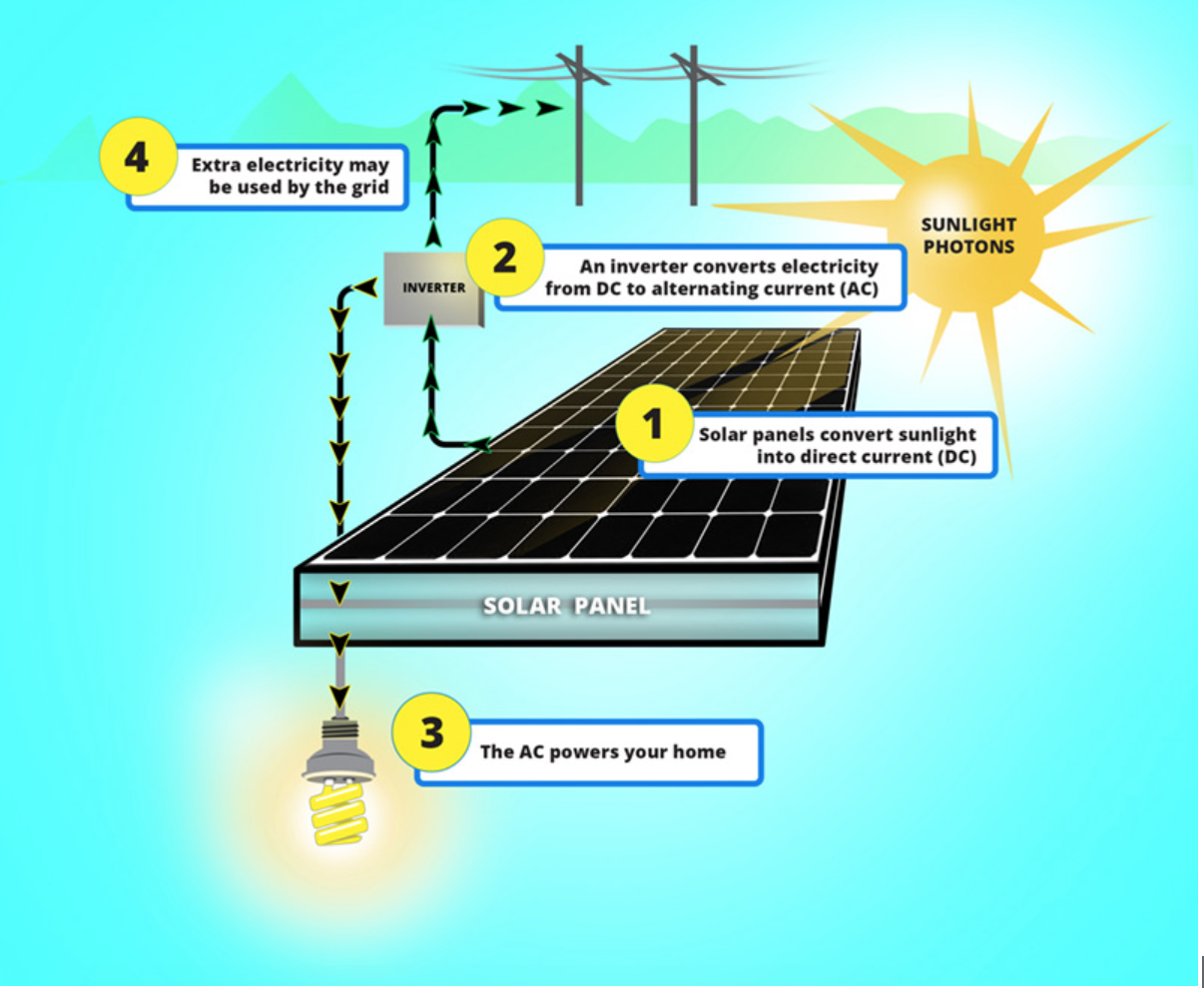
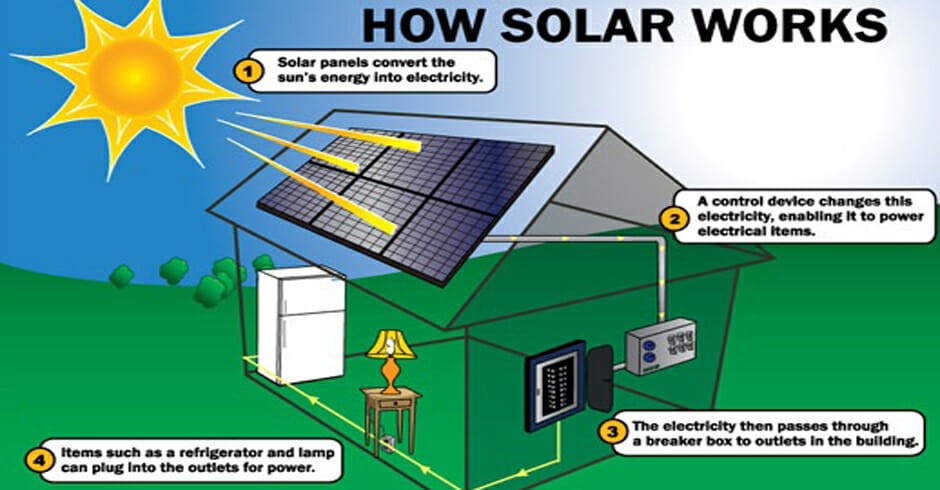
So, the panels generate DC electricity. But your home runs on alternating current (AC). Here’s how the entire system brings power to your outlets:
- Sunlight Hits Panels: Photons strike the solar cells, creating DC electricity through the photovoltaic effect.
- DC Power Flows to Inverter: This DC electricity travels via wiring from your panels to an inverter.
- Inverter Converts DC to AC: The inverter is the crucial component that takes the raw DC power and converts it into usable AC electricity, matching the voltage and frequency of your home’s electrical grid. There are different types: string inverters for a series of panels, microinverters for individual panels, and hybrid inverters for systems with battery storage.
- AC Power to Electrical Panel: The newly converted AC electricity flows to your home’s main electrical panel (breaker box), where it can power your appliances, lights, and devices.
- Excess Power to the Grid (or Battery): If your solar panels generate more electricity than your home is currently using, that excess power can be sent back to the utility grid. Through a process called net metering, your utility company credits you for this power, essentially running your meter backward. Alternatively, with a battery storage system, the excess power can be stored for later use.
- Grid Provides Backup: When your solar panels aren’t producing enough power (e.g., at night or on very cloudy days), your home seamlessly draws electricity from the utility grid, just as it always has.
Beyond Electricity: How Solar Thermal Systems Capture Heat
While PV panels generate electricity, solar thermal systems are masters of heat. They’re often less visible but equally effective in their specific applications.
Solar Water Heaters: Hot Showers, Sun-Powered
The most common application of solar thermal technology for homeowners is heating water. A solar water heater system typically consists of:
- Solar Collectors: These are usually flat-plate collectors or evacuated tube collectors installed on your roof. They absorb sunlight, converting it into heat.
- Heat Transfer Fluid: A fluid (often water or a glycol solution) circulates through the collectors, picking up this heat.
- Heat Exchanger: The heated fluid then passes through a heat exchanger, transferring its thermal energy to your home’s water supply.
- Storage Tank: The now-heated water is stored in an insulated tank, ready for use, much like a conventional water heater.
This system can significantly reduce the energy needed to heat water, which is often one of the largest energy consumers in a household.
Passive Solar Design: Harnessing Heat in Your Home’s Bones
Even older than solar panels is the concept of passive solar design. This isn’t about active equipment but rather intelligent architectural choices that maximize the sun’s natural heating and lighting potential. It involves:
- Orientation: Designing a home to face south (in the Northern Hemisphere) to maximize winter sun exposure.
- Windows: Strategically placed windows allow sunlight to enter and warm interior spaces.
- Thermal Mass: Using materials like concrete, stone, or water walls inside the home to absorb and store solar heat during the day, releasing it slowly at night.
- Shading: Overhangs or deciduous trees that block high summer sun but allow low winter sun to penetrate.
Passive solar design can drastically reduce heating and cooling loads, saving energy without any moving parts.
Solar PV vs. Solar Thermal: A Quick Comparison
To help you distinguish between the two primary uses of solar energy, here’s a comparative breakdown:
| Feature | Solar Photovoltaic (PV) | Solar Thermal |
|---|---|---|
| Primary Output | Electricity (AC current) | Heat (for water, space heating) |
| Conversion Method | Photovoltaic Effect (light to electricity) | Absorption of solar radiation to heat fluid |
| Main Components | Solar panels, inverter, mounting, wiring | Solar collectors, heat exchanger, storage tank, piping |
| Typical Uses | Powering homes, businesses, electric vehicles, grid supply | Domestic hot water, pool heating, space heating |
| Efficiency (Energy Output) | 15-22% (converting sunlight to electricity) | Up to 70-80% (converting sunlight to heat) |
| Relative Cost (Residential) | Higher upfront cost due to complex electronics | Generally lower upfront cost, simpler technology |
| Grid Interaction | Often connected to the electricity grid (net metering) | Typically standalone, no direct grid electrical interaction |
The Components of a Complete Solar PV System (What You Need to Know)
When you’re considering a residential solar PV system, it’s helpful to understand all the pieces of the puzzle that work together to power your home.
Solar Panels (PV Modules): The Power Generators
These are the stars of the show, sitting on your roof and performing the initial conversion of sunlight into DC electricity. Modern panels are incredibly durable, designed to last 25-30 years or more, and come with impressive performance warranties.
Inverters: The Brains of the Operation (DC to AC)
As we discussed, the inverter is critical for converting the DC power from your panels into usable AC power for your home. There are several types:
- String Inverters: A single inverter for the entire array or large sections. Cost-effective but if one panel is shaded, it can affect the whole “string.”
- Microinverters: Installed on each individual panel, converting DC to AC at the panel level. This optimizes performance even if some panels are shaded and allows for individual panel monitoring.
- Hybrid Inverters: Designed to work with both solar panels and battery storage, managing energy flow between all components and the grid.
Mounting System: Holding It All Together
This is the hardware that securely attaches your solar panels to your roof. It’s engineered to withstand wind, snow, and other environmental factors. A well-designed mounting system ensures your panels are angled optimally for maximum sun exposure and remain stable for decades.
Electrical Wiring & Components: The Lifelines
Robust, weather-resistant wiring connects the panels to the inverter, the inverter to your electrical panel, and your electrical panel to the utility grid. This includes conduits, junction boxes, and safety disconnects, all installed to meet strict electrical codes and ensure safe operation.
Monitoring System: Keeping an Eye on Your Energy
Most modern solar systems come with a monitoring system, often accessible via a smartphone app or web portal. This allows you to track your system’s real-time electricity production, daily and historical energy generation, and even identify potential issues. It’s a fantastic tool for understanding your energy usage and production.
Battery Storage (Optional, But Increasingly Popular): Storing Sunshine
While not mandatory, integrating a solar battery storage system allows you to store excess electricity generated by your panels instead of sending it all back to the grid. This power can then be used at night, during cloudy periods, or as backup during a power outage, enhancing your energy independence.
The Grid Connection: Your Utility’s Role
For most residential systems, a crucial component is the connection to the existing utility grid. This enables net metering, where you get credit for excess power, and ensures you always have a reliable power supply even when your panels aren’t producing.
Why Solar Matters: Benefits Beyond the Bill
The appeal of solar energy goes far beyond simply understanding how it works. It’s about the tangible benefits it brings to your life and the planet.
Environmental Impact: A Greener Footprint
This is perhaps the most widely recognized benefit. Solar energy produces zero greenhouse gas emissions during operation. By choosing solar, you directly reduce your reliance on fossil fuels, which are major contributors to climate change and air pollution. Over its lifespan, a typical residential solar system can offset thousands of pounds of carbon dioxide, equivalent to planting hundreds of trees.
Energy Independence & Cost Savings: Taking Control
Installing solar panels allows you to generate your own electricity, significantly reducing or even eliminating your monthly electricity bill. With net metering, you can even earn credits from your utility. Furthermore, solar offers a hedge against rising electricity rates, providing predictable energy costs for decades. It’s about taking control of your energy future.
Consider these compelling facts:
| Benefit Area | Impact on Homeowner (USA) | Key Statistic/Fact |
|---|---|---|
| Electricity Bill Reduction | Significant monthly savings, potential for $0 bill. | Average US homeowner saves ~$100-$200 per month. |
| Carbon Emission Reduction | Reduces individual carbon footprint dramatically. | Typical 6 kW system offsets 6,000-8,000 lbs of CO2 annually. |
| Federal Tax Credit | Direct reduction on federal income tax owed. | 30% Investment Tax Credit (ITC) for systems installed through 2032. |
| Home Value Increase | Homes with solar sell faster and for more money. | Adds an average of 4.1% to home value (Zillow analysis). |
Increased Home Value: An Investment That Pays Off
Numerous studies, including those by Zillow and Lawrence Berkeley National Lab, show that homes with solar panels sell for a premium and often sell faster than comparable homes without solar. It’s an upgrade that enhances your property’s appeal and value, much like a renovated kitchen or bathroom.
Reliability & Durability: Built to Last
Solar panels are built to withstand harsh weather conditions, including hail, high winds, and heavy snow. With minimal moving parts, they require very little maintenance. The robust design and long warranties mean you can expect your solar system to reliably produce power for decades.
Common Questions & Solar Myths, Busted
It’s natural to have questions about a technology that seems almost too good to be true. Let’s tackle some common misconceptions.
“Does solar work on cloudy days?”
Absolutely! While direct, intense sunlight is ideal, solar panels still generate electricity on cloudy or overcast days. They convert diffuse and indirect sunlight into power, though at a reduced rate. Think of it like a cloudy day where you can still see clearly – there’s still plenty of light, just not direct rays.
“What about night time or power outages?”
At night, solar panels produce no electricity. This is where the grid connection or battery storage comes in. If you’re grid-tied, you simply draw power from the utility at night. During a power outage, if you don’t have a battery backup system, your solar system will automatically shut down (for safety reasons, to prevent back-feeding the grid while utility workers are trying to fix it). However, with a battery backup, your home can switch to stored solar power and remain operational.
“Is solar too expensive for me?”
The upfront cost of solar has dropped dramatically over the last decade. Furthermore, generous incentives like the 30% federal solar tax credit (ITC), along with state and local rebates, significantly reduce the net cost. Various financing options, including solar loans and leases, make solar accessible with little to no upfront payment, allowing you to start saving from day one. For many, the long-term savings outweigh the initial investment, making solar a financially smart decision.
The Future is Bright: Innovations in Solar Technology
Solar technology isn’t stagnant; it’s constantly evolving, promising even greater efficiency and accessibility in the years to come.
Efficiency Gains: More Power from Less Space
Panel efficiency continues to climb. Manufacturers are developing new materials and designs, such as perovskite solar cells and bifacial panels (which capture light from both sides), to generate more electricity from a smaller footprint. This means more power for homes with limited roof space.
Storage Solutions: The Missing Piece
Battery technology is rapidly improving, becoming more affordable and efficient. As battery storage becomes more widespread, homeowners will gain even greater energy independence, reduce reliance on the grid, and ensure power during outages.
Integrated Solar: Building-Applied PV (BAPV) and Beyond
Imagine roofs made entirely of solar shingles that look just like traditional roofing materials, or windows that generate electricity. These technologies, known as Building-Applied Photovoltaics (BAPV) or Building-Integrated Photovoltaics (BIPV), are moving from niche to mainstream, making solar an invisible yet powerful part of our structures.
Conclusion: Your Path to a Sun-Powered Future
From the microscopic dance of electrons in a silicon cell to the expansive arrays powering entire communities, solar energy is a testament to human ingenuity in harnessing nature’s most abundant resource. It’s not just a clean energy source; it’s a pathway to energy independence, significant cost savings, and a more resilient future.
Now that you understand what solar energy is and how it works, you’re better equipped to explore whether a sun-powered home is right for you. The sun is shining, ready to power your world. Are you ready to embrace it?
Frequently Asked Questions
What is the main difference between solar PV and solar thermal?
Solar Photovoltaic (PV) systems convert sunlight directly into electricity using solar panels, while solar thermal systems capture the sun’s heat to warm water or air for purposes like domestic hot water or space heating.
Can solar panels generate electricity on cloudy days or at night?
Solar panels can still generate electricity on cloudy days by converting diffuse sunlight, though at a reduced output. At night, panels produce no electricity. Homes typically draw power from the utility grid or a battery storage system during these times.
How efficient are modern solar panels?
Modern residential solar panels typically have efficiency ratings ranging from 15% to 22%, meaning they convert that percentage of the sunlight they receive into usable electricity. Efficiency is constantly improving with new technologies.
What happens to excess electricity generated by my solar panels?
In most grid-tied residential systems, excess electricity is sent back to the utility grid. Through a process called net metering, you receive credits on your electricity bill for the power you contribute, which can then offset power you draw from the grid at other times. Alternatively, you can store excess power in a home battery system.
How long do solar panel systems typically last?
Residential solar panel systems are incredibly durable and are designed to last 25 to 30 years or even longer. Most manufacturers offer performance warranties guaranteeing a certain percentage of the initial power output after 20-25 years.
Is installing solar panels expensive?
While there’s an upfront cost, solar panel prices have fallen significantly. With incentives like the 30% federal solar tax credit, state/local rebates, and various financing options (loans, leases), solar is often more affordable than people realize, offering long-term savings that can outweigh the initial investment.
Are there different types of solar panels?
Yes, the most common types are monocrystalline and polycrystalline. Monocrystalline panels are generally more efficient and have a sleeker appearance, while polycrystalline panels are slightly less efficient but often more cost-effective. Emerging technologies like thin-film and perovskite panels are also gaining traction.


Post Comment