Cdte Solar Cell Advantages And Disadvantages
Cadmium Telluride (CdTe) Solar Cells: Unpacking the Pros and Cons for Your Energy Future
Thinking about solar? You’re probably familiar with traditional silicon panels. But what if there was another player on the field – one that offers unique advantages, especially when it comes to cost and performance in less-than-ideal conditions? Enter Cadmium Telluride (CdTe) solar cells, a leading thin-film technology that’s quietly powering a significant portion of the world’s solar energy.
Table of Contents
- Cadmium Telluride (CdTe) Solar Cells: Unpacking the Pros and Cons for Your Energy Future
- The Quick Take: CdTe Solar Cells at a Glance
- Snapshot of Advantages
- Snapshot of Disadvantages
- What Exactly Are CdTe Solar Cells? (The Basics You Need to Know)
- How They Differ from Traditional Silicon Panels
- The Undeniable Advantages of Cadmium Telluride Solar Cells
- Cost-Effectiveness: A Game Changer in Manufacturing and Installation
- Superior Performance in Challenging Conditions
- Low-Light Efficiency: Capturing More Rays
- High-Temperature Stability: Less Degradation, More Power
- Smaller Carbon Footprint (During Production)
- High Absorption Coefficient: Doing More with Less Material
- Flexible and Versatile Applications
- The Critical Disadvantages and Challenges of CdTe Solar Cells
- Lower Efficiency (Compared to Premium C-Si)
- Cadmium Toxicity: A Real Environmental Concern (and How It’s Managed)
- Material Scarcity (Tellurium Supply)
- End-of-Life Recycling: A Developing Solution
- Perceived Market Maturity and Public Perception
- CdTe vs. Crystalline Silicon (C-Si): A Direct Comparison for Your Investment
- Key Differences at a Glance
- When to Choose CdTe Over C-Si
- Who is Leading the Charge? Major Players in CdTe Technology
- The Future of CdTe: Innovations and Outlook
- Efficiency Breakthroughs
- Enhanced Sustainability and Recycling
- Expanding Applications
- Is CdTe the Right Choice for Your Solar Project?
CdTe solar cells present a compelling alternative, particularly for large-scale utility projects, but their characteristics also have implications for broader applications. Like any technology, they come with a distinct set of advantages and disadvantages. Understanding these can be the difference between a good investment and a great one for your energy needs. Let’s dive in and dissect the real-world implications of CdTe technology.
The Quick Take: CdTe Solar Cells at a Glance
Before we explore the nuances, here’s a rapid overview of what makes CdTe unique.
Snapshot of Advantages
- Cost-Effective Manufacturing: Generally cheaper to produce than crystalline silicon.
- Excellent High-Temperature Performance: Less power degradation as temperatures rise.
- Superior Low-Light Efficiency: Performs better in cloudy or shaded conditions.
- High Absorption Coefficient: Requires less material to absorb sunlight efficiently.
- Smaller Carbon Footprint: Often boasts lower embodied energy in manufacturing.
Snapshot of Disadvantages
- Lower Peak Efficiency: Typically less efficient than premium silicon panels in laboratory settings.
- Cadmium Toxicity: Contains a toxic element, requiring careful handling and recycling.
- Material Scarcity: Tellurium is a relatively rare element.
- Developing Recycling Infrastructure: End-of-life recycling is still evolving.
- Perceived Market Maturity: Less understood by the general public compared to silicon.
What Exactly Are CdTe Solar Cells? (The Basics You Need to Know)
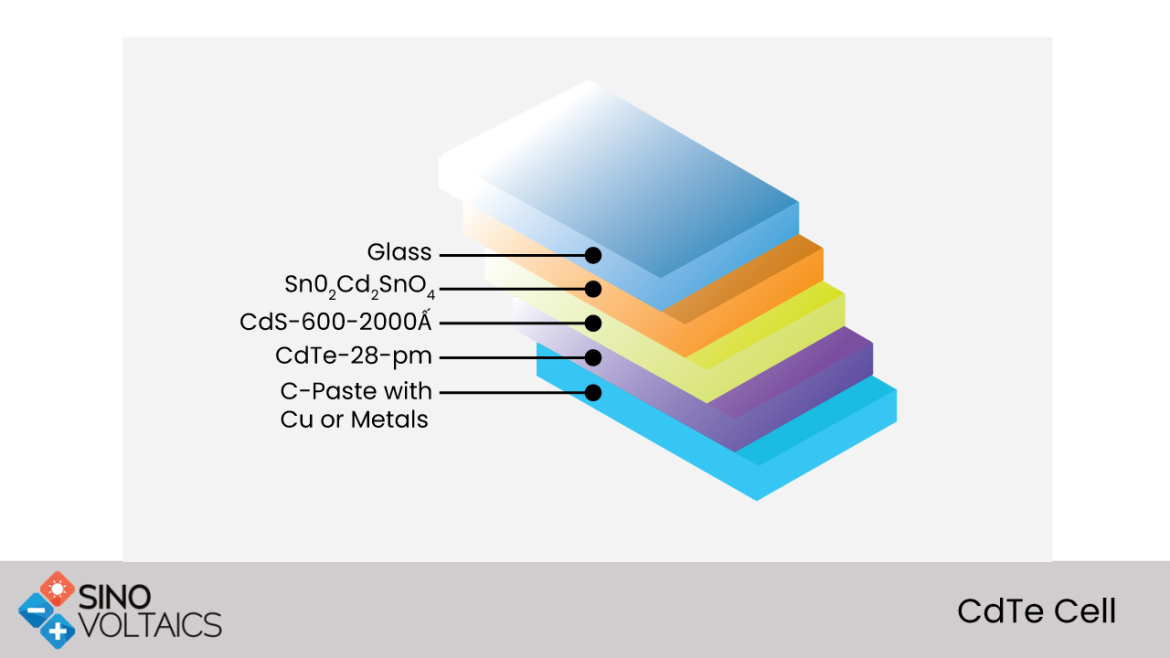
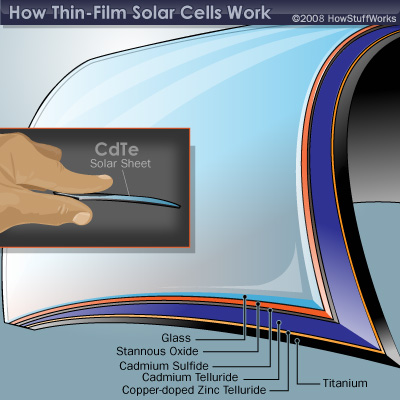
CdTe solar cells belong to the family of thin-film photovoltaic (PV) technologies. Unlike conventional silicon panels that use thick wafers of crystalline silicon, CdTe cells are created by depositing ultra-thin layers of cadmium telluride onto a substrate, such as glass. These layers are incredibly thin – often just a few micrometers thick – which is a major factor in their manufacturing process and cost.
The magic happens because cadmium telluride is a direct band gap semiconductor. This means it can absorb sunlight very efficiently with minimal material, converting photons directly into electrons. This property fundamentally differentiates it from indirect band gap semiconductors like crystalline silicon, which require thicker layers to achieve similar absorption.
How They Differ from Traditional Silicon Panels
Think of it like this: if crystalline silicon panels are the sturdy, well-established workhorses, CdTe panels are the sleek, specialized sprinters. Silicon panels dominate the rooftop market due to their high efficiency per square foot, while CdTe often finds its niche in large-scale solar farms where land availability is less of a constraint and cost per watt is paramount.
The manufacturing process is also distinct. Silicon panels involve energy-intensive ingot growth and wafer slicing. CdTe panels are produced through a more streamlined, lower-temperature deposition process, contributing significantly to their economic advantages.
The Undeniable Advantages of Cadmium Telluride Solar Cells
CdTe isn’t just an alternative; it brings some powerful benefits to the table, making it the preferred choice for specific solar applications.
Cost-Effectiveness: A Game Changer in Manufacturing and Installation
This is often the first advantage cited for CdTe, and for good reason. The manufacturing process for CdTe thin-film modules is typically less energy-intensive and simpler than that for crystalline silicon. Because the active material layers are so thin, less raw material is required, and the fabrication process involves fewer high-temperature steps.
This translates to lower production costs per watt. For utility-scale projects, where thousands or millions of panels are deployed, these cost savings are substantial. Reduced manufacturing costs often lead to more competitive pricing, making solar energy more accessible and improving the overall return on investment for large installations.
Superior Performance in Challenging Conditions
While silicon might boast higher peak efficiency in pristine lab conditions, CdTe often shines in the real world, especially under less-than-ideal circumstances.
Low-Light Efficiency: Capturing More Rays
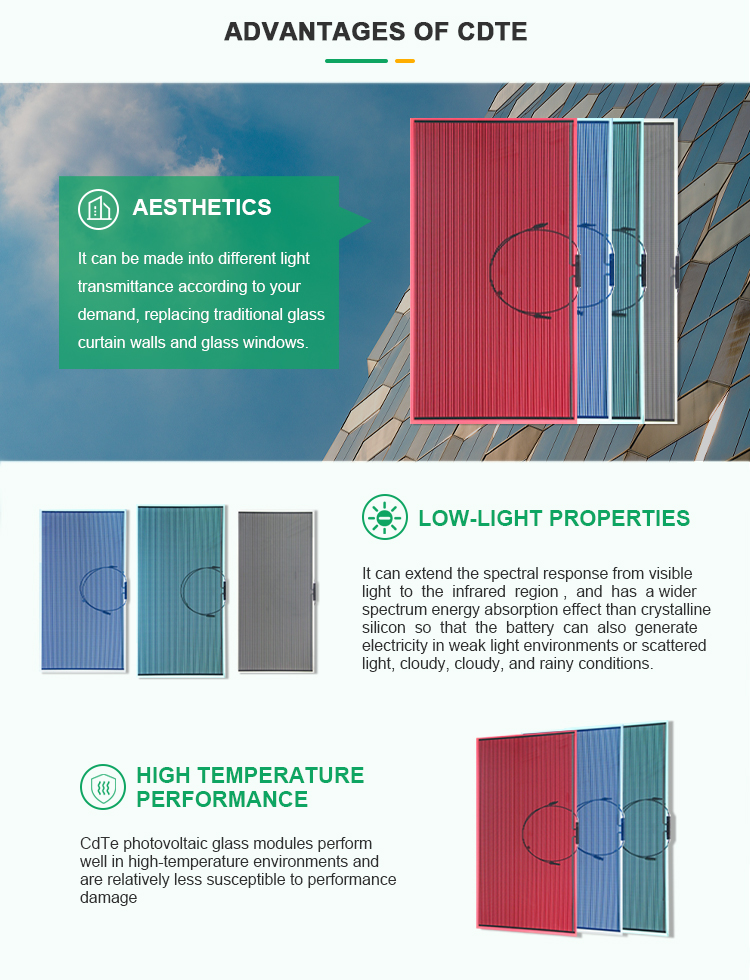
CdTe panels have a notable advantage in their ability to generate power during periods of low irradiance – think cloudy days, early mornings, or late afternoons. Their spectral response allows them to absorb a broader range of the solar spectrum more effectively than some silicon panels, translating into more consistent energy production throughout the day and year, even when the sun isn’t at its brightest.
High-Temperature Stability: Less Degradation, More Power
One of the most significant real-world advantages of CdTe is its better performance in hot climates. All solar panels experience a slight decrease in efficiency as their temperature rises. However, CdTe panels degrade less dramatically than crystalline silicon panels under high temperatures. This means that in scorching environments like deserts, CdTe installations maintain a higher percentage of their rated power output, leading to greater energy yield over time.
This temperature coefficient difference can significantly impact the overall energy generated by a solar farm over its 25-30 year lifespan, giving CdTe a crucial edge in hot regions.
Smaller Carbon Footprint (During Production)
The energy required to manufacture solar panels is known as their embodied energy. Due to the less energy-intensive deposition process and thinner material requirements, CdTe panels generally have a lower embodied energy than crystalline silicon panels. This means they pay back the energy used in their creation much faster, resulting in a quicker energy payback time and a smaller overall carbon footprint associated with their production.
High Absorption Coefficient: Doing More with Less Material
As a direct band gap semiconductor, CdTe is incredibly effective at absorbing sunlight. A layer of CdTe just 1-2 micrometers thick can absorb over 90% of incident sunlight. This means less material is needed to create an effective solar cell, further contributing to lower manufacturing costs and resource efficiency. This is a critical technical advantage over silicon, which requires much thicker layers to achieve similar absorption rates.
Flexible and Versatile Applications
While often used in rigid glass modules, the thin-film nature of CdTe allows for potential flexibility. While not as common for residential rooftops, this opens doors for integrating solar cells into various surfaces, including curved architectural elements or lightweight, flexible arrays for specialized applications where traditional rigid panels aren’t suitable. This versatility is a developing area for thin-film technologies as a whole.
The Critical Disadvantages and Challenges of CdTe Solar Cells
No technology is without its drawbacks, and CdTe is no exception. Understanding these limitations is crucial for a balanced perspective.
Lower Efficiency (Compared to Premium C-Si)
In terms of peak laboratory efficiency, CdTe generally lags behind the best crystalline silicon panels. While CdTe has made remarkable strides, with commercial modules achieving efficiencies around 18-19% and research cells exceeding 22%, premium monocrystalline silicon panels can reach over 23% commercially, with lab records over 26%. This means that per square foot, a CdTe panel might produce less power than a top-tier silicon panel. This is why CdTe is often favored where land is abundant and cost-per-watt is prioritized over maximizing power density per square meter.
However, it’s important to remember that real-world performance, including temperature and low-light response, can often narrow this gap in overall energy yield.
Cadmium Toxicity: A Real Environmental Concern (and How It’s Managed)
This is arguably the most significant concern associated with CdTe technology. Cadmium is a heavy metal and a known carcinogen. This raises valid questions about environmental and health safety, particularly regarding manufacturing processes, potential module damage, and end-of-life disposal.
However, it’s crucial to put this into context:
- Encapsulation: The cadmium telluride material in solar panels is sealed within robust glass layers, preventing environmental release under normal operating conditions.
- Manufacturing Safety: Leading manufacturers like First Solar employ stringent safety protocols and closed-loop systems to minimize worker exposure and environmental discharge during production.
- Recycling Programs: To address end-of-life concerns, manufacturers have developed comprehensive recycling programs. These programs aim to recover cadmium and tellurium for reuse, preventing them from entering landfills.
While the presence of cadmium remains a valid concern, the industry has invested heavily in mitigation strategies to ensure the safe and responsible use of this technology.
Material Scarcity (Tellurium Supply)
Tellurium (Te), a key component of CdTe, is a relatively rare element. It’s primarily a byproduct of copper and lead refining, meaning its supply is tied to the demand for these other metals. This raises concerns about the long-term scalability of CdTe technology if demand for solar panels skyrockets without corresponding increases in copper/lead mining or dedicated tellurium production methods.
Researchers are exploring ways to reduce the amount of tellurium needed in cells or to find alternative absorber materials, but current reliance on byproduct tellurium is a supply chain vulnerability.
End-of-Life Recycling: A Developing Solution
While recycling programs exist, the infrastructure for effectively recycling all thin-film panels at scale is still developing globally. The process for recycling CdTe panels differs from silicon, requiring specialized facilities to safely separate and recover the materials, particularly cadmium. As millions of panels reach the end of their lifespan in the coming decades, ensuring robust, widespread, and cost-effective recycling solutions will be paramount for CdTe’s long-term sustainability.
Perceived Market Maturity and Public Perception
Crystalline silicon has been the dominant solar technology for decades, making it more familiar to installers, financiers, and the general public. CdTe, despite its significant market share (especially in the U.S. utility-scale market), is still sometimes seen as a niche or less mature technology. This can affect consumer confidence, financing options, and the availability of specialized installers outside of utility-scale projects.
CdTe vs. Crystalline Silicon (C-Si): A Direct Comparison for Your Investment
When making a solar investment, you’re essentially weighing the trade-offs between different technologies. Here’s how CdTe stacks up against its more common cousin, crystalline silicon.
Key Differences at a Glance
| Feature | Cadmium Telluride (CdTe) | Crystalline Silicon (C-Si) |
|---|---|---|
| Peak Efficiency (Commercial) | ~18-19% (modules) | ~19-23% (modules, often higher for mono-Si) |
| Temperature Coefficient | Better (lower degradation in heat) | Worse (higher degradation in heat) |
| Low-Light Performance | Generally superior | Good, but can vary |
| Cost Per Watt | Often lower, especially for utility-scale | Higher, but offset by high power density |
| Material Toxicity | Contains Cadmium (toxic, requires careful management) | Non-toxic (Silicon is abundant and benign) |
| Material Abundance | Tellurium is relatively scarce | Silicon is highly abundant |
| Space Requirement | More land area needed for same power output | Less land area needed (higher power density) |
| Primary Applications | Utility-scale solar farms | Residential, commercial, utility-scale |
When to Choose CdTe Over C-Si
Given these differences, CdTe becomes a compelling choice when:
- Land is abundant: If you have ample space and aren’t constrained by square footage, CdTe’s lower cost per watt can lead to a more economical project.
- High temperatures are common: In regions with consistently high ambient temperatures, CdTe’s superior temperature coefficient translates to higher overall energy yield.
- Budget is a primary concern for large installations: For massive utility-scale projects, the capital expenditure savings with CdTe can be substantial.
- Environmental impact of manufacturing is a priority: CdTe’s lower embodied energy offers a quicker carbon payback.
Who is Leading the Charge? Major Players in CdTe Technology
When discussing CdTe solar, one name stands out: First Solar. This U.S.-based company has been the undisputed leader in CdTe thin-film technology for decades. They have continuously pushed the boundaries of CdTe efficiency, manufacturing scale, and recycling initiatives. First Solar’s sustained investment in R&D and manufacturing capacity has been instrumental in making CdTe a viable and competitive force in the global solar market, particularly for large utility-scale projects.
While other companies have explored or briefly entered the CdTe space, First Solar remains the dominant player, controlling a significant portion of the world’s CdTe production.
The Future of CdTe: Innovations and Outlook
The story of CdTe is far from over. Continuous innovation is addressing many of its current disadvantages and enhancing its strengths.
Efficiency Breakthroughs
Research and development continue to push the boundaries of CdTe efficiency. New cell architectures, improved materials, and advanced manufacturing techniques are steadily closing the gap with silicon. It’s not unrealistic to expect commercial CdTe modules to achieve efficiencies well into the 20% range in the coming years, further bolstering their competitiveness.
Enhanced Sustainability and Recycling
The industry is committed to strengthening the recycling infrastructure for CdTe panels. Efforts include developing more efficient and cost-effective recycling processes, expanding collection points, and exploring new material recovery techniques. This focus on a circular economy model will mitigate concerns about cadmium toxicity and material scarcity.
Expanding Applications
While utility-scale remains the primary focus, advancements in flexibility, transparency, and integration could open new avenues for CdTe. Imagine CdTe integrated into building facades, windows, or lightweight portable power solutions. As manufacturing refines and costs further decrease, the versatility of thin-film technology could unlock surprising new applications.
Is CdTe the Right Choice for Your Solar Project?
Choosing between CdTe and crystalline silicon isn’t about one being inherently “better” than the other; it’s about selecting the right tool for the job. CdTe solar cells offer compelling advantages in specific scenarios, particularly where low cost per watt, performance in hot and low-light conditions, and a lower manufacturing carbon footprint are top priorities.
For large-scale developers and investors, CdTe represents a mature, cost-effective, and increasingly efficient option that delivers reliable energy generation. For homeowners, while less common, understanding CdTe provides valuable context about the broader solar landscape and the diverse technologies powering our clean energy future. The continuous evolution of CdTe technology promises an even more impactful role in the global transition to renewable energy.
”
Frequently Asked Questions
What is the main advantage of CdTe solar cells over silicon?
The main advantages of CdTe solar cells are their lower manufacturing cost, superior performance in hot climates (less efficiency degradation with rising temperatures), and better performance in low-light conditions (e.g., cloudy days). They also generally have a lower embodied energy, meaning a smaller carbon footprint during production.
Are CdTe solar cells less efficient than silicon panels?
In terms of peak laboratory efficiency, CdTe cells typically have lower conversion rates than the highest-performing crystalline silicon panels. However, in real-world conditions, particularly in hot environments or low-light scenarios, CdTe’s temperature coefficient and spectral response can lead to a comparable or even superior overall energy yield over time.
Is cadmium in CdTe solar panels dangerous?
Cadmium is a toxic heavy metal. However, in CdTe solar panels, it is encapsulated between two layers of glass, preventing its release during normal operation. Leading manufacturers have robust safety protocols during manufacturing and comprehensive recycling programs to safely recover materials at the end of the panel’s lifespan, minimizing environmental risk.
What happens to CdTe panels at the end of their life?
Responsible manufacturers have established recycling programs for CdTe panels. These programs involve deconstructing the modules and recovering valuable materials, including cadmium and tellurium, for reuse. This prevents toxic substances from entering landfills and reduces the need for new raw material extraction.
Are CdTe solar panels suitable for residential use?
While technically possible, CdTe panels are less common for residential rooftops. This is primarily because they generally require more surface area for a given power output compared to high-efficiency silicon panels, and space is often limited on residential roofs. Their cost-effectiveness truly shines in large, utility-scale solar farm applications where land is abundant.
Who is the leading manufacturer of CdTe solar cells?
First Solar, a U.S.-based company, is the dominant and most well-known manufacturer of Cadmium Telluride (CdTe) thin-film solar modules. They have been at the forefront of CdTe technology development, efficiency improvements, and sustainable manufacturing practices for decades.


Post Comment