Is It Worth It To Clean Solar Panels
Is It Worth It To Clean Solar Panels? The Definitive Homeowner’s Guide
You’ve invested in solar panels to save money and embrace clean energy. That’s fantastic! But then you look up at your roof, see a fine layer of dust, maybe a few bird droppings, and a question pops into your head: “Should I clean these things? And is it even worth the effort and expense?”
Table of Contents
- Is It Worth It To Clean Solar Panels? The Definitive Homeowner’s Guide
- The Unvarnished Truth: How Dirt Really Impacts Solar Panel Performance
- Minimal Loss for Most: What the Research Says
- When Dirt Becomes a Major Problem: Specific Scenarios
- The Cost-Benefit Equation: Is Cleaning Your Panels Really Worth the Money?
- Calculating Potential Energy Gains
- The Price Tag of Cleanliness: DIY vs. Professional Cleaning
- DIY Cleaning
- Professional Cleaning
- The Breakeven Point: When Does Cleaning Pay Off?
- How to Make the Smart Decision: A Homeowner’s Checklist
- Step 1: Assess Your Environment
- Step 2: Monitor Your System’s Performance
- Step 3: Evaluate Panel Accessibility & Safety
- Step 4: Check Your Warranty Terms
- Step 5: Consider Your Aesthetics vs. ROI
- Best Practices for Cleaning Solar Panels (If You Decide to Do It)
- The DIY Approach: Safe and Effective Methods
- When to Call a Pro: The Advantages of Professional Service
- Natural Cleaning: Let Mother Nature Do the Work
- Beyond Cleaning: Maximizing Your Solar Investment
- Regular System Monitoring
- Tree Trimming & Shading Management
- Annual Inspections
- The Verdict: A Balanced Perspective on Solar Panel Cleaning
It’s a dilemma faced by almost every solar homeowner, and the short answer is: it depends. For many, especially those in naturally rainy climates, regular professional cleaning isn’t a cost-effective necessity. But for others, particularly in dusty, dry regions, or with specific panel types and heavy soiling, cleaning can significantly boost your system’s efficiency and ultimately, your return on investment.
So, let’s cut through the noise and equip you with the knowledge to make an informed decision for your home. We’ll break down exactly when cleaning your solar panels is a smart move, and when your money (and effort) is better spent elsewhere.
The Unvarnished Truth: How Dirt Really Impacts Solar Panel Performance
Before you even think about grabbing a hose, it’s crucial to understand what kind of performance loss we’re actually talking about. The impact of dirt on your solar panels isn’t always as dramatic as you might assume, but under certain conditions, it can become significant.
Minimal Loss for Most: What the Research Says
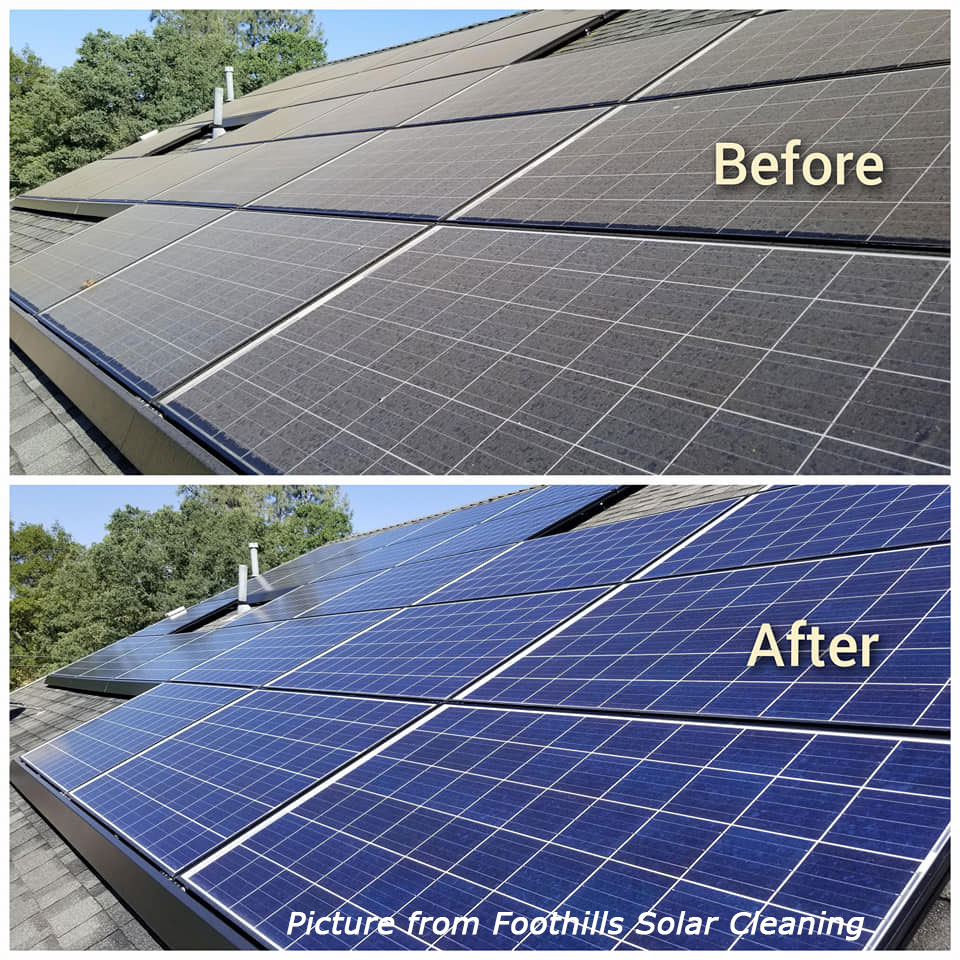
One of the most frequently cited studies comes from engineers at UC San Diego. Their research found that solar panels that hadn’t been cleaned or rained on for a staggering 145 days during a summer drought in California lost only 7.4 percent of their efficiency. That’s less than one percent per month in one of the driest, dustiest scenarios.
For the average homeowner in a typical suburban environment with occasional rain, the performance degradation from dust accumulation is often in the range of 2-5% annually. This is a number that many homeowners might be willing to live with, especially when weighed against the cost and effort of cleaning.
When Dirt Becomes a Major Problem: Specific Scenarios
While the average loss might be minimal, there are specific situations where accumulated grime can seriously eat into your energy production. These are the scenarios where cleaning moves from optional to potentially necessary:
- Heavy Soiling: This is the big one. Think excessive bird droppings, thick layers of pollen during allergy season, heavy industrial pollution (soot, exhaust), fine desert dust, coastal salt spray, or agricultural dust from nearby farms. These aren’t just a thin film; they’re opaque obstructions.
- Panel Tilt & Pitch: Panels installed at a very low angle or completely flat are much more susceptible to accumulating dirt, as gravity and rain struggle to clear debris effectively. Steeper pitches allow rain to wash away grime more efficiently.
- Lack of Rain: If you live in an arid climate with long dry spells (like many parts of the Southwest US), or if your panels are under an overhang that prevents natural rinsing, dirt will build up faster and stay longer.
- Shading Amplified by Dirt: Even small patches of dirt can act like partial shading, reducing the output of entire strings of panels, especially if your system uses string inverters rather than microinverters.
- Hot Spots: Excessive, localized dirt can prevent a small section of a solar cell from dissipating heat. This can create a “hot spot,” potentially causing long-term damage to the panel and reducing its lifespan.
To give you a clearer picture, here’s an estimate of typical performance loss based on different soiling conditions and locations:
| Soiling Type | Location/Climate | Average Performance Loss (%) |
|---|---|---|
| Light Dust | Suburban, moderate rain | 1-3% |
| Moderate Dust/Pollen | Rural, average rain, seasonal pollen | 3-7% |
| Heavy Dust/Arid Conditions | Desert, agricultural, low rainfall | 7-15% |
| Bird Droppings/Localized Grime | Anywhere, specific obstructions | Up to 20% (localized) |
| Industrial Fallout/Soot | Near factories, busy highways | 5-12% |
The Cost-Benefit Equation: Is Cleaning Your Panels Really Worth the Money?
This is where the rubber meets the road. Even if your panels are losing some efficiency, the real question is whether the money you spend to clean them will be recouped in increased energy production. Let’s crunch some numbers.
Calculating Potential Energy Gains
To figure out if cleaning is worth it, you first need to estimate your potential energy savings. Here’s how:
- Determine Your Annual Production: Look at your solar monitoring app or electricity bills for your system’s annual kWh production. Let’s say it’s 10,000 kWh per year.
- Estimate Performance Loss: Based on your environment and the table above, estimate your percentage loss due to dirt. Let’s use a conservative 5% loss for this example.
- Calculate Lost kWh: 10,000 kWh * 0.05 = 500 kWh lost per year.
- Monetize the Loss: Find your average electricity rate (cents per kWh). If your rate is $0.15 per kWh, then 500 kWh * $0.15/kWh = $75 in lost savings per year.
So, in this scenario, cleaning your panels could potentially save you $75 per year. Now, let’s look at the cost of cleaning.
The Price Tag of Cleanliness: DIY vs. Professional Cleaning
There are two main routes to clean your panels, each with its own cost and implications:
DIY Cleaning
If you’re comfortable and safe working on your roof, DIY cleaning can save you labor costs. However, there are still expenses and significant risks:
- Equipment Costs: A proper solar panel cleaning kit (telescoping pole, soft brush, squeegee, pure water system attachment) can run anywhere from $100 to $400 or more for a one-time purchase.
- Time Investment: It could take several hours, depending on system size and accessibility.
- Safety Risks: Falls from roofs or ladders are incredibly dangerous. Damage to panels from improper tools or techniques (e.g., pressure washing, harsh chemicals) can be costly and potentially void warranties.
Professional Cleaning
Hiring a professional takes the burden (and risk) off your shoulders. Prices vary widely based on:
- System Size: More panels = more cost.
- Roof Accessibility: Steep roofs, multi-story homes, or complex layouts cost more.
- Location: Labor costs differ regionally.
- Frequency: One-time vs. recurring service packages.
Generally, professional solar panel cleaning in the USA can range from $150 to $500 per visit for an average residential system. Some companies offer discounts for annual or biannual service.
Here’s a comparison to help you weigh your options:
| Factor | DIY Cleaning | Professional Service |
|---|---|---|
| Cost (Initial/Per Clean) | $100-$400 (equipment), minimal per clean | $150-$500 per visit |
| Safety | High risk of falls, injury | Low risk (trained, insured professionals) |
| Time Investment | Several hours per cleaning | None (they do the work) |
| Effectiveness | Good, if done properly with right tools | Excellent (specialized equipment, expertise) |
| Warranty Risk | Potential to void with improper cleaning | Minimal (professionals know best practices) |
| Convenience | Low | High |
The Breakeven Point: When Does Cleaning Pay Off?
Let’s go back to our example: you’re losing $75 per year in energy savings due to dirt.
- If you DIY: If your equipment cost $200, it would take you almost three years just to break even on the equipment cost, not accounting for your time or the ongoing supplies (like pure water filters). If you only clean once a year, you’re looking at a slow return.
- If you hire a pro: If a professional charges $250 for a cleaning, you’d be spending more than three times what you’d gain in energy savings for that year. In this scenario, professional cleaning is clearly NOT worth it financially.
However, what if you live in a desert climate, have flat panels, and are losing 10% of your production on a 15,000 kWh/year system with electricity costing $0.20/kWh? That’s 1,500 kWh lost, or $300 per year. In this case, a $250 professional cleaning might almost pay for itself in one year. If you only clean once every two years, it becomes even more financially attractive.
The key takeaway: Do the math for YOUR specific situation. Don’t assume. Cleaning might be a financial gain, a break-even, or a net loss.
How to Make the Smart Decision: A Homeowner’s Checklist
Deciding whether to clean your solar panels isn’t just about simple math. It’s about a holistic assessment of your unique circumstances. Use this checklist to guide your decision:
Step 1: Assess Your Environment
- Rainfall: How often does it rain heavily where you live? Frequent, strong rain can be your best cleaner.
- Dust & Pollutants: Are you near a dusty road, construction, agricultural fields, industrial areas, or the coast? Do you notice significant pollen buildup in spring?
- Bird Activity: Do birds frequently perch on or above your panels, leading to droppings?
- Panel Tilt: Are your panels installed at a low angle (less than 10-15 degrees) or nearly flat? These accumulate more debris.
Step 2: Monitor Your System’s Performance
- Track Your Output: Most modern solar systems come with monitoring apps or web portals. Regularly check your daily, weekly, and monthly kWh production.
- Identify Dips: Compare current production to historical data or to what your installer predicted. Look for sustained, unexplained drops that aren’t attributable to shorter days, cloud cover, or equipment malfunction. A sudden, significant dip might indicate heavy soiling.
- Take Photos: If you can safely see your panels, take photos. Visual confirmation of heavy dirt, bird droppings, or pollen can be helpful.
Step 3: Evaluate Panel Accessibility & Safety
- Roof Pitch & Height: How steep is your roof? How many stories is your home? If access requires professional equipment (e.g., scaffolding, specialized ladders, harnesses), DIY cleaning is probably out of the question due to safety risks.
- Personal Comfort: Are you genuinely comfortable and experienced working at heights? If not, even a relatively accessible roof is best left to professionals.
Step 4: Check Your Warranty Terms
Before any cleaning, particularly DIY, review your solar panel manufacturer’s warranty and your installer’s service agreement. Some warranties may be voided if certain cleaning methods or chemicals are used. Professional cleaners are typically aware of these requirements.
Step 5: Consider Your Aesthetics vs. ROI
For some homeowners, the visual appearance of clean, sparkling panels is important, even if the financial ROI from cleaning is marginal. There’s nothing wrong with this, as long as you’re aware of the true financial implications.
Best Practices for Cleaning Solar Panels (If You Decide to Do It)
If, after careful consideration, you decide that cleaning your solar panels is worth it for your specific situation, here’s how to do it safely and effectively:
The DIY Approach: Safe and Effective Methods
Safety is paramount. If you have any doubts about getting on your roof, hire a professional. If you proceed, follow these guidelines:
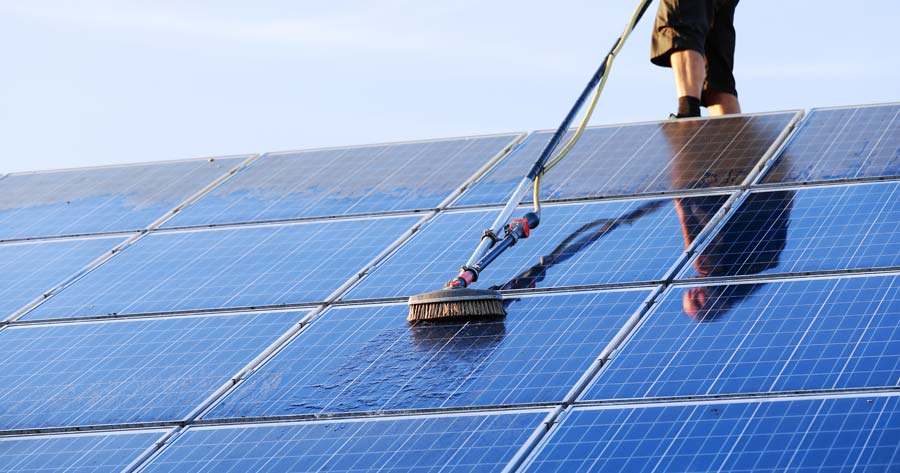
- When to Clean: Choose an overcast day, or clean early in the morning or late in the evening. Never spray cold water on hot panels, as the sudden temperature change can crack the glass.
- Tools & Materials:
- Garden Hose: Often sufficient for light dust.
- Soft Brush or Squeegee: Attached to a telescoping pole. Ensure it’s specifically designed for solar panels or windows.
- Pure Water System: For the best, streak-free results, a deionized water filter system can be attached to your hose. Tap water contains minerals that can leave spots.
- Mild Soap (Optional): Only if absolutely necessary for stubborn grime. Use a very mild, biodegradable, non-abrasive soap. Rinse thoroughly.
- What NOT to Use:
- Abrasive Cleaners or Scouring Pads: These can scratch the anti-reflective coating on your panels, reducing efficiency and potentially voiding warranties.
- Harsh Detergents or Chemicals: Can leave residues, damage the panel frame, or harm nearby landscaping.
- Pressure Washer: The high pressure can damage seals, dislodge wiring, or even crack the glass. It’s too aggressive.
- Cold Water on Hot Panels: As mentioned, thermal shock can cause damage.
- Safety Gear: Always wear non-slip shoes, use a sturdy ladder placed on level ground, and consider a safety harness if you’re working on a steep roof. Never clean alone.
When to Call a Pro: The Advantages of Professional Service
For many homeowners, especially those with multi-story homes, steep roofs, or significant soiling, hiring a professional is the safest and most effective option. They bring:
- Expertise: Knowledge of safe cleaning methods and chemicals specific to solar panels.
- Specialized Equipment: Industrial-grade pure water systems, long poles, and safety gear that most homeowners don’t have.
- Safety: Professionals are trained in roof safety and carry liability insurance, protecting you from potential accidents.
- Convenience: They handle everything, saving you time and effort.
- Inspection: Many professional cleaning services include a basic visual inspection of your panels and racking system, which can catch minor issues before they become major problems.
Natural Cleaning: Let Mother Nature Do the Work
For most residential solar systems, especially those with a decent tilt in areas with regular rainfall, rain is the primary and most cost-effective cleaner. A good downpour can wash away most dust, pollen, and light grime, keeping your panels operating close to peak efficiency without you lifting a finger.
Beyond Cleaning: Maximizing Your Solar Investment
While cleaning is one aspect of solar maintenance, it’s part of a larger picture of maximizing your investment. Don’t forget these other crucial steps:
Regular System Monitoring
Consistently checking your inverter data or monitoring app is perhaps the most important “maintenance” step. It allows you to quickly identify any performance anomalies, whether due to dirt, shading, or equipment issues.
Tree Trimming & Shading Management
Overhanging branches or new growth can cause significant shading, far more detrimental to performance than a layer of dust. Keep trees trimmed to ensure your panels get maximum sun exposure throughout the day.
Annual Inspections
Consider a professional annual inspection of your entire solar system. This goes beyond cleaning to check wiring, connections, mounting hardware, and overall system health, ensuring longevity and optimal performance.
The Verdict: A Balanced Perspective on Solar Panel Cleaning
So, is it worth it to clean solar panels? As you can see, there’s no universal “yes” or “no.” For the majority of homeowners in typical climates with a reasonable amount of rainfall, the financial return on routine cleaning (especially professional cleaning) is often marginal or negative. Rain typically does a sufficient job.
However, if you live in a particularly dusty or polluted environment, experience long dry spells, have panels with a very low tilt, or notice significant, persistent performance drops, then cleaning your panels can absolutely be worth it. In these cases, the gains in energy production can outweigh the cleaning costs.
The best approach is to be proactive but also practical. Monitor your system, assess your environment, and do the math. Your solar panels are a significant investment; understanding when and if to clean them is just smart ownership.
Frequently Asked Questions
How often should I clean my solar panels?
For most homeowners in average climates with regular rainfall, annual or biannual cleaning is generally sufficient, and often rain takes care of light dust. In very dusty, arid, or polluted environments, you might consider cleaning every 3-6 months, especially during long dry spells. Monitoring your system’s performance for noticeable drops is the best indicator.
Does rain clean solar panels effectively?
Yes, for most light dust, pollen, and general grime, rain is highly effective at cleaning solar panels, especially those installed with a sufficient tilt. Heavy, consistent rainfall often keeps panels operating close to peak efficiency without additional intervention. However, stubborn spots like bird droppings or heavy, sticky pollution may require manual cleaning.
Can I clean my solar panels myself?
You can, but it comes with significant safety risks and potential for damage if not done correctly. If your panels are easily accessible and you’re comfortable on a roof, use a soft brush with a telescoping pole and pure (deionized) water. Avoid harsh chemicals, abrasive tools, or pressure washers, as these can scratch the panels or void warranties. For steep roofs, multi-story homes, or if you’re uncomfortable with heights, hiring a professional is strongly recommended.
How much does professional solar panel cleaning cost?
Professional cleaning costs typically range from $150 to $500 for an average residential system. The price depends on factors like the number of panels, roof accessibility (pitch, height), your geographic location, and whether you opt for a one-time service or a recurring maintenance plan.
What kind of performance loss can I expect from dirty solar panels?
For most systems in areas with moderate rainfall, performance loss due to dirt is typically 2-5% annually. In very dusty, polluted, or arid environments with long dry spells, this loss can increase to 7-15%, and localized issues like heavy bird droppings can cause even higher, albeit isolated, drops in efficiency.
Will cleaning my solar panels void my warranty?
Improper cleaning methods or the use of harsh chemicals can potentially void your solar panel manufacturer’s warranty. Always refer to your panel’s warranty documentation for specific cleaning guidelines. Professional solar cleaners are usually aware of these terms and use approved methods, minimizing any risk to your warranty.


Post Comment