How Solar Water Heater Works Animation
How Solar Water Heaters Work: Your Animated Guide to Hot Water (and Savings!)
Tired of watching your energy bills climb, especially when it comes to heating water? Imagine stepping into a hot shower, knowing the sun did most of the work, completely free of charge. Sounds pretty good, right? That’s the magic of a solar water heater.
Table of Contents
- How Solar Water Heaters Work: Your Animated Guide to Hot Water (and Savings!)
- The Core Concept: Sun’s Energy into Hot Water (Think of it like a Garden Hose in the Sun)
- Let’s "Animate" the Process: A Step-by-Step Breakdown
- Step 1: The Solar Collector – Sun’s Heat Magnet
- Step 2: Heat Transfer Fluid – The Silent Workhorse
- Step 3: The Heat Exchanger – The Warm Embrace
- Step 4: Storage Tank – Your Hot Water Reservoir
- Step 5: Circulation System – The Continuous Loop
- Diving Deeper: Types of Solar Water Heater Systems
- Active Systems (Pump-Driven)
- Passive Systems (Natural Convection)
- Why Go Solar? The Compelling Benefits (Beyond Just Warm Showers)
- Significant Cost Savings
- Environmental Impact
- Energy Independence
- Increased Home Value
- The Other Side of the Coin: Potential Downsides & Considerations
- Initial Investment
- Climate Dependency
- Space Requirements
- Maintenance
- What to Look For: Key Components and Technologies
- Collector Types: Flat-Plate vs. Evacuated Tube
- Storage Tank Features
- Control Systems
- Installation & Sizing
- Solar Water Heaters in Action: Real-World Performance
Many people search for ‘how solar water heater works animation’ because they want to truly visualize the process. While I can’t embed an actual animation here, I can guide you through a step-by-step mental walkthrough, detailing every component and action, so you’ll understand exactly how these brilliant systems turn sunlight into piping hot water for your home. Let’s make this complex system easy to grasp.
The Core Concept: Sun’s Energy into Hot Water (Think of it like a Garden Hose in the Sun)
At its heart, a solar water heater is elegantly simple. Think about leaving a dark garden hose out in the sun on a hot day. The water inside gets surprisingly warm, right? A solar water heater works on a much more sophisticated, efficient version of this same principle.
It captures the sun’s radiant energy, uses it to heat a fluid, and then transfers that heat to your household’s potable water. Instead of electricity or natural gas constantly burning, you’re primarily relying on the sun, a truly renewable and free energy source. The key is efficient heat capture and heat transfer. This system reduces your dependence on conventional energy sources, leading to significant savings and a smaller carbon footprint.
Let’s "Animate" the Process: A Step-by-Step Breakdown
Ready to see it in action, piece by piece? Let’s take a journey through a typical solar water heating system, visualizing each stage as if you were watching an incredibly detailed animation.
Step 1: The Solar Collector – Sun’s Heat Magnet
Our animation begins on your roof, or a sunny spot in your yard, where the solar collector is positioned. This is the star of the show, the component responsible for capturing sunlight.
- What it is: Solar collectors come in two main types: flat-plate collectors (which look like skylights, typically dark, insulated boxes with a glass cover) and evacuated tube collectors (which are a series of glass tubes, often with a vacuum between two layers of glass, giving them extremely high efficiency).
- How it works: Regardless of type, the collector’s dark surface absorbs solar radiation, much like a dark car parked in the sun. Inside these collectors, there’s a network of copper pipes or channels.
- Visualize: Imagine the sun’s rays hitting the dark surface. The glass cover allows sunlight in but traps the heat, creating a greenhouse effect. This trapped heat warms the fluid circulating within those pipes.
Step 2: Heat Transfer Fluid – The Silent Workhorse
Next in our animated sequence, watch as a special liquid, the heat transfer fluid, begins its crucial journey.
- What it is: In most systems, particularly in colder climates, this isn’t your household’s drinking water. Instead, it’s typically a non-toxic propylene glycol (similar to car antifreeze) or water with corrosion inhibitors. This fluid is designed to withstand freezing temperatures and high heat.
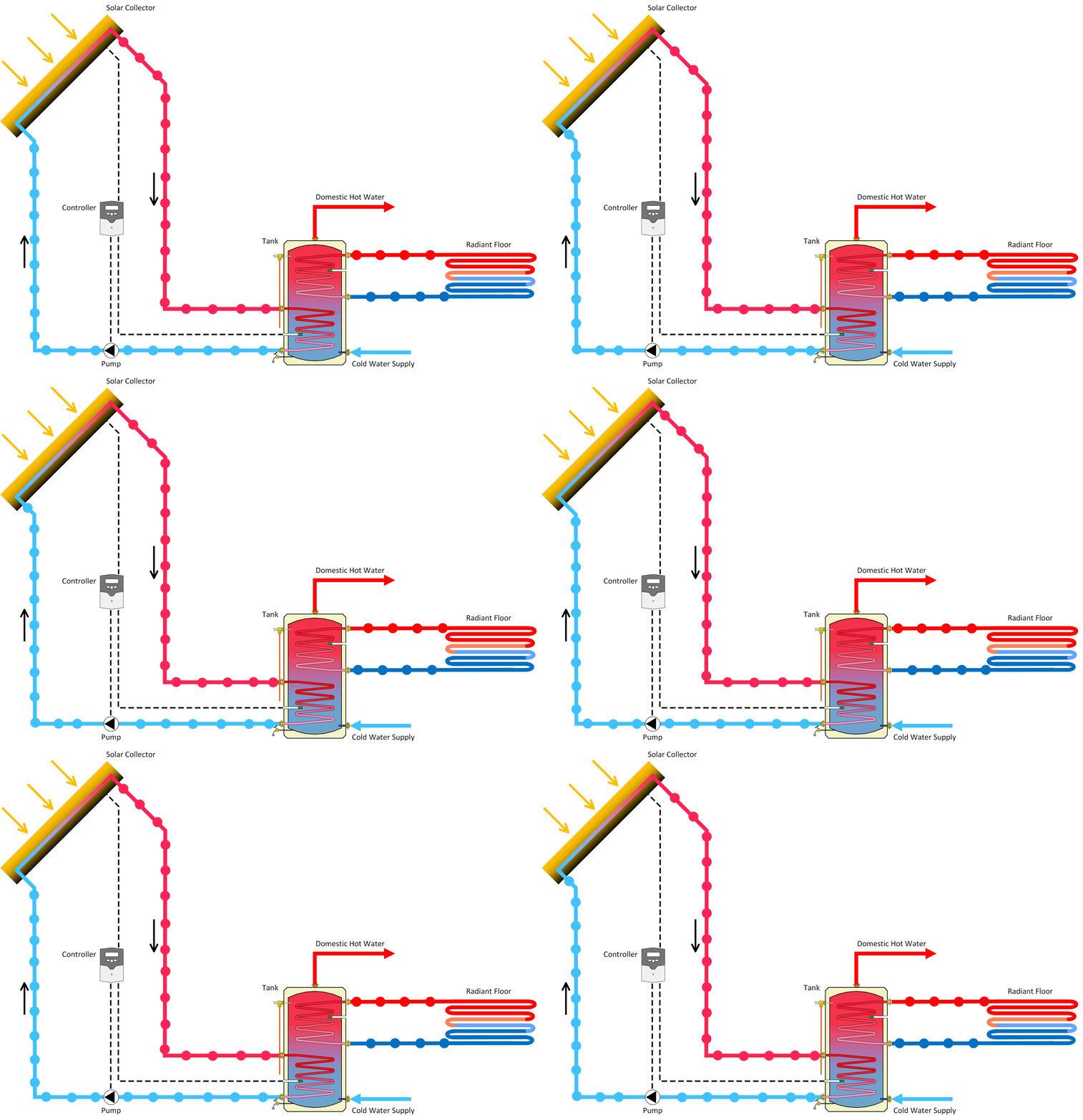
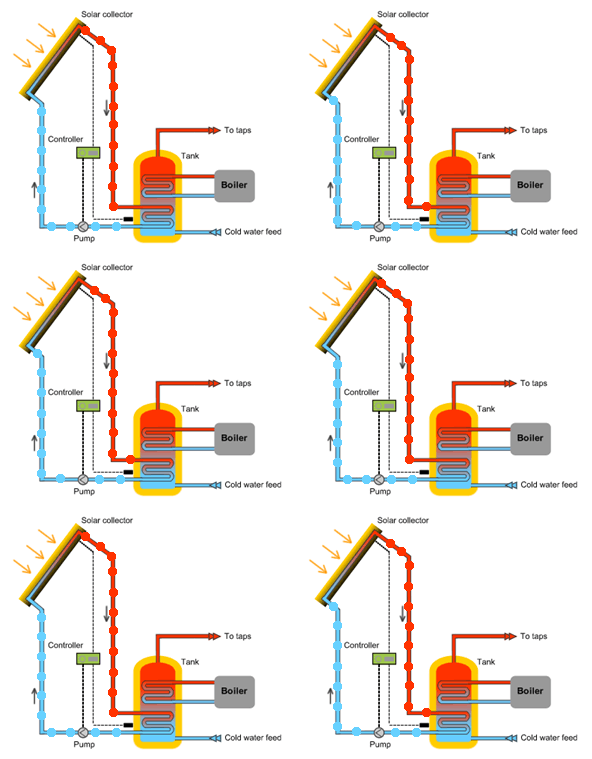
- Its journey: A pump (in active systems, more on that later) circulates this cool heat transfer fluid from the storage tank up into the solar collector. As it passes through the sun-heated pipes within the collector, it rapidly absorbs the thermal energy.
- Visualize: See the fluid, now superheated by the sun, flowing downwards from the collector, through insulated pipes, heading straight for your hot water storage tank.
Step 3: The Heat Exchanger – The Warm Embrace
This is a critical point in our animation, where the sun’s energy finally meets your domestic water. The heat exchanger is where the magic of heat transfer truly happens.

- What it is: The heat exchanger is typically a coil or a jacket inside or wrapped around your storage tank. It’s a barrier that separates the heat transfer fluid from your potable (drinkable) hot water.
- How it works: The superheated fluid from the collector flows through one side of the heat exchanger (e.g., inside the coil), while your cooler domestic water surrounds the other side (e.g., inside the tank, outside the coil). Because the fluid is much hotter than the water, heat energy naturally transfers from the fluid to the water without the two liquids ever mixing.
- Visualize: Picture the hot fluid snaking through a coil submerged in cooler water. As the heat radiates from the coil, the surrounding water gets warmer and warmer, while the heat transfer fluid simultaneously cools down, ready to return to the collector.
Step 4: Storage Tank – Your Hot Water Reservoir
As the domestic water absorbs heat, it gets stored in a dedicated storage tank. This is where your family’s hot water supply resides.
- What it is: This tank looks similar to a conventional water heater tank, but it’s typically larger and extremely well-insulated to minimize heat loss. It’s designed specifically for solar water heating systems, often with an extra inlet/outlet for the heat exchanger.
- Backup: Most solar water heater systems are designed to supplement your existing conventional water heater or include a small electric or gas backup element within the solar tank itself. This ensures you always have hot water, even during long cloudy spells or periods of extremely high demand.
- Visualize: See the warm water accumulating at the top of the insulated tank, ready to be drawn out for showers, dishes, or laundry, while cooler water settles at the bottom, awaiting its turn to be heated.
Step 5: Circulation System – The Continuous Loop
Our animation concludes with the continuous, smart operation of the system.
- How it moves: In active systems, a small pump pushes the cooled heat transfer fluid back up to the solar collector to be reheated, completing the loop. This circulation continues as long as the collector is hotter than the water in the tank.
- Sensors/Controls: Sophisticated electronic controls and temperature sensors monitor the temperatures in the collector and the storage tank. The pump only operates when there’s enough solar energy to make heating efficient, preventing the system from running unnecessarily or cooling the water at night.
- Visualize: Imagine a seamless, silent flow: hot fluid from the roof to the tank, cooler fluid from the tank back to the roof, day after day, year after year, powered by the sun.
Diving Deeper: Types of Solar Water Heater Systems
While the core principle is the same, how the heat transfer fluid circulates and interacts with your water defines the two main categories:
Active Systems (Pump-Driven)
These are the most common and generally more efficient, especially for homes with high hot water demand or in climates with freezing temperatures. They use pumps and electronic controllers.
- Direct Circulation Systems: These pump household water directly through the collectors and then into the storage tank. They are typically less expensive but are best suited for climates where it rarely freezes.
- Indirect Circulation Systems: These pump a non-freezing heat transfer fluid through the collectors and a heat exchanger. This is the type we "animated" above and is ideal for climates prone to freezing.
Passive Systems (Natural Convection)
Passive systems are simpler, less expensive, and generally require less maintenance because they don’t use pumps or controls. They rely on natural convection.
- Integral Collector-Storage (ICS) Systems: These are the simplest. The storage tank itself is the collector – a large, dark tank enclosed in an insulated box with a glazed cover. Sunlight directly heats the water within the tank. They provide hot water quickly but can lose heat overnight.
- Thermosyphon Systems: These rely on the principle that hot water rises. The collector is placed below the storage tank. As water in the collector heats up, it naturally rises into the tank, pushing cooler water from the tank down into the collector to be heated.
Here’s a quick comparison to help you visualize the differences:
| Feature | Active Systems | Passive Systems |
|---|---|---|
| Circulation Method | Pump-driven | Natural convection (hot water rises) |
| Complexity | More complex (pumps, controls) | Simpler (fewer moving parts) |
| Efficiency | Generally higher | Lower to moderate |
| Cost (Installation) | Higher upfront | Lower upfront |
| Maintenance | Moderate (pump/controller checks) | Very low |
| Climate Suitability | All climates (especially cold) | Warm, sunny climates (minimal freezing) |
Why Go Solar? The Compelling Benefits (Beyond Just Warm Showers)
Understanding the animated mechanics is one thing, but knowing why you should consider it is another. Solar water heaters offer a multitude of advantages that extend far beyond simply having hot water.
Significant Cost Savings
This is often the primary driver for homeowners. Heating water is typically the second-largest energy expense in a home, after heating and cooling. By harnessing the sun, you can dramatically reduce or even eliminate these costs for hot water production.
- Reduced Energy Bills: Solar hot water systems can reduce your water heating bills by 50% to 80%. Imagine those savings accumulating year after year!
- Long-Term Investment: While the initial investment is higher, the ongoing savings mean the system often pays for itself over time, providing free hot water for decades.
- Incentives: Federal, state, and local incentives (like tax credits) can significantly offset the upfront cost, making them an even smarter financial move.
Environmental Impact
For the environmentally conscious, solar water heaters are a clear winner.
- Lower Carbon Footprint: By using renewable solar energy instead of fossil fuels or electricity generated from them, you directly reduce your household’s greenhouse gas emissions.
- Sustainable Living: It’s a tangible step towards a more sustainable lifestyle, utilizing a clean, endlessly available resource.
Energy Independence
Becoming less reliant on the grid has its perks.
- Protection from Price Hikes: You’re insulated from fluctuating utility prices for water heating. The sun’s energy bill will always be zero.
- Reliability: Solar hot water systems are incredibly reliable and durable, often outliving conventional water heaters.
Increased Home Value
Adding a solar water heater is an attractive feature for potential buyers.
- Modern Upgrade: It signals a modern, energy-efficient home, appealing to a growing segment of buyers who prioritize sustainability and lower operating costs.
- Long-Term Asset: It’s an upgrade that pays dividends both financially and environmentally.
The Other Side of the Coin: Potential Downsides & Considerations
No system is perfect, and it’s important to have a balanced view. While solar water heaters are fantastic, there are a few things to consider.
Initial Investment
The upfront cost is higher than that of a conventional electric or gas water heater. This can be a hurdle for some homeowners, though incentives and long-term savings often mitigate this.
Climate Dependency
Solar water heaters rely on sunlight. While they still work on cloudy days (using diffuse light), their performance decreases. In very cold, persistently overcast regions, the backup system will be used more frequently. Sizing the system correctly for your climate and hot water needs is crucial.
Space Requirements
You’ll need adequate, unshaded roof space for the collectors. The storage tank for a solar system is also often larger than a conventional tank, requiring sufficient indoor space.
Maintenance
While generally low-maintenance, active systems require periodic checks of pumps, controllers, and fluid levels (for indirect systems). Collectors might need occasional cleaning, especially in dusty areas, to ensure optimal efficiency. Passive systems are virtually maintenance-free.
What to Look For: Key Components and Technologies
When considering a solar water heater, understanding the types of components and what makes a good system will help you make an informed decision.
Collector Types: Flat-Plate vs. Evacuated Tube
- Flat-Plate Collectors: These are durable, cost-effective, and perform very well in sunny, mild to moderate climates. They are essentially insulated boxes containing a dark absorber plate and covered with glass. Good for year-round use in many parts of the US.
- Evacuated Tube Collectors: These are more efficient, especially in colder climates or when you need higher water temperatures. The vacuum between the glass layers provides superior insulation, minimizing heat loss. They are more expensive but can perform better in less ideal conditions.
Storage Tank Features
- Insulation: Look for tanks with excellent insulation (high R-value) to keep water hot longer, especially overnight.
- Backup Element: Ensure the tank has an appropriately sized electric or gas backup heating element to guarantee hot water during periods of low sunlight or high demand.
- Size: Proper sizing is critical. The tank should be large enough to store sufficient hot water for your household’s peak demand, considering the solar input.
Control Systems
For active systems, the control unit is the brain. It measures the temperature in the collector and the tank. A differential controller turns the circulation pump on only when the collector is significantly hotter than the tank water, optimizing efficiency and preventing heat loss. Modern controllers can also offer monitoring and diagnostic features.
Installation & Sizing
This isn’t a DIY project for most. Proper installation and sizing are paramount for efficiency and longevity. A qualified solar thermal installer will assess:
- Your household’s hot water demand.
- Your local climate and solar resource (how much sun you get).
- Available roof or ground space, ensuring minimal shading.
- Local building codes and permits.
Solar Water Heaters in Action: Real-World Performance
When installed correctly, a solar water heater is a powerful appliance that quietly contributes to your home’s comfort and finances for many years.
In the US, a well-sized solar water heater can typically meet 50% to 80% of a household’s hot water needs annually. The exact percentage depends on your location, system type, hot water usage, and the size of the system. The typical lifespan of a solar water heater system is 15-20 years, with some components lasting even longer. This longevity, combined with the substantial energy savings, makes it a robust investment in your home’s future.
Furthermore, federal tax credits in the USA, such as the Investment Tax Credit (ITC), can provide a significant percentage back on the cost of installing a solar water heater, making the payback period even shorter. Always check with local authorities and energy agencies for the most current incentives in your area.
Understanding how solar water heaters work is the first step towards embracing a more sustainable, cost-effective way to get hot water. The process, while involving several components, is a testament to clever engineering harnessing a simple, natural phenomenon – the sun’s incredible energy. By visualizing the sun’s rays turning into hot water, you’re not just understanding a technology; you’re seeing a pathway to a greener, more economical home.
Frequently Asked Questions
How efficient are solar water heaters?
Solar water heaters can typically provide 50% to 80% of a household’s hot water needs annually. The exact efficiency depends on factors like your location, system type, hot water usage, and the system’s size and installation quality.
Do solar water heaters work on cloudy days?
Yes, solar water heaters can still work on cloudy days by absorbing diffuse solar radiation, though their performance will be reduced. Most systems include a conventional backup heater (electric or gas) to ensure you always have hot water during extended cloudy periods or high demand.
What is the lifespan of a solar water heater system?
A well-maintained solar water heater system can last 15 to 20 years, and sometimes even longer. The collectors themselves are often very durable, with heat transfer fluids or components like pumps requiring occasional checks or replacement over this period.
What’s the difference between active and passive solar water heaters?
Active systems use pumps and electronic controls to circulate heat transfer fluid, offering higher efficiency and suitability for various climates. Passive systems rely on natural convection (hot water rising) and don’t use pumps, making them simpler, less expensive, and ideal for warmer, sunnier climates with minimal freezing.
Are there incentives for installing solar water heaters in the USA?
Yes, the U.S. federal government offers tax credits, such as the Investment Tax Credit (ITC), which can significantly reduce the cost of installing a solar water heater. Additionally, many states and local municipalities offer their own rebates, grants, or additional tax incentives. It’s advisable to check with local energy agencies for current programs.
How much space does a solar water heater require?
Solar collectors require unshaded roof space (or ground space) that faces roughly south for optimal performance. The size depends on your hot water demand and climate, but typically ranges from 40 to 80 square feet for a family of four. The storage tank is usually larger than a conventional tank and needs sufficient indoor space.


Post Comment