How Solar System Works At Home
How a Solar System Works at Home: Your Definitive Guide to Powering Your Life with Sunlight
Ever gazed at a neighbor’s rooftop solar panels and wondered, “How does that even work?” You’re not alone. Many homeowners are curious about harnessing the sun’s incredible power, especially with rising electricity costs and a growing desire for sustainable living. But the technology can seem a bit like magic, right?
Table of Contents
- How a Solar System Works at Home: Your Definitive Guide to Powering Your Life with Sunlight
- The Core Principle: How Sunlight Becomes Home Power
- Breaking Down Your Home Solar System: The Essential Components
- 1. Solar Panels (PV Modules): The Sunlight Catchers
- 2. The Inverter: DC to AC – The Heart of Your System
- 3. Electrical Panel (Breaker Box): Directing the Flow
- 4. The Utility Meter & Grid Connection: Sharing and Saving
- 5. Optional: Solar Batteries (Energy Storage): Powering Through the Night or Outages
- The Journey of Electricity: A Step-by-Step Flow in Your Home
- Understanding Different Home Solar System Configurations
- Grid-Tied Systems: The Most Common Choice
- Off-Grid Systems: Total Energy Independence
- Hybrid Systems: The Best of Both Worlds?
- Beyond the Basics: Practical Home Solar Scenarios
- How Solar Panels Work on Cloudy Days
- How Solar Panels Work at Night (and During Power Outages)
- Monitoring Your System’s Performance
- Maintenance: Keeping Your System Running Smoothly
- Is Home Solar Right for You? Key Considerations
Let’s strip away the jargon and break down exactly how a solar system works to power your home. It’s not as complicated as you might think, and once you understand the fundamentals, you’ll see why millions of homes across the USA are making the switch.
The Core Principle: How Sunlight Becomes Home Power
At its heart, home solar power relies on a scientific phenomenon called the photovoltaic effect. Don’t worry, you don’t need a physics degree to grasp it. Simply put, certain materials can absorb particles of light (photons) and release electrons, creating an electric current.
Think of it like this: Sunlight is made of tiny packets of energy called photons. When these photons hit the surface of a solar panel, they literally knock electrons loose from the silicon atoms within the solar cells. These freed electrons then flow to create an electric current. This current is known as Direct Current (DC) electricity.
Breaking Down Your Home Solar System: The Essential Components
While the photovoltaic effect is the starting point, a complete home solar system involves several key pieces of equipment working together seamlessly. Here’s a look at the major players:
1. Solar Panels (PV Modules): The Sunlight Catchers
These are the most recognizable parts of a solar system, typically mounted on your roof. Each panel is made up of many individual solar cells, usually composed of silicon. When sunlight hits these cells, they convert the solar energy into DC electricity.
- Monocrystalline Panels: Made from a single crystal of silicon, these are generally the most efficient and space-saving, appearing uniformly black.
- Polycrystalline Panels: Made from multiple silicon fragments melted together, they are slightly less efficient than monocrystalline but often more affordable and have a speckled blue appearance.
- Thin-Film Panels: Lighter and more flexible, these use very thin layers of photovoltaic material. They’re less common for residential rooftops due to lower efficiency but can be suitable for specific applications.
For most homes, monocrystalline panels are the go-to for their performance and longevity.
2. The Inverter: DC to AC – The Heart of Your System
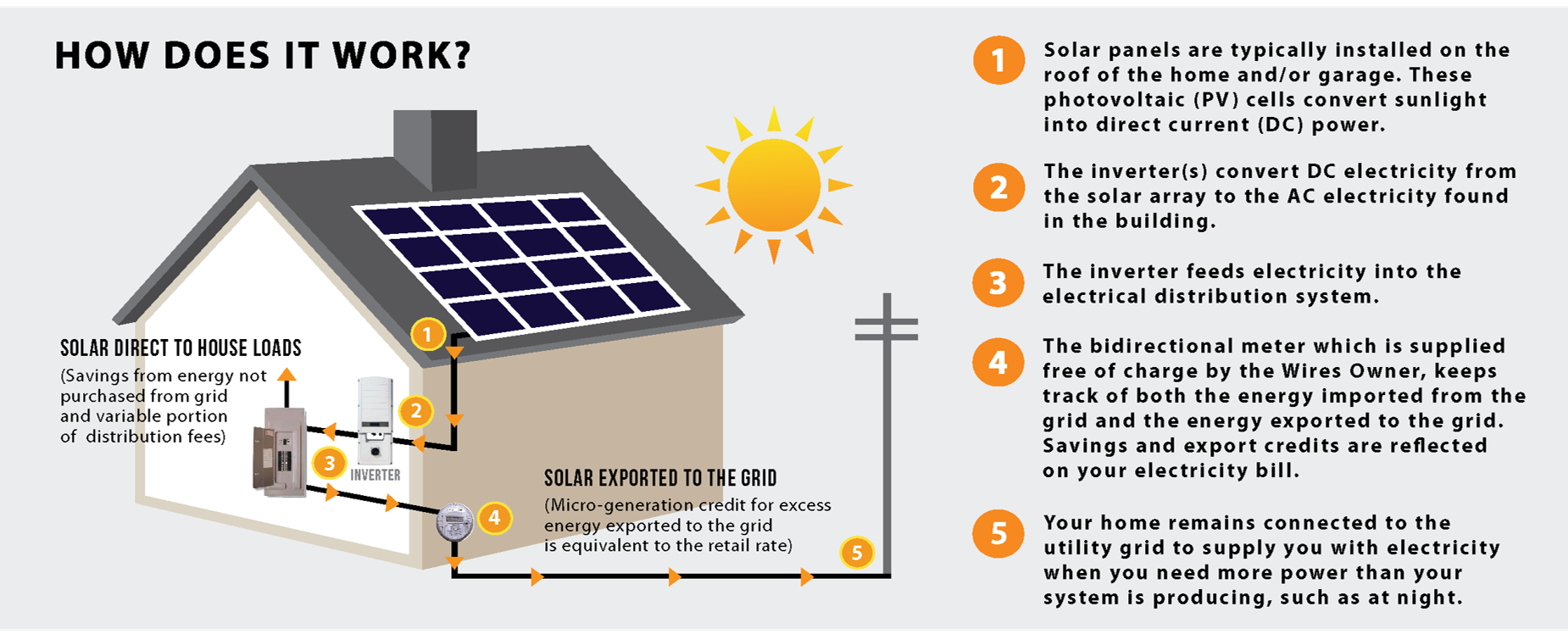
Here’s where the magic really happens for your home. Your appliances, lights, and electronics run on Alternating Current (AC) electricity. Since your solar panels produce DC electricity, you need a device to convert it.
Enter the inverter. This crucial component takes the DC power from your panels and transforms it into usable AC power for your home. There are a few types:
- String Inverters: This is the traditional approach. Panels are wired together in “strings,” and the DC electricity from an entire string goes to one central inverter, usually located near your electrical panel. If one panel in the string performs poorly (due to shade or dirt), it can affect the output of the whole string.
- Microinverters: A more modern solution where each solar panel has its own small inverter attached directly to its back. This means each panel converts DC to AC independently. The big advantage? If one panel is shaded, the others aren’t affected, maximizing overall system performance.
- Hybrid Inverters: These are string inverters that can also manage battery storage, allowing you to seamlessly integrate batteries into your solar setup for backup power or increased self-sufficiency.
| Inverter Type | How It Works | Key Benefit | Consideration |
|---|---|---|---|
| String Inverter | Multiple panels connect to one central unit. | Generally lower upfront cost. | Shading on one panel can reduce efficiency for the entire string. |
| Microinverter | Each panel has its own inverter. | Optimized performance per panel, ideal for complex roofs/shading. | Higher upfront cost per panel. |
| Hybrid Inverter | Functions as a string inverter but also manages battery storage. | Seamless integration with battery backup systems. | More complex system design and installation. |
3. Electrical Panel (Breaker Box): Directing the Flow
Once the inverter has converted the DC power to AC power, this electricity flows to your home’s main electrical panel. This is the central hub for all the electricity in your house. From here, the solar-generated power is distributed to power your lights, appliances, and everything else that runs on electricity.
It’s important that your home’s electrical panel is capable of handling the additional power from your solar system, which your installer will assess.
4. The Utility Meter & Grid Connection: Sharing and Saving
What happens if your solar panels produce more electricity than your home needs at any given moment? This excess power doesn’t just disappear. It’s automatically sent back to the electrical grid, effectively becoming a credit on your utility bill. This process is called net metering.
Your existing utility meter is usually replaced with a bi-directional meter, which tracks both the electricity you pull from the grid and the excess electricity you send back to it. This means you only pay for your “net” electricity consumption (what you use minus what you generate). When your panels aren’t producing enough (like at night), you simply draw power from the grid as usual.
5. Optional: Solar Batteries (Energy Storage): Powering Through the Night or Outages
While not strictly necessary for every solar system, batteries are becoming increasingly popular. A solar battery stores the excess electricity your panels produce instead of sending it all back to the grid. This stored energy can then be used later, such as at night when your panels aren’t generating, or during a power outage to keep essential appliances running.
Batteries offer greater energy independence, potentially reducing your reliance on the grid and providing peace of mind during blackouts. They are a game-changer for homeowners looking to maximize their solar investment.
The Journey of Electricity: A Step-by-Step Flow in Your Home
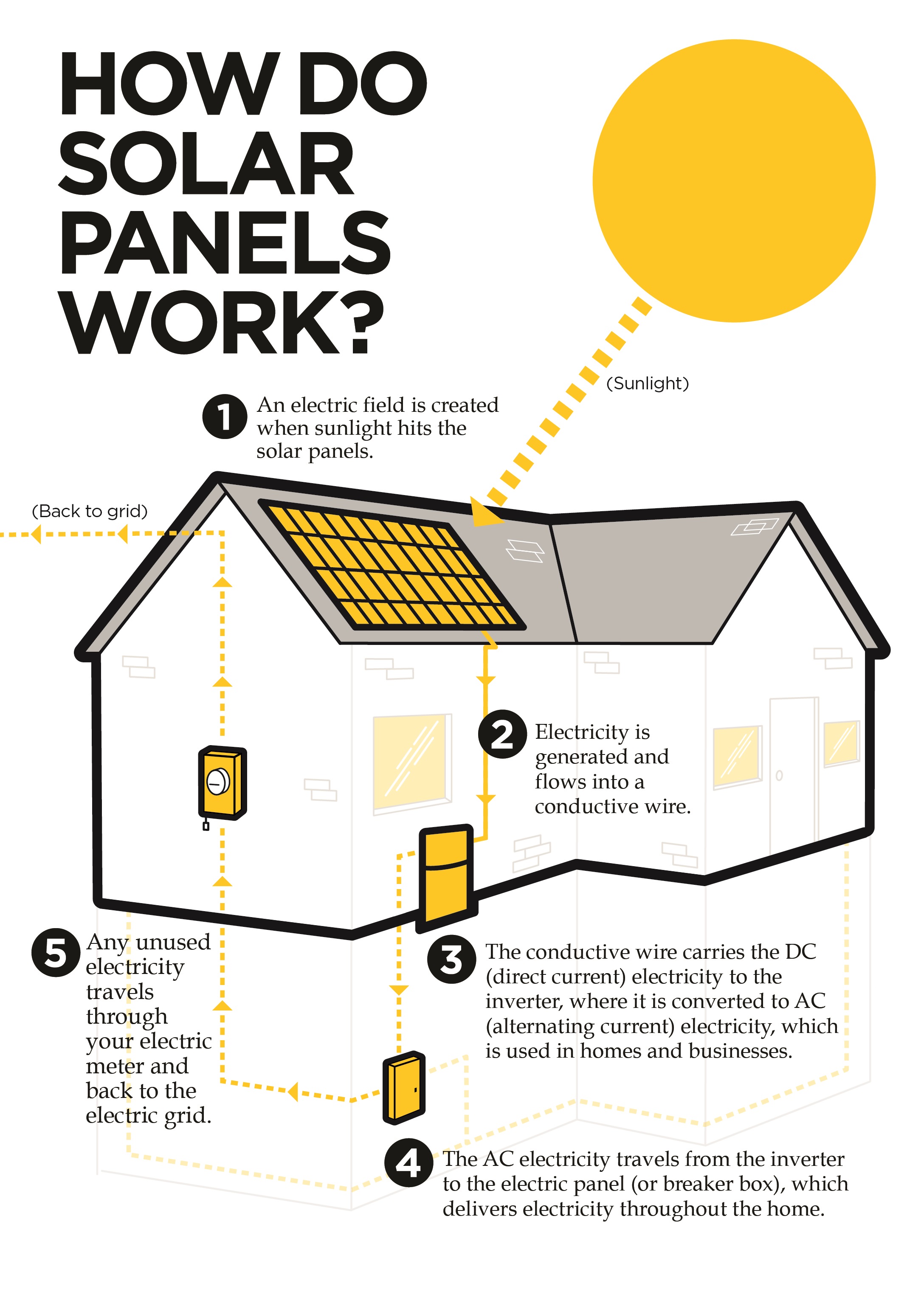
Let’s tie it all together and visualize the path electricity takes from the sun to your toaster:
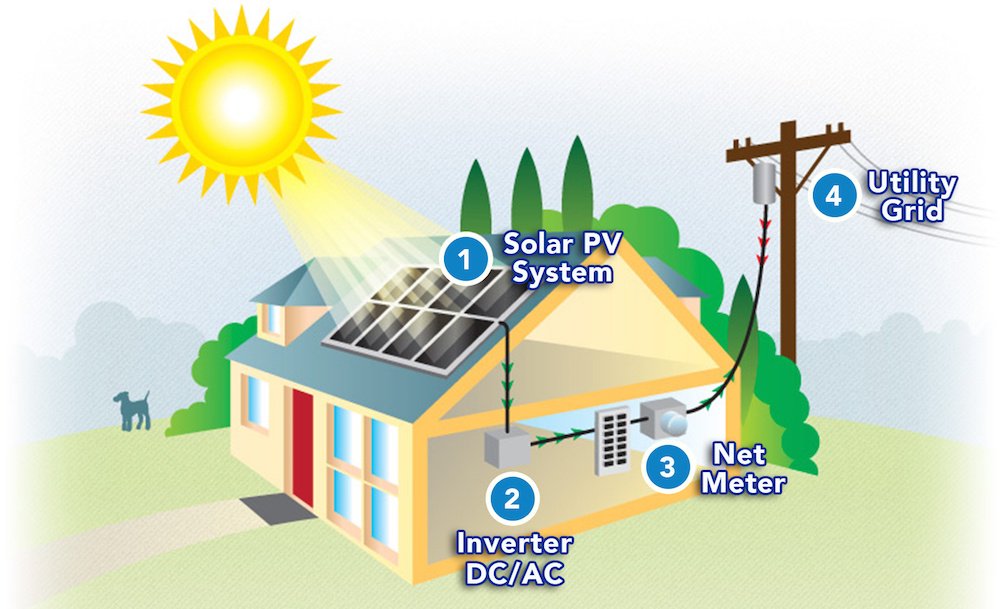
- Sunlight Hits Panels: Photons from the sun strike the silicon cells in your solar panels, exciting electrons and creating a DC electric current.
- DC Power Generation: This DC electricity flows from the panels, typically through wiring on your roof.
- Inversion to AC Power: The DC electricity reaches your inverter(s), which converts it into usable AC electricity for your home.
- Powering Your Home: The AC electricity goes to your home’s electrical panel and is immediately consumed by any active appliances, lights, or electronics.
- Grid Interaction (Net Metering): If your panels produce more AC electricity than your home is using, the excess automatically flows through your bi-directional meter and out to the public utility grid. You earn credits for this surplus.
- Battery Storage (If Applicable): If you have a solar battery, excess AC electricity can be routed to the battery for storage instead of going to the grid. When your panels aren’t producing enough, or during an outage, the battery discharges to power your home.
Understanding Different Home Solar System Configurations
Not all home solar systems are built the same. Your specific needs and goals will determine the best configuration for you.
Grid-Tied Systems: The Most Common Choice
This is the most popular setup for residential solar. Your home remains connected to the utility grid, and your solar system supplements your energy needs. Any excess power goes back to the grid (net metering), and you draw from the grid when your solar production is low.
- Pros: Lowest upfront cost, takes advantage of net metering for credits, doesn’t require batteries (though they can be added).
- Cons: Your home loses power during a grid outage, even if the sun is shining, for safety reasons (prevents backfeeding the grid during repairs).
Off-Grid Systems: Total Energy Independence
An off-grid system means your home is completely disconnected from the utility grid. All your power comes from your solar panels, and any excess is stored in a battery bank. You are entirely self-sufficient.
- Pros: Complete energy independence, no electricity bills, ideal for remote locations where grid connection is expensive or unavailable.
- Cons: Much higher upfront cost (due to large battery bank and backup generator often needed), requires careful energy management, reliance on weather for power generation.
Hybrid Systems: The Best of Both Worlds?
Hybrid systems combine elements of both grid-tied and off-grid setups. Your home is connected to the grid, but you also have a battery bank. This allows you to store excess solar power, reduce reliance on the grid, and have backup power during outages.
- Pros: Provides backup power during outages, maximizes self-consumption of solar energy, potential for further savings by reducing peak-time grid usage.
- Cons: Higher cost than grid-tied due to batteries, more complex installation and monitoring.
| System Type | Grid Connection | Battery Required? | Outage Backup? | Primary Benefit |
|---|---|---|---|---|
| Grid-Tied | Yes | No (Optional) | No | Lowest cost, net metering benefits. |
| Off-Grid | No | Yes (Essential) | Yes | Complete energy independence. |
| Hybrid | Yes | Yes (Essential) | Yes | Backup power with grid benefits. |
Beyond the Basics: Practical Home Solar Scenarios
It’s natural to have questions about how solar performs in less-than-ideal conditions. Let’s tackle some common concerns.
How Solar Panels Work on Cloudy Days
This is a big one! Solar panels don’t need bright, direct sunlight to work. They still produce electricity on cloudy or overcast days, just at a reduced capacity. Think of it like a light dimmer switch: some light still gets through, but not as much as on a sunny day. Modern solar panels are designed to capture diffuse light efficiently, so don’t worry about them being useless on a gloomy day. They’ll still be pulling their weight.
How Solar Panels Work at Night (and During Power Outages)
At night, when there’s no sunlight, solar panels stop producing electricity. This is where your connection to the utility grid (for grid-tied systems) or your battery storage (for off-grid and hybrid systems) comes into play. You simply draw power from the grid or from your stored battery energy.
During a power outage, if you have a standard grid-tied system without batteries, your solar panels will automatically shut down. This is a crucial safety feature called anti-islanding, preventing your system from sending electricity back to the grid and endangering utility workers who might be repairing lines. If you want power during an outage, a hybrid system with batteries or an off-grid system is necessary.
Monitoring Your System’s Performance
Most modern home solar systems come with monitoring capabilities, often accessible via a smartphone app or web portal. This allows you to track your real-time electricity production, daily/monthly/annual generation, and even your energy consumption. It’s a fantastic way to see the impact of your solar investment and optimize your usage habits.
Maintenance: Keeping Your System Running Smoothly
The good news is that solar systems are remarkably low-maintenance. The main thing you’ll need to do is keep the panels clean. Rain often handles this naturally, but occasional washing (especially if you live in a dusty area or near trees that shed leaves) can prevent efficiency drops. Beyond that, annual inspections by a professional are a good idea to ensure everything is operating optimally and safely.
Is Home Solar Right for You? Key Considerations
Now that you understand how it all works, you might be asking if solar is a good fit for your home. Here are some key factors to consider:
- Roof Suitability & Sun Exposure: Is your roof in good condition? Does it get significant, unobstructed sunlight throughout the day? South-facing roofs are generally ideal, but East and West-facing roofs can also be highly effective.
- Energy Consumption Habits: How much electricity do you use? Solar is most beneficial for homes with moderate to high energy bills, as the savings will be more substantial.
- Financial Incentives & Payback Period: The federal solar tax credit (Investment Tax Credit – ITC) significantly reduces the cost of installation. Many states and local utilities also offer rebates or incentives. Understanding these can greatly impact your system’s payback period (how long it takes for your energy savings to offset the initial cost).
- Environmental Impact: Beyond the financial benefits, going solar significantly reduces your carbon footprint, contributing to a cleaner, more sustainable future for everyone.
Embracing solar power for your home is more than just an investment in a new technology; it’s an investment in your financial future, energy independence, and a cleaner planet. The way a solar system works at home is a testament to ingenious engineering and the incredible potential of renewable energy. As you’ve seen, it’s a straightforward process of converting sunlight into the power that lights your home and fuels your life. Welcome to the solar revolution!
Frequently Asked Questions
What are the main components of a home solar system?
A home solar system primarily consists of solar panels (PV modules) to capture sunlight, an inverter to convert DC electricity to AC, an electrical panel to distribute power, and a utility meter for grid connection and net metering. Optional components include solar batteries for energy storage.
How does net metering work with home solar panels?
Net metering allows your home to send any excess solar electricity you produce back to the utility grid. Your bi-directional meter tracks both the power you draw from the grid and the power you send back, crediting your account for the surplus and potentially reducing your electricity bill.
Do solar panels work on cloudy days or at night?
Solar panels still produce electricity on cloudy days, though at a reduced efficiency due to less direct sunlight. At night, they do not produce any electricity. During these times, your home draws power from the utility grid or from a connected battery storage system if you have one.
Can home solar panels provide power during a grid outage?
Standard grid-tied solar systems (without batteries) automatically shut down during a grid outage for safety reasons (anti-islanding). To have power during an outage, you need a hybrid solar system with battery storage or a fully off-grid system.
What is the difference between DC and AC electricity in a solar system?
Solar panels generate Direct Current (DC) electricity, which flows in one direction. Your home appliances, however, use Alternating Current (AC) electricity, which periodically reverses direction. An inverter is essential to convert the DC power from your panels into usable AC power for your home.
Is home solar suitable for every roof?
Not every roof is ideal for solar. Factors like roof condition, angle, direction (south-facing is often best, but east/west also work), and obstruction from trees or other buildings that cause significant shading can impact a system’s efficiency. A professional assessment is crucial.


Post Comment