Average Solar Panel Output Per Day Australia
Decoding Average Solar Panel Output Per Day in Australia: Your Definitive Guide
Considering solar power, perhaps you’re planning a move, investing in Australian property, or simply curious about global renewable energy benchmarks? One of the first questions you’ll have is: “What’s the average solar panel output per day in Australia?” It’s a smart question, and getting a clear, straightforward answer can feel like wading through a maze of technical jargon and regional variances. I’m here to cut through the noise.
Table of Contents
- Decoding Average Solar Panel Output Per Day in Australia: Your Definitive Guide
- The Core Numbers: What to Expect from Australian Solar Panels Daily
- Deep Dive: Factors Shaping Solar Output Across Australia
- Geographic Location & Solar Irradiation (Insolation)
- The Seasonal Swings: Summer vs. Winter Performance
- Panel Technology & Efficiency
- System Design & Installation (Orientation, Tilt, Shading)
- Temperature’s Paradox: Heat and Efficiency
- Maintenance & Cleaning
- Calculating Your Potential Output: A Practical Guide
- Common Solar System Sizes and Their Typical Australian Output
- Maximizing Your Solar System’s Performance Down Under
- Beyond the Averages: Real-World Scenarios and Expectations
On average, a typical 1 kW of installed solar panels in Australia can generate anywhere from 3.5 kWh to 5 kWh per day. This figure fluctuates based on a host of factors – think sunshine intensity, system size, location, and even the time of year. But don’t worry, I’ll break down exactly what those numbers mean for your potential energy production.
The Core Numbers: What to Expect from Australian Solar Panels Daily
Let’s get straight to the point. While individual panel output varies (a standard panel might produce 1.5 to 1.9 kWh/day), what most homeowners truly care about is the performance of a complete system. Here’s a quick overview of what common solar system sizes deliver in Australia:
| System Size (kW) | Approx. Number of Panels (370W) | Average Daily Output (kWh) | Best Case Summer Daily Output (kWh) | Worst Case Winter Daily Output (kWh) |
|---|---|---|---|---|
| 3 kW | 8-9 | 10.5 – 15 | 15 – 18 | 6 – 9 |
| 5 kW | 14-16 | 17.5 – 25 | 25 – 30 | 10 – 15 |
| 6.6 kW | 18-20 | 23 – 33 | 33 – 40 | 13 – 20 |
| 10 kW | 27-30 | 35 – 50 | 50 – 60 | 20 – 30 |
kW vs. kWh: The Fundamental Difference
- kW (kilowatt): This is a unit of power, representing the instantaneous capacity of your solar system. A 6.6 kW system, for example, has a maximum power output of 6.6 kilowatts at any given moment under ideal conditions.
- kWh (kilowatt-hour): This is a unit of energy, representing the total amount of electricity produced or consumed over a period of time. It’s kW multiplied by hours. So, if your 6.6 kW system produces power for 5 hours, it might generate around 33 kWh of energy. This is the number you’ll see on your electricity bill for usage or on your solar monitoring app for production.
Understanding this distinction is key to interpreting solar panel output data. When we talk about “average daily output,” we’re always referring to kWh.
Deep Dive: Factors Shaping Solar Output Across Australia
Australia is a vast continent with diverse climates and conditions. Pinpointing a single “average” without considering these variables would be misleading. Let’s unpack what truly influences how much sunshine your panels convert into usable electricity.
Geographic Location & Solar Irradiation (Insolation)
The amount of sunlight (solar irradiation, often measured in “peak sun hours” or PSH) that hits your panels is the single biggest factor. Australia is incredibly sunny overall, but some regions are sunnier than others. Tropical northern areas generally receive more intense, consistent sunlight than cooler southern states.
Here’s a look at average daily peak sun hours for major Australian capital cities:
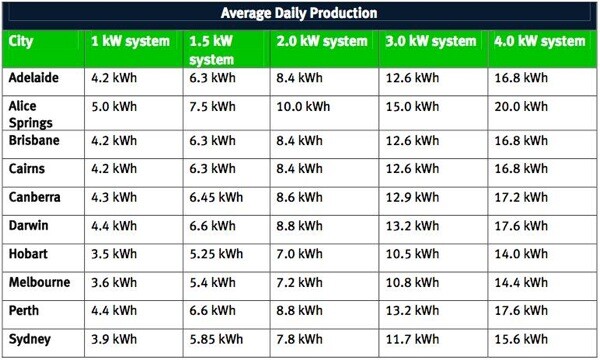
| Australian Capital City | Average Daily Peak Sun Hours (Approx.) | Example 6.6kW System Output (kWh/day) |
|---|---|---|
| Perth | 5.5 – 6.0 | ~30 – 35 |
| Brisbane | 5.0 – 5.5 | ~28 – 33 |
| Sydney | 4.5 – 5.0 | ~25 – 30 |
| Adelaide | 4.8 – 5.3 | ~27 – 32 |
| Melbourne | 4.0 – 4.5 | ~22 – 27 |
| Hobart | 3.5 – 4.0 | ~19 – 24 |
Note: These are approximations. Actual output will vary based on specific day, weather, and system efficiency.
The Seasonal Swings: Summer vs. Winter Performance
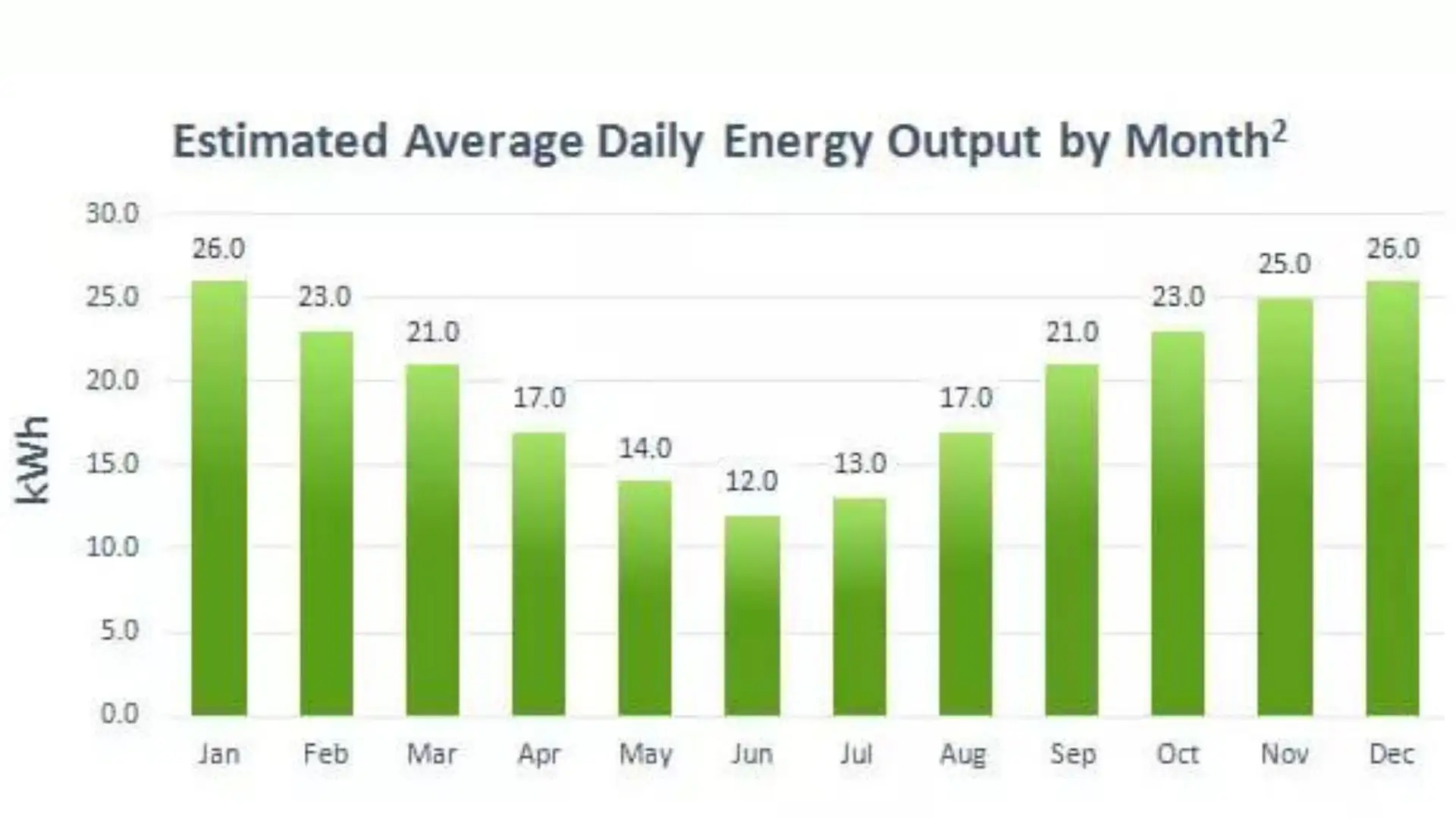
It’s intuitive, right? More sun equals more power. Australia’s seasons play a massive role. Summer days are longer and sunnier, meaning significantly higher output. Winter days are shorter, and the sun’s angle is lower in the sky, reducing production. Cloud cover is also more prevalent in some regions during winter.
For a 6.6 kW system in Sydney, here’s a rough idea of the seasonal difference:
| Season | Approx. Average Daily Output (kWh) |
|---|---|
| Summer (Dec-Feb) | ~33 – 40 |
| Autumn (Mar-May) | ~25 – 30 |
| Winter (Jun-Aug) | ~13 – 20 |
| Spring (Sep-Nov) | ~25 – 30 |
Panel Technology & Efficiency
Not all solar panels are created equal. Modern panels are incredibly efficient, but there are still variations:
- Monocrystalline Panels: Generally the most efficient (17-22%+), offering higher output from a smaller footprint.
- Polycrystalline Panels: Slightly less efficient (15-17%), but often more cost-effective.
- Thin-Film Panels: Lowest efficiency, but flexible and perform better in shaded or high-temperature conditions.
Panel efficiency directly translates to how much electricity your system can produce per square meter. Newer, higher-efficiency panels will naturally generate more kWh per day for the same nominal kW rating, assuming they receive the same amount of sunlight. Also, remember that panels degrade slightly over time, typically losing 0.5% to 1% efficiency per year.
System Design & Installation (Orientation, Tilt, Shading)
A perfectly installed system maximizes output. In Australia (southern hemisphere), panels ideally face due North to capture the most direct sunlight throughout the day. The tilt angle should generally match your latitude for optimal annual production, or be adjusted for seasonal optimization (steeper in winter, flatter in summer).
Shading is a major enemy of solar output. Even partial shading from trees, chimneys, or neighboring buildings can drastically reduce the performance of an entire string of panels if not mitigated with optimizers or micro-inverters.
Temperature’s Paradox: Heat and Efficiency
While Australia boasts abundant sunshine, it also experiences intense heat. This creates a paradox for solar panels. Silicon, the material in most panels, actually becomes less efficient as it gets hotter. For every degree Celsius above 25°C (77°F), panels lose a small percentage of their efficiency (typically 0.3-0.5% per °C). So, a scorching 40°C day might not yield as much power as a cooler, equally sunny 25°C day.
Maintenance & Cleaning
It’s simple: dirty panels don’t work as well. Dust, pollen, bird droppings, and other grime can accumulate on the surface, blocking sunlight. Regular cleaning (especially in dry, dusty regions or after long periods without rain) can significantly improve output. A well-maintained system simply performs better.

Calculating Your Potential Output: A Practical Guide
Want to estimate your own solar output in Australia? You can do it with a simple formula. While installers use sophisticated software, this will give you a good ballpark figure:
Formula: System Size (kW) x Average Daily Peak Sun Hours (PSH) x System Efficiency Factor = Average Daily Output (kWh)
Let’s break it down:
- System Size (kW): This is the DC rating of your solar system (e.g., 6.6 kW).
- Average Daily Peak Sun Hours (PSH): Refer to the table above for your city, or find more precise data for your specific location online. PSH represents the equivalent number of hours per day when solar irradiation averages 1,000 watts per square meter.
- System Efficiency Factor: This accounts for real-world losses due to wiring, inverter inefficiency, temperature, dust, and other factors. A common factor ranges from 0.75 to 0.85 (or 75-85%). For a conservative estimate, use 0.75; for an optimistic one, 0.85. I often use 0.80 for a good average.
Example Calculation:
Let’s calculate for a 6.6 kW system in Sydney, using an average PSH of 4.75 and an efficiency factor of 0.80:
6.6 kW x 4.75 PSH x 0.80 = 25.08 kWh per day
This falls perfectly within the average range I discussed earlier. Remember, this is an average; actual daily output will vary greatly between summer and winter.
Common Solar System Sizes and Their Typical Australian Output
While the calculation method applies broadly, it’s helpful to look at the most common residential solar system sizes in Australia and their typical performance:
| System Size | Typical Panels (370W) | Typical Daily Output (kWh/day) (Annual Average) | Best Suited For |
|---|---|---|---|
| 5 kW Solar System | 14-16 | 17.5 – 25 kWh | Small to medium homes with moderate energy use. |
| 6.6 kW Solar System | 18-20 | 23 – 33 kWh | The most popular choice for average Australian homes, often offsetting most or all daily usage. |
| 10 kW Solar System | 27-30 | 35 – 50 kWh | Larger homes, homes with high energy demand (e.g., EV charging, large families, pools), or small businesses. |
Many Australian households consume around 16-20 kWh per day, making the 6.6 kW system a sweet spot for maximizing self-sufficiency and reducing electricity bills significantly.
Maximizing Your Solar System’s Performance Down Under
Getting solar panels is one thing; ensuring they perform at their peak is another. Here’s how to squeeze every possible kilowatt-hour out of your Australian solar system:
- Strategic Panel Placement: This starts with proper installation. Ensure your panels are oriented as close to due North as possible (or North-West for afternoon peak generation matching consumption) and at an optimal tilt angle for your specific latitude. Critically, minimize any potential shading throughout the day, every day of the year.
- Regular Cleaning & Maintenance: Don’t underestimate the impact of dirt and dust. While rain helps, it’s not always enough. Consider a professional clean every 6-12 months, or if you notice a significant drop in output, especially after prolonged dry spells or dusty conditions. Also, keep an eye on your inverter and wiring.
- Monitoring & Optimization Tools: Most modern solar systems come with monitoring apps. Use them! Regularly check your daily, weekly, and monthly output. If you see a consistent, unexplained dip in performance, it’s a signal to investigate. Technologies like micro-inverters or power optimizers can help individual panels perform independently, mitigating the impact of partial shading or a single underperforming panel.
- Considering Battery Storage: While it doesn’t increase generation, battery storage allows you to store excess daytime solar production for use at night. This maximizes your self-consumption, reducing reliance on grid electricity during peak pricing periods, and helps you make the most of every kWh your panels generate.
- Choosing the Right Installer: This is paramount. A reputable, experienced Australian solar installer will design a system optimized for your specific location, roof, and energy needs. They’ll use quality components, ensure correct orientation and tilt, and provide post-installation support.
Beyond the Averages: Real-World Scenarios and Expectations
While averages provide a great starting point, remember that your solar system’s output will be a dynamic thing. You’ll have days where you smash the average, and days where you fall short. This is normal. Cloud cover, heavy rain, dust storms, extreme heat, or even a specific event like a tree growing taller can all impact daily production.
It’s crucial to set realistic expectations. Don’t compare a cloudy winter day’s output to a clear summer day’s. Instead, look at trends over weeks and months, and compare annual averages to your installer’s predictions. Most importantly, focus on the long-term savings and environmental benefits. Solar power in Australia is a proven, effective investment, and understanding its intricacies simply helps you harness its full potential.
The Australian solar market continues to innovate, with increasing efficiency, smarter grid integration, and competitive pricing. By understanding the factors that drive solar panel output, you’re better equipped to make informed decisions, whether you’re a prospective homeowner, an existing system owner, or an interested observer of global renewable energy trends.
Frequently Asked Questions
What is the average daily output of a 6.6 kW solar system in Australia?
A 6.6 kW solar system, which is very popular in Australia, typically produces between 23 and 33 kWh per day on an annual average. This can soar to 33-40 kWh on sunny summer days and drop to 13-20 kWh during winter.
How many kWh does a 1 kW solar panel produce per day in Australia?
On average, 1 kW of installed solar panels in Australia can generate approximately 3.5 kWh to 5 kWh of electricity per day, depending on factors like location, season, and system efficiency.
Does solar panel output vary significantly between Australian cities?
Yes, absolutely. Cities like Perth and Brisbane, with higher average daily peak sun hours (5.0-6.0 PSH), will generally see higher daily output than cities like Melbourne or Hobart (3.5-4.5 PSH) for the same system size.
How much does a 5 kW solar system produce per day in Australia?
A 5 kW solar system in Australia typically generates between 17.5 and 25 kWh per day on an annual average, making it suitable for small to medium-sized homes with moderate energy consumption.
What factors reduce solar panel output in Australia?
Key factors that can reduce solar panel output include lower solar irradiation (fewer peak sun hours, cloud cover), high ambient temperatures (which reduce panel efficiency), shading from trees or buildings, panel degradation over time, and a lack of regular cleaning and maintenance.
Is it normal for solar panel output to be lower in winter in Australia?
Yes, it is completely normal and expected. Australian winters have shorter daylight hours and a lower sun angle, leading to significantly reduced solar production compared to the longer, sunnier days of summer.


Post Comment