Average Solar Panel Output Per Month
What’s the Average Solar Panel Output Per Month? Your Ultimate Guide to Home Energy Production
So, you’re curious about solar energy. Maybe you’re considering installing panels, or perhaps you already have them and just want to understand the numbers better. One of the most common questions I hear is: “How much energy does a single solar panel actually produce per month?”
Table of Contents
- What’s the Average Solar Panel Output Per Month? Your Ultimate Guide to Home Energy Production
- The Core Numbers: Average Monthly Output for a Single Solar Panel
- Decoding Your Solar Panel’s Power Rating: Watts vs. Kilowatt-Hours
- Understanding Watts (W) and Kilowatts (kW)
- Understanding Kilowatt-Hours (kWh)
- The Power Players: Key Factors That Influence Solar Panel Output
- 1. Peak Sun Hours & Location
- 2. Solar Panel Efficiency
- 3. Panel Orientation & Tilt
- 4. Temperature & Climate
- 5. Shading
- 6. Panel Condition & Maintenance
- 7. Inverter Type & System Design
- Calculating Your Own Solar Panel Output: A Step-by-Step Guide
- Step 1: Determine Your Panel’s Wattage
- Step 2: Estimate Your Average Daily Peak Sun Hours
- Step 3: Account for System Losses
- Step 4: Calculate Daily kWh Output
- Step 5: Calculate Monthly kWh Output
- How Many Panels Do You Need to Power Your Home? (Relating Output to Consumption)
- Step 1: Find Your Monthly Electricity Usage
- Step 2: Calculate Your Total System’s Required Output
- Step 3: Estimate Number of Panels
- Maximizing Your Solar Panel’s Monthly Production
- Conclusion
It’s a fantastic question, and one without a single, simple answer. Why? Because solar panel output isn’t a fixed number; it’s a dynamic equation influenced by several key factors. Think of it like a car’s gas mileage – it depends on the model, how you drive it, and the terrain.
However, I can give you a very strong estimate and, more importantly, empower you with the knowledge to calculate it for your specific situation. Typically, a single modern solar panel (around 400 Watts) in the United States can produce anywhere from 30 to 60 kilowatt-hours (kWh) per month, depending significantly on where you live and the time of year.
This guide will break down those numbers, show you what influences them, and even walk you through calculating your own potential output. By the end, you’ll have a clear understanding of the powerhouse sitting on your roof (or soon will be!).
The Core Numbers: Average Monthly Output for a Single Solar Panel
Let’s dive straight into the practical numbers. While a solar panel’s “wattage” (e.g., 400W) tells you its maximum instantaneous power under ideal laboratory conditions, what you truly care about for your electricity bill is its kilowatt-hour (kWh) output over time. kWh is the unit of energy you consume and produce.
To give you a realistic picture, I’ve factored in typical system losses (like temperature effects, wiring resistance, and dust) that reduce the theoretical maximum by about 20%. This provides a much more accurate real-world expectation.
| Panel Wattage (W) | Avg. Daily Peak Sun Hours | Avg. Daily Output (kWh) | Avg. Monthly Output (kWh) |
|---|---|---|---|
| 300W | 3 (e.g., Seattle, Winter) | 0.72 | 21.9 |
| 300W | 4 (e.g., NYC, Spring/Fall) | 0.96 | 29.2 |
| 300W | 5 (e.g., Atlanta, Summer) | 1.20 | 36.5 |
| 300W | 6 (e.g., Phoenix, Summer) | 1.44 | 43.8 |
| 400W | 3 (e.g., Seattle, Winter) | 0.96 | 29.2 |
| 400W | 4 (e.g., NYC, Spring/Fall) | 1.28 | 39.0 |
| 400W | 5 (e.g., Atlanta, Summer) | 1.60 | 48.6 |
| 400W | 6 (e.g., Phoenix, Summer) | 1.92 | 58.4 |
| 460W | 3 (e.g., Seattle, Winter) | 1.10 | 33.5 |
| 460W | 4 (e.g., NYC, Spring/Fall) | 1.47 | 44.7 |
| 460W | 5 (e.g., Atlanta, Summer) | 1.84 | 56.0 |
| 460W | 6 (e.g., Phoenix, Summer) | 2.21 | 67.2 |
A note on “Peak Sun Hours”: This isn’t just the number of hours the sun is visible. It’s the equivalent number of hours per day when solar irradiance averages 1,000 watts per square meter (W/m²). This is a standard measurement used in the solar industry to account for varying sunlight intensity throughout the day and year. Locations like Arizona or California often have 5-6 peak sun hours, while states like Washington or Maine might see 3-4, especially in winter.
Decoding Your Solar Panel’s Power Rating: Watts vs. Kilowatt-Hours
Before we go deeper, let’s clarify the two fundamental units you’ll encounter:
Understanding Watts (W) and Kilowatts (kW)
Think of Watts as the horsepower of your solar panel. It describes the instantaneous rate at which it can produce electricity. A 400W panel can produce 400 Watts of power at a given moment under optimal conditions. Kilowatts (kW) are simply 1,000 Watts (e.g., a 4kW system has a capacity of 4,000 Watts).
Understanding Kilowatt-Hours (kWh)
Now, think of Kilowatt-hours as the distance traveled. This is the actual amount of energy produced over a period of time. If your 400W panel produces its maximum 400W for one entire hour, it has produced 0.4 kWh (400W * 1 hour = 400 Wh = 0.4 kWh). Your utility bill measures your energy consumption in kWh, so this is the number that truly matters for your energy independence.
Your solar panel’s monthly output, therefore, is the sum of all the kWh it produces over that month. It’s not just how powerful it *can be, but how much power it does* generate and deliver.
The Power Players: Key Factors That Influence Solar Panel Output
Many variables conspire to affect how much juice your panels produce. Understanding these factors is key to predicting and maximizing your monthly yield.
1. Peak Sun Hours & Location
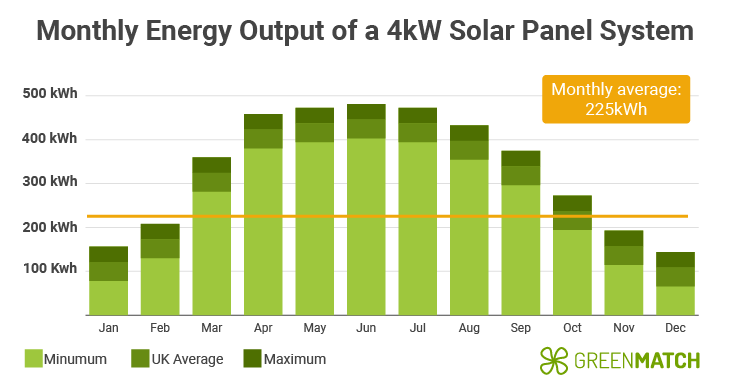
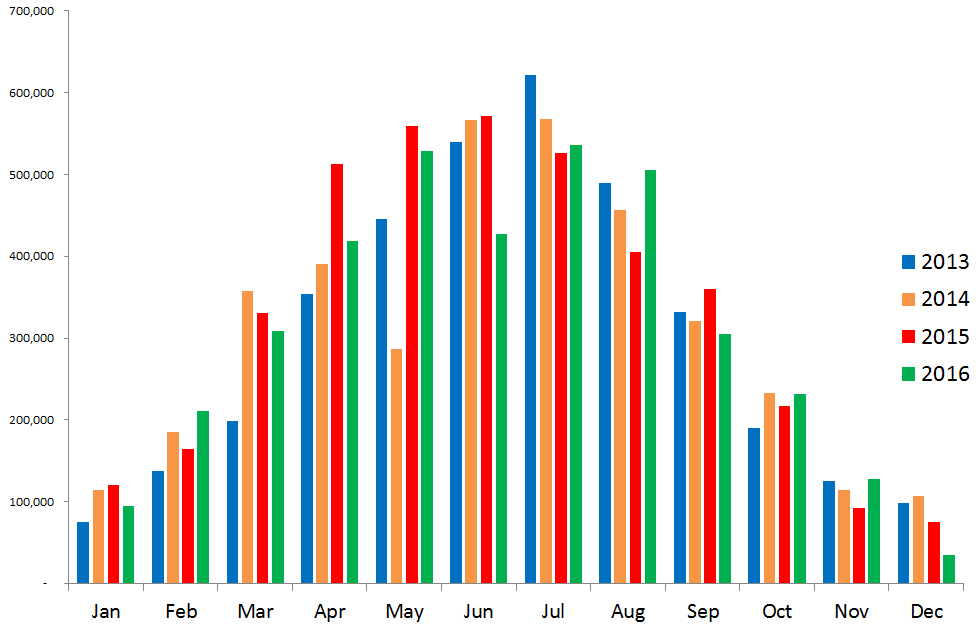
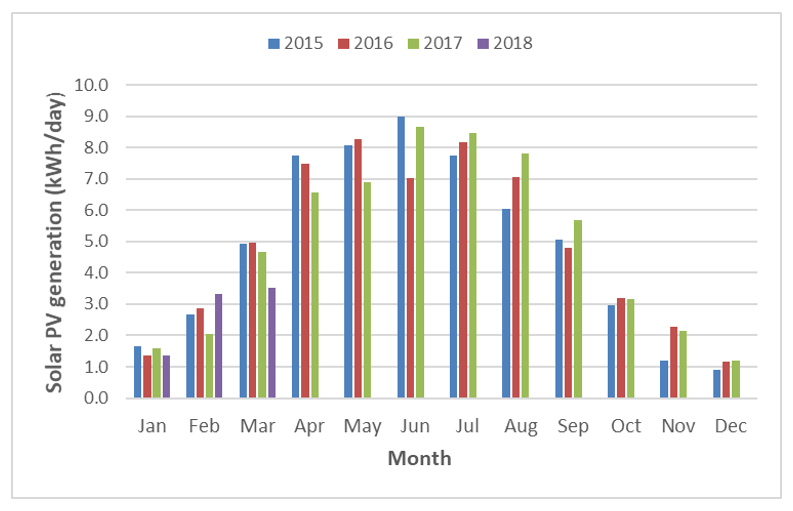
This is arguably the most significant factor. As mentioned earlier, different regions of the U.S. receive varying amounts of effective sunlight throughout the year. The sunniest states (like Arizona, Nevada, and California) boast higher average peak sun hours, leading to greater monthly output. Conversely, cloudier, more northern states will naturally have lower production, especially in winter. Seasonal changes within any location also play a huge role; your panels will produce significantly more in a long, sunny summer day than a short, cloudy winter one.
2. Solar Panel Efficiency
Panel efficiency tells you how effectively a solar panel converts sunlight into usable electricity. Modern panels typically range from 17% to 23% efficiency. A 20% efficient panel will convert 20% of the sunlight hitting it into electricity. A higher efficiency panel (even if it has the same wattage as a lower efficiency one) means it can produce more energy from a smaller physical footprint, which is crucial for roofs with limited space.
3. Panel Orientation & Tilt
For homes in the Northern Hemisphere (like the U.S.), panels ideally face due South to capture the most direct sunlight throughout the day. The tilt angle is also crucial; an angle roughly equal to your geographical latitude is often optimal for annual production. However, some systems are tilted to optimize for winter sun (steeper angle) or summer sun (shallower angle). Even a slight deviation from the ideal can impact monthly output by several percentage points.
4. Temperature & Climate
Here’s a common misconception: solar panels don’t actually perform better in extreme heat. While they need sunlight, photovoltaic cells become less efficient as their temperature rises. This is why you might see a slight dip in summer output during extremely hot days, even with abundant sun. Most panels have a “temperature coefficient,” indicating how much their power output decreases for every degree Celsius above 25°C (77°F). Panels generally perform best in bright, sunny, but cool conditions.
5. Shading
Even partial shading can have a disproportionately large negative impact on solar panel output. If one section of a panel (or one panel in a series string) is shaded by a tree branch, chimney, or even accumulated dirt, the entire string’s output can be reduced dramatically. This is because the electricity flow is only as strong as its weakest link. Modern solutions like micro-inverters or power optimizers mitigate this issue by allowing individual panels to operate independently, minimizing the impact of shading.
6. Panel Condition & Maintenance
A dusty, dirty, or snow-covered panel isn’t performing at its best. Accumulated grime, pollen, bird droppings, or leaves can block sunlight, directly reducing output. While rain often provides a natural rinse, occasional cleaning (especially in dry, dusty areas) can help maintain optimal production. Furthermore, solar panels experience a natural, gradual degradation over their lifespan, typically losing about 0.5% to 1% of their efficiency per year. This means a 20-year-old panel will produce slightly less than a brand new one.
7. Inverter Type & System Design
The inverter is the brain of your solar system, converting the DC (direct current) electricity from your panels into AC (alternating current) that your home can use. Different inverter technologies (string inverters, micro-inverters, power optimizers) have varying efficiencies and impacts on overall system performance. A well-designed system, taking into account all the factors above, will always yield better monthly output than a poorly configured one.
Calculating Your Own Solar Panel Output: A Step-by-Step Guide
Ready to crunch some numbers for your own potential solar setup? Here’s how you can get a good estimate:
Step 1: Determine Your Panel’s Wattage
This is typically easy to find on the panel’s specifications sheet or product description. Common residential panel wattages range from 300W to 460W (and sometimes higher for newer models). For our example, let’s use a 400W panel.
Step 2: Estimate Your Average Daily Peak Sun Hours
This is crucial and location-specific. You can find excellent resources online from the National Renewable Energy Laboratory (NREL) or by simply searching for “average peak sun hours [your city/state]”. Remember, this value will vary seasonally. For a yearly average, or for a specific month, choose the appropriate number. For our example, let’s assume 5 peak sun hours per day.
Step 3: Account for System Losses
As discussed, real-world conditions mean you won’t get 100% of the theoretical output. Factors like temperature, wiring losses, dust, and inverter efficiency lead to a reduction. A realistic system loss factor ranges from 15% to 25%. Let’s use a conservative 20% loss factor (meaning 80% of theoretical output remains).
Step 4: Calculate Daily kWh Output
Now, let’s put it all together. The formula is:
(Panel Wattage * Peak Sun Hours * (1 - Loss Factor)) / 1000 = Daily kWh
Using our example:
- (400W * 5 hours * (1 – 0.20)) / 1000
- (400W * 5 hours * 0.80) / 1000
- (2000 Wh * 0.80) / 1000
- 1600 Wh / 1000 = 1.6 kWh per day
Step 5: Calculate Monthly kWh Output
Finally, multiply your daily output by the average number of days in a month (roughly 30.4 for an annual average):
Daily kWh * 30.4 = Monthly kWh
Continuing our example:
- 1.6 kWh/day * 30.4 days/month = 48.64 kWh per month
So, our hypothetical 400W panel, in a location with 5 peak sun hours and accounting for realistic losses, would produce approximately 48.6 kilowatt-hours per month. This figure aligns perfectly with the range we discussed in the table above!
How Many Panels Do You Need to Power Your Home? (Relating Output to Consumption)
Once you understand a single panel’s output, it’s natural to wonder how many you’d need for your whole home. This is where your individual electricity consumption comes into play.
Step 1: Find Your Monthly Electricity Usage
Grab your utility bill! Most bills clearly state your average monthly electricity consumption in kWh. The average American home uses around 900 kWh per month, but yours could be much lower or higher.
Step 2: Calculate Your Total System’s Required Output
Let’s say your home uses 900 kWh per month. That’s your target production.
Step 3: Estimate Number of Panels
Using our example 400W panel producing 48.6 kWh/month:
Total Required Output / Avg. Panel Monthly Output = Number of Panels
900 kWh / 48.6 kWh/panel ≈ 18.5 panels
Since you can’t have half a panel, you’d likely need around 19 solar panels of this size to cover your entire 900 kWh monthly usage. This is a powerful estimation, but always remember to consult with a professional solar installer for a precise, tailored assessment for your home.
Maximizing Your Solar Panel’s Monthly Production
You’ve invested in solar, now let’s make sure you’re getting every last drop of energy! Here are actionable tips to maximize your monthly output:
- Optimal Placement & Tilt: Ensure your panels are installed facing the ideal direction (South in the U.S.) and at the optimal tilt angle for your latitude. If possible, consider systems with adjustable tilt for seasonal optimization.
- Regular Cleaning: While rain helps, a build-up of dust, dirt, or bird droppings can reduce output by 5-20%. A gentle rinse with a hose a couple of times a year can make a significant difference, especially in dry, dusty regions.
- Shading Mitigation: Before installation, prune any overhanging tree branches that could cast shadows. If shading is unavoidable, discuss micro-inverters or power optimizers with your installer.
- Monitor System Performance: Many modern solar systems come with monitoring apps. Regularly check your daily and monthly production. A sudden dip could indicate an issue (e.g., a dirty panel, an inverter problem) that needs attention.
- Professional Maintenance Checks: Periodically have a solar professional inspect your system. They can identify loose connections, potential wiring issues, or other problems that might silently be reducing your output.
Conclusion
Understanding the average solar panel output per month is a crucial step for any homeowner interested in solar energy. While the exact numbers vary, you now know the primary factors at play – peak sun hours, panel wattage, efficiency, and environmental conditions – and how to make a realistic estimate for your own situation.
Solar energy is a dynamic, powerful, and increasingly accessible solution for reducing your carbon footprint and taking control of your energy bills. With the right information and system, your rooftop can become a consistent, clean energy factory. Ready to explore what solar can do for your specific home? A local solar expert can provide a personalized assessment and precise calculations to help you harness the full power of the sun.
Frequently Asked Questions
What’s a “peak sun hour” and why is it important?
A peak sun hour is not just an hour of sunlight; it’s the equivalent of one hour of sunshine at an intensity of 1,000 watts per square meter. It’s a standard unit used in solar energy calculations to normalize varying sunlight intensity throughout the day and year, giving a more accurate measure of how much energy your panels can actually produce.
Do solar panels produce less energy in winter?
Yes, solar panels generally produce less energy in winter. This is due to shorter daylight hours, the lower angle of the sun in the sky (which means less direct sunlight), and often more cloudy days. Snow cover can also block sunlight, significantly reducing output until it melts or is cleared.
How much energy does a 400W solar panel produce per month?
A modern 400W solar panel in the U.S., accounting for typical system losses, can produce approximately 30 to 60 kilowatt-hours (kWh) per month. This range largely depends on your geographical location’s average daily peak sun hours (e.g., 3-6 hours) and the season.
How does shading affect solar panel output?
Shading, even partial shading from trees, chimneys, or dirt, can significantly reduce solar panel output. In systems where panels are wired in a series string, the performance of the entire string can drop to that of the lowest-producing, shaded panel. Technologies like micro-inverters or power optimizers can mitigate this by allowing each panel to operate independently.
Is it true that solar panels work better in cooler temperatures?
Yes, surprisingly, solar panels tend to be more efficient in cooler temperatures, provided there’s ample sunlight. While sunlight is necessary, extreme heat reduces the efficiency of the photovoltaic cells. Panels typically have a ‘temperature coefficient’ that indicates a slight decrease in power output for every degree Celsius above a standard testing temperature (usually 25°C or 77°F).
How often should I clean my solar panels to maintain optimal output?
The frequency depends on your local environment. In most areas, rain is sufficient to keep panels relatively clean. However, in dusty regions, areas with heavy pollen, or where bird droppings are common, cleaning your panels 1-2 times a year (with just water and a soft brush/squeegee) can help maintain optimal efficiency and prevent output losses of 5-20%.
What’s the typical lifespan of a solar panel and how does it affect output?
Most solar panels are designed to last 25-30 years or more, often coming with a performance warranty guaranteeing a certain percentage of their original output after two decades. Panels experience a natural degradation, typically losing about 0.5% to 1% of their efficiency per year. This means a panel will produce slightly less energy towards the end of its lifespan than when it was new.


Post Comment