Future Of Solar Industry In India
India’s Solar Ascent: Navigating the Bright Future of Renewable Energy
Ever wonder where the next global energy superpower will emerge from? Look no further than India. This isn’t just about another country adopting solar; it’s about a nation of 1.4 billion people embarking on an energy transformation that will reshape global markets, redefine sustainability, and present unprecedented opportunities for innovation and investment. For anyone in the USA looking at future energy trends, climate action, or investment opportunities, India’s solar journey isn’t just a story – it’s a blueprint for the future. You’re about to dive into a future where India isn’t just a major player, but a dominant force in the global solar landscape, driven by ambitious policies, plummeting costs, and an insatiable demand for clean power.
Table of Contents
- India’s Solar Ascent: Navigating the Bright Future of Renewable Energy
- The Unstoppable Momentum: Why India’s Solar Sector Is Exploding
- Astounding Growth Trajectory: From Niche to Necessity
- Driving Forces: The Pillars of Progress
- Decoding India’s Solar Strategy: Policies Paving the Path Forward
- Production Linked Incentive (PLI) Scheme: Fueling Domestic Manufacturing
- PM-KUSUM: Empowering Rural India with Solar Pumps
- Renewable Purchase Obligations (RPOs) & Green Energy Corridors
- Net Metering and Rooftop Solar: Decentralizing Power
- Solar Parks & Ultra Mega Solar Power Projects: Scale and Efficiency
- Technological Horizons: Innovations Shaping Tomorrow’s Solar Landscape
- Advanced PV Technologies: PERC, TOPCon, HJT, and Tandem Cells
- Energy Storage Solutions: The Battery Revolution
- Smart Grids & AI Integration: Optimizing Performance
- Agro-Voltaics: Dual-Use Land for Food and Power
- Investment & Economic Impact: Opportunities for Global Players
- India as a Manufacturing Hub: Supply Chain Diversification
- Foreign Direct Investment (FDI) & Collaborative Ventures
- Job Creation & Skill Development: A Socio-Economic Dividend
- Decarbonization & Green Growth: A Sustainable Future
- The Road Ahead: Navigating Challenges & Ensuring Sustainable Growth
- Solar Waste Management & Circular Economy: A Looming Imperative
- Grid Integration & Stability: Balancing Supply and Demand
- Land Acquisition & Environmental Concerns
- Financing & Investment Barriers
- Geopolitical Dynamics & Supply Chain Resilience
- Looking Beyond 2030: India’s Vision for a Solar-Powered Future
- Ambitious Targets and Net-Zero Aspirations
- Global Leadership in Renewable Energy
- The Promise of Energy Independence
The Unstoppable Momentum: Why India’s Solar Sector Is Exploding
India’s solar industry isn’t just growing; it’s experiencing an exponential surge. Imagine a country adding over 30 GW of new solar capacity in a single year, a stark increase from previous installations. This isn’t just about numbers; it’s about a fundamental shift in how one of the world’s largest economies powers itself. The trajectory is clear: India is on track to become a solar superpower, and understanding the ‘why’ behind this momentum is crucial.
Astounding Growth Trajectory: From Niche to Necessity
Just a decade ago, solar power in India was nascent. Today, it’s a cornerstone of the nation’s energy security and environmental strategy. India’s installed solar capacity has soared, driven by a national imperative to meet escalating energy demand and reduce its carbon footprint. The goal is not just to replace fossil fuels but to create a robust, resilient, and green energy infrastructure capable of supporting future growth.
| Year | Installed Solar Capacity (GW) | Projected Growth (GW by 2030) |
|---|---|---|
| 2014 | ~2.6 | – |
| 2023 | ~70 | – |
| 2024 (estimated) | ~100 | – |
| 2030 (target) | – | 250 – 300+ |
Driving Forces: The Pillars of Progress
Several intertwined factors are fueling this incredible growth:
- Government Ambition & Policy Tailwinds: India’s government has laid out clear, aggressive targets and backed them with robust policy frameworks. Schemes like the Production Linked Incentive (PLI) are not just about adding capacity, but about building an entire domestic manufacturing ecosystem. You’ll see how these policies translate into real-world impact shortly.
- Dramatic Cost Reductions: The global trend of declining solar panel costs has made solar power incredibly competitive, often cheaper than conventional fossil fuel-based electricity in India. This economic advantage is a huge draw for both utility-scale projects and individual consumers.
- Soaring Energy Demand: As India’s economy expands and its population grows, the demand for electricity is escalating rapidly. Solar offers a rapid, scalable, and environmentally friendly solution to meet this burgeoning need, especially in regions with limited grid access.
- Global Green Imperative: India is a signatory to international climate agreements and recognizes its responsibility in combating climate change. The International Solar Alliance (ISA), headquartered in India, is a testament to the nation’s commitment to fostering global cooperation in solar energy adoption.
Decoding India’s Solar Strategy: Policies Paving the Path Forward
Understanding India’s solar future requires a closer look at the intricate policy landscape. These aren’t just bureaucratic directives; they are the engines driving the sector’s transformation, creating fertile ground for investment and innovation.
Production Linked Incentive (PLI) Scheme: Fueling Domestic Manufacturing
A critical shift for India is its push for self-reliance (Atmanirbhar Bharat) in solar manufacturing. The PLI scheme offers financial incentives to companies setting up integrated manufacturing facilities for high-efficiency solar PV modules. What does this mean for you? It signifies India’s commitment to building a resilient, local supply chain, potentially diversifying global manufacturing away from single dominant regions.
PM-KUSUM: Empowering Rural India with Solar Pumps
The Pradhan Mantri Kisan Urja Suraksha evam Utthaan Mahabhiyan (PM-KUSUM) scheme is a game-changer for rural India. It incentivizes farmers to install standalone solar pumps and grid-connected solar power plants. This not only reduces reliance on expensive diesel pumps but also allows farmers to earn income by selling surplus power to the grid. It’s a powerful model for distributed energy generation and rural empowerment.
Renewable Purchase Obligations (RPOs) & Green Energy Corridors
State electricity distribution companies (DISCOMs) are mandated to purchase a certain percentage of their electricity from renewable sources, known as RPOs. To facilitate the evacuation of this massive renewable power, India is building dedicated Green Energy Corridors – high-voltage transmission lines designed specifically for renewable energy. This ensures that the power generated from massive solar parks can actually reach consumers.

Net Metering and Rooftop Solar: Decentralizing Power
The focus isn’t just on large-scale projects. Policies supporting net metering allow residential and commercial consumers to install rooftop solar systems and feed surplus electricity back into the grid, receiving credit for it. This decentralized approach democratizes power generation and empowers millions of individuals and businesses to become prosumers.
Solar Parks & Ultra Mega Solar Power Projects: Scale and Efficiency
To achieve gigawatt-scale targets efficiently, India has promoted the development of large solar parks – designated areas with ready infrastructure (transmission lines, roads, water) for multiple solar power projects. These “ultra mega” parks significantly reduce project development time and costs, attracting large-scale investment.
Technological Horizons: Innovations Shaping Tomorrow’s Solar Landscape
The future of solar in India isn’t just about deploying existing technology; it’s about embracing and fostering the next generation of innovations. Staying competitive means staying ahead of the technological curve.
Advanced PV Technologies: PERC, TOPCon, HJT, and Tandem Cells
While Polycrystalline panels once dominated, India is rapidly moving towards higher efficiency technologies. PERC (Passivated Emitter and Rear Cell) technology is already widespread. Looking ahead, you’ll see increasing adoption of TOPCon (Tunnel Oxide Passivated Contact) and HJT (Heterojunction Technology) cells, which offer superior efficiency and performance, especially in high-temperature environments. Beyond these, the holy grail of tandem cells (stacking multiple absorber layers to capture more of the solar spectrum) promises even greater efficiency breakthroughs.
Energy Storage Solutions: The Battery Revolution
The intermittency of solar power is its main challenge. That’s why large-scale battery energy storage systems (BESS) are critical. India is investing heavily in utility-scale battery storage, pumped hydro, and exploring other forms of energy storage to ensure grid stability and reliability. This creates immense opportunities for battery manufacturers and integrators.
Smart Grids & AI Integration: Optimizing Performance
As more renewable energy comes online, managing the grid becomes complex. India is actively developing smart grids that use digital technologies to monitor, control, and manage energy flow efficiently. Artificial intelligence (AI) and machine learning (ML) are being deployed for demand forecasting, predictive maintenance of solar assets, and optimizing energy dispatch – making the entire system smarter and more resilient.
Agro-Voltaics: Dual-Use Land for Food and Power
Land availability can be a constraint in a densely populated country like India. Agro-voltaics, or agri-PV, offers an ingenious solution: installing solar panels above agricultural land, allowing for both crop cultivation and electricity generation. This innovative approach maximizes land use efficiency and can be particularly impactful in India’s agrarian economy.
Investment & Economic Impact: Opportunities for Global Players
For investors, technology providers, and businesses in the USA, India’s solar journey represents a massive opportunity. It’s not just about energy; it’s about a multi-billion dollar market for technology, manufacturing, and services.
India as a Manufacturing Hub: Supply Chain Diversification
With the PLI scheme, India aims to become a significant global manufacturing hub for solar cells, modules, and components. This push for localization offers a strategic advantage for international companies looking to diversify their supply chains and access India’s vast domestic market. Think about joint ventures, technology transfer, and setting up production facilities.

Foreign Direct Investment (FDI) & Collaborative Ventures
India’s solar sector has attracted substantial FDI, and this trend is set to accelerate. International players are partnering with Indian companies for project development, technology deployment, and manufacturing. The policy environment is increasingly favorable for foreign investment, particularly in areas aligning with India’s energy security and green growth objectives.
| Investment Type | Key Areas of Opportunity | Potential for USA Companies |
|---|---|---|
| Direct Investment | Utility-scale solar farms, rooftop solar projects, solar manufacturing plants | Project equity, manufacturing partnerships, land leasing |
| Technology Transfer | Advanced PV cells (TOPCon, HJT, Tandem), BESS, smart grid solutions, AI/ML for energy management | Licensing agreements, R&D collaboration, joint ventures |
| Service Provision | EPC (Engineering, Procurement, Construction), O&M (Operations & Maintenance), project financing, consulting | Specialized services, global best practices, financing expertise |
Job Creation & Skill Development: A Socio-Economic Dividend
The expansion of the solar sector is a massive job creator, from manufacturing and installation to operations and maintenance. This is a significant socio-economic benefit for India, requiring substantial skill development programs. For international partners, this means a growing pool of skilled labor and a market ripe for training and educational initiatives.
Decarbonization & Green Growth: A Sustainable Future
India’s solar push is pivotal for global decarbonization efforts. By significantly reducing its reliance on coal, India contributes immensely to mitigating climate change. This commitment to green growth aligns with global sustainability goals, presenting opportunities for environmental, social, and governance (ESG) focused investments.
The Road Ahead: Navigating Challenges & Ensuring Sustainable Growth
No journey of such scale is without its obstacles. While India’s solar future is undeniably bright, addressing potential challenges proactively is key to sustaining its growth trajectory.
Solar Waste Management & Circular Economy: A Looming Imperative
One of the less discussed but critical challenges is the management of solar panel waste. As millions of panels installed years ago reach their end-of-life, India will face a significant volume of electronic waste. Developing a robust circular economy for solar, involving efficient recycling, refurbishment, and repurposing of materials, is essential. This area presents a huge opportunity for innovative waste management and recycling technologies, which could be a niche for global companies.
Grid Integration & Stability: Balancing Supply and Demand
Integrating massive amounts of intermittent solar power into an existing grid designed for conventional sources is a complex task. Ensuring grid stability, managing fluctuations, and maintaining reliable power supply requires advanced grid infrastructure, forecasting capabilities, and sufficient energy storage. India is investing in these areas, but the challenge remains substantial.
Land Acquisition & Environmental Concerns
Large-scale solar projects require significant land area, which can lead to challenges related to land acquisition, especially in a densely populated country. Balancing development with environmental conservation, biodiversity protection, and community interests is an ongoing consideration. Innovative solutions like agro-voltaics and floating solar panels help mitigate this.
Financing & Investment Barriers
While investment is flowing, the sheer scale of India’s ambitions means enormous capital requirements. Attracting competitive financing, particularly for smaller, distributed projects, and ensuring a stable regulatory environment for long-term investments are continuous efforts. International financial institutions and green bond markets play a crucial role here.
Geopolitical Dynamics & Supply Chain Resilience
The global solar supply chain has faced disruptions, highlighting the need for resilience. India’s push for domestic manufacturing is partly driven by a desire to reduce dependence on single regions and hedge against geopolitical risks. For global players, understanding these dynamics and potentially collaborating on diversified supply chain strategies is important.
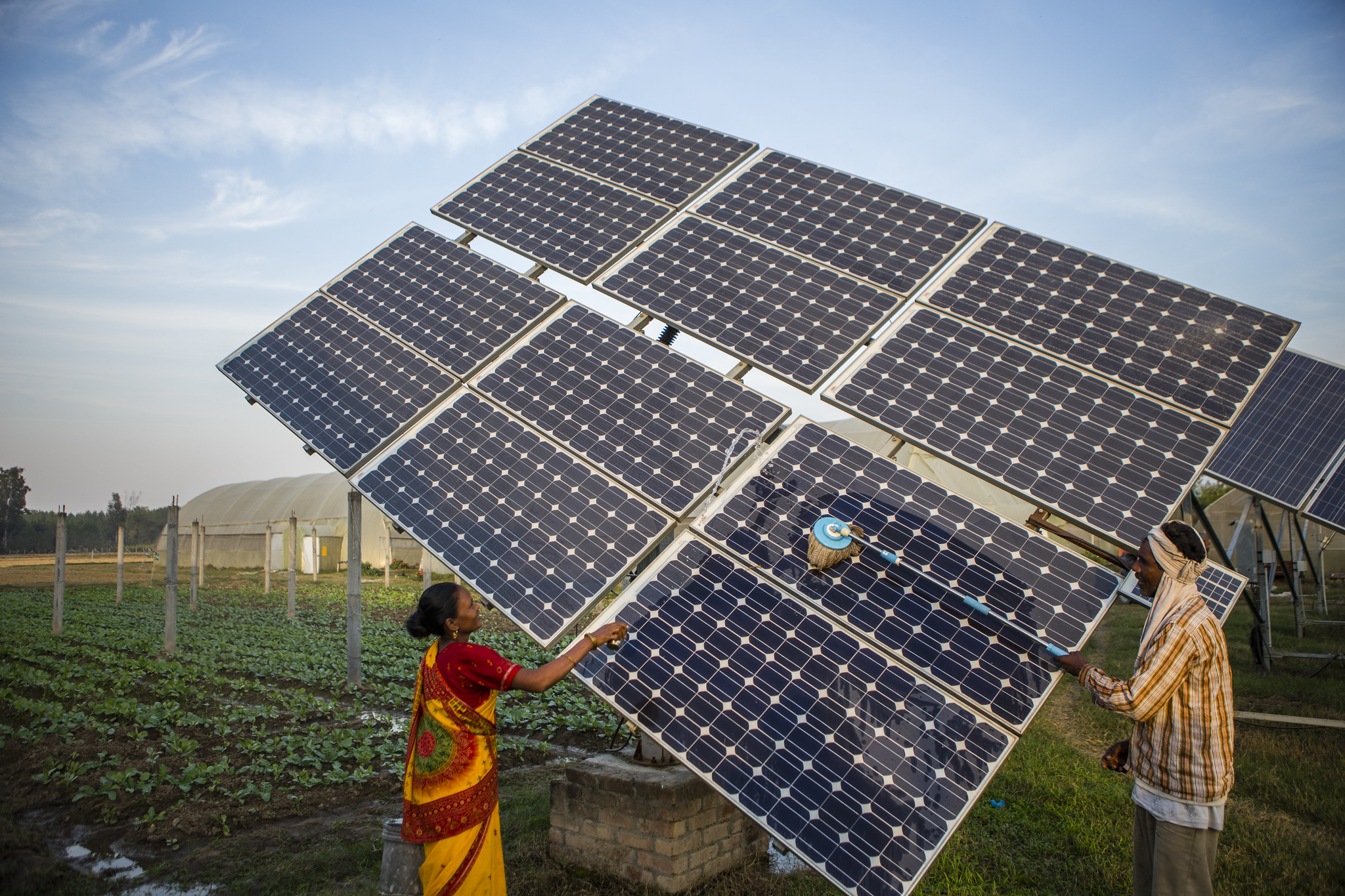
Looking Beyond 2030: India’s Vision for a Solar-Powered Future
India’s commitment to solar power extends far beyond the immediate targets. The vision is ambitious, transformational, and deeply strategic.
Ambitious Targets and Net-Zero Aspirations
India has pledged to achieve Net-Zero emissions by 2070, with a significant interim target of 50% of its energy requirements coming from renewable sources by 2030. Solar energy will be the single largest contributor to this target, driving massive investment and deployment over the coming decades. This isn’t just a political promise; it’s an economic imperative and a national mission.
Global Leadership in Renewable Energy
Through initiatives like the International Solar Alliance, India is positioning itself not just as a consumer but as a leader and advocate for solar energy worldwide. Its experience in rapidly scaling solar, overcoming challenges, and innovating solutions will serve as a valuable model for other developing nations.
The Promise of Energy Independence
Ultimately, India’s solar journey is also about achieving greater energy independence. Reducing reliance on imported fossil fuels stabilizes the economy, improves national security, and allows for greater control over its energy future. Solar is at the heart of this strategic shift.
The future of the solar industry in India is not merely bright; it’s blindingly brilliant. It’s a testament to audacious policy, technological ingenuity, and an unyielding demand for sustainable growth. For global observers, investors, and innovators, India represents one of the most dynamic and consequential energy markets on the planet. Ignoring this seismic shift isn’t an option. Instead, it’s an invitation to engage, collaborate, and contribute to a cleaner, more prosperous future, not just for India, but for the world.
Frequently Asked Questions
What are the primary drivers of solar industry growth in India?
India’s solar growth is primarily driven by strong government policies (like the PLI scheme and PM-KUSUM), significant reductions in solar panel costs, soaring domestic energy demand from its large population, and its commitment to global climate goals and energy independence.
What are India’s solar capacity targets for the coming years?
India aims to significantly boost its solar capacity, with projections suggesting an increase from around 100 GW in 2024 to over 250-300+ GW by 2030. This is part of its larger goal to meet 50% of its energy requirements from renewable sources by 2030 and achieve Net-Zero emissions by 2070.
What role does domestic manufacturing play in India’s solar strategy?
Domestic manufacturing is a cornerstone of India’s solar strategy, aimed at achieving self-reliance and diversifying global supply chains. Schemes like the Production Linked Incentive (PLI) are designed to incentivize companies to set up integrated manufacturing facilities for high-efficiency solar cells and modules within India, reducing reliance on imports.
What challenges does the Indian solar industry face?
Key challenges include effective solar waste management and developing a circular economy for panels, integrating large volumes of intermittent solar power into the grid while maintaining stability, issues related to land acquisition for large projects, securing long-term financing, and building resilient supply chains amidst geopolitical shifts.
Are there opportunities for international investors and companies in India’s solar sector?
Absolutely. India’s solar sector offers vast opportunities for foreign direct investment, technology transfer, and collaborative ventures. Areas include utility-scale project development, advanced PV and battery manufacturing, smart grid solutions, project financing, and specialized services like EPC and O&M, all supported by a favorable policy environment.
How is India addressing the intermittency of solar power?
India is tackling solar intermittency through significant investments in battery energy storage systems (BESS), pumped hydro storage, and the development of smart grids. These technologies, combined with AI-driven forecasting and grid management, aim to ensure stable and reliable power supply despite solar’s variable output.


Post Comment