How Do Solar Panels Work With Your Electric Bill
How Solar Panels Transform Your Electric Bill: A Definitive Guide to Savings
Let’s be real. The promise of solar panels sounds incredible: generating your own clean power, breaking free from escalating utility rates, and dramatically slashing your monthly electric bill. But here’s the question that nags everyone: Do you still get an electric bill with solar panels?
Table of Contents
- How Solar Panels Transform Your Electric Bill: A Definitive Guide to Savings
- The Basics: How Solar Panels Generate Power and Connect to the Grid
- From Sunlight to Electrons: The Solar Panel Process
- The Grid Connection: Why You Still Need It
- Net Metering: Your Key to Solar Bill Credits (And Potential Pitfalls)
- What is Net Metering and How Does It Work?
- The “True-Up” Statement: Your Annual Solar Report Card
- Net Billing and Beyond: Evolving Compensation Structures
- Decoding Your Electric Bill: Before & After Solar (A Hypothetical Example)
- Before Solar: Understanding Standard Utility Charges
- After Solar: What Changes and What Stays the Same?
- The “Zero Bill” Myth vs. Reality
- Maximizing Your Solar Savings: Beyond Just Panels
- Strategic Energy Use: Time-of-Use (TOU) Rates
- The Power of Battery Storage: Self-Sufficiency & Peak Shaving
- Energy Efficiency First: The Foundation of Lower Bills
- Monitoring Your System: Staying on Top of Production & Consumption
- What to Expect When Going Solar: Practical Considerations
- Installation Process & Activation
- System Sizing: Getting It Right for Your Usage
- Seasonal Variations: Solar Production & Bill Fluctuations
- The “Solar Bill” vs. “Utility Bill” (Clarification)
- Common Misconceptions About Solar and Your Electric Bill
The short answer is usually yes, you will still receive an electric bill. But before you throw your hands up, understand this: that bill will look fundamentally different, and the amount you owe can be reduced to mere pennies, or even turn into a credit in your favor. It’s not about eliminating the bill entirely, but rather about seizing control of your energy future and rewriting the rules of your household budget.
This guide isn’t about vague promises. It’s about pulling back the curtain on how solar truly interacts with your electricity usage and, most importantly, your wallet. We’ll demystify the mechanics, dissect a typical electric bill, and show you exactly how solar panels can be your ultimate financial ally.
The Basics: How Solar Panels Generate Power and Connect to the Grid
To understand your bill, you first need to grasp the fundamental dance between your solar system and the electrical grid.
From Sunlight to Electrons: The Solar Panel Process
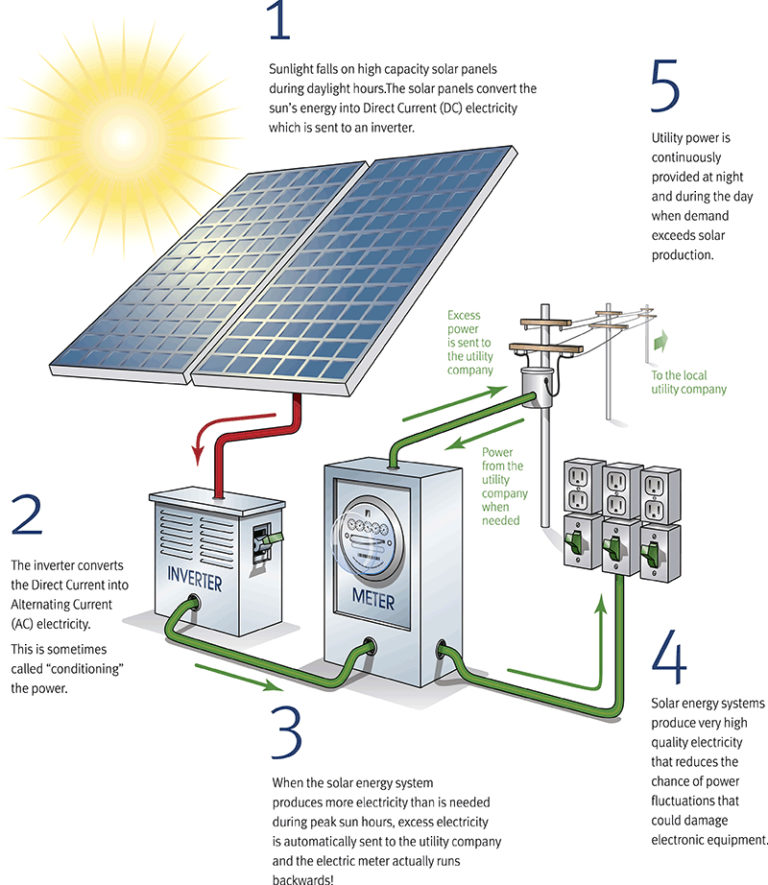
It starts with the sun. Your rooftop solar panels are made of photovoltaic (PV) cells. When sunlight hits these cells, it excites electrons, generating a direct current (DC) of electricity. Most homes and appliances, however, run on alternating current (AC). That’s where your inverter comes in. This smart device converts the DC power from your panels into usable AC electricity for your home.
The moment that AC power is generated, it immediately feeds into your home’s electrical panel. If your home needs power for lights, appliances, or charging devices, it uses this freshly generated solar electricity first. It’s truly a beautiful thing: free, clean energy, generated right where you need it.
The Grid Connection: Why You Still Need It
So, if you’re making your own power, why stay connected to the grid? Simple: solar panels don’t work at night, and their output dips significantly on cloudy or stormy days. They’re also impacted by shading from trees or buildings. The electrical grid acts as your giant, ever-present battery and backup generator. When your solar panels aren’t producing enough power (like after sunset), your home seamlessly draws electricity from the grid, just as it always has. You won’t even notice the switch.
Conversely, when your solar panels are generating more electricity than your home is currently using (often during peak sun hours in the middle of the day), that excess power doesn’t go to waste. Instead, it flows back onto the utility grid, helping to power your neighbors’ homes and contributing to the overall energy supply. And this is where your electric bill starts to get really interesting.
Net Metering: Your Key to Solar Bill Credits (And Potential Pitfalls)
The mechanism that allows you to essentially “bank” your excess solar power with the utility company is called net metering. It’s one of the most crucial aspects of solar economics for homeowners.
What is Net Metering and How Does It Work?
Net metering is a billing arrangement that credits solar energy system owners for the electricity they add to the grid. Think of your electric meter like a financial account. When your solar panels produce more electricity than you use, your meter essentially spins backward, recording the excess energy you’ve sent to the grid. You get a credit for that power, typically at the full retail rate you’d pay for electricity.
Then, when your home needs power from the grid (at night, on cloudy days), you draw from those banked credits. If you send more power to the grid than you pull from it over a billing cycle, you could end up with a net credit on your bill, or even a zero balance for your energy consumption.
The “True-Up” Statement: Your Annual Solar Report Card
While net metering works on a monthly basis, many utility companies operate on an annual “true-up” cycle. This means they track your net energy usage (or generation) over an entire 12-month period. At the end of this period, you receive a true-up statement. This statement reconciles all the electricity you’ve pulled from the grid against all the excess electricity your solar panels have sent to the grid.
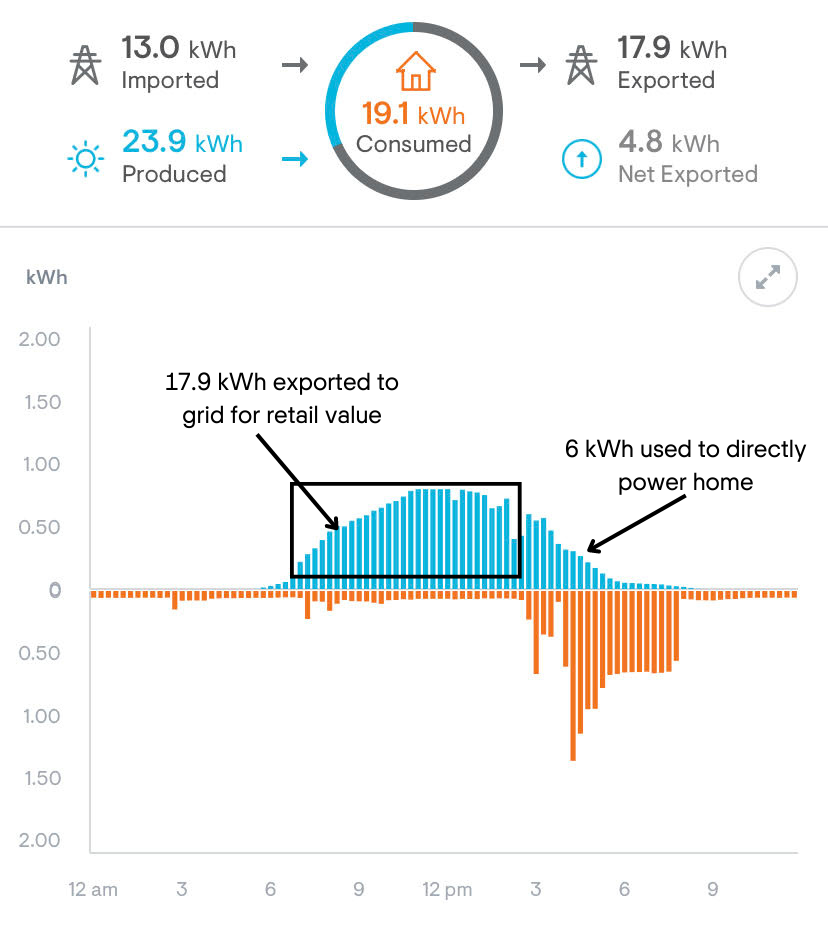
If, over the year, you’ve produced more electricity than you’ve consumed, the utility might pay you for those excess credits at a wholesale rate (which is usually lower than the retail rate), or roll them over for a limited time. If you’ve consumed more than you’ve produced, you’ll owe the utility for the net difference. Understanding your true-up cycle is vital for managing your solar savings.
Net Billing and Beyond: Evolving Compensation Structures
It’s important to note that net metering policies aren’t uniform across the United States. Some states or utilities have transitioned from traditional net metering to net billing or other compensation structures. With net billing, the excess electricity you send to the grid might be compensated at a lower rate (e.g., the wholesale rate or an avoided cost rate) than the retail rate you pay for electricity. This can reduce the financial benefit of sending excess power back to the grid, making strategies like battery storage (to self-consume your solar power) even more appealing.
Always check your local utility and state policies to understand how your excess solar generation will be credited.
Decoding Your Electric Bill: Before & After Solar (A Hypothetical Example)
This is where the rubber meets the road. Let’s look at how your bill transforms from a dreaded monthly expense to a manageable statement of energy independence.
Before Solar: Understanding Standard Utility Charges
A typical electric bill is more than just a charge for kilowatt-hours (kWh) consumed. It’s usually broken down into several components:
- Generation Charges: The cost of producing the electricity itself. This is usually the largest component and varies based on your usage (kWh).
- Transmission Charges: The cost to transport electricity from power plants to your local distribution network.
- Distribution Charges: The cost to deliver electricity from the local network directly to your home.
- Fixed Service Charges (Customer Charge): A flat monthly fee that covers the utility’s administrative costs, meter reading, and billing, regardless of how much electricity you use.
- Taxes and Fees: Various state and local taxes, energy efficiency program surcharges, or other regulatory fees.
After Solar: What Changes and What Stays the Same?
When you go solar, you take a massive bite out of those variable generation, transmission, and distribution charges because you’re generating your own power. Your bill will reflect significantly reduced (or even negative) kWh usage from the grid. However, those pesky fixed service charges and some non-bypassable charges (fees that can’t be avoided even with solar) usually remain.
Here’s a hypothetical comparison to illustrate the impact:
| Charge Type | Before Solar (Example) | After Solar (Example) | Explanation |
|---|---|---|---|
| Total kWh Used (Gross) | 1000 kWh | 1000 kWh (home usage) | Your home’s actual energy consumption doesn’t change. |
| Solar Production | 0 kWh | 800 kWh | Electricity generated by your panels. |
| Net Grid Usage (Consumed from Grid – Sent to Grid) | 1000 kWh | 200 kWh (Net draw: 1000 home use – 800 solar) OR -50 kWh (Net export: if solar produced 1050 kWh) | This is the crucial number that impacts variable charges. |
| Generation Charges | $120.00 (1000 kWh @ $0.12) | $24.00 (200 kWh @ $0.12) OR a credit if net export | Significantly reduced, based on net grid usage. |
| Transmission/Distribution Charges | $60.00 | $12.00 | Also reduced due to lower net grid draw. |
| Fixed Service Charge | $15.00 | $15.00 | Typically remains unchanged, covers grid access. |
| Non-Bypassable Charges/Taxes | $5.00 | $5.00 | Often remains unchanged. |
| Estimated Total Bill | $200.00 | $56.00 (or less, possibly a credit) | A dramatic reduction, even with fixed charges. |
As you can see, even with a scenario where you’re still drawing some power from the grid (200 kWh net), the bill drops significantly. If your solar production exceeded your home’s usage and you sent 50 kWh *net* back to the grid, your generation/transmission/distribution charges could become credits, leaving you with only the fixed charges.
The “Zero Bill” Myth vs. Reality
While a zero energy consumption bill is absolutely achievable with solar (meaning your net grid usage is zero or negative), a zero dollar utility bill is far less common due to those persistent fixed service charges and non-bypassable fees. These charges are for the privilege of being connected to the grid, regardless of how much energy you use. So, while solar drastically reduces the variable portion of your bill, you’ll likely always see a small charge for grid access. Don’t let this deter you; the savings on the variable charges are where the real financial muscle of solar lies.
Maximizing Your Solar Savings: Beyond Just Panels
Installing solar panels is a fantastic first step. But to truly optimize your savings and get the most out of your investment, you need a smart energy strategy.
Strategic Energy Use: Time-of-Use (TOU) Rates
Many utilities now use Time-of-Use (TOU) rates, meaning the cost of electricity varies depending on the time of day. Electricity is most expensive during “peak” hours (e.g., late afternoon/early evening when everyone comes home and uses power) and cheapest during “off-peak” hours (e.g., overnight, midday). This is a huge opportunity for solar owners.
With solar, your panels are typically producing the most during midday, which might be an off-peak or shoulder-peak period. By shifting your heavy energy consumption (like running the dishwasher, doing laundry, or charging an EV) to when your solar panels are producing or to off-peak grid hours, you can dramatically reduce your reliance on expensive peak-hour grid power, maximizing your self-consumption and bill savings.
The Power of Battery Storage: Self-Sufficiency & Peak Shaving
If you truly want to supercharge your solar savings, especially with TOU rates or less favorable net metering policies, a solar battery storage system is your answer. Here’s how it works:
- Store Excess Solar: Instead of sending all your excess solar power to the grid for credits, you store it in your battery.
- Self-Consumption at Night/Peak: When your panels aren’t producing (after sunset) or during expensive peak TOU hours, your home draws power from the battery instead of the grid. This significantly reduces your grid consumption during the most expensive times.
- Backup Power: Many solar batteries also provide backup power during grid outages, offering invaluable peace of mind.
By leveraging a battery, you become more energy independent, further reducing your utility bill and potentially increasing your return on investment.
Energy Efficiency First: The Foundation of Lower Bills
Before you even size your solar system, focus on energy efficiency. The cheapest kilowatt-hour is the one you don’t use. By making your home more energy-efficient, you can:
- Reduce System Size: A more efficient home needs a smaller solar system to meet its needs, saving you upfront installation costs.
- Maximize Savings: Every kWh you save through efficiency means less power you need to generate or buy, amplifying the impact of your solar production.
Think about upgrades like LED lighting, smart thermostats, improved insulation, energy-efficient windows, and sealing air leaks. These simple steps create a robust foundation for your solar journey.
Monitoring Your System: Staying on Top of Production & Consumption
Most modern solar systems come with monitoring apps that allow you to track your solar production in real-time. Many also integrate with smart home energy monitors to show your consumption. This data is incredibly powerful:
- Identify Usage Patterns: See when your home consumes the most energy and adjust habits to align with solar production or off-peak hours.
- Verify Performance: Ensure your solar panels are working optimally. If production drops unexpectedly, you can investigate.
- Track Savings: Watch your kilowatt-hour numbers and credits accumulate, reinforcing your investment.
Being an active participant in monitoring your energy flow is key to unlocking maximum savings.
What to Expect When Going Solar: Practical Considerations
The journey to solar isn’t just about the panels; it involves several practical steps and understanding how your system will perform throughout the year.
Installation Process & Activation
Once you’ve chosen an installer and designed your system, the physical installation typically takes a few days. After installation, your system needs to be inspected by local authorities and then officially interconnected with your utility company. This “Permission to Operate” (PTO) from the utility is the final step before you can flip the switch and start generating your own power. The entire process, from contract to PTO, can take several weeks to a few months, depending on local regulations and utility timelines.
System Sizing: Getting It Right for Your Usage
One of the most critical factors impacting your electric bill after solar is how well your system is sized to your home’s energy consumption. An experienced solar installer will analyze your past electricity bills (typically 12 months’ worth) to understand your historical usage patterns. They’ll then design a system that aims to offset a specific percentage of that usage – often 80-100%, depending on your budget, roof space, and local net metering rules. An undersized system won’t maximize your savings, while an oversized system might produce excess power that isn’t compensated at a high rate, especially in net billing scenarios.
Seasonal Variations: Solar Production & Bill Fluctuations
Your solar panels will produce more electricity in the summer months when days are longer and the sun is higher in the sky. In winter, shorter days, lower sun angles, and more frequent cloud cover will lead to lower production. This doesn’t mean your annual savings are inconsistent; it means your monthly bill might fluctuate:
- Summer: You might generate significant excess credits, potentially leading to very low or even negative monthly bills.
- Winter: You’ll likely draw more power from the grid, reducing your accumulated credits or resulting in a higher (but still lower than pre-solar) bill.
The true-up statement at the end of your annual cycle will balance these seasonal variations, giving you an overall picture of your year-round solar performance and net cost.
The “Solar Bill” vs. “Utility Bill” (Clarification)
It’s important to distinguish between your utility bill and any payments related to your solar financing. If you purchased your system outright, you’ll only have your (much lower) utility bill. However, if you financed your solar system with a loan, you’ll have a monthly loan payment in addition to your reduced utility bill. If you lease your system or have a Power Purchase Agreement (PPA), you’ll have a monthly payment to the solar provider, plus your utility bill for any grid power consumed. Always factor in these separate payments when calculating your total monthly energy costs and overall savings.
Common Misconceptions About Solar and Your Electric Bill
Let’s clear up some lingering myths that can cause confusion for new solar owners.
-
“Solar means no bill ever.” As we’ve discussed, fixed utility charges and non-bypassable fees usually mean a small baseline bill remains. The goal is to eliminate or significantly reduce the variable energy charges.
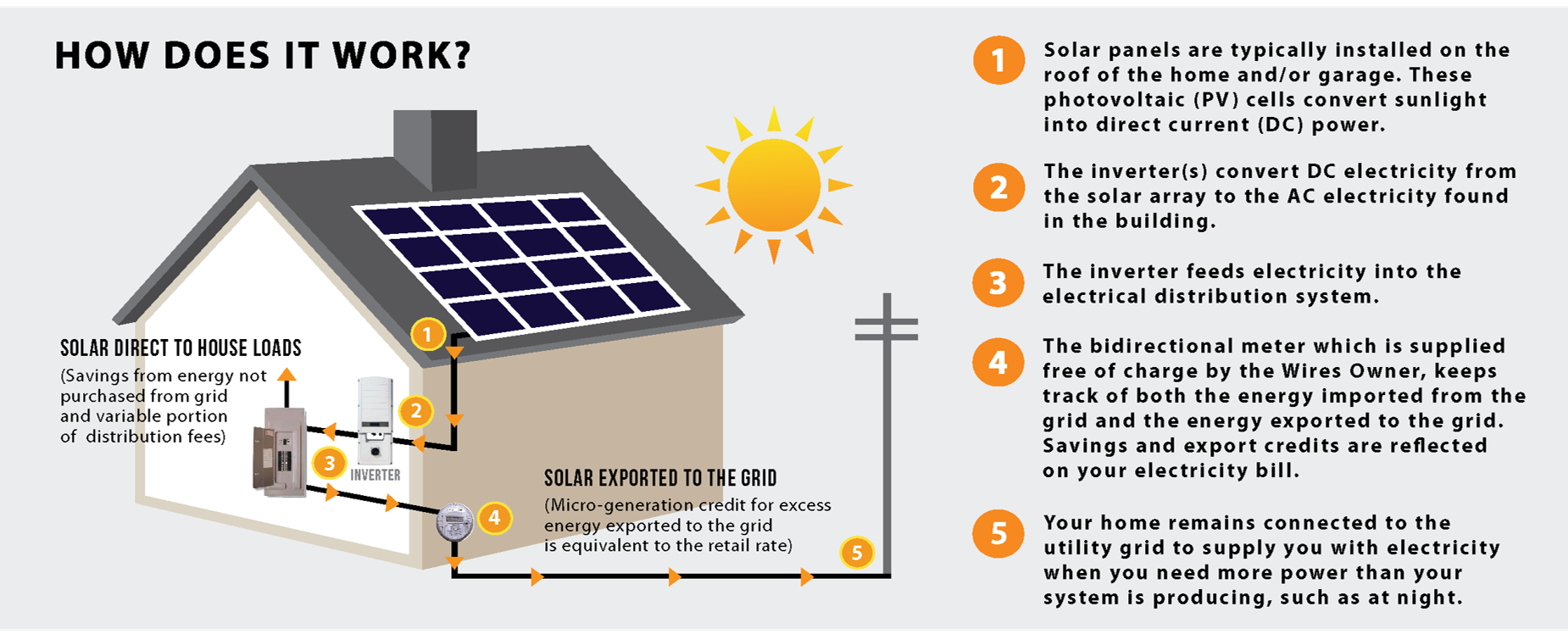 Image Source: skyfireenergy.com
 -
“My meter will always spin backward.” While traditional net metering allowed for meters to literally spin backward (or digitally accrue credits), many modern smart meters simply record net energy flow. Regardless of the physical action, the credits for excess generation are applied to your account.
-
“Solar works the same everywhere.” Absolutely not. Net metering policies, incentives (like federal tax credits), state regulations, utility rates, and even local climate vary widely. What works brilliantly for a homeowner in sunny California with robust net metering might be different for someone in a cloudier state with less favorable policies. Always research your specific local conditions.
-
“I need to be off-grid to save money.” Going completely off-grid is a complex and often more expensive endeavor, typically requiring a much larger battery bank and generator backup. For most homeowners, staying connected to the grid is the most cost-effective and reliable solution, allowing for net metering benefits and seamless backup power.
Understanding these distinctions helps set realistic expectations and ensures you make informed decisions on your solar journey.
Embracing solar power is a smart move for your finances and the environment. While the idea of a completely zero-dollar electric bill might be a myth for most, the reality of drastically reduced utility costs and newfound energy independence is a powerful and achievable dream. By understanding how your solar panels work with the grid, leveraging net metering, and adopting smart energy habits, you’re not just installing panels – you’re investing in a brighter, more controlled energy future.
Frequently Asked Questions
Do I still get an electric bill if I have solar panels?
Yes, you will almost always still receive an electric bill even with solar panels. This bill will typically include fixed service charges, taxes, and potentially charges for any electricity you draw from the grid that your solar panels don’t cover. However, the variable charges for energy consumption will be significantly reduced or even become a credit.
How does net metering affect my electric bill?
Net metering credits you for the excess electricity your solar panels generate and send back to the grid. These credits offset the cost of electricity you draw from the grid at other times (e.g., at night). This mechanism dramatically lowers the variable portion of your electric bill, and in some cases, can result in a net credit.
What are fixed charges on my electric bill after going solar?
Fixed charges, also known as customer charges or service fees, are monthly fees utilities impose regardless of how much electricity you consume. These charges cover administrative costs, meter maintenance, and the cost of maintaining your connection to the grid. They typically remain on your bill even after installing solar panels.
Can solar panels eliminate my electric bill entirely?
While solar panels can drastically reduce the energy consumption portion of your electric bill to zero (or even a credit), it’s highly uncommon to eliminate the bill entirely. Fixed service charges and some non-bypassable fees for grid access usually remain. The goal is to achieve ‘net-zero energy,’ where your solar system produces as much as your home consumes annually.
How do solar batteries impact my electric bill?
Solar batteries can further reduce your electric bill by allowing you to store excess solar energy generated during the day and use it later, particularly during evening peak hours when grid electricity is most expensive. This reduces your reliance on the grid during costly periods and can offer greater energy independence, especially in areas with Time-of-Use (TOU) rates or less favorable net metering policies.
What is a ‘true-up’ statement?
A ‘true-up’ statement is an annual reconciliation from your utility company that summarizes your total electricity consumption from the grid versus the total excess electricity your solar system sent to the grid over a 12-month period. It helps balance out monthly fluctuations in production and consumption, determining your final net balance for the year.
How can I maximize my savings with solar?
To maximize solar savings, combine your system with energy efficiency upgrades (like LED lights and insulation), understand and strategically use Time-of-Use (TOU) rates by shifting consumption to off-peak hours, consider adding battery storage to self-consume your solar power, and actively monitor your system’s production and home’s consumption.


Post Comment