How Does Solar Power Work Simple
How Solar Power Works: Your Simple Guide to Harnessing the Sun
Ever wondered how those sleek panels on rooftops transform mere sunlight into the electricity that powers your lights and gadgets? You’re not alone. For many, solar power feels like a futuristic marvel, shrouded in complex scientific jargon. But I’m here to tell you it’s far simpler than you think.
Table of Contents
- How Solar Power Works: Your Simple Guide to Harnessing the Sun
- The Core Magic: How a Solar Panel Turns Sunlight into Electricity
- Understanding the Photovoltaic (PV) Effect: The Sun’s Tiny Push
- From DC to AC: The Inverter’s Crucial Role
- Beyond the Panel: The Complete Home Solar System
- Solar Panels: Your Sun Catchers
- The Inverter: Your Power Translator
- Batteries: Storing Sunshine for Later
- The Electrical Panel & Wiring: Guiding the Flow
- The Utility Grid & Net Metering: Sharing and Saving
- The Step-by-Step Journey: How Solar Powers Your Home
- Addressing Common Solar Questions & Concerns
- Do Solar Panels Work on Cloudy Days?
- What About Solar Power at Night?
- How Efficient Are Solar Panels?
- What’s the Difference Between Solar PV and Solar Thermal?
- The Bigger Picture: Why Solar Matters
This isn’t about deep-dive physics; it’s about making solar power understandable. I’m going to break down the entire process, from the moment a tiny particle of sunlight hits a panel to the instant your appliances hum to life. You’ll discover the magic behind each component, how they work together, and why solar isn’t just an eco-friendly choice but a smart one for your home.
Let’s demystify solar, step-by-step.
The Core Magic: How a Solar Panel Turns Sunlight into Electricity
At its heart, solar power is about capturing energy. Think of a solar panel as a sophisticated sponge, designed not for water, but for sunlight. But how does it actually convert that light into something you can use?
Understanding the Photovoltaic (PV) Effect: The Sun’s Tiny Push
This is where the real magic happens. Each solar panel is made up of many smaller units called photovoltaic cells, often just called solar cells. These cells are typically made from silicon, a semiconductor material.
Here’s the breakdown:
- Silicon Layers: A solar cell consists of two layers of silicon, specifically treated (or ‘doped’) to create an electric field. One layer is given a slight positive charge (p-type), and the other a slight negative charge (n-type).
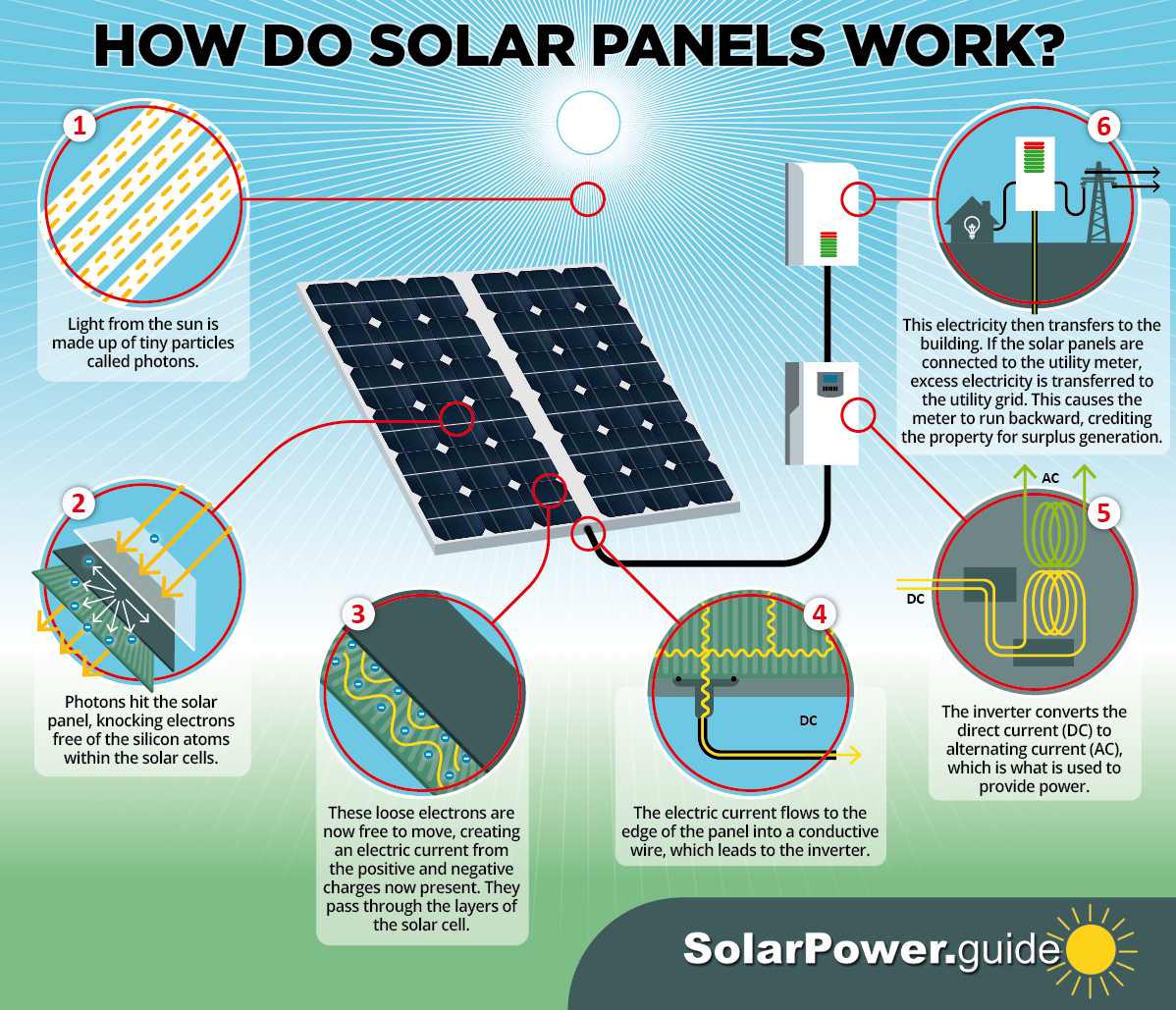
- Enter the Photons: When sunlight (which is made of tiny energy packets called photons) strikes the solar cell, these photons transfer their energy to electrons within the silicon atoms.
- Electrons Get Excited: This energy literally ‘excites’ the electrons, giving them enough juice to break free from their atoms.
- The Electric Field’s Job: Because of the positive and negative layers, there’s an internal electric field that acts like a tiny bouncer, pushing these freed electrons in a specific direction.
- Creating Current: When these electrons flow in a directed path, they create an electric current. This current is Direct Current (DC) electricity.
Imagine it like a tiny, light-powered pinball machine. The photons are the flippers, hitting the electrons (the pinballs) and sending them scurrying in a specific direction, creating a flow.
From DC to AC: The Inverter’s Crucial Role
You’ve got DC electricity flowing from your solar panels. Great! But there’s a catch: almost all your home appliances – your refrigerator, TV, lights, computer – run on Alternating Current (AC) electricity. DC electricity can power things like battery chargers, but it’s not what your home’s grid expects.
This is where the inverter steps in. The inverter is the unsung hero of your solar system. Its job is simple yet vital: it takes all that DC electricity generated by your panels and flawlessly converts it into usable AC electricity for your home. Think of it as a language translator, making sure the sun’s message is understood by your appliances.
There are different types of inverters, each with its own advantages:
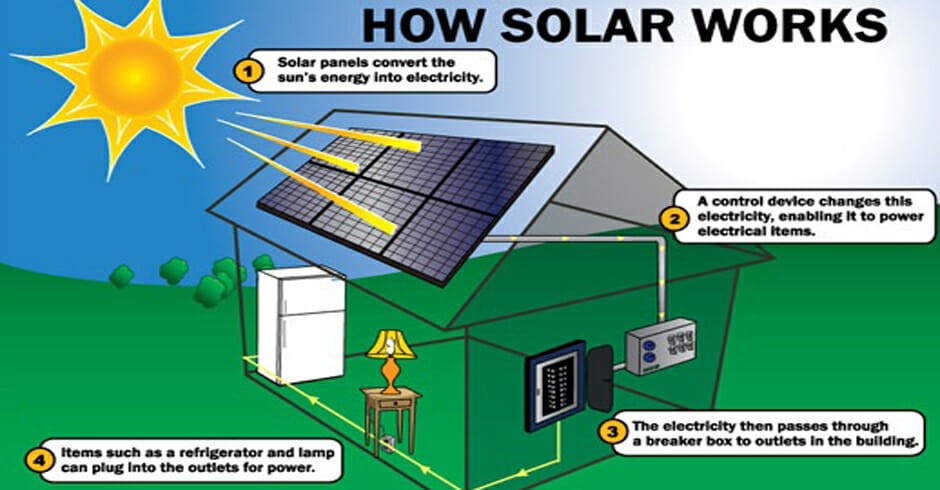
- String Inverters: A common type, where all panels are wired in series to a single inverter.
- Microinverters: Installed directly on each individual panel, converting DC to AC right at the source, which can improve efficiency if one panel is shaded.
- Power Optimizers: A hybrid approach, optimizers are on each panel but send optimized DC to a central inverter.
Beyond the Panel: The Complete Home Solar System
While the solar panels are the most visible part, they’re just one component of a sophisticated system designed to efficiently capture, convert, and deliver power to your home. Here’s a look at all the players working together.
| Component | Function | Why It’s Important |
|---|---|---|
| Solar Panels (PV Modules) | Convert sunlight (photons) into Direct Current (DC) electricity via the photovoltaic effect. | The primary energy collectors; without them, there’s no solar power. |
| Inverter (String, Micro, or Optimizer) | Transforms the DC electricity from panels into Alternating Current (AC) electricity. | Essential for powering standard home appliances and connecting to the utility grid. |
| Mounting System (Racking) | Secures solar panels to your roof or ground, ensuring optimal angle and stability. | Holds panels safely in place, maximizing sun exposure and protecting against weather. |
| Electrical Panel (Breaker Box) | Distributes solar-generated AC electricity safely throughout your home. | Integrates solar power with your home’s existing electrical system. |
| Utility Meter (Bi-directional) | Measures electricity drawn from and sent back to the utility grid. | Enables net metering, allowing you to get credit for excess power generated. |
| Solar Battery (Optional) | Stores excess solar electricity for later use, typically during outages or at night. | Provides energy independence, backup power, and reduces reliance on the grid during peak hours. |
Solar Panels: Your Sun Catchers
We’ve covered the basics of how they work, but let’s briefly touch on the types. Most residential panels are either monocrystalline (made from a single crystal of silicon, typically higher efficiency and sleeker look) or polycrystalline (made from multiple silicon crystals, slightly lower efficiency but often more cost-effective). Regardless of type, their job is the same: capture sunlight.
Their placement and orientation are crucial. Ideally, panels should face south (in the Northern Hemisphere) and be angled to maximize sun exposure throughout the day and year. Installers meticulously plan this to get you the most bang for your buck.
The Inverter: Your Power Translator
Beyond its primary role of DC-to-AC conversion, modern inverters are often intelligent hubs. They monitor your system’s performance, communicate with your utility, and can even manage battery charging. They are the brains ensuring your solar power is always in the right ‘language’ for your home and the grid.
Batteries: Storing Sunshine for Later
While optional, a solar battery storage system is becoming increasingly popular. Why? Because the sun doesn’t shine 24/7. Batteries allow you to:
- Store Excess Energy: If your panels produce more electricity than you’re currently using, the surplus can charge your battery instead of being sent to the grid.
- Power at Night: Use stored energy to power your home when the sun goes down.
- Backup Power: Provide electricity during a grid outage, keeping essential appliances running.
The battery connects to your inverter, which manages both charging and discharging, ensuring you have power when you need it most.
The Electrical Panel & Wiring: Guiding the Flow
Once the inverter has done its job and turned DC into AC, that usable electricity flows to your home’s main electrical panel (also known as a breaker box). From there, it’s distributed through your existing wiring to power all your lights, outlets, and appliances. It integrates seamlessly, essentially becoming another source of power for your home, working in conjunction with or even replacing your utility provider’s supply.
The Utility Grid & Net Metering: Sharing and Saving
Most residential solar systems are grid-tied, meaning they remain connected to your local utility company’s electrical grid. This connection is vital for two main reasons:
- Backup Supply: If your panels aren’t producing enough power (e.g., at night or during heavy usage on a cloudy day) and you don’t have sufficient battery storage, your home can seamlessly draw electricity from the grid.
- Net Metering: This is where you can save serious money. If your solar panels produce more electricity than your home needs at a given moment, that surplus power is automatically sent back to the grid. Your utility company then credits your account for this excess electricity. Your meter actually spins backward, or a special bi-directional meter records both consumption and export. At the end of the month, you only pay for your ‘net’ consumption (utility power used minus solar power exported).
Net metering essentially turns your roof into a mini power plant, allowing you to “sell” your excess clean energy back to the community.
The Step-by-Step Journey: How Solar Powers Your Home
Let’s tie it all together. Here’s the simplified, complete journey of sunlight becoming the power that runs your life:
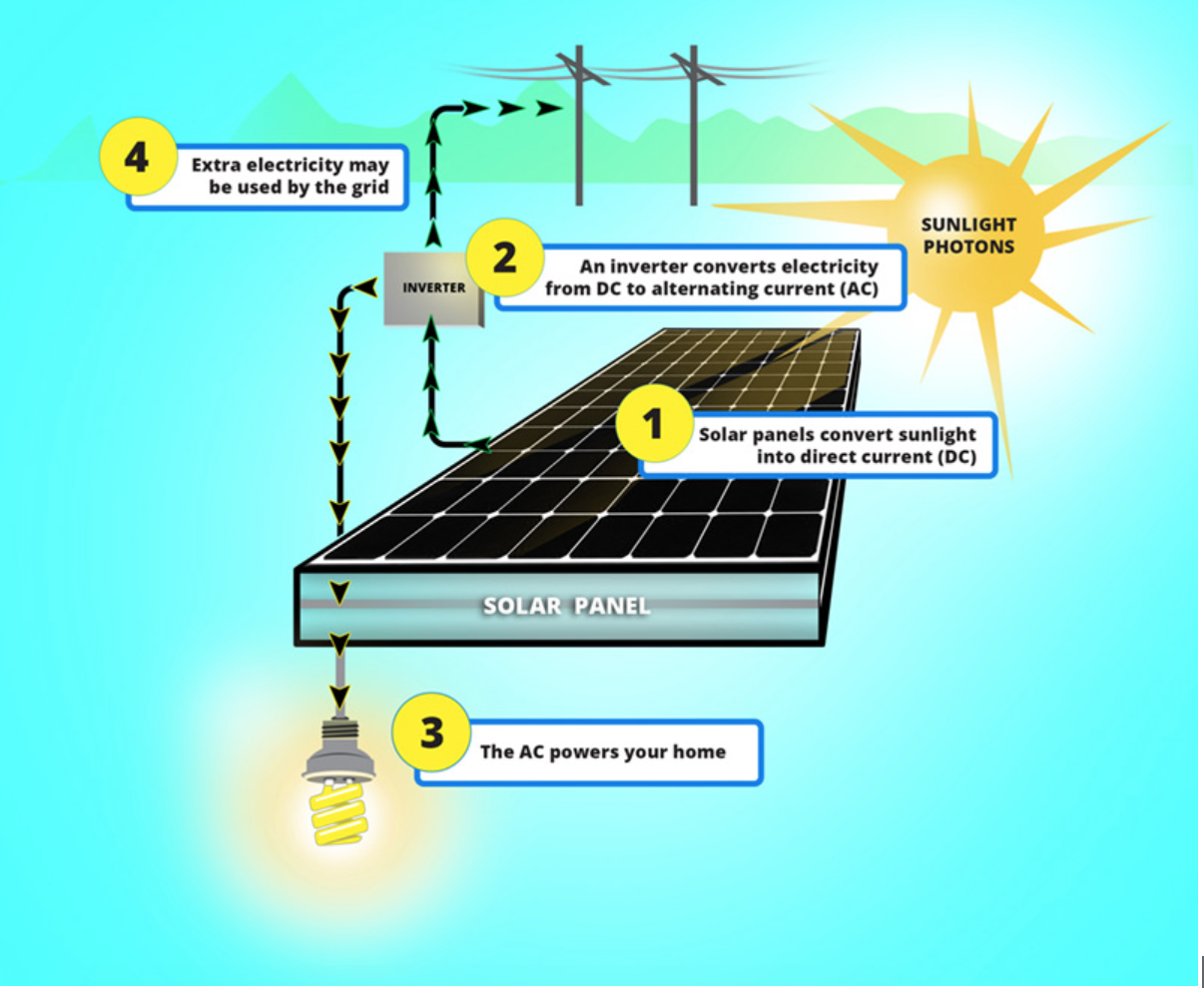
- Sunlight Hits Solar Panels: Photons from the sun strike the semiconductor material in your panels, exciting electrons.
- DC Electricity is Generated: The movement of these freed electrons creates Direct Current (DC) electricity within each solar cell, which is then collected by the panel’s wiring.
- DC Flows to the Inverter: This raw DC power travels from your panels down to your inverter, typically located near your electrical panel.
- Inverter Converts to AC: The inverter transforms the DC electricity into Alternating Current (AC) – the standard electricity used by your home and the grid.
- AC Power is Used by Home: This converted AC electricity immediately flows to your electrical panel and is used by any appliances or lights that are currently on.
- Excess Power is Managed: If your panels produce more AC power than your home needs:n
- Option A (No Battery): The excess power is sent to the utility grid through your bi-directional meter, earning you credits via net metering.
- Option B (With Battery): The excess power first charges your solar battery. Once the battery is full, any remaining surplus is then sent to the grid.
- Drawing Power When Needed:
- At Night/Cloudy Days (With Battery): Your home draws power from your charged solar battery.
- At Night/Cloudy Days (No Battery) or Battery Depleted: Your home seamlessly draws power from the utility grid, just like a traditional home.
And just like that, you’re tapping into a clean, renewable energy source directly from your roof!
Addressing Common Solar Questions & Concerns
It’s natural to have questions when considering a significant change like solar power. Let’s tackle some of the most common ones head-on.
Do Solar Panels Work on Cloudy Days?
Yes, absolutely! Solar panels do generate electricity on cloudy days, just at a reduced capacity. Think of it like this: on a sunny day, you get direct, intense light. On a cloudy day, the light is diffused – it’s still bright outside, but the sun’s rays are scattered by the clouds.
Modern solar panels are designed to capture both direct and diffused sunlight. So while a thick, dark cloud cover will significantly reduce output, a light overcast day might still allow your panels to produce 10-25% of their peak power. They are quite resilient!
What About Solar Power at Night?
This is a straightforward one: solar panels do not generate electricity at night. They need sunlight (photons) to kickstart the photovoltaic effect. When the sun goes down, production stops.
However, this doesn’t mean your home goes dark or that you’re entirely cut off from solar benefits. This is precisely why battery storage and grid-tied systems are so important:
- If you have a solar battery, your home will draw power from the energy stored during the day.
- If you don’t have a battery or your battery is depleted, your home will seamlessly switch to drawing electricity from the traditional utility grid.
Thanks to net metering, the credits you accumulate during sunny days can offset the cost of electricity you draw from the grid at night, often resulting in a very low or even zero electricity bill.
How Efficient Are Solar Panels?
Solar panel efficiency refers to how much of the sunlight hitting the panel is converted into usable electricity. While early panels were quite inefficient, today’s technology is impressive. Most residential solar panels have an efficiency rating between 17% and 23%, with some premium models pushing even higher.
Factors that influence real-world efficiency include:
- Panel Type: Monocrystalline panels generally have higher efficiency than polycrystalline.
- Temperature: Believe it or not, panels perform best in cooler temperatures. Extreme heat can slightly reduce efficiency.
- Shading: Even partial shading from trees, chimneys, or other structures can significantly impact a panel’s output.
- Angle and Orientation: Optimal angling towards the sun maximizes energy capture.
- Cleanliness: Dust, dirt, pollen, and bird droppings can block sunlight, reducing efficiency.
What’s the Difference Between Solar PV and Solar Thermal?
While both harness the sun’s energy, Solar Photovoltaic (PV) and Solar Thermal systems have fundamentally different purposes and outputs.
| Feature | Solar PV (Photovoltaic) | Solar Thermal (Hot Water) |
|---|---|---|
| Primary Purpose | Generate electricity. | Generate heat for water or space heating. |
| Output | Direct Current (DC) electricity, converted to Alternating Current (AC). | Heated liquid (water or an antifreeze mixture). |
| Mechanism | Photovoltaic effect: photons excite electrons in semiconductors. | Concentrates sunlight to heat a fluid directly. |
| Common Uses | Powering homes, businesses, electric vehicles, grid supply. | Heating domestic hot water, swimming pools, radiant floor heating. |
| Appearance | Flat, dark panels with visible grid lines or uniform dark surface. | Collector tubes or flat plates, often connected to a storage tank. |
While this article focuses on PV systems (electricity generation), solar thermal systems are also a fantastic way to utilize the sun’s energy, especially for reducing water heating costs.
The Bigger Picture: Why Solar Matters
Understanding how solar power works isn’t just a fun scientific exercise; it’s a window into the future of energy. As you’ve seen, the process from sunlight to usable electricity is elegant and efficient. But the impact extends far beyond your utility bill.
Solar energy is a cornerstone of the global shift towards clean, renewable energy sources. By harnessing the sun, we significantly reduce our reliance on fossil fuels, which are finite and contribute to greenhouse gas emissions. This means cleaner air, a more stable climate, and a healthier planet for generations to come.
On a personal level, choosing solar means taking control of your energy future. It offers energy independence, protecting you from fluctuating utility rates and potential power outages. It adds value to your home and empowers you to be a part of the solution to some of the world’s most pressing environmental challenges.
The sun is a constant, abundant power source, sending more energy to Earth in an hour than humanity uses in an entire year. Knowing how to tap into that incredible potential, simply and efficiently, is truly transformative.
Now that you understand the mechanics, I hope you feel more confident about the power of solar and its place in our homes and our world. It’s not just a trend; it’s an intelligent, sustainable path forward.
Frequently Asked Questions
What is the photovoltaic (PV) effect?
The photovoltaic effect is the core principle behind how solar panels work. It’s the process by which certain materials, primarily semiconductors like silicon, generate an electric current when exposed to light (photons). When photons hit the material, they knock electrons loose from their atoms, and these freed electrons then flow to create DC electricity.
What does a solar inverter do?
A solar inverter is a crucial component that takes the Direct Current (DC) electricity produced by solar panels and converts it into Alternating Current (AC) electricity. AC is the standard type of electricity used by almost all home appliances and is required for power to be fed into the utility grid. Without an inverter, the DC power from your panels wouldn’t be usable in your home.
Can solar panels power my house at night?
No, solar panels do not generate electricity at night because they require sunlight to produce power. To have solar power at night, you either rely on energy stored in a solar battery system during the day, or your home seamlessly draws electricity from the traditional utility grid, often offset by credits earned from excess power generated during sunny hours (net metering).
Do solar panels still work on cloudy days?
Yes, solar panels absolutely work on cloudy days, but their output is reduced. They can capture and convert both direct and diffused sunlight. While a heavily overcast sky will significantly decrease their production, even light cloud cover allows panels to generate a portion of their peak power, typically between 10-50% depending on cloud density.
What is net metering and how does it work?
Net metering is an electricity billing mechanism that credits solar energy system owners for the electricity they add to the grid. When your solar panels produce more electricity than your home consumes, the excess power is sent to the utility grid, and your meter records this export. You receive credits for this energy, which can then be used to offset the cost of electricity you draw from the grid at other times (e.g., at night). This can significantly reduce or eliminate your monthly electricity bill.
What’s the difference between solar PV and solar thermal?
Solar PV (Photovoltaic) systems convert sunlight directly into electricity, which powers your home appliances. Solar Thermal systems, on the other hand, use sunlight to generate heat, typically to warm water for domestic use or heating purposes. While both use the sun’s energy, their output and applications are distinct: PV for electricity, thermal for heat.
How efficient are modern solar panels?
Modern residential solar panels typically have an efficiency rating between 17% and 23%. This means they convert 17% to 23% of the sunlight hitting their surface into usable electricity. Factors like panel type (monocrystalline often higher), temperature, shading, and cleanliness can influence real-world efficiency.


Post Comment