How Long Do Home Solar Batteries Last
How Long Do Home Solar Batteries REALLY Last? Your Definitive Guide to Lifespan & Longevity
So, you’re thinking about a home solar battery system, or maybe you already have one and you’re wondering: “How long will this thing actually last?” It’s a critical question, not just for your energy independence, but for your wallet too. After all, batteries aren’t cheap, and understanding their longevity is key to a smart investment.
Table of Contents
- How Long Do Home Solar Batteries REALLY Last? Your Definitive Guide to Lifespan & Longevity
- The Quick Answer: What’s the Average Lifespan of a Home Solar Battery?
- Decoding Battery Lifespan: Key Metrics to Understand
- Cycle Life: What It Means and Why It’s Crucial
- Depth of Discharge (DoD): The Sweet Spot for Longevity
- Usable Capacity Degradation: The 70-80% Threshold
- Warranty: What It Covers and How It Relates to Real-World Life
- Battery Chemistry Matters: A Head-to-Head Lifespan Comparison
- Lithium-ion (NMC, LFP): The Modern Workhorse
- Lead-Acid (Flooded, Sealed AGM/Gel): The Budget Option
- Comparison Table: Solar Battery Types
- The Real-World Factors That Shrink (or Extend) Your Battery’s Life
- Usage Patterns & Depth of Discharge (DoD)
- Operating Temperature & Environment
- Installation Quality & System Integration
- Maintenance (or Lack Thereof)
- Manufacturer Quality & Warranty
- Maximizing Your Solar Battery’s Lifespan: Actionable Strategies
- When to Replace Your Solar Battery: Signs & Considerations
- Decreased Capacity: Shorter Backup Times
- Reduced Efficiency: More Power Loss During Charge/Discharge
- Error Codes/System Alerts
- Exceeded Cycle Count/Warranty
- Newer Technology: Is an Upgrade Worth It?
- The Investment Angle: Battery Lifespan vs. Overall Solar ROI
- Calculating Total Cost of Ownership (Initial + Replacement)
- Grid Reliability vs. Financial Payback
- Time-of-Use (TOU) Arbitrage and Self-Consumption Benefits
- Impact of Incentives (Federal, State, Local)
- The Future of Solar Batteries: What’s Next for Longevity?
- The Bottom Line: A Smart, Long-Term Investment
The good news? Home solar batteries are becoming increasingly robust and reliable. The less simple news? Their lifespan isn’t a single, fixed number. It’s a dynamic interplay of technology, how you use it, where you keep it, and even the quality of its installation. But don’t worry, I’m here to break it all down for you.
The Quick Answer: What’s the Average Lifespan of a Home Solar Battery?
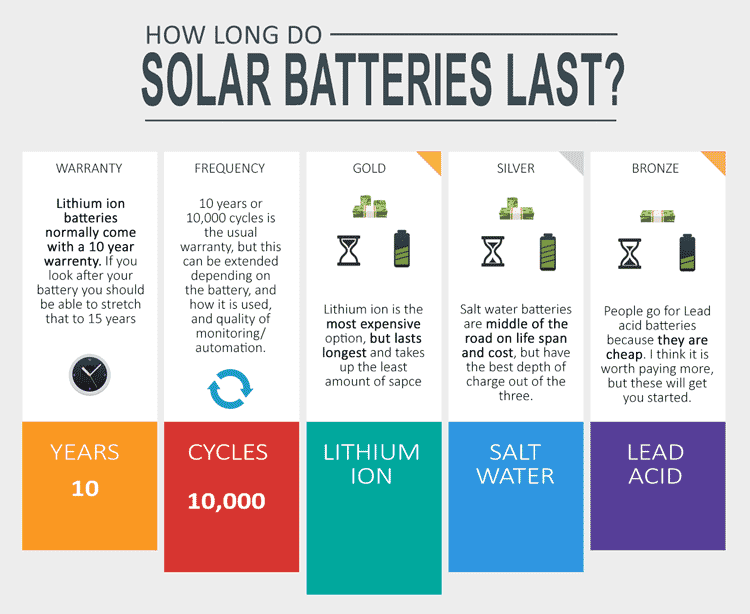
If you’re looking for a quick, straightforward answer, here it is: Most modern home solar batteries, particularly the popular lithium-ion types, are designed to last between 10 to 15 years. Some advanced models, especially those using Lithium Iron Phosphate (LFP) chemistry, can even push past 15 years, potentially reaching 20 years under ideal conditions.
However, this is just an average. The actual lifespan of your battery can swing significantly based on several factors we’ll dive into. Think of it like a car: it might be rated for 200,000 miles, but how you drive it, where you drive it, and how well you maintain it will ultimately determine its real longevity.
Decoding Battery Lifespan: Key Metrics to Understand
When manufacturers talk about battery life, they aren’t just pulling a number out of a hat. They’re referring to specific performance metrics. Understanding these terms will empower you to make more informed decisions.
Cycle Life: What It Means and Why It’s Crucial
A “cycle” refers to one complete discharge and recharge of the battery. If you discharge your battery to 20% and then recharge it to 100%, that’s considered one cycle. Most home solar batteries are rated for a specific number of cycles before their capacity significantly degrades. For lithium-ion batteries, this is typically between 4,000 to 10,000 cycles.
If you cycle your battery daily, a battery rated for 4,000 cycles would last roughly 11 years (4000 cycles / 365 days/year). A 10,000-cycle battery could last nearly 27 years! Of course, daily full cycles are rare, but this gives you a sense of the scale.
Depth of Discharge (DoD): The Sweet Spot for Longevity
The Depth of Discharge (DoD) is the percentage of the battery’s total capacity that has been used. Discharging a battery to 80% means an 80% DoD. Generally, the deeper you discharge a battery regularly, the fewer cycles it will last. Most lithium-ion batteries can handle a DoD of 80-100% without significant issue, but consistently operating at a shallower DoD (e.g., 50-70%) can sometimes extend the overall cycle life.
Usable Capacity Degradation: The 70-80% Threshold
Batteries don’t suddenly stop working; they gradually lose their ability to hold a full charge. Manufacturers typically define the end of a battery’s useful life when its capacity drops to 70-80% of its original rated capacity. At this point, while the battery still works, its ability to store and deliver energy might not meet your needs, making it a candidate for replacement.
Warranty: What It Covers and How It Relates to Real-World Life
Most home solar batteries come with a warranty, usually for 10 years. This warranty often covers either a fixed number of years OR a certain number of cycles, whichever comes first, ensuring the battery retains a minimum percentage (e.g., 70%) of its original capacity. The warranty provides a baseline expectation for performance, but with good care, your battery can often outlast its warranty period.
Battery Chemistry Matters: A Head-to-Head Lifespan Comparison
The type of battery chemistry is perhaps the single biggest determinant of its lifespan, performance, and cost. Let’s look at the most common options for home solar energy storage.

Lithium-ion (NMC, LFP): The Modern Workhorse
Lithium-ion batteries are the undisputed champions of modern home energy storage, largely thanks to their high energy density, efficiency, and long lifespan. Within the lithium-ion family, you’ll find a couple of dominant chemistries:
- Nickel Manganese Cobalt (NMC): Commonly found in electric vehicles and some home batteries (like earlier Tesla Powerwall models). They offer excellent energy density but can be more sensitive to temperature and deep discharges.
- Lithium Iron Phosphate (LFP): Gaining immense popularity for home solar. LFP batteries (like newer Tesla Powerwall models, Enphase IQ Battery, Generac PWRcell) are known for their exceptional safety, thermal stability, and longer cycle life. They are generally heavier and have a slightly lower energy density than NMC, but their longevity and safety profile make them ideal for homes.
Expected Lifespan (Lithium-ion): 10-15 years for NMC, and often 15-20+ years for LFP under optimal conditions.nCycles: 4,000 – 10,000+ cycles.nDepth of Discharge: Typically 90-100% usable.
Lead-Acid (Flooded, Sealed AGM/Gel): The Budget Option
While less common for new residential solar installations today, lead-acid batteries were once the standard and are still used in some off-grid or budget-conscious systems. They are significantly cheaper upfront but come with trade-offs:
- Flooded Lead-Acid (FLA): Requires regular maintenance (adding distilled water) and ventilation due to off-gassing. Less tolerant of deep discharges.
- Sealed Lead-Acid (AGM/Gel): Maintenance-free and don’t off-gas, making them safer for indoor use. Still less tolerant of deep discharges and have shorter lifespans than lithium-ion.
Expected Lifespan (Lead-Acid): 5-10 years, often less if regularly deeply discharged.nCycles: 500 – 1,500 cycles (highly dependent on DoD).nDepth of Discharge: Typically 50-80% usable to preserve lifespan.
Comparison Table: Solar Battery Types
| Feature | Lithium-ion (LFP) | Lithium-ion (NMC) | Lead-Acid (AGM/Gel) |
|---|---|---|---|
| Typical Lifespan | 15-20+ years | 10-15 years | 5-10 years |
| Cycle Life (Approx.) | 6,000 – 10,000+ | 4,000 – 6,000 | 500 – 1,500 |
| Recommended DoD | 90-100% | 90-100% | 50-80% |
| Round-Trip Efficiency | 90-98% | 90-98% | 80-85% |
| Cost (per kWh) | Higher | High | Lower (but higher over time) |
| Typical Warranty | 10 years (with capacity guarantee) | 10 years (with capacity guarantee) | 1-5 years |
The Real-World Factors That Shrink (or Extend) Your Battery’s Life
Beyond chemistry, several practical elements play a massive role in how long your solar battery truly lasts. These are the things you can, to some extent, control or at least be aware of.
Usage Patterns & Depth of Discharge (DoD)
How you use your battery matters. Are you using it for daily self-consumption to offset peak electricity rates (known as time-of-use arbitrage)? Or is it primarily a backup for occasional power outages? Batteries that are cycled deeply every single day might reach their cycle limit faster than those used more intermittently or with shallower discharges.
While modern lithium-ion batteries are built to handle deep discharges, consistently pushing to 100% DoD, especially in conjunction with other stressors, can slightly accelerate degradation compared to a system optimized for 80-90% DoD in daily cycling.
Operating Temperature & Environment
Batteries are like us: they prefer comfortable temperatures. Extreme heat is a battery’s worst enemy. High temperatures accelerate the chemical reactions inside the battery, leading to faster degradation and a reduced lifespan. Conversely, extremely cold temperatures can reduce a battery’s efficiency and available capacity, though they generally don’t cause permanent damage in the same way heat does.
Most manufacturers specify an ideal operating temperature range, often around 60-80°F (15-27°C). Installing your battery in a climate-controlled area, such as a garage, basement, or utility room, away from direct sunlight and extreme fluctuations, is paramount. Proper ventilation is also crucial to dissipate any heat generated during charging and discharging.
Installation Quality & System Integration
This is where professional expertise truly shines. A properly sized and installed system ensures that the battery operates within its optimal parameters. Incorrect wiring, inadequate ventilation, or a poorly configured Battery Management System (BMS) can significantly impact performance and longevity.
The BMS is the battery’s brain, monitoring voltage, current, and temperature, and preventing overcharging or over-discharging. A high-quality, well-integrated BMS is vital for maximizing battery life and ensuring safe operation.
Maintenance (or Lack Thereof)
For modern lithium-ion batteries, “maintenance” is largely hands-off, thanks to advanced BMS technology. However, it’s not entirely absent:
- Monitoring: Regularly check your battery’s performance data via its app or portal for any anomalies.
- Software Updates: Like your smartphone, battery systems often receive software updates that can improve performance, efficiency, and longevity. Ensure your system stays updated.
If you have older lead-acid batteries, maintenance is more involved, requiring periodic checks of electrolyte levels (for flooded types) and terminal cleaning.
Manufacturer Quality & Warranty
Not all batteries are created equal. Reputable manufacturers (think Tesla, Enphase, Generac, LG, SolarEdge) invest heavily in research, development, and quality control. They use higher-grade materials and more sophisticated BMS technologies. Their warranties typically offer better protection and provide a good benchmark for expected lifespan.
Always review the warranty details carefully. A good warranty will specify the years of coverage, the minimum retained capacity at the end of the warranty period, and often a total energy throughput (MWh) guarantee. For example, a warranty might guarantee 70% capacity after 10 years OR 30 MWh of throughput, whichever comes first.
Maximizing Your Solar Battery’s Lifespan: Actionable Strategies
Now that you know what impacts battery life, let’s talk about what you can do to get the most out of your investment.
- Choose the Right Battery for Your Needs: Don’t just buy the cheapest or the most expensive. Consider your primary use case (daily cycling, backup only), your local climate, and your budget. LFP batteries, for example, often offer a longer cycle life for daily use.
- Optimize DoD Settings: If your system allows, work with your installer to set the daily discharge limits. While lithium-ion can handle 100% DoD, maintaining an 80-90% DoD for regular cycling can gently extend its life, especially if you rarely need the full capacity.
- Maintain Ideal Operating Temperatures: This is critical. Install your battery in a cool, dry place. If necessary, consider supplemental ventilation or insulation. Avoid direct sunlight and areas prone to extreme heat or freezing.
- Regular Monitoring & Software Updates: Take advantage of your battery’s smart capabilities. Monitor its performance via the manufacturer’s app. If your system requires it, ensure software and firmware updates are applied to keep the BMS operating at peak efficiency.
- Professional Installation & Annual Check-ups: A certified installer will ensure your battery is correctly sized, wired, and configured. Annual or biennial professional check-ups can catch potential issues early, confirm system health, and ensure everything is running optimally.
- Understand and Utilize Your Warranty: Keep your warranty documentation handy. Know what’s covered, for how long, and under what conditions. This is your safety net.
When to Replace Your Solar Battery: Signs & Considerations
Even with the best care, all batteries eventually reach the end of their useful life. Here are the signs to look for and considerations for replacement:
Decreased Capacity: Shorter Backup Times
The most obvious sign is that your battery simply isn’t holding as much charge as it used to. If your system used to power your critical loads for 12 hours during an outage, and now it’s only lasting 6-8 hours, its capacity has significantly degraded.
Reduced Efficiency: More Power Loss During Charge/Discharge
You might notice that it takes longer to charge the battery or that you’re getting less usable energy out of it than before, indicating increased internal resistance and reduced round-trip efficiency. Your system monitoring should show this.
Error Codes/System Alerts
Your battery management system might start flagging errors or warnings related to cell imbalance, temperature anomalies, or other internal issues. Don’t ignore these; they’re often early indicators of a battery nearing its end.
Exceeded Cycle Count/Warranty
If your battery has gone through its rated number of cycles or is approaching the end of its warranty period (usually 10 years), it’s a good time to start thinking about replacement, even if it’s still performing adequately. Proactive replacement can prevent unexpected outages.
Newer Technology: Is an Upgrade Worth It?
The pace of battery technology is rapid. When it’s time to replace, you might find that newer models offer significantly better capacity, efficiency, features (like seamless integration with smart home tech), or even lower costs per kWh. This could be an opportunity to upgrade your system.
The Investment Angle: Battery Lifespan vs. Overall Solar ROI
For many homeowners, the lifespan of a solar battery directly impacts the financial viability of the entire solar energy system. Here’s how to think about it:
Calculating Total Cost of Ownership (Initial + Replacement)
When you invest in solar, you’re looking at a 25-30+ year lifespan for your panels. If your battery lasts 10-15 years, you’ll likely need to replace it at least once during your solar panels‘ operational life. Factor in the potential cost of replacement (which might be lower due to economies of scale and technology advancements by then) into your long-term financial projections.
Grid Reliability vs. Financial Payback
The “worth” of a solar battery isn’t purely financial. For homes in areas with frequent power outages or an unreliable grid, the peace of mind and resilience offered by a battery might outweigh a purely economic calculation. However, if your grid is stable, you’ll want to ensure the financial benefits (like time-of-use savings) justify the investment over the battery’s lifespan, even with a replacement cost.
Time-of-Use (TOU) Arbitrage and Self-Consumption Benefits
Solar batteries excel at maximizing your solar panel investment by allowing you to store excess daytime energy and use it when electricity rates are highest (TOU rates) or when the sun isn’t shining. The longer your battery performs efficiently, the longer you can capitalize on these savings, thus improving your overall ROI.
Impact of Incentives (Federal, State, Local)
Don’t forget incentives! The federal solar tax credit (Investment Tax Credit – ITC) currently covers solar batteries when installed as part of a solar energy system. Many states and local utilities also offer rebates or incentives for energy storage. These incentives significantly reduce the upfront cost, making the overall investment, including future replacements, more attractive over the battery’s lifespan.
The Future of Solar Batteries: What’s Next for Longevity?
The good news is that battery technology isn’t standing still. The lifespan of home solar batteries is likely to continue improving:
- Solid-State Batteries: These are seen as the holy grail, promising higher energy density, faster charging, and significantly longer lifespans with enhanced safety. While mostly in R&D for EVs, residential applications are on the horizon.
- Flow Batteries: Already used in some commercial and industrial settings, flow batteries offer extremely long lifespans (potentially 20+ years) and the ability to scale capacity and power independently. They are larger and less energy-dense than lithium-ion but could find a niche in very long-duration storage.
- Improved Lithium-ion Chemistries: Ongoing research into new lithium-ion variants (like more advanced LFP formulations) continues to push boundaries in terms of cycle life, efficiency, and safety.
- Advanced BMS & AI Integration: Smarter battery management systems, possibly leveraging AI, will optimize charging and discharging even further, minimizing stress on the battery cells and extending their functional life.
In essence, while today’s batteries are already impressive, the future promises even greater longevity and performance from your home energy storage.
The Bottom Line: A Smart, Long-Term Investment
So, how long do home solar batteries last? The realistic answer is 10 to 15 years for most modern lithium-ion systems, with some LFP models pushing 20 years. But remember, this is a living component of your solar system. Your proactive choices—from the battery type you select, to its installation, and ongoing smart usage—will significantly influence its ultimate longevity.
By understanding the key metrics, knowing the factors that affect lifespan, and implementing smart strategies, you can maximize your battery’s life, ensure reliable power, and truly make the most of your investment in a more sustainable and resilient home.
Frequently Asked Questions
How often will I need to replace my home solar battery?
Most modern lithium-ion solar batteries have an expected lifespan of 10-15 years, with some lasting up to 20 years. Since solar panels typically last 25-30+ years, you will likely need to replace your home solar battery at least once during the lifespan of your solar panel system.
Are solar batteries worth the cost given their lifespan?
The ‘worth’ of solar batteries depends on your priorities. Financially, they can offer significant savings through time-of-use arbitrage, self-consumption, and the federal tax credit. For homes in areas with frequent outages, the peace of mind and energy resilience they provide often justifies the investment, even with a replacement factored in. The total cost of ownership over the full solar system lifespan should be considered.
Does a solar battery’s warranty reflect its true lifespan?
A battery’s warranty (typically 10 years for lithium-ion) guarantees a certain level of performance (e.g., 70% capacity retention) for a specific period or number of cycles. While it provides a strong baseline expectation, a well-maintained battery in optimal conditions can often outlast its warranty period. Think of the warranty as the minimum guaranteed performance, not necessarily the maximum lifespan.
What’s the best temperature to store a solar battery for maximum life?
The ideal operating temperature for most home solar batteries is typically between 60-80°F (15-27°C). Extreme heat (above 90°F / 32°C) significantly accelerates degradation and reduces lifespan. While extreme cold reduces efficiency, it usually doesn’t cause permanent damage in the same way heat does. Installing your battery in a climate-controlled space like a garage or basement is highly recommended.
How does Depth of Discharge (DoD) affect my battery’s longevity?
Depth of Discharge (DoD) is how much of the battery’s capacity you use before recharging. For lithium-ion batteries, a higher DoD (e.g., 90-100%) is generally acceptable and built into their design. However, consistently shallower discharges (e.g., 80% DoD) can sometimes slightly extend the total cycle life. For older lead-acid batteries, a lower DoD (50-80%) is crucial for maximizing their lifespan.
Will my solar battery last as long as my solar panels?
No, typically your home solar battery will not last as long as your solar panels. Solar panels are incredibly durable and often come with performance warranties of 25-30 years. Solar batteries, due to their chemical nature and active cycling, have a shorter lifespan, generally 10-20 years, meaning you’ll likely need to replace your battery at least once during your panels’ operational life.


Post Comment