How Much Solar Panels Do I Need
How Many Solar Panels Do You Really Need? Your Definitive Guide to Sizing Your System
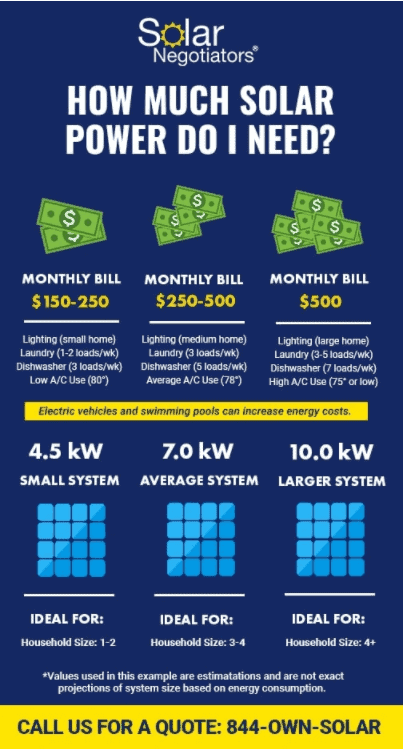
So, you’re thinking about solar. Smart move! But then you hit the big question: “How many solar panels do I actually need?” It’s not as simple as a one-size-fits-all answer, and frankly, anyone who tells you otherwise is probably oversimplifying. While the average U.S. home might need anywhere from 15 to 22 solar panels to cover 100% of its electricity usage, your specific number is unique – it depends on your home, your lifestyle, and even your roof.
Table of Contents
- How Many Solar Panels Do You Really Need? Your Definitive Guide to Sizing Your System
- The Core Equation: Your 3-Step Solar Sizing Formula
- Step 1: Uncover Your Energy Appetite (kWh)
- Step 2: Calculate Your Peak Sun Hours (PSH)
- Step 3: Choose Your Panel Power (Watts)
- Putting It All Together: The Solar Panel Calculation in Action
- Example Calculation:
- Important Adjustment Factors:
- Beyond the Math: Crucial Factors Influencing Your Panel Count
- Your Roof’s Real Estate
- Panel Efficiency & Technology
- Your Budget & Incentives
- Energy Storage & Off-Grid Aspirations
- Net Metering Policies
- Common Scenarios: How Many Panels for Specific Needs?
- “Average” US Home (approx. 1,500 sq ft, 900 kWh/month)
- Powering Specific Appliances (e.g., EV Charger, AC unit)
- Small Home (1,000 sq ft) vs. Large Home (3,000 sq ft)
- The Smart Way Forward: Why Professional Consultation is Key
- Ready to Go Solar? Take the Next Step
Getting this right is crucial. Too few panels, and you’re still relying heavily on the grid, missing out on maximum savings. Too many, and you’re overspending on a system that generates more power than you can use or sell back efficiently. This guide isn’t just about giving you a number; it’s about empowering you to understand the “why” behind your solar needs, so you can make an informed decision and confidently talk to installers.
The Core Equation: Your 3-Step Solar Sizing Formula
Think of sizing your solar system like baking a cake. You need the right ingredients in the right proportions. Our main ingredients are your energy usage, the sunlight your roof gets, and the power of the panels themselves. Let’s break it down.
Step 1: Uncover Your Energy Appetite (kWh)
This is where it all starts. How much electricity do you actually use? This isn’t a guessing game; your electricity bill holds the key.
- Find Your Average Monthly/Annual kWh: Grab your last 12 electricity bills. Look for your “kWh usage” each month. Sum them up for an annual total, then divide by 12 for your average monthly usage. Why 12 months? Because usage fluctuates seasonally (more AC in summer, more heating in winter).
- Consider Future Energy Needs: This is a step many people overlook! Are you planning to buy an electric vehicle (EV) in the next few years? Thinking about switching to an electric heat pump or upgrading appliances? Adding an ADU (Accessory Dwelling Unit)? Electrifying your home will significantly increase your energy demand. It’s smarter (and often cheaper) to size your system for these future needs now rather than adding panels later.
To give you a rough idea, here’s what average homes consume:
| Home Size (Approx. Sq. Ft.) | Typical Monthly kWh Usage | Typical Annual kWh Usage |
|---|---|---|
| Small (1,000 – 1,500) | 500 – 700 kWh | 6,000 – 8,400 kWh |
| Medium (1,501 – 2,500) | 700 – 1,100 kWh | 8,400 – 13,200 kWh |
| Large (2,501 – 3,500+) | 1,100 – 1,800+ kWh | 13,200 – 21,600+ kWh |
Step 2: Calculate Your Peak Sun Hours (PSH)
Sunlight isn’t just about how long the sun is in the sky. It’s about how much intensity of sunlight your panels receive throughout the day. This is measured in “Peak Sun Hours” (PSH).
- What are Peak Sun Hours? One peak sun hour is equivalent to one hour of sunlight at an intensity of 1,000 watts per square meter (W/m²). A day with 6 hours of actual daylight might only have 4-5 PSH due to the sun’s angle, clouds, and other factors.
- Impact of Location, Season, Roof Orientation/Tilt: Different regions of the U.S. receive different amounts of PSH. Florida will have more than Alaska, for example. Your roof’s orientation (south-facing is generally best in the Northern Hemisphere) and tilt also play a huge role.
- Finding Your PSH: You don’t need to be a meteorologist. Online tools from solar organizations or solar installers can give you a good estimate for your specific zip code and roof orientation. A common range for much of the U.S. is 4-5 PSH per day on average, but it can be higher or lower.
Step 3: Choose Your Panel Power (Watts)
Solar panels come in various power outputs, measured in watts (W).
- Understanding Panel Wattage: Most residential solar panels today range from 300 to 450 watts. Higher wattage panels generate more electricity per panel.
- Efficiency vs. Physical Size: A higher wattage panel usually means it’s either more efficient (converts more sunlight to electricity from the same surface area) or physically larger. If you have limited roof space, higher efficiency panels are a game-changer.
| Panel Wattage | Approximate Size (L x W) | Common Application |
|---|---|---|
| 300 – 350 W | 65 x 39 inches | Budget-friendly, larger roof spaces |
| 351 – 400 W | 68 x 41 inches | Standard residential, good balance |
| 401 – 450+ W | 72 x 45 inches (or similar high-efficiency compact) | Limited roof space, maximum power generation |
Putting It All Together: The Solar Panel Calculation in Action
Now that we have our core numbers, let’s crunch them. Here’s the simplified formula:
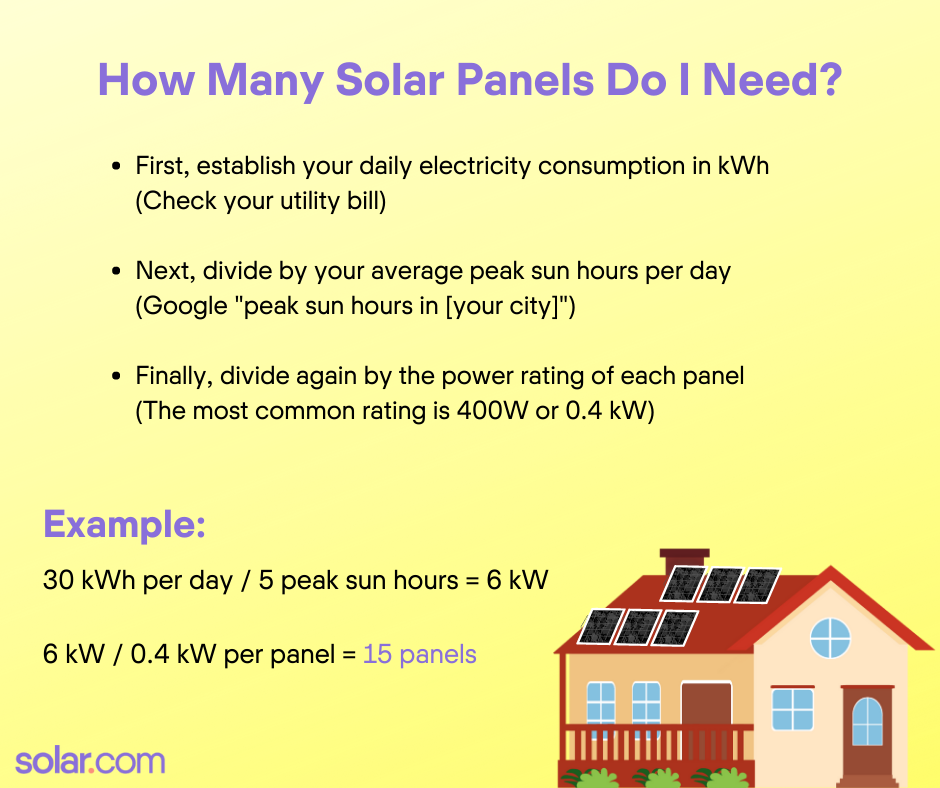
Number of Panels = (Annual kWh Needed / Daily Peak Sun Hours / 365 Days) / Panel Wattage * 1000 / Derate Factor
Wait, don’t let that intimidate you! Let’s walk through it with an example and explain that “Derate Factor” part.
Example Calculation:
Let’s assume:
- Annual kWh Needed: 12,000 kWh (for a medium-sized home aiming for 100% offset)
- Average Daily Peak Sun Hours (PSH): 4.5 hours
- Chosen Panel Wattage: 400 Watts (W)
- Derate Factor (System Losses): 0.80 (80% efficiency – common for residential systems, accounting for heat, wiring, dust, etc.)
- Calculate Daily kWh Target: 12,000 kWh / 365 days = 32.88 kWh per day
- Calculate Total Watts Needed Per Day: (32.88 kWh * 1000) / 4.5 PSH = 7,306.67 Watts of generation per hour of peak sunlight.
- Adjust for System Losses (Derate Factor): 7,306.67 Watts / 0.80 = 9,133.34 Watts. This is your effective system size in Watts (often converted to 9.13 kW).
- Calculate Number of Panels: 9,133.34 Watts / 400 Watts per panel = 22.83 panels
Since you can’t have a fraction of a panel, you’d round this up to 23 panels. This provides a system size of 23 panels * 400W/panel = 9,200 Watts, or 9.2 kW.
Important Adjustment Factors:
- System Losses (Derate Factor): No solar system operates at 100% efficiency all the time. Factors like temperature, dust, shading, inverter efficiency, and wiring resistance lead to energy loss. A typical derate factor is between 0.70 and 0.85. Your installer will use a precise number based on your specific equipment and site conditions.
- Degradation Over Time: Solar panels gradually lose a tiny bit of efficiency each year. Most manufacturers guarantee around 80-85% of original output after 25 years. This typically translates to about a 0.5% to 1% loss per year. A good installer will factor this in, potentially oversizing your system slightly (by a panel or two) to ensure you meet your energy needs throughout the system’s lifespan.
Beyond the Math: Crucial Factors Influencing Your Panel Count
While the numbers give you a strong baseline, several real-world factors will fine-tune your final panel count.
Your Roof’s Real Estate
- Size, Angle, Orientation: A perfectly south-facing roof (in the Northern Hemisphere) with a good pitch (around 30-40 degrees) will produce the most power per panel. East and west-facing roofs are viable but might require more panels to achieve the same output. North-facing roofs are generally avoided for solar. Your roof also needs enough unobstructed space.
- Shading Issues: Trees, chimneys, dormers, and even neighboring buildings can cast shadows that significantly reduce panel efficiency. Even partial shading on one panel can impact an entire string of panels in certain system configurations. A professional site assessment will map out shading patterns throughout the year.
Panel Efficiency & Technology
- Monocrystalline vs. Polycrystalline vs. Thin-Film: Most residential installations use monocrystalline panels, which are the most efficient (typically 17-22%) and have a sleek, uniform black appearance. Polycrystalline panels are slightly less efficient (15-17%) and have a blue hue. Thin-film panels are less common for residential rooftops due to lower efficiency, though they can be flexible. Higher efficiency panels mean you need fewer panels to generate the same amount of power.
- Space Limitations: If your roof space is limited, investing in higher efficiency (and often higher wattage) panels allows you to maximize power generation within your constraints, even if they cost a bit more per panel upfront.
Your Budget & Incentives
- Federal Tax Credit (ITC): The Investment Tax Credit (ITC) currently offers a 30% tax credit on the cost of your solar system. This significantly reduces your out-of-pocket expenses and can make a larger system more affordable.
- State/Local Incentives: Many states and even local municipalities offer additional rebates, tax credits, or performance-based incentives (like SRECs – Solar Renewable Energy Credits) that can further reduce costs. These vary widely, so check what’s available in your area.
- Impact on System Size Affordability: Incentives can directly influence how large a system you can afford. It might make sense to slightly oversize your system if incentives are generous, allowing you to cover more of your energy needs.
Energy Storage & Off-Grid Aspirations
- How Battery Storage Impacts Panel Sizing: If you’re adding battery storage, you might want to slightly oversize your solar array to ensure your batteries are fully charged even on less sunny days, and to power your home through the night. This reduces your reliance on the grid.
- Going Fully Off-Grid: If your goal is true energy independence without any utility connection, you’ll need to significantly oversize your solar array and invest in substantial battery storage. Off-grid systems are typically designed to handle multiple days of cloudy weather and peak usage, requiring a much more robust setup than a grid-tied system.
Net Metering Policies
- Understanding Your Utility’s Rules: Net metering allows you to send excess electricity your panels produce back to the grid and receive credits on your bill. Policies vary greatly by state and utility. Some offer full retail rate credits, others offer a reduced rate, and some have caps on how much you can export or even fixed charges.
- How It Affects the “Perfect” System Size: If your utility offers excellent net metering, you might aim for a system that offsets 100% (or even slightly more) of your usage, knowing you’ll get fair credit for excess production. If net metering is poor, you might aim for a system closer to your exact usage, or invest in battery storage to maximize self-consumption rather than sending power to the grid for minimal credit.
Common Scenarios: How Many Panels for Specific Needs?
While your calculations are key, here are some general ranges for common situations:
“Average” US Home (approx. 1,500 sq ft, 900 kWh/month)
For a home consuming around 900-1000 kWh per month, you would typically need a 7 kW to 10 kW system. With modern 400-watt panels, this translates to roughly 18 to 25 panels, depending on your location’s sunlight, roof characteristics, and desired offset percentage.
Powering Specific Appliances (e.g., EV Charger, AC unit)
If you know you’re adding a major electrical load, here’s a quick way to estimate the increase:
- EV Charger: An average EV driven 1,000 miles/month might add 300-400 kWh/month to your usage. This could require an additional 2-4 panels.
- Central AC: Running a 3-ton AC unit for 8 hours a day in a hot month could add 500-800 kWh/month. This might mean an extra 4-7 panels.
- Heat Pump: Replacing a gas furnace with an electric heat pump could add 500-1000 kWh/month depending on climate, requiring 5-9 additional panels.
Always factor these into your Step 1 (Energy Appetite) calculation for a more accurate overall system size.
Small Home (1,000 sq ft) vs. Large Home (3,000 sq ft)
- Small Home (1,000-1,500 sq ft, 500-700 kWh/month): You might be looking at a 4 kW to 6 kW system, equating to around 10 to 15 panels.
- Large Home (2,500-3,500+ sq ft, 1,100-1,800+ kWh/month): These homes could require a significantly larger system, potentially 10 kW to 15 kW or more, meaning anywhere from 25 to 40+ panels.
The Smart Way Forward: Why Professional Consultation is Key
You’ve now got a solid understanding of how to calculate your solar panel needs. That’s a huge head start! But remember, these calculations are estimates. The real world has nuances that only an experienced professional can accurately assess.
- Complexity of Variables: The exact derate factor, shading analysis, long-term degradation estimates, and the intricate details of local incentives and net metering policies are best handled by experts.
- Accurate Site Assessment: A professional solar installer will conduct a thorough site visit, analyzing your roof’s structural integrity, precise sun exposure, shading obstacles, electrical panel capacity, and local permitting requirements. They use specialized software to model production down to the panel level.
- Optimizing for Savings and Performance: An expert can help you balance your budget with your energy goals, ensuring your system is perfectly sized to maximize your return on investment and energy independence for decades to come. They can also advise on optimal panel placement, inverter types, and battery storage options tailored to your unique situation.
Ready to Go Solar? Take the Next Step
You’re armed with knowledge. You understand the factors, the formulas, and the nuances. Now, it’s time to translate that knowledge into action. Use your newfound expertise to confidently engage with solar providers. Get multiple quotes, ask informed questions, and ensure your chosen system is the perfect fit for your home and your future.
Embracing solar isn’t just about saving money; it’s about investing in a cleaner, more sustainable future. And it starts with knowing exactly how much solar you need.

Frequently Asked Questions
What is the average number of solar panels needed for a U.S. home?
On average, a typical U.S. home requires between 15 and 22 solar panels to cover 100% of its electricity usage. However, this is just an average, and your specific needs will depend on your energy consumption, roof space, and local sunlight.
How do I calculate my home’s energy usage for solar sizing?
The best way is to gather your last 12 months of electricity bills and find your average monthly or annual kilowatt-hour (kWh) consumption. Also, consider any future energy needs, like electric vehicle charging or heat pumps, and add that to your total.
What are ‘Peak Sun Hours’ and why are they important?
Peak Sun Hours (PSH) represent the average number of hours per day your solar panels receive direct sunlight at an intensity of 1,000 watts per square meter. It’s a crucial factor because it tells you how much energy your panels can realistically produce in your specific location, varying by geography, season, and roof orientation.
Does my roof’s orientation or shading matter for solar panels?
Absolutely. A south-facing roof generally receives the most direct sunlight in the Northern Hemisphere, maximizing production. Shading from trees, chimneys, or neighboring buildings can significantly reduce a system’s efficiency, sometimes requiring more panels or specialized equipment to compensate.
Should I oversize my solar system to account for future needs or battery storage?
It’s often a smart strategy to slightly oversize your system if you plan to add an EV, a heat pump, or battery storage in the future. This can be more cost-effective than adding panels later. For off-grid systems, significant oversizing and substantial battery backup are essential.
What is a ‘derate factor’ in solar panel calculation?
The derate factor, typically between 0.70 and 0.85, accounts for various system losses that prevent solar panels from operating at their theoretical maximum efficiency. These losses include factors like temperature, wiring resistance, inverter efficiency, dust, and minor shading. It’s used to calculate the real-world output of your system.


Post Comment