How Much Solar Panels Save On Electric Bill
How Much Do Solar Panels Really Save on Your Electric Bill? Your Definitive Guide to Maximizing Savings
Let’s cut to the chase: You’re tired of skyrocketing electricity bills, and you’ve heard solar panels can help. But the big question remains: how much money can they *really* save you?
Table of Contents
- How Much Do Solar Panels Really Save on Your Electric Bill? Your Definitive Guide to Maximizing Savings
- The Core Truth: Solar Panels Can Slash Your Electric Bill Dramatically
- Breaking Down the Solar Savings Equation: Key Factors at Play
- Your Current Electricity Rates: The Foundation of Savings
- System Size and Energy Production: Powering Your Savings
- Net Metering Policies: Selling Back to the Grid
- Government Incentives and Tax Credits: Supercharging Your ROI
- Your Energy Consumption Habits: The Human Element
- Solar System Financing: Loans, Leases, or Cash?
- Real Numbers: What Typical Solar Savings Look Like (USA Examples)
- Average Annual and Lifetime Savings Across the US
- Case Study 1: The High-Consumption Household in a High-Rate State (e.g., California)
- Case Study 2: The Moderate-Consumption Household in a Mid-Rate State (e.g., Texas)
- Case Study 3: The Energy-Efficient Homeowner in a Low-Rate State (e.g., Louisiana)
- Beyond Bill Savings: The Wider Financial Benefits of Solar
- “Why Do I Still Have an Electric Bill After Going Solar?” Addressing Common Concerns
- Maximizing Your Solar Savings: Actionable Steps
- Is Going Solar Worth It for You? The ROI Question
The short answer? A lot. For most U.S. homeowners, installing solar panels can lead to tens of thousands of dollars in savings over the system’s lifetime, often reducing or even eliminating your monthly electricity charges. But it’s not a one-size-fits-all answer. Your actual savings depend on several critical factors, from where you live to how much sunlight your roof gets.
In this guide, I’ll break down the solar savings equation, give you real numbers based on different scenarios across the USA, and show you exactly how to maximize your financial benefits from going solar. Prepare to understand your future energy bill like never before.
The Core Truth: Solar Panels Can Slash Your Electric Bill Dramatically
Imagine receiving an electricity bill that’s a fraction of what it used to be, or even just a minimal connection fee. This isn’t a pipe dream; it’s the reality for millions of solar homeowners across the United States. On average, homeowners can expect to reduce their electricity bills by 50% to 100%, depending on their system’s size, energy consumption, and local utility policies.
While the goal is often to eliminate your bill entirely, it’s important to understand that you might still see some charges. These typically include:
- Minimum Connection Fees: Most utilities charge a small monthly fee to remain connected to the grid, even if you produce all your own electricity.
- Peak Usage Charges: If your utility has time-of-use (TOU) rates, you might still incur charges if you pull significant power from the grid during high-cost peak hours, even with solar.
- Under-Sized System: If your solar array doesn’t produce enough electricity to cover 100% of your usage, you’ll still pay for the deficit.
But even with these minor caveats, the financial impact of solar is profound. It’s not just about reducing a bill; it’s about taking control of your energy costs for decades to come.
Breaking Down the Solar Savings Equation: Key Factors at Play
To truly understand how much you’ll save, we need to unpack the various elements that contribute to your solar ROI. Think of it as a personalized financial puzzle where each piece significantly impacts the final picture.
Your Current Electricity Rates: The Foundation of Savings
This is perhaps the most straightforward factor: the higher your current electricity rates, the more you stand to save with solar. When you generate your own power, you’re essentially buying less from the utility at their current (and often rising) rates.
The U.S. has a wide range of electricity costs. Homeowners in states with expensive electricity (like California, Hawaii, or parts of the Northeast) often see the fastest payback periods and largest overall savings.
Here’s a snapshot of average residential electricity rates across different U.S. regions:
| State/Region (Illustrative) | Average Residential Electricity Rate (per kWh) | Savings Impact |
|---|---|---|
| National Average | $0.17 | Significant savings potential. |
| Northeast (e.g., NY, MA) | $0.23 – $0.35+ | Very High savings potential; quicker payback. |
| West (e.g., CA) | $0.20 – $0.40+ | Very High savings potential; quicker payback. |
| Southeast (e.g., FL, NC) | $0.13 – $0.18 | Solid savings potential, but slower payback than high-rate states. |
| Midwest (e.g., IL, OH) | $0.14 – $0.19 | Good savings potential. |
Expert Tip: Don’t just look at the average rate. Scrutinize your utility bill for peak vs. off-peak rates, delivery charges, and other fees. These all contribute to your overall cost per kWh and, therefore, your savings.
System Size and Energy Production: Powering Your Savings
The size of your solar panel system (measured in kilowatts, kW) directly correlates with how much electricity it can produce. An appropriately sized system is crucial for maximizing savings. Too small, and you won’t offset enough of your usage. Too large, and you might produce more than you can use or sell back effectively.
Key considerations:
- Your Household’s Energy Needs: Look at your last 12 months of electricity bills to determine your average monthly and annual kWh consumption. This is the baseline for sizing your system.
- Sun Exposure: How much direct, unobstructed sunlight does your roof receive? Factors like roof orientation (south-facing is ideal), pitch, and shading from trees or other buildings significantly impact production.
- Panel Efficiency: More efficient panels can produce more electricity in a smaller footprint, which is important for limited roof space.
A typical U.S. home consumes around 10,632 kWh per year, requiring a system size of approximately 6-9 kW to offset a significant portion of that usage, depending on local sunlight conditions.
Net Metering Policies: Selling Back to the Grid
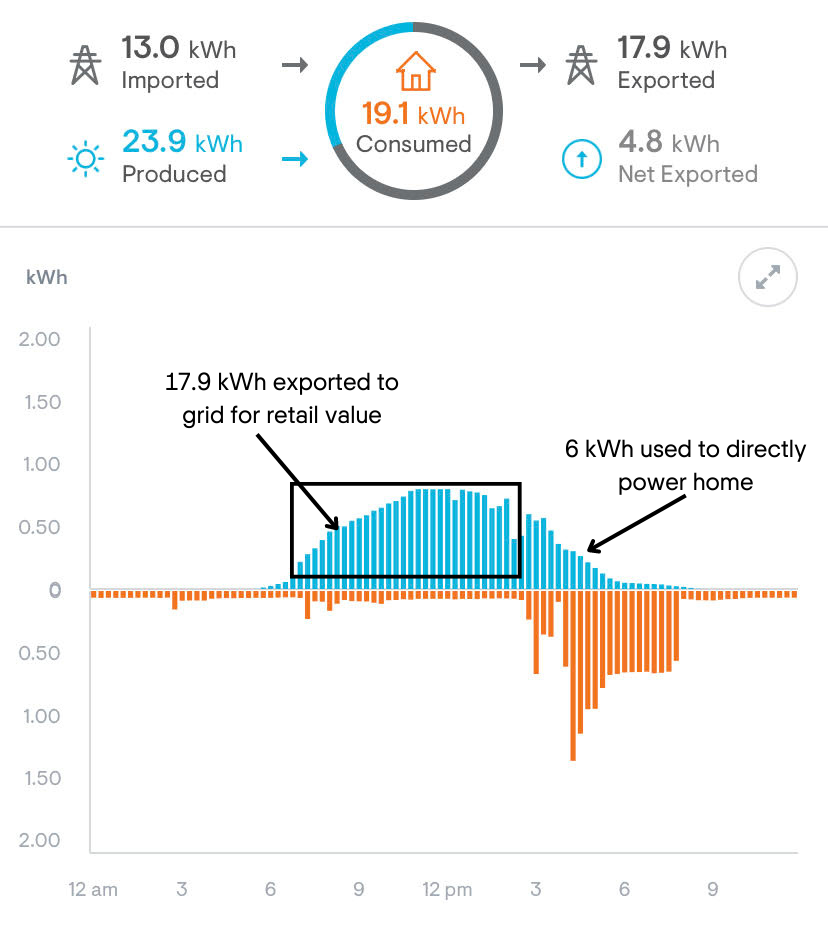
Net metering is arguably one of the most important policies for solar savings. It allows you to send any excess electricity your panels produce back to the grid, and in return, your utility provides you with credits on your bill.
How it works:
- When your panels produce more electricity than you’re using (e.g., during the day when you’re at work), the excess flows back to the grid.
- Your electricity meter literally spins backward or records the export.
- You receive credits for this exported power, which offsets the electricity you pull from the grid when your panels aren’t producing (e.g., at night or on cloudy days).
The value of these credits varies by state and utility. Some offer full retail rate (1:1 credit), while others offer a lower wholesale rate or a fixed compensation rate. Strong net metering policies dramatically increase your potential savings by allowing you to maximize the value of every kWh your system generates.
Government Incentives and Tax Credits: Supercharging Your ROI
The upfront cost of solar can be substantial, but various incentives significantly reduce this barrier, making your savings kick in sooner and boosting your overall return on investment.
The biggest player is the Federal Solar Tax Credit (ITC). As of 2024, it offers a 30% tax credit for the cost of installing a new solar energy system for your home. This is a direct reduction of the federal income taxes you owe, not just a deduction.
Beyond the ITC, look for:
- State Tax Credits/Rebates: Many states offer their own incentives, which can further reduce the net cost.
- Property Tax Exemptions: Some states exempt the added value of solar panels from property tax assessments.
- Sales Tax Exemptions: Certain states don’t charge sales tax on solar equipment.
- Solar Renewable Energy Credits (SRECs): In some markets, you can earn SRECs for every megawatt-hour (MWh) of electricity your system produces and sell them on a market, providing an additional revenue stream.
These incentives don’t directly save you money on your electric bill, but by significantly lowering the initial investment, they accelerate your payback period and amplify your long-term financial benefits.
Your Energy Consumption Habits: The Human Element
Even with solar panels, how you use electricity matters. Your habits directly influence how much you save:
- Energy Efficiency First: Before going solar, making your home as energy-efficient as possible (e.g., LED lighting, insulation, efficient appliances) reduces your overall energy needs, allowing you to install a smaller, less expensive solar system to achieve the same bill reduction.
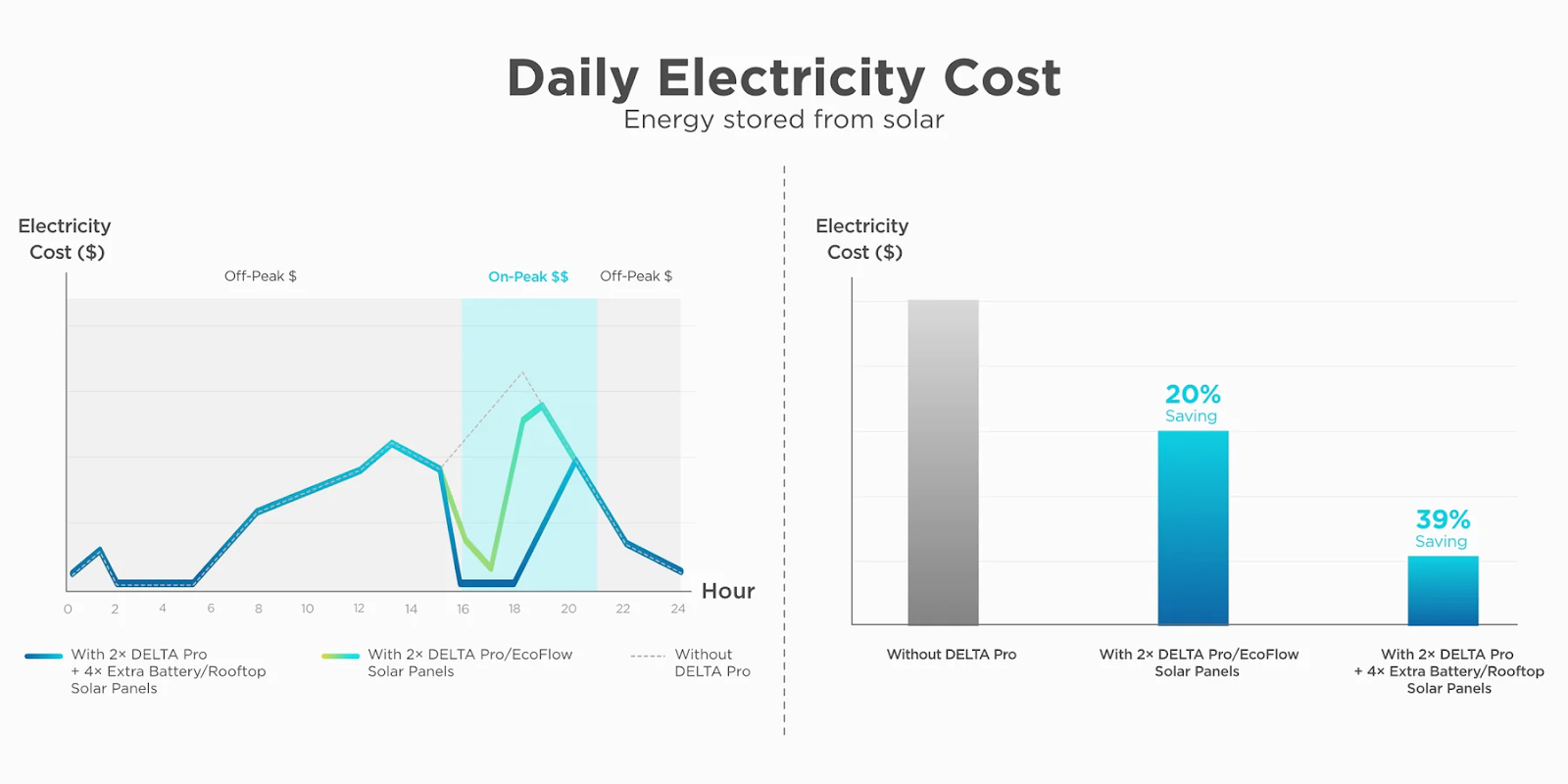
- Time-of-Use Management: If you have TOU rates, shifting high-energy activities (like running laundry or charging an EV) to midday when your panels are producing maximally, or to off-peak hours, can further reduce your reliance on grid power during expensive times.
- Monitoring Usage: Many solar systems come with monitoring apps. Regularly checking your production and consumption can help you identify opportunities to optimize your energy use.
Solar System Financing: Loans, Leases, or Cash?
How you pay for your solar system impacts your monthly cash flow and total savings over time.
- Cash Purchase: This offers the highest long-term savings and fastest payback since you avoid interest payments. You immediately own the system and claim all incentives.
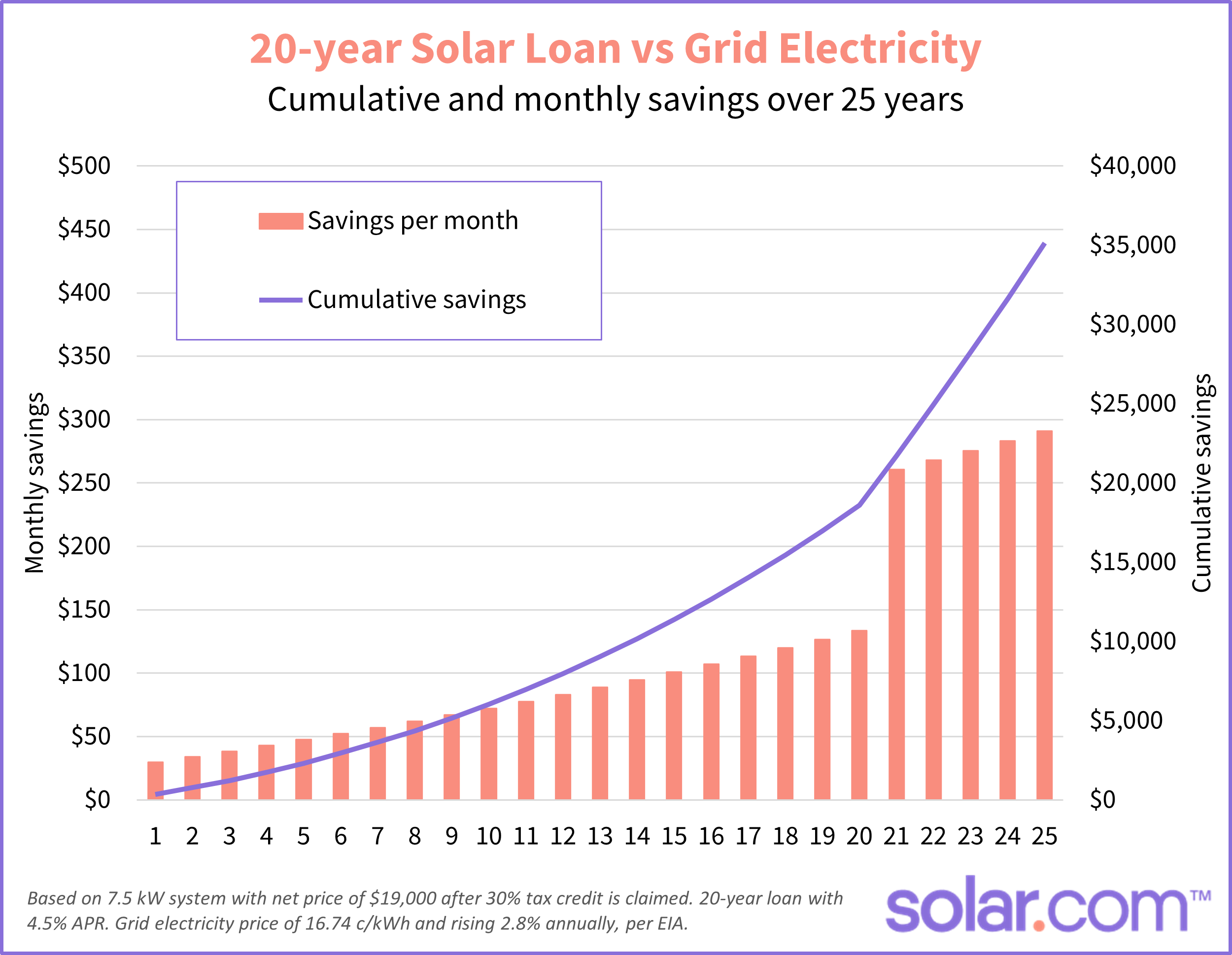
- Solar Loan: A popular option. You own the system and reap all the benefits (tax credits, SRECs). Your monthly loan payment might be offset by your reduced electricity bill, potentially resulting in a net monthly saving from day one.
- Solar Lease/Power Purchase Agreement (PPA): You don’t own the system; a third party does. You pay them a fixed monthly fee (lease) or purchase the electricity they produce at a set rate (PPA). While you get immediate bill savings with no upfront cost, you don’t receive the tax credit or increase your home value as much. Savings are typically less than with ownership.
Your financing choice will significantly influence the monthly and lifetime savings you see.
Real Numbers: What Typical Solar Savings Look Like (USA Examples)
Now that we’ve covered the factors, let’s look at some illustrative numbers. Remember, these are estimates, but they give you a realistic idea of the financial benefits.
Average Annual and Lifetime Savings Across the US
While averages can be misleading, they provide a starting point. Many sources estimate that homeowners can save between $1,000 and $2,000 annually on their electricity bills. Over the typical 25-year lifespan of a solar system, this can accumulate to $25,000 to $50,000 or more in savings.
Here’s an illustrative table showing potential average savings ranges by region, considering varying electricity rates and sunlight conditions. These figures assume a reasonably sized system (e.g., 6-8 kW) and utilization of the federal tax credit:
| U.S. Region (Illustrative) | Avg. Annual Savings Range | Estimated 25-Year Lifetime Savings Range |
|---|---|---|
| California | $1,500 – $2,800 | $37,500 – $70,000 |
| Northeast (e.g., NY, MA, CT) | $1,800 – $3,000+ | $45,000 – $75,000+ |
| Texas (deregulated) | $1,000 – $1,800 | $25,000 – $45,000 |
| Florida | $900 – $1,700 | $22,500 – $42,500 |
| Arizona | $1,200 – $2,200 | $30,000 – $55,000 |
| Mid-Atlantic (e.g., MD, VA) | $1,300 – $2,500 | $32,500 – $62,500 |
Case Study 1: The High-Consumption Household in a High-Rate State (e.g., California)
Meet the Rodriguez family in San Diego, California. Their average monthly electric bill is $300 (equivalent to about 1,000 kWh at $0.30/kWh). They decide to install an 8 kW solar system, costing approximately $28,000 before incentives.
- Initial Cost: $28,000
- Federal ITC (30%): -$8,400
- Net Cost: $19,600
- Annual Production: Their system is estimated to produce about 12,000 kWh annually, covering 100% of their usage.
- Annual Savings: They effectively eliminate their $3,600 annual electricity bill.
- Payback Period: ~$19,600 / $3,600 = ~5.4 years.
- Lifetime Savings (25 years): $3,600/year x 25 years = $90,000 (before considering inflation or rising electricity rates, which would make savings even higher).
This scenario shows how high electricity rates and strong sunlight make for rapid returns and massive long-term savings.
Case Study 2: The Moderate-Consumption Household in a Mid-Rate State (e.g., Texas)
Consider David, living in Houston, Texas. His average monthly electric bill is $150 (about 1,000 kWh at $0.15/kWh). He installs a 7 kW system for $24,500 before incentives.
- Initial Cost: $24,500
- Federal ITC (30%): -$7,350
- Net Cost: $17,150
- Annual Production: His system produces about 10,500 kWh annually, covering his usage.
- Annual Savings: He eliminates his $1,800 annual electricity bill.
- Payback Period: ~$17,150 / $1,800 = ~9.5 years.
- Lifetime Savings (25 years): $1,800/year x 25 years = $45,000.
While the payback is longer than in California, David still realizes substantial lifetime savings, securing his energy costs against future rate hikes.
Case Study 3: The Energy-Efficient Homeowner in a Low-Rate State (e.g., Louisiana)
Sarah, an energy-conscious homeowner in Baton Rouge, Louisiana, has an average monthly electric bill of $100 (about 750 kWh at $0.13/kWh). She installs a smaller, 5 kW system for $17,500 before incentives.
- Initial Cost: $17,500
- Federal ITC (30%): -$5,250
- Net Cost: $12,250
- Annual Production: Her system produces about 7,500 kWh annually, covering her usage.
- Annual Savings: She eliminates her $1,200 annual electricity bill.
- Payback Period: ~$12,250 / $1,200 = ~10.2 years.
- Lifetime Savings (25 years): $1,200/year x 25 years = $30,000.
Even in a state with lower electricity rates, an energy-efficient home and a right-sized system can still yield significant financial benefits.
Beyond Bill Savings: The Wider Financial Benefits of Solar
The money saved on your electricity bill is just one piece of the financial pie. Solar panels offer several other compelling economic advantages:
- Increased Home Value: Studies show that homes with solar panels sell for a premium, often increasing property value by 3% to 4%. This is like getting a home improvement that pays for itself and then some.
- Energy Independence and Price Stability: You become less vulnerable to rising utility rates and grid instability. Your energy source is fixed, offering predictability and control over a major household expense for decades.
- Environmental Impact: While not a direct financial saving, reducing your carbon footprint and contributing to a cleaner environment is a significant value proposition for many homeowners. It’s an investment in a sustainable future.
“Why Do I Still Have an Electric Bill After Going Solar?” Addressing Common Concerns
It’s a common question, and sometimes a source of frustration, for new solar homeowners: “My bill isn’t $0! Why not?” There are several understandable reasons:
- Grid Connection Fees: As mentioned, most utilities charge a nominal monthly fee (often $5-$25) to cover grid maintenance and access, regardless of how much electricity you consume from them. Your solar system doesn’t exempt you from these.
- System Underperformance or Under-Sizing:
- Under-Sizing: Your system might have been designed to offset, for example, 80% of your usage, not 100%. This is common if roof space is limited or if you opted for a smaller system to reduce upfront costs.
- Underperformance: Factors like unexpected shading, dust/debris accumulation, or even equipment malfunction can reduce your system’s output. Regular monitoring helps catch this early.
- Increased Energy Consumption: Many homeowners, once they have solar, subconsciously or consciously increase their energy usage. They might turn the AC down lower, charge an electric vehicle, or add new appliances. Your solar system might be producing as expected, but your consumption simply outpaced it.
- Seasonal Variations: Solar production fluctuates throughout the year. You’ll generate more in sunny summer months and less in cloudy winter months. If your net metering credits don’t fully carry over year-round, you might have higher bills during low-production periods.
- Changes in Utility Rates/Policies: While less common mid-contract, utilities can adjust their rates or net metering policies. These changes can sometimes impact your savings.
Understanding these possibilities helps manage expectations and allows you to proactively address any unexpected charges.
Maximizing Your Solar Savings: Actionable Steps
Ready to unlock the full savings potential of solar? Here’s how to ensure you get the best return on your investment:
- Get Multiple Quotes: This is crucial. Obtain at least 3-5 quotes from different reputable solar installers. Prices, equipment, warranties, and service can vary widely. Don’t just compare the total cost; compare the proposed system size, estimated production, and component quality.
- Understand Net Metering Policies: Thoroughly research your local utility’s net metering or buy-back program. Knowing how you’ll be credited for excess power is vital to accurately project your savings.
- Optimize Energy Efficiency First: Before installing solar, make sure your home is as energy-efficient as possible. Seal air leaks, upgrade insulation, and switch to LED lighting. This reduces your overall energy demand, potentially allowing you to install a smaller, less expensive solar system to achieve your savings goals.
- Monitor Your System’s Performance: Most modern solar systems come with monitoring apps. Regularly check your system’s production to ensure it’s operating optimally. If you notice a significant drop in output, contact your installer.
- Consider a Solar Battery: While an additional investment, a solar battery can dramatically increase your savings, especially in areas with time-of-use (TOU) rates or less favorable net metering. Batteries allow you to store excess solar power generated during the day and use it during peak evening hours when electricity is most expensive, or during grid outages.
- Stay Informed on Incentives: Federal, state, and local incentives can change. Stay updated on available tax credits, rebates, and programs to ensure you claim everything you’re eligible for.
Is Going Solar Worth It for You? The ROI Question
Based on comprehensive data and real-world examples, the answer for most U.S. homeowners is a resounding yes. Solar panels represent a significant investment, but one that offers a powerful return in the form of substantially reduced electric bills, protection against rising energy costs, increased home value, and a smaller environmental footprint.
While the exact payback period and lifetime savings vary, the trend is clear: solar energy is a financially smart move. By understanding the factors that drive savings and taking proactive steps to maximize your system’s potential, you can look forward to decades of predictable, affordable, and clean energy for your home. It’s time to take control of your energy future.
Frequently Asked Questions
How much can I realistically expect to save on my electric bill with solar panels?
Most U.S. homeowners can expect to reduce their electricity bills by 50% to 100%, leading to annual savings of $1,000 to $3,000 or more, depending on factors like local electricity rates, system size, and sun exposure. Over a 25-year system lifespan, total savings can easily reach $25,000 to $75,000+.
Will solar panels completely eliminate my electric bill?
While solar panels can drastically reduce your bill, a completely $0 bill is rare. Most utilities charge a small monthly minimum connection fee to remain tied to the grid. Additionally, if your system is undersized or if you use more electricity than your panels produce, you’ll still pay for the deficit.
What is Net Metering and how does it affect my savings?
Net metering is a policy that allows you to send excess electricity generated by your solar panels back to the grid. In return, your utility credits your account, offsetting the electricity you pull from the grid at night or on cloudy days. Strong net metering policies (where you get full retail value for your excess power) significantly increase your savings potential.
How do government incentives like the Federal Solar Tax Credit impact my savings?
Government incentives, especially the Federal Solar Tax Credit (ITC) of 30%, don’t directly reduce your monthly electric bill but dramatically lower the upfront cost of your solar system. By reducing the net investment, these incentives accelerate your payback period and increase your overall return on investment, making your bill savings more impactful over time.
How long does it take for solar panels to pay for themselves?
The payback period for solar panels typically ranges from 5 to 12 years in the U.S. This timeframe depends heavily on your initial system cost, available incentives, local electricity rates (higher rates lead to faster payback), and your energy consumption habits. After the payback period, the electricity generated by your panels is essentially free.
Beyond bill reduction, are there other financial benefits to going solar?
Absolutely. In addition to reducing or eliminating your electric bill, solar panels increase your home’s value, provide energy independence from fluctuating utility rates, and offer a hedge against future electricity price increases. You also contribute to environmental sustainability, which many consider a significant non-financial benefit.
What can I do to maximize my solar savings?
To maximize savings, focus on these steps: get multiple quotes from different installers, ensure your system is properly sized for your energy needs and sun exposure, understand your utility’s net metering policies, claim all eligible federal and state incentives, make your home energy-efficient *before* going solar, and monitor your system’s performance regularly.


Post Comment