How Often Does A Solar Panel Need To Be Cleaned
How Often Do Solar Panels Need Cleaning? Your Definitive Guide to Maximizing Efficiency
You made a smart investment in solar. But are you inadvertently letting that investment underperform? The question of “how often do solar panels need cleaning?” isn’t a simple, one-size-fits-all answer. It’s a critical factor that directly impacts your energy production, your savings, and the longevity of your system. Ignore it, and you could be losing significant power. Embrace it, and you unlock your solar array’s full potential.
Table of Contents
- How Often Do Solar Panels Need Cleaning? Your Definitive Guide to Maximizing Efficiency
- The Short Answer: How Often to Clean Your Solar Panels
- Why Cleaning Your Solar Panels Isn’t Optional: The Impact of Dirt and Debris
- Understanding Efficiency Loss: The Silent Power Drain
- Unpacking “It Depends”: Factors That Dictate Your Cleaning Schedule
- Geographic Location & Climate
- Panel Tilt & Roof Pitch
- Surrounding Environment
- Snowfall
- Performance Monitoring: Your System Tells You When It’s Struggling
- How to Know When Your Solar Panels Are Dirty: Practical Indicators
- Visual Inspection: The Obvious Clues
- Monitoring App Data: Your System’s Secret Language
- The “Rain Test”: Why You Can’t Rely on Mother Nature
- DIY Solar Panel Cleaning vs. Professional Service: Making the Right Choice
- When to DIY: Taking Matters into Your Own Hands
- When to Hire a Pro: Peace of Mind and Expert Care
- Your DIY Solar Panel Cleaning Checklist: A Safe and Effective Approach
- Safety First: Non-Negotiable Rules
- Tools You’ll Need: Simple & Effective
- Step-by-Step Guide for DIY Cleaning
- The Cost of Cleanliness: ROI on Solar Panel Cleaning
- Professional Cleaning Costs
- Calculating the ROI
- Common Myths About Solar Panel Cleaning Debunked
- Beyond Cleaning: Holistic Solar Panel Maintenance for Longevity
- Your Panels, Your Power: Take Control of Your Solar Investment
Let’s cut to the chase and get you the definitive answer you need, tailored to your unique situation.
The Short Answer: How Often to Clean Your Solar Panels
Generally, you should plan to clean your solar panels at least once or twice a year. However, this is just a starting point. The truly accurate answer for *your* home depends heavily on your specific environment and the conditions surrounding your solar array.
Why does it matter so much? Because a dirty solar panel isn’t just an eyesore; it’s an inefficient power generator. Studies and real-world data consistently show that accumulated dirt, dust, pollen, and grime can reduce your solar panel’s energy output by anywhere from 5% to 25%. That’s a substantial chunk of lost electricity and wasted potential from your investment.
Why Cleaning Your Solar Panels Isn’t Optional: The Impact of Dirt and Debris
Think of your solar panels like a window to the sun. If that window is constantly dirty, less light gets through. For solar cells, less sunlight means less electricity generated. It’s that simple, yet profoundly impactful.
Understanding Efficiency Loss: The Silent Power Drain
Even a thin layer of dust or pollen can have a measurable effect. Here’s a breakdown of what contributes to this efficiency loss:
- Dust and Sand: Common in arid regions, construction zones, or even suburban areas, these particles accumulate quickly, blocking sunlight.
- Pollen: A seasonal menace, particularly in spring. Pollen creates a sticky, stubborn film that can significantly reduce output.
- Bird Droppings: These are particularly problematic. A single large dropping can create a “hot spot” by shading a specific area, potentially leading to localized overheating and even long-term damage to the cell beneath if not removed promptly.
- Leaves and Organic Debris: Fallen leaves can partially or fully cover panels, especially if there are overhanging trees.
- Environmental Pollution: If you live near industrial areas or busy highways, soot and exhaust particles can create a dark, sticky film.
- Snow: While not strictly ‘dirt,’ snow cover completely blocks sunlight, rendering panels temporarily useless until cleared or melted.
The cumulative effect of these contaminants means your system isn’t just producing less power; it’s costing you money you could be saving. Regular cleaning ensures your panels are always operating at or near their peak efficiency, maximizing your return on investment.
Unpacking “It Depends”: Factors That Dictate Your Cleaning Schedule
As we’ve established, a blanket cleaning schedule simply doesn’t work for everyone. Your optimal cleaning frequency is a dynamic equation based on several key environmental and situational factors. Let’s break them down.
Geographic Location & Climate
This is arguably the most critical factor. Different climates come with different challenges:
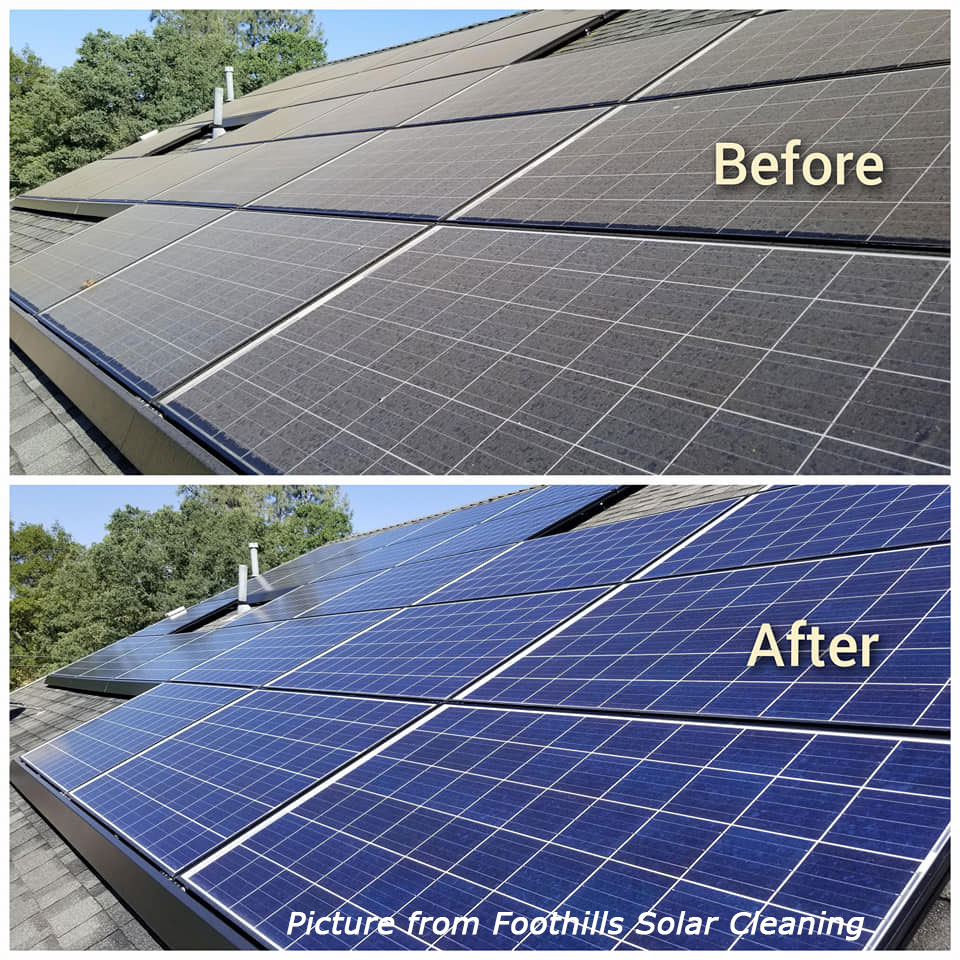
- Desert/Arid Regions: If you live in a dusty, dry area prone to sandstorms (think parts of Arizona, Nevada, or California), your panels will get dirty fast. You might need to clean them 3-4 times a year, or even more after significant dust events.
- Rural/Agricultural Areas: Farms, fields, and even large suburban yards can generate a lot of dust from tilling, harvesting, or even just dry soil. Pollen is also a major factor here. Aim for 2-3 times a year.
- Urban/Industrial Environments: City living means pollution. Soot, exhaust fumes, and general airborne grime can coat panels, often forming a sticky film. Expect to clean 2-3 times a year.
- Coastal Regions: Salt spray from the ocean can accumulate on panels, forming a hazy, corrosive layer. This necessitates cleaning at least twice a year.
- Heavy Rainfall Areas: While rain can rinse some loose dust, it often just streaks heavier grime, leaving mineral deposits behind. Don’t rely on rain alone. You’ll still likely need 1-2 thorough cleanings a year.
Panel Tilt & Roof Pitch
The angle at which your panels are installed matters. Panels with a steeper tilt (higher pitch roof) benefit from gravity and rain to shed some dirt and debris more effectively. Flatter installations tend to accumulate more grime and may require more frequent cleaning.
Surrounding Environment
Take a look around your property:
- Trees: Overhanging trees mean leaves, sap, and pollen directly landing on your panels. This often calls for more frequent attention, especially after autumn.
- Nearby Construction: Dust and debris from building projects can quickly coat panels.
- Traffic: Homes near busy roads will experience more exhaust particulate accumulation.
- Bird Activity: If your roof is a popular perch for local birdlife, you’ll inevitably deal with more droppings.
Snowfall
While not a ‘cleaning’ issue, heavy snowfall can completely obscure your panels, halting production. In snowy climates, actively clearing snow (safely!) is crucial for maintaining winter energy output. Be sure to use appropriate, non-abrasive tools designed for solar panels.
Performance Monitoring: Your System Tells You When It’s Struggling
Most modern solar systems come with monitoring apps or online portals. This is your most powerful tool for determining cleaning frequency. If you notice a sudden, unexplained drop in daily energy production that isn’t due to weather (like a cloudy day), it’s a strong indicator your panels are dirty and need attention. Compare current output to historical data or expected output for similar weather conditions.
Here’s a simplified guide based on these factors:
| Environmental Factor | Typical Cleaning Frequency | Key Considerations |
|---|---|---|
| Arid/Desert (High Dust) | 3-4 times/year (or more after storms) | Frequent dust storms, sand accumulation. Monitor output closely. |
| Rural/Agricultural (Pollen, Dust) | 2-3 times/year (especially after pollen season) | High pollen count, farm dust, agricultural sprays. |
| Urban/Industrial (Pollution) | 2-3 times/year | Soot, exhaust fumes, airborne particulates. |
| Coastal (Salt Spray) | 2 times/year | Salt accumulation, potential for corrosion if left untreated. |
| Temperate (Average) | 1-2 times/year | Moderate dust, occasional pollen. Rain helps, but isn’t sufficient. |
| Heavy Tree Cover | More frequent as needed (especially after fall/spring) | Leaves, sap, bird droppings. Pruning trees helps reduce frequency. |
How to Know When Your Solar Panels Are Dirty: Practical Indicators
While environmental factors give you a baseline, the best way to know if your panels need cleaning is through direct observation and data analysis. Don’t wait for a schedule if you see these signs:
Visual Inspection: The Obvious Clues
Sometimes, it’s just plain obvious. Stand back and look at your panels from the ground (if safe to do so). Are they hazy? Do you see streaks, bird droppings, or a layer of grime? If you can see the dirt, it’s already impacting performance. Look for:
- Visible streaks or films: Especially noticeable after rain, which often just redistributes dirt.
- Patches of opaque material: Bird droppings, dried leaves, or heavy pollen clumps.
- General dullness: Panels should look shiny and reflective. If they look dull or matte, they’re dirty.
Monitoring App Data: Your System’s Secret Language
This is where your solar investment truly pays off in terms of smart management. Your system’s monitoring app is designed to track energy production in real-time. Look for:
- Unexplained Dips: Compare your current daily production to previous days with similar weather conditions (e.g., a sunny Tuesday this week vs. a sunny Tuesday last month). If there’s a significant drop that can’t be attributed to clouds or shorter daylight hours, dirt is a prime suspect.
- Consistent Underperformance: If your system consistently produces less than its estimated output for a given season or month, cleaning is likely needed.
- Microinverter Data: If your system uses microinverters, you can often see the performance of individual panels. A single panel underperforming might indicate a specific blockage (like a bird dropping) that needs targeted cleaning.
The “Rain Test”: Why You Can’t Rely on Mother Nature
Many people mistakenly believe that rain will keep their solar panels clean. While rain can rinse off loose dust, it’s rarely sufficient for a thorough cleaning. Rain often:
- Streaks dirt: It moves grime around, leaving unsightly and efficiency-reducing streaks.
- Leaves mineral deposits: Rainwater isn’t pure; it contains minerals that can leave behind a film as it dries.
- Doesn’t remove sticky grime: Pollen, bird droppings, and tree sap require active scrubbing to remove.
So, while a good downpour might offer a temporary visual improvement, it’s not a substitute for proper cleaning.
DIY Solar Panel Cleaning vs. Professional Service: Making the Right Choice
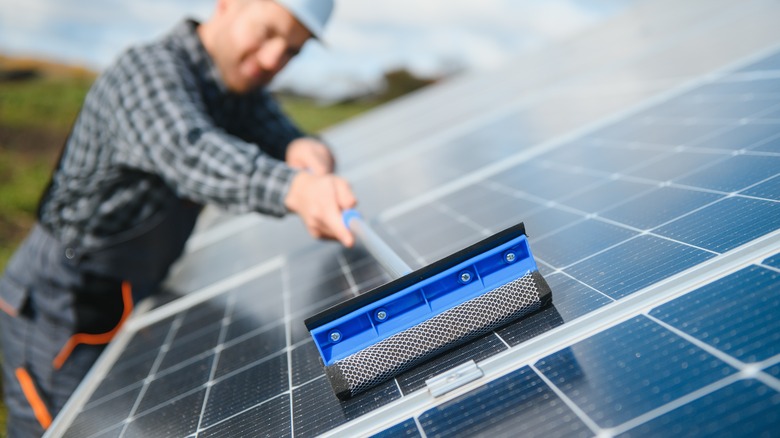
Now that you know when to clean, the next question is how. You essentially have two options: tackle it yourself or call in the professionals. Each has its pros and cons.
| Feature | DIY Cleaning | Professional Cleaning |
|---|---|---|
| Cost | Low (Cost of supplies: ~ $20-$100) | Higher (Typical: $150-$500 per cleaning) |
| Safety | Potential risk (ladder falls, roof work). Requires careful adherence to safety protocols. | High safety (Trained, insured professionals with proper equipment). |
| Effectiveness | Good if done correctly with proper tools and technique. | Excellent (Specialized tools, knowledge of panel care, thorough inspection). |
| Time & Effort | Significant time investment (prep, cleaning, drying). | Minimal effort for homeowner. |
| Equipment | Ladder, soft brush, squeegee, hose, mild soap. | Professional-grade equipment, often deionized water systems. |
| Warranty Implications | Improper cleaning can void some warranties. | Professionals are aware of warranty requirements. |
When to DIY: Taking Matters into Your Own Hands
DIY cleaning is a viable option if:
- Your panels are easily accessible (e.g., on a ground mount or a low-pitched roof with easy access).
- You’re comfortable working at heights and have the proper safety equipment (stable ladder, non-slip shoes, possibly a harness).
- The panels are only lightly soiled with dust or pollen, not heavy, stubborn grime.
- You’re prepared to invest the time and ensure you use the correct tools and methods.
When to Hire a Pro: Peace of Mind and Expert Care
Professional cleaning is highly recommended if:
- Your roof has a steep pitch or your panels are difficult to reach safely.
- You have safety concerns or aren’t comfortable on a ladder or roof.
- Your panels have heavy, stubborn grime like caked-on bird droppings or tree sap.
- You want the cleaning done quickly, effectively, and with the assurance that no damage will occur.
- Your solar installer offers cleaning packages – they know your system best and can often bundle services.
Your DIY Solar Panel Cleaning Checklist: A Safe and Effective Approach
If you’ve decided to clean your panels yourself, safety and proper technique are paramount. Doing it wrong can damage your panels, void your warranty, or worse, cause injury.
Safety First: Non-Negotiable Rules
- Turn Off Your System: This is CRITICAL. Always de-energize your solar array at the inverter or main disconnect before you begin. You don’t want to risk electric shock.
- Work on a Cool Day: Direct sunlight on panels can cause water to evaporate too quickly, leaving spots. Warm panels also increase the risk of thermal shock if cold water is applied. Choose an overcast day or early morning/late evening.
- Secure Ladder Usage: Ensure your ladder is stable on level ground and extends at least three feet above the roofline. Have someone spot you if possible.
- Non-Slip Footwear: Wear shoes with good grip, especially on a potentially wet roof.
- Avoid Walking on Panels: Solar panels are designed to be durable, but walking on them can cause micro-cracks that reduce efficiency and lifespan.
Tools You’ll Need: Simple & Effective
- Garden Hose with a Nozzle: For rinsing. Ensure you have good water pressure, but avoid high-pressure settings.
- Soft-Bristled Brush or Squeegee with Extension Pole: Essential for gently scrubbing. Look for brushes specifically designed for solar panels or car washing.
- Bucket: For your cleaning solution.
- Mild, Non-Abrasive Cleaning Solution: Distilled water is often enough for light dust. For tougher grime, use a small amount of dish soap (like Dawn) diluted in water, or a specialized solar panel cleaning solution. Avoid harsh chemicals, abrasive cleaners, or anything with ammonia.
- Clean Water: For rinsing off soap. Distilled or deionized water is ideal to prevent water spots, but filtered tap water is often acceptable.
Step-by-Step Guide for DIY Cleaning
- Choose the Right Time: Overcast day, early morning, or late evening when panels are cool.
- Turn Off Your Solar System: Locate your inverter or disconnect switch and power down your array. Confirm it’s off.
- Initial Rinse: Use your garden hose to thoroughly rinse down the panels, working from the top down. This loosens dirt and helps prevent scratching during scrubbing.
- Apply Cleaning Solution: Mix your mild soap with water in a bucket. Using your soft brush or squeegee (attached to an extension pole if needed), gently apply the solution to the panels. Work in sections. Do NOT use abrasive pads or scourers.
- Gentle Scrubbing: With light, even pressure, scrub away visible dirt, grime, and bird droppings. Let the brush do the work; don’t press hard.
- Final Rinse: Rinse the panels thoroughly with clean water, again working from top to bottom, until all soap residue and loosened dirt are gone.
- Squeegee (Optional but Recommended): For streak-free results, use a clean squeegee to remove excess water. Wipe the squeegee blade after each pass.
- Inspect for Damage: Once dry, visually inspect the panels from a safe distance for any new damage or lingering spots.
- Power On Your System: Once you are safely off the roof and satisfied with the cleaning, power your system back on.
The Cost of Cleanliness: ROI on Solar Panel Cleaning
Cleaning your solar panels isn’t just an expense; it’s an investment that yields a return. Let’s look at the numbers.
Professional Cleaning Costs
Professional solar panel cleaning services typically range from $150 to $500 per visit, depending on the size of your array, roof pitch, accessibility, and your geographic location. Some companies offer discounts for regular, scheduled cleanings.
Calculating the ROI
If your panels are operating at 10-25% reduced efficiency due to dirt, consider how much that translates into lost electricity generation. For instance, if your system typically generates 500 kWh per month, a 10% reduction means you’re losing 50 kWh. At an average electricity rate of $0.15/kWh (common in many parts of the US), that’s $7.50 lost per month, or $90 per year. A 20% reduction doubles that to $180 per year.
So, a professional cleaning costing $200 could pay for itself within 1-2 years just from the regained energy production, not to mention extending the lifespan of your panels and preventing hot spots that could lead to costly repairs. In highly soiled environments, the ROI is even faster and more pronounced.
Common Myths About Solar Panel Cleaning Debunked
Misinformation can be just as detrimental as dirt. Let’s clear up some common myths:
- Myth 1: Rain Washes Panels Effectively.
Fact: As discussed, rain can rinse some loose dust but often leaves streaks and doesn’t remove stubborn grime like pollen, sap, or bird droppings. It’s not a substitute for active cleaning. - Myth 2: Solar Panels Don’t Need Cleaning.
Fact: While solar panels are low-maintenance, they are not no-maintenance. Dirt accumulation absolutely reduces efficiency and, over time, can lead to premature degradation or hot spots. - Myth 3: You Can Use Any Soap/Detergent.
Fact: Harsh chemicals, abrasive soaps, or strong detergents can damage the panel’s anti-reflective coating or leave residue that attracts more dirt. Always use mild, non-abrasive soap or specialized solar panel cleaners. - Myth 4: Pressure Washing is Fine.
Fact: Absolutely NOT. Pressure washers can force water under the seals, damage the solar cells, void warranties, and cause micro-cracks in the glass. Stick to a garden hose. - Myth 5: Panels Clean Themselves in the Sun.
Fact: While solar panels get hot, this heat isn’t sufficient to burn off or evaporate solid dirt and grime.
Beyond Cleaning: Holistic Solar Panel Maintenance for Longevity
Cleaning is a vital part, but not the entirety, of maintaining your solar investment. Think of it as part of a broader health check for your system:

- Annual Inspections: Consider having your installer or a qualified technician perform an annual check-up. They can spot issues like loose wiring, pest infestations, or mounting problems before they become serious.
- Checking Wiring and Connections: Ensure all visible wiring is secure and free from rodent damage or weathering.
- Pest Control: Birds, squirrels, and other critters love to nest under panels. This can damage wiring and create fire hazards. Consider installing critter guards.
- Tree Trimming: Keep surrounding trees pruned to prevent shading and reduce the amount of leaves and sap falling onto your panels.
- Monitor Performance Regularly: Make checking your solar monitoring app a habit. Early detection of performance dips allows for swift intervention.
Your Panels, Your Power: Take Control of Your Solar Investment
Understanding how often to clean your solar panels, and why it’s so important, empowers you to take control of your energy production. It’s not about an arbitrary schedule, but about responding to your environment and ensuring your investment works as hard as it can for you. Whether you choose to don your gloves and clean them yourself or hire a trusted professional, prioritizing regular solar panel cleaning will lead to greater efficiency, more significant savings, and a longer, healthier life for your clean energy system.
Don’t let dirt steal your solar power. Stay informed, stay vigilant, and keep those panels sparkling!
Frequently Asked Questions
How often should I clean my solar panels?
While a general recommendation is 1-2 times per year, the ideal frequency depends heavily on your location and environment. Dusty, urban, or agricultural areas may require 3-4 cleanings annually, while temperate climates might only need one to two.
What happens if I don’t clean my solar panels?
Uncleaned solar panels accumulate dirt, dust, pollen, and grime, which can reduce their energy production by 5% to 25%. This translates directly to lost electricity generation, lower savings, and potentially accelerated degradation of the panels over time due to hot spots.
Can rain clean my solar panels effectively?
No, relying solely on rain is a common myth. While rain can rinse off loose dust, it often streaks heavier grime, leaves behind mineral deposits, and is ineffective against sticky contaminants like pollen, bird droppings, or tree sap. Manual cleaning is essential for optimal performance.
Should I clean my solar panels myself or hire a professional?
DIY cleaning is suitable for easily accessible panels and light soiling, provided you prioritize safety and use proper tools. However, for steep roofs, heavy grime, safety concerns, or to ensure warranty compliance, hiring a professional solar panel cleaning service is highly recommended.
What tools and solutions should I use for DIY solar panel cleaning?
For DIY cleaning, use a garden hose with a nozzle, a soft-bristled brush or squeegee with an extension pole, and a bucket. Use only mild, non-abrasive soap (like diluted dish soap) or specialized solar panel cleaning solutions. Avoid harsh chemicals, abrasive scrubbers, or pressure washers.
How do I know my solar panels need cleaning beyond a visual check?
Your solar system’s monitoring app is a powerful indicator. Look for unexplained dips in daily energy production that aren’t due to weather (e.g., cloudy days). Consistent underperformance compared to historical data strongly suggests your panels are dirty and require cleaning.
Will cleaning my solar panels void my warranty?
Improper cleaning methods, such as using abrasive chemicals, high-pressure washers, or causing physical damage, can potentially void your solar panel warranty. Always consult your panel manufacturer’s guidelines or opt for professional cleaning services that are aware of warranty requirements.


Post Comment