How To Calculate Solar Panel Output
How to Calculate Solar Panel Output: Your Definitive Guide to Real-World Solar Power
Thinking about solar? Fantastic! But let’s be honest, deciphering how much actual electricity your panels will produce can feel like trying to solve a quantum physics problem. Wattage ratings, peak sun hours, derating factors – it’s a lot to take in.
Table of Contents
- How to Calculate Solar Panel Output: Your Definitive Guide to Real-World Solar Power
- Why Understanding Your Solar Panel’s Output Matters (Beyond Just Watts)
- The Foundation of Energy Independence
- Smart System Sizing and Investment
- Maximizing Your Savings
- The Core Formula: Your Starting Point for Solar Output Calculation
- Understanding Panel Wattage (STC vs. PTC)
- What Are “Peak Sun Hours”? (And How to Find Yours)
- Step-by-Step: How to Calculate Solar Panel Output (The Real-World Way)
- Step 1: Gather Your Panel’s Rated Wattage (Wp)
- Step 2: Determine Your Location’s Average Peak Sun Hours (PSH)
- Step 3: Account for System Losses and Efficiency (The Crucial “Derating Factor”)
- Step 4: Plug It All In: The Real-World Output Formula
- Step 5: Calculate Daily, Monthly, and Annual Output
- Beyond the Basics: Factors That Truly Impact Your Solar Panel’s Performance
- Solar Panel Efficiency: What the Numbers Mean
- Orientation and Tilt Angle: Catching Maximum Rays
- Shading: The Silent Output Killer
- Temperature: Solar Panels Don’t Love the Heat
- Degradation Rate: The Long-Term Reality
- Weather and Seasonal Variations: It’s Not Always Sunny
- Example Calculations: Putting Theory into Practice
- Example 1: Single Panel Daily Output
- Example 2: Small Residential System Monthly Output
- Example 3: Full Home System Annual Output & Sizing
- Tools and Resources to Simplify Your Calculations
- NREL’s PVWatts Calculator
- Google’s Project Sunroof
- Your Solar Installer
- Maximizing Your Solar Panel’s Output: Practical Tips
- Regular Cleaning and Maintenance
- Consider Microinverters or Power Optimizers
- Proactive Shading Management
- System Monitoring
- The Bottom Line: Empowering Your Solar Journey
Forget the confusing jargon and vague estimates. My goal here is to cut through the noise and give you a straightforward, step-by-step guide to calculating your solar panel’s *real-world output. We’ll go beyond the factory specs to understand what your system will truly deliver to your home, helping you make informed decisions and confidently embark on your solar journey.
Why Understanding Your Solar Panel’s Output Matters (Beyond Just Watts)
Knowing your solar panel’s output isn’t just a technical exercise; it’s the bedrock of a successful and satisfying solar investment. This isn’t just about a number on a spec sheet; it’s about practical power for your life.
The Foundation of Energy Independence
For many, solar is about taking control of their energy. Calculating output allows you to directly connect the power produced by your panels to your household’s energy needs. Are you aiming for 100% self-sufficiency? Net metering? Understanding your output is the first step to knowing if you’ll hit that goal and what it truly means for your utility bill.
Smart System Sizing and Investment
Imagine buying a car without knowing its fuel efficiency or a house without knowing its square footage. That’s what choosing a solar system without understanding its output is like. Accurate calculations help you:
- Right-size your system: Avoid overspending on too many panels or underspending on too few.
- Estimate ROI: Project how quickly your investment will pay for itself through energy savings.
- Compare options: Evaluate different panel types, inverter technologies, and system designs based on their real-world performance.
Maximizing Your Savings
Your solar panels are an investment designed to save you money. The more accurately you can predict their output, the more precisely you can forecast your energy bill reductions and potential earnings from selling excess power back to the grid (if net metering is available in your area). This clarity empowers you to manage your budget and truly appreciate the financial benefits of going solar.
The Core Formula: Your Starting Point for Solar Output Calculation
At its heart, calculating solar panel output begins with a surprisingly simple formula. Think of it as the starting block of your race toward energy independence. We’ll refine this, of course, but let’s get the basics down first.
The most fundamental calculation for a solar panel’s theoretical daily energy output is:
Energy (Wh) = Panel Wattage (Wp) x Peak Sun Hours (PSH)
Let’s break down those two critical components:
Understanding Panel Wattage (STC vs. PTC)
When you look at a solar panel’s specifications, you’ll see a wattage rating (e.g., 350W, 400W). This is its maximum power output under ideal, controlled conditions. But there are two important standards for this rating:
- STC (Standard Test Conditions): This is the most common rating. It measures a panel’s performance at 25°C (77°F) cell temperature, 1000 W/m² solar irradiance, and an air mass of 1.5. Think of it as the panel’s “laboratory best.” Most panels you see advertised use their STC rating.n
- PTC (PVUSA Test Conditions): A more realistic rating, PTC takes into account conditions closer to what panels experience in the field: 20°C (68°F) ambient temperature, 1000 W/m² solar irradiance, and a wind speed of 1 meter per second. The PTC rating will always be slightly lower than the STC rating, but it gives you a better real-world expectation.n
For our calculations, we’ll generally start with the STC wattage, but remember we’ll apply a “derating factor” later to bring it closer to reality.
What Are “Peak Sun Hours”? (And How to Find Yours)
This is where local conditions become crucial. Peak Sun Hours (PSH) is not the total number of hours the sun is out. Instead, it’s the equivalent number of hours per day when solar irradiance averages 1,000 watts per square meter (W/m²). This is the intensity of sunlight needed to generate a panel’s rated power.
Think of it this way: 5 hours of direct, intense midday sun might equal 5 peak sun hours. But 10 hours of weaker morning and afternoon sun might also only add up to 5 peak sun hours. It’s about the quality and intensity* of sunlight, not just its duration.
How to find your Peak Sun Hours:
- NREL Solar Radiation Data Manuals: The National Renewable Energy Laboratory (NREL) provides extensive solar radiation data for locations across the U.S. This is highly reliable.n
- PVWatts Calculator: This free online tool from NREL (pvwatts.nrel.gov) is excellent for finding average PSH for your specific location and will even perform system output calculations for you.n
- Online Solar Maps: Many websites offer interactive maps showing average daily peak sun hours by region or even by zip code. Just search for “average peak sun hours [your state/city].”n
- Your Solar Installer: A reputable local installer will have precise data for your specific area and can factor in microclimates or specific site conditions.n
For example, a sunny state like Arizona might have 5-7 PSH per day, while a cloudier region in the Pacific Northwest might have 3-4 PSH.
Step-by-Step: How to Calculate Solar Panel Output (The Real-World Way)
Now, let’s put it all together and perform a real-world calculation. This isn’t just about the ideal; it’s about what you can truly expect. This is the core ‘how-to’ for the topic.
Step 1: Gather Your Panel’s Rated Wattage (Wp)
Look at your solar panel’s specifications. This is usually expressed in Watts (W) or Watt-peak (Wp). For consistency, let’s use the STC rating for our initial calculation, as it’s the most commonly advertised number. Let’s assume you have a 400Wp panel.
Step 2: Determine Your Location’s Average Peak Sun Hours (PSH)
As discussed, this is critical. Use resources like PVWatts or NREL data for your specific location. For this example, let’s assume your location averages 5 Peak Sun Hours per day.
Step 3: Account for System Losses and Efficiency (The Crucial “Derating Factor”)
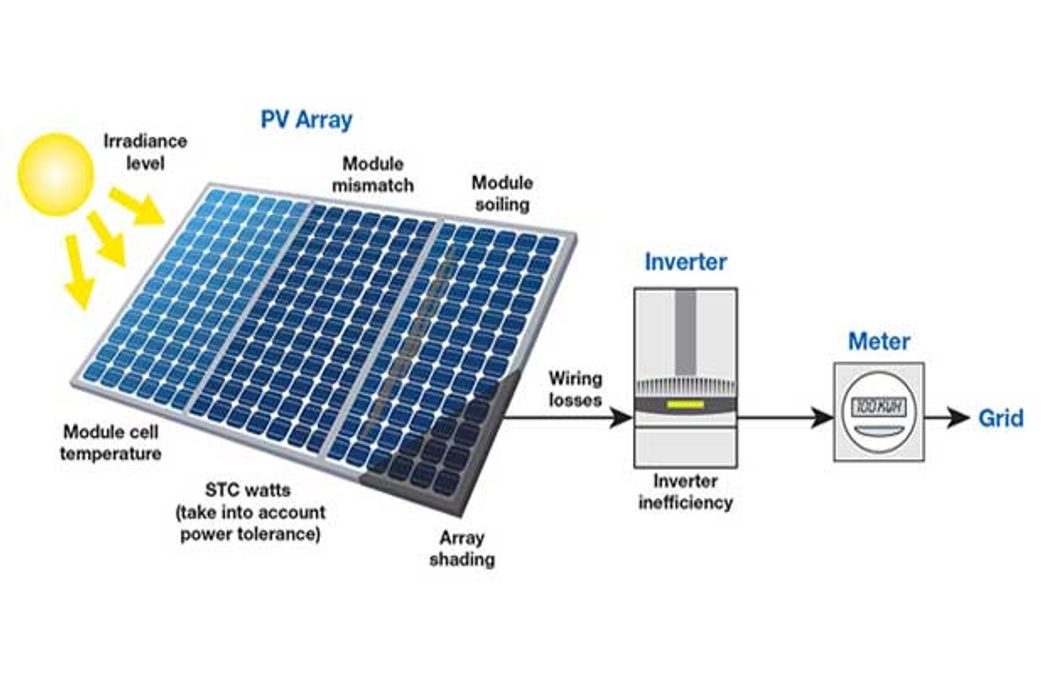
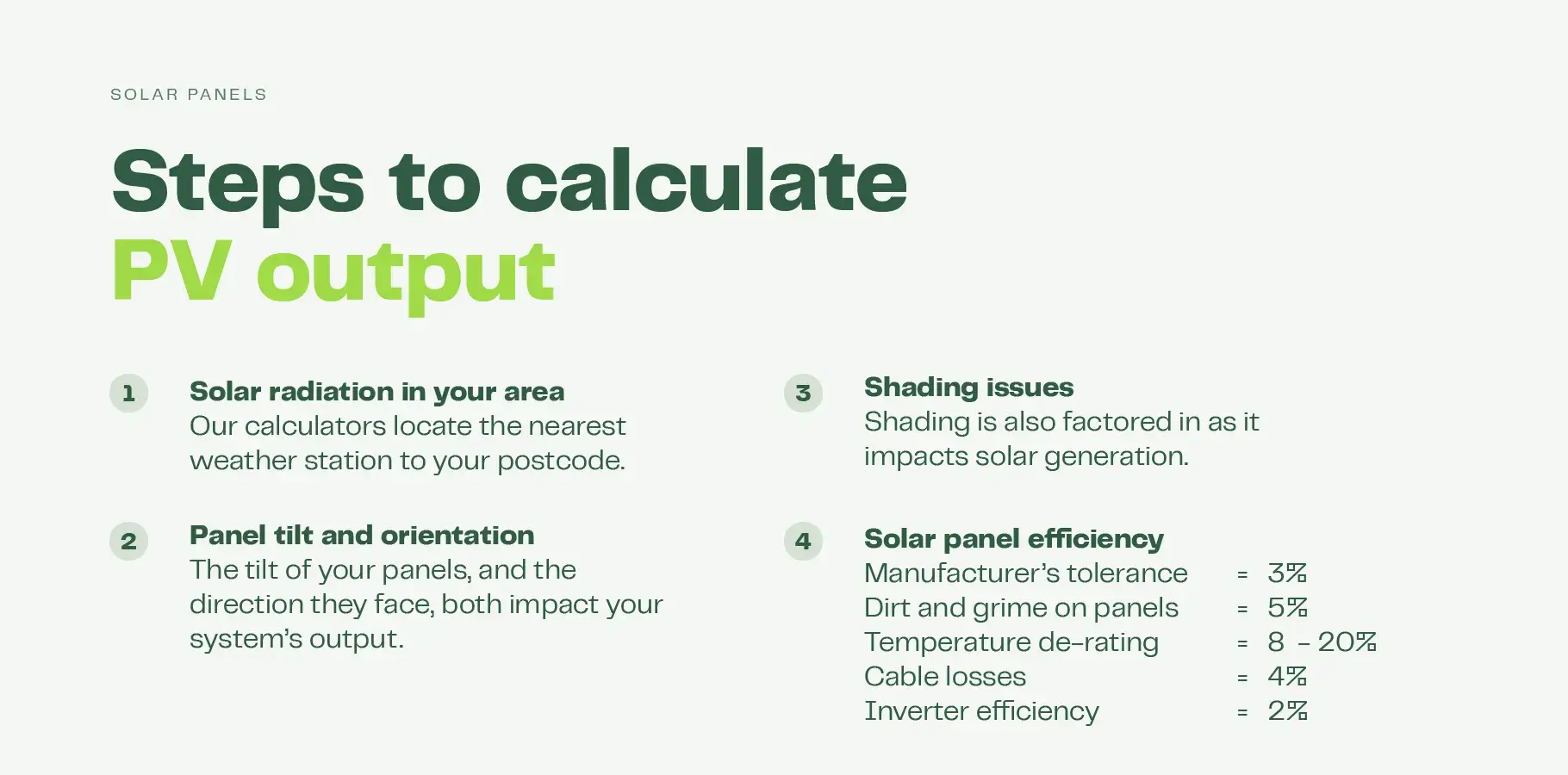
This is where theory meets reality. Solar panels rarely operate at 100% of their rated capacity due to a variety of factors. We use a “derating factor” (or system loss factor) to account for these inefficiencies. This factor typically ranges from 0.75 (75%) to 0.85 (85%) for residential systems, but it can be lower if conditions are poor (e.g., heavy shading, extreme temperatures).
Factors contributing to system losses:
- Temperature: Panels lose efficiency as they get hotter.
- Inverter efficiency: The inverter converts DC power from panels to AC power for your home, and it’s not 100% efficient (typically 95-98%).
- Wiring losses: Some energy is lost in the electrical wiring.
- Dust and dirt: Accumulation on panels reduces sunlight absorption.
- Shading: Even partial shading can significantly reduce output.
- Degradation: Panels slowly lose efficiency over their lifespan (typically 0.5% – 1% per year).
For a good general estimate for a typical residential installation, a derating factor of 0.77 (77%) is often used. Your installer can give you a more precise estimate based on your specific system design and local climate.
Step 4: Plug It All In: The Real-World Output Formula
Now, combine everything for your daily energy output:
Daily Energy Output (Wh) = Panel Wattage (Wp) x Peak Sun Hours (PSH) x Derating Factor
Using our example values:
Daily Energy Output = 400 Wp x 5 PSH x 0.77
Daily Energy Output = 1540 Wh (Watt-hours)
To convert this to kilowatt-hours (kWh), which is how your utility bills are measured, divide by 1000:
Daily Energy Output = 1540 Wh / 1000 = 1.54 kWh per day
Step 5: Calculate Daily, Monthly, and Annual Output
Once you have your daily kWh, it’s easy to scale up:
- Monthly Output: Daily kWh x Average Days in a Month (e.g., 30.4 for an annual average)
- Annual Output: Daily kWh x 365 days
Using our 1.54 kWh/day example for a single panel:
- Monthly Output: 1.54 kWh/day x 30.4 days/month = 46.8 kWh per month
- Annual Output: 1.54 kWh/day x 365 days/year = 562.1 kWh per year
And if you have multiple panels in your system, simply multiply the single-panel output by the number of panels.
For instance, a system with 10 of these 400Wp panels would produce:
- Daily System Output: 1.54 kWh/panel x 10 panels = 15.4 kWh per day
- Annual System Output: 562.1 kWh/panel x 10 panels = 5,621 kWh per year
Beyond the Basics: Factors That Truly Impact Your Solar Panel’s Performance
The calculation above is a fantastic starting point, but a true understanding of solar panel output requires acknowledging the dynamic forces at play. These aren’t just minor adjustments; they are fundamental elements that can significantly sway your system’s performance.
| Factor | Ideal Scenario (STC) | Real-World Impact & Typical Loss | How to Mitigate/Account For It |
|---|---|---|---|
| Solar Irradiance (Sunlight) | 1000 W/m² (bright, direct sun) | Varies significantly by location, time of day, season, and weather. Directly impacts PSH. | Use accurate local PSH data. Consider weather patterns for annual estimates. |
| Temperature | 25°C (77°F) cell temp | Panels lose efficiency as temp rises (typically 0.25-0.5% per °C above 25°C). Often 5-15% loss. | Ensure good ventilation behind panels. Higher temperature coefficient panels perform better in heat. |
| Panel Efficiency | Rated percentage (e.g., 20%) | The actual conversion rate of sunlight into electricity. Affects the panel’s Wp rating. | Choose panels with higher efficiency ratings if space is a constraint. |
| Orientation & Tilt | Optimal angle for direct sun | Suboptimal angles lead to less direct sunlight. Can be 5-20% loss. | South-facing (Northern Hemisphere) with optimal tilt. Consider tracking systems (more complex/costly). |
| Shading | None | Even partial shading can dramatically reduce output across an entire string of panels. Highly variable, potentially 10-50%+ loss. | Site assessment to minimize shading. Use microinverters or power optimizers. Trim trees. |
| Dust & Dirt (Soiling) | Clean surface | Accumulation reduces light absorption. Typical 1-5% loss, more in dusty areas. | Regular cleaning (or reliance on rain). |
| Inverter Efficiency | 100% conversion (ideal) | DC to AC conversion always has losses. Typical 2-5% loss. | Choose high-efficiency inverters (95-98% is common). |
| Wiring & Other Losses | None | Resistance in cables, mismatch losses between panels. Typical 1-3% loss. | Professional installation with correctly sized wiring. |
| Degradation Rate | 0% per year (new panels) | Panels slowly lose efficiency over time. Typical 0.5% – 1% loss per year. | Account for this in long-term financial modeling. Choose panels with better degradation warranties. |
Solar Panel Efficiency: What the Numbers Mean
Panel efficiency, expressed as a percentage (e.g., 20%), tells you how much of the sunlight hitting the panel is converted into usable electricity. A 20% efficient panel converts 20% of the sun’s energy into power. Higher efficiency means more power from a smaller footprint, which is crucial if your roof space is limited. It’s often factored into the panel’s wattage, so you don’t typically apply it as a separate multiplier, but it drives the Wp rating itself.
Orientation and Tilt Angle: Catching Maximum Rays
In the Northern Hemisphere, south-facing panels with a tilt angle roughly equal to your latitude will capture the most sunlight annually. Deviations from this ideal (e.g., east or west facing, or very flat/steep roofs) will reduce output. A skilled installer will optimize this based on your specific roof and local solar path.
Shading: The Silent Output Killer
Even a small amount of shade from trees, chimneys, or neighboring buildings can drastically reduce your system’s output. Why? Because panels are often wired in ‘strings,’ and the entire string’s output can be limited by the weakest (shadiest) panel. This is why microinverters or power optimizers are often recommended; they allow each panel to perform independently, minimizing the impact of shading.
Temperature: Solar Panels Don’t Love the Heat
While solar panels need sunlight, they don’t perform optimally in extreme heat. As a panel’s temperature rises above 25°C (77°F), its efficiency decreases. This is why a sunny, cool day often yields better results than a sunny, scorching hot day. Good air circulation behind your panels is important to help dissipate heat.
Degradation Rate: The Long-Term Reality
Like any technology, solar panels degrade over time. Most manufacturers guarantee that their panels will still produce 80-85% of their original output after 25 years. This annual degradation rate (typically 0.5% to 1% per year) means your system’s output will slightly decrease year over year. Factor this into long-term financial planning.
Weather and Seasonal Variations: It’s Not Always Sunny
Your actual daily output will vary significantly based on weather (cloud cover, rain, snow) and seasonal changes (longer days in summer, lower sun angle in winter). While our average PSH accounts for some of this, be prepared for day-to-day fluctuations. Your highest output will generally be in the late spring and early summer, not necessarily the peak of summer when temperatures are highest.
Example Calculations: Putting Theory into Practice
Let’s walk through a few more examples to solidify your understanding. Remember, these are estimates, but they provide a solid foundation for evaluating your solar potential.
Example 1: Single Panel Daily Output
You’re considering a single 300Wp portable solar panel for camping, used in an area with 4.5 Peak Sun Hours a day. Portable panels might have slightly more losses due to imperfect positioning, so let’s use a derating factor of 0.70.
Calculation:
- Daily Energy Output (Wh) = 300 Wp x 4.5 PSH x 0.70
- Daily Energy Output (Wh) = 945 Wh
- Daily Energy Output (kWh) = 945 Wh / 1000 = 0.945 kWh per day
This tells you that your portable panel could generate enough power for small electronics or a mini-fridge during a day trip.
Example 2: Small Residential System Monthly Output
You have a small rooftop system consisting of 6 x 380Wp panels in a state averaging 5.2 Peak Sun Hours daily. Your installer estimates a system derating factor of 0.78.
Step 1: Calculate daily output for one panel:
- Daily Panel Output (Wh) = 380 Wp x 5.2 PSH x 0.78
- Daily Panel Output (Wh) = 1543.68 Wh
- Daily Panel Output (kWh) = 1.544 kWh (rounded)
Step 2: Calculate daily output for the entire system:
- Daily System Output (kWh) = 1.544 kWh/panel x 6 panels
- Daily System Output (kWh) = 9.264 kWh per day
Step 3: Calculate monthly output:
- Monthly System Output (kWh) = 9.264 kWh/day x 30.4 days/month (average)
- Monthly System Output (kWh) = 281.7 kWh per month (rounded)
This system would generate roughly 282 kWh per month, which could cover a significant portion of a modest household’s electricity usage.
Example 3: Full Home System Annual Output & Sizing
Your home uses an average of 9,000 kWh per year. You live in an area with 4.8 Peak Sun Hours. You’re looking at installing 420Wp panels, and your installer quotes a derating factor of 0.76.
Step 1: Calculate the annual output of a single 420Wp panel:
- Daily Panel Output (Wh) = 420 Wp x 4.8 PSH x 0.76 = 1532.16 Wh
- Daily Panel Output (kWh) = 1.532 kWh
- Annual Panel Output (kWh) = 1.532 kWh/day x 365 days/year = 559.18 kWh per year
Step 2: Determine how many panels you need to meet 9,000 kWh/year:
- Number of Panels = Total Annual kWh Needed / Annual Output per Panel
- Number of Panels = 9,000 kWh / 559.18 kWh/panel
- Number of Panels = 16.09 (You can’t have a fraction of a panel, so round up to 17 panels)
This calculation suggests you’d need a system of 17 x 420Wp panels to meet your annual energy needs, generating approximately 9,506 kWh per year (17 * 559.18).

| Metric | Value (Example 3) | Notes |
|---|---|---|
| Panel Wattage (Wp) | 420 Wp | STC rating per panel |
| Average Peak Sun Hours (PSH) | 4.8 hours | Location-specific daily average |
| System Derating Factor | 0.76 (76%) | Accounts for real-world losses (temp, inverter, shading, etc.) |
| Daily Output per Panel (kWh) | 1.532 kWh | (420 * 4.8 * 0.76) / 1000 |
| Annual Output per Panel (kWh) | 559.18 kWh | 1.532 kWh * 365 days |
| Desired Annual Home Usage (kWh) | 9,000 kWh | From your utility bills |
| Estimated Panels Needed | 17 panels | 9000 kWh / 559.18 kWh/panel (rounded up) |
Tools and Resources to Simplify Your Calculations
While doing the manual calculations gives you a fantastic understanding of the underlying principles, there are powerful tools available to help you quickly and accurately estimate solar output for your specific location.
NREL’s PVWatts Calculator
This is the gold standard for solar energy estimates in the US and beyond. Developed by the National Renewable Energy Laboratory (NREL), PVWatts allows you to input your address, system size, and a few other parameters, and it will churn out detailed monthly and annual energy production estimates. It automatically pulls in accurate solar resource data and considers many system losses. It’s a fantastic resource for both homeowners and professionals.
Google’s Project Sunroof
Project Sunroof is a user-friendly tool that uses Google Maps data to analyze your roof’s solar potential. You simply enter your address, and it estimates how much sun your roof receives, potential energy savings, and even recommends local solar installers. It’s great for an initial, high-level overview.
Your Solar Installer
For the most accurate and personalized estimate, nothing beats a professional solar installer. They will perform a detailed site assessment, taking into account specific roof angles, shading from nearby trees or buildings, local weather patterns, and your actual electricity consumption. They use sophisticated software that builds upon the principles we’ve discussed to provide a highly precise production estimate and system design tailored to your needs.
Maximizing Your Solar Panel’s Output: Practical Tips
Understanding how to calculate output is one thing; ensuring your system *achieves* that output (or even exceeds expectations) is another. Here are practical steps you can take to get the most from your solar investment:
Regular Cleaning and Maintenance
Dust, pollen, leaves, and bird droppings can accumulate on your panels, reducing the amount of sunlight that reaches the cells. While rain often helps, a periodic rinse with a hose (especially after dry spells or during pollen season) can make a difference. Avoid abrasive cleaners or harsh scrubbing. Professional cleaning can also be an option.
Consider Microinverters or Power Optimizers
If your roof experiences partial shading at different times of the day, or if you have multiple roof planes, these technologies are game-changers. Instead of a single central inverter, microinverters are attached to each panel, allowing them to operate independently. Power optimizers do a similar job, conditioning the power from each panel before sending it to a central inverter. This mitigates the “weakest link” problem and significantly boosts overall system output in less-than-ideal conditions.
Proactive Shading Management
Before installation, trim any tree branches that will cast significant shade on your panels, especially during peak sun hours. If new growth occurs, plan for periodic trimming. Sometimes, simply adjusting where panels are placed on your roof can dramatically reduce shading.
System Monitoring
Most modern solar systems come with monitoring apps or online portals. Regularly checking your system’s performance allows you to identify any dips in production quickly. If output suddenly drops significantly without an obvious reason (like heavy rain or snow), it could indicate a problem that needs professional attention, such as a faulty inverter, damaged panel, or excessive soiling. Early detection means less lost energy.
The Bottom Line: Empowering Your Solar Journey
Calculating solar panel output might seem daunting at first, but with a clear understanding of the formula, the factors involved, and the resources available, it becomes an empowering exercise. You’re not just estimating watts; you’re projecting your future energy independence, savings, and environmental impact.
This guide has equipped you with the knowledge to move beyond guesswork. Whether you’re planning a new installation, evaluating an existing system, or just curious about the magic of solar, you now have the tools to understand the real-world power at your fingertips. Go forth and embrace the sun!
n
Frequently Asked Questions
What is the difference between STC and PTC ratings?
STC (Standard Test Conditions) is a panel’s wattage measured in a lab under ideal conditions (25°C cell temp, 1000 W/m² irradiance). PTC (PVUSA Test Conditions) is a more realistic rating, accounting for ambient temperature and wind, thus providing a slightly lower but more real-world expectation of power output.
What are Peak Sun Hours (PSH) and how do I find mine?
Peak Sun Hours are the equivalent number of hours per day when solar irradiance averages 1,000 watts per square meter. It’s a measure of sunlight intensity, not just duration. You can find your local PSH using resources like NREL’s PVWatts Calculator, Google’s Project Sunroof, or by consulting a local solar installer.
What is a ‘derating factor’ and why is it important?
A derating factor (or system loss factor) accounts for real-world inefficiencies that reduce a solar panel’s output below its ideal rating. These losses come from factors like temperature, inverter efficiency, wiring, dirt, shading, and panel degradation. It’s typically a multiplier between 0.70 and 0.85 and is crucial for calculating actual energy production.
How does temperature affect solar panel output?
Solar panels actually become less efficient as their temperature rises above 25°C (77°F). While they need sunlight, extreme heat causes their voltage to drop, reducing overall power output. This is why good ventilation behind panels is important.
Can shading significantly reduce my solar panel’s output?
Yes, even partial shading can drastically reduce a system’s output. If panels are wired in a string, the entire string’s production can be limited by the weakest (shadiest) panel. Solutions like microinverters or power optimizers can mitigate this by allowing each panel to operate independently.
How often should I clean my solar panels?
The frequency depends on your local environment. In most areas, rain provides sufficient cleaning. However, if you live in a dusty area, near agricultural fields, or experience significant bird droppings, a periodic rinse with water (without harsh chemicals) can help maintain optimal output. System monitoring can alert you if dirt buildup is significantly impacting performance.
How accurate are online solar calculators like PVWatts?
Online calculators like PVWatts are highly accurate for general estimates because they use extensive historical solar radiation data and advanced algorithms to account for various factors. While a professional site assessment will provide the most precise prediction for your specific roof, these tools are excellent for preliminary planning and understanding your solar potential.


Post Comment