How To Teach Solar System To Preschoolers
How to Teach the Solar System to Preschoolers: An Engaging, Age-Appropriate Guide
Ever gazed up at the night sky with a little one, watching their eyes widen at the twinkle of a distant star or the glow of the moon? That innate curiosity is a powerful launchpad for learning, and the solar system is one of the most magnificent wonders we can explore with preschoolers.
Table of Contents
- How to Teach the Solar System to Preschoolers: An Engaging, Age-Appropriate Guide
- Why Introduce the Solar System to Preschoolers?
- Fostering Curiosity and Wonder
- Boosting Cognitive Development
- Expanding Vocabulary
- Laying a Foundation for STEM Learning
- The Core Principles for Teaching Space to Little Ones
- Keep it Simple and Concrete
- Embrace Hands-On and Multi-Sensory Learning
- Short and Sweet Sessions
- Repetition is Your Friend
- Focus on Fun, Not Facts
- Step-by-Step Guide: Making Space Exploration Simple for Preschoolers
- Step 1: Start with the Sun and Earth (Our Home Base)
- Step 2: Introduce the Moon – Earth’s Companion
- Step 3: Meet the Planets (One or Two at a Time)
- Step 4: The Concept of Orbit – Spinning and Going Around
- Step 5: Expand Beyond the Planets (Briefly!)
- Engaging Activities to Bring the Solar System to Life
- Creative Crafts & Art Projects
- Story Time & Books
- Songs & Movement
- Sensory Bins & Playdough Fun
- Role-Playing & Games
- Digital Resources (Used Sparingly)
- Pro Tips for Success
- Use Everyday Objects for Comparison
- Be Patient and Flexible
- Answer Questions with Enthusiasm
- Connect to Real-World Experiences
- Reinforce Learning Through Play
Teaching abstract concepts like planets, orbits, and vast distances to a three or four-year-old might sound daunting, but trust me, it’s not! With the right approach – focusing on play, imagination, and hands-on discovery – you can spark a lifelong love for science and the cosmos. This guide will show you exactly how to transform complex ideas into simple, joyful learning experiences your preschooler will adore.
Why Introduce the Solar System to Preschoolers?
Beyond the sheer awe of space, there are significant developmental benefits to introducing the solar system early. It’s not about memorizing facts; it’s about nurturing core skills.
Fostering Curiosity and Wonder
Preschoolers are naturally curious. They ask “why?” constantly. The solar system provides a boundless source of wonder, encouraging them to question, observe, and imagine beyond their immediate world. This foundational curiosity is a cornerstone of scientific thinking and problem-solving.
Boosting Cognitive Development
Learning about the solar system helps preschoolers grapple with concepts like size (big planets, small planets), order (which planet comes first?), colors, and patterns. They begin to understand basic spatial relationships and the idea of a system where things work together. This strengthens their classification skills, memory, and logical thinking.
Expanding Vocabulary
Introducing words like “planet,” “star,” “moon,” “orbit,” “telescope,” and “astronaut” expands their language skills in an exciting context. As they learn new terms, they connect them to visual and tactile experiences, solidifying their understanding and broadening their expressive language.
Laying a Foundation for STEM Learning
Early exposure to science, technology, engineering, and math (STEM) concepts is incredibly beneficial. The solar system naturally integrates all these elements – observing planetary movements (science), using simple models (engineering), and counting planets (math). It makes STEM accessible and exciting from a young age, without them even realizing they’re learning complex subjects.
The Core Principles for Teaching Space to Little Ones
Before we dive into specific activities, let’s establish some guiding principles. These will make your teaching journey smoother and more impactful for your tiny astronaut.
Keep it Simple and Concrete
Abstract concepts like gravity or light-years are too much for preschoolers. Focus on what they can see, touch, or relate to their own experiences. Instead of explaining orbital mechanics, say, “The Earth goes around the Sun, just like you might walk around a tree.” Use simple language and analogies they can grasp.

Embrace Hands-On and Multi-Sensory Learning
Preschoolers learn by doing, seeing, touching, and hearing. Kinetic activities like modeling planets with playdough, drawing, singing songs, or acting out planetary movements are far more effective than just looking at pictures or listening to explanations. Engage all their senses!
Short and Sweet Sessions
A preschooler’s attention span is notoriously short – typically 3 to 5 minutes per year of age. This means your “solar system lessons” should be brief, engaging bursts of activity. If they lose interest, switch gears or take a break. You can always come back to it later or the next day. Little bits of learning add up!
Repetition is Your Friend
Don’t expect them to remember everything after one session. Repetition, presented in different fun ways, is key to cementing knowledge. Revisit songs, books, and activities. Each time, they’ll pick up a little more, reinforcing previous learning without feeling bored.
Focus on Fun, Not Facts
The primary goal at this age is to ignite interest and make learning enjoyable. Don’t stress about memorizing planet names in order or exact distances. If they learn the names of a few planets and understand that they all orbit the sun, you’ve achieved a huge success. The joy of discovery is paramount.
Step-by-Step Guide: Making Space Exploration Simple for Preschoolers
Let’s break down how to introduce the solar system in a manageable, engaging sequence that builds understanding gradually.
Step 1: Start with the Sun and Earth (Our Home Base)
Begin with what’s familiar: our own planet and the giant star that warms us. Introduce the Sun as a big, hot star in the middle of our solar system. Then, talk about Earth as our home, where we live. Emphasize that the Earth goes around the Sun.
- Activity Idea: Day and Night Simulation: Use a flashlight (Sun) and a globe or a ball (Earth). Shine the flashlight on one side of the ‘Earth’ to show day, and explain that the other side is night. Slowly rotate the ‘Earth’ to show the transition.
- Activity Idea: Simple Sun Craft: Draw a large yellow circle and let them glue yellow and orange tissue paper or yarn “rays” around it. Keep it bright and cheerful!
Step 2: Introduce the Moon – Earth’s Companion
Once Earth is established, bring in its closest companion: the Moon. Explain that the Moon orbits our Earth. Talk about how it looks different in the sky sometimes (phases) and how it’s rocky and dusty.
- Activity Idea: Moon Phase Drawing: Look at the moon outside (if visible) or show pictures. Have them draw what they see or cut out different moon shapes from paper.
- Activity Idea: Crater Making with Playdough: Roll grey or white playdough into a ball. Use small marbles or pebbles to drop onto it, creating “craters.” Discuss how the moon has lots of bumps and holes.
Step 3: Meet the Planets (One or Two at a Time)
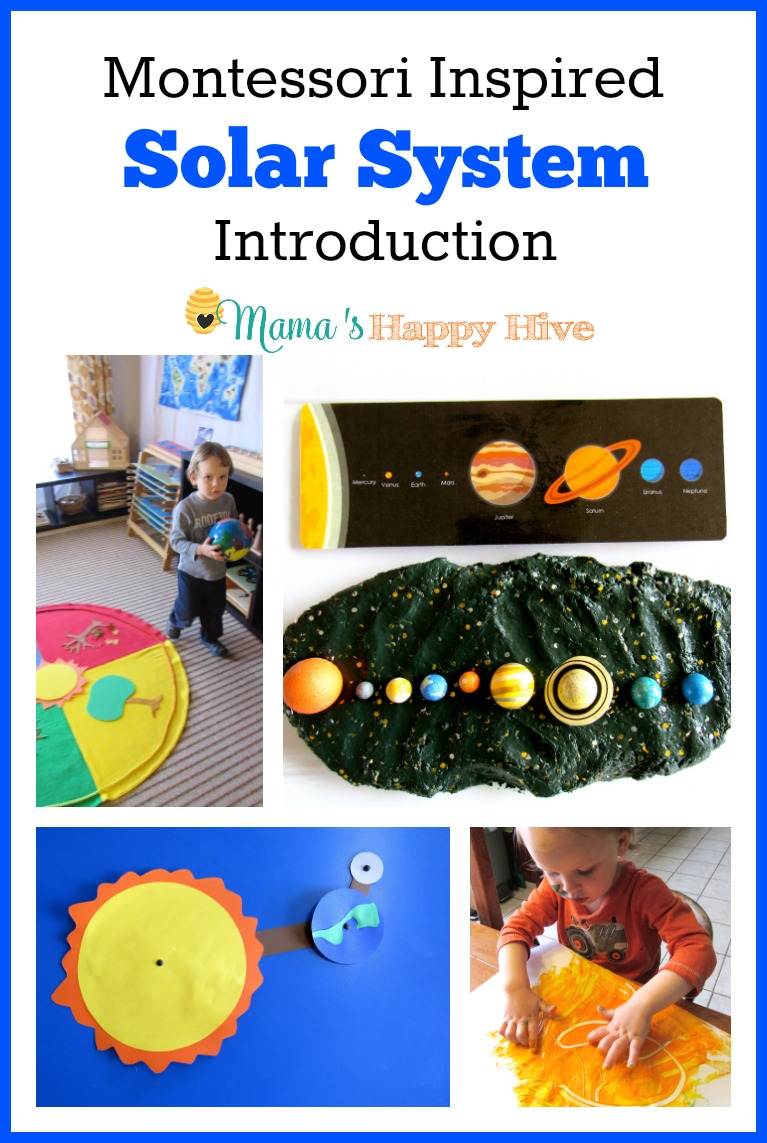
Don’t overwhelm them with all eight planets at once. Start with the ones that are visually distinct or easily relatable. Focus on a few key characteristics: color, size (relative to others), and maybe one fun fact. Use simplified terms. Here’s a quick guide:
| Planet | Simple Description for Preschoolers | Key Visual/Fact |
|---|---|---|
| Mercury | Small, rocky, closest to the Sun | Like a hot, fast little rock |
| Venus | Very hot and bright, Earth’s neighbor | The ‘morning star’ that shines brightly |
| Earth | Our home, blue and green | Where we live! Has water and air |
| Mars | The ‘Red Planet’ | Looks rusty red, maybe has robots! |
| Jupiter | The biggest planet, striped | A giant with a big red spot (storm) |
| Saturn | Has beautiful rings | The ‘ringed jewel’ of the solar system |
| Uranus | Blue-green, icy, far away | Looks like a big blue marble |
| Neptune | Deep blue, very windy, farthest | The ‘blue giant’ at the edge |
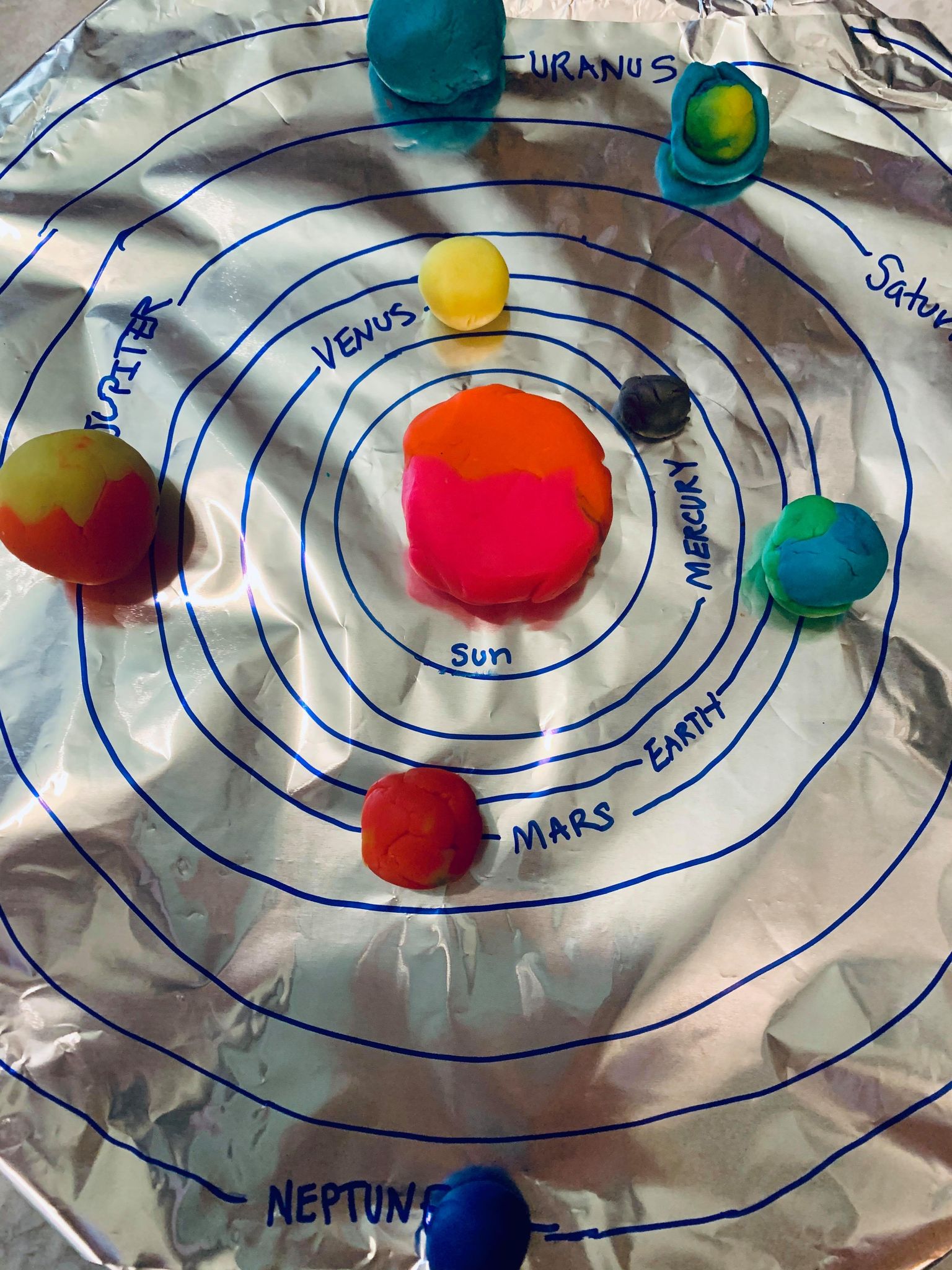
- Activity Idea: Play-Doh Planets: Provide different colors of playdough. Guide them to make different sized balls for the planets, emphasizing their unique colors. For instance, a small grey Mercury, a big striped Jupiter, a red Mars, and a blue Earth.
- Activity Idea: Planet Sensory Bin: Fill a bin with colored rice, chickpeas, or kinetic sand. Add small planet figures (or painted rocks/balls) for them to find and arrange. Include little astronaut figures or star cutouts for extra fun.
Step 4: The Concept of Orbit – Spinning and Going Around
Explain that planets don’t just sit still; they move around the Sun in a path called an orbit. This is crucial for understanding the solar system’s dynamics, even if explained simply.
- Activity Idea: Human “Planet” Orbit Game: Have one child stand in the middle as the “Sun.” Other children are “planets” who walk or skip in a circle around the Sun. You can add more “planets” to show different orbital paths.
- Activity Idea: String Model Solar System: Hang painted Styrofoam balls (planets) from a hula hoop (orbit path) with different lengths of string, with a bigger ball (Sun) in the center. They can see how everything revolves around the Sun.
Step 5: Expand Beyond the Planets (Briefly!)
Once they have a grasp of the Sun, Earth, Moon, and a few planets, you can briefly touch upon other celestial bodies. Keep it super simple.
- Stars: Millions of other suns, far away, that make our night sky twinkle.
- Asteroids/Comets: Big rocks or icy snowballs floating in space.
Engaging Activities to Bring the Solar System to Life
Here’s a collection of hands-on, interactive activities that reinforce learning and keep the fun flowing.
Creative Crafts & Art Projects
- Solar System Mobile: Cut out construction paper circles for the Sun and planets. Decorate them with paint, glitter, or markers. Attach them with string to a hanger or a stick to create a hanging mobile.
- Cereal Box Rockets: Decorate empty cereal boxes or paper towel rolls to look like rockets. Add fins, windows, and flames. Use them for imaginary space travel.
- Constellation Art: On dark paper, use a white crayon to draw dots and connect them to make simple constellations (like the Big Dipper). You can also use stickers or glow-in-the-dark paint.
Story Time & Books
Reading together is a fantastic way to introduce new concepts and vocabulary. Look for books with vibrant illustrations and simple, repetitive text. Some popular titles include:
- “There’s No Place Like Space: All About Our Solar System” (Cat in the Hat’s Learning Library)
- “The Planets” by Gail Gibbons
- “Roaring Rockets” by Tony Mitton
- “National Geographic Little Kids First Big Book of Space”
Songs & Movement
Music and movement are incredibly powerful learning tools for preschoolers. Simple, catchy tunes help them remember names and concepts.
- Solar System Song: Adapt a familiar tune (like “Twinkle, Twinkle Little Star” or “The Wheels on the Bus”) to sing about the Sun and planets. Example: “The planets go ‘round the Sun, ‘round the Sun, ‘round the Sun…”
- Planet Dance: Assign each child a planet. Play music and have them dance, then when the music stops, they freeze in their “orbit” around a central “Sun.”
Sensory Bins & Playdough Fun
Sensory play is paramount for preschoolers. It engages multiple senses and allows for open-ended exploration.
- Space-Themed Sensory Bins: As mentioned, rice, kinetic sand, or even dried black beans can be a base. Add small plastic planets, glitter, star stickers, toy astronauts, and scoops for scooping and pouring.
- Playdough Planets and Aliens: Beyond just making planets, encourage them to create their own alien creatures or spaceships for imaginative play.
Role-Playing & Games
Imaginative play solidifies understanding and allows children to act out what they’ve learned.
- Astronaut Dress-Up: Provide simple props like helmets (bowls), space suits (overalls), and pretend controls. Let them embark on imaginary missions to different planets.
- Planet Matching Game: Print or draw simple pictures of planets. Create two sets and have them match the pairs.
Digital Resources (Used Sparingly)
While hands-on is best, a little screen time can be supplementary. Look for short, engaging educational videos or simple interactive apps.
- Educational Videos: Search for age-appropriate videos about planets or space on trusted platforms. Keep them brief, no more than 5-7 minutes.
- Simple Space Apps: Some apps offer basic planet identification or simple space-themed puzzles. Supervise usage and ensure content is educational.
Pro Tips for Success
A few extra pointers can make your solar system exploration even more stellar.
Use Everyday Objects for Comparison
When discussing sizes, compare planets to things they know: “Jupiter is like a giant beach ball, and Earth is like a small bouncy ball.” This helps abstract concepts feel more tangible.
Be Patient and Flexible
Learning isn’t linear. Some days they’ll be fascinated; other days, they won’t. Follow their lead. If they’re interested in dinosaurs today, that’s okay! Revisit the solar system another time. The goal is positive association, not forced learning.
Answer Questions with Enthusiasm
When they ask questions, even if repetitive, answer them with genuine excitement. “Why is Mars red?” is a fantastic opportunity to reinforce learning. If you don’t know the answer, say, “That’s a great question! Let’s find out together!”
Connect to Real-World Experiences
Point out the moon in the sky during the day or night. Look at stars on a clear evening. Talk about how the sun gives us light and warmth. These real-world connections make the solar system feel less abstract and more relevant.
Reinforce Learning Through Play
Leave out the playdough, books, and craft supplies for them to revisit independently. Unstructured play with space-themed materials allows them to process and internalize what they’ve learned in their own creative ways.
Teaching the solar system to preschoolers is less about rigorous science lessons and more about igniting a spark of wonder. By focusing on simple, hands-on, and playful activities, you can foster their natural curiosity and lay a beautiful foundation for future scientific exploration. So go ahead, embark on this cosmic adventure with your little learners – the universe awaits!
Frequently Asked Questions
What is the best age to start teaching the solar system to children?
You can introduce basic solar system concepts as early as 3-5 years old (preschool age). At this stage, the focus should be on sparking curiosity, introducing simple concepts like the Sun, Earth, and Moon, and engaging in hands-on activities rather than memorizing complex facts.
How can I explain abstract concepts like ‘orbit’ to a preschooler?
For preschoolers, abstract concepts need to be made concrete. To explain ‘orbit,’ you can use a physical demonstration: have one person (the ‘Sun’) stand still while another person (the ‘Earth’) walks in a circle around them. You can say, ‘The Earth goes around the Sun, just like you are walking around me!’
What are some simple materials I can use to teach about planets?
Everyday materials work best! Playdough is excellent for modeling planets of different sizes and colors. Styrofoam balls or painted rocks can represent planets for a mobile or sensory bin. Flashlights can act as the Sun, and balls of various sizes can demonstrate relative planet sizes.
Should I teach all eight planets at once?
No, it’s best to introduce planets gradually. Start with the Sun, Earth, and Moon. Then, introduce one or two planets at a time, focusing on their unique characteristics (like Mars being red or Saturn having rings) through play and visuals. Don’t worry about memorizing all eight in order; the goal is engagement and discovery.
How do I keep a preschooler’s attention during a solar system lesson?
Keep sessions short (5-10 minutes), highly interactive, and multi-sensory. Use songs, movement, crafts, and stories. If their attention wanes, switch activities or take a break. Repetition in different fun formats over several days is more effective than one long session.
Are there any good books about the solar system for preschoolers?
Absolutely! Look for books with bright illustrations and simple language. Popular choices include ‘There’s No Place Like Space: All About Our Solar System’ by the Cat in the Hat, ‘The Planets’ by Gail Gibbons, and the ‘National Geographic Little Kids First Big Book of Space.’ Reading aloud makes learning fun and accessible.


Post Comment