Materials Used In Solar Panels
What Are Solar Panels Made Of? Unpacking the Core Materials & Future of Solar Energy
Ever wondered what goes into those sleek, power-generating panels on rooftops? It’s more than just a fancy piece of glass. At its heart, a solar panel is an ingeniously layered device, built from a carefully selected array of materials designed to capture sunlight, convert it into electricity, and withstand the elements for decades.
Table of Contents
- What Are Solar Panels Made Of? Unpacking the Core Materials & Future of Solar Energy
- The Core Components: An In-Depth Look
- 1. Photovoltaic Cells: The Heart of the Panel
- 2. Tempered Glass: The Protective Shield
- 3. EVA (Ethylene Vinyl Acetate) Encapsulant: The Invisible Bond
- 4. Backsheet: The Rear Guard
- 5. Aluminum Frame: The Structural Backbone
- 6. Junction Box & Wiring: The Electrical Hub
- 7. Essential Metals: Conductors & Connectors
- The Manufacturing Process: From Sand to Solar Power
- Beyond Traditional Silicon: Emerging Solar Panel Materials
- 1. Perovskites: The Next Big Thing?
- 2. Organic Photovoltaics (OPVs): Flexible & Transparent
- 3. Quantum Dots: Harnessing Nanoscale Power
- The Environmental Footprint: Raw Materials, Recycling, and Sustainability
- Sourcing Challenges & Impact
- The Growing Importance of Solar Panel Recycling
- Choosing Your Solar Panels: What Materials Mean for You
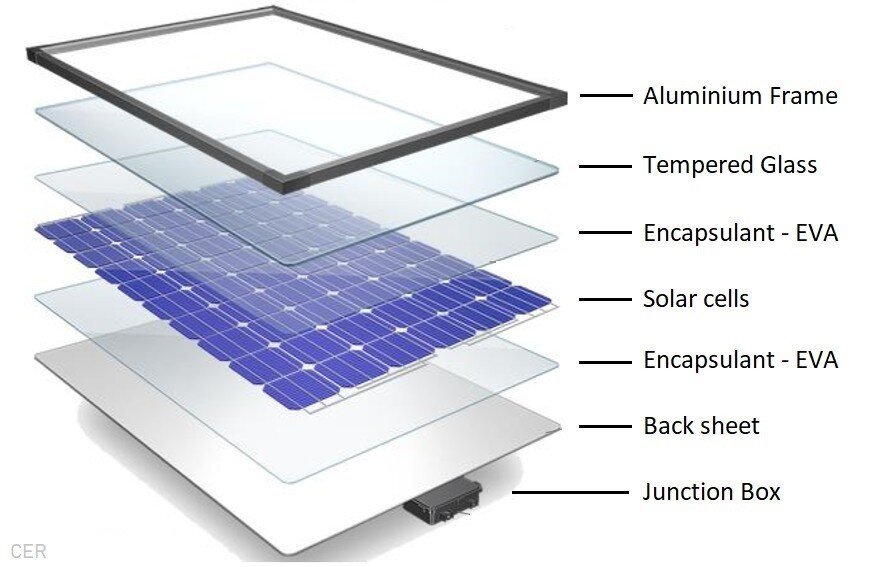
Essentially, a standard solar panel is a sophisticated “sandwich” primarily composed of silicon cells, a protective layer of tempered glass, an aluminum frame for structural integrity, EVA encapsulant to seal and protect, a durable backsheet, and a junction box with wiring to manage the power flow. Each material plays a non-negotiable role in ensuring the panel’s efficiency, longevity, and performance.
Let’s peel back the layers and understand exactly what makes these incredible renewable energy generators tick.
The Core Components: An In-Depth Look
Think of a solar panel as a high-tech puzzle. Each piece, from the microscopic silicon atom to the robust aluminum frame, is crucial. Here’s a detailed breakdown:
1. Photovoltaic Cells: The Heart of the Panel
These are the stars of the show – the components directly responsible for converting sunlight (photons) into electricity (electrons). The vast majority of solar panels use silicon-based cells, but there are different types, each with its own characteristics.
- Monocrystalline Silicon: These cells are cut from a single, continuous crystal of silicon. You can spot them by their uniform, dark appearance and rounded edges (though modern designs often crop the corners to fit more cells). Monocrystalline panels boast the highest efficiency rates, typically ranging from 18% to 22%+, making them ideal for spaces where maximizing power output per square foot is critical.
- Polycrystalline Silicon: Made from multiple silicon crystal fragments melted together, polycrystalline cells have a distinctive speckled, blue hue and square shape. While slightly less efficient (15-18% range) than their monocrystalline counterparts, they are generally more affordable to produce, offering a cost-effective solution for many installations.
- Thin-Film (Amorphous Silicon, Cadmium Telluride, CIGS): Unlike crystalline silicon cells, thin-film panels are made by depositing ultra-thin layers of semiconductor material onto a substrate like glass, plastic, or metal. They are typically less efficient per square foot (10-13%) but can be flexible, lightweight, and perform better in low-light conditions. Their material usage is significantly less, making them a good fit for niche applications like portable chargers or building-integrated photovoltaics (BIPV).
Here’s a quick comparison of the dominant PV cell types:
| Cell Type | Material Basis | Typical Efficiency Range | Appearance | Key Advantage | Key Disadvantage |
|---|---|---|---|---|---|
| Monocrystalline Silicon | Single Silicon Crystal | 18-22%+ | Uniform, dark black, rounded corners | Highest efficiency, best for limited space | Higher manufacturing cost |
| Polycrystalline Silicon | Multiple Silicon Crystals | 15-18% | Speckled blue, square shape | More affordable to produce | Slightly lower efficiency |
| Thin-Film (CdTe, CIGS, a-Si) | Various semiconductor layers | 10-13% (per area) | Flexible, uniform, often dark/transparent | Lightweight, flexible, good low-light performance | Lower efficiency, larger footprint needed |
2. Tempered Glass: The Protective Shield
Just like a superhero needs armor, solar cells need protection. This is where the tempered glass comes in. It’s not just any glass; it’s specially designed to be highly durable and transparent. Typically, this is a low-iron, high-transmission glass that allows maximum sunlight to reach the cells while protecting them from hail, debris, and harsh weather conditions. It’s often anti-reflective coated to minimize light loss, ensuring more photons hit the silicon.
3. EVA (Ethylene Vinyl Acetate) Encapsulant: The Invisible Bond
Imagine sticky, clear plastic that seals everything together. That’s essentially the role of EVA film. Two layers of EVA sandwich the silicon cells, bonding them to the glass on the front and the backsheet on the rear. This transparent polymer serves multiple critical functions:
- Protection: It protects the delicate silicon cells from moisture, dirt, and physical shock.
- Adhesion: It glues all the layers together, creating a robust, waterproof laminate.
- Optical Clarity: It maintains excellent light transmission, ensuring sunlight can reach the cells effectively without degradation over time.
4. Backsheet: The Rear Guard
On the very back of the solar panel, you’ll find the backsheet. This multi-layered polymer film is the final line of defense. Its primary jobs are:
- Electrical Insulation: Prevents electrical leakage and protects against potential shock.
- Moisture Barrier: Stops water vapor from penetrating the panel, which could degrade the cells.
- UV Resistance: Protects internal components from harmful ultraviolet radiation, which can cause materials to yellow or become brittle.
- Thermal Management: Helps dissipate heat from the cells, contributing to efficiency.
Common materials for backsheets include Tedlar (polyvinyl fluoride), PET (polyethylene terephthalate), and various other fluoropolymer blends.
5. Aluminum Frame: The Structural Backbone
Without a strong frame, a solar panel would be vulnerable to bending, warping, and damage during installation and throughout its lifespan. The aluminum frame provides this essential structural integrity. Aluminum is chosen for several reasons:
- Lightweight: Reduces the overall weight, making installation easier and minimizing roof load.
- Strength: Provides rigidity and protects the edges of the glass and internal components.
- Corrosion Resistance: Aluminum is naturally resistant to rust and corrosion, crucial for outdoor exposure in various climates.
- Mounting: The frame is designed with channels and holes to easily attach mounting hardware, securing the panel to your roof or ground array.
6. Junction Box & Wiring: The Electrical Hub
Located on the back of the panel, the junction box is the central hub for the panel’s electrical connections. It typically contains:
- Bypass Diodes: These are crucial. If one cell or section of cells becomes shaded or malfunctions, bypass diodes allow electricity to flow around the affected area, preventing the entire panel’s output from dropping to zero.
- Output Cables: Usually two cables (positive and negative) extend from the junction box, ready to connect to other panels in a string or directly to an inverter. These cables are typically made of copper for excellent conductivity and insulated with weather-resistant plastic.
- Enclosure: The box itself is made of a durable, weatherproof plastic, protecting the delicate electrical components from moisture and dust.
7. Essential Metals: Conductors & Connectors
Beyond the aluminum frame and copper wiring, other metals are vital for efficient electricity collection and transfer within the panel:
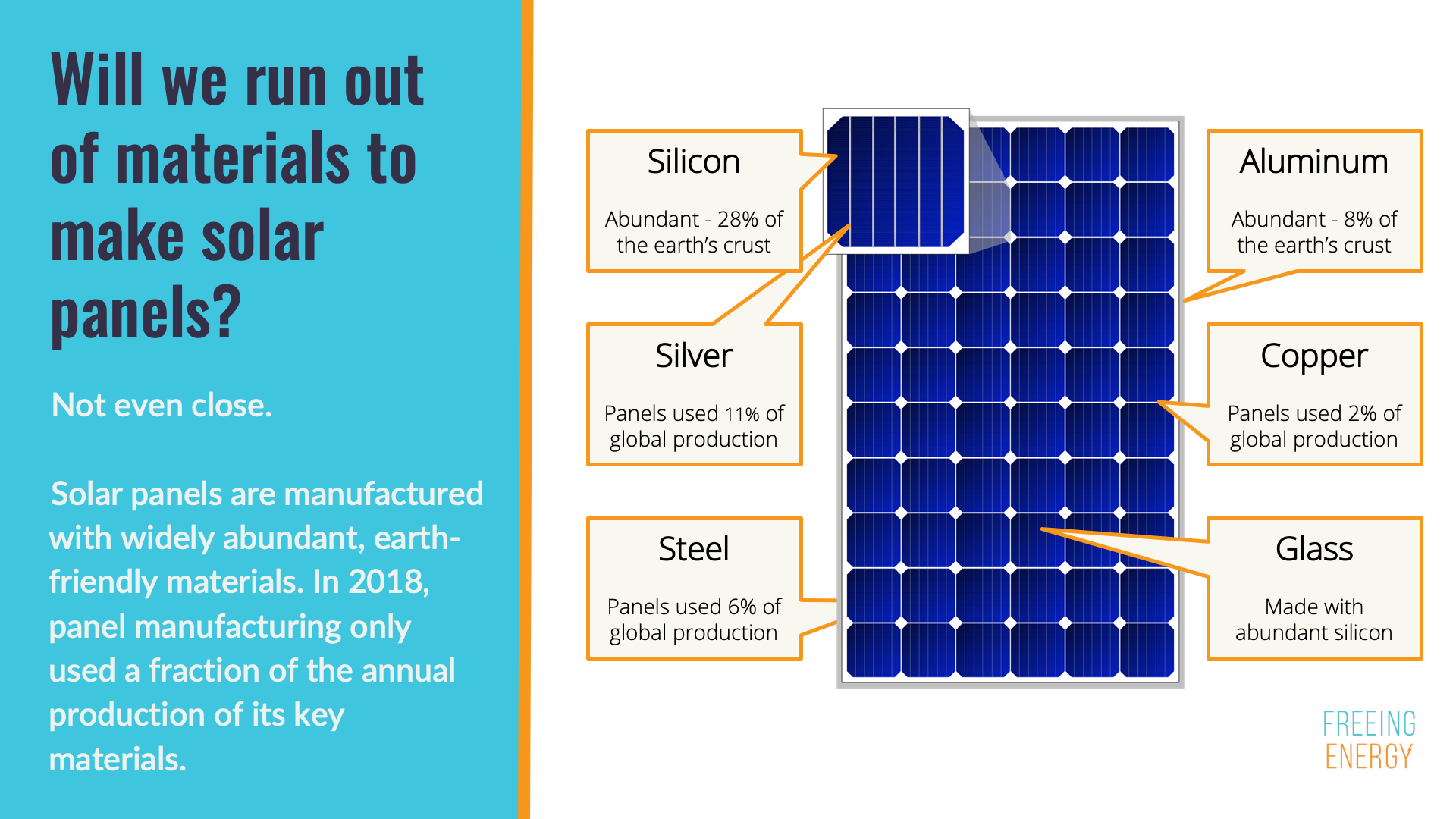
- Silver: While costly, silver is an exceptional electrical conductor. It’s used to create thin finger grids and busbars printed onto the surface of the silicon cells. These grids collect the electrons generated by the silicon and channel them out of the cell.
- Copper: As mentioned, copper is the go-to for wiring (e.g., ribbon wires connecting cells, output cables) due to its high conductivity, ductility, and relatively lower cost compared to silver.
- Lead (Historical/Trace): Historically, solder used to connect cells contained lead. Modern, lead-free solder is increasingly common due to environmental regulations.
The Manufacturing Process: From Sand to Solar Power
While our focus is on materials, understanding the journey from raw materials to a finished panel helps appreciate the engineering involved. It’s a complex, multi-step process:
- Silicon Purification: High-purity silicon is extracted from quartz sand, then melted and grown into large ingots (cylindrical blocks).
- Wafer Slicing: These ingots are precisely sliced into thin wafers, which will become the solar cells.
- Cell Fabrication: Wafers are treated (doped) with elements like boron and phosphorus to create the P-N junction, then etched, cleaned, and metallized with silver contacts.
- Cell Stringing: Individual cells are soldered together using copper ribbons and organized into strings.
- Lamination: The cell strings are carefully placed between layers of glass, EVA, and the backsheet. This “sandwich” is then heated and compressed in a laminator, melting the EVA to create a strong, hermetically sealed unit.
- Framing and Junction Box: The laminated module is fitted with its aluminum frame, and the junction box is attached and wired.
- Testing: Each panel undergoes rigorous electrical testing and quality control to ensure it meets performance specifications before packaging and shipping.
Beyond Traditional Silicon: Emerging Solar Panel Materials
While silicon dominates the market, scientists and engineers are constantly pushing the boundaries, exploring new materials that promise higher efficiencies, lower costs, or unique properties. Here are some of the most exciting developments:
1. Perovskites: The Next Big Thing?
Perovskite solar cells are generating immense buzz. These synthetic crystals have demonstrated astonishing efficiency gains in lab settings, rapidly catching up to and even exceeding silicon in some cases. What makes them so promising?
- High Efficiency Potential: Researchers have achieved efficiencies over 25% in single-junction perovskite cells, and even higher in tandem cells (layered with silicon).
- Low-Cost Manufacturing: Perovskites can be processed from solution, meaning they can be printed or sprayed onto substrates, potentially significantly reducing manufacturing costs.
- Flexibility and Transparency: They can be made into flexible films or even semi-transparent coatings, opening doors for building-integrated solar (windows that generate power!).
Challenges remain, particularly concerning their long-term stability in harsh weather and the presence of lead in some formulations, but the pace of development is rapid.
2. Organic Photovoltaics (OPVs): Flexible & Transparent
Organic solar cells use carbon-based polymers and molecules to convert light into electricity. While their efficiency is generally lower than silicon or perovskites, their unique advantages make them attractive for specific applications:
- Extreme Flexibility: They can be made into ultra-thin, lightweight, and bendable films.
- Transparency: Some OPVs are semi-transparent, allowing them to be integrated into windows or flexible displays.
- Aesthetics: They can be produced in various colors, offering design flexibility not possible with traditional silicon.
Think solar-powered tents, smart clothing, or architectural elements that seamlessly blend energy generation with design.
3. Quantum Dots: Harnessing Nanoscale Power
Quantum dots are nanoscale semiconductor crystals that can absorb different wavelengths of light depending on their size. When used in solar cells, they offer:
- Tunable Absorption: The ability to fine-tune which parts of the solar spectrum they absorb by simply changing their size, potentially leading to higher efficiencies by capturing more of the sun’s energy.
- Multi-Spectrum Conversion: They can convert higher-energy light into lower-energy photons more efficiently, reducing heat loss.
Quantum dot solar cells are still largely in the research phase, but they hold the promise of highly efficient, potentially low-cost, and versatile solar energy solutions.
The Environmental Footprint: Raw Materials, Recycling, and Sustainability
While solar energy is a cornerstone of a sustainable future, it’s important to acknowledge the environmental impact associated with the materials used and the panel’s lifecycle.
Sourcing Challenges & Impact
Producing solar panels requires significant raw materials and energy:
- Mining: Extracting quartz for silicon, bauxite for aluminum, and ores for copper and silver involves mining, which can have localized environmental impacts like habitat disruption and water contamination.
- Energy Consumption in Manufacturing: The purification of silicon and the manufacturing of cells and panels are energy-intensive processes. However, the energy payback time (the time it takes for a solar panel to generate the amount of energy used to produce it) for modern panels is often less than 2 years, far shorter than their 25-30+ year lifespan.
The Growing Importance of Solar Panel Recycling
As solar adoption skyrockets, so does the future challenge of managing end-of-life panels. Fortunately, solar panels are highly recyclable:
- Material Recovery: Up to 90-95% of a silicon-based solar panel’s materials, particularly the aluminum frame and glass, can be recovered and reused. Silicon itself can be purified for new solar cells or other applications.
- Process: Specialized recycling facilities mechanically separate the aluminum frame, then crush the glass and laminate layers. Thermal or chemical processes are used to recover silicon, copper, silver, and other valuable materials.
- Circular Economy: The goal is to move towards a circular economy for solar panels, where materials are continuously reused, minimizing waste and resource depletion. This reduces the need for virgin materials and further enhances solar power’s environmental credentials.
Organizations and governments worldwide are actively developing robust recycling infrastructure and policies to ensure that the solar revolution is as sustainable at its end-of-life as it is during its operational life.
Choosing Your Solar Panels: What Materials Mean for You
When you’re looking at solar panels for your home or business, the materials within them directly influence several key factors:
:max_bytes(150000):strip_icc()/what-are-solar-panels-made-of-5179704-Add-COLOR-V1-2-e5a199583dd84161ad30c17b4da5f932.png "What Are Solar Panels Made Of? The Parts of a Solar Panel")
- Efficiency vs. Cost: Monocrystalline panels (more silicon, more complex manufacturing) offer higher efficiency but often come with a higher price tag. Polycrystalline panels are a good balance of cost and performance. Thin-film might be ideal for unique architectural integrations but requires more space for the same power output.
- Durability and Longevity: The quality of the glass, EVA, backsheet, and frame directly impacts how long your panels will last and how well they’ll perform over their 25-30+ year warranty period. Reputable manufacturers use high-grade materials and rigorous testing.
- Environmental Considerations: If minimizing environmental impact is a top priority, consider manufacturers with strong sustainability practices, transparent supply chains, and commitments to end-of-life recycling.
Understanding the materials used in solar panels empowers you to make an informed decision, ensuring you invest in a system that not only meets your energy needs but also aligns with your values. The future of energy is built on these foundational components, constantly evolving to deliver more power, more sustainably, than ever before.
Frequently Asked Questions
What are the main materials used to make a typical solar panel?
A standard solar panel is primarily made of silicon photovoltaic cells (monocrystalline or polycrystalline), tempered glass for protection, EVA (Ethylene Vinyl Acetate) encapsulant to seal the cells, a durable backsheet, an aluminum frame for structural support, and a junction box with copper wiring for electrical connections.
Why is silicon the most common material for solar cells?
Silicon is abundant, relatively affordable to purify, and has excellent semiconductor properties that allow it to efficiently convert sunlight into electricity. Its stability and proven long-term performance have made it the industry standard for decades.
Are there different types of solar cells, and how do they differ?
Yes, the main types are monocrystalline silicon (highest efficiency, uniform dark look), polycrystalline silicon (slightly lower efficiency, speckled blue look, more affordable), and thin-film (lower efficiency per area, flexible, lightweight, and uses less material like Cadmium Telluride or CIGS).
What is the purpose of the glass on a solar panel?
The tempered glass layer on a solar panel serves as a robust protective shield for the delicate silicon cells beneath. It’s designed to be highly transparent and durable, allowing maximum sunlight penetration while safeguarding against harsh weather, impacts, and debris, ensuring the panel’s longevity.
What role does the aluminum frame play in a solar panel?
The aluminum frame provides critical structural integrity, protecting the edges of the glass and internal components from physical stress and impact. Its lightweight, strength, and corrosion resistance make it ideal for supporting the panel and facilitating secure mounting on rooftops or ground arrays.
Can solar panels be recycled, and what materials are recovered?
Yes, solar panels are largely recyclable. Specialized facilities can recover up to 90-95% of their materials, including the aluminum frame, glass, copper, and even silicon. This helps reduce waste and the need for virgin raw materials, contributing to a more circular economy for solar technology.
What are some emerging materials being explored for future solar panels?
Researchers are actively developing new materials like Perovskites, which offer high efficiency and low-cost manufacturing potential; Organic Photovoltaics (OPVs), known for their flexibility and transparency; and Quantum Dots, which can tune light absorption at the nanoscale for potentially higher efficiencies.


Post Comment