Pros And Cons Of Solar Energy For Homes
Pros and Cons of Solar Energy for Homes: Your Definitive Guide to Going Solar
Thinking about putting solar panels on your roof? You’re not alone. The idea of generating your own clean power, slashing electricity bills, and doing your part for the planet is incredibly appealing. But like any major home improvement, going solar isn’t a simple ‘yes’ or ‘no.’ It’s a significant investment with its own set of advantages and disadvantages.
Table of Contents
- Pros and Cons of Solar Energy for Homes: Your Definitive Guide to Going Solar
- The Bright Side: Major Advantages of Residential Solar Power
- Slash Your Electricity Bills and Achieve Energy Independence
- Boost Your Home’s Value (and Attract Buyers)
- Harnessing the Power of Incentives: Federal, State, and Local
- Environmental Impact: A Greener Footprint for Your Home
- Low Maintenance and Long Lifespan
- Protection Against Rising Energy Costs
- The Shadow Side: Key Disadvantages and Challenges of Home Solar
- High Upfront Costs: The Primary Barrier
- Intermittency and Weather Dependence
- Not Every Roof is Solar-Ready
- The Grid Connection and Net Metering Nuances
- The Manufacturing and Disposal Footprint
- Potential Impact on Property Taxes (Mitigated by Exemptions)
- Navigating the Investment: Costs, Incentives, and Financing Options
- Understanding Total Cost of Ownership
- Maximizing Your Savings with the Federal ITC
- Financing Your Solar System: Cash, Loan, Lease, or PPA?
- Is Solar Right for YOUR Home? A Decision-Making Checklist
- Assess Your Energy Needs and Consumption
- Evaluate Your Roof’s Suitability and Sunlight Exposure
- Research Local Incentives and Net Metering Policies
- Understand Your Financial Situation and Investment Horizon
- Consider Your Environmental Goals
- The Future of Home Solar: Innovations and Trends
- Making the Leap: Next Steps to Go Solar
- Verdict: Is Solar Worth It for Most Homeowners?
I’m here to help you cut through the hype and the jargon. This isn’t just another list of pros and cons; it’s a deep dive into what solar energy truly means for your home, your wallet, and your lifestyle in the USA. By the end of this guide, you’ll have the insights, the data, and the framework to decide if solar is genuinely the right move for you.
The Bright Side: Major Advantages of Residential Solar Power
Let’s kick things off with why so many homeowners are flocking to solar. The benefits are compelling, offering both financial relief and environmental satisfaction.
Slash Your Electricity Bills and Achieve Energy Independence
This is often the first, and most compelling, reason homeowners consider solar. When you generate your own electricity, you purchase less—or sometimes no—power from your utility company. Imagine opening your electric bill and seeing a charge of zero, or even a credit! This is often facilitated by a system called net metering, where your utility company credits you for the excess energy your panels produce and send back to the grid.
Over a year, this can translate into substantial savings, especially if you live in an area with high electricity rates. It’s not just about saving money; it’s about gaining a degree of energy independence, shielding you from the unpredictable whims of utility price hikes.
| Average US Monthly Electricity Consumption | Average US Electricity Cost (per kWh) | Estimated Monthly Savings (100% Offset) | Estimated Annual Savings (100% Offset) |
|---|---|---|---|
| 877 kWh | $0.17 | $149.09 | $1,789.08 |
Note: These are national averages and can vary significantly by state and individual usage.
Boost Your Home’s Value (and Attract Buyers)
Studies consistently show that homes with owned solar panel systems sell for a premium compared to homes without them. Appraisers and real estate agents increasingly recognize solar as a valuable home upgrade, similar to a remodeled kitchen or bathroom. It’s an investment that not only pays you back in energy savings but also in increased equity and appeal on the housing market.
Buyers are often willing to pay more for a home with pre-installed solar, as it means they immediately benefit from lower energy costs without the hassle and upfront expense of installing the system themselves. This is particularly true for owned systems, rather than leased ones.
Harnessing the Power of Incentives: Federal, State, and Local
One of the biggest drivers of solar adoption in the US is the array of financial incentives available. The most significant is the Federal Solar Investment Tax Credit (ITC), which allows you to deduct a substantial percentage of your solar system’s cost from your federal taxes. Currently, this credit is set at 30% for systems installed through 2032, making a considerable dent in the initial investment.
Beyond the federal ITC, many states and local municipalities offer their own incentives, which can include:
- State tax credits or rebates: Direct money back or tax reductions.
- Property tax exemptions: Preventing your property taxes from increasing due to the added value of solar.
- Sales tax exemptions: Avoiding sales tax on the purchase of solar equipment.
- Solar Renewable Energy Credits (SRECs): In some states, you can earn credits for the solar electricity you generate, which can then be sold for cash.
These incentives significantly reduce the actual cost of going solar, making the return on investment (ROI) much more attractive.
Environmental Impact: A Greener Footprint for Your Home
For many, the environmental benefits are paramount. Solar energy is a clean, renewable energy source. Unlike fossil fuels, it produces no harmful greenhouse gas emissions during operation. By switching to solar, you directly reduce your household’s carbon footprint, helping to combat climate change and reduce air pollution.
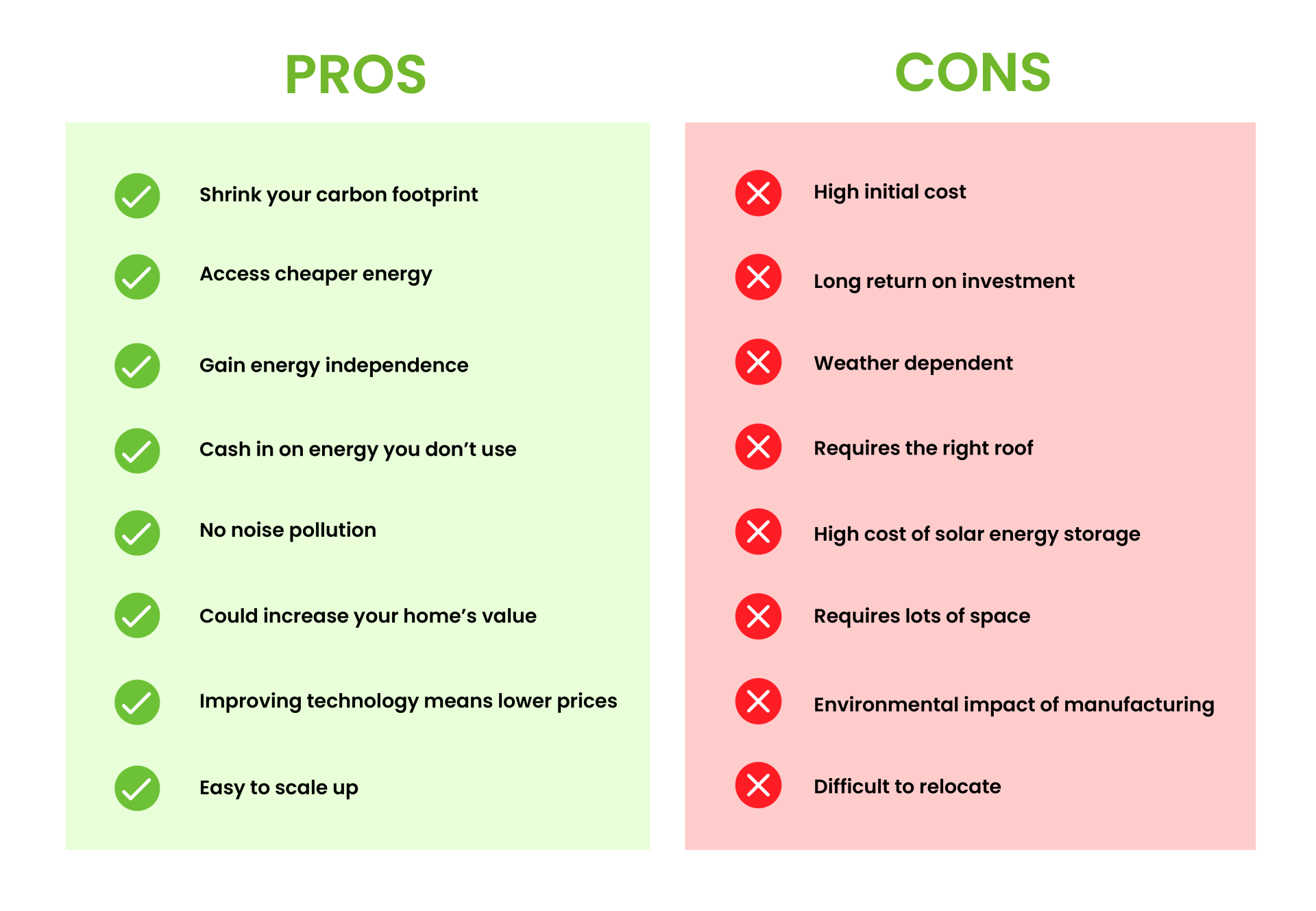
Every kilowatt-hour of electricity you generate from the sun means one less kilowatt-hour produced by burning coal, natural gas, or other non-renewable sources. It’s a tangible way to contribute to a healthier planet, starting right from your own rooftop.
Low Maintenance and Long Lifespan
Once installed, solar panels require surprisingly little maintenance. Most systems are built to withstand harsh weather, and rain often does a good job of washing away dust and debris. Occasional checks for dirt buildup or professional cleaning every few years might be recommended, but it’s generally a hands-off technology.
Modern solar panels are incredibly durable and come with extensive warranties, typically guaranteeing performance for 20-25 years. The inverters, which convert DC power to AC power for your home, usually have a shorter warranty (10-12 years) but are relatively easy to replace. This longevity means you can expect decades of reliable, clean energy production.
Protection Against Rising Energy Costs
Utility rates have historically risen steadily, and there’s no sign of that trend stopping. When you install solar panels, you essentially lock in your energy costs. While you still might have a minimal connection fee to the grid, the bulk of your electricity generation is free once your system is paid for.
This predictability is a huge financial advantage. You’re not at the mercy of volatile energy markets or the fluctuating costs of fossil fuels. You gain a significant hedge against inflation, providing long-term financial stability for your household budget.
The Shadow Side: Key Disadvantages and Challenges of Home Solar
Now, let’s look at the other side of the coin. While the benefits are clear, solar energy also comes with its share of drawbacks and considerations that every homeowner should understand.
High Upfront Costs: The Primary Barrier
Without a doubt, the most significant hurdle for many homeowners considering solar is the initial investment. A complete residential solar system is not cheap. While incentives drastically reduce the net cost, you still need to account for the gross price before those tax credits and rebates kick in.
The total cost depends on factors like system size (how much electricity you need to generate), panel efficiency, inverter type, installation complexity, and local labor rates. Even after incentives, you’re looking at a substantial sum that requires careful financial planning.
| Average System Size (kW) | Average Cost Per Watt (before ITC) | Estimated Gross Cost (before ITC) | Estimated Net Cost (after 30% ITC) |
|---|---|---|---|
| 6 kW (typical US home) | $3.00 – $4.00 | $18,000 – $24,000 | $12,600 – $16,800 |
Note: These figures are national averages for owned systems and can fluctuate based on market conditions, location, and specific equipment. Battery storage would add significantly to these costs.
Intermittency and Weather Dependence
Solar panels need sunlight to generate electricity. This fundamental truth means they are an intermittent energy source. They produce less power on cloudy days, significantly less in winter (due to shorter days and lower sun angles), and no power at night.
For most grid-tied homes, this isn’t a huge issue because you simply draw power from the grid when your panels aren’t producing enough. However, if you’re aiming for true energy independence and want to be protected during grid outages (blackouts), you’ll need a battery storage system. Batteries add another substantial cost to your solar investment, often increasing the total price by $10,000 to $20,000 or more, depending on capacity.
Not Every Roof is Solar-Ready
While solar is becoming more accessible, it’s not a universal solution. Several factors can make your home less suitable for solar:
- Roof Orientation: South-facing roofs (in the Northern Hemisphere) are ideal for maximizing sun exposure. East and west-facing roofs can still work but might yield less production. North-facing roofs are generally not suitable.
- Shading: Tall trees, neighboring buildings, or even architectural features on your own home can cast significant shade on your roof, drastically reducing panel efficiency.
- Roof Condition & Material: Your roof needs to be in good structural shape and have at least 10-15 years of life left. Replacing a roof after solar panels are installed is a much more complex and expensive undertaking. Certain materials, like slate or cedar shake, can also make installation more difficult or costly.
- Space: You need enough unobstructed roof space to install a system large enough to meet your energy needs.
Before committing to solar, a professional assessment of your roof is absolutely essential.

The Grid Connection and Net Metering Nuances
While net metering is a fantastic benefit, its policies vary significantly by state and even by utility company. Some states offer dollar-for-dollar credits, others offer a reduced rate for excess energy, and some are phasing out net metering entirely in favor of other compensation mechanisms like “net billing.”
Additionally, even with solar, you’ll still likely be connected to the grid and might incur minimum monthly connection fees or fixed charges from your utility. Understanding your local utility’s specific policies before installation is crucial to accurately project your long-term savings.
The Manufacturing and Disposal Footprint
While solar panels produce clean energy during operation, their manufacturing process is not entirely carbon-neutral. It requires energy-intensive processes to extract raw materials (like silicon) and fabricate the panels. There’s also the question of disposal and recycling at the end of their lifespan.
However, it’s important to put this into perspective: studies show that solar panels typically generate enough clean energy to offset their manufacturing footprint within 1-4 years. Given their 25+ year lifespan, this means decades of net positive environmental impact. Recycling infrastructure for solar panels is also an evolving industry, with increasing efforts to recover valuable materials.
Potential Impact on Property Taxes (Mitigated by Exemptions)
As mentioned, solar panels can increase your home’s value. In some areas, this increase in value could potentially lead to higher property taxes. However, many states have recognized this as a disincentive for clean energy adoption and have implemented property tax exemptions for solar installations.
It’s vital to check the specific regulations in your state and local county. In most progressive solar states, the added value of solar will not increase your property tax assessment.
Navigating the Investment: Costs, Incentives, and Financing Options
The upfront cost of solar can be daunting, but understanding the full financial picture, including incentives and financing, makes it much more manageable.
Understanding Total Cost of Ownership
When you get a quote for a solar system, ensure it’s comprehensive. This should include:
- Equipment costs: Panels, inverters, racking, wiring.
- Installation labor: The cost of professional installers.
- Permitting and inspection fees: Necessary regulatory steps.
- Interconnection fees: For connecting to the utility grid.
- Potential battery storage: If you opt for backup power.
Factor in these elements to understand your true total investment before considering any savings.
Maximizing Your Savings with the Federal ITC
The Federal Solar Investment Tax Credit (ITC) is a cornerstone of solar affordability. It’s not a rebate; it’s a dollar-for-dollar reduction in your federal income tax liability. If your system costs $20,000, a 30% ITC means you get $6,000 back as a tax credit. You need to have enough tax liability to claim the full credit, but it can be carried forward if you don’t use it all in one year.
It’s important to remember that this credit is currently set at 30% through 2032, then steps down. Acting sooner rather than later can lock in the best rate.
Financing Your Solar System: Cash, Loan, Lease, or PPA?
How you pay for your system significantly impacts your long-term financial benefits.
| Financing Option | Pros | Cons | Who It’s Best For |
|---|---|---|---|
| Cash Purchase | Max savings, fastest ROI, own all incentives, higher home value increase. | Highest upfront cost, tied-up capital. | Homeowners with significant savings who want maximum financial benefit. |
| Solar Loan | Own the system, claim incentives, lower upfront cost, immediate bill savings. | Monthly loan payments, interest charges, need good credit. | Homeowners who want ownership and benefits but prefer not to pay cash upfront. |
| Solar Lease | No upfront cost, fixed monthly payments, maintenance included. | Don’t own the system, don’t get ITC/incentives, lower home value increase, complex if you sell home. | Homeowners with no upfront capital who prioritize immediate bill reduction and don’t care about ownership. |
| Power Purchase Agreement (PPA) | No upfront cost, pay for electricity produced (often at a fixed or escalating rate), maintenance included. | Similar to lease: don’t own system, no incentives, complex if selling home. | Similar to lease: no upfront capital, focus on immediate savings, less concern for ownership. |
Generally, owning your system (cash or loan) yields the greatest financial benefits long-term, as you capture all the incentives and full equity. Leases and PPAs can be attractive for those with no upfront capital, but they transfer significant financial upside (and the ITC) to the solar provider.

Is Solar Right for YOUR Home? A Decision-Making Checklist
The ‘pros and cons’ are just data points. How they apply to your unique situation is what truly matters. Use this checklist to evaluate your solar readiness:
Assess Your Energy Needs and Consumption
- Review past electricity bills: How much electricity (kWh) do you use annually? This determines the size of the system you’ll need.
- Consider future usage: Are you planning to get an electric vehicle, add a hot tub, or switch to electric appliances? Factor in potential increases in consumption.
- Energy efficiency first: Before going solar, have you made your home as energy-efficient as possible? Sealing leaks, upgrading insulation, and replacing old appliances can reduce your energy needs, meaning you can install a smaller, less expensive solar system.
Evaluate Your Roof’s Suitability and Sunlight Exposure
- Sun path analysis: Does your roof get direct sunlight for most of the day, particularly between 9 AM and 3 PM? Any significant shading from trees or other structures?
- Roof condition and age: Is your roof relatively new (less than 10-15 years old) and in excellent condition? If it needs replacement soon, it’s usually best to do that before installing solar.
- Roof pitch and orientation: Is your primary roof area angled favorably (ideally south-facing in the US) and has enough clear space?
Research Local Incentives and Net Metering Policies
- State and local programs: Beyond the federal ITC, what state or municipal rebates, tax credits, or SREC programs are available where you live?
- Utility net metering: Understand your local utility’s specific net metering or net billing policies. How will you be compensated for excess energy? Are there any fixed charges or fees for grid connection?
Understand Your Financial Situation and Investment Horizon
- Budget for upfront costs: How much capital can you comfortably invest?
- Financing preference: Are you interested in owning the system outright, or would a lease/PPA make more sense for your budget?
- Time in home: How long do you plan to stay in your current home? Solar systems offer the best ROI over the long term (10+ years).
Consider Your Environmental Goals
- Beyond financial savings, how important is reducing your carbon footprint and supporting renewable energy? This can be a significant motivator for many.
The Future of Home Solar: Innovations and Trends
The solar industry isn’t standing still. Here’s a quick look at what’s on the horizon:
- Increased Efficiency: Panels are continually getting better at converting sunlight into electricity, meaning more power from smaller footprints.
- Improved Battery Storage: Costs are coming down, and capacities are going up, making home battery solutions more viable for blackout protection and energy independence.
- Smart Home Integration: Solar systems are increasingly integrated with smart home technologies, allowing for optimized energy usage, monitoring, and automation.
- Aesthetics: Options like solar shingles and tiles are becoming more sophisticated, allowing solar to blend seamlessly into your roofline.
These innovations promise to make solar even more efficient, affordable, and accessible in the years to come.
Making the Leap: Next Steps to Go Solar
If, after weighing all the factors, you feel solar is a strong fit for your home, here’s how to proceed:
- Get Multiple Quotes: Don’t settle for the first offer. Contact at least 3-5 reputable solar installers in your area. Compare system designs, equipment, warranties, and pricing.
- Ask the Right Questions: Inquire about their experience, licensing, insurance, and customer references. Understand the specifics of their equipment (panel brand, inverter type). Clarify financing options and how they handle permits and interconnection.
- Understand the Contracts: Whether it’s a purchase agreement, loan, lease, or PPA, read every line carefully. Ensure you understand the terms, warranties, and any escalation clauses.
- Check Their Reputation: Look up reviews on independent sites, check their Better Business Bureau rating, and confirm their licenses.
Verdict: Is Solar Worth It for Most Homeowners?
After diving deep into the pros and cons, the answer for most US homeowners is a resounding YES, solar energy is absolutely worth it. While the initial investment is significant, the long-term financial savings, increased home value, protection against rising energy costs, and substantial environmental benefits typically outweigh the drawbacks.
However, that “most” comes with an asterisk. Solar isn’t a one-size-fits-all solution. Its worth depends heavily on your specific circumstances: your roof, your sun exposure, your local utility policies, and your financial situation. If you have good sun exposure, plan to stay in your home for several years, and can take advantage of the generous federal tax credit, then the benefits are overwhelmingly compelling.
The key is to do your homework, understand the nuances, and work with reputable professionals to ensure you get a system that’s perfectly tailored to your needs. The sun is a powerful, free resource; harnessing it for your home can be one of the smartest investments you’ll ever make.
Frequently Asked Questions
How long do solar panels typically last?
Most modern solar panels are highly durable and come with performance warranties of 20-25 years, guaranteeing a certain level of electricity production. Many systems continue to operate effectively beyond this warranty period, often for 30 years or more, though their efficiency may slightly degrade over time.
Can solar panels power my home during a blackout?
Standard grid-tied solar panel systems are designed to shut down during a power outage for safety reasons (to prevent back-feeding electricity into the grid and harming utility workers). To power your home during a blackout, you need to include a battery storage system with your solar installation. This allows your home to draw power from the stored energy when the grid is down.
Do solar panels work in cloudy weather?
Yes, solar panels still generate electricity on cloudy days, but at a reduced efficiency. Clouds scatter sunlight, so the panels will produce less power than on a bright, sunny day. The amount of electricity generated depends on the density of the clouds; light overcast days will see more production than heavy, dark clouds. During the night, they produce no power.
What’s the average cost of installing solar panels?
The average gross cost for a typical 6 kW residential solar system in the US ranges from $18,000 to $24,000 before incentives. After factoring in the 30% Federal Solar Investment Tax Credit, the net cost often falls between $12,600 and $16,800. These figures can vary significantly based on location, system size, equipment, and installation complexity.
How do federal tax credits for solar work?
The Federal Solar Investment Tax Credit (ITC) allows homeowners to deduct a percentage of the cost of installing a solar energy system from their federal income taxes. Currently, it’s 30% for systems installed through 2032. It’s a dollar-for-dollar reduction in your tax liability. You must have enough tax liability to claim the credit, and it can be carried forward to future tax years if you can’t use it all in one year.
Will solar panels increase my property taxes?
In many US states, solar energy systems are exempt from property tax increases. This means that while solar panels add value to your home, they won’t necessarily lead to higher property taxes. It’s crucial to check the specific property tax exemption laws in your state and local municipality, as policies vary.
What maintenance do solar panels require?
Solar panels require very little maintenance. Rain typically helps keep them clean, washing away dust and debris. In dry climates or areas with significant pollen/dust, an occasional cleaning (once or twice a year) might be beneficial. It’s also a good idea to periodically check for any shading issues or visible damage. Most installers offer monitoring systems to track performance and alert you to any issues.


Post Comment