Pros And Cons Of Solar Panels
Pros and Cons of Solar Panels: Your Definitive Guide to Deciding If They’re Right for You
Thinking about solar panels? You’ve likely heard the buzz: lower electricity bills, helping the planet, energy independence. Sounds great, right? But then the other voice kicks in: “What about the upfront cost? Do they really work when it’s cloudy? What if I move?”
Table of Contents
- Pros and Cons of Solar Panels: Your Definitive Guide to Deciding If They’re Right for You
- The Sunny Side: Advantages of Going Solar
- Slash Your Electricity Bills & Achieve Energy Independence
- Boost Your Home’s Value (and Curb Appeal)
- Unlock Generous Incentives & Tax Credits
- Shrink Your Carbon Footprint
- Low Maintenance, High Durability
- Technological Advancements & Accessibility
- The Cloudier Skies: Disadvantages & Considerations for Solar Panels
- The Initial Investment: A Significant Upfront Cost
- Intermittency: When the Sun Doesn’t Shine
- Not Every Roof is Solar-Ready
- The Payback Period: A Long-Term Commitment
- Potential Environmental Impact of Manufacturing & Disposal
- Moving Soon? Solar Might Not Be Right for You
- So, Are Solar Panels Worth It for YOU? A Decision Framework
- Assess Your Home & Location
- Crunch the Numbers: Your Financial Situation
- Your Long-Term Goals
- Weighing the Trade-Offs: A Quick Self-Assessment
- Solar Panel Myths vs. Realities
- Myth: Solar panels are too expensive for the average homeowner.
- Myth: Solar panels don’t work in cloudy climates or winter.
- Myth: Solar panels require constant cleaning and maintenance.
- The Future of Solar: Brighter Than Ever
It’s a big decision, and you deserve a straightforward, honest breakdown. My goal here isn’t to sell you on solar, nor to scare you away. It’s to equip you with the full picture – the good, the bad, and the practical considerations – so you can confidently decide if solar energy is truly the right move for your home and your wallet.
Let’s cut through the noise and figure out if turning sunlight into savings is your next smart investment.
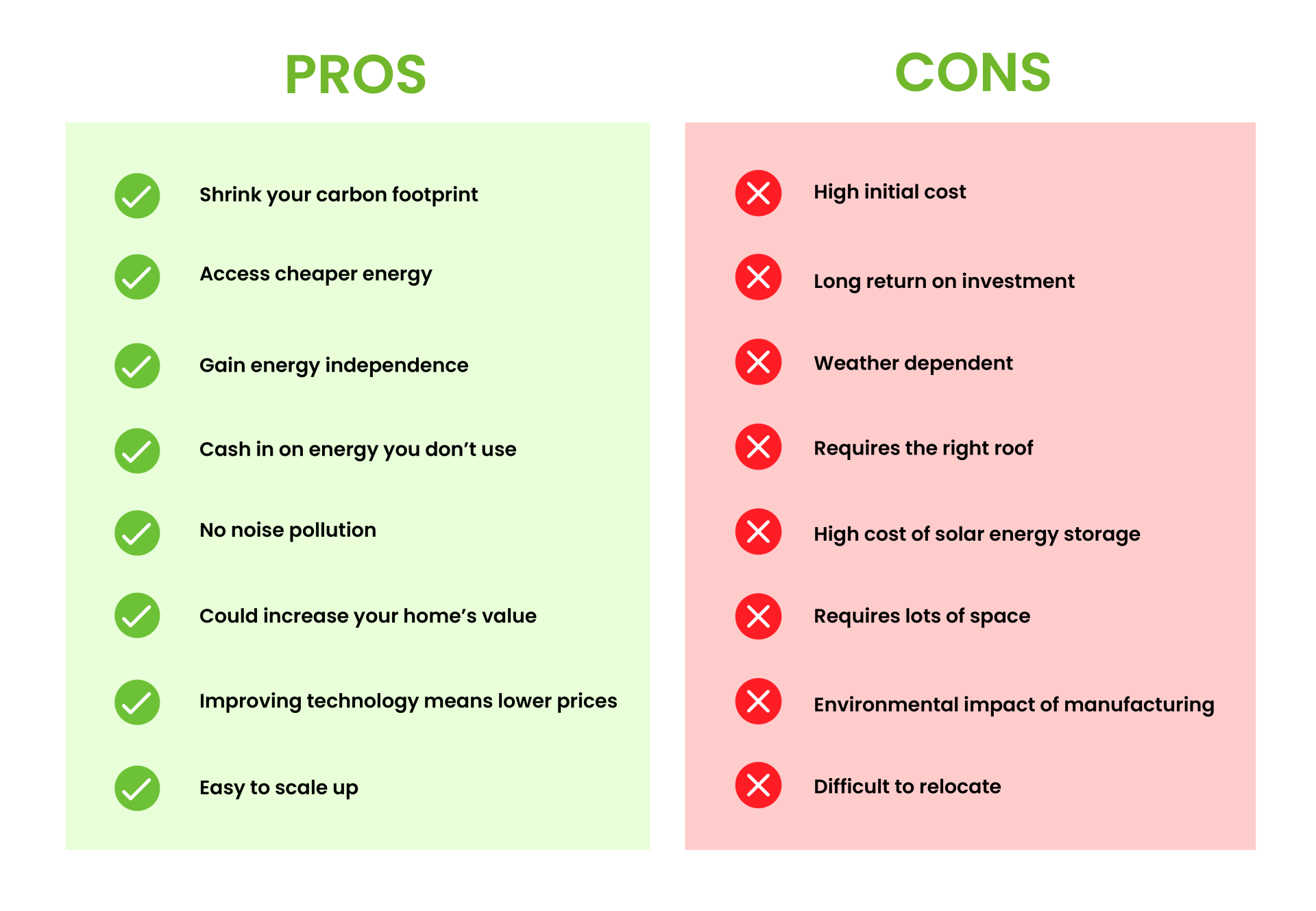
The Sunny Side: Advantages of Going Solar
Let’s start with why so many homeowners are making the switch. The benefits of solar power are compelling, touching everything from your monthly budget to your environmental conscience.
Slash Your Electricity Bills & Achieve Energy Independence
This is often the number one reason people consider solar, and it’s a powerful one. Installing solar panels can dramatically reduce, or even eliminate, your monthly electricity bill. Imagine seeing that utility bill drop from hundreds of dollars to just a few bucks for grid connection fees, or even earning credits for excess power you send back!
How it works: Your panels generate electricity from the sun. If you produce more than you use, programs like net metering often allow you to send that excess power back to the grid, earning credits that offset future usage. This means you’re less susceptible to the whims of rising energy costs and more in control of your household budget.
Protection Against Rising Energy Costs: Utility rates have historically increased year over year. When you generate your own power, you essentially lock in your energy costs for the lifespan of your system, providing long-term financial stability against an unpredictable market.
To give you a clearer idea, let’s look at potential savings:
| Average Monthly Electricity Bill (Before Solar) | Estimated Monthly Savings (After Solar) | Estimated Annual Savings |
|---|---|---|
| $100 – $150 | $70 – $120 | $840 – $1,440 |
| $150 – $250 | $120 – $220 | $1,440 – $2,640 |
| $250+ | $220+ | $2,640+ |
*Savings are estimates and vary greatly based on location, system size, electricity consumption, and local utility rates.
Boost Your Home’s Value (and Curb Appeal)
Numerous studies, including those by the National Renewable Energy Laboratory (NREL) and Zillow, indicate that homes with owned solar panel systems sell for a premium. This isn’t just a hunch; it’s a measurable increase, often correlating with the size of the system and the energy savings it provides. For many buyers, a home with pre-installed solar means immediate savings and modern amenities, making it a more attractive purchase.
Think of it as adding a valuable upgrade, similar to a renovated kitchen or a new bathroom, but one that actively saves the homeowner money every month. Plus, modern solar panels are sleek and designed to integrate seamlessly with your roof, often enhancing, rather than detracting from, curb appeal.
Unlock Generous Incentives & Tax Credits
One of the biggest drivers making solar more affordable is the array of financial incentives available. The most significant is the Federal Solar Tax Credit (ITC), which currently allows you to deduct a substantial percentage of the cost of your solar system from your federal taxes. This isn’t a rebate; it’s a dollar-for-dollar reduction in what you owe the IRS.
Beyond the federal level, many states and local municipalities offer their own incentives:
- State Tax Credits: Some states provide additional tax credits similar to the federal ITC.
- Property Tax Exemptions: In many areas, the increased home value from solar panels is exempt from property tax assessments.
- Sales Tax Exemptions: Some states waive sales tax on solar equipment and installation.
- Solar Renewable Energy Credits (SRECs): In certain markets, you can earn credits for the solar energy your system generates and sell these credits for cash, creating an additional income stream.
These incentives are crucial because they significantly reduce the upfront cost of going solar, often by 30% or more, making the return on investment much faster.
Shrink Your Carbon Footprint
For many, the environmental benefit is a primary motivator. Solar energy is a clean, renewable resource that produces electricity without generating harmful greenhouse gas emissions. By choosing solar, you directly reduce your reliance on fossil fuels, contributing to cleaner air and a healthier planet. It’s a tangible way to take personal action against climate change and promote a sustainable future for generations to come.
Low Maintenance, High Durability
Once installed, solar panels are remarkably low-maintenance. They’re designed to withstand harsh weather conditions – hail, snow, high winds – and come with long warranties, often 25 years or more for power output. Most of the time, rain does a sufficient job of cleaning the panels. Occasional checks or professional cleanings every few years might be recommended, but it’s far less intensive than maintaining a car or many other home appliances.
Technological Advancements & Accessibility
Solar technology has come a long way. Panels are more efficient, more durable, and more aesthetically pleasing than ever before. Critically, the cost of solar panel installation has dropped dramatically over the last decade, making it more accessible to the average homeowner. This ongoing innovation means better performance and greater value for your investment.
The Cloudier Skies: Disadvantages & Considerations for Solar Panels
No solution is perfect, and solar panels have their drawbacks. Understanding these challenges upfront is key to making an informed decision.
The Initial Investment: A Significant Upfront Cost
This is undeniably the biggest hurdle for most people. A full solar panel system for an average-sized home can range from $15,000 to $30,000 or more, before incentives. While incentives significantly reduce this figure, it’s still a substantial amount of money to spend upfront. This cost covers panels, inverters, racking, labor, permits, and connection fees.
Here’s a general idea of costs before and after the federal tax credit:
| System Size (kW) | Estimated Gross Cost (Pre-Tax Credit) | Estimated Net Cost (After 30% Federal ITC) |
|---|---|---|
| 4 kW | $12,000 – $16,000 | $8,400 – $11,200 |
| 6 kW | $18,000 – $24,000 | $12,600 – $16,800 |
| 8 kW | $24,000 – $32,000 | $16,800 – $22,400 |
*Costs are estimates for an average system in the U.S. and can vary by region, installer, and specific equipment chosen. The federal tax credit is subject to change.
Financing Options: While the upfront cost is high, you don’t always have to pay cash. Common financing methods include:
- Solar Loans: Similar to a home improvement loan, you own the system, pay it off over time, and still qualify for incentives.
- Solar Leases & Power Purchase Agreements (PPAs): You don’t own the system; instead, you pay a fixed monthly fee (lease) or pay for the power generated at a set rate (PPA). These often require no upfront cost but you generally don’t get the tax credits or full increase in home value.
Intermittency: When the Sun Doesn’t Shine
Solar panels need sunlight to generate electricity. This means their output varies throughout the day, seasonally, and on cloudy or rainy days. At night, they produce nothing. For most grid-tied systems, this isn’t a problem; you simply draw power from the utility grid when your panels aren’t producing enough.

However, if you’re aiming for true energy independence and want to protect against power outages, you’ll need to invest in battery storage. Batteries store excess solar energy for use when the sun isn’t shining. While battery technology is improving and costs are falling, adding a battery bank significantly increases the overall system cost.
Not Every Roof is Solar-Ready
Before you get too excited, you need to assess your roof’s suitability. Key factors include:
- Sun Exposure: Does your roof get significant, unobstructed sunlight throughout the day? Large trees, neighboring buildings, or even architectural features can cause shading, drastically reducing panel efficiency.
- Roof Angle and Orientation: In the Northern Hemisphere (like the U.S.), a south-facing roof is generally ideal. East and west-facing roofs can also work well, but north-facing roofs are typically unsuitable.
- Roof Size and Condition: Do you have enough unobstructed roof space to accommodate the number of panels needed for your energy consumption? Is your roof old or in poor condition? Panels are designed to last for decades, so you’ll want your roof to have a similar lifespan or be replaced before installation.
- Roof Material: While solar can be installed on most roof types (asphalt shingles, metal, tile), some materials are more challenging or costly to work with.
A professional solar installer will conduct a detailed site assessment to determine your roof’s viability.
The Payback Period: A Long-Term Commitment
While solar panels offer long-term savings, the time it takes to recoup your initial investment (the payback period) can be significant. In the U.S., the average payback period typically ranges from 7 to 12 years, but this can vary wildly based on:
- Your location: Electricity rates vary across states. Higher rates mean faster savings.
- Local incentives: Generous state and local programs accelerate payback.
- System cost: A more efficient or larger system might cost more but could also generate more savings.
- Energy consumption: The more electricity you use, the more you save by generating your own.
This means you need to view solar as a long-term investment. If you don’t plan to stay in your home for at least the payback period, the financial benefits might not fully materialize for you.
Potential Environmental Impact of Manufacturing & Disposal
While solar energy is clean during operation, it’s fair to acknowledge the environmental footprint of manufacturing the panels themselves. The production process requires raw materials and energy, and there are concerns about the disposal of panels at the end of their lifespan (typically 25-30 years). However, the industry is making significant strides in recycling programs and sustainable manufacturing practices, and the lifetime environmental benefits of solar vastly outweigh these initial impacts.
Moving Soon? Solar Might Not Be Right for You
If you’re contemplating a move within the next 3-5 years, getting solar panels requires careful consideration. While owned solar panels generally increase home value, transferring a solar lease or PPA can sometimes complicate a home sale. Potential buyers may be hesitant to take on a long-term contract, which can delay or even derail a sale. If you own the system outright, it’s usually a straightforward value add, but understanding the implications for your specific situation is important.
So, Are Solar Panels Worth It for YOU? A Decision Framework
After weighing the pros and cons, the big question remains: Is solar right for your specific situation? There’s no one-size-fits-all answer, but by considering these key areas, you can arrive at a confident decision.
Assess Your Home & Location
This is where you need to be brutally honest about your property. Grab your recent electricity bills and look outside at your roof.
- Sunlight Availability: Does your roof get full, unobstructed sun for most of the day, especially between 9 AM and 3 PM? Shading from trees, chimneys, or neighboring buildings significantly reduces efficiency.
- Roof Suitability: Is your roof in good condition (less than 10-15 years old)? Is it large enough for the system you’d need? Does it face south, east, or west? A professional solar assessment is crucial here to confirm feasibility and optimal placement.
- Local Climate: While panels work in all climates, some regions (like the sunny Southwest) offer higher energy production than others.
- Utility Provider: What are your local utility’s net metering policies? Are they favorable, offering fair credit for excess energy?
Crunch the Numbers: Your Financial Situation
This is where the rubber meets the road. Solar is an investment, and like any investment, you need to understand the potential return.
- Current Electricity Bills: If you have consistently high electricity bills ($150+ per month), your potential savings from solar are much greater, leading to a faster payback period. If your bills are already low, the financial incentive might be less compelling.
- Access to Capital: Do you have savings to pay for the system outright (which yields the best ROI), or will you need financing? Understand the terms of solar loans, leases, and PPAs.
- Eligibility for Incentives: Research the federal ITC and any state or local incentives specific to your area. These can dramatically reduce your net cost. Tax credits require you to have a sufficient tax liability to claim them.
- Long-Term Stay: Do you plan to live in your home for at least 7-12 years (or longer, depending on your estimated payback period)? If not, the full financial benefit might not materialize for you.
Your Long-Term Goals
Beyond the immediate finances, what are your broader motivations?
- Environmental Impact: Is reducing your carbon footprint a significant personal priority?
- Energy Independence: Do you value being less reliant on the grid and external energy providers?
- Home Value: Is increasing your property value a key objective?
Weighing the Trade-Offs: A Quick Self-Assessment
Take a moment to compare the biggest pros against the biggest cons for your specific situation. If the potential for massive savings, increased home value, and environmental benefits aligns with your long-term plans and your home is suitable, then the initial investment and longer payback period might be acceptable trade-offs. If your roof is heavily shaded, your energy bills are low, or you plan to move next year, then solar might not be the most practical or financially beneficial option right now.

Actionable Advice: The best way to get a clear picture is to get multiple quotes from reputable solar installers. They can assess your roof, analyze your energy usage, and provide a detailed breakdown of costs, savings, and payback periods tailored to your home and local incentives. Don’t rush into a decision; understand every line of the contract and ask all your questions.
Solar Panel Myths vs. Realities
There’s a lot of information and misinformation floating around about solar. Let’s clear up some common misconceptions.
Myth: Solar panels are too expensive for the average homeowner.
Reality: While the upfront cost can be high, the combination of federal, state, and local incentives, along with various financing options (loans, leases, PPAs), has made solar significantly more accessible. Many homeowners can go solar with little to no money down and begin saving immediately on their monthly utility bills, making the monthly payment for solar less than or comparable to their previous electricity bill.
Myth: Solar panels don’t work in cloudy climates or winter.
Reality: Solar panels generate electricity from daylight, not direct heat. While their output is certainly highest on bright, sunny days, they still produce power on cloudy days, albeit at a reduced rate. Even in regions with significant cloud cover or snowfall, solar systems are designed to perform, and snow typically slides off panels due to their angle and dark color. Systems are sized to account for seasonal variations in production.
Myth: Solar panels require constant cleaning and maintenance.
Reality: Modern solar panels are built to be incredibly durable and require very little maintenance. Rain often handles most of the cleaning, washing away dust and debris. In exceptionally dry areas or if you have specific concerns (e.g., heavy pollen season), an occasional hose-down might be beneficial. Most systems come with robust warranties (25+ years for performance), and professional checks are only recommended every few years.
The Future of Solar: Brighter Than Ever
The solar industry is constantly evolving. We’re seeing rapid advancements in panel efficiency, battery storage solutions, and smart home integration. Government policies are increasingly supportive of renewable energy, and public demand continues to grow. This upward trajectory means that solar will only become more efficient, more affordable, and more integrated into our energy landscape, making it an increasingly attractive option for homeowners looking towards a sustainable and cost-effective future.
Frequently Asked Questions
How long do solar panels last?
Most solar panels are designed to last for 25 to 30 years or even longer. Manufacturers typically offer performance warranties that guarantee panels will produce a certain percentage of their rated power output (e.g., 80% or 85%) after 25 years.
Do solar panels work at night or on cloudy days?
Solar panels do not work at night as they require sunlight to generate electricity. On cloudy days, they still produce power, but at a reduced capacity compared to bright, sunny days. For continuous power or during outages, a solar battery storage system is needed to store excess energy generated during the day.
How much do solar panels cost in the US?
The cost of solar panels in the US varies widely based on system size, location, equipment, and installer. On average, a typical residential solar system (6-8 kW) can cost between $18,000 and $32,000 before applying the federal solar tax credit and other incentives. After the 30% federal tax credit, the net cost can fall into the range of $12,600 to $22,400.
What incentives are available for solar panels?
The primary incentive is the Federal Solar Tax Credit (ITC), which currently offers a 30% tax credit on the cost of your system. Many states and local municipalities also offer their own incentives, such as additional tax credits, sales tax exemptions, property tax exemptions, and Solar Renewable Energy Credits (SRECs) which can further reduce the net cost of installation.
How much maintenance do solar panels need?
Solar panels are very low maintenance. For most homeowners, rain is usually sufficient to keep the panels clean. Occasionally, in very dusty areas or during long dry spells, a simple rinse with a garden hose may be beneficial. Professional inspections are generally only recommended every few years to ensure optimal performance and check for any issues.
Can solar panels increase my home’s value?
Yes, studies have consistently shown that owned solar panel systems can increase a home’s resale value. The exact increase depends on factors like system size, energy savings, and local market conditions, but it’s generally considered a valuable home improvement by potential buyers.
What happens if I move with solar panels?
If you own your solar panel system, it typically adds value to your home and transfers with the sale. If you have a solar lease or a Power Purchase Agreement (PPA), the contract usually needs to be transferred to the new homeowner. This can sometimes complicate the sale process, so it’s important to understand your contract’s terms and discuss it with your realtor early on.


Post Comment