Solar Battery Storage How Long Does It Last
Solar Battery Storage: How Long Do They REALLY Last? (And How to Make Yours Go the Distance)
So, you’re considering solar power, and the idea of storing your own clean energy sounds incredibly appealing. No more worrying about rising utility bills, no more blackouts, just pure energy independence. But there’s a nagging question in the back of your mind: how long does a solar battery really last? Is it a decade? Two decades? And what happens when it eventually gives up the ghost?
Table of Contents
- Solar Battery Storage: How Long Do They REALLY Last? (And How to Make Yours Go the Distance)
- The Short Answer: What’s the Average Lifespan of a Solar Battery?
- Diving Deeper: Key Factors That Dictate Your Battery’s Longevity
- 1. Battery Chemistry: It’s Not All Lithium-Ion
- 2. Depth of Discharge (DoD): The Hidden Killer
- 3. Charge and Discharge Cycles: Every Cycle Counts
- 4. Operating Temperature: Heat is Your Enemy
- 5. Maintenance and Care: A Little Goes a Long Way
- 6. Manufacturer & Warranty: Your Safety Net
- Maximizing Your Solar Battery’s Lifespan: Actionable Strategies
- Optimal Charging and Discharging Practices
- Environmental Control: Keep it Cool and Dry
- Regular Monitoring and Maintenance
- Right-Sizing Your System
- Solar Battery Lifespan vs. Solar Panel Lifespan: The Replacement Reality
- Is Solar Battery Storage Worth the Investment? ROI & Peace of Mind
- Beyond Lifespan: How Long Can a Solar Battery Power Your Home During an Outage?
- The Future of Solar Batteries: What’s on the Horizon?
- Making the Smart Choice: Key Takeaways for Homeowners
It’s a fantastic question, and one you absolutely should be asking. The truth is, there’s no single, simple answer because several factors play into a solar battery’s lifespan. But I can tell you this: most homeowners can expect their solar battery storage system to last anywhere from 5 to 15 years, with premium systems often pushing towards the upper end of that range, sometimes even beyond.
That’s a pretty wide window, right? Don’t worry, I’m here to unpack what influences that lifespan, how you can maximize it, and what to realistically expect from your investment. Let’s dive in.
The Short Answer: What’s the Average Lifespan of a Solar Battery?
When you’re looking at today’s market, particularly for popular residential solutions, a solar battery system typically has a functional life of 5 to 15 years. This projection accounts for the battery’s ability to hold a charge and deliver power efficiently. However, it’s crucial to understand that ‘lifespan’ isn’t just about whether the battery still turns on; it’s also about its capacity to store energy.
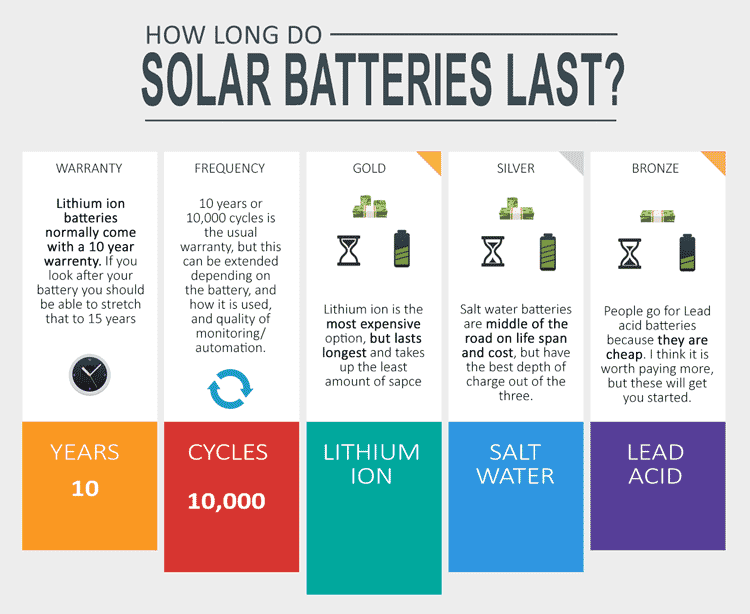
Most manufacturers guarantee their batteries will retain a certain percentage of their original capacity (e.g., 70-80%) after a specified number of years or charge cycles. For instance, a warranty might promise 70% capacity retention after 10 years or 6,000 cycles. Once a battery drops below this threshold, its effectiveness as a storage solution diminishes, and replacement becomes a more pressing consideration.
So, while your battery might still technically ‘work’ after 15 years, it might not be able to power your home for as long or as effectively as it once did. Think of it like your phone battery: it still turns on, but it needs charging much more frequently than it did when it was new.
Diving Deeper: Key Factors That Dictate Your Battery’s Longevity
That 5-to-15-year range isn’t arbitrary. It’s a reflection of several critical factors. Understanding these will not only help you choose the right battery but also give you the power to extend its life.
1. Battery Chemistry: It’s Not All Lithium-Ion
Just like cars run on different types of fuel, solar batteries come in various chemistries, and each has its own characteristics, including lifespan, efficiency, and cost.
- Lithium-ion (Li-ion): This is the reigning champion for residential solar storage, primarily due to its high energy density, efficiency, and relatively long lifespan. Within Li-ion, Lithium Iron Phosphate (LiFePO4 or LFP) batteries are gaining popularity for their enhanced safety and even longer cycle life compared to other Li-ion variants like Nickel Manganese Cobalt (NMC). Most modern home batteries (e.g., Tesla Powerwall, Enphase Encharge) use Li-ion technology.
- Lead-Acid Batteries: Once the standard, lead-acid batteries (including flooded, sealed gel, and AGM types) are older, heavier, less efficient, and typically have shorter lifespans than Li-ion. However, they are generally less expensive upfront, making them an option for budget-conscious or off-grid systems where space and weight aren’t major concerns.
- Flow Batteries: Still emerging for residential use, flow batteries offer impressive longevity (potentially 20+ years) and the ability to deep cycle without significant degradation. They are typically larger and more complex, but promise a very long operational life with minimal capacity fade.
Here’s a quick comparison of the main types:

| Battery Type | Typical Lifespan (Years) | Cycles | Depth of Discharge (DoD) | Efficiency | Relative Cost | Maintenance |
|---|---|---|---|---|---|---|
| Lithium Iron Phosphate (LFP) | 10-15+ | 4,000 – 10,000+ | 90-100% | 90-98% | High | Low |
| Lithium-ion (NMC) | 8-12 | 2,000 – 6,000 | 80-90% | 90-95% | High | Low |
| Lead-Acid (AGM/Gel) | 5-10 | 500 – 2,000 | 50% | 80-85% | Medium-Low | Low |
| Lead-Acid (Flooded) | 3-7 | 500 – 1,500 | 50% | 70-80% | Low | High (watering) |
| Flow Battery | 20+ | 10,000+ | 100% | 75-85% | Very High | Medium |
2. Depth of Discharge (DoD): The Hidden Killer
This is a big one. The Depth of Discharge (DoD) refers to how much energy is discharged from the battery relative to its total capacity. A 100% DoD means you’ve used all of its usable energy; a 50% DoD means you’ve used half. For most battery chemistries, especially lithium-ion, regularly discharging to a high DoD (e.g., draining it completely) puts more stress on the battery and significantly shortens its lifespan.
Modern lithium-ion batteries often allow for a 90-100% DoD, meaning you can use almost all of their stored energy. However, even with these, consistently operating at the very edge of their capacity can impact their long-term health. Lead-acid batteries, on the other hand, are severely impacted by high DoD; they typically recommend a maximum DoD of 50% to maintain their warranty and expected life.
3. Charge and Discharge Cycles: Every Cycle Counts
A “cycle” is one complete charge and discharge of a battery. Manufacturers rate batteries by the number of cycles they can endure before their capacity degrades below a certain point (e.g., 70-80%). For example, a battery might be rated for 6,000 cycles at 90% DoD. This means you can expect 6,000 instances of using 90% of its power before it significantly loses capacity.
If you’re using your battery every day (e.g., charging from solar during the day and discharging at night), that’s roughly 365 cycles per year. A 6,000-cycle battery, in this scenario, would last over 16 years (6000 / 365 = 16.4). If you only use it for backup during outages, it will last much, much longer in terms of calendar years, though the battery still ages.
4. Operating Temperature: Heat is Your Enemy
Batteries are sensitive to extreme temperatures. Operating or storing them in very hot or very cold environments can accelerate degradation and reduce their overall lifespan. High temperatures are particularly damaging, causing internal chemical reactions to speed up, leading to faster capacity loss.
Most manufacturers specify an optimal operating temperature range, usually between 50°F and 85°F (10°C and 30°C). Installing your battery in a climate-controlled space, such as a garage or basement, rather than an exposed outdoor area, can significantly contribute to its longevity.
5. Maintenance and Care: A Little Goes a Long Way
While modern lithium-ion batteries are largely maintenance-free, older lead-acid batteries require regular attention. Flooded lead-acid batteries, for instance, need periodic watering to replenish electrolyte levels. Neglecting this crucial step will quickly kill the battery.
For all battery types, ensuring proper ventilation, keeping terminals clean, and regularly monitoring performance through your energy management system can help catch potential issues early and prevent premature failure.
6. Manufacturer & Warranty: Your Safety Net
The brand and the warranty are strong indicators of a battery’s expected lifespan and the manufacturer’s confidence in their product. Reputable brands typically offer 10-year warranties for their lithium-ion batteries, often specifying a minimum capacity retention and/or a certain number of cycles within that period.
Always read the fine print of the warranty. It’s your ultimate protection against unexpected premature failure and offers peace of mind for your significant investment.
Maximizing Your Solar Battery’s Lifespan: Actionable Strategies
You’ve invested in a solar battery, now how do you make sure it lives its best, longest life? It’s often about smart usage and installation.
Optimal Charging and Discharging Practices
- Mind Your DoD: Even with high DoD-rated batteries, consider programming your system to avoid routinely draining it to 0%. A slightly shallower discharge, if your energy needs allow, can extend overall cycle life. For lead-acid batteries, adhering strictly to the 50% DoD recommendation is paramount.
- Avoid Extreme Cycling: If you have the option, and it aligns with your energy goals, try to avoid constant, rapid full charge-discharge cycles. Some smart energy management systems can optimize this for you, balancing grid interaction with battery health.
Environmental Control: Keep it Cool and Dry
- Strategic Placement: Install your battery in a location that stays within its recommended temperature range. Basements, garages (if adequately ventilated), or utility rooms are often ideal. Avoid direct sunlight, attics, or uninsulated sheds where temperatures can fluctuate wildly.
- Ensure Ventilation: Batteries generate some heat during operation. Make sure the installation area has adequate airflow to prevent heat buildup, especially for systems without active cooling.
- Protect from Elements: If outdoor installation is necessary, ensure the battery is housed in a purpose-built, weather-resistant enclosure that protects it from rain, snow, and extreme temperatures.
Regular Monitoring and Maintenance
- Leverage Monitoring Apps: Most modern solar battery systems come with an app or online portal that allows you to monitor its performance, charge status, and health. Pay attention to any alerts or significant drops in performance.
- Scheduled Check-ups: While lithium-ion batteries are low-maintenance, an annual check-up by a qualified solar professional can ensure everything is operating optimally, connections are secure, and software is up to date.
- Lead-Acid Specifics: If you have flooded lead-acid batteries, establish a routine for checking electrolyte levels and adding distilled water as needed. Keep terminals clean and free of corrosion.
Right-Sizing Your System
A battery that’s too small for your needs will be constantly over-cycled, leading to premature degradation. A battery that’s too large might be an unnecessary expense. Work with your solar installer to accurately assess your energy consumption and backup needs to select a battery capacity that can comfortably handle your daily demands without excessive deep cycling.
Solar Battery Lifespan vs. Solar Panel Lifespan: The Replacement Reality
Here’s a crucial point to understand: your solar panels and your solar battery will likely have different lifespans. Solar panels are incredibly durable, often rated for 25-30 years of performance, with many continuing to produce power well beyond that. Your solar battery, however, will typically need replacement at least once, possibly twice, over the lifetime of your solar panel system.
This isn’t a flaw in the technology; it’s just the nature of current battery chemistry. When budgeting for a solar-plus-storage system, it’s wise to factor in the potential cost of a battery replacement down the line. Many homeowners choose to lease batteries or opt for systems with strong long-term warranties to mitigate this future expense.
Is Solar Battery Storage Worth the Investment? ROI & Peace of Mind
Given the lifespan considerations and initial cost, you might be asking: is it really worth it? For many homeowners, the answer is a resounding yes, and it extends beyond just the raw numbers.
- Energy Independence: The ability to store your own clean energy means less reliance on the grid and fluctuating utility rates.
- Savings on Time-of-Use (TOU) Rates: If your utility has TOU rates, you can charge your battery when electricity is cheap (e.g., during the day with solar production or off-peak from the grid) and discharge it during expensive peak hours, saving you significant money.
- Backup Power & Resilience: Perhaps the biggest driver for battery adoption in many areas is the peace of mind during power outages. A well-sized battery can keep critical appliances running for hours, or even days, when the grid goes down.
- Environmental Impact: By maximizing your solar self-consumption and reducing reliance on fossil-fuel generated grid power, you further lower your carbon footprint.
Let’s look at some typical figures to put it in perspective:
| Component | Initial Cost (Avg.) | Expected Lifespan (Years) | Estimated Replacement Cost (Avg.) | Key Benefits |
|---|---|---|---|---|
| Solar Panels (10kW System) | $20,000 – $30,000 | 25-30+ | Minimal (Inverter may need replacement ~10-15 yrs, $2k-$4k) | Long-term energy production, significant bill reduction, high ROI |
| Solar Battery (10-13 kWh) | $10,000 – $15,000 (installed) | 5-15 | $8,000 – $12,000 (potentially less with tech advancements) | Grid independence, backup power, TOU optimization, increased self-consumption |
(Note: Costs are estimates and vary widely by location, system size, and installer.)
While the upfront cost can be substantial, federal and state incentives (like the 30% federal solar tax credit) can significantly reduce your out-of-pocket expenses for both solar panels and battery storage. When you factor in these incentives and the long-term savings on your utility bills, the financial return on investment often makes sense, especially when paired with the invaluable peace of mind that comes from having reliable backup power.
Beyond Lifespan: How Long Can a Solar Battery Power Your Home During an Outage?
This is a separate, but equally important, question often confused with lifespan. A battery’s runtime during an outage depends on two main factors:
- Battery Capacity: How many kilowatt-hours (kWh) can it store? A typical home battery might store 10-13 kWh.
- Your Household Consumption: How much electricity are you using? Are you powering your whole home, or just critical loads (lights, fridge, Wi-Fi, well pump)?
Example Scenario:

- An average U.S. home uses about 29 kWh per day.
- If you want to power your entire home during an outage with a single 10 kWh battery, you’ll run out of juice in a few hours.
- However, if you prioritize critical loads (e.g., refrigerator, some lights, Wi-Fi, device charging, maybe a fan), you might only use 5-10 kWh per day. In this case, a 10 kWh battery could power these essentials for 1 to 2 days.
The key here is understanding your energy needs during an outage and sizing your battery accordingly, often with multiple units for extended backup.
The Future of Solar Batteries: What’s on the Horizon?
Battery technology isn’t standing still. Researchers and manufacturers are constantly innovating, and the future looks promising for even longer-lasting, more efficient, and more affordable solar storage solutions:
- Solid-State Batteries: These promise higher energy density, faster charging, and potentially even greater safety and longevity than current lithium-ion technologies.
- Next-Gen Flow Batteries: Continued advancements are expected to make flow batteries more compact and cost-effective, expanding their residential viability.
- AI and Smart Management: More sophisticated software will continue to optimize battery charging and discharging, further extending lifespan by reducing stress and improving efficiency.
- Recycling and Second-Life Applications: Efforts are ongoing to create robust recycling programs for retired solar batteries and find second-life uses (e.g., grid-scale storage) for units that no longer meet residential performance thresholds, improving overall sustainability.
This means that while today’s batteries last 5-15 years, future generations might see even better performance and longevity.
Making the Smart Choice: Key Takeaways for Homeowners
Choosing a solar battery system is a significant decision. Here’s what you should carry with you:
- Expect 5-15 Years: This is the realistic lifespan for most modern residential solar batteries.
- Lithium-ion Leads the Way: For performance and longevity, LiFePO4 (LFP) is currently the top contender.
- DoD and Cycles Matter: Understand how you use your battery and how that impacts its rated cycle life.
- Location, Location, Location: A temperate, well-ventilated installation spot is crucial for battery health.
- Warranty is Your Friend: Always check the manufacturer’s warranty for specific guarantees on capacity retention and cycle life.
- Factor in Replacement: Be aware that your battery will likely need replacing before your solar panels do.
- The Value is More Than Just Dollars: Consider the peace of mind, energy independence, and environmental benefits alongside the financial ROI.
By understanding these aspects, you can make an informed decision, choose a system that fits your needs, and take proactive steps to ensure your solar battery serves your home reliably for years to come.
Frequently Asked Questions
What is the average lifespan of a home solar battery?
Most modern home solar batteries, especially lithium-ion types, are designed to last between 5 and 15 years. This timeframe accounts for the battery maintaining at least 70-80% of its original capacity before significant degradation occurs.
Do all solar batteries last the same amount of time?
No, battery lifespan varies significantly depending on the chemistry. Lithium-ion batteries (especially LiFePO4) generally last longer (10-15+ years) than traditional lead-acid batteries (3-10 years), due to their higher cycle counts and deeper discharge capabilities.
How does Depth of Discharge (DoD) affect battery lifespan?
Depth of Discharge (DoD) refers to how much energy is used from the battery’s total capacity. Consistently discharging a battery to a very high DoD (e.g., draining it completely) puts more stress on it and can significantly shorten its lifespan and reduce the total number of cycles it can perform. Deeper cycles lead to faster degradation.
Will my solar battery need to be replaced before my solar panels?
Yes, typically. Solar panels are built to last 25-30 years or more with minimal degradation. Solar batteries, with their 5-15 year lifespan, will likely need to be replaced at least once, possibly twice, during the operational life of your solar panel system.
What can I do to extend the life of my solar battery?
To maximize your battery’s lifespan, ensure it’s installed in a location with stable, moderate temperatures and good ventilation. Avoid routinely draining it to 0% (if your system allows), and follow any manufacturer recommendations for monitoring and maintenance. Choosing a high-quality battery with a strong warranty also provides peace of mind.
Is a solar battery worth the investment if it needs replacing?
For many, yes. Beyond the financial ROI from energy savings (especially with Time-of-Use rates), solar batteries offer invaluable benefits like energy independence, reliable backup power during outages, and a reduced carbon footprint. Federal and state incentives can also help offset initial costs.


Post Comment