Solar Panel Cleaning Companies In India
Unlocking Solar Efficiency in India: A Comprehensive Guide to Solar Panel Cleaning Companies for USA Investors & Businesses
So, you’re a USA investor or business with a stake in India’s booming solar market. Or perhaps you’re just researching the operational intricacies of overseas renewable assets. Either way, you’ve hit a critical point: solar panel cleaning. You might think it’s a minor detail, but let me tell you, neglected solar panels in India’s unique environment are like leaving money on the table – a lot of money. The hidden cost of soiling can drastically reduce your returns and shorten the lifespan of your valuable assets.
Table of Contents
- Unlocking Solar Efficiency in India: A Comprehensive Guide to Solar Panel Cleaning Companies for USA Investors & Businesses
- The Imperative: Why Your Solar Panels in India Demand Professional Cleaning
- The Efficiency Drain: Understanding Soiling Loss in India’s Climate
- Beyond Efficiency: Protecting Your Investment’s Lifespan
- Navigating the Indian Market: Types of Solar Panel Cleaning Services Available
- Manual Cleaning: The Traditional & Cost-Effective Approach
- Semi-Automated Solutions: Bridging the Gap
- Robotic & Automated Cleaning: The High-Tech Frontier
- Annual Maintenance Contracts (AMCs): The Long-Term Solution
- Key Players in India’s Solar Panel Cleaning Landscape: A Curated Look
- Top Tier Providers (Robotic/Advanced Technology)
- Comprehensive Maintenance Providers (AMCs & Full O&M)
- Specialized Equipment & Services
- The Cost of Cleanliness: Understanding Solar Panel Cleaning Pricing in India
- Factors Influencing Cost: Scale, Frequency, Technology & Location
- Typical Pricing Models & Ranges in India
- ROI of Professional Cleaning: A Financial Perspective for USA Investors
- Choosing the Right Solar Panel Cleaning Partner in India: A Checklist for USA Entities
- Assess Your Needs: Scale, Location, Budget, & Technology Preference
- Due Diligence: What to Look For in a Company
- Contractual Considerations: AMCs, SLAs, & Performance Guarantees
- Future Trends in Solar Panel Cleaning in India
- Safeguarding Your Indian Solar Investment with Strategic Cleaning
India’s solar landscape is vibrant, but it presents specific challenges. The country’s diverse climate, from arid deserts to industrial zones, means dust, pollution, and even agricultural residue can rapidly accumulate on panels. This isn’t just an aesthetic issue; it’s a direct threat to your system’s performance and profitability. Understanding the local market for cleaning services, from traditional manual methods to cutting-edge robotics, is essential for safeguarding your investment.
The Imperative: Why Your Solar Panels in India Demand Professional Cleaning
Imagine your solar panels as the lungs of your renewable energy system. When they’re covered in grime, they can’t breathe efficiently, leading to a significant drop in power generation. In India, this problem is amplified by environmental factors rarely seen in the West. Neglecting cleaning isn’t just about losing a few percentage points of efficiency; it’s about a consistent, avoidable drain on your financial returns.
The Efficiency Drain: Understanding Soiling Loss in India’s Climate
Dust is the arch-nemesis of solar panels in India. Fine particulate matter from arid regions, construction sites, and industrial emissions settles on panel surfaces, creating an opaque layer. Beyond dust, you’re contending with bird droppings, pollen, leaves, and even agricultural aerosols in farming areas. This ‘soiling’ effect reduces the amount of sunlight reaching the photovoltaic cells.
Studies and real-world data from India show that soiling can lead to an average power loss of 15-25% annually, and in severe cases, especially during dry, dusty seasons, it can reach up to 40% or more between cleaning cycles. This isn’t theoretical; it’s kilowatt-hours lost and revenue foregone. For large-scale utility projects, even a small percentage drop translates to millions in lost earnings over the project’s lifetime. For commercial or industrial rooftops, it means higher electricity bills or lower energy independence than promised.
Beyond Efficiency: Protecting Your Investment’s Lifespan
The impact of soiling goes beyond immediate power loss. Long-term accumulation of dirt, especially if coupled with moisture (like morning dew), can lead to more serious issues:
- Hot Spots: Uneven soiling can create shaded areas on panels. These shaded cells can’t produce power, and the current from the unshaded cells is forced through them, causing them to heat up. This phenomenon, known as a ‘hot spot,’ can damage the cell, reduce its lifespan, and even lead to fire hazards.
- Permanent Degradation: Over time, certain types of particulate matter can become abrasive or corrosive, causing microscopic scratches or chemical reactions that permanently degrade the panel surface or the anti-reflective coating.
- Warranty Voidance: Some solar panel manufacturers’ warranties might have clauses related to regular maintenance and cleaning. Neglecting this could, in extreme cases, jeopardize your claims for manufacturing defects.
Ultimately, professional cleaning isn’t just about maximizing daily output; it’s about preserving the long-term health and financial viability of your solar assets in India.
Navigating the Indian Market: Types of Solar Panel Cleaning Services Available
The Indian solar panel cleaning market is a dynamic blend of traditional methods and cutting-edge technology. Understanding these options is crucial for selecting a service that aligns with the scale of your project, environmental conditions, and budget.
Manual Cleaning: The Traditional & Cost-Effective Approach
Manual cleaning involves human labor using soft brushes, squeegees, and purified water. It’s the most common and often the most cost-effective method for smaller rooftop installations (residential, small commercial) or for panels with difficult access. The primary advantages are its flexibility and the ability to address specific, stubborn spots.
However, manual cleaning has limitations. It’s labor-intensive, time-consuming for large arrays, and poses safety risks for workers, especially on high or sloped rooftops. The quality can vary significantly depending on the diligence of the crew. In areas with water scarcity, the reliance on purified water can also be a logistical challenge.
Semi-Automated Solutions: Bridging the Gap
For medium-sized commercial projects or ground-mounted arrays, semi-automated solutions offer a middle ground. These often involve specialized equipment like telescopic poles with rotating brushes (powered by battery or electricity) that connect to a water supply. Operators guide the brush over the panels, significantly reducing physical effort and increasing cleaning speed compared to purely manual methods.
Companies like JP Solar or those offering specialized cleaning kits fall into this category, providing tools that enhance efficiency. These systems balance cost-effectiveness with improved speed and consistency, making them popular for projects ranging from a few hundred kilowatts to several megawatts.
Robotic & Automated Cleaning: The High-Tech Frontier
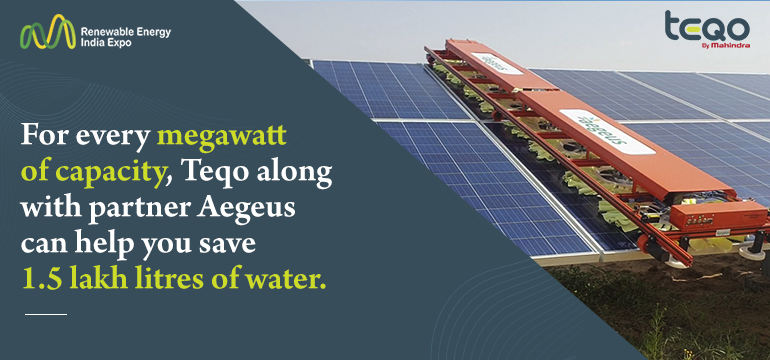
For utility-scale solar farms and very large commercial installations, robotic and automated cleaning systems are revolutionizing operations. Companies like Ecoppia are pioneers, leveraging AI, data analytics, and robust robotics to clean panels efficiently, often without human intervention. These systems can be ‘wet’ (using minimal water) or ‘waterless,’ a critical advantage in water-stressed regions of India.
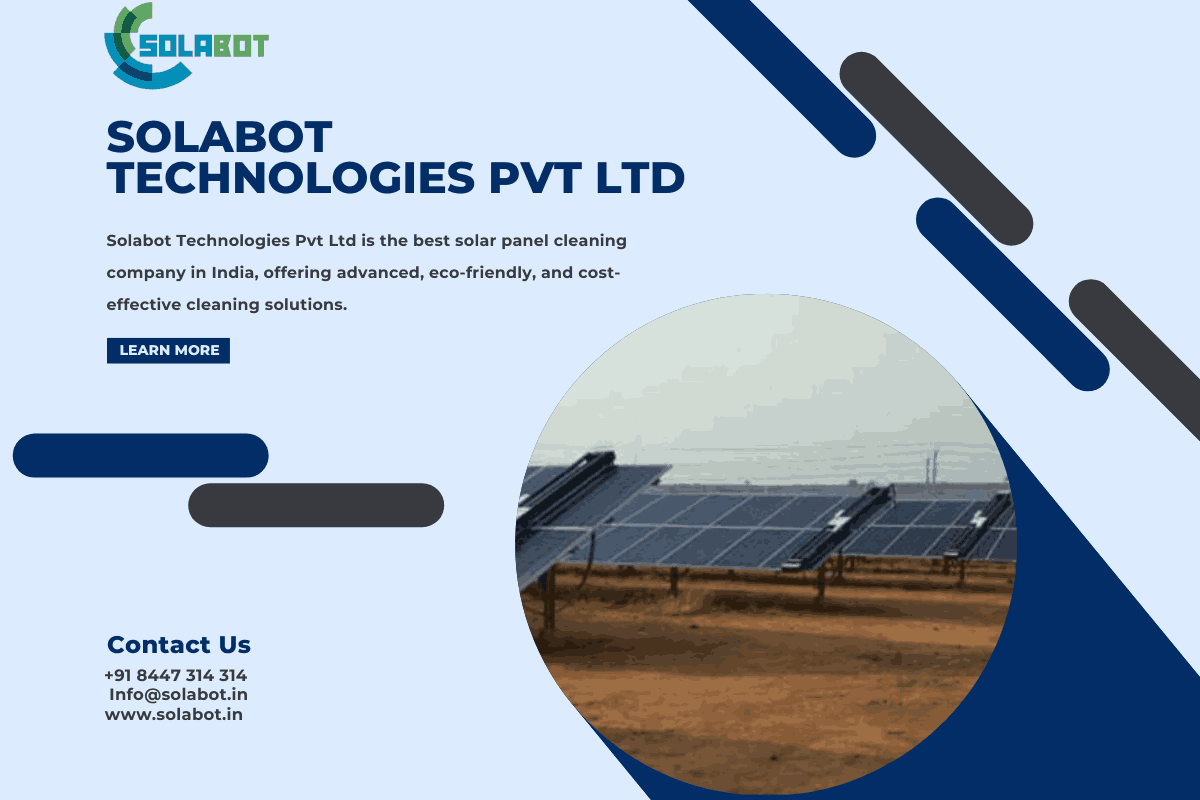
Other players like Skilancer Solar and Solabot also offer advanced robotic solutions, often tailor-made for specific project scales and terrains. The benefits are substantial: unparalleled cleaning consistency, elimination of human safety risks, reduced labor costs, and often, optimized water usage. These systems can operate at night, maximizing panel uptime during daylight hours. While the upfront investment is higher, the long-term ROI for large projects, considering efficiency gains and operational cost reductions, is compelling.
Annual Maintenance Contracts (AMCs): The Long-Term Solution
Many Indian solar companies, such as Spectra Solar Power and Intello, offer comprehensive Annual Maintenance Contracts (AMCs). These are invaluable for USA investors seeking a hands-off approach to their Indian assets. An AMC typically includes:
- Regular Cleaning: Scheduled professional cleaning, often quarterly or monthly, depending on soiling rates.
- Preventive Maintenance: Inspections of panels, wiring, inverters, and mounting structures.
- Performance Monitoring: Ensuring the system is operating optimally and identifying potential issues early.
- Emergency Support: On-call services for unexpected breakdowns or issues.
AMCs provide peace of mind, ensuring consistent performance, prolonged asset life, and compliance with warranty conditions, all managed by local experts.
Key Players in India’s Solar Panel Cleaning Landscape: A Curated Look
When you’re evaluating solar panel cleaning companies in India, it’s not just about who’s on a ‘top 10’ list. It’s about understanding their specialization, technology, and ability to meet the unique demands of your project. Here’s a categorized look at the types of providers you’ll encounter, featuring companies often highlighted in the market.
Top Tier Providers (Robotic/Advanced Technology)
These companies are at the forefront of innovation, often targeting large-scale utility projects with sophisticated, automated solutions:
- Ecoppia: A global leader and pioneer in robotic solar panel cleaning. Their solutions are highly automated, data-driven, and often waterless or low-water, making them ideal for arid regions and vast solar farms. They focus on maximizing energy production through consistent, efficient cleaning.
- Solabot Technologies: Positioned as a leading Indian company, Solabot offers advanced, eco-friendly, and cost-effective cleaning solutions, often employing robotic systems. They emphasize efficiency and reducing operational costs for their clients.
- Skilancer Solar: Frequently cited among top providers, Skilancer Solar likely offers a range of services from advanced robotics to comprehensive O&M, catering to various project scales with a focus on maximizing performance.
Comprehensive Maintenance Providers (AMCs & Full O&M)
These firms provide a broader suite of services, with cleaning often integrated into larger operations and maintenance contracts:
- Spectra Solar Power: Known for annual maintenance contracts (AMCs) that cover cleaning, inspections, inverter checks, and preventive servicing. They emphasize ensuring consistent performance for both homes and businesses.
- Intello Tech: Positioned as India’s leading solar maintenance experts, Intello offers comprehensive solar O&M services, including cleaning, to ensure systems are efficient and long-lasting for commercial, ground mount, and home solar setups.
Specialized Equipment & Services
Some companies focus on specific aspects, from providing cleaning systems to niche service offerings:
- JP Solar: Offers solar panel cleaning systems in India, implying they might sell equipment for self-cleaning or provide services using their proprietary systems.
- Solar Cleaning India (solarcleaningindia.com): Focuses on providing solar cleaning brushes and kits, including motorized options, for efficient cleaning. This indicates a market for both direct equipment sales and potentially services using these tools.
- Madhav Solar & Irrigation, E-Welt Technology, Prasham Greens, etc. (as seen on Indiamart): These are often regional or specialized service providers, some of whom might offer specific cleaning tools or services tailored to local needs.
Choosing between these types of providers depends heavily on your project’s scale, location, budget, and desired level of automation. Here’s a simplified comparison:
| Service Type / Company Category | Target Project Scale | Key Features / Technology | Pros for USA Investors | Considerations |
|---|---|---|---|---|
| Robotic/Advanced (Ecoppia, Solabot, Skilancer) | Utility-scale, large commercial | AI-driven robotics, waterless/low-water, scheduled autonomy, remote monitoring | Highest efficiency, minimal human error, excellent ROI for large assets, less local oversight needed | Higher upfront investment, may not be cost-effective for smaller projects |
| Comprehensive O&M (Spectra, Intello) | Commercial, industrial, large residential | AMCs, manual/semi-automated cleaning, full system inspections, inverter checks, preventive maintenance | Holistic asset protection, single point of contact for O&M, consistent performance, easier budgeting | Cleaning might be less frequent than dedicated robotic systems, quality of cleaning can vary by crew |
| Specialized Equipment/Services (JP Solar, Solar Cleaning India) | Small to medium commercial, self-management models | Sales of cleaning tools (brushes, systems), niche cleaning services, DIY options for local teams | Cost-effective for specific scenarios, good for local teams managing operations directly | Requires local management/personnel, quality and consistency can be highly variable |
The Cost of Cleanliness: Understanding Solar Panel Cleaning Pricing in India
For any USA investor, understanding the cost structure in a foreign market is paramount. Solar panel cleaning costs in India are influenced by several factors, and while often more competitive than in the West, it’s crucial to factor them into your operational expenditure projections.
Factors Influencing Cost: Scale, Frequency, Technology & Location
The price you’ll pay for solar panel cleaning in India isn’t uniform. Here’s what drives the numbers:
- Scale of the Project: Larger projects (utility-scale) benefit from economies of scale. The per-panel or per-MW cost tends to decrease as the project size increases, especially with automated systems.
- Cleaning Frequency: More frequent cleaning (e.g., monthly vs. quarterly) will naturally lead to higher annual costs. This is often dictated by local environmental conditions and desired performance targets.
- Cleaning Technology: Manual cleaning is the cheapest per instance, but labor costs add up. Robotic systems have a higher initial setup or contract cost but offer long-term savings through efficiency and reduced labor.
- Location: Remote locations or those with difficult terrain might incur higher logistical costs. Accessibility to water sources can also impact the method and cost.
- Water Availability & Purity: If specialized purified water needs to be transported, it adds to the cost. Waterless robotic systems mitigate this, but their technology comes at a premium.
- Inclusion in AMC: If cleaning is part of a broader AMC, the cost is bundled, offering a predictable annual expense.
Typical Pricing Models & Ranges in India
While exact figures will always require a direct quote, here’s a general idea of what to expect for professional solar panel cleaning services in India:
| Cleaning Method | Approx. Cost per Panel (INR, indicative) | Approx. Cost per MW (INR/year, indicative for AMCs) | Notes for USA Investors |
|---|---|---|---|
| Manual Cleaning | ₹10 – ₹25 (per cleaning) | ₹50,000 – ₹1,50,000 (for quarterly) | Suitable for smaller residential/commercial projects. Variable quality, labor-dependent. |
| Semi-Automated (e.g., brush on pole) | ₹15 – ₹35 (per cleaning) | ₹80,000 – ₹2,50,000 (for quarterly) | Better for medium-scale, improved consistency over purely manual. |
| Robotic/Automated (Wet) | ₹25 – ₹50 (per cleaning/per panel installed) | ₹2,00,000 – ₹5,00,000+ (for monthly/bi-monthly) | High upfront, but lower operational and higher efficiency gains for large utility. Price depends on frequency and scope. |
| Robotic/Automated (Waterless) | ₹30 – ₹60 (per cleaning/per panel installed) | ₹2,50,000 – ₹6,00,000+ (for monthly/bi-monthly) | Premium solution, excellent for arid zones. Highest efficiency and autonomy. |
| Annual Maintenance Contract (AMC) | N/A (bundled) | ₹1,00,000 – ₹7,00,000+ (per MW, depends on scope & frequency) | Comprehensive solution, includes cleaning & other O&M. Predictable costs. |
Note: These figures are highly indicative and subject to change based on specific contract terms, regional variations, and market dynamics. Always obtain multiple direct quotes. (1 USD ≈ 83 INR as of late 2023/early 2024, for context).
ROI of Professional Cleaning: A Financial Perspective for USA Investors
The question isn’t whether you *can afford to clean, but whether you can afford not to*. For a USA investor managing assets in India, calculating the ROI of professional cleaning is crucial:
- Increased Yield: If cleaning costs ₹5,00,000/MW/year but prevents a 15% efficiency loss on a system generating ₹1 crore/MW/year (approx. $120,000), you’re saving ₹15 lakhs/MW/year. That’s a net gain of ₹10 lakhs/MW/year.
- Extended Asset Life: Preventing hot spots and degradation preserves the physical integrity of your panels, potentially extending their operational life and protecting your initial capital investment.
- Predictable Performance: Regular cleaning ensures your solar assets consistently meet performance targets, which is vital for power purchase agreements (PPAs) and financial forecasting.
- Enhanced ESG Profile: For institutional investors, demonstrating responsible asset management and maximizing clean energy production contributes positively to Environmental, Social, and Governance (ESG) metrics.
Professional cleaning is not an expense; it’s an investment that secures and enhances the profitability of your Indian solar assets.
Choosing the Right Solar Panel Cleaning Partner in India: A Checklist for USA Entities
Selecting a local service provider from afar can be daunting. As a USA investor or business, your due diligence needs to be thorough. You’re not just hiring cleaners; you’re entrusting them with the performance and longevity of your valuable assets.
Assess Your Needs: Scale, Location, Budget, & Technology Preference
Before you even look at companies, define your own parameters:

- Project Scale: Are you managing a few rooftop installations or a multi-megawatt solar farm? This will dictate whether you need manual teams, semi-automated solutions, or advanced robotics.
- Location in India: Is it an arid region prone to dust, a coastal area with salinity issues, or an industrial zone with specific pollutants? The environment directly impacts cleaning frequency and method suitability.
- Budget: What’s your allocated OPEX for O&M? Be realistic about the balance between cost and desired cleaning quality/frequency.
- Technology Preference: Are you open to investing in advanced robotic solutions for their efficiency, or is a reliable manual/semi-automated service sufficient for your project type?
Due Diligence: What to Look For in a Company
Once you understand your needs, here’s a checklist for evaluating potential partners:
- Experience & Track Record: How long have they been operating in the Indian solar market? Can they provide case studies or references for projects similar to yours? Look for companies with a demonstrated history of managing large-scale operations if your project demands it.
- Technology & Equipment: Do they use purified water? What kind of brushes or robotic systems do they employ? Are their methods safe for your specific panel type (e.g., avoiding abrasive materials)? Ask about their water sourcing and management practices, especially if water conservation is a priority.
- Safety Protocols: This is non-negotiable. What are their safety training programs for manual labor? How do they ensure the safe operation of robotic systems? Request their safety manuals and incident reports if available.
- Insurance & Warranties: Do they carry comprehensive liability insurance? What kind of guarantees do they offer on their cleaning services (e.g., performance improvement)?
- Customer References & Reviews (Crucial for Remote Management): Especially important for USA-based clients. Can they connect you with other international or large-scale clients they serve? Look for testimonials that speak to reliability, communication, and problem-solving.
- Communication & Reporting Capabilities: How will they communicate with you, given the geographical distance? Do they provide detailed cleaning reports, including before-and-after performance data or visual evidence? A robust reporting system is vital for transparency and accountability.
- Compliance & Certifications: Do they comply with local labor laws and environmental regulations? Are they certified by any relevant industry bodies?
Contractual Considerations: AMCs, SLAs, & Performance Guarantees
Your contract with an Indian cleaning company should be watertight:
- Scope of Work: Clearly define what’s included (cleaning method, frequency, use of water, ancillary services).
- Service Level Agreements (SLAs): Establish clear performance metrics, such as response times for emergency cleaning or minimum efficiency improvements expected after cleaning.
- Performance Guarantees: Can they offer guarantees on the percentage of efficiency recovery or sustained performance?
- Payment Terms: Clearly outline payment schedules, currency, and any penalty clauses.
- Termination Clauses: Understand the conditions under which either party can terminate the agreement.
- Dispute Resolution: Specify the mechanism for resolving any disputes, preferably through arbitration in a neutral location or as per Indian commercial law.
Working with a reputable local legal counsel in India to review contracts is highly recommended for USA investors.
Future Trends in Solar Panel Cleaning in India
The solar cleaning market in India is continuously evolving, driven by the need for greater efficiency, water conservation, and cost-effectiveness. As an investor, staying aware of these trends can help you make future-proof decisions:
- AI & IoT Integration: Expect more sophisticated robotic systems that use Artificial Intelligence to detect soiling levels, schedule cleaning autonomously, and optimize cleaning paths. Internet of Things (IoT) sensors on panels will provide real-time data on performance and soiling, triggering cleaning only when necessary.
- Waterless Cleaning Technologies: With water scarcity being a critical concern in many parts of India, the development and adoption of waterless or ultra-low water cleaning solutions will accelerate. This includes specialized brushes, air-blowers, and advanced hydrophobic coatings that repel dust.
- Increased Automation & Robotics: The trend towards automation for large-scale projects will continue, driven by cost savings, safety improvements, and consistent cleaning quality. Even smaller commercial projects may see more affordable semi-automated solutions emerge.
- Predictive Maintenance: Moving beyond reactive cleaning, future systems will leverage big data and machine learning to predict soiling patterns based on weather, location, and historical data, allowing for more proactive and efficient cleaning schedules.
- Integrated O&M Platforms: Companies will increasingly offer comprehensive digital platforms that integrate cleaning with overall O&M, performance monitoring, and fault detection, providing a single pane of glass for asset management.
Safeguarding Your Indian Solar Investment with Strategic Cleaning
For USA investors and businesses, the Indian solar market offers immense opportunities, but operational excellence, especially when it comes to fundamental aspects like panel cleaning, is non-negotiable. Don’t let dust and grime erode your profits and diminish the value of your assets.
By understanding the unique challenges of India’s environment, evaluating the diverse range of cleaning services available, and conducting thorough due diligence, you can partner with the right professionals. Strategic cleaning is not merely a maintenance task; it’s a critical component of maximizing your return on investment, ensuring long-term asset health, and contributing to the sustainable growth of India’s clean energy future. Invest wisely, and keep those panels sparkling.
Frequently Asked Questions
Why is solar panel cleaning particularly important in India?
Solar panels in India are highly susceptible to efficiency loss due to significant dust accumulation, air pollution from industrial and vehicular sources, and agricultural residues. These environmental factors can lead to an average power loss of 15-25% annually, making regular professional cleaning critical for maintaining performance and protecting long-term investment.
What types of solar panel cleaning services are available in India?
The Indian market offers a range of services: Manual cleaning for smaller installations, semi-automated solutions (e.g., telescopic brushes) for medium-sized projects, and advanced robotic and automated cleaning systems (often AI-driven and waterless/low-water) for large utility-scale solar farms. Many companies also offer comprehensive Annual Maintenance Contracts (AMCs) that include cleaning alongside other O&M services.
How do costs for solar panel cleaning in India compare to the USA?
While direct comparisons vary, cleaning services in India are generally more cost-competitive than in the USA, primarily due to lower labor costs. However, prices are influenced by factors such as the scale of the project, cleaning frequency, technology used (manual vs. robotic), water availability, and specific location within India. Robotic systems, while having a higher upfront cost, offer significant long-term ROI for large projects.
What should a USA investor look for when choosing an Indian solar cleaning company?
Key factors include the company’s experience and track record, the technology and equipment they use (e.g., purified water, advanced robotics), adherence to safety protocols, comprehensive insurance and warranties, robust communication and detailed reporting capabilities, and verifiable customer references. For remote management, clear Service Level Agreements (SLAs) and performance guarantees in contracts are essential.
How often should solar panels in India be cleaned?
The ideal cleaning frequency depends heavily on the specific location and environmental conditions. In dusty or polluted areas, monthly or even bi-monthly cleaning might be necessary. In less harsh environments, quarterly cleaning could suffice. For large-scale projects, data-driven scheduling based on real-time soiling levels is becoming more common, often managed by robotic systems or integrated O&M platforms.
Can I manage solar panel cleaning in India remotely from the USA?
Yes, it is entirely possible to manage solar panel cleaning remotely, especially when partnering with companies that offer comprehensive AMCs and robust digital reporting systems. Advanced robotic cleaning providers often include remote monitoring and scheduling capabilities. Clear communication channels, detailed performance reports, and strong contractual agreements are vital for effective remote oversight.


Post Comment