Solar Panel Efficiency In Cloudy Weather
Solar Panel Efficiency in Cloudy Weather: The Definitive Guide for Homeowners
Let’s be real: If you’re considering solar power for your home, one of the first questions that pops into your head is probably, “But what about when it’s cloudy?” It’s a valid concern. We’ve all seen those impressive solar farms basking under a brilliant sun, leading us to believe that without direct sunshine, solar panels might just be fancy roof decorations. Well, I’m here to tell you that’s simply not true.
Table of Contents
- Solar Panel Efficiency in Cloudy Weather: The Definitive Guide for Homeowners
- The Core Truth: Yes, Your Solar Panels Still Work When It’s Cloudy!
- Understanding Direct vs. Diffuse Sunlight: The Science Behind Cloudy Day Production
- The “Why”: How Photovoltaics Capture Diffuse Light
- How Much Power Do Solar Panels Really Generate on Cloudy Days? (The Numbers You Need)
- Average Efficiency Reduction: What to Expect
- Factors Influencing Cloudy Day Output: It’s Not Just About the Clouds
- The “Cloud Lensing” Phenomenon: A Rare Boost
- Beyond Standard: Solar Panel Technologies Built for Low-Light Performance
- Why Some Panels Excel in the Gloom: Key Technological Differences
- Maximizing Your Solar Output on Overcast Days: Actionable Strategies
- Smart Panel Selection: Choosing the Right Tech for Your Climate
- Optimized System Design: Angles, Orientation, and Shading Avoidance
- The Power of Energy Storage: Batteries for Cloudy Days and Beyond
- Regular Maintenance: Keeping Panels Clean (Rain Helps!)
- Advanced Monitoring Systems: Tracking Performance in Real-Time
- Debunking Common Myths About Solar Panels and Cloudy Weather
- Myth 1: “Solar panels are useless when it’s cloudy.”
- Myth 2: “Rain damages solar panels or stops them from working.”
- Myth 3: “You can’t go solar if you live in a cloudy region.”
- The Long-Term Perspective: Solar in Continuously Cloudy Climates (Is It Worth It?)
- Assessing Your Regional Solar Potential
- Net Metering and Grid Tie-In: Your Backup Plan
- The Economic Case: Balancing Output with Savings
- Conclusion: Embracing the Full Spectrum of Solar Power
The good news? Your solar panels absolutely still generate electricity on cloudy days. The better news? Advances in solar technology and smart system design mean you can harness significant power even when the sun plays peek-a-boo. Forget what you think you know about solar only working on ‘perfect’ days. This guide will dismantle myths, explain the science, and show you exactly how solar panels perform when the clouds roll in, and what you can do to maximize their output, no matter the weather.
The Core Truth: Yes, Your Solar Panels Still Work When It’s Cloudy!
It’s the most common question, and the answer is a resounding YES. Solar panels don’t need direct, blazing sunlight to produce power. They need light, any light. Think of it like a cloudy day at the beach – you can still get a sunburn because UV rays penetrate the clouds. Solar panels operate on a similar principle, but instead of UV, they’re capturing photons.
Understanding Direct vs. Diffuse Sunlight: The Science Behind Cloudy Day Production
When the sun is shining brightly, your solar panels are primarily absorbing direct sunlight. These are photons traveling in a straight line from the sun to your panels. On a cloudy day, however, the clouds act like a giant diffuser, scattering sunlight. This scattered light is called diffuse sunlight. While diffuse light is less intense than direct light, it’s still light, and your solar panels are designed to capture it.
The photovoltaic (PV) cells in your panels absorb these photons, whether direct or diffuse, and convert them into electricity. The efficiency might drop compared to a clear, sunny day, but the production doesn’t stop. It’s a continuous process, leveraging whatever light is available in the environment.
The “Why”: How Photovoltaics Capture Diffuse Light
The magic happens at the atomic level. Solar cells are made of semiconductor materials, most commonly silicon. When photons (light particles) strike the silicon, they knock electrons loose from their atoms. These freed electrons then flow through the cell, creating an electrical current. This phenomenon is called the photovoltaic effect.
This process doesn’t differentiate between photons from direct sunlight and photons from diffuse sunlight. As long as there’s enough energy in the photons to excite the electrons, electricity is generated. The less intense diffuse light simply means fewer photons hitting the panel at any given moment, resulting in a lower, but still significant, power output.
How Much Power Do Solar Panels Really Generate on Cloudy Days? (The Numbers You Need)
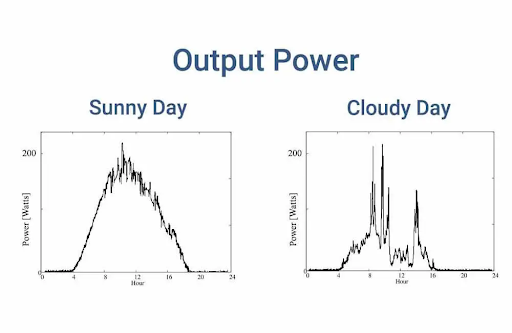
This is where things get a bit more nuanced, but crucial. While panels always work, the amount of power they produce varies widely depending on several factors. The general consensus from energy experts and real-world data is that solar panels can produce anywhere from 10% to 50% of their peak output on a typical cloudy day. Some sources even suggest as high as 76% efficiency under light cloud cover, while very dense, stormy conditions can reduce output further.

Average Efficiency Reduction: What to Expect
Let’s break down the typical ranges you might encounter:
| Cloud Condition | Typical Output (% of Peak) | Description |
|---|---|---|
| Clear Sky, Direct Sun | 100% | Optimal production conditions. |
| Light Overcast/Haze | 50-75% | Thin clouds, diffuse light still strong. |
| Partially Cloudy | 30-60% | Sun frequently obscured, but bursts of direct light. |
| Heavy Overcast/Rain | 10-25% | Dense cloud cover, heavy rain; lowest production. |
| Very Dense Storm | <10% | Extreme weather conditions, minimal light. |
Factors Influencing Cloudy Day Output: It’s Not Just About the Clouds
The type and density of clouds are major players, but they’re not the only ones:
- Cloud Density and Type: Thin, wispy clouds allow more light to pass through than thick, dark storm clouds. Light cirrus clouds might only cause a minimal dip, whereas a heavy cumulonimbus formation will drastically reduce output.
- Panel Technology: As we’ll discuss, some panel types are inherently better at capturing diffuse light than others.
- Time of Day and Season: Even on a cloudy day, panels will produce more energy midday than at dawn or dusk because the sun’s angle is higher, and there’s generally more ambient light. Winter months naturally have shorter days and lower sun angles, reducing overall production, cloudy or not.
- Temperature: Surprisingly, cooler temperatures, often associated with cloudy days, can slightly boost panel efficiency. Solar panels actually perform better in cooler conditions because their internal resistance decreases. However, the reduction in light intensity usually outweighs this temperature benefit.
- System Design and Orientation: Panels optimally angled for peak sun exposure might perform slightly less efficiently under diffuse light than those with a more ‘generalized’ angle, but this difference is often minor. Shading from trees or other structures becomes even more critical on cloudy days, as any shadow can significantly impede output.
The “Cloud Lensing” Phenomenon: A Rare Boost
Here’s a fascinating, albeit rare, scenario: sometimes, under specific cloud formations, sunlight can be concentrated or reflected in such a way that it actually *boosts* solar panel output beyond what a clear sky might offer. This is known as cloud lensing or the enhanced edge effect. It happens when the edges of specific cloud types reflect and focus sunlight onto your panels, creating a temporary surge in power. It’s not something you can rely on, but it’s a testament to the dynamic interaction between sunlight, clouds, and solar technology.
Beyond Standard: Solar Panel Technologies Built for Low-Light Performance
Not all solar panels are created equal, especially when it comes to performing under less-than-ideal conditions. While all modern panels will generate some power on cloudy days, certain technologies are specifically engineered to maximize diffuse light capture.
Why Some Panels Excel in the Gloom: Key Technological Differences
The difference often lies in how efficiently the solar cells convert available light into electricity, particularly when that light is scattered or lower intensity. It’s about quantum efficiency and the spectral response of the semiconductor material.
- Monocrystalline vs. Polycrystalline: The Classic Comparison
- Monocrystalline Panels: These are made from a single, pure silicon crystal. Their uniform structure allows electrons to move more freely, generally leading to higher overall efficiency (17-22%) in both direct and diffuse light. They are often preferred for their sleek black appearance and superior performance in varied conditions.
- Polycrystalline Panels: Made from multiple silicon fragments melted together, these cells have a slightly lower efficiency (15-18%) than monocrystalline due to crystal grain boundaries that impede electron flow. While cheaper, their diffuse light performance is typically a bit less robust than monocrystalline.
- PERC (Passivated Emitter Rear Cell) Technology: A Common Enhancement
PERC technology adds a passive layer to the rear of the solar cell. This layer helps reflect unabsorbed light back into the cell, giving photons a second chance to create electrons. It also reduces electron recombination, improving efficiency. PERC panels offer better performance in low-light conditions and at higher temperatures compared to traditional cells. Most high-efficiency panels today incorporate PERC. - Half-Cut Cells: Boosting Performance and Resilience
Instead of having 60 or 72 full-sized cells, half-cut cell panels have 120 or 144 smaller cells. Cutting cells in half reduces electrical resistance, meaning less energy is lost as heat. This design also makes the panel more tolerant to partial shading. If one half of the panel is shaded (e.g., by a cloud), the other half can continue producing more effectively, improving overall cloudy day performance. - TOPCon (Tunnel Oxide Passivated Contact) Cells: The New Frontier in Efficiency
TOPCon technology is an advanced n-type cell design that improves passivation on both the front and rear of the cell. This significantly boosts efficiency, often exceeding 22%, and makes them exceptionally good at capturing diffuse light. They are rapidly gaining traction as a high-performance choice for all conditions, including overcast skies. - Back Contact (IBC) Cells: Maximizing Front Surface Absorption
Interdigitated Back Contact (IBC) cells move all electrical contacts to the back of the solar cell, leaving the entire front surface free to absorb sunlight. This eliminates shading from busbars (the thin metal lines on the front of traditional cells), leading to higher photon capture and thus better performance in low-light conditions. - Bifacial Panels: Capturing Light from Both Sides
Bifacial solar panels can absorb light from both their front and back sides. While the front captures direct and diffuse sunlight from above, the back can capture reflected light from the ground, snow, or a light-colored roof. In cloudy conditions, where diffuse light is abundant and reflected light might still be present, bifacial panels can offer a significant boost in overall yield, especially if mounted with good ground clearance.
| Panel Technology | Typical Efficiency Range | Low-Light Performance | Key Benefit for Cloudy Weather |
|---|---|---|---|
| Monocrystalline | 17-22% | Good | High overall efficiency, effective diffuse light capture. |
| Polycrystalline | 15-18% | Moderate | Cost-effective, but slightly lower low-light performance. |
| PERC Cells | 19-23% | Very Good | Improved light absorption and reduced electron recombination. |
| Half-Cut Cells | 19-23% | Very Good | Reduced internal losses, better partial shade tolerance. |
| TOPCon Cells | 22-25%+ | Excellent | Superior passivation and high overall efficiency, excelling in diffuse light. |
| Back Contact (IBC) Cells | 20-22%+ | Excellent | Maximized front surface for light absorption, no busbar shading. |
| Bifacial Panels | 18-22% (front) + 5-30% (rear) | Excellent | Captures diffuse and reflected light from both sides, increasing yield. |
Maximizing Your Solar Output on Overcast Days: Actionable Strategies
Knowing that your panels work on cloudy days is one thing; making sure they work as hard as possible is another. Here are concrete strategies homeowners can employ:
Smart Panel Selection: Choosing the Right Tech for Your Climate
As detailed above, certain panel technologies are inherently better at low-light performance. If you live in a region with frequent overcast skies, prioritizing panels with features like PERC, Half-Cut, TOPCon, IBC, or Bifacial technology will pay off. While these might have a higher upfront cost, their superior performance in diffuse light can lead to better overall energy production and a faster return on investment in cloudier climates. Discuss your specific climate with your solar installer to ensure you get panels optimized for your local conditions.
Optimized System Design: Angles, Orientation, and Shading Avoidance
- Orientation: In the Northern Hemisphere, south-facing panels typically get the most direct sun. However, for diffuse light, a slightly less aggressive south-facing angle or even an east/west split can sometimes capture more morning and afternoon diffuse light. Your installer will model the optimal orientation for your specific roof and local sun path.
- Angle (Tilt): The ideal tilt angle for solar panels often balances summer and winter sun. In regions with significant cloud cover, optimizing for year-round diffuse light rather than just peak summer direct sun might be considered.
- Shading Avoidance: This is paramount. Even a small shadow from a chimney, tree branch, or neighboring building can drastically reduce the output of an entire string of panels if not properly mitigated. Modern systems often use microinverters or power optimizers that allow each panel to operate independently, minimizing the impact of partial shading. This is especially crucial on cloudy days when overall light levels are already lower.
The Power of Energy Storage: Batteries for Cloudy Days and Beyond
If your panels produce less electricity on a cloudy day than your home consumes, a solar battery storage system becomes invaluable. Batteries store excess energy generated on sunnier days or during peak production hours. When clouds roll in, or at night, your home can draw power from the battery instead of relying solely on the grid. This boosts your energy independence and helps you make the most of every electron your system produces, regardless of immediate weather conditions.
Regular Maintenance: Keeping Panels Clean (Rain Helps!)
Dust, pollen, bird droppings, and other debris can accumulate on your solar panels, reducing their efficiency. While rain can naturally wash away some of this grime, occasional cleaning (usually once or twice a year, or as needed) will ensure your panels are always ready to absorb as much light as possible, including diffuse light. Clean panels mean more photons reaching the cells, even on an overcast day.
Advanced Monitoring Systems: Tracking Performance in Real-Time
Most modern solar installations come with monitoring apps or platforms. These allow you to track your system’s energy production in real-time. By observing your panel’s output on cloudy days, you can understand how different cloud conditions impact your specific system and make informed decisions about energy usage or storage. This data empowers you to optimize your solar investment.
Debunking Common Myths About Solar Panels and Cloudy Weather
It’s time to set the record straight on some pervasive misconceptions:
Myth 1: “Solar panels are useless when it’s cloudy.”
Reality: Absolutely false. As discussed, solar panels continue to generate electricity using diffuse light. While output is reduced, it’s far from zero. In fact, countries known for their cloudiness, like Germany (a world leader in solar adoption), prove that solar power is viable and highly effective even without constant sunshine. Their success hinges on robust net metering policies, energy storage, and efficient panel technology.
Myth 2: “Rain damages solar panels or stops them from working.”
Reality: Rain is generally beneficial for solar panels! They are built to withstand harsh weather conditions, including heavy rain, hail, and snow. Rain effectively acts as a natural cleaning agent, washing away dust and grime that can accumulate and reduce efficiency. While production is lower during a downpour due to dense cloud cover, the rain itself doesn’t harm the panels; it often helps them perform better once the skies clear.
Myth 3: “You can’t go solar if you live in a cloudy region.”
Reality: Not true. Many homeowners in traditionally cloudy or less sunny regions successfully go solar. The key is to account for the local climate during system design. This might mean installing a slightly larger system, choosing higher-efficiency panels, incorporating battery storage, or taking advantage of robust net metering policies that allow you to sell excess power back to the grid and draw from it when needed. A reputable solar installer will provide a realistic assessment of your solar potential based on your specific location and weather patterns.
The Long-Term Perspective: Solar in Continuously Cloudy Climates (Is It Worth It?)
If you live in a region known for its persistent cloud cover – think the Pacific Northwest, parts of the Northeast, or even many European countries – you might still be wondering if solar is a smart investment. The answer, for most, is a resounding yes, but with a nuanced approach.
Assessing Your Regional Solar Potential
Before making any decisions, get a professional solar assessment. Installers use sophisticated software that analyzes your specific location, roof characteristics, shading, and historical weather data to provide an accurate estimate of your potential energy production. This will give you a clear picture of what to expect, even with cloudy days factored in.
Net Metering and Grid Tie-In: Your Backup Plan
For most homeowners, a grid-tied solar system is the solution. This means your home remains connected to the utility grid. When your panels produce more electricity than you need (on sunny days, or even lightly cloudy ones), the excess is sent back to the grid, and you typically receive credits (via net metering). When your panels produce less than you need (heavy clouds, night, or high energy demand), you draw electricity from the grid. This symbiotic relationship ensures you always have power, effectively using the grid as a massive, infinitely scalable battery. Even in cloudy climates, the overall annual production, combined with net metering, can lead to substantial savings.
The Economic Case: Balancing Output with Savings
The economic viability of solar in cloudy regions often comes down to a combination of factors:
- Electricity Rates: If your local utility rates are high, the savings from solar will be more significant, even with lower production on cloudy days.
- Incentives: Federal tax credits (like the Investment Tax Credit), state rebates, and local programs can drastically reduce the upfront cost of solar, making it more financially attractive regardless of weather.
- Panel Efficiency and System Size: Investing in higher-efficiency panels and potentially a slightly larger system can compensate for reduced output on cloudy days, maximizing your annual energy generation.
- Property Value: Solar panels generally increase property value, providing a long-term asset.
The calculation is rarely about perfectly matching your daily consumption with daily solar production. Instead, it’s about the annual energy offset and the overall financial benefits over the system’s lifespan, which can be 25-30 years or more. Don’t let a few cloudy days deter you from exploring the significant advantages of going solar.
Conclusion: Embracing the Full Spectrum of Solar Power
Hopefully, by now, your concerns about solar panel efficiency in cloudy weather have been largely put to rest. The reality is that modern solar technology is robust, adaptable, and far more capable than many realize. Your solar panels are silent workhorses, diligently converting diffuse light into usable energy, even when the sun is hidden behind a blanket of clouds.
By understanding the science, choosing the right panel technology, optimizing your system design, and potentially integrating energy storage, you can ensure your solar investment continues to deliver significant value, year-round. Don’t let a few gray skies overshadow the bright future of renewable energy for your home. Solar power is not just for the perpetually sunny states; it’s a powerful, sustainable solution for homes across the entire spectrum of weather conditions.
Frequently Asked Questions
Do solar panels generate electricity when it’s completely overcast or raining?
Yes, solar panels absolutely generate electricity even on completely overcast or rainy days. While their output is reduced compared to direct sunlight, they can still produce anywhere from 10% to 50% of their peak capacity by capturing diffuse sunlight. Rain also helps by cleaning the panels, which can improve efficiency once the clouds break.
How much less efficient are solar panels on cloudy days?
On average, solar panels can be 50-90% less efficient than their peak performance on very heavy overcast or stormy days. However, under light cloud cover or haze, efficiency might only drop by 25-50%. The exact reduction depends on cloud density, panel technology, time of day, and seasonal factors.
Are certain types of solar panels better for cloudy weather?
Yes, some advanced solar panel technologies are indeed better for low-light conditions. Panels featuring PERC, Half-Cut cells, TOPCon, Interdigitated Back Contact (IBC), or Bifacial designs tend to excel at capturing diffuse light more efficiently than older or less advanced polycrystalline panels. These technologies are designed to maximize photon absorption and minimize internal losses.
How can I maximize my solar panel output if I live in a cloudy climate?
To maximize output in cloudy climates, consider these strategies: choose high-efficiency panels (e.g., TOPCon, PERC), optimize system design for your specific sun path and minimize shading, install a solar battery storage system to store excess energy, ensure panels are cleaned regularly, and utilize advanced monitoring systems to track performance.
Will I still save money with solar if I live in a region with many cloudy days?
Most likely, yes. The economic viability of solar in cloudy regions depends on factors like local electricity rates, available incentives (federal, state, local), and the overall size and efficiency of your system. Net metering policies, which allow you to sell excess power back to the grid, also play a crucial role in ensuring you benefit from your system’s annual production, even with daily fluctuations due to weather.
Do solar panels work at night?
No, solar panels do not work at night. They require light (photons) to generate electricity via the photovoltaic effect. At night, with no light, they produce no power. This is why grid-tied systems and/or battery storage are essential to ensure continuous power supply after sunset or during prolonged periods of low production.


Post Comment