Solar Panel Output Vs Sun Angle
Solar Panel Output vs. Sun Angle: The Definitive Homeowner’s Guide to Maximizing Your Energy
Are you leaving money on the table with your solar panels? It might sound dramatic, but if your solar array isn’t angled correctly, you could be losing out on significant energy production and, more importantly, hard-earned savings. The angle at which the sun’s rays hit your panels is not just a minor detail; it’s a critical factor that directly impacts how much electricity your system generates.
Table of Contents
- Solar Panel Output vs. Sun Angle: The Definitive Homeowner’s Guide to Maximizing Your Energy
- The Unseen Force: How Sun Angle Directly Controls Your Solar Output
- What is the “Angle of Incidence”?
- Quantifying the Impact: Immediate Data on Output Drop-Off
- Finding Your Solar Sweet Spot: The Optimal Panel Tilt for Your Home
- It’s All About Latitude: Your Location’s Biggest Influence
- Orientation Matters More Than Tilt (Often)
- The Seasonal Dance: Adjusting for Winter vs. Summer Sun
- Beyond the Ideal: Practical Solutions for Real-World Roofs
- Flat Roofs: Your Secret Weapon (with a catch)
- East/West Facing Roofs: Making the Most of What You Have
- North-Facing Roofs: When Solar Might Not Be Right
- Shading: The Silent Power Killer
- Solar Tracking Systems: Is Constantly Chasing the Sun Worth It?
- What are Solar Trackers?
- How Much More Output?
- The Cost-Benefit Analysis for Homeowners
- Calculating Your Optimal Angle: A Step-by-Step Homeowner’s Guide
- Step 1: Determine Your Latitude
- Step 2: Assess Your Roof Pitch/Existing Tilt
- Step 3: Consider Seasonal Adjustments (If Applicable)
- Step 4: Account for Shading and Obstacles
- Step 5: Use Online Tools/Consult an Expert
- Common Misconceptions About Solar Panel Angles
- Conclusion
Forget complex equations and jargon. This guide is built for you, the homeowner, to understand exactly why sun angle matters, how to find your system’s sweet spot, and what practical steps you can take to ensure you’re getting every watt possible from your investment. We’ll uncover the immediate impact of even slight angle deviations, explore smart solutions for less-than-ideal rooflines, and help you decide if advanced tracking systems are truly worth the extra cost.
The Unseen Force: How Sun Angle Directly Controls Your Solar Output
Think of it like this: when you’re trying to catch rainwater in a bucket, you hold it open to the sky, right? If you tilt the bucket, less rain falls in. Solar panels work on a similar principle, but with sunlight.
What is the “Angle of Incidence”?
In simple terms, the angle of incidence is the angle at which sunlight strikes the surface of your solar panel. When the sun’s rays hit the panel head-on (at a 90-degree angle to the panel’s surface), you get maximum energy absorption. This is when the “effective area” of your panel that’s exposed to the sun is largest. As the angle of incidence increases (meaning the sun’s rays are hitting the panel more obliquely, or at a shallower angle relative to the panel’s surface), the effective area shrinks, and so does your energy output.
It’s not just about getting some sun; it’s about getting the most direct sun possible for the longest duration. Even a small deviation from the optimal angle can lead to a noticeable drop in performance throughout the day and across seasons.
Quantifying the Impact: Immediate Data on Output Drop-Off
To give you a clearer picture, let’s look at how much power output can decrease when your panels aren’t perfectly aligned with the sun. These are estimated figures, but they illustrate the significant difference proper angling makes.
| Deviation from Optimal Angle (Degrees) | Estimated Reduction in Daily Output (%) | Impact on Annual Production (Example 7,000 kWh system) |
|---|---|---|
| 0 – 5 | 0 – 2% | 0 – 140 kWh (Minor) |
| 5 – 15 | 2 – 8% | 140 – 560 kWh (Noticeable) |
| 15 – 30 | 8 – 20% | 560 – 1,400 kWh (Significant) |
| 30+ | 20 – 40%+ | 1,400 – 2,800+ kWh (Major Loss) |
As you can see, even a deviation of 15 degrees can lead to a substantial drop in your system’s overall output, translating directly into fewer savings and a longer payback period for your solar investment.
Finding Your Solar Sweet Spot: The Optimal Panel Tilt for Your Home
So, what’s the magic number? Unfortunately, there isn’t one universal “perfect” angle because it depends heavily on where you live and what you’re trying to achieve (e.g., maximum annual production vs. maximizing winter production).
It’s All About Latitude: Your Location’s Biggest Influence
The primary factor determining your optimal fixed tilt angle is your geographic latitude. Latitude indicates how far north or south you are from the equator. The closer you are to the equator (lower latitude), the higher the sun sits in the sky on average, requiring a shallower tilt. The further you are from the equator (higher latitude), the lower the sun sits, requiring a steeper tilt.
A common rule of thumb for a fixed, year-round optimal angle is to simply set your panels at an angle roughly equal to your latitude. For example, if you live in a city at 35 degrees North latitude, a 35-degree tilt might be a good starting point for maximizing annual production.
| Approximate Latitude Zone (USA) | Example Cities | Recommended Fixed Tilt Angle (Degrees from Horizontal) |
|---|---|---|
| 25-30° | Miami, New Orleans | 20 – 25° |
| 30-35° | Austin, Phoenix, Atlanta | 25 – 30° |
| 35-40° | Washington D.C., Denver, San Francisco | 30 – 35° |
| 40-45° | New York City, Chicago, Boston | 35 – 40° |
| 45-50° | Seattle, Minneapolis | 40 – 45° |
Orientation Matters More Than Tilt (Often)
While tilt is crucial, the direction your panels face, known as their orientation, is arguably even more important for overall annual production, especially in the Northern Hemisphere. For maximum energy output, solar panels should ideally face true south.
- South-facing: Receives the most direct sunlight throughout the day, especially around solar noon. This is generally the gold standard for maximizing annual kWh production.
- East-facing: Captures morning sun. Good for homeowners who have higher energy consumption earlier in the day.
- West-facing: Captures afternoon sun. Ideal for those with higher energy consumption later in the day, when electricity prices might be higher (time-of-use rates).
- North-facing: Generally not recommended. Panels facing true north in the Northern Hemisphere will produce significantly less energy, often making the investment non-viable due to the poor angle of incidence.
The Seasonal Dance: Adjusting for Winter vs. Summer Sun
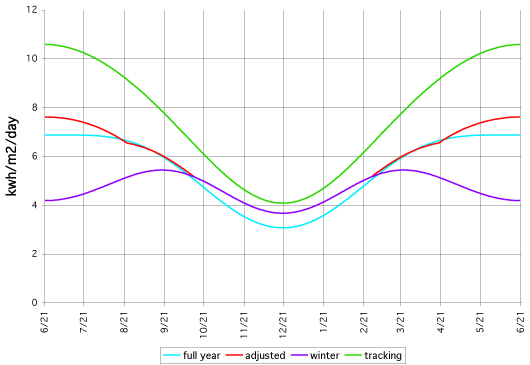
The sun’s path across the sky changes dramatically with the seasons. It’s much lower in the sky during winter and much higher during summer. For this reason, a fixed tilt angle is always a compromise.
- For Winter Maximization: You’d want a steeper angle to catch the lower winter sun. A common guideline is your latitude + 15 degrees.
- For Summer Maximization: You’d want a shallower angle to align with the higher summer sun. A common guideline is your latitude – 15 degrees.
While adjusting panels seasonally can theoretically increase output, for most residential systems, the added complexity, cost of adjustable racking, and effort often don’t justify the gains. Fixed-tilt systems are overwhelmingly common for homes, optimized for the best annual average.
| Adjustment Period | Optimal Tilt Formula (Approx.) | Estimated Output Gain Over Fixed Angle (Annually, illustrative) |
|---|---|---|
| Year-Round (Fixed) | ~ Latitude | Baseline |
| Winter (Steeper) | Latitude + 15° | 3 – 5% (if adjusted twice/year) |
| Summer (Shallower) | Latitude – 15° | 1 – 3% (if adjusted twice/year) |
| Optimal Seasonal Adjustment (Twice a year) | Winter & Summer Formulas | 5 – 10% (varies greatly by latitude and specific angles) |
For most homeowners, the slight increase in energy production from seasonal adjustments doesn’t outweigh the effort or the potential higher cost of adjustable racking. It’s often more cost-effective to install slightly more fixed panels or ensure optimal orientation.
Beyond the Ideal: Practical Solutions for Real-World Roofs
Not everyone has a perfectly south-facing roof with an ideal pitch. But don’t despair! There are still smart ways to maximize your solar output, even in less-than-ideal scenarios.
Flat Roofs: Your Secret Weapon (with a catch)
While flat roofs might seem less intuitive for solar, they actually offer a fantastic opportunity for angle optimization. Since there’s no inherent pitch, panels can be mounted on racking systems that precisely set the optimal tilt angle and orientation. This means you can often achieve a better angle than on a pitched roof.
Considerations:
- Wind Loading: Higher tilt angles on a flat roof can increase wind resistance, requiring robust racking and ballast to prevent panels from becoming kites.
- Shading: Be mindful that tilting panels on a flat roof can cause them to shade adjacent panels, especially if not spaced correctly.
- Cost: Racking for flat roofs can sometimes be more expensive than flush-mounting on a pitched roof due to the need for structural support.
East/West Facing Roofs: Making the Most of What You Have
If your roof faces east or west, don’t write off solar. While you won’t get the peak production of a south-facing array, an East/West split can actually offer unique advantages:
- Balanced Production: East-facing panels produce more in the morning, and west-facing panels produce more in the afternoon, often aligning better with typical household energy consumption patterns. This can be beneficial under time-of-use (TOU) electricity rates, where afternoon/evening power is more expensive.
- Wider Production Curve: An East/West array often produces a broader, flatter power curve throughout the day, rather than a sharp peak around noon. This can reduce reliance on grid power during shoulder hours.
Solar installers can design systems with split arrays (some panels facing east, some west) to optimize production across the day. Advanced inverter technologies like microinverters or power optimizers are particularly effective in these scenarios, as they allow each panel to operate independently, preventing one panel’s lower output from dragging down the entire array.
North-Facing Roofs: When Solar Might Not Be Right
For most of the Northern Hemisphere, installing solar panels on a true north-facing roof is generally not recommended. The sun’s angle is simply too shallow for effective energy production, leading to significantly diminished returns. In these cases, it’s essential to have realistic expectations or explore alternatives:
- Ground-Mount Systems: If you have available land, a ground-mount system allows you to achieve optimal tilt and orientation regardless of your roof’s constraints.
- Community Solar: Consider subscribing to a community solar project if rooftop solar isn’t viable.
- Energy Efficiency: Focus intensely on reducing your energy consumption through efficiency upgrades.
Shading: The Silent Power Killer
Even if your panels are at the perfect angle, shading can drastically reduce their output. A single shaded cell on a traditional string inverter system can diminish the performance of an entire string of panels. Trees, chimneys, satellite dishes, and even dormant leaves in winter can cause partial shading.

Solutions:
- Trim Vegetation: Proactively trim trees or shrubs that might cast shadows.
- Strategic Placement: Design the system to avoid known shade sources.
- Microinverters & Power Optimizers: These technologies isolate each panel, so if one panel is shaded, it doesn’t affect the performance of the others in the array. This is a game-changer for systems with potential shading issues.
Solar Tracking Systems: Is Constantly Chasing the Sun Worth It?
Imagine your solar panels acting like sunflowers, constantly turning to face the sun throughout the day. That’s the principle behind solar tracking systems.
What are Solar Trackers?
Solar trackers are mechanical devices that automatically adjust the orientation of solar panels to follow the sun’s path across the sky. There are two main types:
- Single-Axis Trackers: These systems typically rotate along one axis (usually east to west), optimizing for the sun’s daily movement. They offer moderate gains over fixed systems.
- Dual-Axis Trackers: These systems rotate along two axes (east-west and north-south), allowing them to perfectly follow the sun’s position both daily and seasonally. They provide the highest possible energy capture.
How Much More Output?
The energy gains from tracking systems are substantial:
- Single-axis trackers: Can increase energy output by 15-30% compared to a fixed-tilt system.
- Dual-axis trackers: Can boost output by an impressive 25-45% (or even more in certain latitudes) over a fixed system.
The Cost-Benefit Analysis for Homeowners
While the output gains are attractive, tracking systems come with a higher upfront cost, increased complexity, and potential maintenance requirements. For this reason, they are less common for typical residential rooftop installations and more often seen in utility-scale solar farms or ground-mounted residential systems.
| System Type | Output Increase (vs. Fixed) | Relative Cost (Installation & Maintenance) | Best Suited For |
|---|---|---|---|
| Fixed Tilt (Optimized) | Baseline | Lowest | Most residential rooftops, budget-conscious installations. |
| Single-Axis Tracker | 15 – 30% | Moderate – High | Ground mounts with ample space, higher energy needs, good sunlight. |
| Dual-Axis Tracker | 25 – 45%+ | Highest | Utility-scale projects, remote off-grid systems, very high energy demands with space. |
For the average homeowner, a well-designed fixed-tilt system often provides the best balance of cost, complexity, and energy production. However, if you have a ground-mount system and high energy consumption, a tracker could be a compelling option to explore.
Calculating Your Optimal Angle: A Step-by-Step Homeowner’s Guide
While a professional solar installer will handle the precise calculations, understanding the basics empowers you to ask informed questions and verify their recommendations.
Step 1: Determine Your Latitude
This is the foundation. You can easily find your home’s latitude using Google Maps (right-click on your location and it will show you coordinates) or any online latitude/longitude finder. Record this number.
Step 2: Assess Your Roof Pitch/Existing Tilt
If you’re installing on a pitched roof, its existing angle is a major factor. Roof pitch is usually expressed as a ratio (e.g., 6/12), but solar installers can easily convert this to degrees. If your roof’s pitch is close to your optimal latitude angle and faces south, you’re in great shape for a flush-mounted system.
Step 3: Consider Seasonal Adjustments (If Applicable)
Decide if seasonal adjustment is practical or desirable for your situation. For most residential rooftop systems, a single, optimized fixed angle for year-round production is chosen. If you have a ground mount and are comfortable making manual adjustments twice a year, you could aim for the latitude +/- 15-degree rule to boost winter and summer output, respectively.
Step 4: Account for Shading and Obstacles
Walk around your property throughout the day, in different seasons if possible. Identify any trees, chimneys, adjacent buildings, or other structures that cast shadows on your roof. Even a small amount of shade can significantly impact output. Share these observations with your installer.

Step 5: Use Online Tools/Consult an Expert
Many online solar calculators or mapping tools (like Project Sunroof) can give you a preliminary estimate of your solar potential, often taking into account your roof’s orientation and pitch. However, for a precise and reliable design, always consult a professional solar installer. They use sophisticated software that models your specific location, roof characteristics, shading patterns, and electricity consumption to design a system with the absolute best angle and layout for your unique situation.
Common Misconceptions About Solar Panel Angles
Let’s clear up some common myths that can lead to suboptimal solar performance.
- “Any angle is fine, as long as it gets sun.”
False. While some sun is better than no sun, a significant deviation from the optimal angle can lead to 20-40% or more reduction in output. Precision matters for maximizing your investment. - “Panels need to be perfectly perpendicular to the sun all day.”
Impractical for fixed systems. While this is the ideal scenario for instantaneous power, achieving it requires expensive, complex tracking systems. Fixed systems are designed to find the best compromise for average daily and annual production, balancing cost with efficiency. - “Seasonal adjustments are always worth the effort.”
Not always for small residential systems. For most homeowners, the logistical hassle, potential for error, and the relatively small gains (compared to the overall system output) often don’t make seasonal manual adjustments worthwhile. The primary goal is usually to maximize overall annual production with a single, fixed tilt. - “The higher the tilt, the more power it makes.”
False. Too steep or too shallow an angle can both reduce output. There’s a ‘sweet spot’ dictated by your latitude and the sun’s average path.
Conclusion
The angle of your solar panels isn’t just a technical detail; it’s a fundamental aspect of your system’s efficiency and your return on investment. Understanding how sun angle, latitude, orientation, and even seasonal changes impact output empowers you to make informed decisions about your solar journey.
While the goal is always to maximize direct sunlight, remember that a “perfect” angle is often a carefully calculated compromise for fixed systems. The real winning strategy involves combining optimal design with practical considerations for your specific home and energy needs. By working with a reputable solar professional, you can ensure your panels are positioned to capture every valuable ray, turning sunlight into substantial savings for years to come.
Frequently Asked Questions
Does solar panel angle really make a big difference in output?
Absolutely. Even a deviation of 15-30 degrees from the optimal angle can reduce your solar panel’s energy output by 8-20% or more annually. The angle of incidence, or how directly the sunlight hits the panel, is crucial for maximum energy absorption and efficiency.
What is the best angle for solar panels in the USA?
For most of the continental USA, the ideal fixed tilt angle for year-round maximum production is roughly equal to your geographic latitude. For example, if you’re at 35 degrees North latitude, a 35-degree tilt from horizontal is often optimal. However, the best angle also depends on your specific energy needs and whether you prioritize summer or winter output.
Is it worth it to adjust solar panels seasonally?
For most residential rooftop systems with fixed panels, seasonal adjustment isn’t typically worth the effort or added cost of adjustable racking. While it can theoretically increase output by 5-10%, the gains are often offset by the practical challenges. A single, well-chosen fixed angle optimized for annual production is usually the most cost-effective approach.
Is orientation (direction) or tilt angle more important for solar panels?
Both are critical, but for most homeowners in the Northern Hemisphere, orientation is arguably more important. A south-facing orientation, even with a slightly off-optimal tilt, will generally outperform a perfectly tilted system facing east or west over the course of a year. North-facing panels are rarely viable.
What if my roof doesn’t face south or is flat?
Don’t worry! East or west-facing roofs can still be excellent for solar, offering balanced morning/afternoon production, especially with microinverters. Flat roofs actually provide an advantage, allowing installers to use racking systems to set panels at the precise optimal tilt and orientation, regardless of the roof’s natural pitch.
Are solar tracking systems worth the investment for a homeowner?
Solar tracking systems can increase output by 15-45% compared to fixed panels, but they come with a significantly higher upfront cost and more maintenance. For most residential rooftop installations, the added expense doesn’t justify the gains. They are more commonly considered for ground-mounted systems with ample space, or for homeowners with very high energy demands where maximum output is paramount.


Post Comment