Solar Power Benefits To The Environment
Why Solar Power Isn’t Just Good, It’s Essential: Unpacking the Environmental Benefits for a Brighter Future
Feeling the weight of climate change? Worried about the air your kids breathe or the future of our natural world? You’re not alone. Many of us are looking for real, impactful solutions, and often, the answer is literally shining down on us every day: solar power.
Table of Contents
- Why Solar Power Isn’t Just Good, It’s Essential: Unpacking the Environmental Benefits for a Brighter Future
- The Core Environmental Power of Solar: Emissions and Pollution Reduced
- Eliminating Greenhouse Gas Emissions: A Climate Game-Changer
- Cleaner Air for Healthier Lives: Reducing Air Pollution
- Protecting Our Water Resources: Less Pollution, Less Consumption
- Beyond Emissions: Solar’s Broader Ecological Impact
- Conserving Finite Natural Resources
- Preserving Biodiversity and Ecosystems
- Less Waste, Cleaner Planet: Tackling Toxic Byproducts
- Addressing the Lifecycle Question: What About the “Buts”?
- Manufacturing & Installation: A Temporary Carbon Footprint
- Land Use: Smart Siting Solutions
- Recycling Solar Panels: A Growing Industry
- The Future is Bright: Solar’s Role in a Sustainable Tomorrow
- Driving Innovation and Economic Growth
- Empowering Communities and Individuals
- Embracing the Sun: A Sustainable Path Forward
For decades, we’ve powered our lives with energy sources that come with a steep environmental cost. But the shift to solar isn’t just a trend; it’s a fundamental change that’s redefining our relationship with the planet. It’s about more than just electricity; it’s about a healthier, more sustainable world for everyone. Let’s dive deep into exactly how solar power benefits our environment, making it not just a choice, but an essential step forward.
The Core Environmental Power of Solar: Emissions and Pollution Reduced
Eliminating Greenhouse Gas Emissions: A Climate Game-Changer
This is the big one, the headline benefit you hear most often, and for good reason. Our climate crisis is fueled primarily by greenhouse gas (GHG) emissions, gases like carbon dioxide (CO2), methane (CH4), and nitrous oxide (N2O) that trap heat in our atmosphere. When we burn fossil fuels like coal, oil, and natural gas for electricity, these gases pour into the air.
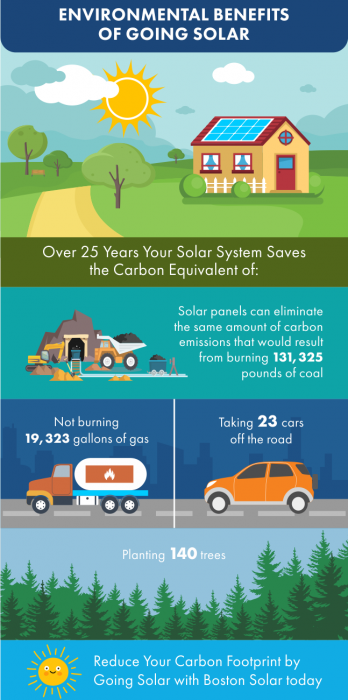
Solar photovoltaic (PV) systems, once installed, generate electricity by converting sunlight directly into power, with absolutely zero operational emissions. Think about that: clean energy, day after day, without adding to the atmospheric burden. This dramatically reduces our carbon footprint, slowing global warming and mitigating the severity of extreme weather events, from hurricanes to droughts and wildfires, that are increasingly impacting communities across the U.S. and beyond.
To put this into perspective, here’s how different energy sources stack up in terms of their lifecycle greenhouse gas emissions (including manufacturing, operation, and decommissioning):
| Energy Source | Lifecycle GHG Emissions (kg CO2e / MWh) |
|---|---|
| Coal | 900 – 1000 |
| Natural Gas | 400 – 500 |
| Solar Photovoltaic | 30 – 60 |
| Wind Power | 10 – 20 |
| Nuclear Power | 5 – 15 |
As you can see, solar power drastically outperforms fossil fuels in terms of lifetime emissions, making it a critical tool in our fight against climate change.
Cleaner Air for Healthier Lives: Reducing Air Pollution
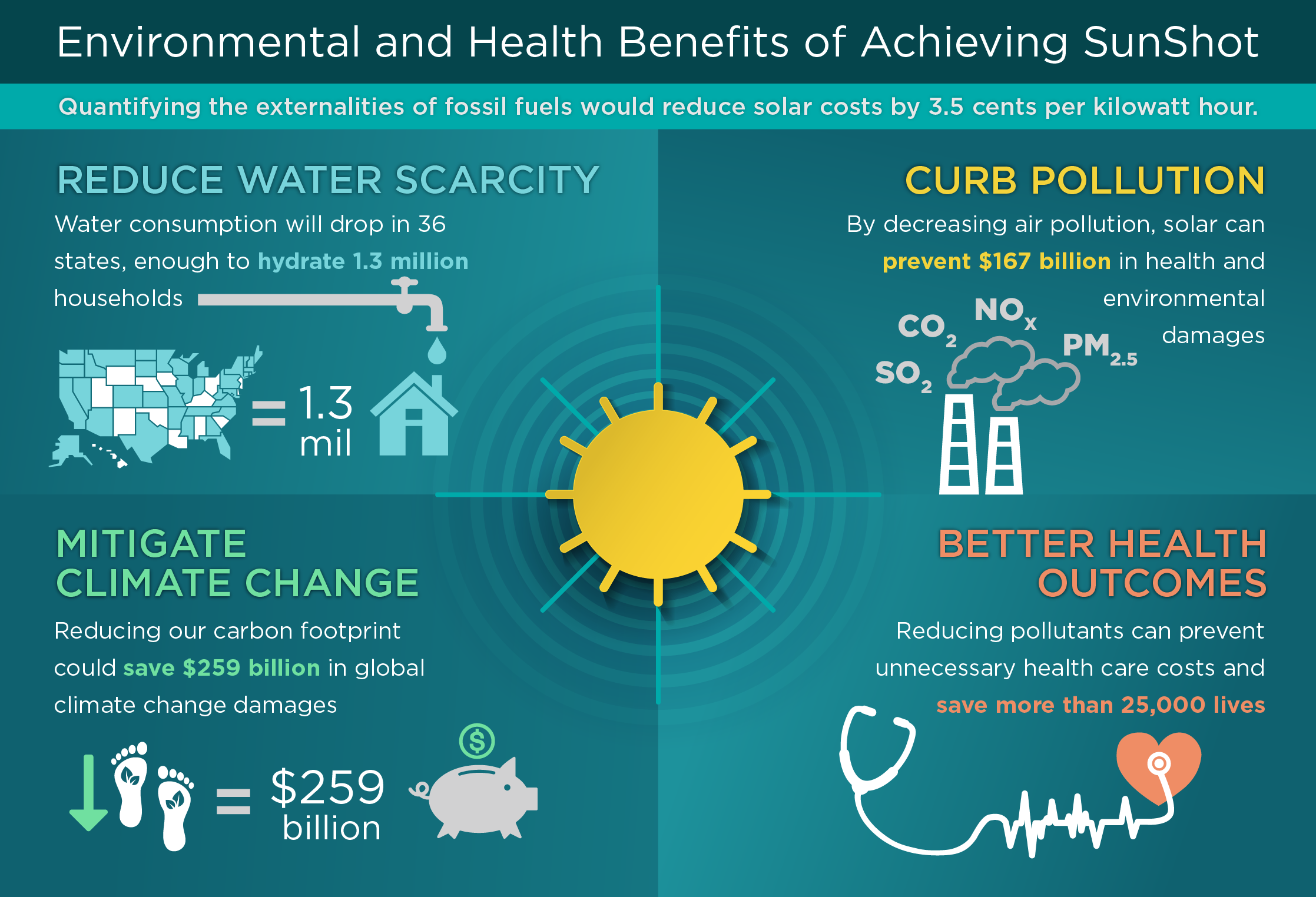
Beyond greenhouse gases, burning fossil fuels releases a host of other nasty pollutants directly into the air we breathe. These include sulfur dioxide (SO2), nitrogen oxides (NOx), particulate matter, and heavy metals like mercury. These aren’t just invisible threats; they have tangible, immediate impacts on our health and environment.
- Respiratory Issues: NOx and particulate matter contribute to smog and acid rain, aggravating conditions like asthma, bronchitis, and other respiratory diseases, particularly in urban areas and near power plants.
- Cardiovascular Health: Fine particulate matter can penetrate deep into the lungs and enter the bloodstream, leading to heart attacks, strokes, and premature death.
- Ecosystem Damage: Acid rain damages forests, acidifies lakes and streams, and deteriorates infrastructure.
By replacing fossil fuel generation, solar power directly reduces these harmful emissions. This means cleaner air, fewer smog days, and a significant improvement in public health outcomes. Imagine a future with fewer emergency room visits due to asthma attacks and a general improvement in the well-being of our communities – that’s a direct benefit of widespread solar adoption.
Protecting Our Water Resources: Less Pollution, Less Consumption
When you think of power generation, water might not be the first thing that comes to mind, but it’s critically linked. Many traditional power plants – coal, natural gas, nuclear – rely heavily on water for cooling, steam generation, and processing. This often leads to:
- Massive Water Consumption: These plants withdraw billions of gallons of water annually from rivers, lakes, and oceans. While much of it is returned, a significant portion is lost to evaporation, particularly problematic in drought-prone regions of the U.S.
- Thermal Pollution: Returned water is often warmer than the source, which can disrupt aquatic ecosystems, harming fish and other wildlife.
- Water Contamination: Mining for coal, drilling for oil and gas (especially fracking), and storing coal ash can contaminate groundwater and surface water with toxic chemicals and heavy metals.
Solar PV systems, in stark contrast, require virtually no water for electricity generation. Their primary water use is for periodic cleaning of the panels, which is minimal, especially in regions with natural rainfall. This makes solar an invaluable asset in water-stressed areas, easing pressure on finite freshwater supplies and preventing widespread aquatic pollution.
| Energy Source | Operational Water Consumption (Liters / MWh) |
|---|---|
| Coal | 1500 – 2500 |
| Natural Gas | 400 – 600 |
| Nuclear Power | 1500 – 2500 |
| Solar Photovoltaic | 0 – 20 (primarily for cleaning) |
| Wind Power | 0 |
Beyond Emissions: Solar’s Broader Ecological Impact
Conserving Finite Natural Resources
Here’s a fundamental truth: coal, oil, and natural gas are finite resources. They formed over millions of years and once we use them, they’re gone. Our relentless extraction of these resources leads to environmental destruction, from mountaintop removal mining to offshore oil spills and the constant risk of pipeline leaks.
Solar power, by contrast, taps into the ultimate renewable resource: the sun. It’s an energy source that won’t run out for billions of years. By shifting to solar, we reduce our dependency on these finite, environmentally damaging fuels, preserving precious natural landscapes and ecosystems from the ravages of extraction. This isn’t just about saving fuel; it’s about preserving the natural world itself.
Preserving Biodiversity and Ecosystems
The quest for fossil fuels often comes at a high cost to biodiversity. Land clearing for mines, drilling operations, roads, and pipelines destroys habitats, fragments ecosystems, and displaces countless species. Oil spills devastate marine life, and air pollution can acidify soils and stunt plant growth far from the source.
Solar energy helps in several ways:
- Reduced Habitat Destruction: By lessening the need for fossil fuel extraction, solar power helps protect untouched wilderness, forests, and marine environments.
- Mitigating Climate Change Impacts: As a primary driver of climate change, fossil fuels indirectly cause habitat loss, species migration, and extinction due to altered climates, sea-level rise, and extreme weather. Solar power combats this root cause.
- Responsible Land Use: While solar farms do require space, they can be sited responsibly. Think about installing panels on existing rooftops, over parking lots (creating shade!), on previously disturbed lands like brownfields, or even co-locating with agriculture (agrivoltaics) where crops can grow beneath elevated panels. These approaches minimize new habitat disruption.
Choosing solar means choosing a future where natural landscapes thrive, and diverse species have a better chance to survive and flourish.
Less Waste, Cleaner Planet: Tackling Toxic Byproducts
Traditional energy sources produce a variety of hazardous wastes:
- Coal Ash: A toxic byproduct of coal burning, often stored in massive impoundments that can leak into groundwater or catastrophically spill.
- Nuclear Waste: Highly radioactive, requiring secure storage for tens of thousands of years.
- Oil & Gas Waste: Drilling muds, produced water, and other toxic chemicals from exploration and production.
Solar panels, while they contain various materials, do not produce toxic operational waste or hazardous byproducts during electricity generation. Their primary waste concern comes at the very end of their long lifespan (typically 25-30+ years), which we’ll address next. The materials used in panels, primarily silicon and glass, are largely benign during operation, offering a stark contrast to the persistent toxic legacy of fossil fuels and nuclear fission.
Addressing the Lifecycle Question: What About the “Buts”?
No energy source is entirely without impact, and it’s important to acknowledge the full lifecycle of solar panels. Critics often raise concerns about manufacturing, land use, and recycling. Let’s tackle these head-on, because even with these considerations, solar’s environmental benefits far outweigh its drawbacks.
Manufacturing & Installation: A Temporary Carbon Footprint
Yes, manufacturing solar panels requires energy, and that energy currently often comes from a mix of sources, including fossil fuels. Extracting raw materials, purifying silicon, and assembling panels all have an associated carbon footprint. However, this is a one-time energy investment.
The key concept here is “energy payback time.” This is the amount of time a solar panel needs to operate to generate the same amount of energy that went into its manufacture. For modern solar PV panels, this payback time is typically 1-4 years. Considering panels last 25-30 years (or more!), they generate clean energy for decades after they’ve “paid back” their initial energy investment. Plus, manufacturing processes are becoming increasingly efficient and less carbon-intensive, and the factories themselves are increasingly powered by renewable energy, creating a virtuous cycle.
Land Use: Smart Siting Solutions
Large-scale solar farms do require land, and legitimate concerns can arise about potential habitat disruption or conflict with agricultural land. However, the industry is rapidly evolving with innovative solutions:
- Rooftop Solar: The most common form of residential and commercial solar, using existing infrastructure without occupying new land.
- Agrivoltaics (Agri-Solar): Combining agriculture and solar power on the same land. Elevated panels can provide shade for crops, reduce water evaporation, and allow for continued farming.
- Brownfield Development: Utilizing contaminated or industrial sites that are unsuitable for other uses, turning environmental liabilities into assets.
- Floating Solar (Floatovoltaics): Installing solar panels on bodies of water like reservoirs or quarry lakes, reducing evaporation and avoiding land use conflicts.
- Distributed Generation: Many smaller solar installations spread across communities, reducing the need for massive, centralized farms.
When comparing land use, it’s also important to consider the immense footprint of fossil fuel extraction (mines, oil fields, pipelines) and the land required for coal ash ponds or nuclear waste storage. Solar’s footprint, especially with smart siting, is often significantly lower and far less environmentally damaging over its lifecycle.
Recycling Solar Panels: A Growing Industry
With millions of panels installed globally, what happens at their end-of-life? Currently, the volume of panels reaching end-of-life is relatively small, but it’s a critical area of development. While challenges exist, the industry is actively working on scalable recycling solutions:
- Material Recovery: Solar panels are primarily glass (around 75%), aluminum (the frame), silicon, copper, and small amounts of other metals. These materials are valuable and recoverable.
- Emerging Technologies: Specialized recycling facilities are emerging that can efficiently separate and recover materials, often to a high purity, for reuse in new panels or other industries.
- Policy & Initiatives: European countries have established extended producer responsibility (EPR) programs for solar panels, and similar initiatives are gaining traction in the U.S. and elsewhere.
Compared to the truly intractable problem of nuclear waste or the toxic burden of coal ash, solar panel recycling is a solvable engineering and logistical challenge. The goal is to move towards a truly circular economy for solar, where materials are endlessly reused, minimizing waste and maximizing resource efficiency.
The Future is Bright: Solar’s Role in a Sustainable Tomorrow
Driving Innovation and Economic Growth
The solar industry isn’t just about environmental benefits; it’s a powerful engine for innovation and economic growth. In the U.S., the solar sector creates hundreds of thousands of jobs, from manufacturing and installation to research and development. This growth fosters new technologies in energy storage, grid management, and smart home systems, propelling us towards a more resilient and decentralized energy infrastructure.
This innovation also leads to continued efficiency gains and cost reductions, making solar power even more accessible and competitive, further accelerating the transition away from fossil fuels.
Empowering Communities and Individuals
Solar power democratizes energy. Homeowners can generate their own electricity, reducing their utility bills and achieving a degree of energy independence. Communities can invest in local solar projects, keeping energy dollars within the local economy and reducing reliance on distant, often volatile, fossil fuel markets.
This localized control over energy production translates directly into improved local environmental quality. Fewer power plants burning fossil fuels in populated areas mean cleaner air and water for everyone, creating healthier, more vibrant neighborhoods. It’s a tangible way for individuals and communities to take direct action against climate change and see immediate local benefits.
Embracing the Sun: A Sustainable Path Forward
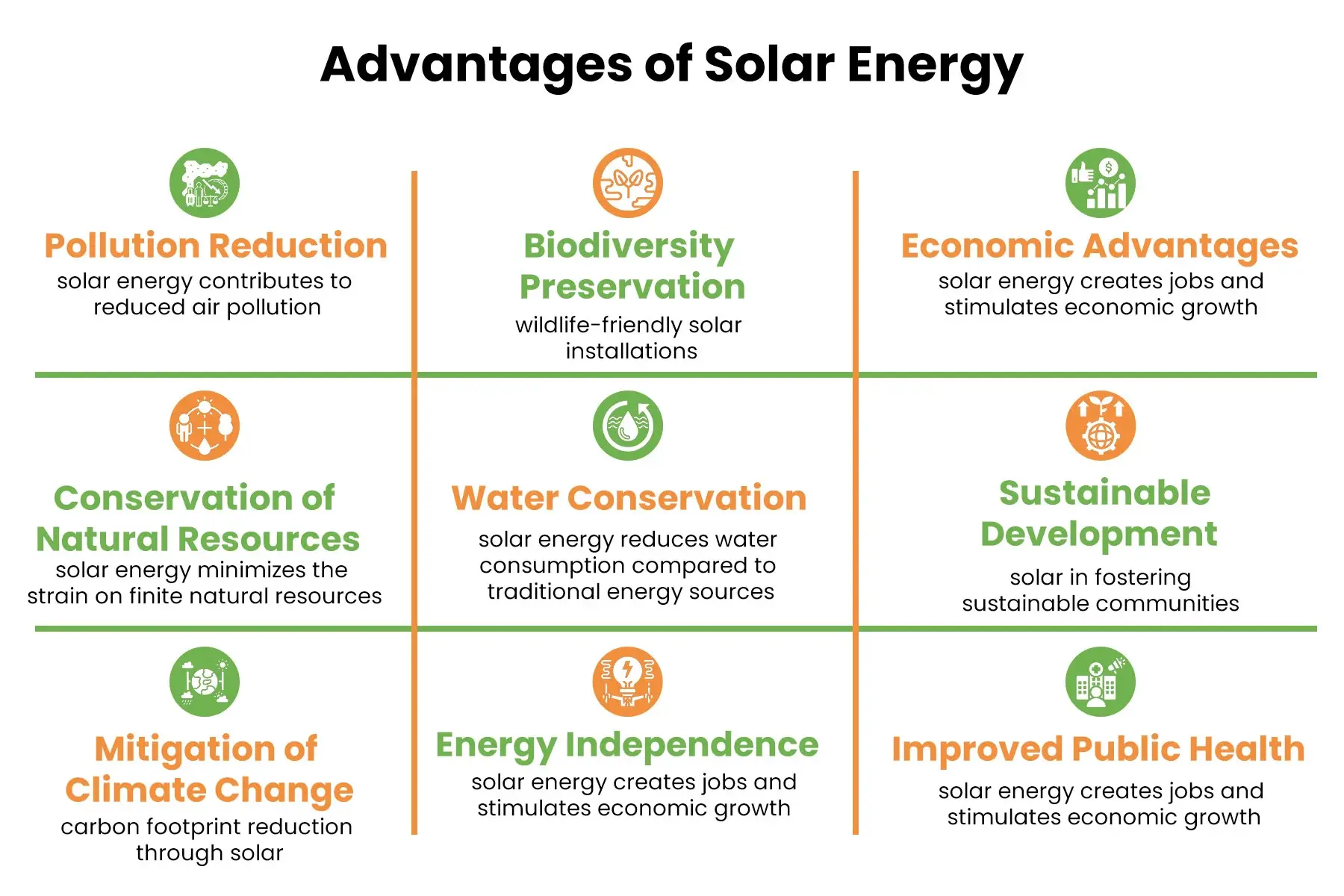
When you stack up the evidence, the environmental benefits of solar power are overwhelmingly clear and profound. From drastically cutting greenhouse gas emissions and cleaning our air and water to conserving precious natural resources and protecting biodiversity, solar is a powerhouse for positive change. Yes, there are lifecycle considerations, but the industry is actively innovating to address them, making solar an increasingly cleaner and more sustainable choice.
Choosing solar isn’t just a decision about your energy bill; it’s a statement about the kind of future you want to live in. It’s an investment in cleaner air, healthier communities, and a stable climate for generations to come. The sun offers an inexhaustible, clean solution, and by embracing it, we pave the way for a truly brighter, greener tomorrow.
”
}
Frequently Asked Questions
What are the primary environmental benefits of solar power?
The primary environmental benefits of solar power include drastically reducing greenhouse gas emissions (like CO2) which combat climate change, decreasing harmful air pollutants (like SOx and NOx) leading to cleaner air and improved public health, and significantly conserving water resources compared to traditional power generation.
Does solar power help reduce air pollution?
Absolutely. Solar panels generate electricity without burning fossil fuels, meaning they produce zero operational emissions of air pollutants such as sulfur dioxide, nitrogen oxides, and particulate matter. This leads to cleaner air, less smog, and a reduction in respiratory and cardiovascular health issues associated with air pollution.
How does solar power impact water conservation?
Solar photovoltaic (PV) systems require very little to no water for electricity generation. This is a stark contrast to fossil fuel and nuclear power plants that use vast amounts of water for cooling and steam production. By reducing reliance on these water-intensive methods, solar power helps conserve freshwater supplies, especially in drought-prone regions.
Are solar panels environmentally friendly throughout their entire lifecycle?
While manufacturing solar panels requires energy and resources, their overall lifecycle impact is overwhelmingly positive compared to fossil fuels. Modern panels have a short ‘energy payback time’ (1-4 years), meaning they generate far more clean energy over their 25-30+ year lifespan than was used to create them. The industry is also making great strides in responsible land use and developing robust recycling programs to minimize end-of-life waste.
Do solar farms take up too much land, impacting ecosystems?
While large solar farms do require space, significant efforts are being made to minimize their ecological footprint. Solutions include rooftop installations, agrivoltaics (combining solar with agriculture), developing on brownfields (previously disturbed land), and floating solar. These strategies reduce the need for new land, and the overall land impact is often less damaging than the extensive land use required for fossil fuel extraction and infrastructure.
What happens to solar panels at the end of their life?
Solar panels typically last 25-30 years or more. At the end of their life, they can be recycled. The industry is actively developing advanced recycling technologies to recover valuable materials like glass, aluminum, silicon, and copper for reuse. This aims to create a circular economy for solar panels, reducing waste and conserving resources.


Post Comment