Types Of Inverter For Solar Panels
Decoding Solar Inverters: Your Guide to Choosing the Right Type for Your Home
So, you’re considering solar panels for your home. Fantastic! It’s one of the best investments you can make for your wallet and the planet. But here’s a secret that many first-time solar buyers overlook: your solar panels are only as good as the inverter connected to them.
Table of Contents
- Decoding Solar Inverters: Your Guide to Choosing the Right Type for Your Home
- What Exactly Is a Solar Inverter, Anyway?
- The Main Types of Solar Inverters: A Head-to-Head Comparison
- 1. String Inverters: The Traditional Workhorse
- How They Work
- Ideal Scenarios
- Pros:
- Cons:
- 2. Microinverters: Panel-Level Powerhouses
- How They Work
- Ideal Scenarios
- Pros:
- Cons:
- 3. Power Optimizers: The Best of Both Worlds?
- How They Work
- Ideal Scenarios
- Pros:
- Cons:
- 4. Hybrid Inverters: Ready for the Battery Revolution
- How They Work
- Ideal Scenarios
- Pros:
- Cons:
- (Brief Mention) Off-Grid Inverters: For True Independence
- Advanced Concepts: What Else to Consider
- Understanding Maximum Power Point Tracking (MPPT)
- The Truth About Inverter Efficiency and Clipping
- Warranty and Longevity: Protecting Your Investment
- Comparing Solar Inverters Side-by-Side
- How to Choose the Best Solar Inverter for YOUR Home
- The Future of Solar Inverters
- Conclusion
Think of it this way: your panels collect the raw energy, but it’s the inverter that transforms it into the usable electricity that powers your lights, appliances, and even charges your EV. Choosing the right inverter isn’t just a technical detail; it’s a critical decision that impacts your system’s efficiency, longevity, and your overall return on investment. Get it wrong, and you could be leaving money on the table. Get it right, and you’ll maximize every ray of sunshine.
In this guide, I’ll break down the different types of solar inverters available today, their pros and cons, and help you figure out which one is the perfect match for your home and energy goals. No jargon, just clear, actionable insights.
What Exactly Is a Solar Inverter, Anyway?
At its core, a solar inverter is the brain of your solar system. Solar panels produce Direct Current (DC) electricity, but your home and the electrical grid run on Alternating Current (AC) electricity. The inverter’s primary job is to take that DC power from your panels and convert it into usable AC power.
But it does so much more than just convert electricity. A modern inverter also:
- Optimizes Power: It constantly searches for the maximum power point (MPP) from your solar panels to ensure you’re getting the most energy out of them at any given moment.
- Monitors Performance: Many inverters come with sophisticated monitoring systems, allowing you to track your system’s output, identify potential issues, and understand your energy consumption.
- Ensures Safety: Inverters have built-in safety features, like rapid shutdown capabilities, to protect your home and utility workers during power outages or emergencies.
- Communicates with the Grid: For grid-tied systems, the inverter manages the flow of electricity to and from the utility grid, ensuring seamless integration.
Without an inverter, your solar panels would just be expensive roof decorations. It’s the critical link that makes solar power work for you.
The Main Types of Solar Inverters: A Head-to-Head Comparison
When you start researching, you’ll primarily encounter four main types of inverters. Each has its unique strengths and weaknesses, making them suitable for different situations. Let’s dive in.
1. String Inverters: The Traditional Workhorse
String inverters are the oldest and most common type of solar inverter. In a system with a string inverter, solar panels are wired together in a “string,” and this entire string feeds DC electricity into one central inverter, usually located near your main electrical panel or outside your home.
How They Work
All panels in a single string act as one unit. The inverter converts the combined DC output of the string into AC power. If you have multiple sections of panels on different roof facets, you might have multiple strings feeding into the same or separate string inverters, each with its own MPPT (Maximum Power Point Tracking) input.

Ideal Scenarios
- Unshaded Roofs: Best for homes with large, unshaded roof sections where all panels receive consistent sunlight.
- Budget-Conscious Installations: Typically the least expensive inverter option upfront.
- Simpler Systems: For homeowners who don’t need granular, panel-level monitoring.
Pros:
| Advantage | Description |
|---|---|
| Cost-Effective | Generally the lowest upfront cost, making them attractive for tighter budgets. |
| Simple Installation | Fewer components on the roof, simplifying installation and reducing labor time. |
| Easy Maintenance | The central unit is easily accessible for inspection and service. |
| Reliable Technology | A well-established and proven technology with decades of use. |
Cons:
| Disadvantage | Description |
|---|---|
| “Christmas Light Effect” | The biggest drawback: if one panel in a string is shaded or underperforms, the output of the entire string is reduced to the lowest common denominator. |
| Limited Monitoring | Typically provides system-level monitoring, not individual panel performance. Identifying a specific underperforming panel can be difficult. |
| Expansion Challenges | Adding panels later can be complex as it needs to match the existing string’s voltage and current. |
| Shorter Lifespan | Generally have a shorter warranty (10-12 years) compared to panels (25 years), meaning you’ll likely replace it once. |
2. Microinverters: Panel-Level Powerhouses
Microinverters represent a significant leap in solar technology. Instead of one central inverter, each solar panel has its own dedicated microinverter attached to its back. This means the DC to AC conversion happens right at the panel level.
How They Work
Each panel operates independently. If one panel is shaded, dirty, or fails, the others continue to produce at their maximum potential, unaffected. The AC power from each microinverter is then combined and sent to your home’s electrical panel.
Ideal Scenarios
- Shaded or Complex Roofs: Perfect for roofs with varying sunlight exposure throughout the day or with multiple angles/obstructions (chimneys, vents).
- Future Expansion: Easily add more panels in the future without worrying about compatibility with existing strings.
- Granular Monitoring: Ideal for homeowners who want to see the performance of each individual panel.
Pros:
| Advantage | Description |
|---|---|
| Maximum Energy Harvest | Mitigates the “Christmas light effect” by allowing each panel to operate optimally, even with shading or performance issues on other panels. |
| Panel-Level Monitoring | Offers detailed insights into each panel’s performance, making troubleshooting easy. |
| Greater Reliability & Redundancy | If one microinverter fails, only that panel’s output is affected, not the entire system. |
| Longer Lifespan & Warranty | Typically come with longer warranties (20-25 years), matching the lifespan of your panels. |
| Enhanced Safety | Converts DC to AC at the panel, eliminating high-voltage DC runs across your roof, which is a key safety benefit for homeowners and first responders. |
Cons:
| Disadvantage | Description |
|---|---|
| Higher Upfront Cost | Generally more expensive per watt than string inverters due to the number of units required. |
| More Components on Roof | Each panel has an inverter, meaning more electronics exposed to the elements. |
| Potentially Harder to Service | If a microinverter fails, replacing it requires getting back on the roof and removing the associated panel. |
3. Power Optimizers: The Best of Both Worlds?
Power optimizers are a hybrid solution, combining some benefits of microinverters with the simplicity of a central inverter. They are often referred to as Module-Level Power Electronics (MLPEs) alongside microinverters.
How They Work
Like microinverters, power optimizers are installed on each individual solar panel. However, instead of converting DC to AC at the panel, they condition and optimize the DC power from each panel and send it to a central string inverter for the final DC to AC conversion. This means they optimize power at the panel level, but the heavy lifting of inversion still happens centrally.
Ideal Scenarios
- Partial Shading: Excellent for roofs with intermittent or partial shading, as they mitigate the “Christmas light effect” like microinverters.
- Cost-Conscious but Performance-Driven: A good middle ground if microinverters are too expensive but string inverters don’t offer enough performance optimization.
- Detailed Monitoring Desired: Offers panel-level monitoring similar to microinverters.
Pros:
| Advantage | Description |
|---|---|
| Improved Performance | Optimizes output from each panel, reducing losses from shading or panel degradation. |
| Panel-Level Monitoring | Provides granular data for each panel, simplifying fault detection. |
| Cost-Effective Optimization | Often a more affordable solution for optimization than full microinverter systems. |
| Enhanced Safety | Many power optimizer systems also include rapid shutdown capabilities at the module level. |
Cons:
| Disadvantage | Description |
|---|---|
| Two Points of Failure | You have optimizers on the roof AND a central inverter, potentially increasing system complexity. |
| Roof Service Needed | If an optimizer fails, it requires getting on the roof to replace it. |
| Proprietary Systems | Power optimizers often work only with specific brands of string inverters, limiting flexibility. |
4. Hybrid Inverters: Ready for the Battery Revolution
Hybrid inverters are becoming increasingly popular, especially as battery storage becomes more affordable and desirable. A hybrid inverter essentially combines the functions of a grid-tied solar inverter and a battery inverter into a single unit.
How They Work
A hybrid inverter can manage power from your solar panels, send excess power to the grid, draw power from the grid when needed, and also charge and discharge a home battery system. This allows for greater energy independence and often provides backup power during outages.
Ideal Scenarios
- Battery Storage Now or Later: Perfect if you plan to add a home battery system immediately or want the flexibility to do so in the future.
- Backup Power Needs: If you live in an area prone to power outages and want uninterrupted electricity.
- Time-of-Use (TOU) Rates: Can be programmed to charge batteries during off-peak hours and discharge during expensive peak hours, saving you money.
Pros:
| Advantage | Description |
|---|---|
| Battery Compatibility | Designed to work seamlessly with home battery storage systems. |
| Backup Power | Provides critical backup power during grid outages when combined with a battery. |
| Energy Management | Intelligently manages power flow between solar, battery, grid, and home loads. |
| Future-Proofing | Prepares your system for future energy independence and smart grid integration. |
Cons:
| Disadvantage | Description |
|---|---|
| Higher Cost | Significantly more expensive than standard string inverters, especially when combined with battery costs. |
| More Complex Installation | Installation is more involved due to battery integration and advanced wiring. |
| Slightly Lower Efficiency (sometimes) | Converting power multiple times (DC to AC to DC for battery, then DC back to AC for home) can introduce minor efficiency losses compared to a direct grid-tied system. |
(Brief Mention) Off-Grid Inverters: For True Independence
While hybrid inverters offer battery integration for grid-tied homes, off-grid inverters are designed for systems that are completely disconnected from the utility grid. These are robust, standalone units that manage power between solar panels, a large battery bank, and home loads, with no interaction with a public grid. They are essential for remote cabins, RVs, or homes aiming for total energy self-sufficiency.
Advanced Concepts: What Else to Consider
Beyond the basic types, there are a few technical aspects that savvy solar buyers should understand to make the most informed decision.
Understanding Maximum Power Point Tracking (MPPT)
MPPT is a crucial function of any solar inverter. Solar panels don’t always produce power at a consistent voltage and current. Factors like temperature, sunlight intensity, and shading cause their output to fluctuate. An MPPT controller’s job is to continuously monitor the voltage and current from the solar array and adjust it to find the "maximum power point" – the sweet spot where the panel generates the most power possible at that moment.
- String Inverters: Typically have one or two MPPT trackers, meaning all panels connected to that tracker are optimized as a group. If one panel in the string is shaded, the MPPT will find the best point for the *entire* string, which will be lower.
- Microinverters & Power Optimizers: Each individual microinverter or power optimizer has its own MPPT. This allows for panel-level optimization, ensuring that each panel performs at its absolute peak, regardless of what’s happening to its neighbors. This is why they excel in shaded or complex installations.
The Truth About Inverter Efficiency and Clipping
You’ll often see efficiency ratings for inverters (e.g., 97-99%). This indicates how much DC power is successfully converted to AC power, with the remainder lost as heat. Higher efficiency is always better, but most reputable brands today offer very high efficiencies.
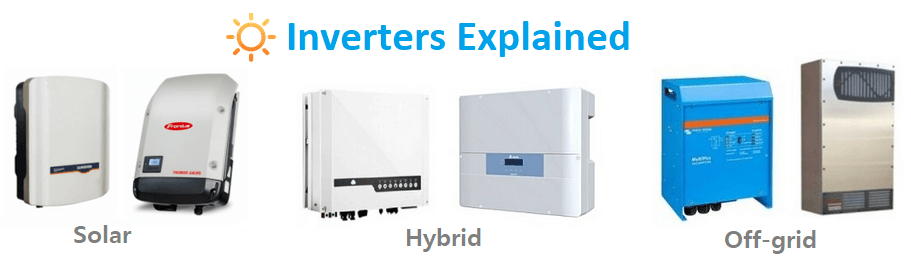
A more nuanced concept is clipping (sometimes called scalping). This occurs when your solar array produces more DC power than your inverter can handle, causing the inverter to limit, or "clip," the output to its maximum AC capacity. For example, if you have 8kW of panels and a 7.6kW inverter, on a perfectly sunny day, the inverter might limit the system’s output to 7.6kW even if the panels could momentarily produce more.
While clipping sounds bad, a small amount is often acceptable and even planned for by installers. It usually happens for short periods around solar noon and helps ensure your inverter operates within safe limits, potentially extending its lifespan. A good solar designer will balance the panel-to-inverter ratio to optimize overall production without excessive clipping losses.
Warranty and Longevity: Protecting Your Investment
Your inverter is the hardest working component in your solar system. Its lifespan and warranty are critical considerations.
- String Inverters: Typically come with a 10-12 year warranty. Since solar panels are warranted for 25 years, you’ll likely need to replace your string inverter once during your system’s lifetime.
- Microinverters: Often boast 20-25 year warranties, effectively matching the lifespan of your solar panels. This means less worry about replacements down the line.
- Power Optimizers: Usually come with 20-25 year warranties for the optimizers themselves, while the central string inverter in the system will have its own 10-12 year warranty.
- Hybrid Inverters: Warranties vary, but generally fall in the 10-15 year range, though some premium models offer longer terms.
Always check the specific warranty terms, including labor coverage for replacements, as this can add up if a unit fails.
Comparing Solar Inverters Side-by-Side
To help you visualize the differences, here’s a comprehensive comparison of the main inverter types across key decision factors:
| Feature | String Inverter | Microinverter | Power Optimizer + String Inverter | Hybrid Inverter (Grid-Tied + Battery Ready) |
|---|---|---|---|---|
| Cost (per watt) | Lowest | Highest | Medium-High | High (before battery) / Highest (with battery) |
| Shading Tolerance | Poor (affects entire string) | Excellent (panel-level optimization) | Excellent (panel-level optimization) | Depends on associated MLPEs (often paired with optimizers for battery systems) |
| Monitoring | System-level only | Panel-level | Panel-level | System and often battery/load-level (can be panel-level with optimizers/microinverters) |
| Redundancy/Reliability | Single point of failure | High (individual failure doesn’t stop others) | Medium (optimizers are redundant, central inverter is not) | Medium (central unit) to High (if paired with MLPEs) |
| Expansion Potential | Challenging (must match string) | Easy (add more panels + microinverters) | Relatively easy (add more panels + optimizers) | Good (designed for future battery integration) |
| Warranty (Inverter) | 10-12 years | 20-25 years | Optimizers: 20-25 years; Inverter: 10-12 years | 10-15 years |
| Maintenance/Service | Easiest (central unit) | Requires roof access for failures | Requires roof access for optimizer failures | Moderate (central unit, but more complex electronics) |
| Battery Storage Ready | No (requires separate battery inverter) | No (requires separate battery inverter) | No (requires separate battery inverter) | Yes (built-in) |
How to Choose the Best Solar Inverter for YOUR Home
There’s no single "best" inverter; the ideal choice depends on your specific circumstances. Here’s a thought process to guide your decision:
- Assess Your Roof and Shading:
- Is your roof large, open, and mostly unshaded throughout the day? A string inverter could be a cost-effective choice.
- Do you have chimneys, vents, trees, or neighboring buildings that cast shadows on different parts of your roof at various times? Microinverters or power optimizers will maximize your energy production.
- Do you have multiple small roof sections or dormers? MLPEs (microinverters or optimizers) are usually the better fit.
- Consider Your Budget:
- Are you looking for the lowest upfront cost? String inverters generally win here.
- Are you willing to invest more for maximum performance, longer warranties, and advanced features? Microinverters or hybrid inverters will be pricier.
- Think About Battery Storage:
- Do you want to add a home battery now or in the future for backup power or greater energy independence? A hybrid inverter is explicitly designed for this and will save you money and complexity down the line compared to adding a separate battery inverter later.
- Are you purely interested in grid-tied solar with no battery plans? Then the choice is primarily between string, micro, or optimizer systems.
- How Important is Monitoring and Troubleshooting?
- Are you happy with knowing your total system output? A string inverter is fine.
- Do you want to see exactly what each panel is producing and quickly identify any underperforming panels? Microinverters or power optimizers offer this granular detail.
- Future Expansion:
- Do you foresee needing to add more panels in the future (e.g., for an EV, a future home addition)? Microinverters and power optimizers make adding individual panels or small groups much simpler.
- Local Regulations and Utility:
- Some local building codes or utility requirements (especially for rapid shutdown) might favor certain inverter types over others. Your installer will know these details.
Ultimately, the best advice I can give you is to consult with multiple reputable solar installers. Share your goals, your budget, and the specifics of your home. A good installer will walk you through the options, explain why they recommend a particular inverter type, and provide a detailed quote reflecting those choices.
The Future of Solar Inverters
The solar inverter market is constantly innovating. We’re seeing trends towards:
- Smarter Inverters: Increasingly integrated with smart home systems, AI for predictive analytics, and advanced grid services (feeding power back during peak demand).
- Enhanced Resiliency: More focus on seamless backup power and grid-forming capabilities for increased energy independence.
- Modularity: Designs that allow for easier upgrades and integration of new technologies like EV charging or advanced home energy management.
What’s clear is that the inverter will remain the unsung hero of your solar power system, constantly evolving to make solar energy even more efficient, reliable, and intelligent.
Conclusion
Choosing the right solar inverter is a critical step in building a high-performing, reliable solar energy system for your home. While string inverters offer a cost-effective solution for ideal conditions, microinverters and power optimizers provide superior performance in challenging environments and offer greater monitoring capabilities.
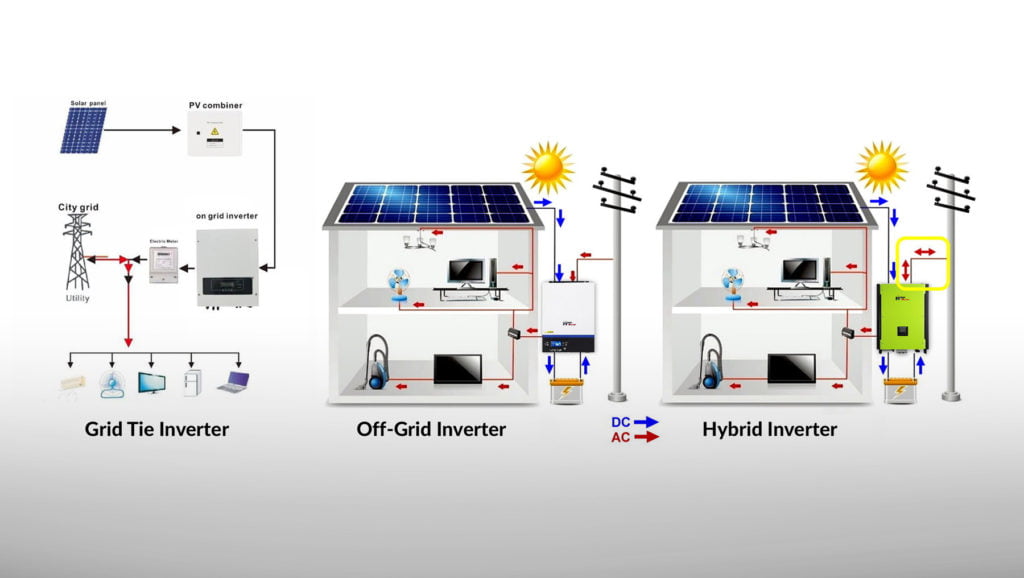
Hybrid inverters, on the other hand, are the future-forward choice for homeowners looking to integrate battery storage and achieve greater energy independence. By understanding the nuances of each type and aligning them with your specific needs, you’ll ensure your solar investment pays dividends for decades to come.
Don’t just pick a system based on panel quantity; give your inverter the attention it deserves. It’s the engine that drives your solar savings!
Frequently Asked Questions
How long do solar inverters typically last?
String inverters generally last 10-12 years, meaning you’ll likely replace one during your solar panel’s 25-year lifespan. Microinverters and power optimizers often come with 20-25 year warranties, more closely matching the panel lifespan. Hybrid inverter warranties usually range from 10-15 years.
Are microinverters worth the extra cost?
For many homeowners, yes. Microinverters offer significant benefits like panel-level optimization (great for shaded roofs), individual panel monitoring, enhanced safety, and longer warranties. While the upfront cost is higher, the increased energy harvest and peace of mind can lead to greater long-term savings and system reliability, especially in complex or shaded installations.
Can I mix different types of inverters in my solar system?
Generally, you cannot mix different *types* of inverters within the same string or array (e.g., a string inverter with microinverters on the same panels). However, it’s common to have a system with power optimizers feeding into a specific type of string inverter. If you have multiple distinct solar arrays on different parts of your property or separate systems, they could potentially use different inverter types, but this is less common for a single residential installation.
What is the best inverter for a shaded roof?
For shaded roofs, microinverters or power optimizers are generally the best choice. They optimize power at the individual panel level, preventing a shaded panel from dragging down the performance of the entire system. String inverters are less effective in shaded conditions due to their ‘Christmas light effect’.
Do solar inverters require maintenance?
Modern solar inverters are largely maintenance-free. It’s recommended to keep the area around central string or hybrid inverters clean and clear for proper ventilation. For microinverters and power optimizers on the roof, routine system monitoring usually alerts you to any performance issues, rather than requiring hands-on maintenance.
What is a ‘smart’ inverter?
A ‘smart’ inverter is an advanced inverter with enhanced communication and control capabilities. It can interact with the utility grid, respond to grid signals, and provide services like voltage regulation, reactive power support, and precise energy metering. This helps integrate renewable energy more effectively into the grid and often supports advanced home energy management.
How does an inverter affect my solar panel warranty?
The inverter itself does not directly affect the warranty of your solar panels, as they are separate components. However, choosing a reliable inverter with good performance optimization (like microinverters or optimizers) ensures your panels operate at their best, thus maximizing the energy output throughout their warranted lifespan. A faulty inverter, regardless of its type, would hinder your panels’ ability to produce power, impacting your system’s overall value.


Post Comment