Types Of Solar Batteries For Solar Panels
Beyond the Panels: A Comprehensive Guide to Solar Battery Types for Your Home
Imagine the sun shining brightly, powering your home. Now imagine that sun setting, or a sudden power outage hitting your neighborhood. Without a way to store that precious solar energy, your clean power grid becomes a pumpkin at midnight.
Table of Contents
- Beyond the Panels: A Comprehensive Guide to Solar Battery Types for Your Home
- The Core Three: Lithium-Ion, Lead-Acid, and Flow Batteries
- 1. Lithium-Ion Batteries: The Modern Powerhouse
- 2. Lead-Acid Batteries: The Reliable, Budget-Friendly Choice
- 3. Flow Batteries: Power for the Long Haul
- Beyond the Big Three: Niche and Emerging Solar Battery Technologies
- Nickel-Cadmium (Ni-Cd) Batteries: The Industrial Workhorse (Less Common for Residential Solar)
- Saltwater Batteries: The Eco-Friendly Contender
- The Future is Bright: Sodium-Ion & Solid-State Batteries
- Choosing Your Power Partner: Key Factors to Consider
- Side-by-Side: The Ultimate Solar Battery Comparison
- Making the Right Choice for Your Solar Setup
- The Bottom Line: Powering Your Future
That’s where solar batteries come in. They’re not just a luxury; they’re the critical component that transforms your solar panels from an intermittent power source into a reliable, 24/7 energy solution. Whether you’re aiming for energy independence, cutting down on grid electricity costs, or simply ensuring uninterrupted power during outages, choosing the right solar battery is paramount.
But with so many options out there, how do you pick the best one for your unique home and needs? That’s exactly what we’re here to help you figure out.
The Core Three: Lithium-Ion, Lead-Acid, and Flow Batteries
While the world of energy storage is constantly evolving, three main battery chemistries currently dominate the residential and light commercial solar market. Understanding their fundamental differences is your first step toward smart energy storage.
1. Lithium-Ion Batteries: The Modern Powerhouse
Lithium-ion batteries have revolutionized everything from smartphones to electric vehicles, and their impact on solar energy storage is no different. They are, by far, the most popular choice for new solar installations today, offering a blend of high performance and advanced features.
While there are several lithium-ion chemistries, one stands out for solar applications:
Lithium Iron Phosphate (LiFePO4/LFP): The Gold Standard
LFP batteries are a specific type of lithium-ion battery that has become the preferred choice for residential solar energy storage due to their superior safety profile and longevity compared to other lithium chemistries.
- Pros:
- High Depth of Discharge (DoD): Typically 90-100%, meaning you can use almost all of the stored energy without damaging the battery.
- Long Cycle Life: Often 6,000 to 15,000 cycles or more, translating to 15-20+ years of daily use.
- High Efficiency: Typically 95-99%, minimizing energy loss during charging and discharging.
- Excellent Power Density: Compact and lighter than lead-acid, saving space.
- Safer: Less prone to thermal runaway (overheating) compared to other lithium chemistries.
- Low Maintenance: Virtually maintenance-free.
- Cons:
- Higher Upfront Cost: Significantly more expensive initially than lead-acid batteries.
- Temperature Sensitivity: While better than other lithium types, extreme cold can reduce performance.
- Ideal Use Cases: Grid-tied homes with backup, daily cycling for self-consumption, maximizing solar savings, off-grid systems where longevity and reliability are critical.
Other Lithium-Ion Chemistries (NMC/NCA): While less common for dedicated home solar storage due to safety concerns and shorter lifespans, Nickel Manganese Cobalt (NMC) and Nickel Cobalt Aluminum (NCA) are used in some products (like certain electric vehicles with vehicle-to-home capabilities). They offer higher energy density but come with higher risks of thermal events if not managed perfectly.
Safety Considerations for Lithium: Despite LFPs being safer, all lithium-ion batteries require a sophisticated Battery Management System (BMS) to monitor voltage, temperature, and current, protecting against overcharging, over-discharging, and overheating. Always choose reputable brands with certified safety features.
2. Lead-Acid Batteries: The Reliable, Budget-Friendly Choice
Lead-acid batteries are the oldest rechargeable battery technology and have been a staple in off-grid solar systems for decades. While they don’t offer the same performance as lithium-ion, their lower upfront cost and proven reliability keep them relevant, especially for budget-conscious projects or certain off-grid scenarios.
There are three main types of lead-acid batteries used in solar:
Flooded Lead-Acid (FLA): The DIY Workhorse
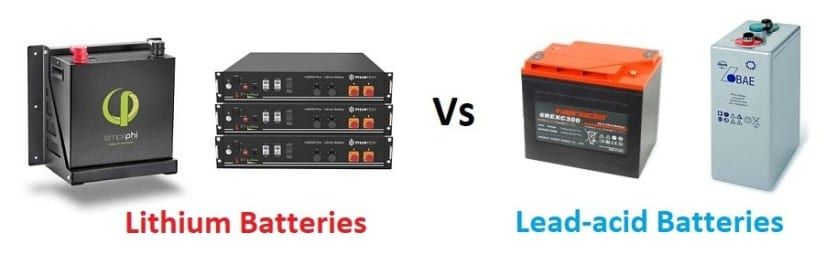
FLA batteries are what most people picture when they think of traditional car batteries, though solar versions are designed for deep cycling. They contain liquid electrolyte that covers lead plates.
- Pros:
- Lowest Upfront Cost: The most affordable option.
- Robust and Forgiving: Can tolerate some abuse (within limits).
- Recyclable: High recycling rates.
- Cons:
- High Maintenance: Require regular watering (checking electrolyte levels every 1-3 months).
- Low Depth of Discharge (DoD): Typically 30-50% to maximize lifespan, meaning you can only use a fraction of their rated capacity.
- Shorter Cycle Life: 500-2,000 cycles, significantly less than LFP.
- Vent Gasses: Release hydrogen gas during charging, requiring ventilation and specific placement in a dedicated battery box or room.
- Lower Efficiency: Around 70-85%.
- Large and Heavy: Require substantial space.
- Ideal Use Cases: Remote cabins, small off-grid systems with infrequent use, tight budgets, or situations where the user is comfortable with regular maintenance.
Sealed Lead-Acid (SLA): Less Hassle, Still Affordable
Sealed lead-acid batteries eliminate the need for watering and venting of gasses during normal operation, making them a more convenient option. They come in two primary forms:
- Absorbed Glass Mat (AGM) Batteries:
- Pros: No maintenance (sealed), no gassing (in normal operation), spill-proof, better cold-weather performance than gel, faster charging than gel.
- Cons: Moderate DoD (50-60%), sensitive to overcharging (can damage plates), shorter cycle life than LFP, higher cost than FLA.
- Ideal Use Cases: Smaller backup systems, RVs, marine applications, off-grid systems where minimal maintenance is desired but budget is a concern.
- Gel Cell Batteries:
- Pros: Excellent deep discharge capabilities (up to 70% DoD), very low self-discharge, perform well in high temperatures, extremely robust against vibration.
- Cons: Slower charge rate, very sensitive to overcharging (can create internal voids), higher cost than AGM.
- Ideal Use Cases: Very remote off-grid systems, extreme temperature environments, deep cycle applications where slow charging isn’t an issue.
General Lead-Acid Safety and Maintenance: Even sealed lead-acid batteries can vent if overcharged or damaged. All lead-acid batteries require careful charging profiles and proper ventilation. Regular checks on connections and voltage are recommended.
3. Flow Batteries: Power for the Long Haul
Flow batteries represent a distinct category in energy storage. Instead of storing energy in solid electrodes, they store it in liquid electrolytes contained in external tanks. These liquids are then pumped through a central cell to generate electricity.
- Pros:
- Extremely Long Lifespan: Can last 20+ years with minimal degradation, often rated for 20,000+ cycles.
- 100% Depth of Discharge (DoD): Can be fully discharged without damage.
- Non-Degrading Capacity: Unlike other batteries, capacity doesn’t diminish over time.
- Inherently Safe: Non-flammable electrolytes, low risk of thermal runaway.
- Highly Scalable: Capacity can be increased by simply adding larger electrolyte tanks.
- Low Maintenance: Few moving parts, generally robust.
- Cons:
- High Upfront Cost: Among the most expensive options.
- Large Footprint: Requires significant physical space for the tanks and system.
- Lower Efficiency: Typically 70-80% due to the pumping required.
- Lower Power Density: Not ideal for applications requiring rapid, high-power bursts.
- Ideal Use Cases: Large residential or commercial off-grid systems, long-duration energy storage, industrial applications, projects prioritizing extreme longevity and safety over compact size.
Beyond the Big Three: Niche and Emerging Solar Battery Technologies
While the market is dominated by lithium-ion and lead-acid, it’s worth knowing about other technologies that exist or are on the horizon.
Nickel-Cadmium (Ni-Cd) Batteries: The Industrial Workhorse (Less Common for Residential Solar)
Ni-Cd batteries are known for their robustness and ability to operate in extreme temperatures. However, their use in residential solar has declined significantly.
- Pros: Long cycle life, wide operating temperature range, very robust.
- Cons: High cost, “memory effect” (requires full discharge before recharging), toxic cadmium content (environmental concerns), lower efficiency.
- Use Cases: Niche industrial applications, emergency lighting, aviation where extreme reliability in harsh conditions is paramount. Not recommended for new residential solar.
Saltwater Batteries: The Eco-Friendly Contender
These batteries use saltwater electrolyte, making them non-toxic and composed of abundant, sustainable materials. They are a relatively new and niche technology.
- Pros: Non-toxic, fire-safe, sustainable materials, full depth of discharge.
- Cons: Lower energy density (larger physical size needed for equivalent capacity), lower efficiency, limited availability, generally higher cost than lead-acid.
- Use Cases: Eco-conscious homeowners, off-grid systems where environmental impact is a primary concern, or backup for smaller loads.
The Future is Bright: Sodium-Ion & Solid-State Batteries
- Sodium-Ion Batteries: Seen as a potential successor to lithium-ion, especially for grid-scale storage. Sodium is more abundant and cheaper than lithium, potentially leading to lower costs. Still largely in the R&D phase for residential applications.
- Solid-State Batteries: Replace liquid electrolytes with solid ones, promising even higher energy density, faster charging, and greater safety than current lithium-ion batteries. Still many years away from widespread commercialization for solar storage.
Choosing Your Power Partner: Key Factors to Consider
Now that you know the main types, how do you decide which one is right for your home? It’s not just about the battery type; it’s about matching the battery’s characteristics to your specific needs and budget.
1. Capacity (kWh): How Much Power Do You Need?
Battery capacity is measured in kilowatt-hours (kWh) and indicates how much energy the battery can store. This is the most critical factor. Consider:
- Daily Consumption: How much electricity do you use on average each day?
- Backup Duration: How long do you want your home to run during an outage (e.g., 8 hours, 24 hours, multiple days)?
- Critical Loads: Are you backing up your entire home or just essential appliances (fridge, lights, internet)?
Work with an installer to conduct a detailed load analysis to determine your actual capacity needs.
2. Depth of Discharge (DoD): How Much Can You Use?
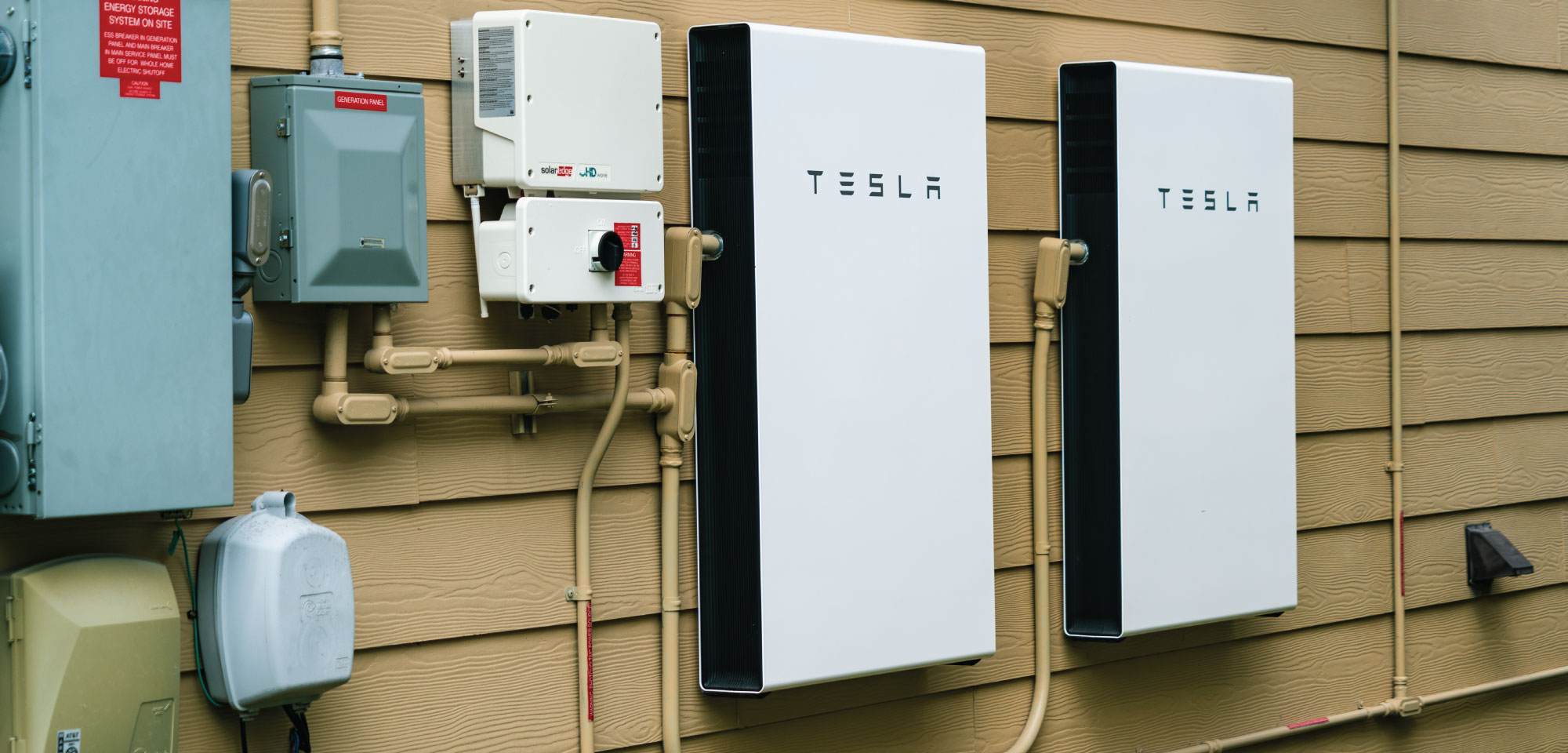
DoD refers to the percentage of a battery’s total capacity that has been discharged. A higher DoD means you can use more of the stored energy. For example, a battery with a 90% DoD and 10 kWh capacity allows you to use 9 kWh. Discharging beyond a recommended DoD shortens the battery’s lifespan. Lithium-ion batteries typically offer much higher DoD (90-100%) than lead-acid (30-70%).
3. Cycle Life: How Long Will It Last?
A “cycle” is one complete discharge and recharge of the battery. Cycle life indicates how many times a battery can be cycled before its capacity significantly degrades (e.g., to 80% of its original capacity). Higher cycle life means a longer-lasting battery. LFP batteries boast cycle lives in the thousands, far outperforming lead-acid.
4. Efficiency: Don’t Waste a Drop of Sun
Round-trip efficiency measures how much energy is put into the battery versus how much usable energy you get out. Higher efficiency means less energy loss during the charging and discharging process. LFP batteries typically have efficiencies of 95-99%, while lead-acid batteries are closer to 70-85%.
5. Cost: Upfront vs. Lifetime Value
Don’t just look at the initial purchase price. Consider the lifetime cost of ownership, which includes:
- Upfront Purchase & Installation: LFP is higher, lead-acid is lower.
- Maintenance: Lead-acid can have ongoing costs.
- Replacement: How often will you need to replace the battery? A cheaper battery with a shorter lifespan might cost more in the long run.
- Incentives: Federal tax credits (like the ITC) and state/local rebates can significantly reduce net costs.
6. Safety: Peace of Mind for Your Home
Battery safety is paramount. All batteries carry some inherent risks, but modern LFP batteries are designed with advanced safety features and Battery Management Systems (BMS) to prevent overheating or other dangerous conditions. Lead-acid batteries require ventilation due to hydrogen gas, and flow batteries are generally considered very safe due to their non-flammable electrolytes.
7. Maintenance Requirements: Hands-On or Hands-Off?
Are you willing to perform regular maintenance (like watering flooded lead-acid batteries) or do you prefer a completely hands-off solution? Lithium-ion and sealed lead-acid batteries are essentially maintenance-free.
8. Scalability: Can It Grow With Your Needs?
Can you easily add more battery capacity later if your energy needs increase? Many lithium-ion systems are modular, allowing for easy expansion. Flow batteries are also highly scalable by adding more electrolyte.
9. AC-Coupled vs. DC-Coupled Systems: Integration Matters
This refers to how your battery integrates with your solar panels and home’s electrical system:

- DC-Coupled: The battery charges directly from your solar panels’ DC electricity *before* it’s converted to AC for home use. This is generally more efficient for battery charging and often used in off-grid systems.
- AC-Coupled: The battery charges from your home’s AC electricity (which comes from your solar inverter or the grid). This is easier to retrofit to existing solar systems and often simpler to install.
The type of battery you choose, and your existing solar setup, will influence whether an AC or DC-coupled system is more suitable.
10. Warranty: Protecting Your Investment
Always review the manufacturer’s warranty. A good warranty typically covers capacity retention over a certain period or number of cycles. LFP warranties are often 10 years or more.
Side-by-Side: The Ultimate Solar Battery Comparison
Let’s put the most common and relevant solar battery types head-to-head so you can see their strengths and weaknesses at a glance.
| Feature | Lithium Iron Phosphate (LFP) | AGM Lead-Acid | Gel Lead-Acid | Flooded Lead-Acid (FLA) | Flow Batteries | Saltwater Batteries |
|---|---|---|---|---|---|---|
| Depth of Discharge (DoD) | 90-100% | 50-60% | 60-70% | 30-50% | 100% | 100% |
| Cycle Life | 6,000 – 15,000+ | 1,000 – 2,000 | 1,500 – 2,500 | 500 – 2,000 | 20,000+ | 3,000 – 5,000 |
| Typical Lifespan (Years) | 15 – 20+ | 5 – 10 | 7 – 12 | 3 – 8 | 20 – 30+ | 8 – 15 |
| Round-Trip Efficiency | 95-99% | 80-85% | 75-80% | 70-80% | 70-80% | 75-85% |
| Upfront Cost (per kWh) | High | Medium-Low | Medium-Low | Low | Very High | Medium-High |
| Lifetime Cost (LCOE) | Medium | Medium-High | Medium-High | High | Medium | Medium-High |
| Maintenance | Very Low | Low (Sealed) | Low (Sealed) | High (Watering) | Low | Low |
| Safety Concerns | Low (with BMS) | Moderate (gassing with FLA) | Moderate (gassing with FLA) | Moderate (gassing) | Very Low (non-flammable) | Very Low (non-toxic) |
| Footprint/Weight | Compact/Light | Large/Heavy | Large/Heavy | Very Large/Heavy | Very Large/Heavy | Large/Heavy |
| Ideal Use Cases | Daily cycling, grid-tie backup, off-grid | Small backup, RVs, budget off-grid | Remote off-grid, harsh temps | Budget off-grid, infrequent use | Large-scale storage, commercial, extreme longevity | Eco-conscious, small backup |
Making the Right Choice for Your Solar Setup
It’s clear there’s no single “best” battery; the ideal choice depends entirely on your priorities, budget, and energy goals. Here are some scenarios to help you think about which battery might be right for you:
- You Want the Best Overall Performance and Longevity for Daily Use and Backup: Go with Lithium Iron Phosphate (LFP). It’s the premium choice for reliability, efficiency, and a long lifespan, making it an excellent investment for most homeowners looking to maximize their solar self-consumption and ensure robust backup.
- You’re On a Tight Budget but Need Backup Power: Consider AGM or Gel Lead-Acid batteries. While they require more capacity for the same usable energy and have a shorter lifespan, their lower upfront cost can make them accessible for essential backup loads. If you’re willing to do the maintenance, Flooded Lead-Acid is the cheapest entry point.
- You Need Extreme Reliability for Off-Grid Living, Cost No Object: For true energy independence and maximum peace of mind, a well-sized LFP system or even a large-scale Flow Battery setup would be ideal. They offer deep cycling, long life, and robust performance.
- You Prioritize Eco-Friendliness and Sustainability Above All Else: While still developing, Saltwater batteries offer a non-toxic, sustainable alternative for those looking to minimize their environmental footprint, albeit with some trade-offs in energy density and efficiency.
Ultimately, the best way to make an informed decision is to consult with a reputable solar energy professional. They can assess your energy consumption, discuss your specific goals (backup, self-consumption, off-grid), and design a comprehensive solar-plus-storage system tailored to your home.
The Bottom Line: Powering Your Future
Integrating batteries with your solar panels is no longer a luxury for the privileged few; it’s becoming a fundamental part of a resilient, independent, and sustainable energy future. The right battery type will seamlessly store your solar bounty, provide reliable power when the grid falters, and significantly enhance your overall energy independence.
By understanding the nuances of Lithium-ion, Lead-acid, and Flow batteries, alongside the critical factors like capacity, DoD, cycle life, and cost, you’re empowered to make a choice that truly serves your home’s energy needs for years to come. Don’t just generate power; store it, manage it, and take control of your energy destiny.
Frequently Asked Questions
What are the main types of solar batteries available for residential use?
The three primary types of solar batteries for residential use are Lithium-ion (specifically Lithium Iron Phosphate or LFP), Lead-Acid (including Flooded, AGM, and Gel), and to a lesser extent, Flow Batteries for larger applications. LFP is currently the most popular due to its high efficiency, long lifespan, and safety.
Which type of solar battery is best for my home?
The ‘best’ battery depends on your specific needs, budget, and energy goals. LFP batteries offer the best overall performance, longevity, and efficiency for daily cycling and backup. Lead-acid batteries are a more budget-friendly option for essential backup or infrequent use. Flow batteries are ideal for very large-scale, long-duration storage where space is not a concern.
What is Depth of Discharge (DoD) and why is it important?
Depth of Discharge (DoD) indicates the percentage of a battery’s total capacity that has been used. A higher DoD means you can utilize more of the stored energy. It’s important because frequently discharging a battery beyond its recommended DoD can significantly shorten its lifespan. LFP batteries typically allow for 90-100% DoD, while lead-acid batteries are often limited to 30-70%.
How long do solar batteries typically last?
Battery lifespan is measured in ‘cycle life’ (how many times it can be fully discharged and recharged) and years. LFP batteries can last 15-20+ years (6,000-15,000+ cycles). Lead-acid batteries typically last 3-10 years (500-2,500 cycles), depending on the type and how they are used. Flow batteries boast the longest lifespans, often 20-30+ years.
Are solar batteries safe for home installation?
Yes, modern solar batteries are designed with safety in mind. LFP batteries, for example, have advanced Battery Management Systems (BMS) to prevent overheating and overcharging. Lead-acid batteries, especially Flooded types, require proper ventilation due to hydrogen gas. Always ensure professional installation and choose reputable brands that comply with safety standards.
What is the difference between AC-coupled and DC-coupled battery systems?
DC-coupled systems charge the battery directly from the solar panels’ DC electricity before it’s converted to AC for home use, often being more efficient for battery charging. AC-coupled systems charge the battery from your home’s AC electricity (after it’s been converted by your solar inverter or from the grid). AC-coupled systems are generally easier to retrofit to existing solar setups.
Can I add batteries to an existing solar panel system?
Yes, it is typically possible to add batteries to an existing solar panel system, especially with an AC-coupled battery solution. This allows the battery to integrate with your current setup without needing to reconfigure your entire solar array. However, it’s crucial to consult with a solar professional to assess compatibility and design the optimal integration.


Post Comment