What Is A Power Purchase Agreement Solar
What is a Solar Power Purchase Agreement (PPA)? Your Guide to Going Solar for Less
Tired of watching your electricity bills creep higher every year? Dreaming of solar panels but daunted by the hefty upfront investment? You’re not alone. For many, the idea of paying tens of thousands of dollars out-of-pocket for a solar system is simply not feasible.
Table of Contents
- What is a Solar Power Purchase Agreement (PPA)? Your Guide to Going Solar for Less
- The Core Concept: How a Solar PPA Works in Plain English
- The Three Key Players: You, the Developer, and the Sun
- From Installation to Electricity: A Step-by-Step Breakdown
- Ownership Matters: Who Owns What, and Why It’s Crucial
- Unpacking the Benefits: Why Property Owners Choose a Solar PPA
- Zero Upfront Costs: Solar Without the Sticker Shock
- Predictable Energy Bills: Locking in Your Rate
- Maintenance-Free Solar: The Developer Handles Everything
- Environmental Impact: Going Green Effortlessly
- No Performance Risk: Pay Only for What’s Produced
- Understanding the Downsides: Potential Challenges of a Solar PPA
- No Ownership, No Incentives: Missing Out on Tax Credits
- Contract Length and Termination: Long-Term Commitments
- Potential for Escalator Clauses: Rates That Rise
- System Aesthetics and Property Value: Considerations for Homeowners
- Transferability: Selling Your Home with a PPA
- Solar PPA vs. Solar Lease vs. Outright Purchase: Which Path is Right for You?
- The “$0 Down” Options: PPA vs. Lease
- The Ownership Advantage: Buying Your System
- Key Terms and Clauses to Understand in a Solar PPA Contract
- Escalator Rate: What to Look For
- Production Guarantee: Your Assurance
- Termination Clauses: Exiting the Agreement
- System Transferability: When You Move
- Maintenance and Monitoring: Who Does What
- Purchase Option: The Path to Ownership
- Is a Solar PPA Right for You? Factors to Consider
- Your Financial Situation: Upfront Costs vs. Long-Term Savings
- Your Energy Consumption: Is Solar Worth It?
- Your Property: Roof Suitability and Local Regulations
- Your Long-Term Plans: Staying Put or Moving Soon?
- The Future of Solar PPAs: Trends and Innovations
- Community Solar PPAs
- PPAs with Battery Storage
- Corporate and Commercial PPAs
- Conclusion: Is a Solar PPA Your Path to Green Energy Savings?
This is where the Solar Power Purchase Agreement (PPA) comes in. Think of it as a game-changer, allowing you to enjoy the benefits of solar energy—clean power and potentially lower monthly costs—without actually owning the panels or paying for their installation. It’s a popular, zero-down way for homeowners and businesses across the USA to go green.
At its heart, a PPA is a financial arrangement where a third-party developer installs, owns, and maintains a solar energy system on your property. You, the customer, simply agree to purchase the electricity generated by that system at a predetermined rate, often lower than your utility company’s rate. Pretty sweet, right?
The Core Concept: How a Solar PPA Works in Plain English
A solar PPA simplifies going solar by removing the biggest barrier: the initial cost. Instead of buying the system yourself, you’re buying the *power it produces. Let’s break down the mechanics.
The Three Key Players: You, the Developer, and the Sun
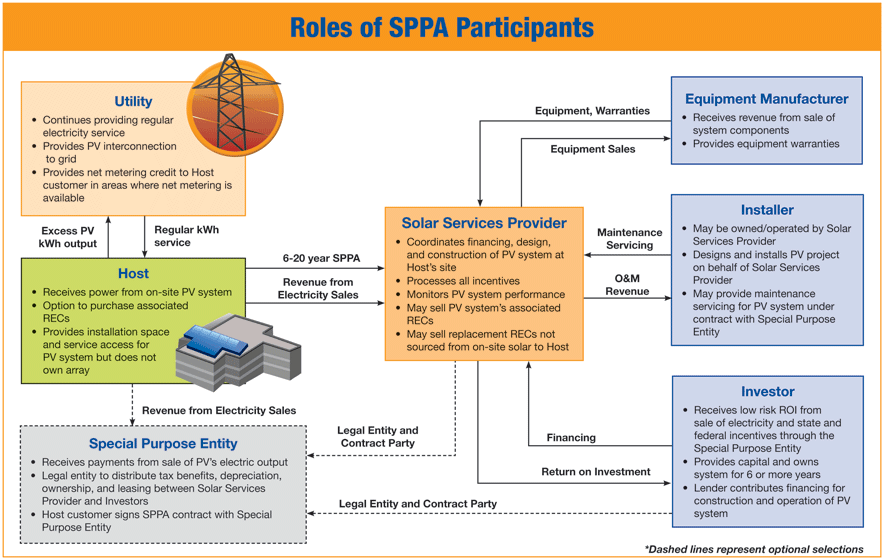
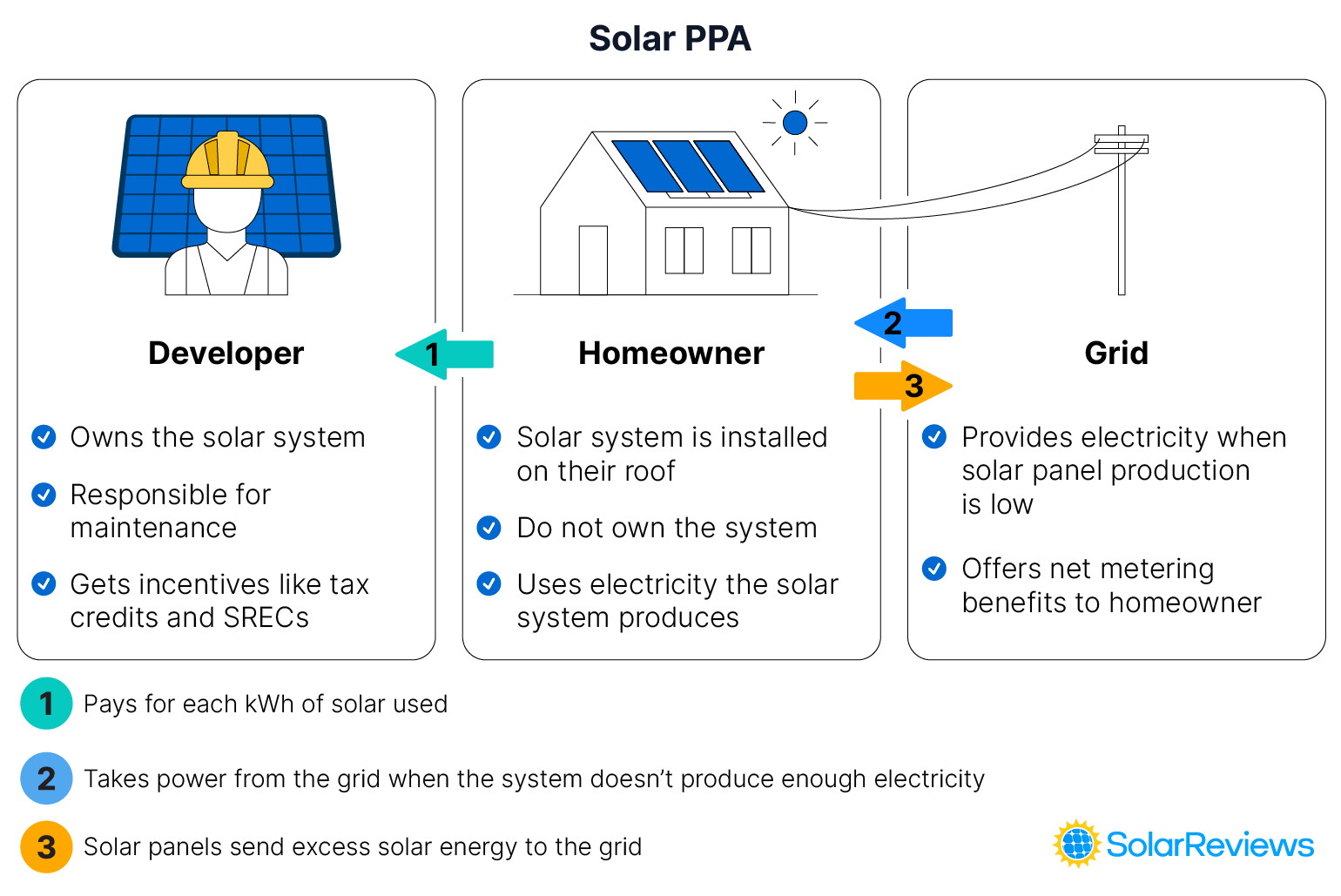
- You (The Host Customer): You provide the space for the solar panels (usually your roof or property) and agree to buy the electricity generated.
- The Solar Developer (Third-Party Owner): This company finances, designs, installs, owns, operates, and maintains the solar energy system on your property. They are the experts, handling all the technical stuff.
- The Sun (The Energy Source): Its rays power the panels, generating the clean electricity you’ll use.
From Installation to Electricity: A Step-by-Step Breakdown
- Assessment & Agreement: A solar developer evaluates your property’s suitability for solar (roof space, sun exposure, local regulations) and estimates your potential energy savings. If it looks good, you’ll sign a PPA contract, typically ranging from 15 to 25 years.
- Installation & Connection: The developer installs the solar panels on your property at no cost to you. Once installed, the system is connected to your property’s electrical system and, usually, to the local utility grid.
- Generating Power: The solar panels begin converting sunlight into electricity. This clean energy powers your home or business.
- Billing & Savings: You pay the solar developer a fixed (or incrementally increasing) rate for the electricity the solar system produces. This PPA rate is often lower than what you’d pay your traditional utility company, leading to monthly savings.
- Maintenance & Monitoring: The developer is responsible for all maintenance, repairs, and monitoring of the system’s performance for the entire contract term. If a panel breaks or efficiency drops, it’s their problem, not yours.
Ownership Matters: Who Owns What, and Why It’s Crucial
Under a PPA, the solar developer retains full ownership of the solar equipment. This is a critical distinction. Because they own the system, they are entitled to all the financial incentives associated with solar ownership, such as federal tax credits (like the Investment Tax Credit, or ITC), state rebates, and renewable energy credits (RECs).
For you, the host customer, this means you don’t receive these direct financial incentives. However, the developer factors these incentives into the PPA rate they offer you, allowing them to provide a competitive price for the electricity. It’s a trade-off: you get no upfront costs and no maintenance headaches, but you also forgo the ownership benefits.
Unpacking the Benefits: Why Property Owners Choose a Solar PPA
The appeal of solar PPAs is strong, particularly for those looking to embrace renewable energy without the typical financial burden or operational responsibilities. Let’s explore the key advantages:
Zero Upfront Costs: Solar Without the Sticker Shock
This is arguably the biggest draw. With a PPA, you don’t need to purchase the solar panels, inverters, or mounting hardware. The developer covers all the design, permitting, equipment, and installation costs. This means you can start generating clean energy and potentially saving money on your utility bill from day one, without a major capital outlay.
Predictable Energy Bills: Locking in Your Rate
Many PPAs offer a fixed per-kilowatt-hour (kWh) rate for the electricity generated, or a rate that increases at a predictable, modest percentage each year (often 1-3%). This predictability helps shield you from the fluctuating, and often rising, rates charged by traditional utility companies. You gain a clearer picture of your energy expenses for years to come.
Maintenance-Free Solar: The Developer Handles Everything
Solar systems are generally robust, but like any technology, they can require maintenance or repairs. With a PPA, the developer is responsible for all monitoring, cleaning, repairs, and insurance for the system. If an inverter fails or a panel needs replacement, you make a call, and they take care of it—at no extra cost to you.
Environmental Impact: Going Green Effortlessly
You get to reduce your carbon footprint and contribute to a cleaner environment without the complexities of system ownership. It’s an easy way to support renewable energy and showcase your commitment to sustainability.
No Performance Risk: Pay Only for What’s Produced
In most PPA structures, you only pay for the actual electricity generated by the solar panels. If the system underperforms due to weather, shading (unlikely if designed correctly), or equipment issues, you simply pay less for that month’s solar power. The financial risk of system performance rests with the developer.
Understanding the Downsides: Potential Challenges of a Solar PPA
While PPAs offer significant benefits, they aren’t without their drawbacks. It’s crucial to understand the potential challenges before signing on the dotted line.
No Ownership, No Incentives: Missing Out on Tax Credits
Because you don’t own the system, you’re not eligible for the valuable federal solar Investment Tax Credit (ITC), state rebates, or other local incentives designed for system owners. These incentives can significantly reduce the net cost of purchasing a system outright. While the PPA rate is discounted because the developer captures these, you don’t directly benefit from them.
Contract Length and Termination: Long-Term Commitments
Solar PPA contracts are typically long-term commitments, often 15 to 25 years. Early termination can be costly, often requiring you to purchase the system outright at its fair market value or pay a substantial fee. This lack of flexibility can be a concern if your energy needs change drastically or if you plan to move.
Potential for Escalator Clauses: Rates That Rise
Many PPAs include an “escalator clause,” meaning the rate you pay per kWh increases by a small percentage (e.g., 1-3%) annually. While this allows the developer to account for inflation and operational costs, it means your solar rate isn’t perfectly fixed. It’s vital to compare this escalator rate against the historical increase of your utility’s rates. Sometimes, utility rates jump much higher, making the PPA escalator seem modest, but it’s a factor to consider.
System Aesthetics and Property Value: Considerations for Homeowners
While solar can boost property value, some homeowners worry about the visual impact of panels on their roof. Under a PPA, the developer dictates the system’s design and installation. You also don’t own the asset, which can sometimes complicate property appraisals, though this is becoming less common as PPAs gain acceptance.
Transferability: Selling Your Home with a PPA
If you sell your home before the PPA contract ends, the agreement typically needs to be transferred to the new homeowner. While many PPA providers have streamlined this process, it can sometimes add an extra layer of complexity or delay to a home sale. The new buyer must qualify and agree to assume the PPA terms. If they don’t, you might be required to buy out the system or pay an early termination fee.
Solar PPA vs. Solar Lease vs. Outright Purchase: Which Path is Right for You?
When considering solar, you generally have three main financing options. Understanding the differences is key to making an informed decision for your unique situation.
The “$0 Down” Options: PPA vs. Lease
Both PPAs and solar leases allow you to go solar with little to no upfront cost, but they differ in what you’re actually paying for:
- Solar PPA (Power Purchase Agreement): You pay for the electricity generated by the panels. Your monthly bill varies based on how much power the system produces and you consume.
- Solar Lease: You pay a fixed monthly fee to ‘rent’ the solar equipment. Your payment doesn’t directly fluctuate with how much electricity the system produces; it’s a set lease payment, much like a car lease.
Both models mean the third party owns and maintains the system, and they retain the solar incentives. The PPA offers a bit more flexibility in that you only pay for what’s produced, while a lease is a consistent monthly fee regardless of production (though performance guarantees are often part of lease agreements).

The Ownership Advantage: Buying Your System
Purchasing your solar system outright (cash or solar loan) is the third, fundamentally different approach. Here’s a comparison to help clarify:
| Feature | Solar PPA | Solar Lease | Outright Purchase (Cash/Loan) |
|---|---|---|---|
| Upfront Cost | $0 | $0 (or very low) | High (Cash) or Financing Costs (Loan) |
| System Ownership | Developer | Developer | You |
| Payment Structure | Pay per kWh generated (variable) | Fixed monthly payment (lease fee) | One-time payment (cash) or fixed monthly loan payment |
| Maintenance & Repairs | Developer’s responsibility | Developer’s responsibility | Your responsibility |
| Eligibility for Incentives (ITC, RECs) | No (developer claims) | No (developer claims) | Yes (you claim) |
| Potential for Savings | Moderate, immediate savings vs. utility | Moderate, immediate savings vs. utility | Highest long-term savings |
| Contract Length | 15-25 years | 15-25 years | None (ownership) |
| Property Value Impact | Generally positive, but may complicate sale | Generally positive, but may complicate sale | Highest positive impact, clearer asset |
Key Terms and Clauses to Understand in a Solar PPA Contract
Before you sign a PPA, it’s critical to review the contract thoroughly. Don’t be afraid to ask questions. Here are some of the most important clauses and terms to understand:
Escalator Rate: What to Look For
As mentioned, many PPAs include an annual escalation rate. This is the percentage by which your per-kWh rate will increase each year. A common range is 1% to 3%. It’s important to understand this rate and compare it against historical utility rate increases in your area. A lower escalator rate is generally better, as it keeps your long-term energy costs more predictable and affordable.
Production Guarantee: Your Assurance
Some PPA contracts include a production guarantee, which specifies the minimum amount of electricity the solar system is expected to generate annually. If the system underperforms below this guarantee (not due to your actions, like adding shade), the developer might compensate you or offer credits. This protects you from a consistently underperforming system.
Termination Clauses: Exiting the Agreement
Understand the conditions under which the PPA can be terminated early, and what the associated costs would be. This often involves buying the system at its fair market value or paying a significant termination fee. Be clear on these terms, especially if you anticipate changes in your living or business situation.
System Transferability: When You Move
If you sell your property, the PPA will need to be transferred to the new owner. The contract should clearly outline this process. Key questions include: Will the new owner need to qualify? What happens if they don’t want to assume the PPA? What are your obligations if the transfer falls through?
Maintenance and Monitoring: Who Does What
While the developer is generally responsible for maintenance, the contract should clearly define the scope of their responsibilities. This includes monitoring system performance, routine cleaning (if any), and repairs. Ensure there’s a clear communication channel and response time for issues.
Purchase Option: The Path to Ownership
Some PPAs offer an option to purchase the solar system at predetermined intervals (e.g., after 5, 10, or 15 years) or at the end of the contract term. This allows you to eventually take ownership if you wish, often at a discounted rate based on the system’s depreciated value. This can be a valuable clause for those who want the initial zero-down benefit but aspire to full ownership later.
Is a Solar PPA Right for You? Factors to Consider
Deciding on a solar PPA, or any solar financing, involves weighing your personal circumstances and priorities. Here are key questions to ask yourself:
Your Financial Situation: Upfront Costs vs. Long-Term Savings
- Do you have significant upfront capital to invest? If yes, purchasing outright or with a loan might offer better long-term financial returns due to incentives and full ownership.
- Are you looking for a zero-down option to reduce immediate costs? If so, a PPA (or lease) is ideal.
- Are you comfortable with a long-term contract? PPAs are typically 15-25 years.
Your Energy Consumption: Is Solar Worth It?
- How high are your current electricity bills? The higher your current bills, the more potential savings a PPA can offer by locking in a lower rate.
- Is your energy consumption relatively stable? PPAs are most beneficial when your solar production closely matches your consumption.
Your Property: Roof Suitability and Local Regulations
- Does your roof have sufficient sun exposure? Shading from trees or other buildings will reduce solar production.
- Is your roof in good condition? Developers typically require a solid roof structure for installation. If your roof needs replacing soon, it’s best to do that before* solar installation.
- Are PPAs common and well-regulated in your state or municipality? Some areas have more robust PPA markets than others.
Your Long-Term Plans: Staying Put or Moving Soon?
- Do you plan to stay in your home or business location for the majority of the PPA term? The longer you stay, the more you benefit from the predictable rates and savings.
- If you plan to move, how comfortable are you with the PPA transfer process? While usually smooth, it adds a step to selling your property.
The Future of Solar PPAs: Trends and Innovations
The solar PPA landscape is continuously evolving, adapting to new technologies and market demands. Here’s a glimpse into current and future trends:
Community Solar PPAs
For those who can’t install solar on their own property (e.g., renters, apartment dwellers, homes with shaded roofs), community solar PPAs offer a solution. You subscribe to a share of a larger, offsite solar farm and receive credits on your electricity bill for the power generated by your share, often at a discounted rate. It’s a way to participate in solar without direct rooftop installation.
PPAs with Battery Storage
The integration of battery storage with solar PPAs is becoming more common. This allows the host customer to store excess solar energy generated during the day and use it during peak evening hours or during a power outage. This enhances energy independence and can lead to even greater savings, especially in areas with time-of-use (TOU) utility rates.
Corporate and Commercial PPAs
While often associated with residential customers, PPAs are also a massive driver for commercial and industrial solar adoption. Businesses leverage PPAs to meet sustainability goals, stabilize energy costs, and avoid large capital expenditures, contributing to significant growth in large-scale renewable projects.
Conclusion: Is a Solar PPA Your Path to Green Energy Savings?
A Solar Power Purchase Agreement offers an attractive, zero-down pathway to harness the power of the sun. It eliminates the upfront costs and maintenance worries of solar ownership, providing predictable electricity rates and immediate environmental benefits. While you won’t claim the direct tax incentives, the developer’s ability to do so allows them to offer you competitive rates, often lower than your traditional utility.
However, it’s essential to approach a PPA with a clear understanding of its long-term contractual nature, the potential for escalator clauses, and the implications for selling your property. By carefully evaluating your needs, comparing options, and scrutinizing contract terms, you can determine if a solar PPA is the smart, sustainable choice for your home or business.
Ultimately, the best solar financing option is the one that aligns with your financial goals, lifestyle, and commitment to clean energy. A PPA makes solar accessible, and for many, that accessibility is worth its weight in sunshine.
Frequently Asked Questions
What exactly is a Solar Power Purchase Agreement (PPA)?
A Solar PPA is a financial contract where a third-party developer installs, owns, and maintains a solar panel system on your property at no upfront cost to you. In return, you agree to purchase the electricity generated by that system at a predetermined rate, which is often lower than your utility company’s standard rates.
Do I own the solar panels with a PPA?
No, under a Solar PPA, the third-party developer retains full ownership of the solar panel system. You are essentially paying for the electricity the system produces, not for the ownership of the equipment itself.
What are the main benefits of a Solar PPA?
The primary benefits include zero upfront installation costs, predictable monthly energy bills (often with an escalator clause), and no responsibility for maintenance or repairs. The developer handles everything, and you simply pay for the clean energy you consume.
What are the potential drawbacks of a Solar PPA?
Drawbacks can include not being eligible for solar tax credits or incentives (as the developer claims them), being locked into a long-term contract (typically 15-25 years), and potential complexities when selling your property, as the PPA must be transferred to the new owner.
How does a Solar PPA differ from a solar lease?
With a Solar PPA, you pay for the actual electricity generated by the panels (a variable cost). With a solar lease, you pay a fixed monthly fee to ‘rent’ the solar equipment, regardless of the exact production. Both are zero-down options where a third-party owns the system.
Will a Solar PPA affect the value or sale of my home?
Solar installations generally add value to a home. However, because the PPA is a long-term contract tied to the property, it must be transferred to the new homeowner upon sale. This process is usually streamlined by PPA providers but can sometimes add an extra step to the transaction.
Are there options to purchase the system later with a PPA?
Many PPA contracts include a purchase option, allowing you to buy the solar system outright from the developer at specific intervals (e.g., after 5, 10, or 15 years) or at the end of the contract term, often at a depreciated value. This provides a path to eventual ownership.


Post Comment