What Is Solar Eclipse For Class 5
What is a Solar Eclipse? Your Super Cool Guide for Class 5 Scientists!
Hey there, future astronomers and curious minds! Have you ever seen something truly amazing happen in the sky, something that makes you gasp and point? Well, get ready, because we’re about to explore one of nature’s most spectacular sky shows: a solar eclipse! It’s like the Sun, Moon, and Earth decide to play a giant game of hide-and-seek, and we get a front-row seat.
Table of Contents
- What is a Solar Eclipse? Your Super Cool Guide for Class 5 Scientists!
- The Big Idea: What Exactly is a Solar Eclipse?
- Why Don’t We Have a Solar Eclipse Every Month? The Moon’s Tilted Dance!
- The Three Amazing Kinds of Solar Eclipses
- Total Solar Eclipse: The Sun Disappears Completely!
- Partial Solar Eclipse: A Bite Out of the Sun!
- Annular Solar Eclipse: The Ring of Fire!
- Solar Eclipse vs. Lunar Eclipse: Spot the Difference!
- Eye Safety First! How to Watch a Solar Eclipse Safely
- 1. Use Certified Solar Eclipse Glasses
- 2. Pinhole Projectors: A Safe and Fun DIY Method!
- What NOT to Use:
- Fun Facts About Solar Eclipses for Young Astronomers
- Ready for the Next Big Sky Show?
Imagine for a moment: the bright, shining Sun, the familiar Moon, and our very own Earth, all doing a cosmic dance. Sometimes, just sometimes, they line up in a very special way that creates a stunning, temporary darkness in the middle of the day. That’s a solar eclipse, and it’s super cool!
In this guide, made just for Class 5 scientists like you, we’re going to uncover:
- What a solar eclipse truly is and how it happens.
- Why we don’t see one every single month.
- The three different kinds of solar eclipses you might hear about.
- How solar eclipses are different from lunar eclipses.
- And, most importantly, how to watch one safely so you don’t hurt your eyes!
So, grab your imaginary telescope (and maybe a snack!), and let’s dive into the incredible world of solar eclipses!
The Big Idea: What Exactly is a Solar Eclipse?
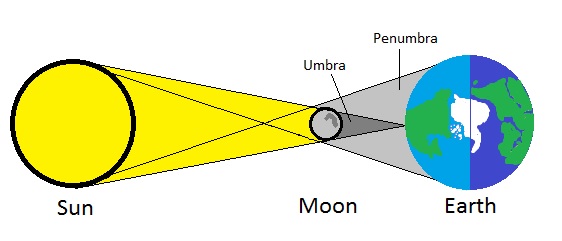
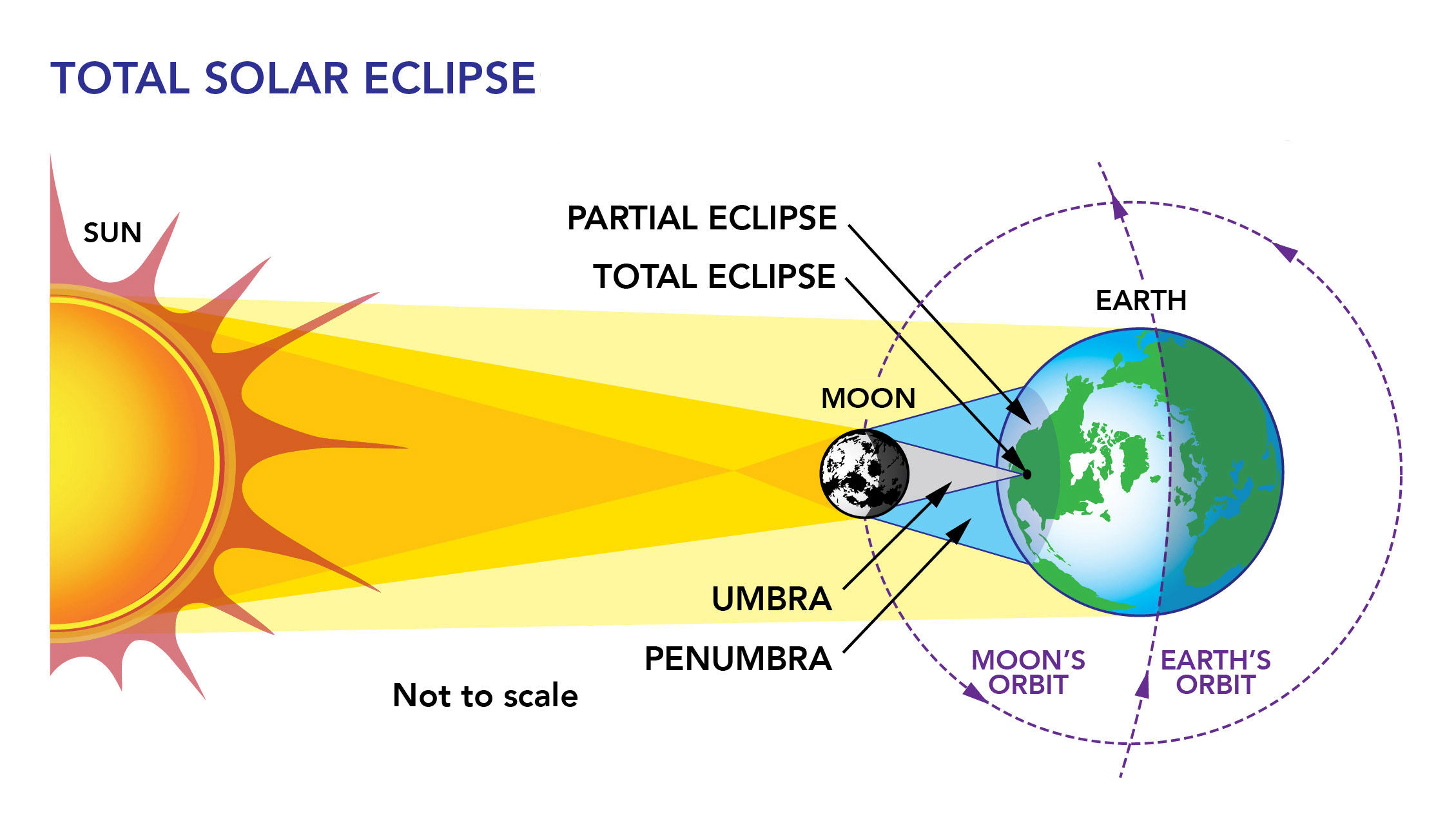
Let’s get straight to it: a solar eclipse happens when the Moon passes directly between the Sun and Earth. When this cosmic lineup occurs, the Moon casts its shadow onto our planet, blocking some or all of the Sun’s light from reaching us.
Think of it like a giant game of shadow puppets in space! You know how if you hold your hand close to a lamp, your hand makes a big shadow on the wall? Well, in a solar eclipse, the Moon is like your hand, and the Sun is the lamp. The Earth is the wall, and the Moon’s shadow falls right onto it.
Here are the main characters in this amazing show:
- The Sun: Our huge, bright star, providing all the light.
- The Moon: Earth’s natural satellite, much smaller than the Sun but much closer to us.
- The Earth: Our home planet, where we live and watch the show!
Because the Moon is so much closer to Earth than the Sun, it can appear to be the same size as the Sun in our sky, even though the Sun is actually way, way bigger! It’s an optical illusion that makes this spectacular event possible.
When the Moon blocks the Sun’s light, it creates two main parts of a shadow:
- The Umbra: This is the very darkest, inner part of the Moon’s shadow. If you’re standing in the umbra, you’ll see a total solar eclipse. It’s a small area, which is why total eclipses are so rare for any one place.
- The Penumbra: This is the lighter, outer part of the shadow. If you’re in the penumbra, you’ll experience a partial solar eclipse, where only a part of the Sun is covered. This area is much wider.
So, in simple terms, a solar eclipse is when the Moon acts like a giant shield, momentarily hiding the Sun’s powerful light from a part of Earth. Pretty neat, right?
Why Don’t We Have a Solar Eclipse Every Month? The Moon’s Tilted Dance!
This is a super smart question, Class 5 scientists! If the Moon goes around the Earth once every month, and sometimes it’s between the Sun and Earth (that’s called a ‘New Moon’ phase), why don’t we see a solar eclipse every four weeks?
The answer is all about how the Moon orbits our Earth. Imagine a flat dinner plate. If the Earth were in the middle, and the Moon orbited perfectly flat on the rim of that plate, we’d have an eclipse every month! But that’s not how it works in space.
Instead, the Moon’s orbit around Earth is actually a little bit tilted. It’s tilted by about 5 degrees compared to Earth’s orbit around the Sun. Think of it like this: if Earth’s orbit is like the dinner plate, the Moon’s orbit is like a dinner plate that’s slightly tipped up on one side and down on the other.
Because of this tilt, most of the time when the Moon is in its ‘New Moon’ phase (the part of its orbit where it’s between the Sun and Earth), it passes either a little bit above the Sun or a little bit below the Sun from our perspective on Earth. It’s like missing a target by just a tiny bit.
A solar eclipse only happens when the New Moon is at or very close to the points where its tilted orbit crosses the plane of Earth’s orbit around the Sun. These special crossing points are called nodes. When the Moon is at a node during a New Moon, *then the perfect alignment for an eclipse can occur.
This is why solar eclipses are special events! They don’t happen every month, but usually about two to five times a year somewhere on Earth. However, for any single spot on Earth, a total solar eclipse is a much rarer sight, often happening only once every few hundred years!
The Three Amazing Kinds of Solar Eclipses
Just like there are different kinds of clouds or different kinds of animals, there are actually three main kinds of solar eclipses! Each one is a bit different and offers a unique view of the Sun disappearing.
Total Solar Eclipse: The Sun Disappears Completely!
This is the grandest and most spectacular type of solar eclipse. A total solar eclipse happens when the Moon perfectly lines up with the Sun and Earth, and the Moon completely covers the Sun’s bright face. Imagine daylight turning into twilight in just a few minutes!
During a total solar eclipse, if you are in the path of the Moon’s darkest shadow (the umbra), you’ll experience these amazing things:
- The sky will darken dramatically, as if it’s dawn or dusk, even in the middle of the day.
- The temperature might drop a little.
- Animals can get confused; birds might stop singing, and nocturnal animals might start their evening routines.
- You’ll be able to see the Sun’s beautiful outer atmosphere, called the corona. The corona is usually hidden by the Sun’s intense brightness, but during a total eclipse, it shines like a ghostly, pearly white crown around the dark disk of the Moon. It’s truly a breathtaking sight that scientists study!
- You might even see bright stars or planets in the darkened sky.
Total solar eclipses are rare for any specific location because the Moon’s darkest shadow, the umbra, is quite small – only about 100 miles wide. So, you have to be in just the right spot at the right time to see the whole show!
Partial Solar Eclipse: A Bite Out of the Sun!
A partial solar eclipse is much more common than a total one. This happens when the Moon only partially covers the Sun. Instead of the Sun disappearing completely, it looks like a crescent, or as if a giant bite has been taken out of it!
If you’re in the Moon’s lighter shadow (the penumbra), you’ll see a partial solar eclipse. This means the Sun, Moon, and Earth aren’t perfectly aligned, or you’re just outside the path of totality during a total eclipse. You might not even notice the sky getting much darker, especially if only a small part of the Sun is covered. However, it’s still an amazing sight to observe safely!
Even a small partial eclipse is a reminder of the incredible movements happening constantly in space. Remember, even during a partial eclipse, it’s never safe to look directly at the Sun without proper eye protection!
Annular Solar Eclipse: The Ring of Fire!
The third type of solar eclipse is called an annular solar eclipse. This one is really cool because it creates what looks like a fiery ring in the sky!
An annular eclipse happens when the Moon passes directly in front of the Sun, but it’s a little bit further away from Earth in its orbit. Because it’s further away, the Moon appears slightly smaller in the sky than the Sun. So, even though it’s directly in front, it can’t quite cover the Sun completely.

What you see is a bright ring of the Sun’s light surrounding the dark disk of the Moon. This is often called the “ring of fire.” It’s a beautiful sight, but because part of the Sun is always visible, it’s never safe to look at an annular eclipse without special eclipse glasses or viewers. The sky doesn’t darken as much as during a total eclipse, and the corona is not visible.
Each type of solar eclipse offers a unique and incredible experience, reminding us of the wonders of our solar system!
Solar Eclipse vs. Lunar Eclipse: Spot the Difference!
It’s easy to get solar eclipses and lunar eclipses mixed up! Both involve the Sun, Moon, and Earth, and both are spectacular sky events. But they are actually quite different! Let’s clear up the confusion with a quick comparison. Think of it as a game of ‘find the differences’ for sky events!
The biggest difference is who is doing the blocking and what is being blocked.
- In a solar eclipse, the Moon blocks the Sun’s light from reaching Earth.
- In a lunar eclipse, the Earth blocks the Sun’s light from reaching the Moon.
This means during a solar eclipse, the Moon’s shadow falls on Earth. During a lunar eclipse, Earth’s shadow falls on the Moon, making the Moon appear dark or reddish.
Here’s a helpful table to keep them straight:
| Feature | Solar Eclipse | Lunar Eclipse |
|---|---|---|
| What happens? | Moon passes between Sun & Earth. | Earth passes between Sun & Moon. |
| Who blocks whom? | The Moon blocks the Sun’s light from reaching Earth. | The Earth blocks the Sun’s light from reaching the Moon. |
| What you see from Earth? | The Sun appears to be covered (partially or totally). | The Moon appears to turn dim, dark, or reddish. |
| Time of day? | Always happens during the day. | Always happens at night. |
| Safety for viewing? | Requires special eye protection. Never look directly. | Safe to look at directly with your naked eyes. |
| Moon phase involved? | New Moon. | Full Moon. |
See? They are like two sides of the same cosmic coin, both fascinating but very different in how we experience them and how we need to stay safe!
Eye Safety First! How to Watch a Solar Eclipse Safely
Okay, young scientists, this is the MOST IMPORTANT PART of our entire guide. While solar eclipses are breathtaking, they can be extremely dangerous to your eyes if you don’t watch them correctly. NEVER, EVER look directly at the Sun during a solar eclipse without proper eye protection.
Your eyes are super precious, and looking at the Sun, even for a few seconds, can cause serious and permanent damage to your eyesight. This is because the Sun’s rays are so powerful they can burn the light-sensing cells in your retina, the back of your eye, without you even feeling it. This injury is called solar retinopathy.
So, how do you watch a solar eclipse safely?
1. Use Certified Solar Eclipse Glasses
These are not just regular sunglasses! They are much, much darker and are designed to block almost all of the Sun’s harmful ultraviolet (UV), infrared (IR), and intense visible light. Make sure your eclipse glasses are:
- ISO 12312-2 international safety standard compliant: Look for this label on the glasses. This means they meet strict safety requirements.
- From a reputable vendor: Buy them from trusted science stores, observatories, or certified online retailers. Be careful of cheap, unverified glasses.
- Undamaged: Before using, check for any scratches, tears, or holes. If they’re damaged, throw them away.
Put your eclipse glasses on before looking at the Sun, and take them off after* turning away from the Sun. Keep them on for the entire duration of a partial or annular eclipse. The only time it’s safe to briefly remove them is during the brief period of totality (when the Sun is 100% covered) during a total solar eclipse, but only if you are absolutely certain you are in the path of totality. As soon as any part of the Sun’s bright disk reappears, put them back on immediately!
2. Pinhole Projectors: A Safe and Fun DIY Method!
You can make a super simple and safe pinhole projector using just a few common household items! This lets you project an image of the Sun onto a surface, so you’re looking at the Sun’s shadow, not the Sun itself.
How to make a simple pinhole projector:
- Take two pieces of stiff white paper or cardboard.
- In the center of one piece, use a pushpin or sharp pencil to poke a small, neat hole. Don’t make it too big!
- Stand with your back to the Sun. Hold the paper with the hole in it towards the Sun, allowing the Sun’s light to pass through the hole.
- Hold the second piece of paper about 2-3 feet behind the first piece.
- You’ll see a small, upside-down image of the eclipsed Sun projected onto the second piece of paper! You can adjust the distance between the two papers to make the image clearer.
This is a great way to safely share the experience with friends and family!
What NOT to Use:
NEVER use:
- Regular sunglasses (even dark ones)
- Unfiltered telescopes, binoculars, or cameras
- Smoked glass, CDs, DVDs, or photographic film
- Medical X-ray film
- Any homemade filter that hasn’t been certified for solar viewing
These items do NOT provide enough protection and can seriously harm your eyes. Always follow safety instructions and make sure an adult supervises your eclipse viewing. Staying safe lets you enjoy the incredible show!
Fun Facts About Solar Eclipses for Young Astronomers
Solar eclipses are not just beautiful; they’re also full of fascinating stories and scientific wonders!
- Ancient Fears and Wonder: For thousands of years, people didn’t understand what caused eclipses. They often thought a mythical creature was eating the Sun, or it was a sign from the gods! Imagine how scary it must have been to suddenly lose the daylight without knowing why!
- Animals React: During a total solar eclipse, many animals get confused. Birds might stop chirping and fly back to their nests, crickets might start singing, and other animals might begin their nighttime routines. They think night has suddenly fallen!
- They Don’t Last Long: The longest a total solar eclipse can last is about 7 and a half minutes, but most only last for 2-4 minutes. That’s why they are so precious to watch!
- Eclipses on Other Planets: Earth isn’t the only planet to experience eclipses! Mars has two tiny moons, Phobos and Deimos, that can cross in front of the Sun, creating partial solar eclipses there. Jupiter’s big moons also cast shadows on Jupiter itself.
- The Moon is Moving Away: Our Moon is actually slowly moving away from Earth, about 1.5 inches (3.8 cm) per year. Millions of years from now, it will be too far away to completely cover the Sun, and total solar eclipses will no longer happen! So, we’re living in a special time.
Isn’t it amazing how much there is to learn about these cosmic events?
Ready for the Next Big Sky Show?
Wow, you’ve learned a lot about solar eclipses today, Class 5 scientists! You now know that a solar eclipse is a dazzling celestial event where the Moon passes between the Sun and Earth, casting its shadow and briefly dimming our daylight. You understand why they don’t happen every month and the differences between total, partial, and annular eclipses.
Most importantly, you know how crucial it is to always protect your eyes with certified eclipse glasses or a safe pinhole projector if you ever get the chance to witness one.
Space is full of incredible mysteries and beautiful phenomena. Keep looking up, keep asking questions, and keep exploring the wonders of our universe. Who knows what amazing sky shows you’ll discover next!
Frequently Asked Questions
What is the simplest definition of a solar eclipse for kids?
A solar eclipse happens when the Moon gets in between the Sun and Earth, blocking the Sun’s light and casting a shadow on Earth. It’s like the Moon is playing hide-and-seek with the Sun!
Why don’t we have a solar eclipse every month?
We don’t have a solar eclipse every month because the Moon’s orbit around Earth is slightly tilted. Most of the time, the New Moon passes either above or below the Sun from our view on Earth, so the three don’t line up perfectly enough to create a shadow.
What are the three main types of solar eclipses?
The three main types are: 1. Total Solar Eclipse (Moon completely covers the Sun), 2. Partial Solar Eclipse (Moon only covers part of the Sun), and 3. Annular Solar Eclipse (Moon is further away and appears smaller, creating a ‘ring of fire’ around it).
Is it safe to look at a solar eclipse directly with my eyes?
No, absolutely not! Looking directly at the Sun during any part of a solar eclipse without proper protection can cause serious and permanent damage to your eyes. You must use certified solar eclipse glasses or a safe pinhole projector to view it.
How is a solar eclipse different from a lunar eclipse?
In a solar eclipse, the Moon blocks the Sun’s light from reaching Earth. In a lunar eclipse, the Earth blocks the Sun’s light from reaching the Moon. Solar eclipses happen during the day and require eye protection, while lunar eclipses happen at night and are safe to view directly.
What is the ‘corona’ and when can you see it?
The ‘corona’ is the Sun’s beautiful, shimmering outer atmosphere. It’s usually hidden by the Sun’s brightness, but during the brief period of a total solar eclipse (when the Sun is 100% covered), it becomes visible as a pearly white crown around the dark Moon.


Post Comment