What Is Solar Power And How Does It Work
What Is Solar Power And How Does It Work? Your Definitive Guide to Harnessing the Sun’s Energy
Ever looked up at the sun and wondered if you could capture all that incredible energy? Well, good news: we can, and we do! Solar power isn’t some futuristic fantasy; it’s a readily available, powerful solution rapidly transforming how we light our homes, power our businesses, and move towards a cleaner future. But if you’re like most people, you might be thinking, “Okay, but what is solar power, really, and how does it actually *work?“
Table of Contents
- What Is Solar Power And How Does It Work? Your Definitive Guide to Harnessing the Sun’s Energy
- Solar Power 101: A Quick Definition
- The Magic Behind the Panels: How Solar Energy Works (The Photovoltaic Effect Explained)
- Step 1: Sunlight Hits the Solar Panel (PV Cells)
- Step 2: Generating Direct Current (DC) Electricity
- Step 3: Converting DC to AC Power with an Inverter
- Step 4: Powering Your Home (and Sending Excess to the Grid)
- Step 5: Storing Energy for Later (Optional: Solar Batteries)
- Beyond Photovoltaics: Other Ways We Harness Solar Energy
- Solar Thermal Systems (Heating Water & Air)
- Concentrated Solar Power (CSP) (Large-Scale Electricity Generation)
- Components of a Complete Solar Energy System
- Solar Panels (PV Modules)
- Inverters (The Brains of the Operation)
- Mounting System (Racks & Hardware)
- Electrical Wiring & Disconnects
- Monitoring System
- (Optional) Battery Storage
- (Optional) Net Meter
- Why Solar Power Matters: The Benefits You Can’t Ignore
- Common Questions & Misconceptions About Solar
- The Future of Solar: Brighter Than Ever
You’re in the right place. Forget the complex jargon. I’m here to break down the magic of solar energy into plain, understandable language. We’ll explore how sunlight becomes usable electricity, the different ways we harness the sun, and why this clean energy source is becoming increasingly vital for everyone.
Solar Power 101: A Quick Definition
At its core, solar power is simply energy derived from the sun. It’s the ultimate renewable resource, constantly replenished and available to us every single day. We harness this energy in two primary ways: either by converting sunlight directly into electricity (the most common method you see on rooftops) or by using its heat to warm water or air.
Think of it as capturing tiny packets of sunlight – called photons – and putting them to work. Instead of burning fossil fuels that release harmful emissions, solar power offers a clean, sustainable alternative that helps protect our planet and can significantly reduce your energy bills. It’s a win-win.
The Magic Behind the Panels: How Solar Energy Works (The Photovoltaic Effect Explained)
When most people talk about solar power for homes and businesses, they’re referring to photovoltaic (PV) solar panels. These are the sleek, dark rectangles you see on roofs. The process they use to turn sunlight into electricity is known as the photovoltaic effect. It sounds complex, but it’s actually quite elegant once you understand the steps.
Step 1: Sunlight Hits the Solar Panel (PV Cells)
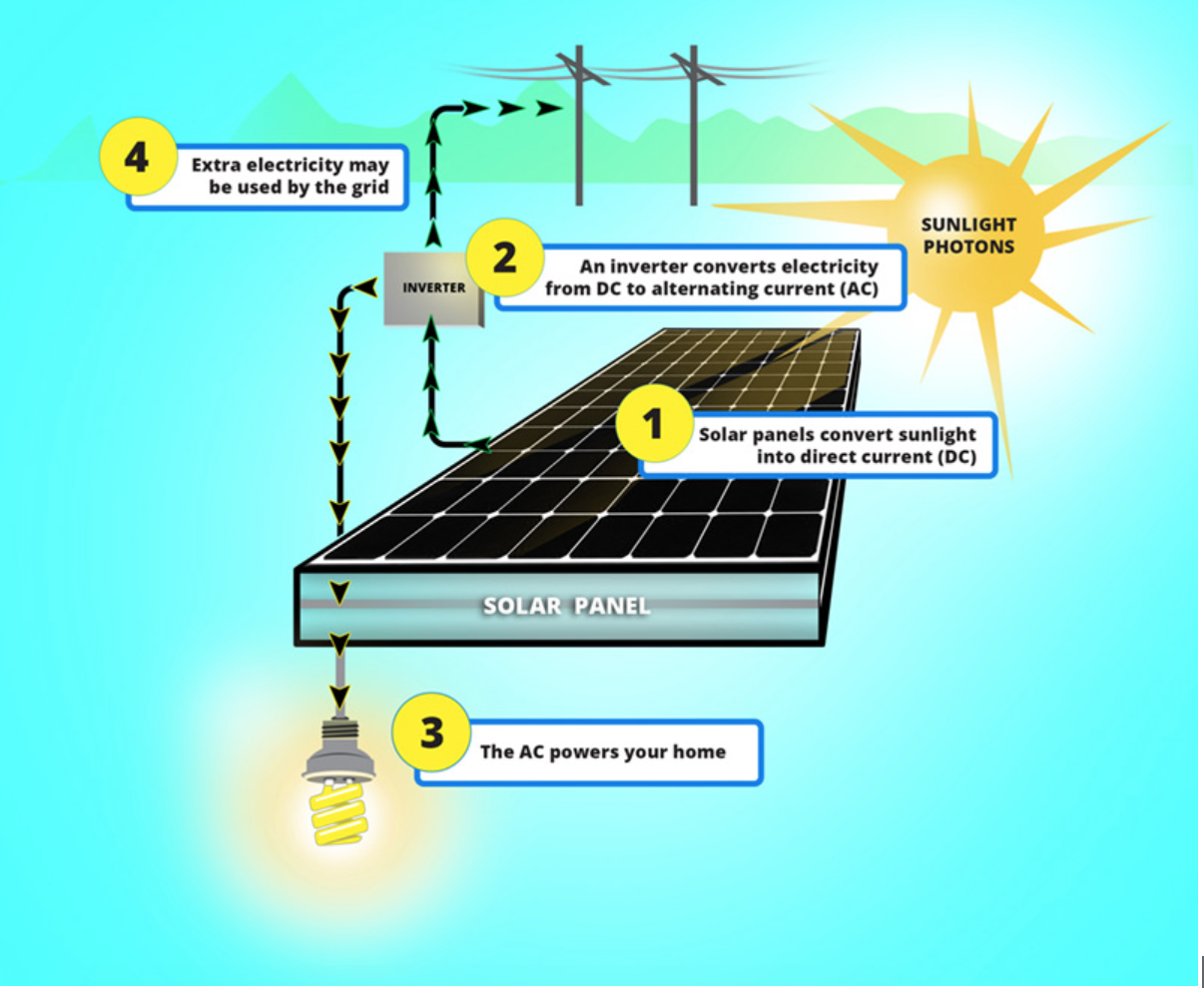
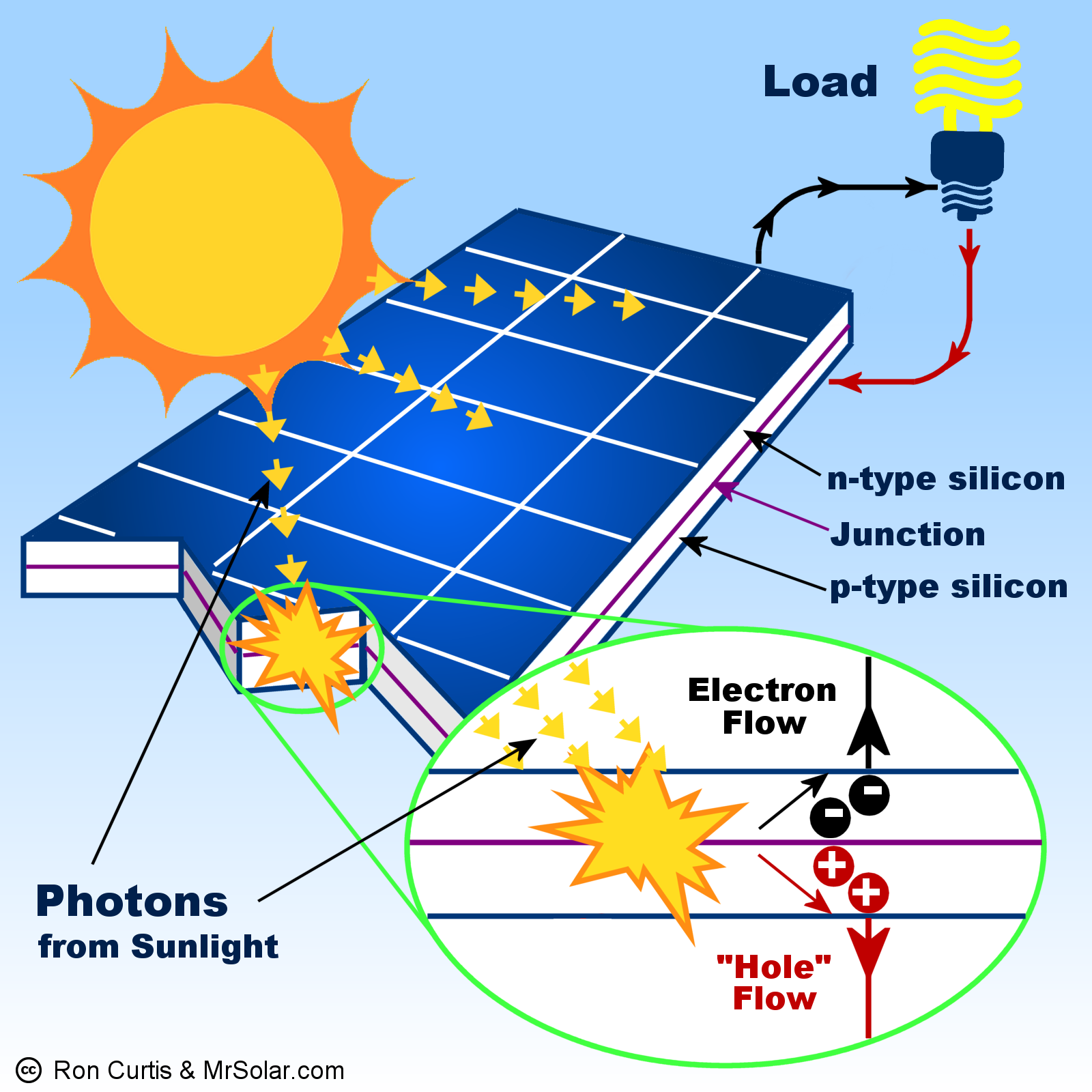
Every solar panel is made up of many smaller units called photovoltaic cells. These cells are typically made from semiconductor materials, most commonly silicon. When photons from sunlight strike the surface of a PV cell, they impart their energy to the electrons within the silicon atoms.
Imagine tiny billiard balls (photons) hitting other tiny billiard balls (electrons). When a photon has enough energy, it knocks an electron loose from its atom. This is the crucial first step: creating free electrons that are ready to move.
Step 2: Generating Direct Current (DC) Electricity
The silicon in a solar cell is specially treated (or “doped”) to create an electric field. This is done by layering two different types of silicon: one with a slight positive charge (p-type) and one with a slight negative charge (n-type). When the freed electrons are excited by photons, this electric field acts like a one-way street, pushing the electrons to flow in a specific direction.
This directed flow of electrons creates an electrical current. Because the electrons flow in one continuous direction, this is known as Direct Current (DC) electricity. This DC power is what your solar panels produce directly from sunlight.
Step 3: Converting DC to AC Power with an Inverter
Here’s the thing: most homes and businesses operate on Alternating Current (AC) electricity. Your toaster, your TV, your lights – they all need AC power. The DC electricity produced by your solar panels isn’t directly usable by your appliances.
This is where the solar inverter comes in. The inverter is often called the “brain” of your solar system because its primary job is to take that DC electricity from your panels and convert it into usable AC electricity. There are different types of inverters, from central “string” inverters to individual “microinverters” on each panel, but their core function remains the same: making your solar energy compatible with your home’s electrical system.
Step 4: Powering Your Home (and Sending Excess to the Grid)
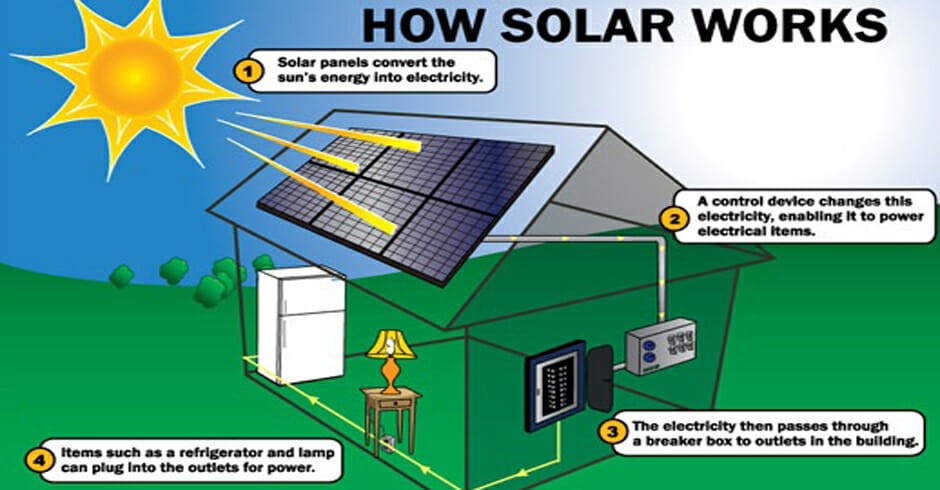
Once the electricity has been converted to AC by the inverter, it flows through your home’s electrical panel. If your solar panels are producing enough power, this electricity will immediately power your appliances, lights, and everything else running in your home. This means you’re consuming less electricity from the utility company, directly lowering your energy bills.
What happens if your panels produce more electricity than your home is currently using? This excess power doesn’t just disappear. Thanks to a system called net metering, it’s sent back out to the utility grid. Your utility company then credits your account for this surplus energy, which you can often draw upon later (like at night or on very cloudy days).
Step 5: Storing Energy for Later (Optional: Solar Batteries)
While net metering handles excess energy for most grid-tied systems, many homeowners are choosing to add solar batteries to their setups. A solar battery stores any surplus electricity generated by your panels instead of sending it directly to the grid. This stored energy can then be used later, such as:
- At night, when your panels aren’t producing.
- During a power outage, providing backup electricity for critical appliances (if set up for backup).
- When electricity prices are higher (time-of-use rates), allowing you to draw from your battery instead of buying expensive grid power.
Batteries increase energy independence and resilience, offering a robust solution for continuous power, even when the sun isn’t shining or the grid is down.
Beyond Photovoltaics: Other Ways We Harness Solar Energy
While PV panels are the most recognized form of solar power, the sun’s energy can be captured and utilized in other powerful ways too. It’s not just about electricity; it’s about heat and large-scale power generation.
Solar Thermal Systems (Heating Water & Air)
Instead of converting sunlight into electricity, solar thermal systems focus on capturing the sun’s heat. These systems typically use collectors (often flat-plate collectors or evacuated tubes) to absorb solar radiation and transfer that heat to a fluid, usually water or an antifreeze solution.
This heated fluid then circulates to a storage tank, providing hot water for your home (solar water heaters) or even contributing to space heating. They are highly efficient for their purpose and can drastically reduce the energy needed to heat water, which is often a significant portion of a household’s energy consumption.
Concentrated Solar Power (CSP) (Large-Scale Electricity Generation)
For utility-scale electricity generation, Concentrated Solar Power (CSP) plants employ a different strategy. Instead of many small PV cells, CSP systems use mirrors or lenses to concentrate a large area of sunlight onto a small receiver. This concentrated sunlight generates intense heat, which is then used to boil water, creating steam. This steam drives a turbine, which in turn powers a generator to produce electricity.
CSP systems are often found in large-scale solar farms, typically in areas with abundant direct sunlight. They can even store heat to generate electricity after the sun has set, making them a more dispatchable (on-demand) form of solar electricity.
Let’s quickly compare these main types:
| Feature | Photovoltaic (PV) | Solar Thermal | Concentrated Solar Power (CSP) |
|---|---|---|---|
| Primary Output | Electricity (AC/DC) | Heat (hot water/air) | Electricity (via steam turbine) |
| Mechanism | Photovoltaic effect (electrons) | Absorbing heat directly | Concentrating sunlight to create heat |
| Typical Application | Residential, commercial, utility-scale electricity | Residential/commercial water/space heating | Large-scale utility power plants |
| Storage Option | Batteries | Insulated hot water tanks | Molten salt for heat storage |
Components of a Complete Solar Energy System
While solar panels are the most visible part of a solar system, they’re just one piece of a larger, integrated puzzle. Here’s a breakdown of the key components that work together to bring solar power to your home or business:
Solar Panels (PV Modules)
These are the stars of the show, converting sunlight into DC electricity. Modern panels are incredibly durable and efficient, designed to withstand decades of weather. You’ll typically encounter a few types:
- Monocrystalline Panels: Made from a single crystal of silicon, these are typically the most efficient and have a sleek, uniform dark appearance.
- Polycrystalline Panels: Made from multiple silicon crystals, these are slightly less efficient but often more cost-effective. They usually have a mottled blue appearance.
- Thin-Film Panels: Lighter and more flexible, made by depositing thin layers of photovoltaic material onto a substrate. Less common for residential use due to lower efficiency but good for certain niche applications.
Inverters (The Brains of the Operation)
As discussed, the inverter is essential for converting DC electricity from your panels into AC electricity usable by your home. The main types include:
- String Inverters: A single inverter handles all panels in a “string.” Cost-effective but if one panel underperforms (e.g., due to shade), it can affect the entire string.
- Microinverters: Installed on each individual panel. This allows each panel to operate independently, maximizing output even if some panels are shaded. Offers panel-level monitoring.
- Power Optimizers: A hybrid approach. Optimizers are installed on each panel to condition the DC power, sending optimized DC to a central string inverter. Combines benefits of both.
- Hybrid Inverters: Can manage both solar production and battery storage, often integrated with grid connectivity.
Mounting System (Racks & Hardware)
This is the framework that secures your solar panels to your roof or the ground. It’s crucial for stability, safety, and proper tilt/angle to optimize sunlight capture. Common types include roof-mounted (most common) and ground-mounted systems.
Electrical Wiring & Disconnects
A network of wires connects panels to the inverter, the inverter to your electrical panel, and your electrical panel to the utility grid. Safety disconnect switches are installed to allow electricians or utility workers to safely shut down the system when needed.
Monitoring System
Many modern solar systems come with monitoring capabilities, often accessible via a smartphone app or web portal. This allows you to track your system’s performance, see how much electricity it’s generating, and identify any potential issues.
(Optional) Battery Storage
As mentioned, batteries store excess solar energy for later use, providing backup power and increased energy independence. These are becoming increasingly popular for homeowners.
(Optional) Net Meter
A specialized meter installed by your utility company. It measures the electricity your home consumes from the grid and* the excess electricity your solar system sends back to the grid. This bidirectional metering is key to net metering programs, ensuring you get credit for your surplus production.
Why Solar Power Matters: The Benefits You Can’t Ignore
The technical aspects of how solar works are fascinating, but the real question for many is: why should I care? The benefits of going solar extend far beyond just technology, impacting your wallet, your home, and the planet.
- Clean, Renewable Energy: This is the big one. Solar power produces zero greenhouse gas emissions during operation. It’s a key player in combating climate change and reducing air pollution, relying on an infinite resource – the sun – rather than finite fossil fuels.
- Reduced Electricity Bills: For many, this is the primary driver. By generating your own electricity, you significantly reduce or even eliminate your monthly electricity bill from the utility company. Over the lifespan of your system, these savings can amount to tens of thousands of dollars.
- Energy Independence: Generating your own power means less reliance on the grid and utility companies. With battery storage, you can even maintain power during outages, offering peace of mind and greater control over your energy supply.
- Low Maintenance: Solar PV systems are incredibly durable and have no moving parts (unlike wind turbines, for example). Once installed, they require very little maintenance beyond occasional cleaning.
- Increased Home Value: Homes equipped with solar panel systems consistently sell for more and often sell faster than comparable homes without solar. It’s a valuable upgrade that pays dividends.
- Environmental Impact: Every kilowatt-hour of solar electricity generated means one less kilowatt-hour produced by burning fossil fuels. This reduces your carbon footprint, helping create a healthier planet for everyone.
Common Questions & Misconceptions About Solar
Despite its growing popularity, there are still a few common myths and questions surrounding solar power. Let’s clear some of them up:
- Can solar panels work on cloudy days? Yes! While direct sunlight is best, solar panels still produce electricity on cloudy or overcast days. They capture diffuse sunlight, just at a lower efficiency. Modern panels are surprisingly good at performing in varied weather.
- What about night-time? No, solar panels cannot produce electricity at night because there’s no sunlight. This is why battery storage or net metering (drawing from the grid for credits earned during the day) are crucial components for continuous power.
- Are solar panels expensive? While the upfront cost can be significant, the price of solar has dropped dramatically over the past decade. With various government incentives (like the federal solar tax credit), state programs, and financing options, solar is more affordable than ever. The long-term savings often make it a wise investment.
- How long do solar panels last? Most solar panels come with performance warranties of 20-25 years, guaranteeing a certain percentage of their original output for that period. Many systems continue to operate effectively for 30 years or more, simply degrading slightly over time.
The Future of Solar: Brighter Than Ever
The story of solar power is one of rapid innovation and exponential growth. We’re seeing continuous advancements in panel efficiency, durability, and aesthetics. New technologies like transparent solar cells, solar roads, and even space-based solar power are being explored, pushing the boundaries of what’s possible.
As costs continue to fall and global awareness of climate change increases, solar power is poised to become an even more dominant force in the world’s energy mix. It’s not just a technology; it’s a movement towards a cleaner, more sustainable, and energy-independent future for all of us.
Understanding what solar power is and how it works demystifies a crucial part of our clean energy transition. It’s accessible, powerful, and an investment in a brighter tomorrow.
Frequently Asked Questions
What is the main difference between solar PV and solar thermal?
Solar PV (photovoltaic) systems convert sunlight directly into electricity using semiconductor materials, primarily for powering homes and businesses. Solar thermal systems, on the other hand, capture the sun’s heat to warm water or air, primarily used for hot water or space heating.
Can solar panels generate electricity at night or during a power outage?
Solar panels cannot generate electricity at night without sunlight. During a power outage, a standard grid-tied solar system without battery backup will also shut down for safety reasons. However, systems with integrated battery storage can provide power to your home during outages, even at night, using stored energy.
How efficient are modern solar panels?
Modern solar panels typically have efficiencies ranging from 17% to over 22%. This means they can convert 17-22% of the sunlight that hits them into usable electricity. Advances in technology are continuously pushing these efficiency limits higher.
What is net metering and how does it benefit solar homeowners?
Net metering is a billing mechanism that credits solar energy system owners for the electricity they add to the grid. When your panels produce more power than your home uses, the excess is sent to the grid, and your utility credits your account. When your home needs more power than your panels are producing (like at night), you draw from the grid using those credits, effectively offsetting your electricity costs.
How long do solar panel systems typically last?
Most solar panels come with performance warranties guaranteeing at least 80-85% of their original power output for 20-25 years. The physical components of a solar system, including panels, inverters, and racking, are built to last and can often operate effectively for 30 years or more with minimal maintenance.
Are there different types of solar panels, and which is best?
Yes, the primary types are monocrystalline, polycrystalline, and thin-film. Monocrystalline panels are generally the most efficient and space-saving. Polycrystalline panels are slightly less efficient but often more cost-effective. Thin-film panels are lighter and more flexible but have lower efficiency. The ‘best’ type depends on factors like your budget, available roof space, and specific energy needs.
Can solar panels withstand extreme weather conditions?
Modern solar panels are incredibly durable and designed to withstand a wide range of extreme weather conditions, including heavy snow loads, high winds, and hail. They undergo rigorous testing to meet international safety and performance standards. Most manufacturers offer robust warranties against weather-related damage.


Post Comment